
Reviewed · LISBON VIEWPOINT TOURS
7 Hills and 14 Viewpoints – Lisbon E-Bike Tour
Lisbon’s famous seven hills can turn a pleasant walk into a serious workout. This tour solves that problem with an e-bike, carrying you from rooftop views to narrow Alfama lanes, old squares, and the Tagus waterfront. I especially like the maximum of seven riders, which gives guides such as Hugo, Miguel, Maya, and Pedro room to keep the group together and answer questions. I also like the mix of viewpoints and ordinary neighborhoods, rather than a route made only of grand monuments.
The main caution is simple: an e-bike removes much of the effort, but it does not remove Lisbon’s traffic, cobblestones, tram tracks, crowds, or steep drops. You need reasonable bike-handling confidence. I would not choose this tour if cycling in busy city streets makes you nervous.
Key points to know before you ride
- Four hours and about 14 kilometers: You cover a large part of historic Lisbon without spending the whole day in the saddle.
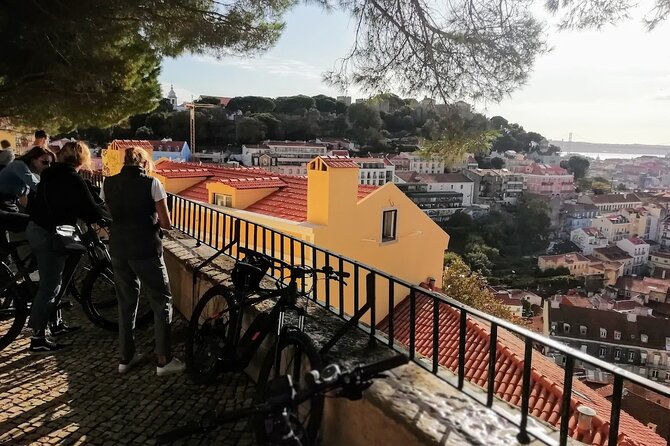
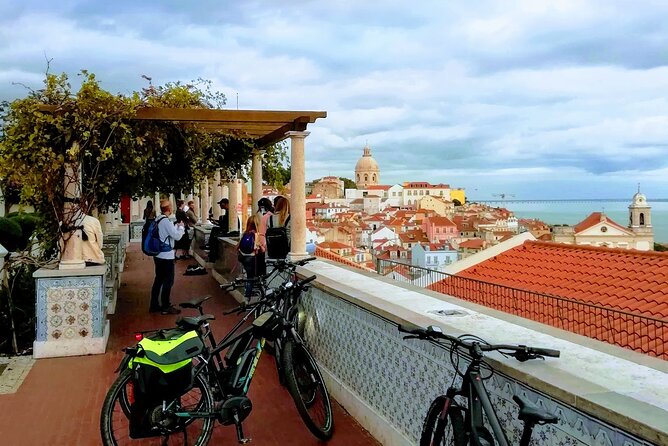
- Fourteen viewpoints: Senhora do Monte, São Pedro de Alcântara, Santa Luzia, Portas do Sol, and others give you different angles across the city.
- A real small-group tour: The group is capped at seven, so the guide can watch the pace and help at crossings.
- The e-bike matters: It makes the hills manageable, but you still need to steer, brake, and ride safely around people and cars.
- Local stories are part of the route: Expect history, neighborhood details, contact with local people, and a small taste of ginjinha in Alfama.
- The price is $54.42 per person: That is fair for a four-hour guided ride with the bike, helmet, and guide included.
Why an e-bike is the right tool for Lisbon’s seven hills
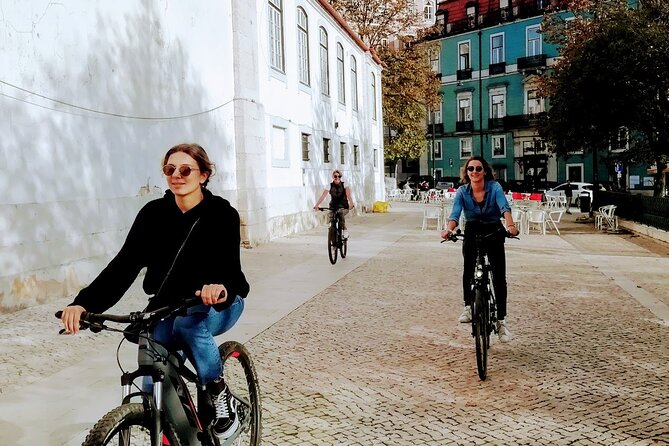
Lisbon is not merely a city with a few hills. Its older districts rise and fall sharply, and several of the best viewpoints sit above the historic center. On foot, you may spend much of your sightseeing time climbing. By regular bicycle, the route would be demanding. The electric assistance changes the equation.
You still pedal, but the motor takes the sting out of the long climbs. That lets you focus on the rooftops, tiled facades, churches, and river views rather than counting the meters to the top. Several guides also adjust the pace and wait at crossings, which matters when a group includes riders with different levels of confidence.
Do not mistake electric assistance for an automatic ride. You must be comfortable starting, stopping, turning, and controlling the bike on uneven surfaces. Lisbon’s cobblestones can feel bumpy, and the historic center brings pedestrians, cars, and tram tracks into the same narrow streets.
One rider found the traffic and crowds too stressful, and another group briefly became separated in a busy area. Those are useful warnings, not reasons to reject the tour outright. The guide gives a safety briefing, and the small group helps, but no city bike tour can remove every risk from a crowded old center.
More Lisbon Seven Hills Tours:
- Lisbon: 7 Hills Half-Day Electric Bike Tour
★ 4.9 · 1,592 reviews - 3-Hour Lisbon 7 Hills Electric Bike Tour
★ 5.0 · 818 reviews - The 7 Hills Tour of Lisboa
★ 5.0 · 125 reviews
Starting near the railway and heading to São Pedro de Alcântara
The tour starts at Rua dos Caminhos de Ferro 62 at 10:00 a.m. That address is near public transportation and close to the eastern side of central Lisbon. You return to the same meeting point at the end, so you do not need to arrange a separate pickup.
The first major viewpoint is Miradouro de São Pedro de Alcântara. From here, you look over central Lisbon and toward the eastern side of the city. It is a useful opening view because the guide can point out the hills, the castle district, and the areas you will later reach by bike.
You may spend only about five minutes here, so have your camera ready before you stop. This is a photo and orientation break rather than a long rest.
Next comes Largo do Carmo, a compact square linked to the 1974 Revolution. The Carmo Convent ruins give the place a striking setting, while the nearby Santa Justa elevator adds one of Lisbon’s best-known pieces of ironwork to the view. The stop is brief, but it ties the city’s medieval remains to its modern political story.
Tiles, ruins, and the climb to Senhora do Monte
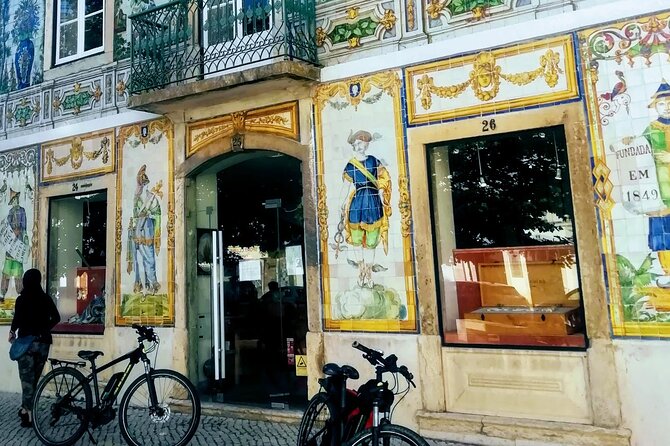
At Viuva Lamego, the focus shifts to Portugal’s tile tradition. The building once housed one of the country’s best-known tile factories. Lisbon’s painted tiles are not just decoration for tourists. They cover facades, protect walls, and give many streets their distinct look.
This stop is valuable because it points you toward details you might otherwise pass without noticing. The building itself is the subject, rather than a factory visit or a tile-making class, so keep your expectations practical.
The route then climbs to Miradouro da Senhora do Monte, one of the high points of Lisbon and, for many people, the finest view on the tour. From here, the city spreads below you in a broad sweep. The guide also explains why this high ground mattered to the city roughly 900 years ago.
This is one of the clearest examples of the e-bike’s value. The climb would be tiring on foot, especially early in a sightseeing day. With electric assistance, you reach the view with more energy left for the neighborhoods and landmarks still ahead.
Graça gives you castle views and a slower look at local life
The next stop is Miradouro da Graça, also called the Sophia de Mello Breyner Andresen viewpoint. Graça is one of Lisbon’s traditional neighborhoods, and the view here takes in the city from another angle. São Jorge Castle appears close by, giving you a better sense of how the castle sits above the surrounding districts.
The stop lasts about ten minutes and includes a chance to see the church and part of the Graça convent without an extra admission charge. This is one of the tour’s better balances: you get a major view, a religious site, and a neighborhood setting without spending time in a long museum queue.
The pace is fairly active. You stop often, but most viewpoint visits are short. I like that format for a first visit because it builds a mental map quickly. If you prefer to sit at each lookout for half an hour, this route may feel rushed.
More Lisbon Viewpoint Tours:
- Lisbon: City Highlights and Viewpoints E-Bike Tour
★ 4.9 · 1,556 reviews - Lisbon: Old Town TukTuk Tour and Scenic Viewpoints in Alfama
★ 5.0 · 974 reviews - Explore Lisbon by Tuk Tuk: History and Viewpoints
★ 5.0 · 840 reviews - Lisbon: 3h tour in German to all viewpoints with local guide
★ 4.7 · 20 reviews
Santa Clara, the National Pantheon, and the flea market area
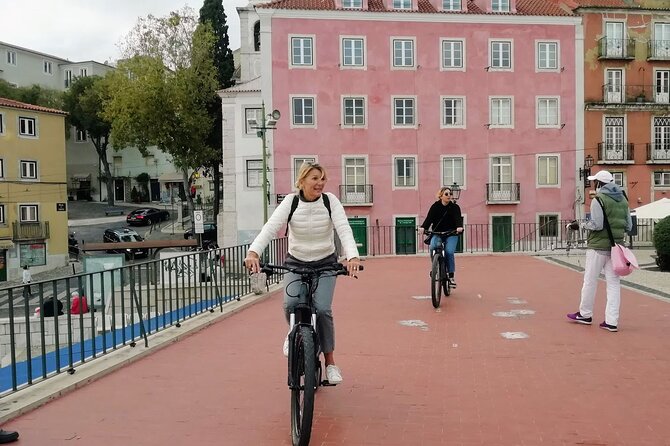
At Mercado de Santa Clara, you reach an important part of eastern Lisbon. The market area hosts the city’s oldest street market, held on Tuesdays and Saturdays. The route does not promise a full market visit, and the market schedule means you may see a different atmosphere depending on the day.
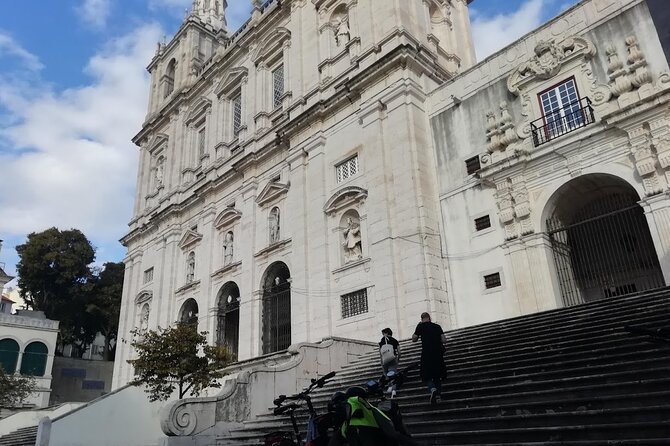
Nearby are the São Vicente de Fora Monastery and the National Pantheon. You observe the monuments from outside, so this is mainly a location and history stop rather than an interior tour. That distinction matters if you want detailed visits inside both buildings.
The Santa Clara area helps connect Lisbon’s grand sights to everyday city life. Markets, churches, monasteries, and residential streets sit close together here. The guide’s local stories add more value than simply stopping for a photograph.
Alfama is the heart of the ride

Alfama is the most involved part of the route. You cycle through narrow streets that can feel like a maze, stopping at points to hear about the neighborhood, speak with local people, and sample a small ginjinha, Portugal’s sour-cherry liqueur.
The route covers the lower part of Alfama and several viewpoints: Santo Estêvão, Santa Luzia, Cerca Moura, and Portas do Sol. You also pass Lisbon Cathedral and Santo António Church. These stops show why Alfama is so popular, but the bike gives you a different experience from a standard walking tour. You move through the lanes instead of viewing them from one main street.
The tradeoff is the same one that makes Alfama interesting. Streets are tight, surfaces are uneven, and people may appear around a corner without much warning. Ride slowly, keep space from the person ahead, and follow the guide’s signals. The route is not suitable for someone who has never handled a bicycle in a crowded setting.
The half-hour allocated here is enough for a taste, not a full exploration. You will not see every lane or enter every church. What you gain is a broad introduction to the district, along with several strong views and a sense of how the oldest part of Lisbon fits together.
São Jorge Castle, Mouraria, and the city’s older edges
After Alfama, the route continues through the São Jorge Castle neighborhood. You see old houses, narrow lanes, and the castle gate. The emphasis is on the area around the castle rather than an extended visit inside São Jorge Castle itself.
That can be a plus if you already plan to tour the castle separately. You get the setting and approach without using much of this four-hour route on one paid attraction. If the castle interior is your main goal, plan another visit.
The ride then skirts Mouraria, another of Lisbon’s oldest districts. Its lanes border the castle and Alfama, and the neighborhood includes unexpected details, such as photographs of local residents displayed along the streets. It is a small but memorable example of how Lisbon’s older quarters mix public art, local identity, and daily life.
This section also shows why a guide helps. The most interesting detail may not be a famous monument. It may be a small street display or a story about a neighborhood that you would pass without understanding.
From São Domingos to the Tagus
The final stretch brings you into central Lisbon. You pass large squares, theaters, shops, and monuments, including São Domingos Church, Rossio Square, the base of the Santa Justa elevator, Rua Augusta Arch, and Praça do Comércio.
Praça do Comércio is a fitting finish. The broad square opens toward the Tagus, giving you a change from the tight streets of Alfama, Mouraria, and the castle district. It also gives you a chance to see how Lisbon’s central grid differs from the older hill neighborhoods.
The tour then returns to the original meeting point. Because the ride begins and ends in the same place, you can plan the rest of your day without worrying about where to collect bags or retrieve transport. The experience lasts about four hours, though the exact timing can change with traffic, group pace, and stops.
Guides, group size, and the value of the storytelling
The small group is one of the strongest features here. Seven riders is a useful limit in Lisbon, where a larger formation would be harder to manage on narrow streets. It also lets the guide speak naturally instead of shouting over a crowd.
The guides named in the experience include Miguel, Hugo, Maya, and Pedro. The most praised qualities are clear explanations, humor, patience, and careful handling of road crossings. Hugo is noted for a calm pace and friendly instruction. Miguel is described as entertaining and proud of Lisbon. Maya brings enthusiasm for her city, while Pedro adds advice on sights and food.
That does not mean every guide will give the same tour word for word. It does mean you should expect a guide-led experience rather than a ride with only basic directions. Stories about the 1974 Revolution, tile production, old religious sites, neighborhoods, and Lisbon’s growth make the route easier to remember.
The guide also has an important safety role. Riders are kept together, crossings are handled carefully, and the group may slow down for someone who needs more time. Even so, you remain responsible for your own bike and awareness.
Price, equipment, and who gets the best value
At $54.42 per person, the tour offers solid value if you want a broad first look at Lisbon. The price includes the e-bike, helmet, guide, and free monument tickets. Food and drinks are not included, apart from the described ginjinha stop, so budget separately for anything you buy along the way.
The value comes from combining transport and sightseeing. You are not paying only for a bike rental, and you are not walking between distant hills. In about four hours, you reach viewpoints and neighborhoods that would take much longer to connect on foot.
The equipment is generally described as well maintained, but one rider experienced a bike problem. The operator says guides can address small faults and replace bikes when needed. A quick check of the brakes, tires, gears, and battery before departure is still sensible.
I would choose this for first-time visitors, families with teenagers, couples, and anyone who wants a city overview before deciding where to return. It is also a good fit if steep hills are a concern but you still want active sightseeing.
I would skip it if you dislike cycling near traffic, have poor balance, or want long, quiet visits inside monuments. Rain adds another concern. Wet cobblestones are harder to manage, and the experience may be canceled in poor weather. You can cancel for a full refund up to 24 hours before the start time, while a weather cancellation offers a new date or full refund.
Should you book the 7 Hills and 14 Viewpoints ride?
Book it if you want to cover a lot of old Lisbon in one morning and feel comfortable on a bike. The e-bike makes the hills realistic, the seven-person limit keeps the ride personal, and the route combines famous views with less polished streets in Alfama, Mouraria, and Graça.
Go in with the right expectations: this is not a leisurely cycle path beside the river. It is a guided city ride over cobbles, through crowds, and around traffic. If you can handle that setting, this is an efficient and memorable way to get your bearings, hear local stories, and see why Lisbon is best understood from both the hilltops and the streets below.
FAQ
How long does the e-bike tour last?
The tour lasts approximately four hours.
What time does the tour begin?
It starts at 10:00 a.m.
Where does the tour start and finish?
It starts at Rua dos Caminhos de Ferro 62, 1100-108 Lisboa, Portugal, and ends back at the same meeting point.
How many people can join the tour?
The maximum group size is seven travelers.
Is the tour offered in English?
Yes. The tour is offered in English.
What is included in the price?
The price includes use of the bicycle, a helmet, a guide, and free monument tickets.
Are food and drinks included?
No. Food and drinks are not included. The route does include a described stop involving a small ginjinha tasting in Alfama.
Is the tour suitable for every cycling ability?
You should have a moderate level of physical fitness and be confident handling a bicycle. The e-bike helps with steep hills, but you still ride on cobblestones and through traffic, crowds, and narrow streets.
What happens if the weather is poor?
The experience requires good weather. If the operator cancels because of poor weather, you are offered a different date or a full refund.
More Lisbon Bike and E-Bike Tours
- Lisbon: Hills, Alfama, and Mouraria Tour by Electric Bike
★ 4.8 · 3,438 reviews - Lisbon E-Bike Tour Commerce Square, Mouraria and Alfama
★ 4.5 · 1,688 reviews - Lisbon: 3-Hour Tour by E-Bike
★ 4.8 · 1,150 reviews - Bike Tours Lisbon – Center of Lisbon to Belém
★ 5.0 · 686 reviews
Just reviewed in Lisbon
- Lisbon: Morning of Equestrian Art with Lusitano Horses★ 4.4 · 87 reviews
- Lisbon: Entry Tickets to Mosteiro de São Vicente de Foram★ 4.6 · 50 reviews
- Lisbon: National Palace of Ajuda E-Ticket & City Audio Guide★ 4.1 · 87 reviews
- Lisbon: Early Morning TukTuk Tour – hotel/cruise ship pickup★ 4.9 · 45 reviews
- Sintra: Quinta da Regaleira e-Ticket & Sintra City Audios★ 4.1 · 12 reviews
- Lisbon E-Bike Tour TAGUS★ 5.0 · 3 reviews
- Lisbon: E-bike Trip from the Sintra Mountains to Cascais Sea★ 5.0 · 67 reviews
- Lisbon: Discover Belem by electric Tuk Tuk★ 4.9 · 86 reviews
Lisbon Viewpoint Tours, compared.

Old Town TukTuk Tour and Scenic Viewpoints in Alfama
Read our review →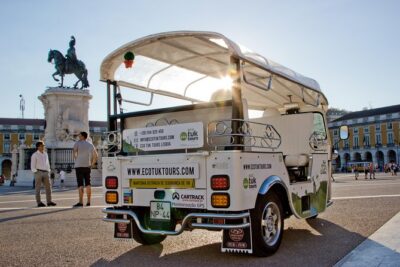
Explore Lisbon by Tuk Tuk: History and Viewpoints
Read our review →

All Viewpoints Tuk-Tuk Tour with a True Local Guide
Read our review →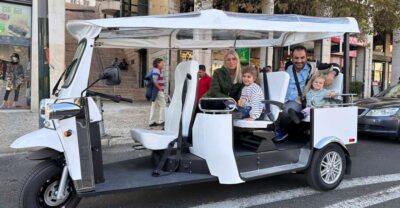
Browse the lists this tour appears in