

Reviewed · ÓBIDOS DAY TRIPS FROM LISBON
From Lisbon: Alcobaça & Óbidos Self-Guided Tour
Alcobaça gives you one of Portugal’s finest monasteries, while Óbidos offers medieval walls, whitewashed houses, and a castle-town setting you can explore without a guide hurrying you along. I like the mix of serious history and easy wandering, plus the freedom to choose your own stops in Óbidos. The six-hour schedule is efficient, but it can feel tight, and a busy vehicle or late arrival may leave little time for churches.
I especially like that transport, a map, and an audio guide in eight languages are included. You can learn why Pedro and Inês are remembered as Portugal’s real Romeo and Juliet, then pause for Alcobaça’s famous sweets or a walk along Óbidos’s walls. Just keep an eye on the clock: this is a useful sampler, not a slow village stay.
Key points to know before booking
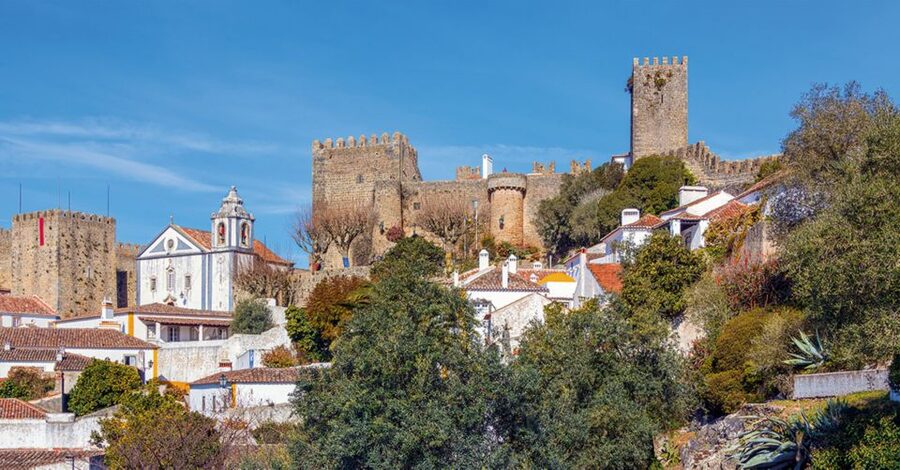
- Alcobaça’s monastery is the historical anchor: See the royal tombs of King Pedro and Inês de Castro inside a UNESCO-listed Cistercian complex.
- Óbidos is explored independently: Use the map and audio guide to find its churches, castle, walls, gates, and flower-decorated lanes.
- The day includes about three hours on the road: Expect 75 minutes to Alcobaça, 45 minutes between the towns, and one hour back to Lisbon.
- You receive two hours in Óbidos: That is enough for a focused walk, but not for every church and a leisurely meal.
- The $50 price covers the main essentials: Transport, the interactive audio guide, and a destination map are included, while hotel pickup and entry fees are not listed as included.
- The meeting point is central Lisbon: Start and finish at the Cityrama Gray Line terminal at Praça Marquês de Pombal, below Parque Eduardo VII.
Why Alcobaça deserves the first stop
The day begins with a 75-minute coach ride from Lisbon to Alcobaça. The trip is not a quick hop, so the journey takes up a noticeable part of your day. Still, Alcobaça earns its place because the Royal Monastery of Santa Maria de Alcobaça is one of Portugal’s great historic sights.
The monastery was begun in 1178 on the orders of King Afonso Henriques, and Cistercian monks occupied it in 1223. It became one of the largest and best-preserved Cistercian complexes in Europe. That background matters because the building is not just a grand church you glance at before lunch. It reflects the power, discipline, and reach of a major medieval religious order.
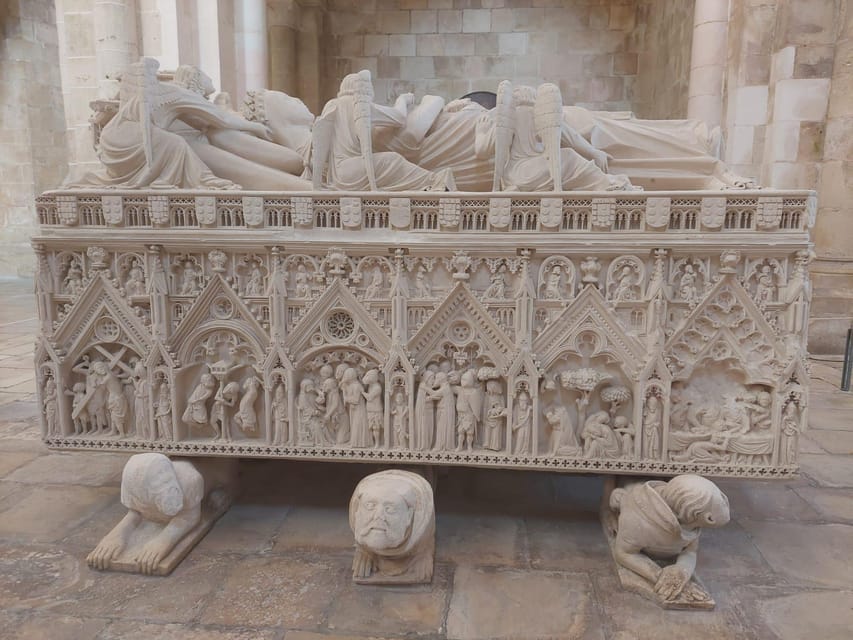
You have about one hour in Alcobaça. Use it with purpose. The main draw is the monastery church and the tombs of King Pedro and Inês de Castro. Their story is one of Portugal’s most famous romances, filled with royal opposition, tragedy, and posthumous devotion. The paired tombs give the story a physical focus and are among the most memorable details of the visit.
The schedule also gives you free time to try Alcobaça’s heaven sweets, a local specialty associated with the town’s convent tradition. If tasting local food matters to you, this is where you may want to save a few minutes. The tradeoff is simple: every pastry stop reduces your time for the monastery, so decide before you arrive what matters most.
One practical point is important. The provided plan does not state that monastery admission is included, so check the current booking details before you go. The transport, map, and audio guide are included, but attraction entry is not clearly listed among the inclusions.
More Batalha and Alcobaça Monastery Tours:
- From Lisbon: Fátima, Nazaré, Batalha, and Óbidos Guided Tour
★ 4.7 · 3,060 reviews - From Lisbon: Fatima Batalha Nazaré & Óbidos Small-Group Tour
★ 4.7 · 2,563 reviews - From Lisbon: Fátima, Nazaré, Batalha and Óbidos Guided Tour
★ 5.0 · 922 reviews
The Pedro and Inês story inside the monastery
The Pedro and Inês story gives Alcobaça emotional weight. King Pedro chose the monastery church as the burial place for himself and his beloved Inês de Castro. Their impressive tombs can be visited, making this more than a general architectural stop.
You do not need a separate guide to follow the basic story because the audio guide provides background in English, Portuguese, Spanish, French, German, Italian, or Chinese. That range is useful for mixed-language groups and for anyone who prefers to move quietly rather than follow a live guide.
The one-hour visit rewards a little planning. If you spend too long taking in the full complex, you may have no time for sweets or a relaxed look around town. If the monastery is your main reason for booking, head there first and treat everything else as a bonus.
The 45-minute transfer to Óbidos
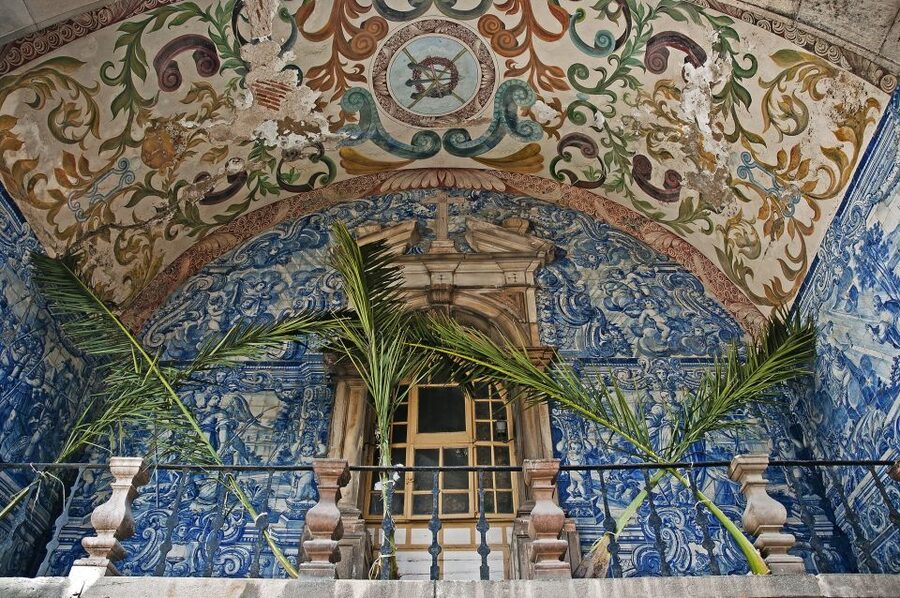
After Alcobaça, the coach continues for about 45 minutes to Óbidos. The route gives you a change of mood. Alcobaça is anchored by a monumental religious complex, while Óbidos is a compact fortified village where the pleasure comes from walking, looking up, and taking side turns.
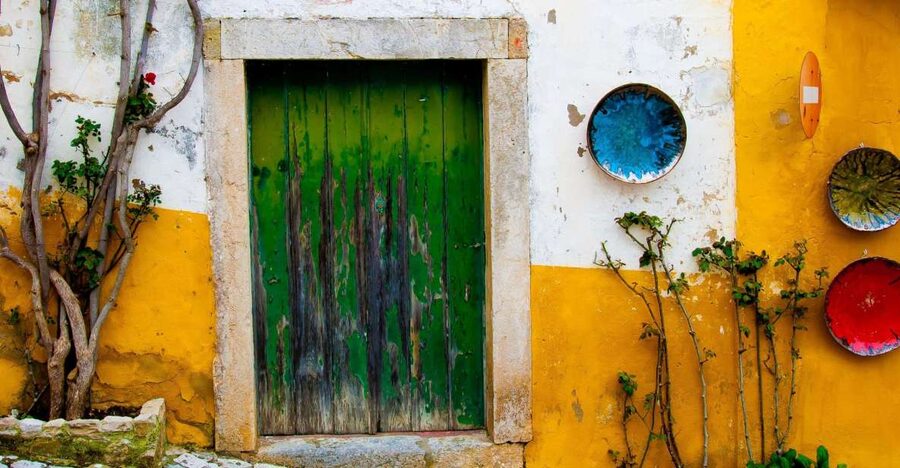
You have two hours in Óbidos, accompanied by the audio guide rather than a live escort. That arrangement suits independent visitors. You can stop for photographs, browse the streets, visit a church, or walk beside the medieval walls at your own pace.
The time limit still matters. Óbidos has enough historic points to fill a longer visit, and two hours can pass quickly if you stop often. A first-time visitor should pick two or three priorities instead of trying to cover every church, the castle, the walls, and the shops.
Entering Óbidos through the Town Gate
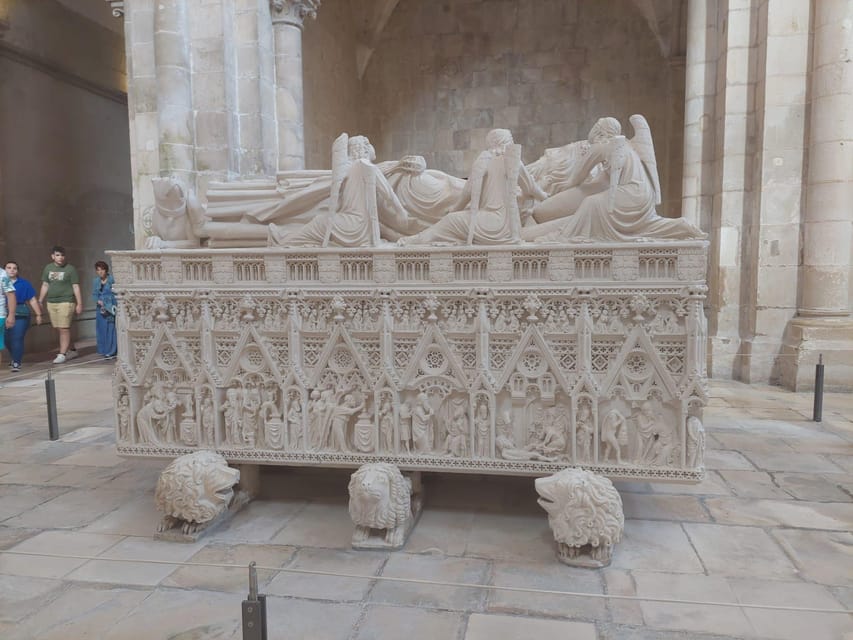
The Town Gate, also called Our Lady of Sorrow, is a natural starting point. It honors Óbidos’s patron saint and carries the inscription stating that the Virgin was conceived without original sin. The inscription dates from the 17th century, during the reign of John IV.
Look closely at the 18th-century tiles showing scenes from the Passion of Christ. They add detail to what might otherwise feel like a simple entrance passage. Begin your audio tour here, then use the gate as your reference point as you work into the old streets.
Óbidos has a long and layered past. It may have begun with Celtic settlement around 308 BC, and later research connects it with the Roman city of Eburobrittium. The village was then occupied by barbarian groups and the Moors before Afonso Henriques, Portugal’s first king, conquered it.
That history is easy to miss if you treat Óbidos as only a pretty shopping street. The walls, churches, gates, and castle are reminders that this was a defended settlement and a royal possession. The audio guide helps supply that context while you walk.
More Óbidos Day Trips from Lisbon:
- Three Cities in One Day: Porto, Nazare and Obidos from Lisbon
★ 4.5 · 3,572 reviews - From Lisbon: Day Trip to Porto, Óbidos, and Nazaré
★ 4.5 · 1,311 reviews - Fatima, Nazare, Obidos 8-People Small Group, Day-Tour from Lisbon
★ 5.0 · 995 reviews - From Lisbon: Fátima, Batalha, Nazaré, and Obidos Tour by Van
★ 4.8 · 893 reviews
Churches, tiles, and royal connections
St. Peter’s Church has medieval foundations and keeps its original portal. It was renovated in the second half of the 16th century and has a single nave with a Baroque wood altarpiece from the period of King John V.
The Pousada of Óbidos occupies what was once the Paço do Alcaide. It was Portugal’s first pousada created from a historic building. You can admire its Manueline windows and the doorway with a lintel shaped like intertwined tree trunks. You may not enter every part of the building, but the exterior details are worth noticing as you pass.
St. James Church has royal associations too. The royal family attended it during their stays in Óbidos, and King Sancho founded it. Its connection with the monarchy gives you another way to understand why Óbidos remained important long after its military role faded.
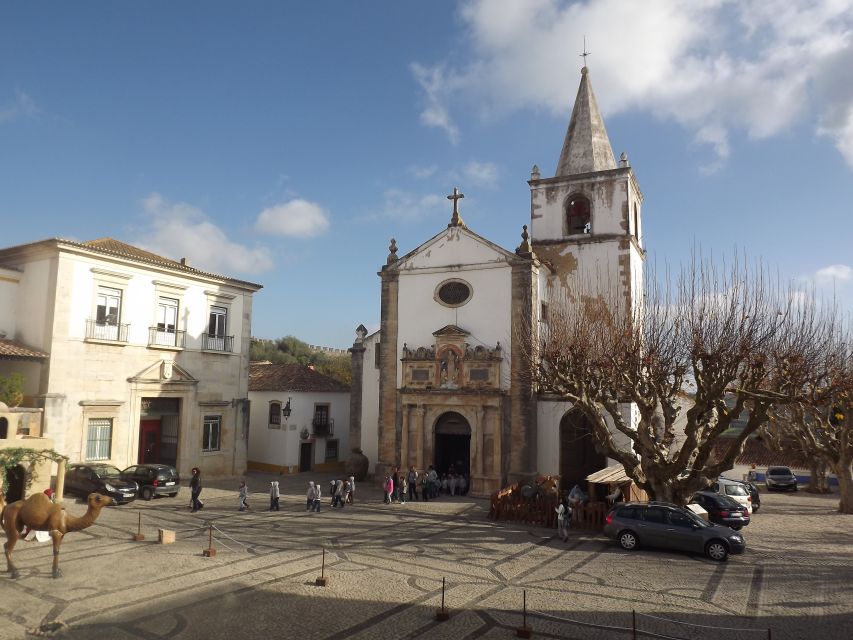
St. Mary’s Church occupies the site of an old Visigoth temple, which was later converted into a mosque. After Afonso I’s Christian conquest, it became a Catholic church. Inside, look for the wall tiles and the tomb of D. João de Noronha, the 16th-century mayor of Óbidos. The tomb is attributed to Nicolau Chanterene and is described as a masterpiece of his work.
These churches are one reason I would not book this outing solely for shopping or photographs. They provide the substance behind the attractive streets. The caution is timing. A fixed coach excursion can arrive when some interiors are closed, and one account of this experience found the churches shut by arrival. Check the day’s opening hours if church interiors are essential to you, and keep realistic expectations about what two hours can cover.
Walking the walls and the village lanes
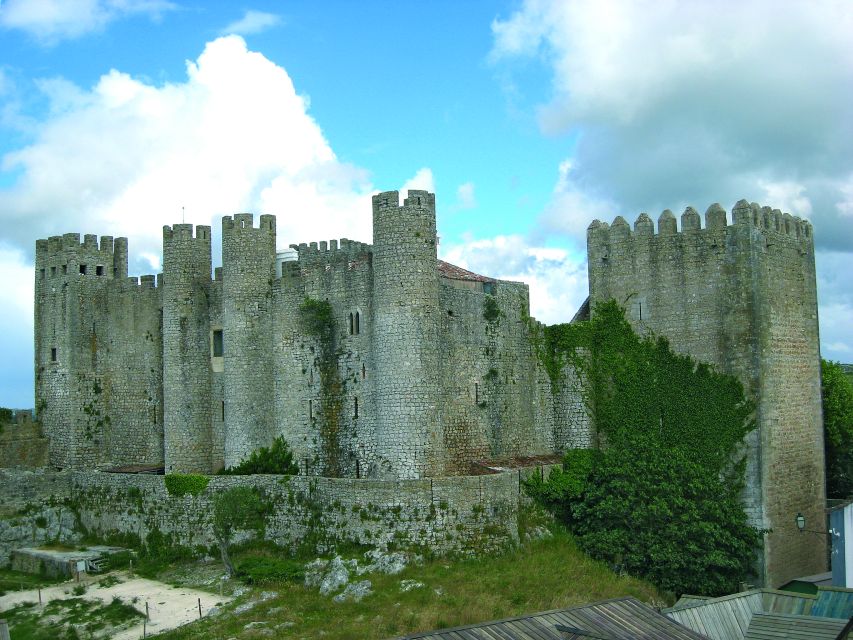
The medieval walls are the most physical way to experience Óbidos. From them, you can look across the village and see the relationship between the fortifications, the castle, and the tightly packed houses. The walk is self-paced, so you can choose how much of the wall to cover rather than follow a group.
Comfortable shoes are a must. The experience specifically recommends them, along with sunglasses, a sun hat, and a camera. The wall walk and old streets call for sensible footwear, and summer sun can be strong.
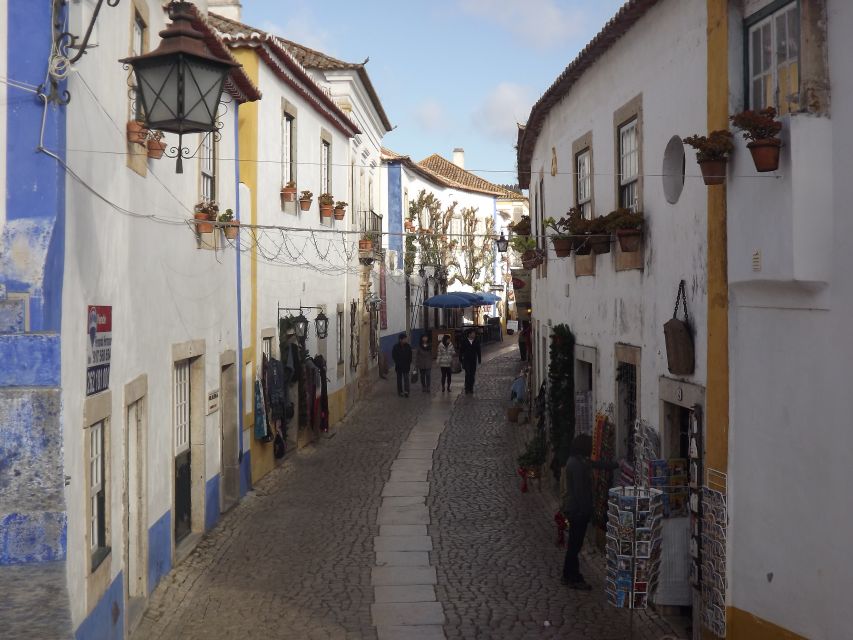
Below the walls, Óbidos is known for colorful houses, flowers, churches, and narrow streets. The setting is attractive, but the streets also contain shops and eateries. One past experience found that little remained to see after the churches closed, apart from commercial stops. That is a useful warning, not a reason to skip the town. It means you should put the walls and open historic sites before browsing.
The famous cherry liqueur, ginjinha, is not specified as part of this outing, so I would not assume a tasting is included. The same applies to meals and entrance fees. You have free time, but you pay for personal purchases yourself.
What the $50 price really buys
At $50 per person, the value rests on convenience. You avoid arranging separate transport between Lisbon, Alcobaça, and Óbidos, and you get a map plus an audio guide in several languages. For a visitor with only one spare day and no interest in driving, that can be a fair price.
The day is not a private tour. You are using shared coach or van transport and exploring independently at the stops. That keeps the cost below a fully guided private outing, but it also means less flexibility. You cannot simply add another hour in Óbidos because you have found a church or café you like.
Transport takes roughly three hours in total. The timetable lists 75 minutes from Lisbon to Alcobaça, 45 minutes to Óbidos, and one hour back to Lisbon. Add one hour in Alcobaça and two hours in Óbidos, and the six-hour structure becomes clear.
A cramped or uncomfortable vehicle could make the road portions less pleasant, especially for anyone who dislikes long seated rides. The duration is approximate, and the operator may change or cancel a service for reasons beyond its control. The terms also say that a cancellation for such reasons does not bring a refund, so read the current conditions before paying.
Who will enjoy this day trip most

I would choose this tour if you want to see two important places in one day and prefer independent exploring over a continuous guided walk. It suits first-time visitors to Portugal who have limited time in Lisbon and want more than city sightseeing.
It is also a good fit if you like audio tours. You can listen in your preferred language, pause when you want, and spend more time on the sights that interest you. The map helps you get your bearings quickly in Óbidos.
I would be more cautious if you want a slow day, long meals, or detailed access to every church. The schedule is tight, and the two-hour Óbidos stop may feel short. Anyone sensitive to vehicle comfort should also consider the amount of road time.
The meeting point is the Cityrama Gray Line terminal at the bottom of Parque Eduardo VII, at Praça Marquês de Pombal. There is no hotel pickup or drop-off, and the activity returns to the same meeting point. Allow enough time to reach the terminal, since missing the departure would undermine the value of a tightly timed day.
Final call: should you book it?
Book this $50 outing if your priority is efficient sightseeing. You will see the Alcobaça monastery, the Pedro and Inês tombs, and the fortified streets of Óbidos without arranging several connections yourself. The multilingual audio guide gives you useful context while leaving you free to set your own pace.
Skip it if you want to linger. Alcobaça receives only about an hour, Óbidos about two, and the total road time is substantial. For the best experience, enter Óbidos with a short plan: the Town Gate, one or two churches if open, the walls, and a little free time for local sweets or browsing.
FAQ
How long does the Alcobaça and Óbidos tour last?
The planned duration is six hours, though the actual time is approximate. The schedule includes about 75 minutes to Alcobaça, one hour there, 45 minutes to Óbidos, two hours in Óbidos, and one hour back to Lisbon.
Where does the tour start and finish?
It starts and finishes at the Cityrama Gray Line terminal at Praça Marquês de Pombal, at the bottom of Parque Eduardo VII in Lisbon.
Is hotel pickup included?
No. Hotel pickup and drop-off are not included. You must reach the central meeting point yourself.
What is included in the price?
Transport, an interactive audio guide, and a map of the destination are included. Entry fees, food, and personal purchases are not listed as included.
Which languages are available for the audio guide?
The audio guide is available in Spanish, Chinese, English, French, German, Italian, and Portuguese.
How much free time do I get in Alcobaça?
You receive about one hour in Alcobaça, including time to visit the monastery area and explore or taste the town’s traditional sweets.
How much time is available in Óbidos?
You have about two hours in Óbidos for the self-guided visit, free time, churches, walls, castle area, and streets.
What should I bring?
Bring comfortable shoes, sunglasses, a sun hat, and a camera. Pets are not allowed.
Can I cancel the booking?
You can cancel up to 24 hours in advance for a full refund. The reserve-now, pay-later option allows you to hold a place without paying immediately.
More Self-Guided Tours in Lisbon
- Lisbon: São Jorge Castle E-Ticket and Audio Guide
★ 4.3 · 2,182 reviews - Sintra: Quinta da Regaleira E-Ticket and Audio Guide
★ 4.2 · 1,731 reviews - Lisbon: Tram 28 Entry Ticket & Audio Guide with 24-Hour Pass
★ 4.0 · 930 reviews - Lisbon: Jerónimos Monastery E-Ticket and Audio Guide
★ 3.7 · 660 reviews
Just reviewed in Lisbon
- Lisbon: Morning of Equestrian Art with Lusitano Horses★ 4.4 · 87 reviews
- Lisbon: Entry Tickets to Mosteiro de São Vicente de Foram★ 4.6 · 50 reviews
- Lisbon: National Palace of Ajuda E-Ticket & City Audio Guide★ 4.1 · 87 reviews
- Lisbon: Early Morning TukTuk Tour – hotel/cruise ship pickup★ 4.9 · 45 reviews
- Sintra: Quinta da Regaleira e-Ticket & Sintra City Audios★ 4.1 · 12 reviews
- Lisbon E-Bike Tour TAGUS★ 5.0 · 3 reviews
- Lisbon: E-bike Trip from the Sintra Mountains to Cascais Sea★ 5.0 · 67 reviews
- Lisbon: Discover Belem by electric Tuk Tuk★ 4.9 · 86 reviews
Óbidos Day Trips from Lisbon, compared.

Fátima, Nazaré, Batalha, and Óbidos Guided Tour
Read our review →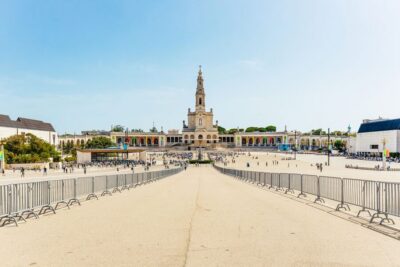
Fatima Batalha Nazaré & Óbidos Small-Group Tour
Read our review →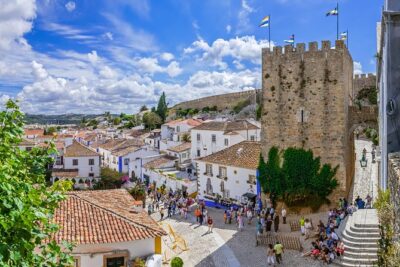
Fatima, Nazare, Obidos 8-People Small Group, Day-Tour from Lisbon
Read our review →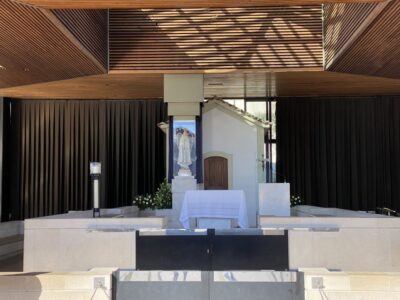
Fátima, Batalha, Nazaré, and Obidos Tour by Van
Read our review →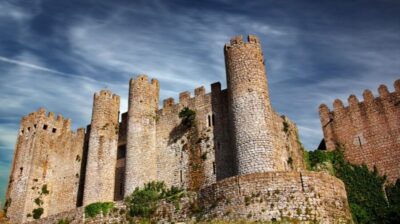

The Best of the West – Fátima, Nazaré, Óbidos & Batalha
Read our review →
Browse the lists this tour appears in