
Reviewed · LISBON WINE TASTING TOURS
Historic Winery Tour and Tasting in Bombarral
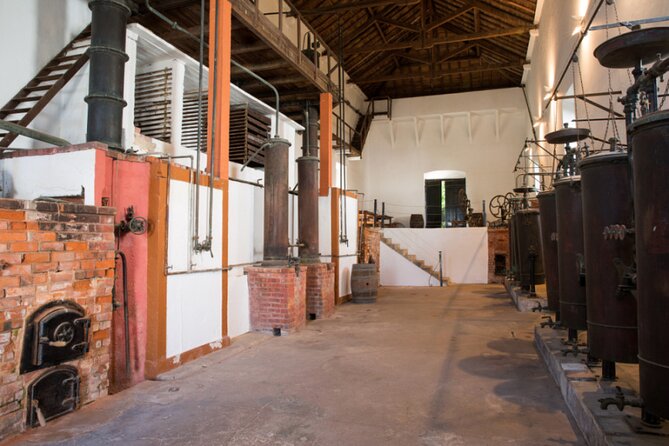
The best part of this outing is its look behind the scenes. At Quinta do Sanguinhal, a family-owned winery about 40 minutes from Lisbon, you see old copper stills, granite cellars, gardens, and wine-making equipment that still tells the story of the place. I especially like the six-wine tasting and the chance to see a wooden and granite screw press dating from 1871.
I also like the small group limit of 12 people, which suits anyone who wants time for questions rather than a rushed stop. Guides including Anna, the founder’s great-granddaughter, and Josephine have led engaging visits. The main drawback is the location: transportation to the meeting point in Bombarral is not described, so you need to plan that part yourself.
Key points to know before you book
- Rare historic equipment: See copper column stills, granite cellars, and a screw press dating from 1871.
- Six wines included: The tasting covers two whites, two reds, and two distinctive fortified wines.
- Family connection: Anna, the founder’s great-granddaughter, has guided the tour and shared the winery’s story.
- Small-group setting: The experience is capped at 12 people, making it easier to ask questions.
- Short but worthwhile visit: The full experience lasts about 90 minutes, with the tour followed by tasting and local snacks.
- Useful regional stop: The winery is near Peniche, Baleal, and Nazaré, and lies on the route toward Fátima.
Why this winery visit is worth leaving Lisbon for
Lisbon has enough churches, viewpoints, and tiled streets to fill several days. Still, Portugal makes more sense when you get beyond the capital and see how its food and drink are made. This visit gives you a compact way to do that without committing to a full-day wine tour.
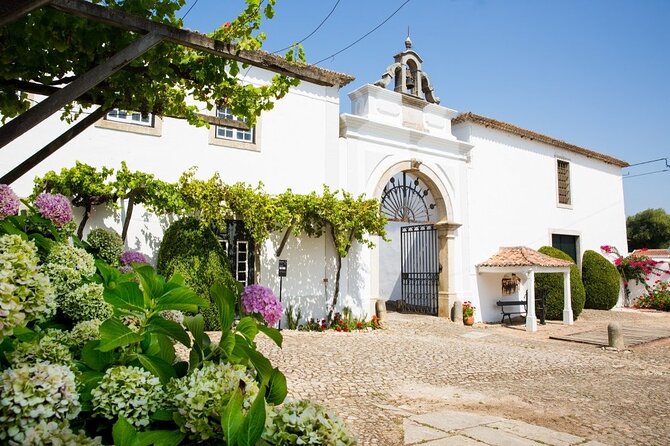
Quinta do Sanguinhal is in Bombarral, about 40 minutes from Lisbon. The setting is a historic family estate, not a large commercial tasting room. That difference matters. You are visiting a working place with old buildings, traditional equipment, gardens, cellars, and a family connection that reaches back to the winery’s founder.
The visit lasts about 1 hour and 30 minutes. That is long enough to see the main parts of the estate and enjoy a proper tasting, but short enough to fit into a broader day in the region. I would consider it a good match for someone who has already seen Lisbon’s main sights and wants a quieter, more local experience.
The experience has received an overall rating of 4 from six reviews, with strong praise for the setting, the family atmosphere, the wine selection, and the explanation of the production process. One serious complaint concerns a booking that was canceled by the provider two days before the scheduled visit because no availability remained. That appears to be an isolated but important warning: confirm the appointment if your schedule is tight.
More Lisbon Wine Tasting Tours:
- Winner 2025 Undiscovered Lisbon Food & Wine Tour by Eating Europe
★ 5.0 · 6,390 reviews - Lisbon: Live Fado Show with Port Wine in Historic Center
★ 4.7 · 4,166 reviews - Award-Winning Original Lisbon Food Wine Tour: 19 Curated Tastings
★ 5.0 · 1,288 reviews
Arriving at Quinta do Sanguinhal in Bombarral
The meeting point is listed as 2540-216 Q.ta do Sanguinhal, Portugal. The activity begins and ends there. No hotel pickup or transfer from Lisbon is included in the information provided, so you should treat the journey to the estate as your responsibility.
The drive is described as taking about 40 minutes from Lisbon, but actual travel time can vary. If you are building a day around the visit, leave room for the trip and avoid scheduling another fixed activity too close to the end. The winery is also close to Peniche, Baleal, and Nazaré, and sits on the route toward Fátima, so it may fit naturally into a broader trip through central Portugal.
This is not a city tasting bar that you can reach by stepping off a metro line. The location is part of the appeal, but it also creates the chief practical question. Check your route before booking, especially if you are not driving. The supplied details do not state that transportation is provided.
Seeing the family estate and historic buildings
The visit begins with an introduction to the estate and its wine-making history. The family has invested in the tourism and service areas so that the historic buildings can be opened to the public. You are not simply shown a modern production room. You move through an old estate whose buildings and equipment are part of the story.
A family connection adds a personal touch. Anna, described as the founder’s great-granddaughter, has guided the visit. Her role gives the tour a direct link to the people who built and maintained the winery. You may also be guided by Josephine, who has been praised for her patience during the tasting and explanation.
That family element is valuable because it helps connect the objects in the cellar to the people who used them. You get a sense of this as a continuing family business rather than a display assembled only for tourists. The tone appears to be informal and welcoming, though the exact guide depends on the date of your visit.
The estate’s centenary buildings provide much of the atmosphere. You should expect an old-world setting, but not a polished theme-park version of one. Surfaces, tools, and rooms have practical origins. If you enjoy architecture, industrial heritage, and traditional food production, the buildings may be just as interesting as the wine.
The copper stills and the first distillery
One of the most unusual stops is the estate’s historic distillery. It contains column copper alembic stills, described as among the first distilleries built in the region. These stills are a useful reminder that the estate’s work has not been limited to table wine.
Copper alembic equipment is visually striking, with tall metal forms that look very different from the barrels and bottles associated with wine. The guide explains the role of the distillery and the products made there. The available details do not specify every spirit produced, so you should expect historical and production context rather than a full spirits workshop.
This part of the visit is especially useful for anyone who thinks a winery tour is only about vineyards and tasting notes. The estate’s story includes distillation, aging, old machinery, and traditional pressing. It gives the tour more variety than a basic introduction to white and red wine.
More Historical Tours in Lisbon:
- Lisbon: History, Stories and Lifestyle Walking Tour
★ 4.8 · 10,902 reviews - Lisbon: Fado Show with Wine in a Historic Venue
★ 4.8 · 1,294 reviews - Explore Lisbon by Tuk Tuk: History and Viewpoints
★ 5.0 · 840 reviews - Lisbon: Daytime or Sunset Boat Cruise with History and Wine
★ 4.9 · 819 reviews
Granite cellars and the 1871 screw press
Next, you enter the granite cellars. These rooms hold wood and granite screw presses, including one dating from 1871. The equipment is described as unique in the Iberian Peninsula, which makes this one of the strongest reasons to choose this experience over a standard cellar visit.
The old press offers a clear link between modern wine and earlier methods. You can see the size and weight of the equipment and better understand how much physical work once went into pressing grapes. A guide can explain how these tools fit into the production process, but the supplied information does not promise a hands-on demonstration.
The cellars may appeal to you even if you are not an expert in wine. You do not need to know grape varieties or fermentation terms to appreciate the age and craftsmanship of the equipment. The setting also gives the visit a sense of place that a tasting alone cannot provide.
Keep in mind that historic cellars may involve uneven surfaces or stairs, but the activity information does not provide detailed accessibility notes. It states that most people can participate. If you have specific mobility needs, ask the provider before booking rather than assuming every area is easy to access.
Gardens and aging cellars
The route also includes the estate gardens and the winery’s aging cellars. The gardens add a change of pace after the production rooms and provide a chance to see the property as a complete estate rather than only a place for barrels and presses.
The aging cellars are where the wine’s story continues after production. Here you can learn how the winery handles its wines before they are ready for tasting. The available details do not identify the exact barrel types, aging periods, or temperature methods, so do not book this expecting a technical cellar seminar.
Instead, think of this section as a chance to see the quieter side of wine production. The old buildings, cellar rooms, and gardens give the visit a strong sense of atmosphere. That is one reason I would choose this tour for someone who values setting and heritage as much as the final glass.
Six wines and local snacks
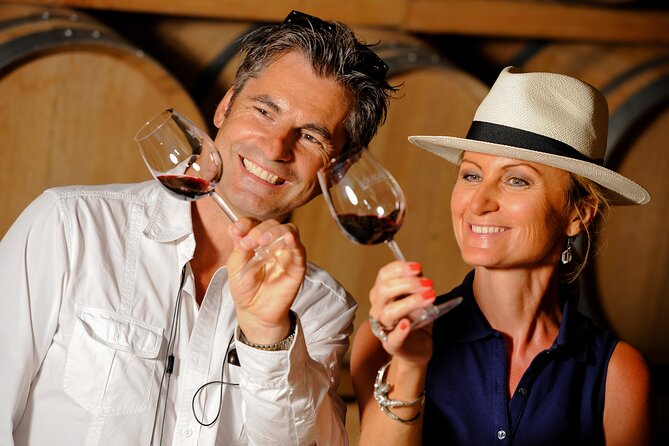
The visit ends with a guided tasting of six wines made at the winery. The selection described in the tasting includes two whites, two reds, and two unique fortified wines. That is a better range than a tasting focused on one style, particularly if you want to compare how the estate handles different wines.
The fortified wines are likely to be the most distinctive part of the lineup. The supplied information does not name the wines or explain their grape varieties, so you should ask the guide what makes each one different. A guided tasting is most useful when you take time to compare color, aroma, sweetness, texture, and finish rather than simply choosing a favorite.
Local snacks accompany the tasting. The details do not specify which foods are served, so do not plan around a full meal. Think of the snacks as a regional bite that supports the wine and makes the tasting more comfortable.
The tasting appears to be a highlight of the visit. Several comments praise the wines, and one tasting description specifically notes that all six were excellent. That does not mean every bottle will suit your taste. It does mean you get a broad, organized sample of the estate’s production instead of one token pour.
If you do not drink alcohol, the information does not explain whether alternatives are available. Ask before booking if that matters to you.
What the $52.36 price means
At $52.36 per person, this is not the cheapest way to taste Portuguese wine. The price includes the guided estate visit, access to the historic production areas, six wines, and local snacks. It does not appear to include transportation from Lisbon.
The value depends on what you want from a wine outing. If your main goal is to buy or sample as much wine as possible, a city tasting may cost less. If you want a family estate, old equipment, gardens, a distillery, historic cellars, and a six-wine tasting in one short visit, the price is easier to justify.
The small group limit also matters. With no more than 12 people, you have a better chance of hearing the guide and asking about the wines or equipment. A larger bus group might offer a lower price, but it would likely feel less personal.
I would see the cost as reasonable for a compact heritage and tasting experience, provided you are already planning to be in the Bombarral area or can arrange the transport without much trouble. It is less attractive if you are paying for an expensive private transfer only to spend 90 minutes at the estate.
Who will enjoy this visit most
This experience is best for wine lovers who want context with their tasting. You get old presses, copper stills, gardens, aging cellars, and family history before the final glasses arrive.
It also suits curious visitors who are not wine specialists. The equipment gives you something concrete to look at while the guide explains production. You can enjoy the visit even if you cannot tell a Touriga Nacional from a Chardonnay.
The small group makes it a good option for couples, families, and small groups who prefer a calmer setting. Most people can participate, according to the activity information, but anyone with mobility concerns should confirm access to the historic rooms.
I would be less likely to recommend it to someone who wants a full-day wine route, a vineyard walk, or a large meal. None of those are promised. This is a focused 90-minute estate visit with tasting and snacks.
Booking, cancellation, and one caution
Confirmation is provided when you book, and the activity accepts mobile tickets. Free cancellation is available up to 24 hours before the start time for a full refund. Cancellations or changes made less than 24 hours before the scheduled start are not accepted for a refund, and the cut-off uses local time.
The provider is Curioseety SRLS. Because one booking was reportedly canceled by the provider two days before the visit due to a lack of availability, I would keep an eye on your confirmation and contact the provider if the appointment is central to your plans. Do not build an unchangeable itinerary around it until your booking is secure.
Should you book the Quinta do Sanguinhal visit?
Book it if you want a small-scale Portuguese wine experience with real historic equipment, family connections, and a varied six-wine tasting. The 1871 screw press, copper stills, gardens, and granite cellars give the visit more substance than a simple pour-and-purchase stop.
Skip it if you need transport from Lisbon included, want a full meal, or prefer a long vineyard day with extensive technical instruction. The tour is short, and the location requires planning.
For the right visitor, the combination works well: a family winery, an unusual industrial past, a personal guide, and enough wine to make the trip worthwhile without taking your whole day. Arrange the route carefully, confirm the appointment, and this can be a memorable break from Lisbon’s city center.
FAQ
Where does the winery tour begin and end?
The tour begins at 2540-216 Q.ta do Sanguinhal, Portugal, and ends back at the same meeting point.
How far is the winery from Lisbon?
The winery is described as about 40 minutes from Lisbon.
How long does the experience last?
The visit lasts approximately 1 hour and 30 minutes.
How many people can join the tour?
The activity has a maximum of 12 participants.
What is included in the wine tasting?
The tasting includes six wines produced at the winery. The selection described includes two whites, two reds, and two fortified wines, along with local snacks.
What historic features will I see?
You will see the estate’s historic distillery with copper column alembic stills, granite cellars, wood and granite screw presses, including one dating from 1871, gardens, and aging cellars.
Can I cancel for a full refund?
Yes. You can cancel at least 24 hours before the experience start time for a full refund. Cancellations or changes made less than 24 hours before the start time are not accepted for a refund.
More Lisbon Food Tours
- Lisbon: Food and Wine Small Group Walking Tour
★ 4.9 · 4,082 reviews - Lisbon Small-Group Food Tour with 18 Tastings in Alfama District
★ 5.0 · 1,967 reviews - Lisbon: Baixa District Food Tour with Dinner and Drinks
★ 4.9 · 1,870 reviews - Devour Lisbon: The Ultimate Portuguese Food Tour
★ 5.0 · 1,782 reviews
Just reviewed in Lisbon
- Private tour Lisbon – full day★ 5.0 · 8 reviews
- Private Tour: Portuguese Food and Wine Tour★ 5.0 · 33 reviews
- Lisbon Football Experience – Private stadium and Museum Tour★ 4.0 · 10 reviews
- Lisbon and Sintra Essence 8H – Private Tour★ 5.0 · 5 reviews
- Private Tour: Lisbon Sunset Walking Tour with Fado Show and Dinner★ 5.0 · 30 reviews
- Private Catamaran Tour: Lisbon coast cruise with barbecue and drinks★ 5.0 · 20 reviews
- Lisbon: Helicopter Tour over Cascais & Cabo da Roca★ 5.0 · 4 reviews
- Private Tour Fátima – Nazaré – Batalha – Óbidos★ 5.0 · 6 reviews
Lisbon Wine Tasting Tours, compared.

Winner 2025 Undiscovered Lisbon Food & Wine Tour by Eating Europe
Read our review →
Live Fado Show with Port Wine in Historic Center
Read our review →
Award-Winning Original Lisbon Food Wine Tour: 19 Curated Tastings
Read our review →
Private Lisbon Arrabida Wine Tour: Food & Wines, Mountain and Sea
Read our review →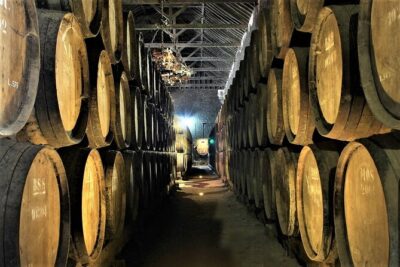
Private Wine Tasting in the Setúbal Wine Region, from Lisbon
Read our review →
Arrabida and Sesimbra Small-Group Day Trip from Lisbon with Wine Tasting
Read our review →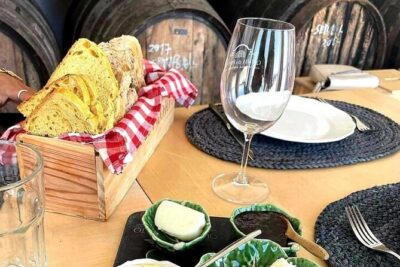
Private Lisbon-Arrábida Wine Tour: 3 Wineries, Coast & Heritage
Read our review →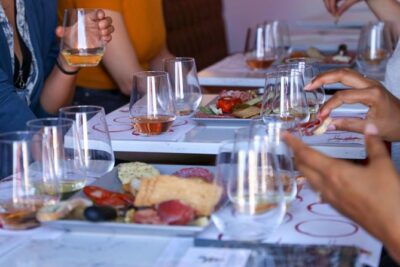
Wine and Cheese Tasting Lunch in Portuguese Wine Bar
Read our review →Browse the lists this tour appears in