
Reviewed · ARRáBIDA NATURAL PARK TOURS
Historical and Natural Arrábida: Private Tour from Lisbon
Arrábida gives you a fine change of pace from Lisbon: within a short drive, you trade city streets for Atlantic views, limestone peaks, and quiet coves. This private six-hour outing links scenery with local food and small pieces of Portugal’s past, rather than treating the region as a quick photo stop.
I like the door-to-door pickup and the freedom of having the guide adjust the day for weather or your interests. I also like the range of stops, from Azeitão cheese and wine country to Setúbal’s famous fish market and a 17th-century tide mill. The main drawback is the guide-dependent nature of a private tour. One guide may offer a lively running commentary, while another may give you more quiet time, and the six-hour schedule can feel busy.
Key points to know
- Arrábida’s mountain roads lead to broad views over the Sado estuary and Atlantic coast.
- Azeitão adds local flavor, with chances to try traditional wine, cheese, and other regional goods.
- Setúbal’s Livramento Market combines seafood with an enormous display of blue-and-white azulejo tiles.
- Forte de São Filipe gives you history and wide views over Setúbal and the Sado River entrance.
- The private format is the real luxury, with hotel or cruise-port pickup and room to adjust the plan.
- Weather matters, especially for viewpoints and summer beach stops.
Leaving Lisbon beneath the Ponte 25 de Abril
Your day begins around 9 a.m. with pickup at your Lisbon hotel, Airbnb, accommodation, or a convenient nearby meeting point. Pickup is also available from the cruise port, a useful option if you have limited time before or after a sailing.
The first recognizable landmark is the Ponte 25 de Abril. From here, the tour moves away from Lisbon toward the Setúbal Peninsula and Arrábida. You travel in a private, air-conditioned car or van, with only your own group and the guide aboard.
That setup makes a difference. You do not need to wait for a large coach, repeat questions for strangers, or follow a fixed group pace. If the morning light is good, you can spend more time at a viewpoint. If clouds roll in, the guide may shift the order of stops, as happened on one weather-affected outing.
The road time also gives your guide a chance to explain the places ahead. The strongest guides on this experience seem to combine driving with local context. Rod and Paulo are names associated with particularly well-received outings, though your guide will depend on the date and availability.
More Arrábida Natural Park Tours:
- Private Lisbon Arrabida Wine Tour: Food & Wines, Mountain and Sea
★ 5.0 · 907 reviews - Arrabida and Sesimbra Small-Group Day Trip from Lisbon with Wine Tasting
★ 5.0 · 494 reviews - Private Lisbon-Arrábida Wine Tour: 3 Wineries, Coast & Heritage
★ 5.0 · 450 reviews
Azeitão: wine, cheese, and a useful breakfast stop
Azeitão is your first proper stop, about 30 minutes. The town and surrounding area are known for wine and cheese, so this is where the tour begins to feel distinct from a standard sightseeing drive.
You might stop for breakfast and sample traditional local products. That option is especially useful because the tour begins at 9 a.m. and lunch is not included. If you prefer a slow start, ask your guide how much time is available here before the day gets moving.
This stop is less about a long formal tasting and more about getting a first sense of the region. You can ask about the local goods, see what is available, and make a practical decision about buying something to take back. Since food and other personal purchases are not included in the price, budget separately for tastings.
Azeitão also helps break up the journey to the mountain park. You are not simply being driven from Lisbon to a distant viewpoint. The route has a food-and-history rhythm, with each stop offering a different reason to get out of the vehicle.
Arrábida Mountain Park and the Sado estuary
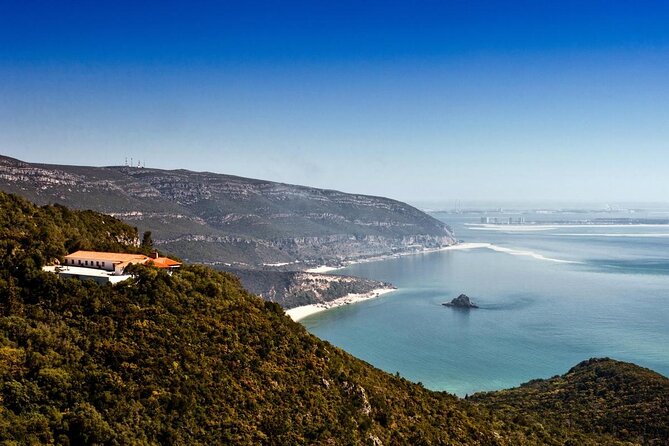
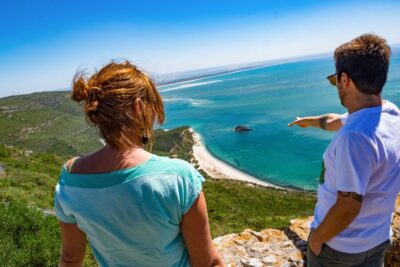
The central scenic portion takes you into Arrábida Natural Park. The mountain slopes rise above the road, and lookout points open toward the Sado estuary and the Atlantic Ocean.
This is the part of the day where weather has the greatest effect. On a clear day, you can expect broad views and good photo opportunities. In poor weather, the same viewpoints may be muted, so a flexible private itinerary is useful. Do not judge this excursion only by the road distance. The appeal is in the stops along the way, where you can pause and take in the setting.
The route includes several places to park for photographs. Your guide can explain what you are seeing and help put the estuary, coast, and mountain roads into context. You will want comfortable shoes and a moderate level of fitness, since the outing is not designed for complete inactivity.
Summer visitors may also see the area’s beaches included in the day. The beach portion is seasonal, so it should not be treated as a guaranteed swimming stop in every departure. The main value here is the combination of scenery and access. Arrábida can feel far removed from Lisbon, yet you reach it without arranging your own rental car or navigating the winding roads yourself.
The Arrábida Convent and Lapa de Santa Margarida
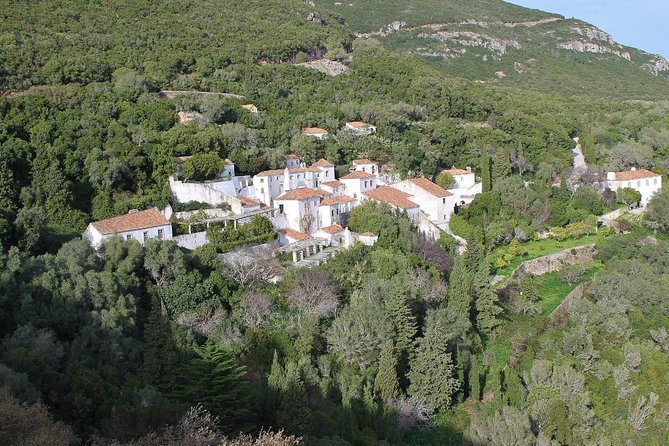
Along the route, you stop to see the Convent of Arrábida, founded in 1542 by Friar Martinho de Santa Maria, a Castilian Franciscan. The land was granted by D. João de Lencastre, the first Duke of Aveiro.
The convent is important because it gives the park a human story. The mountains are not only a scenic backdrop. Religious communities used this remote setting, and the buildings reflect the quiet, austere character that made the location suitable for retreat.
The stop is listed as about 30 minutes, and the convent may be viewed from outside as part of the route. The tour includes entrance fees for the included sites, and the guide accompanies you inside locations and monuments when the visit allows. Still, you should clarify on the day exactly which areas of the convent are open, since the stated route focuses on seeing it along the way.
Lapa de Santa Margarida is another brief stop before Setúbal. It adds a second point of interest without turning the tour into a long museum visit. If you prefer scenery and variety over spending hours in one building, this pace should suit you.
More Historical Tours in Lisbon:
- Lisbon: History, Stories and Lifestyle Walking Tour
★ 4.8 · 10,902 reviews - Lisbon: Live Fado Show with Port Wine in Historic Center
★ 4.7 · 4,166 reviews - Lisbon: Fado Show with Wine in a Historic Venue
★ 4.8 · 1,294 reviews - Explore Lisbon by Tuk Tuk: History and Viewpoints
★ 5.0 · 840 reviews
Setúbal’s Livramento Market and its tiled walls
The Livramento Market is one of the day’s strongest stops. You spend about an hour inside, looking at the seafood counters and learning how different Portuguese fish appear before they reach a plate.
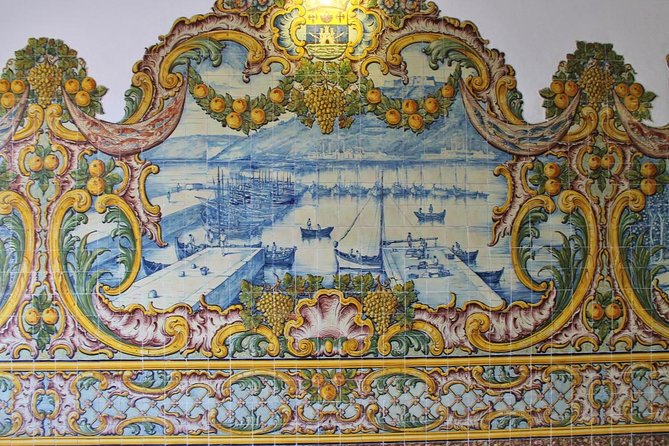
The market is known for its tile decoration. Around 5,700 azulejo pieces cover panels showing local fishing and farming scenes. That gives you two things to look at: the food in front of you and the images behind it. The tiled walls turn an ordinary market visit into a small lesson in local life.
Sardines are a favorite, particularly during June, when Portugal’s consumption rises sharply. You do not need to be a serious food enthusiast to enjoy this stop. The market makes sense for anyone who wants to see how a coastal Portuguese town shops and eats.
Lunch is not included, so ask your guide about the best way to fit food into the day. One guide, Paulo, found an excellent local restaurant during an outing, but restaurant arrangements are not listed as a fixed part of the tour. Treat that as a possible benefit of a flexible guide, not a promise.
The market can be busy, and an hour passes quickly. You may have time to browse, take in the tiles, and ask questions, but not to linger over every stall. The private format helps here because your guide can focus on what interests you most.
Forte de São Filipe above Setúbal

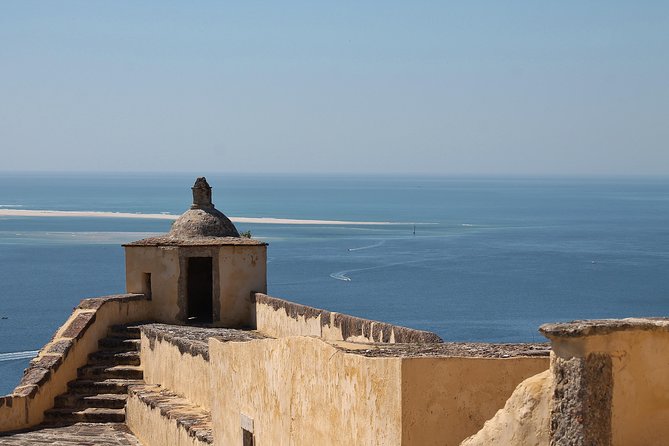
Forte de São Filipe gives the history portion of the tour a strong finish. Construction began in 1590 and ended in 1600, when the fortress helped protect Setúbal and the entrance to the Sado River.
This is one of Portugal’s early star fortifications, built with angled defenses suited to the changing nature of gunpowder warfare. The fort’s position matters as much as its walls. From here, you can look across Setúbal and the surrounding area, linking the town, river, and coast you have already seen from lower viewpoints.
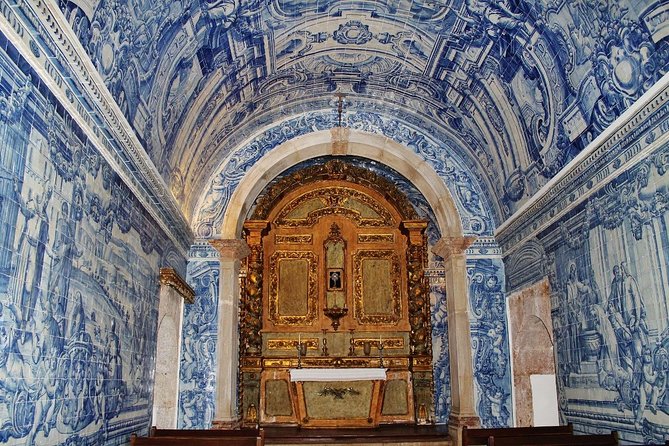
The visit lasts about an hour, and admission is included. Inside, the original complex included the governor’s house and military areas. A small Baroque chapel dedicated to Our Lady, dated 1736, remains part of the site.
I like this stop because it does not ask you to choose between history and scenery. The guide can explain why the fortress was built while you look out over the very approach it was meant to protect. Bring a hat or water in warm weather, since exposed historic sites can feel hot even when the drive is comfortable.
The itinerary uses the name Forte de São Filipe, but one past outing also included a castle and other local stops. That suggests the exact balance may change with conditions, opening times, or your interests. Ask your guide at the start which stops are fixed and which can be adjusted.
Mourisca Tide Mill and the wetlands
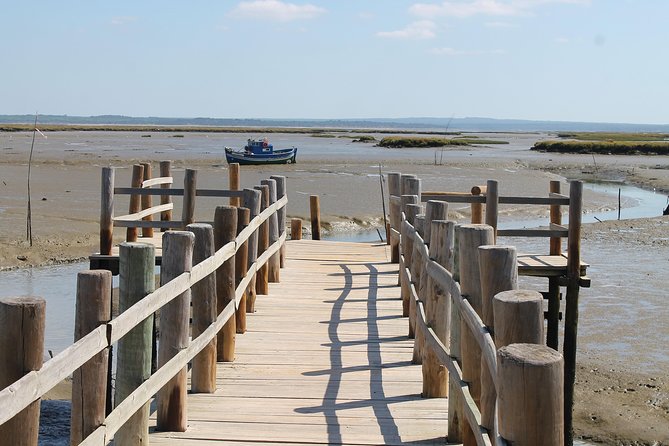
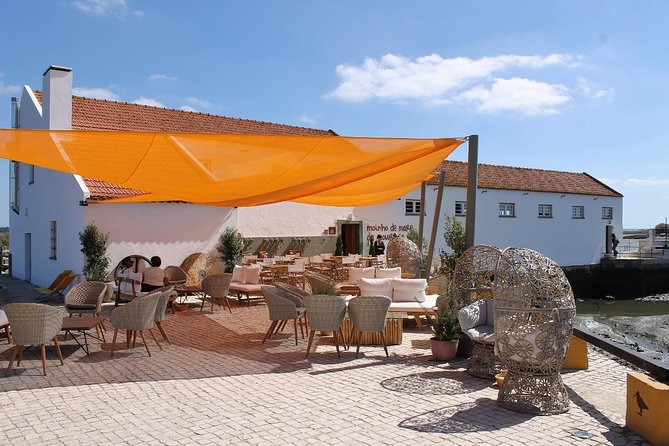
The final listed stop is Moinho de Maré da Mourisca, a restored tide mill built in 1601. This is a different kind of attraction from the convent and fortress. Instead of military or religious history, it shows how people used the movement of the tides for work.
The mill still uses tidal energy, a renewable source that does not produce pollution while operating. You can learn how the machinery connected the changing water level with milling, and then look beyond the building toward one of Portugal’s largest wetlands.
This stop rewards curiosity more than quick sightseeing. It connects local industry with the natural setting around it. The wetlands also add another view of the Sado region, one that is flatter, quieter, and quite different from the mountain roads earlier in the day.
The visit is scheduled for about an hour. If you are most excited by the mountain scenery, this may feel like a slower ending. If you enjoy old machines, environmental subjects, and places that explain how people worked with nature, it may be one of the most memorable stops.
What the private price includes
The listed price is $114.15 per person. That is a serious amount for a six-hour outing, but the value depends heavily on your group size. You are paying for private transportation, a professional guide, pickup and drop-off, entrance fees, and a day built around your own party.
For one or two people, the cost is higher than joining a shared excursion, but you gain privacy and flexibility. For a small group, the per-person price may make more sense, especially with group discounts available. You also avoid the work of renting a car, finding the fort, locating viewpoints, and fitting several separate sites into one day.
Lunch is not included, nor are breakfast tastings or other personal purchases. Keep extra money available for Azeitão products and food in or around Setúbal. The guide may suggest a restaurant, but that is not part of the guaranteed package.
The tour also promises to skip long lines and includes entrance fees. That matters most when a site is busy, though opening conditions can still affect what you see. The private vehicle and guide are the main reasons to pay more, not simply the number of monuments.
Who will get the most from this outing
I would choose this tour if you have already seen much of central Lisbon and want a full day outside the city without arranging transport. It is also a good fit for a family or small group that values a private pace.
You should enjoy it if you like mixing viewpoints, food, military history, religious sites, markets, and old engineering. The itinerary changes subject often, which keeps the day moving but gives you less time for a long, restful beach visit or a single museum.
A moderate physical fitness level is recommended. You will get in and out of the vehicle several times and walk around historic sites, viewpoints, the market, and the tide mill. This is not presented as a demanding hike, but it is more active than simply sitting in a vehicle all day.
Guide style is worth considering. Rod and Paulo received especially warm praise for being friendly, flexible, safe drivers, and good sources of local context. At least one outing found the guide’s nonstop talking tiring, particularly in places where quiet would have been welcome. If you like silence during scenic stops, say so politely at the beginning.
Should you book Historical and Natural Arrábida?
Book it if you want private transport, varied stops, and a guide who can react to weather and your interests. The mix of Arrábida views, Azeitão food, Setúbal seafood, Forte de São Filipe, and the Mourisca tide mill gives you a much wider picture of the region than a simple coastal drive.
Think twice if you want a slow beach day, a long wine tasting, or a very quiet nature excursion. The six-hour schedule covers a lot, lunch costs extra, and the experience depends on how well your guide balances explanation with peaceful time.
For a small group, cruise passenger, or Lisbon visitor who wants to see beyond the capital without renting a car, the price can be fair. Confirm your preferred pace at pickup, bring comfortable shoes, and ask which stops can change. That small conversation may turn a good outing into a much better fit.
FAQ
How long does the Arrábida private tour last?
The tour lasts approximately six hours and begins at 9 a.m.
Where can pickup take place?
Pickup and drop-off are available at a hotel or Airbnb in Lisbon, another agreed location near your accommodation, or the cruise port.
Is this a private tour?
Yes. Only your own group and the guide participate.
What type of transportation is provided?
Transportation is provided in a private, air-conditioned car or van.
Is the tour offered in English?
Yes. The tour is offered in English.
Are entrance fees included?
Yes. Entrance fees for the included attractions are covered.
Is lunch included?
No. Lunch and items not specifically mentioned are not included.
Does the tour visit beaches?
Beaches may be visited during the summer portion of the tour.
Can the tour be changed because of weather?
The private format allows flexibility, and the tour plan has been modified because of poor afternoon weather. Changes depend on conditions and the guide.
Just reviewed in Lisbon
- Private tour Lisbon – full day★ 5.0 · 8 reviews
- Private Tour: Portuguese Food and Wine Tour★ 5.0 · 33 reviews
- Lisbon Football Experience – Private stadium and Museum Tour★ 4.0 · 10 reviews
- Lisbon and Sintra Essence 8H – Private Tour★ 5.0 · 5 reviews
- Private Tour: Lisbon Sunset Walking Tour with Fado Show and Dinner★ 5.0 · 30 reviews
- Private Catamaran Tour: Lisbon coast cruise with barbecue and drinks★ 5.0 · 20 reviews
- Lisbon: Helicopter Tour over Cascais & Cabo da Roca★ 5.0 · 4 reviews
- Private Tour Fátima – Nazaré – Batalha – Óbidos★ 5.0 · 6 reviews
Arrábida Natural Park Tours, compared.

Private Lisbon Arrabida Wine Tour: Food & Wines, Mountain and Sea
Read our review →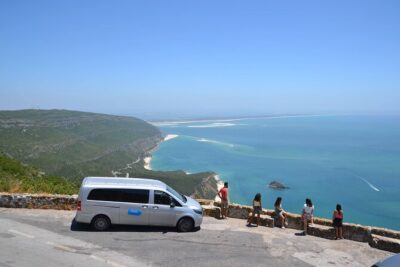
Arrabida and Sesimbra Small-Group Day Trip from Lisbon with Wine Tasting
Read our review →
Private Lisbon-Arrábida Wine Tour: 3 Wineries, Coast & Heritage
Read our review →
Sesimbra/Arrábida Natural Park Coasteering Adventure
Read our review →
Browse the lists this tour appears in