
Reviewed · TAGUS RIVER CRUISES
Lisbon: Tagus Estuary Nature Reserve Birdwatching Boat Tour
The surprising part of this tour is how quickly Lisbon gives way to mudflats, tidal channels, and bird-filled wetlands. The Tagus Estuary Nature Reserve begins only about 10 minutes from the city, yet it feels far removed from trams, tiled streets, and traffic. This is one of Lisbon’s best outdoor breaks.
I like the small group, limited to 10 people, and I like the way guide Carlos Cera uses the tide and his close knowledge of the estuary to find birds without rushing the boat. The main consideration is simple: wildlife is never guaranteed. Fog, wind, tide, and season all matter, and summer can be quieter than winter.
Key points at a glance
- About 3 hours on the water: The route begins at Onda Luso-Americana and reaches the Tagus Estuary Nature Reserve, with time for city views, mudflats, and wildlife.
- Carlos Cera leads the trip: He identifies birds, explains their behavior and migration, and adjusts the outing to suit the group.
- Winter brings the biggest numbers: The estuary regularly holds around 120,000 wintering birds, while the reserve has recorded about 200 species.
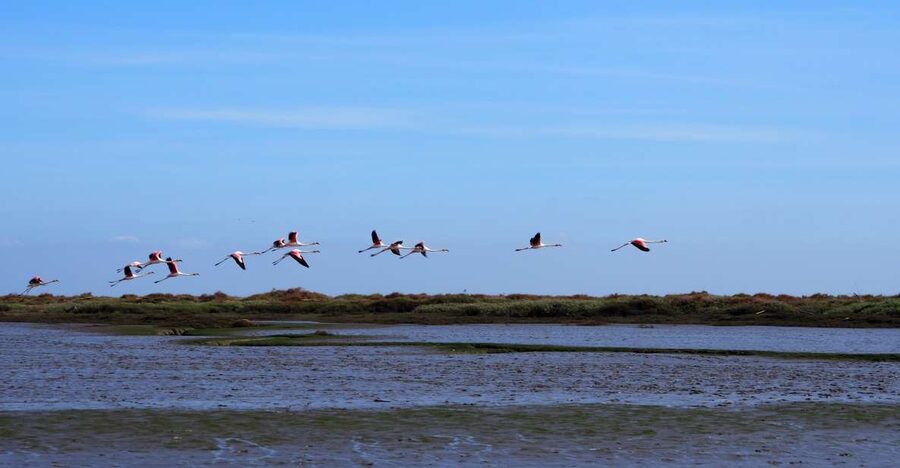
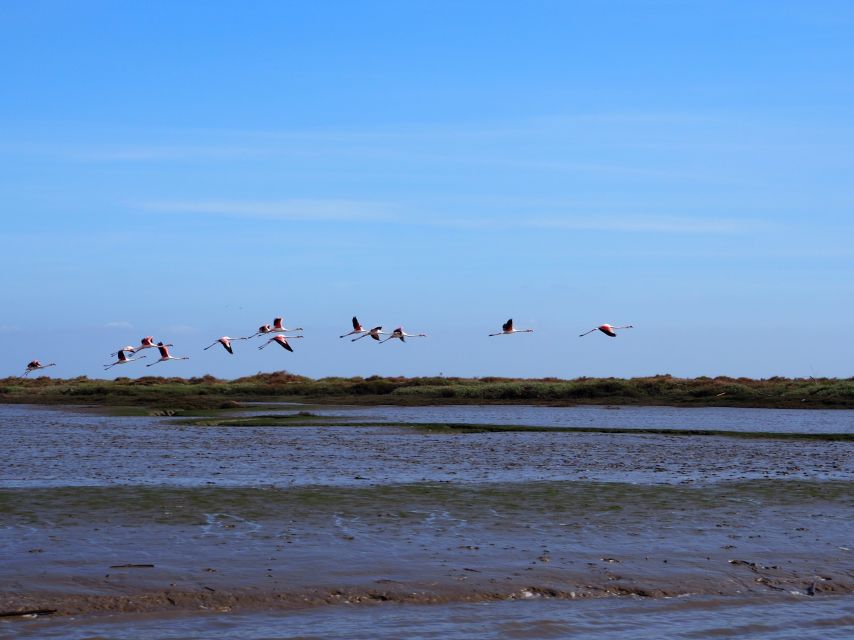
- Flamingos are a major highlight: Around 12,000 flamingos were counted in the estuary in 2024, though sightings depend on conditions.
- Small boat, small group: A maximum of 10 participants makes it easier to ask questions and get a clear view of the birds.
- Bring a jacket and patience: The boat is exposed to weather, and the tour can be canceled for fog or unsafe sea conditions.
Why this estuary matters so close to Lisbon
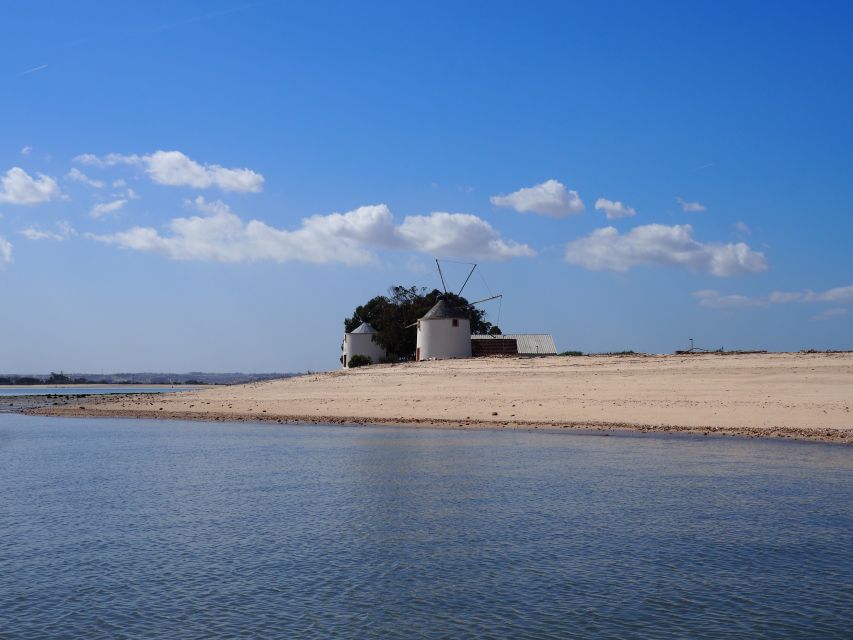
The Tagus is the largest estuary in western Europe, covering about 32 square kilometers. Its protected area extends across roughly 14,000 hectares, with tidal mudflats and channels that support feeding and resting birds.
That setting explains the tour’s appeal. You are not simply taking a sightseeing cruise past Lisbon’s waterfront. You are entering a working natural system where birds gather according to the tide, season, food supply, and weather.
The numbers are impressive. Around 200 bird species have been identified in the reserve, and regular winter counts reach about 120,000 birds. In 2024, approximately 12,000 flamingos were counted in the estuary. You may see only a fraction of that population on a three-hour outing, but the scale of the habitat helps explain why the trip can produce such varied sightings.
I especially like the contrast. You can begin near the modern buildings of Parque das Nações and soon be watching waders feeding across exposed mud. Lisbon remains close, but the city becomes a distant backdrop rather than the main attraction.
More Tagus River Cruises:
- Lisbon: Tagus River Cruise to the Ocean & Dolphin Watching
★ 4.0 · 3,019 reviews - Lisbon: Sailing Tour on the Tagus River
★ 4.8 · 2,632 reviews - Lisbon: Tagus River Sunset Tour with Snacks and Drink
★ 4.2 · 2,543 reviews
Meeting at Onda Luso-Americana
The tour begins beside the Onda Luso-Americana artwork near Parque das Nações. This is a useful meeting point because the area is easy to reach by metro, according to the practical experience of participants who used public transportation.
You then head toward the marina for a 15-minute safety briefing. Life jackets are worn on the boat, and fuel, insurance, and safety equipment are included in the $58 price.
Do not treat the meeting time casually. The estuary is tide-driven, and the boat needs to leave on schedule to make good use of the available feeding areas. Wear comfortable shoes and clothes that can handle sun, breeze, and changing weather.
Parque das Nações from the river
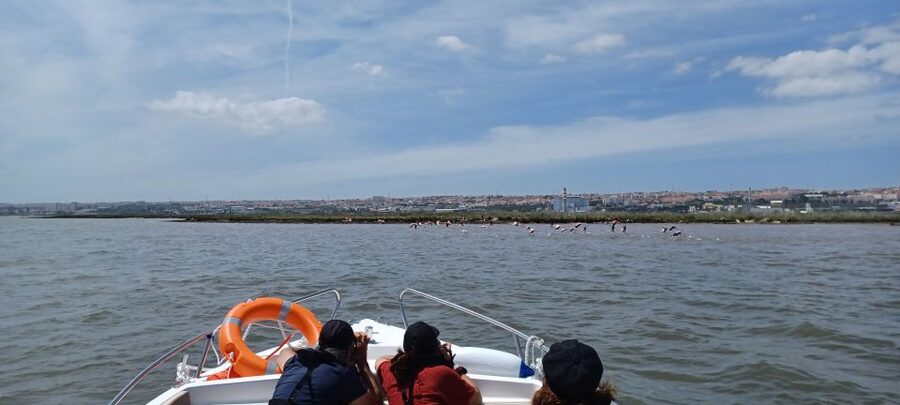
The first part of the cruise gives you a different view of Lisbon. Parque das Nações is the city’s modern waterfront district, with broad public spaces, contemporary buildings, and the Vasco da Gama Bridge nearby.
This section is partly sightseeing and partly orientation. Carlos explains the area as you move away from the marina, and you get photos of Lisbon from a low, open-water viewpoint. If your main goal is birds, do not expect this opening stretch to provide the most exciting sightings. Its value is that it shows how quickly the urban waterfront connects with the estuary.
The boat is described in participant accounts as a small speedboat that feels comfortable in calm water. That small size helps the outing feel personal, but it also means conditions are more noticeable than they would be on a large covered cruise boat. On a windy or rough day, you should expect a more active ride.
Passing Bairro dos Pescadores
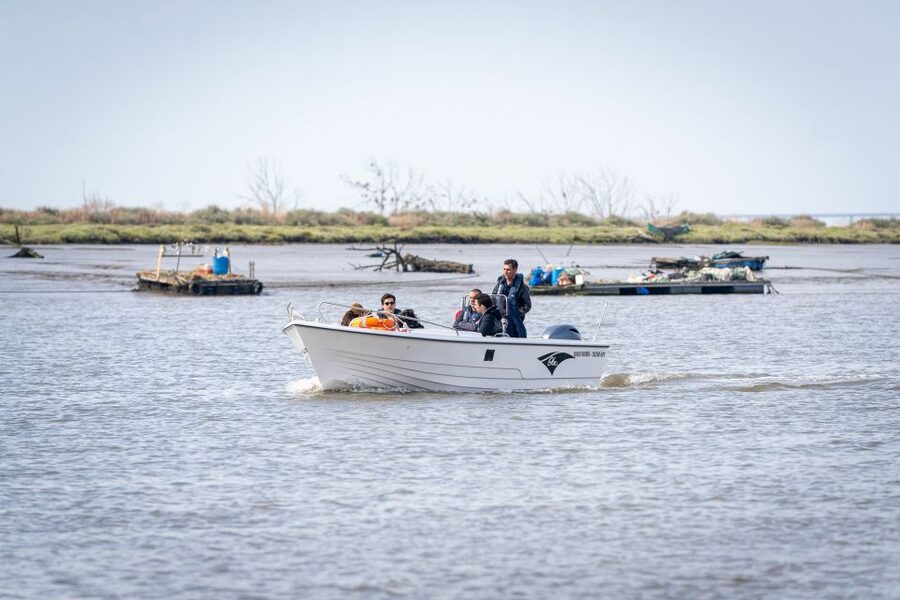
The route continues past Bairro dos Pescadores, a fishing neighborhood that adds local character to the cruise. Here, the view shifts from polished waterfront development toward the human side of the river.
The stop is mainly for sightseeing, photos, and commentary rather than a walk ashore. It gives Carlos room to explain the connection between the river, fishing communities, and the estuary’s natural areas.
This is also a good moment to settle into the rhythm of the tour. You may spend several minutes scanning the water and banks before Carlos points out a bird that is easy to miss. Birdwatching rewards patience. The best sightings are often not dramatic at first glance.
More Lisbon Boat Tours:
- Lisbon: Sunset Boat Party Cruise with DJ and Open Bar
★ 4.5 · 10,378 reviews - Lisbon: Daytime/Sunset/Night City Sailboat Tour with Drink
★ 4.9 · 3,114 reviews - Lisbon: Sunset Boat Tour with Music and Drinks
★ 4.6 · 2,973 reviews - Lisbon: Sunset Catamaran Boat Tour with Music and Drinks
★ 4.7 · 2,834 reviews
Into the Tagus Estuary Nature Reserve
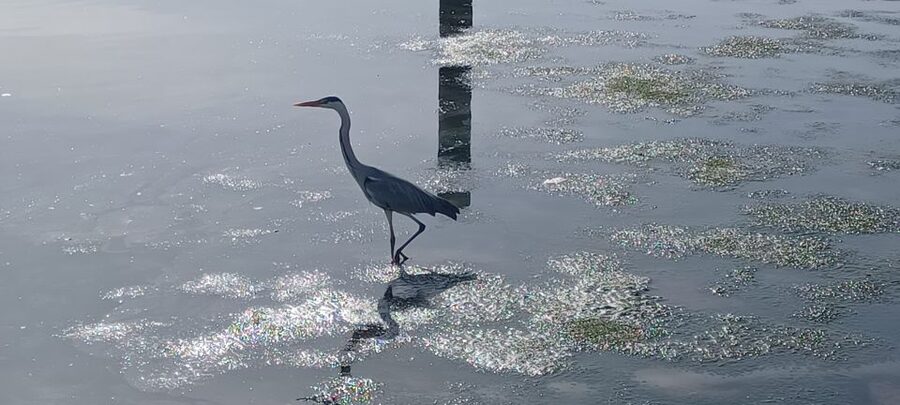
The reserve is the heart of the trip, and about two and a half hours of the outing are devoted to it. That is a good allocation of time. You are not spending most of the tour on a fast transfer to the wildlife area, then getting only a few minutes to look around.
Carlos guides the boat through channels and along mudflats, watching for birds on the water, in flight, and along the exposed banks. He uses binoculars and bird references to help with identification, and binoculars are provided if you do not have your own.
The mudflats matter because they are feeding grounds. When the tide exposes them, waders can gather to search for small food sources. Timing is therefore more important than a simple morning or afternoon label. One participant specifically wished they had checked the tide before booking, while another described how Carlos timed the arrival at exposed mudflats as birds came in to feed.
You should expect a flexible route rather than a fixed parade of guaranteed sightings. Carlos may slow down, change direction, or remain in an area when something interesting appears. He also keeps a respectful distance from wildlife, which is important for both animal welfare and good viewing.
Birds you might see
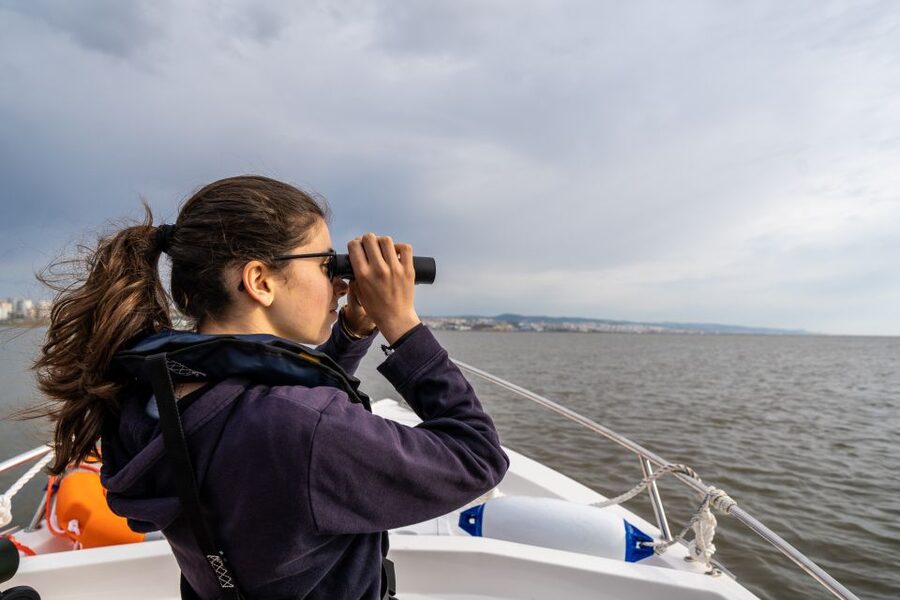
The exact list changes with the season, tide, and weather. Still, the sightings reported across different months show the reserve’s range.
Possible birds include:
- Flamingos
- Avocets
- Spoonbills
- Purple herons
- Glossy ibises
- Black ibises
- Little and cattle egrets
- Little terns
- Ospreys
- Marsh harriers
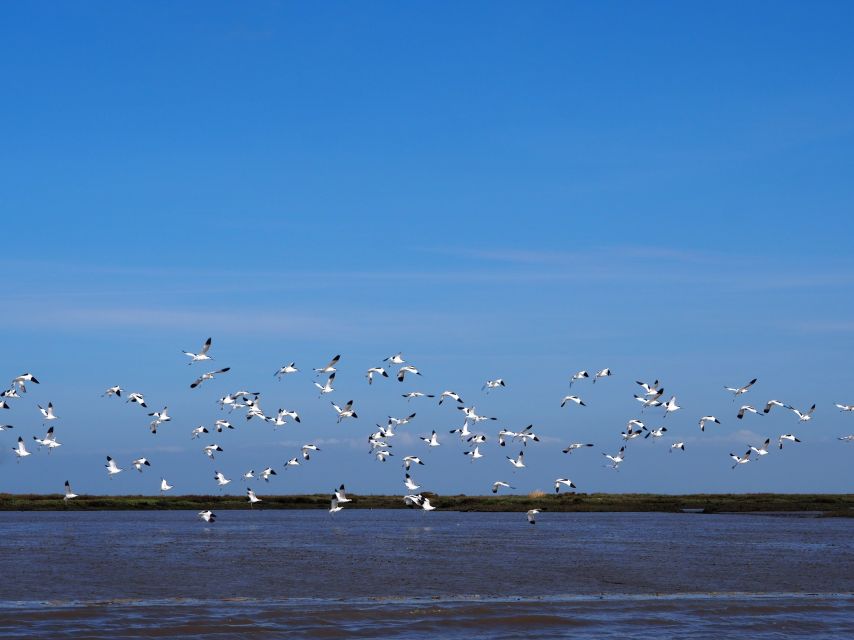
You might see large flocks, or you might spend more time identifying individual birds along the channels. Some outings have produced more than 20 species in three hours, while another recorded more than 30. Those numbers should be treated as examples, not promises.
Flamingos are among the most memorable possibilities, particularly when they rise in a group. Spoonbills and avocets are also rewarding sightings because their shapes are easy to recognize once Carlos explains what to look for. Birds of prey add another dimension, especially when an osprey flies over the water or a marsh harrier works low over the islands.
In July, one group saw black-winged stilts, purple herons, spoonbills, glossy ibises, egrets, little terns, and marsh harriers. That is a useful reminder that the warmer months are not bird-free. The overall number may be lower outside the main winter period, but breeding birds and resident species can still make the trip worthwhile.
Mouchao da Povoa and the outer channels
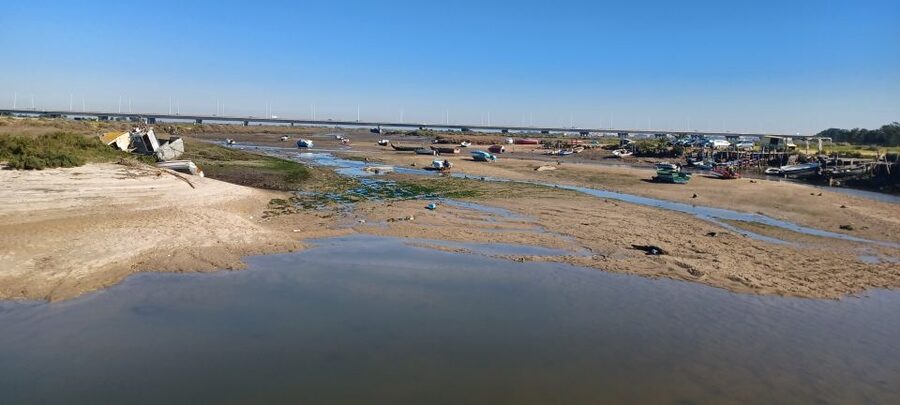
The boat passes Mouchao da Povoa, an area of islands, channels, and open water within the estuary environment. The stop is not presented as a shore excursion. Instead, it is another chance to watch wildlife from the boat and take in the wide views.
This portion can be especially good for seeing birds in flight. Open water gives you a larger field of view, while low islands and mudflats provide places for birds to feed or rest.
You may also see marine life, though the central focus is birds. The experience is best for someone who enjoys the whole setting, not only a checklist. Carlos talks about the river, wildlife, and local environment, so you learn how the pieces fit together rather than simply collecting names.
Returning under the Vasco da Gama Bridge
The return route passes the Vasco da Gama Bridge, one of Lisbon’s most recognizable structures. After hours among mudflats and bird colonies, the bridge provides a clear reminder that the capital is close by.
It is a good final photo stop, especially if you want a picture that combines the scale of the city’s infrastructure with the open estuary. The boat then returns to Onda Luso-Americana.
The contrast is part of the pleasure. You can spend the morning or afternoon in a protected wetland and be back among Lisbon’s urban sights within the same three-hour activity.
Carlos Cera makes the difference
The guide is central to the value of this outing. Carlos Cera is not simply steering the boat while you look around. He identifies species, explains migration patterns and habitat, and shares his strong connection to the river.
He also appears to adjust his style to the group. Beginners can ask basic identification questions without feeling out of place, while experienced birders can focus on species, behavior, and seasonal movement. One outing included people with different levels of experience, and Carlos tailored the commentary to their interests.
That matters because birdwatching from a moving boat can otherwise become frustrating. A good guide spots the bird before you do, tells you where to look, and gives you time to see it. Carlos also takes his time for photographs rather than rushing from one sighting to the next.
The small group helps. With no more than 10 participants, you have a better chance of hearing the explanation, sharing the viewing angle, and asking for help with identification. A large boat would be cheaper to operate, but it would not suit this kind of quiet wildlife watching nearly as well.
Best seasons, tides, and weather
Winter is likely the strongest period if your priority is the largest number of birds. The estuary’s regular winter population reaches about 120,000, and migratory species can make the mudflats especially active.
Autumn can also be excellent. Sightings have included flamingos, spoonbills, ibises, ospreys, and marsh harriers, along with large movements of migrating birds. Spring may still produce strong sightings, though birds are in breeding season and numbers can vary.
Summer is less predictable. The estuary may have fewer visiting migrants, yet resident and breeding species remain. If your schedule only allows July or August, do not assume the trip is pointless. You might still see a good mix of herons, stilts, egrets, ibises, and terns.
Tide is worth checking before you book if the schedule allows. Exposed mudflats can bring feeding birds closer to the boat and create better viewing conditions. Still, Carlos may be able to work with the tide and adjust the route.
Weather is the bigger limitation. Every boat trip depends on sea and weather conditions. Foggy mornings have occasionally caused last-minute cancellations, and unsafe conditions can cancel the tour even after you have planned around it. If the operator expects a cancellation, you should be contacted within 24 hours to reschedule. If rescheduling does not work, you receive a full refund.
What to bring for three hours outside
Bring a passport or ID card, comfortable shoes, sunglasses, a camera, biodegradable sunscreen, and a jacket. Even on a warm Lisbon day, the river can feel cool when the boat is moving.
Wear layers and clothing suited to the forecast. A jacket is not excessive, especially in cooler months or during an early start. Bring your own binoculars if you have a pair you like, but binoculars are supplied.
Food and drinks are not included. You may bring a picnic if you wish, though the three-hour length means you can also eat before or after the tour. There is no hotel pickup or drop-off, so plan your route to Parque das Nações separately.
The listed languages include Portuguese, English, Spanish, and French in the tour information, while the live-guide details specifically list Portuguese, English, and Spanish. If French is important to you, confirm it before booking.
Is $58 a fair price?
At $58 per person, this is not the cheapest way to spend three hours in Lisbon. It is also more than a standard city sightseeing cruise, which usually carries many more people and focuses on architecture and waterfront views.
The value comes from the small group, the specialist guide, binoculars, fuel, insurance, and the amount of time spent inside the reserve. You are paying for Carlos’s ability to read the estuary and locate birds, not simply for a seat on a boat.
For a serious birdwatcher, the price is reasonable because the trip is built around wildlife rather than treating it as a side attraction. For a family or couple who only wants a pleasant ride, the value depends on your interest in nature. You may love the peace and open views, but you should not book it expecting a guaranteed flamingo show.
Free cancellation up to 24 hours before departure and the reserve-now, pay-later option also reduce the risk when your schedule is still shifting. The weather policy matters more than the cancellation policy, since conditions can change beyond your control.
Who should book this Tagus boat tour?
I would choose this trip if you enjoy birds, photography, quiet outdoor time, or seeing a familiar city from a new angle. It also suits families, including children who can stay interested while looking for visible birds and learning their names.
You do not need to be an expert. Beginners can rely on Carlos to explain what they are seeing, and experienced birders have enough habitat and seasonal variety to keep the outing worthwhile.
I would think twice if you dislike open boats, are seeking a tightly scripted sightseeing tour, or need guaranteed sightings. Wildlife watching calls for patience, and the boat is exposed to weather. If the day is foggy or rough, the tour may be postponed or canceled.
Should you book it?
Yes, if the Tagus Estuary interests you and you can accept that nature sets the schedule. The combination of a small group, a local guide who clearly cares about the river, and a protected wetland so close to Lisbon makes this a strong change of pace from city sightseeing.
For the best chance at large flocks and migrant species, aim for autumn or winter and pay attention to the tide. In warmer months, go for the peaceful water, resident birds, and the chance to see Lisbon from a quieter side. At $58, it is a good buy for birders and a worthwhile splurge for nature lovers who want more than another city tour.
FAQ
How long is the Tagus Estuary birdwatching boat tour?
The tour lasts three hours. About 15 minutes are used for the safety briefing, while the reserve portion takes roughly two and a half hours, with additional time for the route from Parque das Nações.
Where does the tour meet?
The meeting point is beside the Onda Luso-Americana artwork. The boat departs from the Marina Parque das Nações area.
What birds can I see?
Possible sightings include flamingos, avocets, spoonbills, herons, ibises, egrets, little terns, ospreys, and marsh harriers. The exact species and number depend on the season, tide, and weather.
Are binoculars provided?
Yes. Binoculars are included, and you may also bring your own pair.
How many people are in the group?
The tour is limited to 10 participants, making it a small-group boat outing.
Is food included?
No. Food and drinks are not included. You may bring a picnic if you prefer.
What happens if the weather is unsafe?
Boat trips depend on weather and sea conditions. The operator may cancel because of fog or other unforeseen conditions, contact you about rescheduling, and provide a full refund if you cannot reschedule.
What languages are available?
The tour information lists Portuguese, English, Spanish, and French among the available languages. The live-guide details specifically list Portuguese, English, and Spanish, so confirm French availability if needed.
More National Parks in Lisbon
- Sesimbra & Arrábida National Park Tour with 5 Wines Tasting
★ 4.9 · 153 reviews
Just reviewed in Lisbon
- Lisbon: Morning of Equestrian Art with Lusitano Horses★ 4.4 · 87 reviews
- Lisbon: Entry Tickets to Mosteiro de São Vicente de Foram★ 4.6 · 50 reviews
- Lisbon: National Palace of Ajuda E-Ticket & City Audio Guide★ 4.1 · 87 reviews
- Lisbon: Early Morning TukTuk Tour – hotel/cruise ship pickup★ 4.9 · 45 reviews
- Sintra: Quinta da Regaleira e-Ticket & Sintra City Audios★ 4.1 · 12 reviews
- Lisbon E-Bike Tour TAGUS★ 5.0 · 3 reviews
- Lisbon: E-bike Trip from the Sintra Mountains to Cascais Sea★ 5.0 · 67 reviews
- Lisbon: Discover Belem by electric Tuk Tuk★ 4.9 · 86 reviews
Tagus River Cruises, compared.
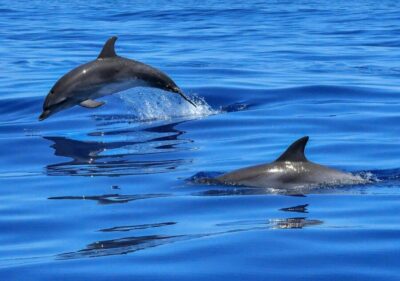
Tagus River Cruise to the Ocean & Dolphin Watching
Read our review →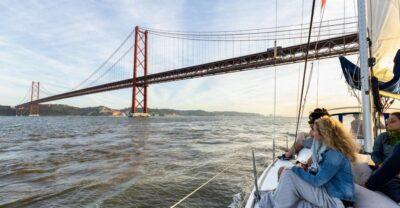
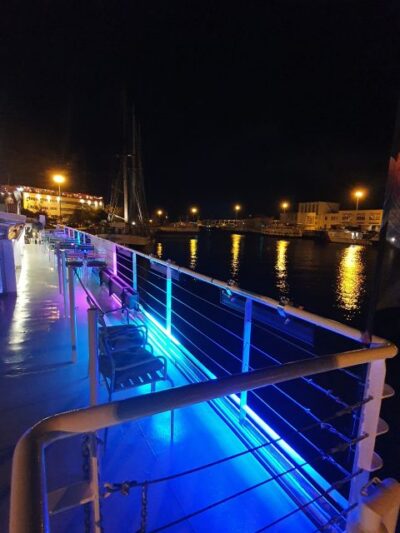
Tagus River Sunset Tour with Snacks and Drink
Read our review →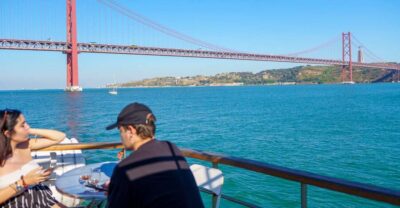
Tagus River Boat Tour with One Drink Included
Read our review →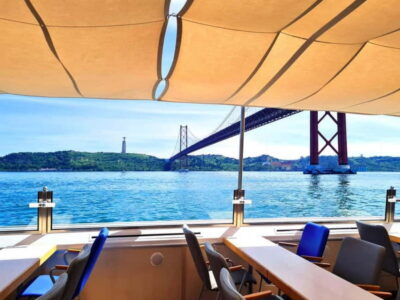
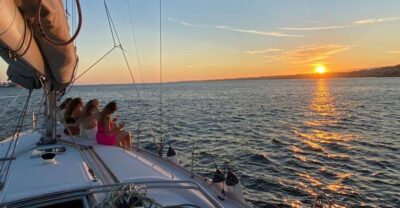
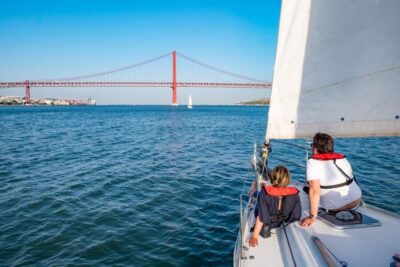
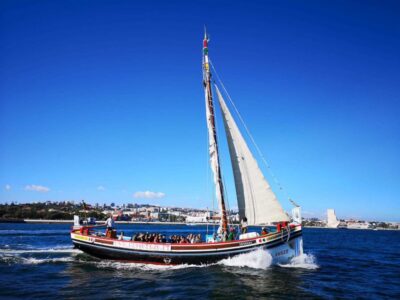
Tagus River Express Cruise in a Traditional Vessel
Read our review →Browse the lists this tour appears in