
Reviewed · LISBON ESCAPE GAMES AND TREASURE HUNTS
Queer Lisbon – A Treasure Hunt in LGBT History
Lisbon’s queer story is far bigger than a few bars in Bairro Alto. On this 3.5-hour walking tour, Alex links old scandals, dictatorship-era repression, Pride, drag, HIV care, writers, nightlife, and modern legal rights into one lively city walk. You get history with a human face, plus practical ideas for your next night out.
I like the small group, capped at 15, and the relaxed pace that leaves room for questions and rest. I also like the useful PDF guide, Alex’s LONG LIST, normally worth 15 euros, which points you toward LGBTQ-friendly bars, clubs, services, and free things to do. The main drawback is simple: this is a long walking tour, and the many short stops can feel tiring in poor weather.
Key points to know before booking
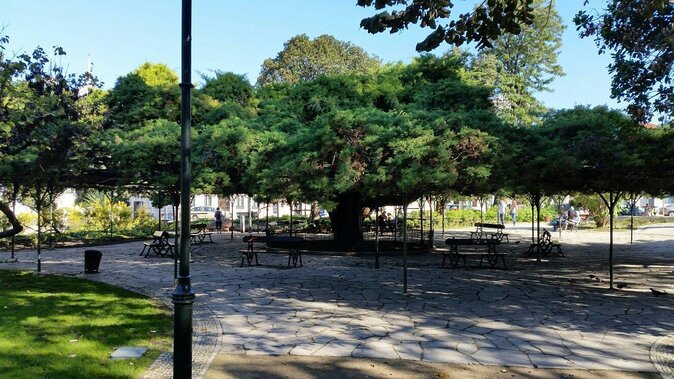
- Start with Lisbon’s queer memorials and Pride story in Jardim do Príncipe Real, then connect those public landmarks to daily life.
- Hear unusually specific stories about lesbian bars, drag performers, cruising, Josephine Baker, the Inquisition, and Portugal’s legal battles.
- Walk through several nightlife areas, with stops at places including Construction, Trumps, Finalmente, Purex, Bar TR3S, and Shelter Bar.
- Finish at Late Birds Hotel, where the group can use the lounge, bar, garden, and pool area, weather permitting.
- Get Alex’s LGBTQ Lisbon PDF guide, a practical extra that can help shape the rest of your visit.
- Expect a social, active morning, not a bus tour. The group meets at 10:00 a.m. and travels on foot.
Why this Lisbon walk feels different
Most city tours point out churches, viewpoints, and famous squares. This one asks a more interesting question: what has Lisbon looked like to people whose lives and loves were pushed out of public view?
Alex leads you through central Lisbon with a focus on queer people and the forces that shaped their lives. The stories move between humor and grief. A joke about an old nightclub may sit beside a memorial to people killed by homophobia. A tale of drag and nightlife may lead into censorship, police surveillance, or the long legal shift from dictatorship values to constitutional protection.
That mix gives the walk its purpose. You are not simply collecting names of bars. You are seeing how public space, law, health care, art, and nightlife affected LGBTQ people over time.
The tour is offered in English and has a maximum of 15 people. That size matters. You can ask questions without trying to shout over a large crowd, and the guide can adjust the talk to the interests of the group. The pace is informal, but the route covers a lot of ground.
More Lisbon Escape Games and Treasure Hunts:
- Lisbon: Old Town Immersive Escape Game with Live Actors
★ 5.0 · 31 reviews - Private Outdoor Escape Game in Lisbon
★ 5.0 · 28 reviews - Private Outdoor Escape Game in Lisbon
★ 5.0 · 21 reviews
Príncipe Real begins with memory and celebration
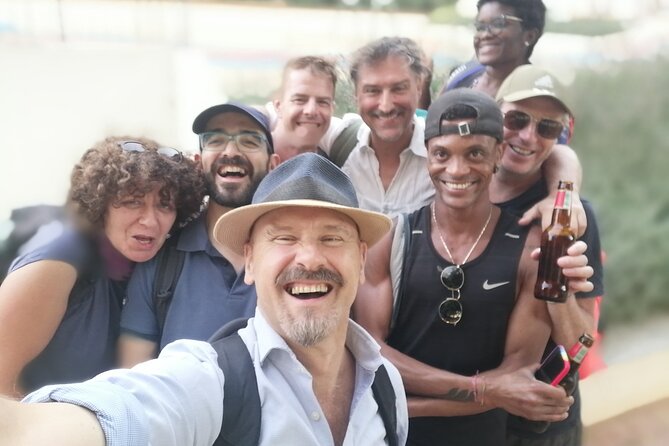
The meeting point is the playground at Praça do Príncipe Real. The tour begins with introductions in Jardim do Príncipe Real, then moves to a monument dedicated to victims of homophobia.
This is a useful opening because it sets the right tone. The walk is not only about parties and colorful characters. It recognizes violence and loss, then connects that past to Lisbon’s present-day queer scene.
The next stop is the square where Lisbon Pride begins. You learn what makes Lisbon Pride distinctive and why the city’s planned EuroPride connection matters. This is a good early lesson in how public celebration can also be political. A parade is not just a party when people have had to fight for the right to be visible.
The tour then visits GAT Checkpoint LX, with a focus on Portugal’s handling of the HIV and AIDS pandemic. You also receive useful information about health services for queer men and women. This stop adds a practical side that many cultural walks miss.
Nightlife stories from Construction to Trumps
The route then turns toward the places that helped shape queer nightlife. Construction Lisbon Club is one of the long-running dance venues you should know about if you plan to go out in Lisbon. Nearby lesbian venues add another layer, showing that queer nightlife has never been one single scene.
At Lisbon’s Botanical Garden, the subject changes to cruising in the 1950s. The stories involve public parks, police, accusations of offending public morals, and the creative ways men tried to avoid arrest. The subject is frank, but the point is larger than scandal. Public spaces could become places of connection when private or openly queer spaces were limited.
Trumps follows, with its two floors and different moods. The club has been part of Lisbon’s queer nightlife since 1980. You will not spend long inside each location, but the stop helps you place the city’s nightlife on a map. It also gives you a chance to decide which venues might suit you later.
The account of O Gato Verde, Lisbon’s first lesbian bar, brings a different focus. Its story helps correct the common habit of treating gay male nightlife as the whole LGBTQ story. Lesbian spaces, women-run venues, and women who challenged convention receive attention throughout the walk.
Drag, bears, and places for a night out
At Praça das Flores, Alex tells the story of Lisbon’s first drag bar. The 1974 revolution opened the door to new enthusiasm for drag, though that freedom later faced limits. This stop follows the rise and fall of Lisbon’s first drag queen, giving the entertainment a political edge.
Bar 106 is a brief stop where you can leave a message for friends. Shelter Bar and Bar TR3S introduce the bear scene, with the second stop touching on Bear Pride, beach clubs, parties, a sauna, and sports sponsorship.
Finally Club is another essential nightlife stop. It is presented as the oldest and best place for drag in town, with different shows at different times. The practical lesson is to check what is happening before you go. A venue can feel very different depending on the night and the performance.
Purex adds a women-run dance floor and a playful reference to vagina jewelry. The stop broadens the picture again. Lisbon’s queer nightlife is not limited to one type of club, audience, or evening.
You should not expect entry into every venue or a full nightlife crawl. The tour uses these places as story points. That is useful during the day, when you can learn the background and then return later if something catches your eye.
More Historical Tours in Lisbon:
- Lisbon: History, Stories and Lifestyle Walking Tour
★ 4.8 · 10,902 reviews - Lisbon: Live Fado Show with Port Wine in Historic Center
★ 4.7 · 4,166 reviews - Lisbon: Fado Show with Wine in a Historic Venue
★ 4.8 · 1,294 reviews - Explore Lisbon by Tuk Tuk: History and Viewpoints
★ 5.0 · 840 reviews
From dictatorship to legal protection
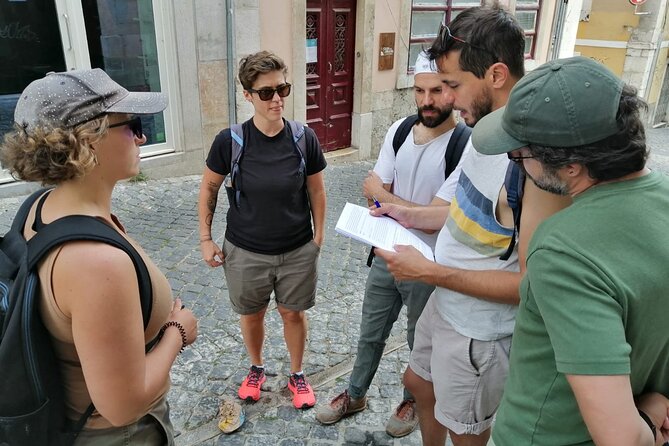
The Constitutional Court stop explains Portugal’s long movement from dictatorship-era values toward legal protection for LGBTQ people. This is one of the most important parts of the route because it gives structure to the earlier stories.
At Rua Luz Soriano, you hear about the first homosexual manifesto, early efforts that were suppressed, and the eventual success of the movement. The story connects activism to the rights and public visibility you see in Lisbon today.
This political material is balanced by stranger, more personal episodes. Rua do Trombeta brings the story of the Two Fernandes, a 19th-century scandal involving love nests, luxury apartments, and later references to saunas. At Maria Caxuxa, you hear about a woman who challenged convention in the 1940s and brushed aside intrusive journalists.
At Travessa da Espera, the tale involves the Marquis of Valada, a common soldier, political blackmail, disgrace, and survival. These stories can sound theatrical, but that is part of their value. They show that queer lives existed in Lisbon long before modern labels, rights campaigns, or nightlife districts.
Josephine Baker, queer writing, and the Inquisition
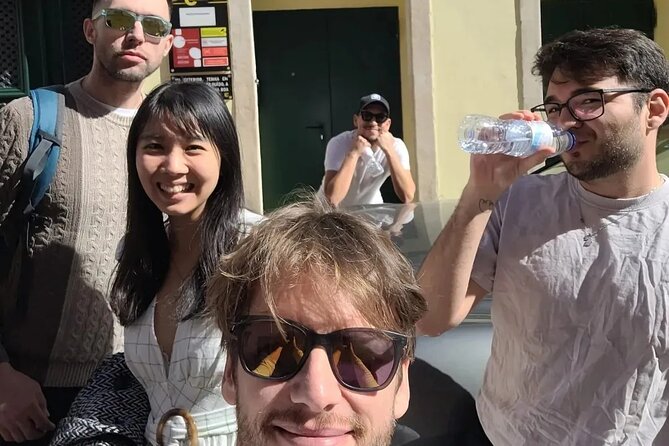
Teatro da Trindade brings in Josephine Baker, the bisexual jazz legend who performed in wartime Lisbon while avoiding secret police and spy activity. This was one of the most memorable subjects highlighted by the tour experience, and it shows how international figures could use performance, travel, and public attention as cover.
At Rua da Misericórdia, the focus turns to women in love with women, queer fiction, censorship, and compromised censors. Literature becomes evidence here, especially when official records are silent or hostile.
The longest stop is at Igreja de São Roque, where the Portuguese Inquisition opens a window onto queer lives in the 16th, 17th, and 18th centuries. The material includes lesbian nuns, sex in church, a strange story involving a demonic penis, and a transgender love story.
This is not a quick church sightseeing stop. You spend about 15 minutes here, longer than at most other points. The church setting also helps show how religion, law, and private life were tangled together. If you prefer a light, purely social tour, this section may feel intense. If you want older and less familiar stories, it is one of the strongest parts.
At Hospital St. Louis, the focus shifts to Fernando Pessoa. The stop considers his writing, his uncertain future, and the way his work is now read through a queer lens. It is a reminder that famous artists can be reclaimed and understood in new ways as ideas about identity change.
A social ending at Late Birds Hotel
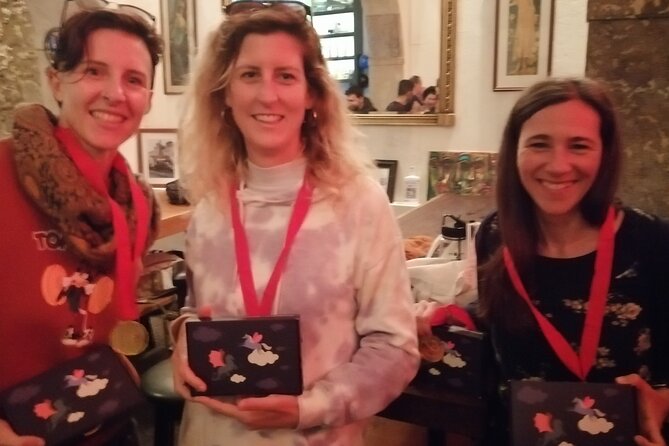
The final destination is Late Birds Hotel, described as Lisbon’s largest gay hotel. The walk ends in its lounge, bar, garden, and pool area. If the weather is warm, you can bring a swimming costume, though the main point is the chance to relax after the walk.
A pub quiz and prizes give the ending a social shape. You can have a drink, meet people from the group, and compare notes before going your separate ways. Legal drinking age in Portugal is 18, and the tour is open to people aged 16 and older.
Ending at a hotel rather than a random street corner is a smart choice. It gives the guide time to share final tips and gives you a comfortable place to ask about bars, clubs, and other parts of Lisbon. It also makes the tour feel like an introduction to a local social network rather than a lecture that ends at the last monument.
What the $60.34 price includes

The price is $60.34 per person. That is not bargain-basement pricing for a walking tour, but the value improves if you use the extras.
You receive the guided walk, the small group, the pub quiz, and the PDF guide. Alex’s LONG LIST normally costs 15 euros on its own, so it has real use if you plan to explore LGBTQ Lisbon after the tour. The route also replaces several hours of independent research and brings together places that would be hard to connect without local context.
There is no private transportation. That is not a problem for this experience because the route is designed as a walk, but you need comfortable shoes and enough stamina for several hours on foot. The tour takes about three and a half hours, and the number of stops makes it feel full rather than leisurely in the traditional sightseeing sense.
The tour is usually booked about 23 days ahead. If your dates are fixed, reserve early, especially since the group is limited to 15 people. Free cancellation is available up to 24 hours before the 10:00 a.m. start time. Changes or cancellations inside that window are not accepted for a refund.
Who will get the most from this tour
I would choose this tour if you want queer history treated as a central part of Lisbon, not as a quick mention near the end of a general city walk. It suits LGBTQ visitors, couples, solo visitors, and allies who want more context before exploring the city’s nightlife.
It also works well for someone who already knows the main sights. The route takes you through familiar central areas but asks you to see them through a different lens. The stories about Josephine Baker, Fernando Pessoa, old bars, the Inquisition, and Portugal’s legal changes offer material you are unlikely to get from a standard sightseeing circuit.
You should think twice if you dislike walking, want lots of time inside attractions, or prefer a tour with only cheerful stories. The route includes serious material, and some stops are brief. A moderate level of physical fitness is recommended.
Service animals are allowed, and the meeting point is near public transportation. The tour is in English only. Bring water, wear shoes suited to Lisbon’s streets, and check the weather before leaving. One past outing went ahead in poor weather with umbrellas provided by Alex, but you should not assume every weather problem will be handled the same way.
Should you book Queer Lisbon?
Book it if you want a personal, story-led introduction to Lisbon’s queer past and present. Alex’s warm delivery, clear passion, and willingness to answer questions are a major part of the experience. The strongest value comes from the combination of serious history, practical nightlife advice, the LGBTQ Lisbon PDF, and a relaxed finish at Late Birds Hotel.
Skip it if you want a short, low-effort orientation or a tour focused only on landmarks. This is an active walk with a lot of stops and a wide range of subjects. For the right reader, though, it offers something rare: a way to understand Lisbon through the people and communities who have fought to live openly here.
FAQ
Where does the Queer Lisbon tour start?
It starts at the Príncipe Real Playground, Praça do Príncipe Real, 1250-184 Lisboa, Portugal.
What time does the tour begin?
The tour starts at 10:00 a.m.
Where does the tour end?
It ends at Late Birds Hotel, at Tv. André Valente 25, 1200-236 Lisboa, Portugal.
How long does the experience last?
The tour lasts approximately three hours and 30 minutes.
Is transportation included?
No. Private transportation is not included. The experience is designed as a walking tour.
What language is the tour offered in?
The tour is offered in English.
How large is the group?
The tour has a maximum of 15 participants.
What age can book the experience?
People aged 16 and older can book the experience. The legal drinking age is 18.
What do I receive after the tour?
You receive a PDF copy of Alex’s LONG LIST, an LGBTQ Lisbon guide that is normally valued at 15 euros.
Can I cancel for a full refund?
Yes. You can cancel at least 24 hours before the start time for a full refund. Cancellations or changes made less than 24 hours before the start time are not accepted for a refund.
Just reviewed in Lisbon
- Lisbon: Morning of Equestrian Art with Lusitano Horses★ 4.4 · 87 reviews
- Lisbon: Entry Tickets to Mosteiro de São Vicente de Foram★ 4.6 · 50 reviews
- Lisbon: National Palace of Ajuda E-Ticket & City Audio Guide★ 4.1 · 87 reviews
- Lisbon: Early Morning TukTuk Tour – hotel/cruise ship pickup★ 4.9 · 45 reviews
- Sintra: Quinta da Regaleira e-Ticket & Sintra City Audios★ 4.1 · 12 reviews
- Lisbon E-Bike Tour TAGUS★ 5.0 · 3 reviews
- Lisbon: E-bike Trip from the Sintra Mountains to Cascais Sea★ 5.0 · 67 reviews
- Lisbon: Discover Belem by electric Tuk Tuk★ 4.9 · 86 reviews
Lisbon Escape Games and Treasure Hunts, compared.
Browse the lists this tour appears in