
Reviewed · LISBON
Лиссабон: сверху вниз под правдивые и вымышленные истории
Lisbon makes more sense when you see it from above, then walk downhill through the layers of the city. This three-hour tour links hilltop viewpoints, old quarters, churches, lifts, trams, and the grand riverfront, with stories about kings, knights, local people, and the city’s daily life.
I like the small group of up to seven, which should make it easier to ask questions, and I like the practical focus on how Lisbon’s funiculars, elevators, and trams actually work. The guide, Katia Literra, is a Russian-speaking philologist who lives in Lisbon and brings both local familiarity and a love of the city.
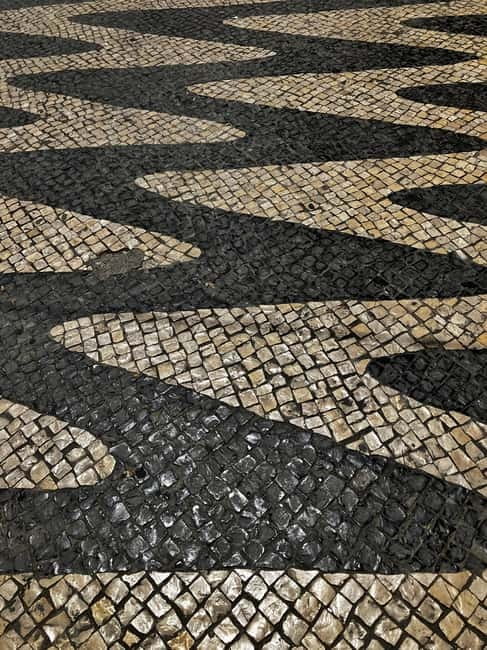
The main drawback is the surface underfoot. You’ll walk on cobblestones and sometimes use stairs, even though the route generally goes downhill, so this is not suitable for people with limited mobility. Bring good shoes, water, and sun protection.
Key points to know before booking
- See Lisbon from a hilltop first, then follow its streets downhill toward the Tagus.
- Learn the city’s transport system, including its unusual lifts, funiculars, and trams.
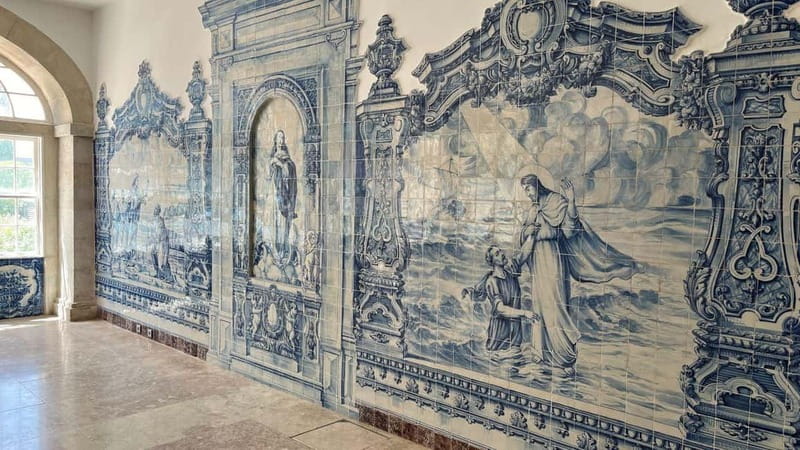
- Visit Igreja de São Roque, one of the most richly decorated church interiors on the route.
- Walk through Principe Real, Bairro Alto, Chiado, Baixa, and Rua da Prata, each with a different mood and role in Lisbon.
- Ask for neighborhood advice, including where to find quiet evenings, late-night activity, dancing, or a younger party scene.
- Finish at Praça do Comércio, near restaurants, cafés, shops, attractions, and the blue metro line.
Why this walk is a useful first look at Lisbon
This is not simply a parade of monuments. It is a city-orientation walk, designed to show you how Lisbon fits together.
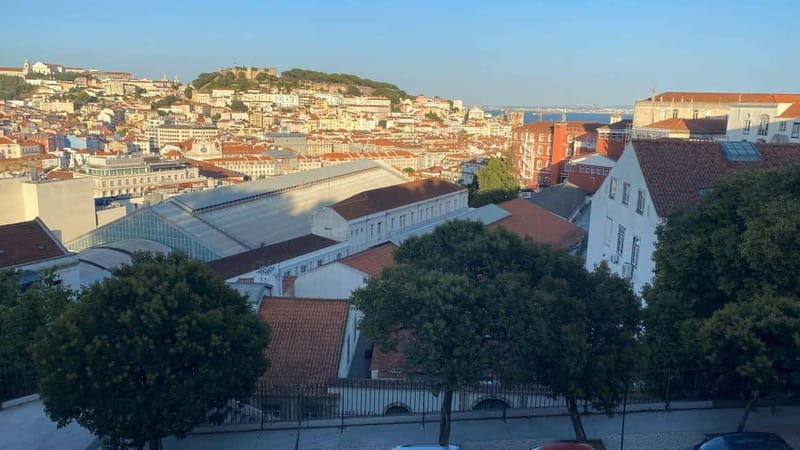
You begin high on the western side of the central city and gradually descend through several districts. Along the way, you see how the hills shape the streets, why public transport matters so much, and how Lisbon’s old neighborhoods connect to the flat Baixa district beside the river.
I find that approach especially useful in Lisbon. The city can feel confusing at first because it rises and falls so sharply. A street that looks close on a map may require a long climb, while a short ride on a funicular can save your legs. By the end, you should have a clearer sense of where you want to return on your own.
The tour is conducted in Russian, and Katia Literra is the named guide. Her background as a philologist living in Lisbon suits a walk built around language, stories, culture, and city life. The tone is intended to include both true tales and legends, so you should expect a mix of documented events, local anecdotes, gossip, and traditional stories.
Still choosing? These other Lisbon trips come up in the same search.
- Lisbon City Center Tour – The Unmissable Lisbon
★ 5.0 · 22,234 reviews - Lisbon: Sintra, Pena, Regaleira, Cabo da Roca & Cascais
★ 4.7 · 19,656 reviews - Sintra: Pena Palace and Park Entrance Ticket
★ 4.2 · 17,410 reviews
Starting at Largo do Rato and Principe Real
Meet at Chafariz do Largo do Rato, beside the exit of the yellow line metro station Rato toward Rua da Escola Politécnica. Look for the guide holding a GetYourGuide sign.
The opening section takes you toward Jardim do Principe Real, a handsome garden in one of central Lisbon’s more attractive districts. The garden gives the tour an easy start before the route turns toward the first major viewpoint.
You’ll spend about 15 minutes here with the guide. This is a good place to begin asking questions about the city because the tour is still at a relaxed pace, before the downhill route becomes more packed with sights.
The area also helps set up one of the tour’s main themes: Lisbon is not one single center. It is a collection of districts, each with its own rhythm. Principe Real can feel calmer and more residential, while nearby Bairro Alto changes character after dark.
The city opens up at São Pedro de Alcântara

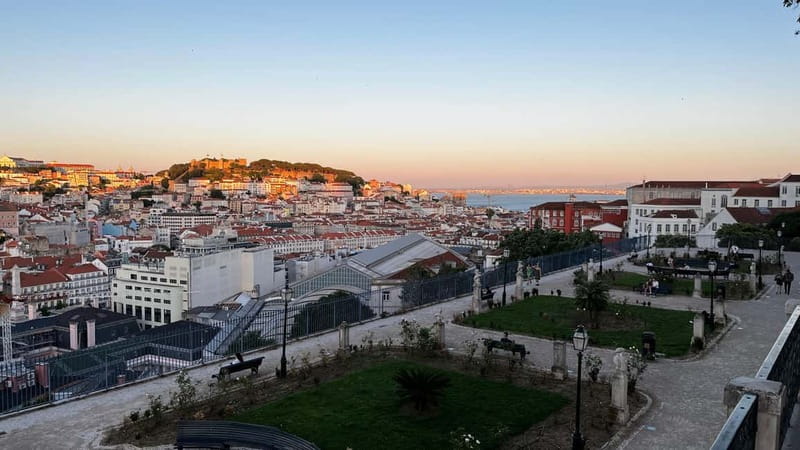
From Principe Real, the route continues on foot for about 10 minutes to Miradouro de São Pedro de Alcântara. This is one of the strongest stops on the walk.
At the viewpoint, you can look across Lisbon’s old central districts and take photographs from above. The view helps you understand the city’s shape better than a street map can. You can see the old urban center spread toward the river, with hills and rooftops giving the city its distinctive form.
The tour also uses a tile-built map at a viewpoint to explain how Lisbon is arranged. That detail is particularly useful because it turns a scenic stop into a practical lesson. Instead of only taking pictures, you learn how the main neighborhoods relate to one another.
Allow about 10 minutes here for the guided explanation and photographs. Views depend on weather and light, so bring a hat and water in warm months. Rain gear is sensible at other times.
Lisbon’s transport at the Elevador da Glória

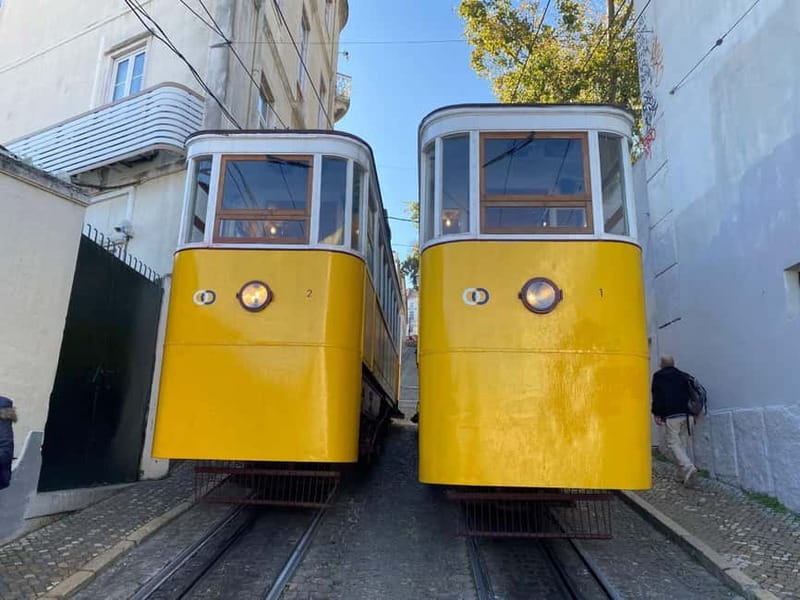
The next stop is Elevador da Glória, one of Lisbon’s famous funiculars. You’ll have a short photo and explanation stop of about seven minutes.
This is more than a transport curiosity. Lisbon’s hills make these systems part of ordinary city life. The funiculars, elevators, and trams are not just decorative pieces for photographs. They help connect streets that would otherwise require steep climbs.
Katia explains how to use the city’s transport network during your independent time. That can save you from treating every hill as a walking challenge. It also gives you a better sense of how locals move around the central districts.
The tour does not include transport tickets, so you should not assume a ride is part of the price. The stop is mainly for viewing, explanation, and orientation.
Something different to do with a day in Lisbon:
- Lisbon: Jerónimos Monastery Entrance Ticket
★ 4.1 · 14,164 reviews - Lisbon: History, Stories and Lifestyle Walking Tour
★ 4.8 · 10,902 reviews - Lisbon: Sunset Boat Party Cruise with DJ and Open Bar
★ 4.5 · 10,378 reviews - Lisbon: Pena Palace, Sintra, Cabo da Roca, & Cascais Daytrip
★ 4.7 · 9,981 reviews
Bairro Alto, where the city changes after dark
The walk continues into Bairro Alto for about 15 minutes. This district is known for its narrow streets and changing evening mood.
During the day, you’ll see the neighborhood as part of Lisbon’s historic center. At night, it becomes one of the places associated with bars, music, and social life. The tour’s value here is less about checking off a single monument and more about learning what the district is like and when it makes sense to visit.
You can ask which areas suit a quiet evening, which streets are better for a walk, and where to look for dancing or a younger party atmosphere. That kind of advice is more useful than a generic list of attractions because it helps you choose a neighborhood that fits your mood.
The streets are uneven, and the walk includes cobblestones. Wear shoes with a firm sole rather than smooth sandals.
Igreja de São Roque and the beauty inside
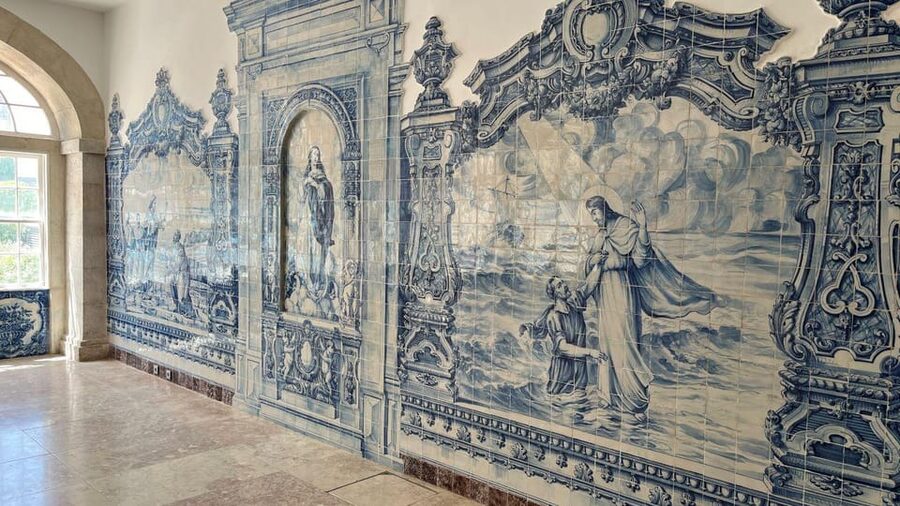
After another short walk, you visit Igreja de São Roque. The stop lasts about 15 minutes and includes a guided visit, with some time for independent looking.
The exterior is easy to overlook compared with the ornate interior. Inside, the decoration becomes the focus. The church is one of the places where Lisbon’s artistic and religious wealth is easiest to see in a concentrated space.
This stop adds balance to the outdoor viewpoints and neighborhood walks. You get a quiet interior, a chance to look closely at decoration, and a reminder that Lisbon’s story is also told through its churches.
Because this is a short walking tour rather than a full museum visit, expect an introduction rather than an exhaustive study of every detail. If church interiors matter to you, listen closely and use the independent portion of the stop to look at the details that catch your eye.
Largo do Carmo, a welcome pause in the route

The next major stop is Largo do Carmo, reached after about five minutes on foot. You’ll spend around 15 minutes here for sightseeing, photographs, and possibly coffee or a local snack.
This is a useful pause in the middle of the route. Lisbon walks can feel more demanding than the distance suggests because of cobbles, slopes, and frequent stops. A short break gives you time to sit, take in the square, and ask questions.
The square also connects naturally to the city’s lifts and central neighborhoods. From here, the route moves toward the Santa Justa Lift and then into Chiado.
The tour does not include food or drinks, so budget separately if you want coffee or a snack. That is a small extra cost, but it can make the three-hour walk more comfortable.
Santa Justa Lift and the move into Chiado
Santa Justa Lift is one of Lisbon’s most recognizable pieces of public transport architecture. The stop lasts about 10 minutes and focuses on photographs, explanation, and views along the route.
The lift is a good example of how Lisbon turns practical engineering into part of the city’s visual identity. It links the lower streets with the higher Carmo area and gives you another way to understand the city’s steep layout.
The experience does not list a ride in the lift as included, and transport is not part of the price. You’ll see and discuss it as part of the walk, rather than receiving a transport ticket.
From there, you continue into Chiado. This district is one of the main central areas for shops, cafés, culture, and pedestrian movement. The guided walk here lasts about 15 minutes.
Chiado helps connect the hill districts with Baixa. It is a good place to notice how Lisbon shifts from narrow older streets into a more organized commercial center.
Rossio and the rebuilt lower city
The route then reaches Rossio Square for about 15 minutes of sightseeing, photographs, and explanation. Rossio is one of the central meeting points of Lisbon and a natural place to understand the city’s public life.
From Rossio, you enter Baixa de Lisboa. This lower district was rebuilt in a more ordered grid after the earthquake that reshaped Lisbon in the eighteenth century. The tour uses Baixa to show how the city’s structure changes from hilltop neighborhoods to broad, straight streets.
That contrast is one of the most useful parts of the walk. Principe Real, Bairro Alto, Chiado, and Baixa are close together, yet they do not feel the same. Once you see them in sequence, you can better plan your own days.
There is also time for shopping and sightseeing in Baixa. Do not expect a long shopping session, since the stop is about 10 minutes, but you’ll have a chance to note streets and shops worth revisiting later.
Pollux and Rua da Prata toward the river
The group continues through central Baixa, with a 10-minute stop around Pollux and another 10-minute visit along Rua da Prata.
These sections are less about one major landmark and more about the working shape of the city. You see commercial streets, daily movement, and the connection between the central grid and the riverfront.
That practical detail matters. A first visit to Lisbon can become too focused on viewpoints and old buildings, while the central streets explain how people shop, commute, meet, and cross the city.
The walk remains mostly downhill, but you still need to manage cobblestones and occasional steps. The overall route is described as physically easy for people who walk comfortably, but it is not suitable for people with mobility impairments.
Ending at Praça do Comércio
The final stop is Praça do Comércio, also called Terreiro do Paço. The group spends about 15 minutes here for photographs, sightseeing, and a final explanation.
This huge square opens toward the Tagus and gives the walk a fitting finish. After moving through narrow lanes, hilltop viewpoints, churches, and commercial streets, you arrive at an open river-facing space.
The square is near restaurants, cafés, shops, attractions, and the Praça do Comércio metro station on the blue line. That makes it a convenient place to continue your day. You can stop for lunch, walk beside the river, or use the metro to reach another part of Lisbon.
The route details describe the walk as ending at Praça do Comércio. One meeting-point note also says the activity ends back at the meeting point, so it is sensible to confirm the final meeting instructions before setting out. The detailed route and final stop point to Praça do Comércio as the practical endpoint.
What the $23 price gives you
At $23 per person, the tour is priced as an affordable orientation walk rather than a ticketed attraction package.
You are paying for three hours of a small-group guided route, a Russian-language explanation, access to the guide’s local recommendations, and a carefully connected walk through several central districts. You are not paying for museum admission, drinks, or transport tickets.
I think the value is strongest if this is your first time in Lisbon or if you want help turning a confusing city map into a usable plan. The advice on neighborhoods can also save time later. You learn where a quiet evening might work better than a late night, and which districts suit walking, dancing, or a younger social scene.
The value is lower if you prefer to move at your own pace, spend a long time inside churches, or stop for extended photographs. The schedule gives most places a short introduction, not a deep visit.
The tour offers free cancellation up to 24 hours before the start, and you can reserve now and pay later. That gives you some flexibility while planning, though you should still check the available start times.
Who should book this Lisbon walk?
I would choose this tour for a Russian-speaking visitor who wants a clear introduction to central Lisbon, especially someone arriving without a firm plan for neighborhoods or public transport.
It also suits you if you enjoy stories, legends, city gossip, and historical anecdotes mixed with practical advice. Katia’s friendly, organized style is a strong fit for a personal walking tour rather than a formal lecture.
You should think twice if you have limited mobility, dislike uneven pavement, or want a route with no stairs. Children under 12 are not accepted, and the group is intended for adults and older children who can manage a three-hour urban walk.
Bring:
- Comfortable walking shoes
- Water
- A sun hat
- Rain gear if the forecast is uncertain
Should you book it?
Book this walk if you want to get your bearings quickly, learn how Lisbon’s districts connect, and receive practical advice in Russian from Katia Literra. The downhill route, small group, viewpoints, church interior, and transport tips give you a useful first layer of the city.
Skip it if your priority is a slow museum visit, a food tour, or a completely flat route. For most independent visitors who want to understand Lisbon before exploring on their own, $23 is a fair price for three hours of orientation and local stories.
FAQ
How long does the Lisbon walking tour last?
The tour lasts about three hours. The walking route is described as taking approximately two and a half to three hours, depending on the pace and stops.
What language is the tour conducted in?
The tour is conducted in Russian by Katia Literra, a philologist living in Lisbon.
Where does the tour begin?
It begins at Chafariz do Largo do Rato, near the exit of Rato metro station on the yellow line toward Rua da Escola Politécnica. The guide will hold a GetYourGuide sign.
Where does the tour end?
The route is described as ending at Praça do Comércio, also called Terreiro do Paço, near the blue-line metro station of the same name.
Are transport tickets, drinks, or museum tickets included?
No. Water, drinks, transport, and museum admission are not included in the tour price.
Is the route suitable for people with limited mobility?
No. The walk uses cobblestone streets and sometimes stairs, so it is not suitable for people with mobility impairments. Children under 12 are also not accepted.
Just reviewed in Lisbon
- SINTRA – CABO DA ROCA – CASCAIS: A magical escape★ 5.0 · 33 reviews
- Private Tour to Fátima Nazaré and Óbidos from Lisbon★ 5.0 · 34 reviews
- Exclusive Private Tour to Sintra, Pena Palace & Cascais★ 5.0 · 91 reviews
- Private Tour to Évora with Wine tasting★ 5.0 · 3 reviews
- Fatima e Tomar Full Day Private Tour from Lisbon★ 4.0 · 4 reviews
- Tomar and Castle of Almourol Private Full-Day Tour from Lisbon★ 4.5 · 3 reviews
- From Lisbon to Sintra, Cabo da Roca + Wine Tasting, Hotel Pick-Up★ 5.0 · 13 reviews
- Private Tour of Sintra and Pena skip the line tickets★ 5.0 · 32 reviews