
Reviewed · CITY TOURS
Lisbon City Center Tour – The Unmissable Lisbon
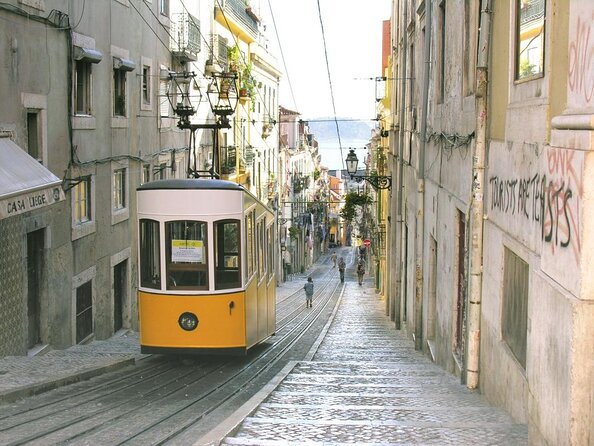
Lisbon reveals itself best on foot, and this tour takes you through the city’s back lanes, grand squares, churches, cafés, and revolution sites without wasting time on roads cars can use. I like the local advice you receive along the way, especially the food and sightseeing tips that can shape the rest of your stay. I also like the pay-what-you-value format, which keeps the price remarkably low at about $3.62 per person.
The main drawback is the amount of information. Guides such as Miriam, Ricardo, Claudia, Hugo, and Fernanda have a lot to share, and one guide delivered more history than one participant could absorb. The walking is steady, too, with uneven paving underfoot and limited shelter if rain arrives.
Key points at a glance
- A useful first-day route: You walk from Restauradores to Praça do Comércio through several central neighborhoods.
- History with a human voice: Stories cover independence, religious persecution, revolution, literature, opera, and daily Lisbon life.
- No-cost sightseeing: The tour visits churches, squares, streets, and public landmarks without separate admission charges.
- Strong local recommendations: Guides may suggest places to eat and things to do after the walk.
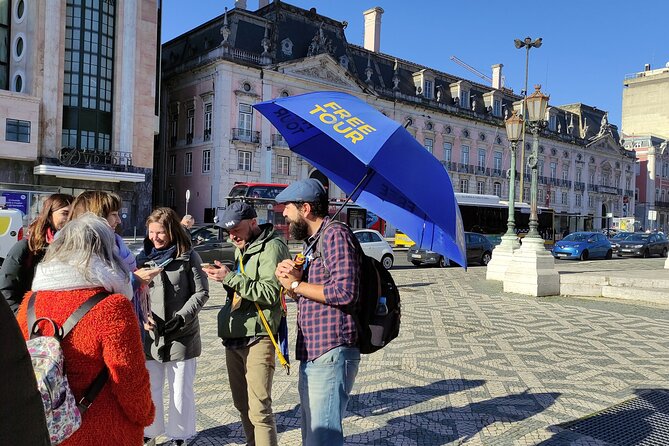
- Small-group feel: The maximum group size is 25, though actual groups can be smaller.
- A good value test: The advertised price is about $3.62, and the pay-what-you-value approach lets you decide what the experience was worth.
Start at Restauradores, where modern Lisbon meets national memory
The meeting point is Monumento dos Restauradores in Praça dos Restauradores. This is a practical place to begin because the square sits at the lower end of Avenida da Liberdade, one of Lisbon’s main avenues.
Your guide begins with the story behind the square and Portugal’s independence. The opening stop lasts only about five minutes, but it gives you a useful frame for the city: Lisbon’s public spaces often carry political memory as clearly as they carry beauty.
I like this start because it is easy to find and immediately central. You are not spending the first part of the tour reaching a distant neighborhood. The tradeoff is that the tour begins with history right away, so you should arrive ready to listen rather than expecting a casual orientation chat.
More City Tours in Lisbon:
- Lisbon: Daytime/Sunset/Night City Sailboat Tour with Drink
★ 4.9 · 3,114 reviews - Lisbon: City Highlights and Viewpoints E-Bike Tour
★ 4.9 · 1,556 reviews - Lisbon: Private City Tour by Eco Tuk Tuk
★ 4.9 · 1,215 reviews
Igreja de São Domingos and the 1506 massacre memorial
The next stop is Igreja de São Domingos, a church described on the tour as one of Lisbon’s least adorned, yet one of its most meaningful. The guide connects the building with ideas of peace, tolerance, and unity.
You then walk to the Memorial às Vítimas do Massacre Judaico de 1506. This memorial honors the victims of the Jewish massacre that followed religious intolerance and fanaticism in Lisbon. It is a serious pause in the route, and a useful reminder that the city’s past includes painful episodes alongside its grand monuments.
These stops show one of the tour’s strengths. You are not only being led from pretty square to pretty square. You are asked to consider how faith, prejudice, and public memory shaped Lisbon. If you prefer your sightseeing light and fast, this section may feel demanding. The guide’s presentation style matters here, and some guides give longer explanations than others.
Rossio Square and the surprising age of Rossio Station
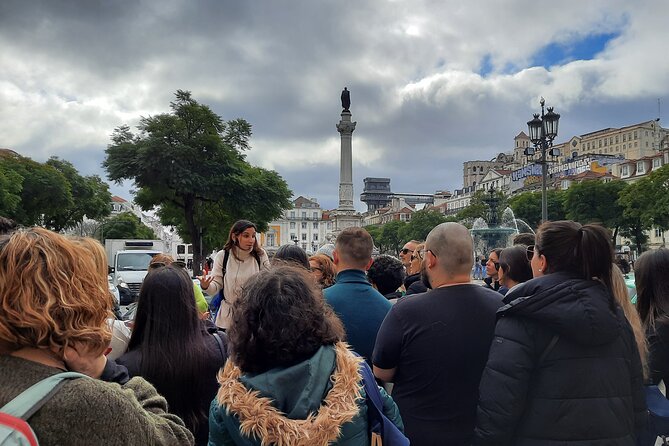
Praça Dom Pedro IV, better known as Rossio, is one of Lisbon’s key public squares. It has hosted major events for more than six centuries, and its patterned paving, fountains, and open setting make it an important point of orientation in the center.
The tour then stops at Estação do Rossio, the ornate railway station overlooking the square. The station opened in 1846, and its age is part of the surprise. The façade makes the building feel more like a ceremonial landmark than a transport hub.
I find this part especially useful for first-time visitors because Rossio is a place you are likely to pass again. The guide helps you read the square instead of treating it as a photo stop. You also begin to understand how Lisbon places grand architecture beside ordinary daily movement.
Into Chiado and the free area of Santa Justa
From Rossio, the route moves toward Chiado, the entrance to one of Lisbon’s most cosmopolitan districts. The stop itself is brief, but it signals a change in mood. Chiado is linked with shops, cafés, artists, and the polished side of central Lisbon.
The Elevador de Santa Justa comes next. This iron lift is both public transport and one of the city’s best-known landmarks. The tour accesses its free area, so you can see part of the structure without paying a separate admission fee.
That detail matters. The lift can attract long lines, and this experience is not presented as a paid ride to the top. You get the guide’s explanation and access to the free section, which is useful if you want to understand the landmark without building your day around it.
The route is still manageable, but you are walking on uneven central streets. Wear shoes with a firm sole, and do not assume that a two-and-a-half-hour tour will feel like a slow stroll.
Something different to do with a day in Lisbon:
- Lisbon: Sintra, Pena, Regaleira, Cabo da Roca & Cascais
★ 4.7 · 19,656 reviews - Sintra: Pena Palace and Park Entrance Ticket
★ 4.2 · 17,410 reviews - Lisbon: Jerónimos Monastery Entrance Ticket
★ 4.1 · 14,164 reviews - Lisbon: History, Stories and Lifestyle Walking Tour
★ 4.8 · 10,902 reviews
Largo do Carmo, where Lisbon changed course
Largo do Carmo is one of the most memorable stops. The square was a stage for passionate revolutions, giving your guide a chance to explain Lisbon through political action rather than only through buildings.
The setting also helps break up the walk. After the busy streets around Rossio and Chiado, Largo do Carmo offers a more contained place to stop and hear the story. The scheduled explanation lasts about 15 minutes, one of the longer pauses on the route.
I like this kind of stop because it gives historical events a physical setting. Instead of hearing about a revolution in the abstract, you are standing where public change unfolded. If your guide enjoys storytelling, this may become one of the tour’s high points.
São Roque and Bairro Alto’s evening personality
Igreja de São Roque was built in the 16th century and became the first Jesuit church in Portugal. It served as the society’s home church in the country for more than 200 years, before the Jesuits were expelled.
The church also contains one of the world’s most valuable chapels. The tour does not charge a separate admission fee for this stop, but you should treat the visit as a guided introduction rather than a full church study. Your time inside is listed at about 10 minutes, so listen closely and save a longer return visit if the chapel catches your interest.
After São Roque, you enter Bairro Alto, Lisbon’s nightlife district. The neighborhood has more than 500 years of history, but the guide presents it as a place of bohemian character as well as evening entertainment.
This contrast is one reason the route works well. You move from religious power to nightlife, from a historic church to narrow streets associated with music, bars, and late hours. The tour takes place during the day, so you get the neighborhood’s structure and story without the nighttime crowds.
Largo do Chiado and A Brasileira
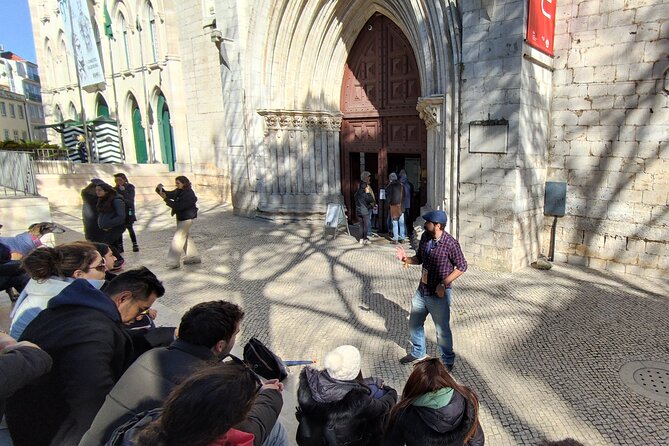
Largo do Chiado marks the transition between Chiado and Bairro Alto. It is a small square, but its position makes it a useful way to understand how Lisbon’s central neighborhoods fit together.
The next stop is A Brasileira, a famous café associated with the development of coffee culture in Lisbon. It is also linked with Fernando Pessoa and other writers and artists who created the modernist magazine Orpheu.
You may recognize the café from photographs, but the guide adds cultural context. This is not just a stop for a quick exterior picture. It connects Lisbon’s streets with its literary life and helps explain why Chiado became such an important meeting place for artists and intellectuals.
One practical point: the itinerary gives the stop about 10 minutes, so you should not expect a long coffee break. If you want to sit inside or order something, plan to return later.
São Carlos National Theatre and the Rua Augusta Arch
Teatro Nacional de São Carlos is still Portugal’s only theatre dedicated to producing and presenting opera, choral music, and symphonic music. The brief stop gives you a window into Lisbon’s formal cultural life after the more informal atmosphere of Chiado and Bairro Alto.
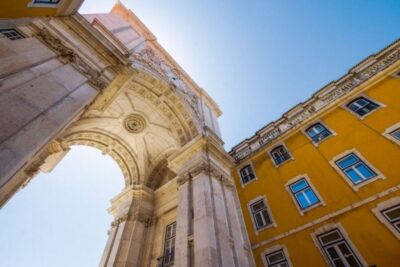
From here, the walk heads toward Rua Augusta. Along the way, you encounter the triumphal arch that appears in so many images of Lisbon. The arch leads into Rua Augusta, the lively and attractive pedestrian street of downtown.
The sequence is well chosen. You first hear about opera and formal performance, then move into one of the city center’s most active public streets. Rua Augusta is a place for people-watching, shopping, and finding your bearings in Baixa.
I would not expect quiet here. The appeal is the energy and sense of movement, not solitude. Keep your group in sight as the route enters the busier part of central Lisbon.
Finish at Praça do Comércio beside the Tagus
The tour ends at Praça do Comércio, between the arch and the equestrian statue of Dom José I. This is one of Lisbon’s grandest squares, and its open waterfront position makes the finish feel larger than the opening in Restauradores.
The square is where the city meets the Tagus River. It is also a practical place to continue your day because you can stop for a drink, walk along the river, or use the central area as a reference point for later sightseeing.
I like ending here rather than in another narrow street. The route begins with a square linked to Portugal’s independence and finishes with a square tied to Lisbon’s waterfront identity. You get a clear sense of how the central city stretches from Avenida da Liberdade down to the river.
What the guides add to the route
The official language is English, and the quality of the experience depends heavily on the guide’s pace and style. Names associated with particularly strong sessions include Miriam, Cecília, Claudia, Hugo, Ricardo, Mariana, Fernanda, and Silvestro.
Guides have different strengths. Miriam is described as funny, engaging, and good at offering food and cultural suggestions. Ricardo is praised for storytelling, humor, and passion for Lisbon. Claudia brings structure, adds a break, and ends with concise takeaways. Hugo kept a rainy tour interesting by continuing with stories and suggesting good photo points.
Fernanda’s practical follow-up is worth noting. She sent a WhatsApp document with local tips and answered a later question promptly. That sort of help can be more useful than another string of dates and names, especially if you have only a few days in Lisbon.
The one clear caution is information overload. One guide gave extended explanations about Portuguese colonial history and the 1506 massacre, leaving one participant feeling swamped. I would suggest telling your guide early if you prefer shorter explanations and more time to look around.
Is the $3.62 price good value?
At about $3.62 per person, this is unusually inexpensive for a two-and-a-half-hour guided walk. The value comes from the route and the local context, not from included attractions or transport.
The major stops are public places, and the itinerary lists admission as free throughout. You are paying for a guide who connects the locations, keeps the group moving, and gives you ideas for the rest of your visit.
The pay-what-you-value model also changes the feel of the experience. You are not locked into the price of a high-cost private tour, yet you still receive a structured introduction to central Lisbon. If you find the guide helpful, you can decide what the walk was worth to you.
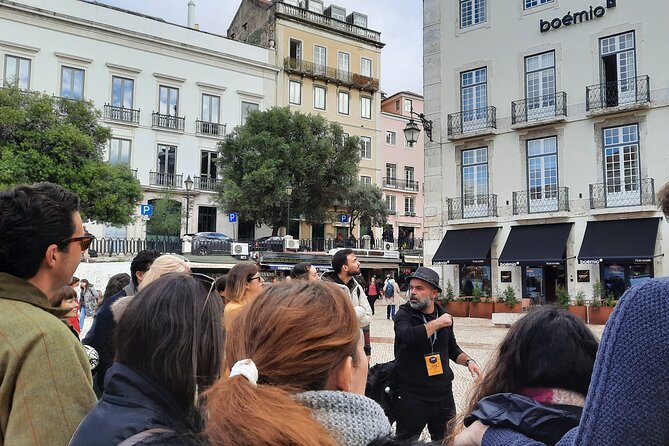
A maximum of 25 people keeps the group from becoming enormous, though a smaller group will allow more conversation. Some sessions are small enough for easy interaction with the guide and other members of the group.
Timing, weather, and who should book
The tour lasts about two hours and 30 minutes, with most stops lasting between five and 15 minutes. The walking is steady, and uneven streets are part of the route. I would book it near the beginning of your Lisbon stay, since the neighborhood orientation and local tips can help you plan later days.
This is a good fit if you:
- Want a broad introduction before exploring alone
- Like history, architecture, literature, and local stories
- Prefer walking to riding between major sights
- Want advice on food and activities for the rest of your visit
- Can manage a steady walk over uneven streets
- Are comfortable with a guide who may give detailed explanations
It may be less suitable if you want museum interiors, a slow café tour, or a short route with frequent seating. The walk also depends on good weather. If poor weather cancels it, you are offered another date or a full refund.
Confirmation arrives when you book. Service animals are allowed, public transportation is nearby, and most people can take part. You can cancel for a full refund up to 24 hours before the start time. Inside that window, refunds and changes are not accepted.
Should you book The Unmissable Lisbon?
I would book this tour early in a Lisbon visit, especially if you want to understand the city center before tackling it on your own. The route covers a lot: independence, religious intolerance, Rossio, Chiado, Santa Justa, revolution, Jesuit history, Bairro Alto, Pessoa, opera, Rua Augusta, and the Tagus.
The best reason to choose it is the combination of low cost and useful orientation. The main reason to hesitate is the guide’s pace. You may hear more historical detail than you expect, and rain can make the streets and photo stops less pleasant.
If you enjoy stories and want practical suggestions from guides such as Miriam, Ricardo, Claudia, Hugo, or Fernanda, this is a strong first walk. If you prefer a quiet, lightly narrated introduction, choose a shorter private experience instead.
FAQ
Where does the tour start?
It starts at Monumento dos Restauradores in Praça dos Restauradores, Lisbon.
Where does the tour end?
It ends at Praça do Comércio, between the arch and the equestrian statue of Dom José I.
How long does the tour last?
The tour lasts approximately two hours and 30 minutes.
What language is offered?
The tour is offered in English.
How much does the tour cost?
The listed price is about $3.62 per person. The experience uses a pay-what-you-value format.
How large can the group be?
The maximum group size is 25 people.
Can I cancel for a refund?
Yes. You can cancel at least 24 hours before the start time for a full refund. Cancellations or changes made less than 24 hours before the start time are not accepted, and poor-weather cancellations offer another date or a full refund.
Just reviewed in Lisbon
- Lisbon: Morning of Equestrian Art with Lusitano Horses★ 4.4 · 87 reviews
- Lisbon: Entry Tickets to Mosteiro de São Vicente de Foram★ 4.6 · 50 reviews
- Lisbon: National Palace of Ajuda E-Ticket & City Audio Guide★ 4.1 · 87 reviews
- Lisbon: Early Morning TukTuk Tour – hotel/cruise ship pickup★ 4.9 · 45 reviews
- Sintra: Quinta da Regaleira e-Ticket & Sintra City Audios★ 4.1 · 12 reviews
- Lisbon E-Bike Tour TAGUS★ 5.0 · 3 reviews
- Lisbon: E-bike Trip from the Sintra Mountains to Cascais Sea★ 5.0 · 67 reviews
- Lisbon: Discover Belem by electric Tuk Tuk★ 4.9 · 86 reviews
City Tours, compared.

Daytime/Sunset/Night City Sailboat Tour with Drink
Read our review →


Express Lisbon | City Center and Old Town Tuk Tuk Tour
Read our review →Browse the lists this tour appears in