
Reviewed · LISBON STREET ART TOURS
3-Hour Guided Street Art Walking Tour of Lisbon
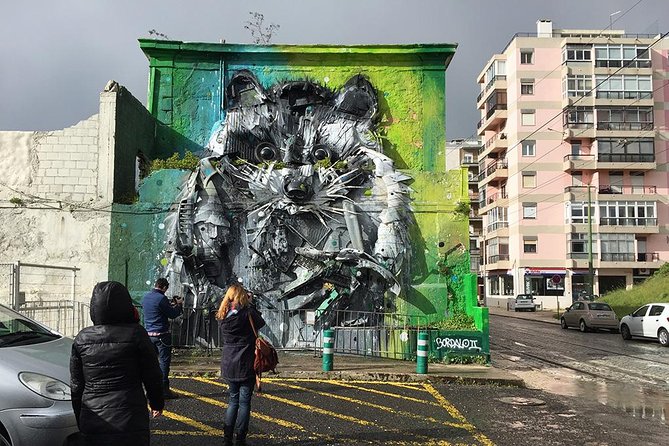
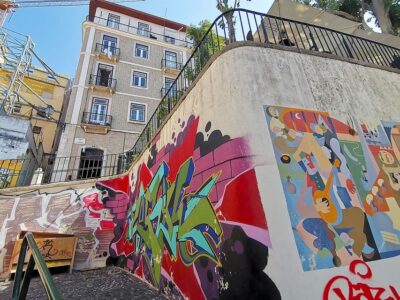
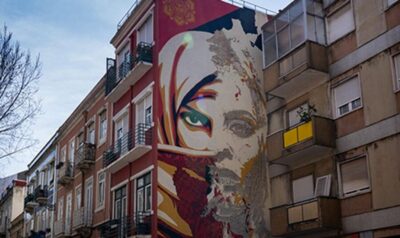
Lisbon’s street art is not confined to one district or one style. This three-hour walk links murals, graffiti, painted buildings, azulejos, and public viewpoints, while explaining how art connects with nightlife, workers’ rights, politics, and neighborhood life. Guides such as Erica, Maria, and Laith bring strong art knowledge and a clear local point of view.
I like the route’s variety, especially the contrast between the nightlife art of Bairro Alto and the huge works around Graça. I also like the small-group format, capped at 12 in the main description and no more than 15 overall, since it gives you a fair chance to ask questions and hear the stories.
The catch is the terrain. Lisbon is hilly, and this is a real walking tour over cobbled and uneven streets. Three hours can feel long if you are not used to hills, though built-in rest stops help.
Key points to know before booking
- See far more than graffiti: The route includes murals, tags, tilework, decorated buildings, and major public art projects.
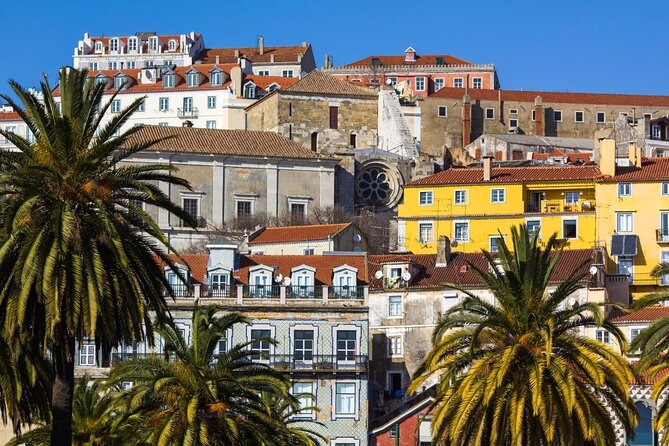
- Follow a thoughtful route: You walk from Bairro Alto through Baixa, Alfama, and Graça rather than viewing isolated pieces from a vehicle.
- Expect social context: Guides explain how art relates to politics, workers’ rights, city rules, artists, and Lisbon’s changing neighborhoods.
- Plan for hills and cobbles: Comfortable shoes are essential, and the tour is not recommended if you have mobility limits.
- Small groups matter: The stated maximum is 12 people, with an absolute limit of 15.
- Good value for art fans: At $42.27, the price covers about three hours, a local guide, and a focused introduction to parts of Lisbon you might otherwise miss.
Why this route gives you a different Lisbon
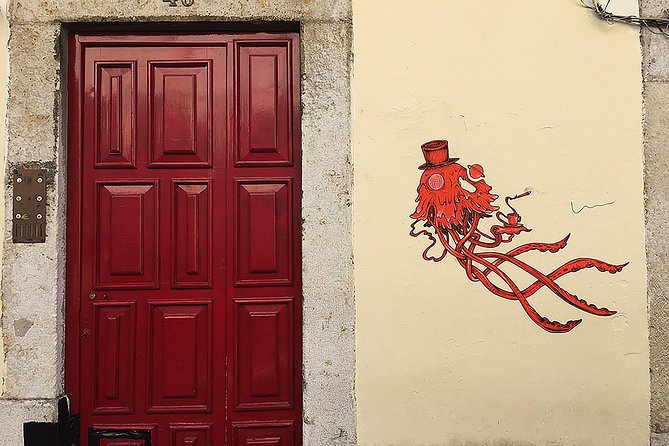
Many city walks point you toward grand monuments and famous viewpoints. This one asks you to look at walls, shutters, stairways, car parks, and old tiled surfaces. That shift is the main pleasure.
You may begin by thinking of street art as simple decoration. By the end, you should have a wider view of it as a public conversation. A small tag, a political mural, or a carefully restored tile facade can reveal something about who uses a neighborhood, who controls public space, and how Lisbon presents itself.
The guides are central to the experience. Erica is praised for connecting street art with social, cultural, and historical subjects. Maria brings a strong command of English and encourages discussion. Laith is described as a street artist himself and has even brought a spray can for participants to try.
That last detail gives you a sense of the tone. This is not only a walk in which you point a camera at walls. You are encouraged to notice methods, styles, symbols, and the language of the art world. The guide may explain the difference between forms of street expression, discuss how city authorities decide what remains, and connect local work with international artists.
More Lisbon Street Art Tours:
- Lisbon: Street Art Tour
★ 4.9 · 1,324 reviews - Lisbon: Kickstart Street Art Walking Tour
★ 4.9 · 717 reviews - Lisbon: Street Art Tuk Tuk Tour
★ 4.9 · 372 reviews
Bairro Alto: nightlife on the walls
The tour begins at R. Luz Soriano 67 in Bairro Alto. This is a useful starting point because the neighborhood’s art links closely with its nightlife identity.
Expect about 30 minutes here. The focus is not simply on finding the biggest mural. Instead, the guide uses the district to explain how street art develops in a quarter known for evening activity, narrow streets, and a strong public life.
Bairro Alto can reward slow looking. A painted wall or small piece may be easy to pass without noticing, especially when you are busy watching the pavement or finding your way through the lanes. With a guide, you can stop and ask why a work appears in that location and how its surroundings shape its meaning.
This opening section should suit you if you are new to street art. The guide can give you a visual vocabulary before the route grows more ambitious. You begin learning to inspect scale, lettering, color, placement, and the way an artwork interacts with an old building.
Elevador da Glória: an outdoor art gallery
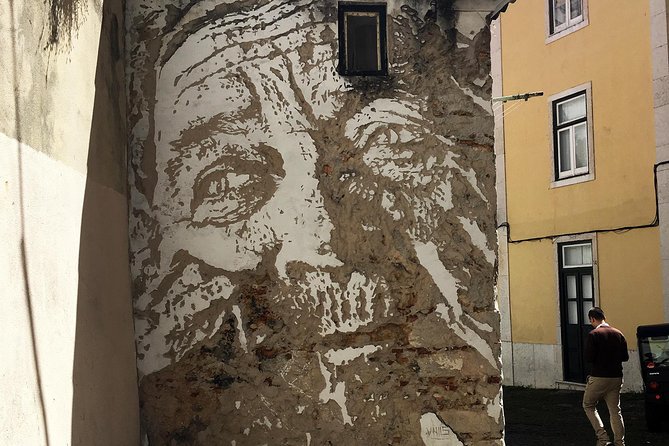
The next stop is Calçada da Glória, around the famous Elevador da Glória. This area is described as one of Lisbon’s urban art galleries, with artists from different countries contributing to changing projects.
Allow another 30 minutes. The location is valuable because it shows street art at a larger public scale. You may see work that feels planned and monumental rather than spontaneous. That contrast helps explain why street art is not one single movement.
The guide’s commentary is likely to be most useful here. A large mural can look simple from a distance, but its symbols, technique, and placement often tell a more involved story. You can ask about the artist, the process, the city’s rules, and why certain pieces stay while others disappear.
Photography is a strong reason to book this tour. The route is designed for people who want to find good art rather than stumble across one lucky wall. Still, remember that outdoor art changes. Paint fades, walls are cleaned, and new work replaces old work. The value is in learning how to spot it, not in expecting a fixed museum display.
Baixa: tiles, cobbles, and the older side of street art
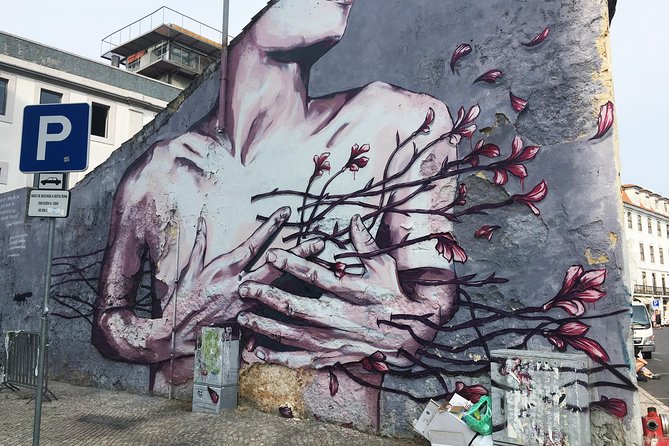
In Baixa de Lisboa, the tour broadens its idea of street art. Here, the guide discusses azulejos, cobblestone streets, stories, designs, and symbols.
This is one of the route’s more interesting choices. If you expect only spray paint, you may be surprised by the attention given to tiles and older decorative traditions. The point is not to claim that every decorated surface is modern street art. It is to show how Lisbon’s public spaces have long used pattern, image, and craftsmanship to express identity.
Baixa also gives the guide a chance to connect art with the city’s built form. A tile facade does not sit apart from the street. It changes how light, color, and texture work around a building. The black-and-white paving underfoot adds another visual layer.
For you, this section offers a useful reset. After examining bold murals and graffiti, you begin to notice quieter forms of design. That broader way of looking is one of the tour’s best results. You may continue spotting small details across Lisbon long after the walk ends.
More Lisbon Walking Tours:
- Lisbon: History, Stories and Lifestyle Walking Tour
★ 4.8 · 10,902 reviews - Best of Lisbon Small-Group Guided Walking Tour
★ 5.0 · 4,869 reviews - Lisbon: Food and Wine Small Group Walking Tour
★ 4.9 · 4,082 reviews - Best of Lisbon Walking Tour: Rossio, Chiado & Alfama
★ 4.9 · 2,700 reviews
Graça viewpoint: art with a social purpose

The route then climbs toward Miradouro da Graça, officially Miradouro da Graça Sophia de Mello Breyner Andresen. The stop takes about 30 minutes and brings together art, neighborhood history, and a fine city view.
Graça is described as a residential district with links to workers’ unions and workers’ rights. Its street art reflects that background. Here, the guide can move beyond questions of style and ask what public art says about labor, community, power, and social change.
This is also the point where the walking becomes more demanding. Lisbon’s hills are not a minor detail. You will be moving through streets that may be steep, with cobbles and uneven surfaces underfoot. The viewpoint gives the route a natural pause, and breaks are included during the walk, but you should still arrive in proper walking shoes.
I like the way this stop joins a view with a political story. A viewpoint can easily become a quick photo stop. Here, the setting has more weight because the surrounding district and its past help explain the art.
Alfama and Chão do Loureiro: a car park turned gallery
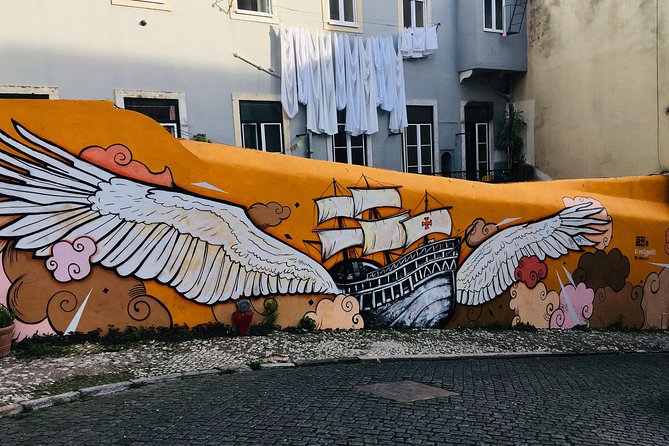
The final area is Alfama, with a stop at Chão do Loureiro. This five-floor car park has been transformed into a street-art gallery, displaying work by prominent artists from Lisbon’s south bank.
That setting gives the tour a memorable finish. Street art is not limited to elegant facades or purpose-built cultural venues. A car park can become an exhibition space, changing how you experience an ordinary structure.
You will likely find a wide range of scale here, from smaller pieces to large works that take in an entire wall. The guide can point out different artistic approaches and explain the artists’ backgrounds. One particularly useful part of the tour is the chance to compare Lisbon’s work with street art elsewhere in Europe and around the world.
The route ends at Miradouro da Graça, rather than returning you to the starting point. That matters when planning the rest of your day. You finish in a high part of the city, with public transport nearby, but you should not book an appointment back in Bairro Alto immediately afterward.
What the guide adds to the art

The strongest part of this experience is the interpretation. You can find walls on your own, but it is harder to understand the people, choices, and disputes behind them.
The guides explain the history and meaning of individual pieces, as well as the broader street-art scene. They also make room for questions. That conversational approach is important because street art can be personal, political, humorous, or deliberately difficult to interpret.
Laith’s connection to street art as a practitioner adds a practical angle. The spray-can demonstration described in the tour feedback may not be promised at every departure, so you should treat it as a possible extra rather than a guaranteed feature. Still, it shows the hands-on spirit that can make the subject less intimidating.
You may also receive suggestions for the rest of your Lisbon visit. Guides have offered restaurant and sightseeing tips at the end of the walk, and one guide helped a solo participant reach a hotel safely. Those details are not formal inclusions, but they show how a good guide can make the tour useful beyond its scheduled route.
Is $42.27 fair for three hours?
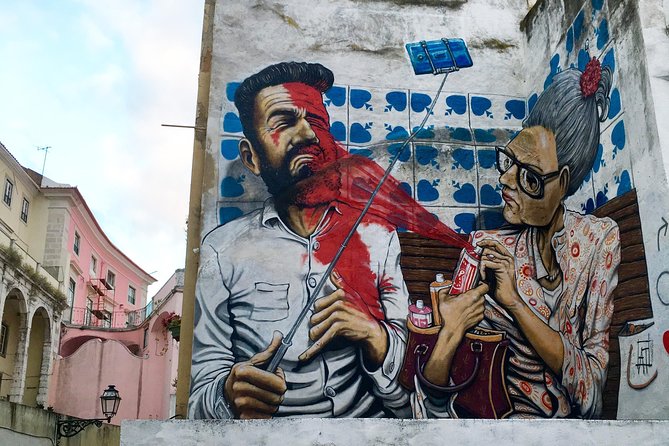
At $42.27 per person, the tour is not the cheapest way to see Lisbon’s streets. You are paying for a focused route, a local guide, and interpretation rather than transport or entry tickets.
There are no admission charges because the art is in public spaces. That means the price makes sense mainly if you value context. If you only want a list of mural locations, you could explore independently. If you want to understand artists, symbols, city policy, local history, and the social role of public art, the guided format offers better value.
The group size helps the calculation. A maximum of 12, with no more than 15 overall, is small enough for questions and discussion. It also makes it easier to stop without blocking the pavement or losing the group.
Food and drinks are not included. A rest break is provided, and the route includes places where you can buy water or take a short pause, but you should carry water and eat beforehand if you need a proper meal.
Who should book this walk?
You are a good match if you enjoy photography, urban culture, local history, or walking tours that go beyond the standard sights. You do not need to know much about street art. Several parts of the route are designed to teach you how to look, so beginners can follow along.
It also suits repeat visitors who have already seen Lisbon’s main monuments. The route reaches neighborhoods and corners you might not choose on a first independent stroll. You get a different sense of the city by moving through working and residential districts, not only postcard locations.
The tour is less suitable if you dislike hills, cobbled streets, or long periods on your feet. Most people can participate, but you must manage uneven terrain, and the activity is not recommended for people with mobility issues.
It is offered in English and includes a mobile ticket. Service animals are allowed, and the meeting point is near public transport. Hotel pickup and drop-off are not included, so plan your way to Bairro Alto and your onward route from Graça.
Booking, weather, and timing
The experience lasts about three hours and is commonly reserved well ahead, with an average booking lead time of 26 days. If your Lisbon dates are fixed, booking early is sensible, especially if you want a small group.
Free cancellation is available up to 24 hours before the start time. Changes or cancellations inside that window are not accepted for a refund. The activity requires good weather, so a weather cancellation brings the choice of another date or a full refund.
Wear comfortable clothes and shoes with a firm grip. Lisbon’s pavement can be slippery or uneven, and the route includes hills. Carry water, keep your phone charged for photos, and leave room in your schedule after the walk.
Should you book the Lisbon street art tour?
I would book this if you want to understand Lisbon through its walls rather than simply photograph them. The mix of murals, graffiti, azulejos, political stories, viewpoints, and neighborhood history gives the walk more substance than a mural checklist.
The best reason to go is the guiding. Erica, Maria, Laith, and the other local guides bring different personalities, but the experience clearly depends on their ability to explain art in plain language and connect it to the city around you.
Skip it if a three-hour hill walk sounds tiring or if you prefer a self-guided route at your own pace. For everyone else, the $42.27 price is fair for an active, small-group introduction to Lisbon’s public art and the social stories painted across the city.
FAQ
How long is the Lisbon street art walking tour?
The tour lasts approximately three hours, with about 30 minutes planned at each of five main stops.
Where does the tour begin?
It begins at R. Luz Soriano 67, 1200-246 Lisboa, Portugal, in Bairro Alto.
Where does the tour end?
The tour ends at Miradouro da Graça, at Calçada da Graça, 1100-265 Lisbon.
Is the tour offered in English?
Yes. English is the listed language for the experience.
How large is the group?
The main tour information gives a maximum group size of 12 people. The additional information gives an overall maximum of 15 participants.
Is hotel pickup included?
No. Hotel pickup and drop-off are not included.
What happens if bad weather cancels the tour?
If poor weather causes cancellation, you can choose a different date or receive a full refund.
More 3-Hour Experiences in Lisbon
- Lisbon: 3-Hour Tour by E-Bike
★ 4.8 · 1,150 reviews - 3-Hour Lisbon 7 Hills Electric Bike Tour
★ 5.0 · 818 reviews - Lisbon: 3-Hour The Slave Trade – An Historical Walking Tour
★ 4.9 · 179 reviews - 3 Hours Private Lisbon Food Tuk Tour
★ 5.0 · 145 reviews
Just reviewed in Lisbon
- Lisbon: Morning of Equestrian Art with Lusitano Horses★ 4.4 · 87 reviews
- Lisbon: Entry Tickets to Mosteiro de São Vicente de Foram★ 4.6 · 50 reviews
- Lisbon: National Palace of Ajuda E-Ticket & City Audio Guide★ 4.1 · 87 reviews
- Lisbon: Early Morning TukTuk Tour – hotel/cruise ship pickup★ 4.9 · 45 reviews
- Sintra: Quinta da Regaleira e-Ticket & Sintra City Audios★ 4.1 · 12 reviews
- Lisbon E-Bike Tour TAGUS★ 5.0 · 3 reviews
- Lisbon: E-bike Trip from the Sintra Mountains to Cascais Sea★ 5.0 · 67 reviews
- Lisbon: Discover Belem by electric Tuk Tuk★ 4.9 · 86 reviews
Lisbon Street Art Tours, compared.




Browse the lists this tour appears in