
Reviewed · LISBON
Lisbon: Lisbon Classical Nights Concert
Lisbon Classical Nights puts you close enough to watch a guitarist’s fingers work through delicate Portuguese pieces. The 50-minute concert takes place in a private area of Saint Paul’s Church, not the regular public space, and the audience is limited to 20 people.
I like the small scale and the setting. You get direct contact with the music, plus introductions that explain the background of each piece. The main consideration is length: this is a focused concert of less than an hour, not a full evening of music.
I also like the price. At $23 per person, it costs about what you might spend on a casual Lisbon dinner, yet gives you a distinct cultural evening in a historic church. Children under eight cannot attend, and the 7 PM start may compete with dinner plans.
Key points at a glance
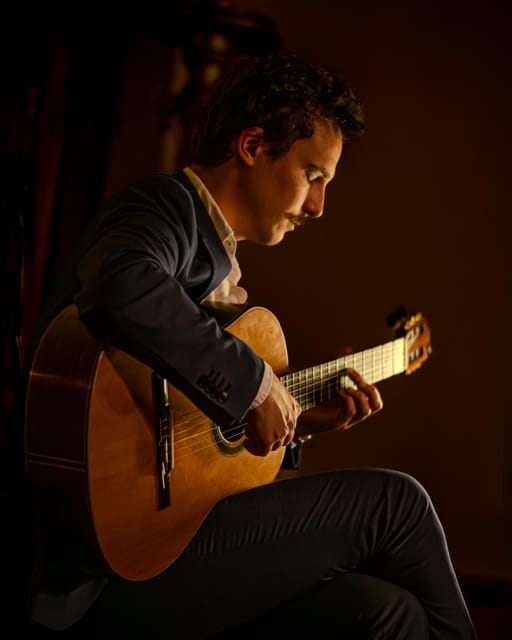
- A 20-person concert: The small audience puts you close to the guitarist and keeps the room quiet.
- Portuguese music at the center: The program can include Portuguese, Brazilian, Spanish, and Argentinian classical guitar.
- João’s personal introductions: On evenings featuring João, he explains the music in English and Portuguese and adds cultural context.
- A private church room: The performance happens in an area not normally open to the public.
- A 50-minute format: It fits neatly into an evening without taking over your entire night.
- Tuesday to Saturday at 7 PM: You have several chances to fit the concert into a Lisbon stay.
Entering Saint Paul’s Church at 7 PM

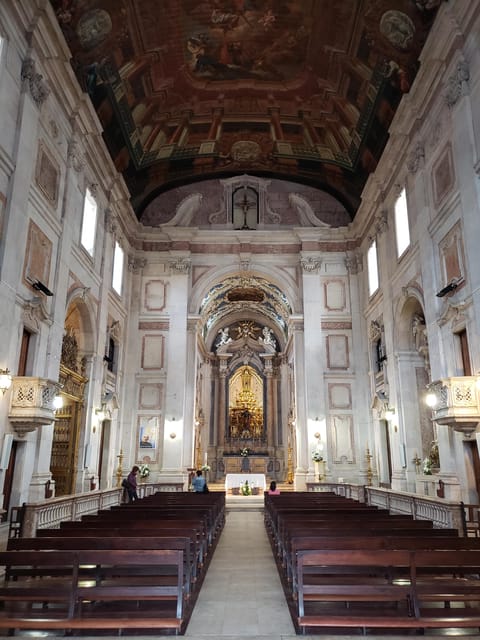
Your meeting point is the main entrance of São Paulo’s Church. The church sits beside a picturesque square in Lisbon’s old central area, and arriving here gives the concert a clear sense of place before the music begins.
Saint Paul’s Church is a Pombaline building, the architectural style associated with Lisbon’s rebuilding after the 1755 earthquake. Look for the rectangular windows, the central façade with its triangular pediment, and the two bell towers. These details matter because the church is not simply a rented concert hall. Its design and setting form part of the evening.
The parish grew in importance during the age of the Portuguese Discoveries, when foreign merchants and other newcomers increased the local population. The earthquake destroyed much of the area, but commercial activity helped it recover under the direction of the Marquis of Pombal. The nearby square later gained a large limestone fountain in 1849.
You do not come here for a long architectural tour, but the short visit gives you a useful glimpse of Lisbon’s ability to rebuild and adapt. The setting also creates a sharp contrast with the city outside. You leave the busy streets and enter a quieter, older space for the performance.
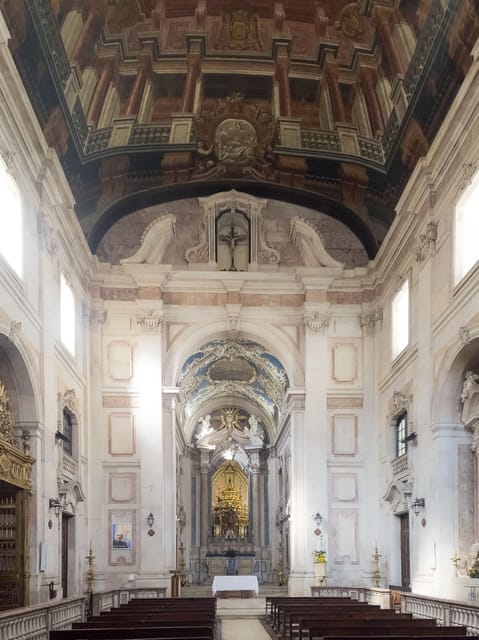
The program takes place in a private part of the church that is not open to regular public access. That detail gives the evening a special edge. You are not just sitting in a church during visiting hours. You are being brought into a room used for this small musical event.
More Lisbon Fado Shows:
- Lisbon Fado Experience: Walking Tour, Dinner and Live Music Show
★ 4.5 · 336 reviews
Sitting close to a classical guitarist
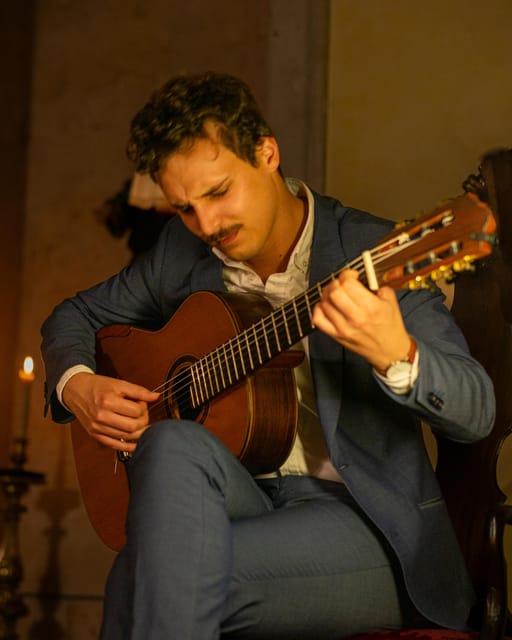
The strongest feature is the distance between you and the performer. With a maximum of 20 people, this feels more like a private recital than a large concert. Several performances have taken place with about 20 to 25 people in the room, creating a close view of the instrument and the player’s technique.
I find this especially useful if you enjoy seeing how music is made. You may be able to watch the guitarist’s fingers rather than viewing the performer from a distant seat. That close perspective makes small movements, changes in rhythm, and careful phrasing easier to notice.
The setting also encourages a quiet, attentive mood. This is not a theatrical production with elaborate staging, lighting, or a long list of performers. It is a musician, a guitar, a small room, and an audience close enough for the event to feel personal.
The limited size has one practical tradeoff: seats are not described as assigned, so arriving at the church with enough time to find the entrance is sensible. The official meeting point is clear, but the building is historic and the event takes place away from the regular public area.
The music: Portuguese roots and wider Iberian sounds
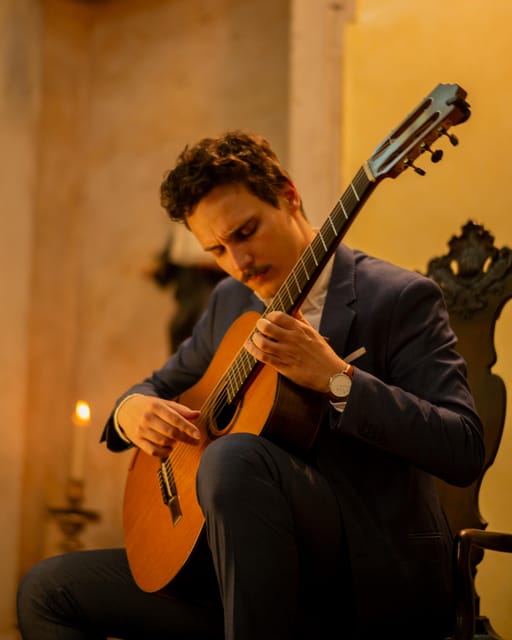
The program celebrates major classical guitar composers while also making room for lesser-known Portuguese pieces. You may hear music from Portugal alongside Brazilian, Spanish, and Argentinian works. Some evenings also include more modern guitar music, so do not expect a program made only of famous classical standards.
The music can change with the performer and the evening. João, a guitarist featured in several performances, has presented carefully arranged programs that included Portuguese and Brazilian works, along with an original composition. Other pieces have drawn from Spanish and Argentinian traditions.
That range is one reason the concert works well for people who do not usually attend classical recitals. You do not need a detailed background in guitar music to follow the program. The performer introduces the pieces and explains their place in Portuguese or English, with Spanish also available through the host or greeter.
These comments are more than filler between songs. They help you hear a piece as part of a culture and tradition rather than as a string of unfamiliar titles. You may learn why a work matters, where its musical style comes from, or how it connects to Portuguese history and culture.
The exact program is not listed in advance, so you should book this for the style of evening rather than for one guaranteed composer or song. If you need to hear a specific work, this may not be the right concert.
Why the introductions matter
A short classical concert can sometimes feel formal or distant. Here, the performer speaks directly to the small audience and gives context before playing. That simple choice changes the pace of the evening.
On performances featuring João, the introductions have been given in both Portuguese and English. He is not only a skilled guitarist but also an engaging presenter, explaining the pieces and connecting them with Portuguese culture. A Spanish-speaking host or greeter is also available, according to the activity details.
I like this format because it gives you a way into the music. You hear the notes first, then you gain a little context, or the other way around. The explanations are part of the reason this feels like a cultural activity rather than background music in a historic building.
The amount of speaking can vary with the performer. You should expect brief explanations, not a full lecture on music history. That balance suits the 50-minute schedule and keeps the focus on the guitar.
Something different to do with a day in Lisbon:
- Lisbon City Center Tour – The Unmissable Lisbon
★ 5.0 · 22,234 reviews - Lisbon: Sintra, Pena, Regaleira, Cabo da Roca & Cascais
★ 4.7 · 19,656 reviews - Sintra: Pena Palace and Park Entrance Ticket
★ 4.2 · 17,410 reviews - Lisbon: Jerónimos Monastery Entrance Ticket
★ 4.1 · 14,164 reviews
A closer look at the 50-minute itinerary
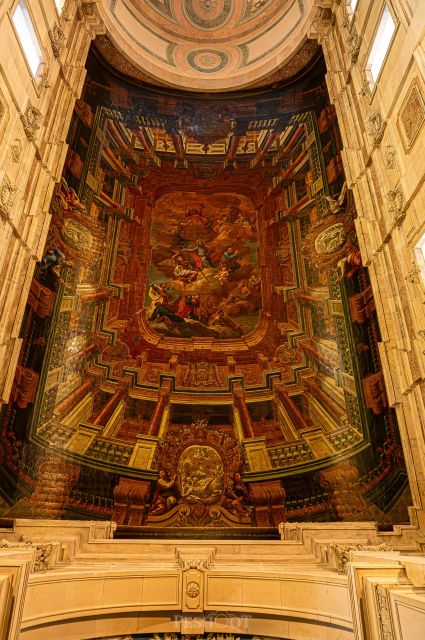
The evening follows a simple pattern.
You meet at the main entrance of Saint Paul’s Church. A host or greeter helps direct you inside and communicates in English, Portuguese, or Spanish. The church visit is included, so you can take in the setting before the music begins.
You then move to the private performance area. This is a part of the church not open to ordinary public visits, which gives the concert a more secluded feel. Seating is arranged for a very small audience, keeping you close to the musician.
The guitarist presents a program of classical pieces and Portuguese compositions. Depending on the evening, the selection may also include Brazilian, Spanish, Argentinian, or more modern music. The performer introduces the works and may share details about the composer, the music, or its cultural setting.
After roughly 50 minutes, the concert ends. There is no additional meal, walking tour, or long church visit included, so you remain free to continue your evening. That makes it easy to combine with dinner or a stroll through central Lisbon.
The straightforward schedule is a benefit. You know you are booking a compact cultural event, not an open-ended night out. The drawback is equally clear: if you want a full concert lasting two hours, this will feel brief.
Is $23 good value?
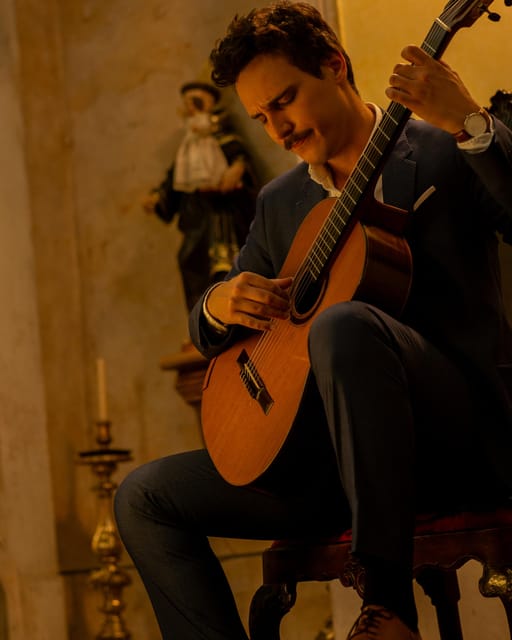
At $23, this is a reasonable choice for a special evening in Lisbon. You are paying for a live performance, entry to the church, the private concert room, and the attention that comes with a very small audience.
The value improves if you care about the setting and personal contact. A large concert may offer a wider range of music, but it will not usually let you sit close enough to watch a guitarist’s technique or hear short explanations aimed at a group of only 20 people.
You should also judge the price against your interests. If classical guitar is not your thing, the church alone may not justify the cost. The program is built around guitar music, and the concert does not promise a broad mix of instruments or singers.
One past ticket price was listed at 20 euros, while the current price provided for this activity is $23 per person. Prices can change with the booking platform and date, so check the amount when you reserve. The option to reserve now and pay later is useful if your Lisbon schedule is still changing. Free cancellation is available up to 24 hours before the start time for a full refund.
Who will enjoy this most
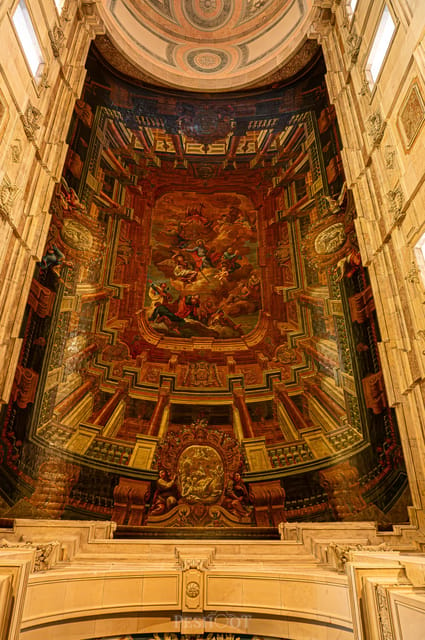
I would choose Lisbon Classical Nights for several types of visitors.
Music lovers get a close view of skilled classical guitar playing and a program that reaches beyond the most familiar European composers. The range of Portuguese, Brazilian, Spanish, and Argentinian music adds variety.
Culture-minded visitors get more than a recital. The church, the Pombaline setting, and the performer’s comments connect the music to Lisbon and Portugal.
Couples and solo visitors may appreciate the calm, compact format. It is a thoughtful evening activity without the fuss of a major venue.
First-time classical listeners can benefit from the introductions. You do not need to arrive with a technical understanding of guitar music.
The concert is less suitable for young children, since children under eight are not permitted. It may also disappoint anyone looking for a large, formal production, a guaranteed famous composition, or a performance much longer than an hour.
Practical advice for planning your evening
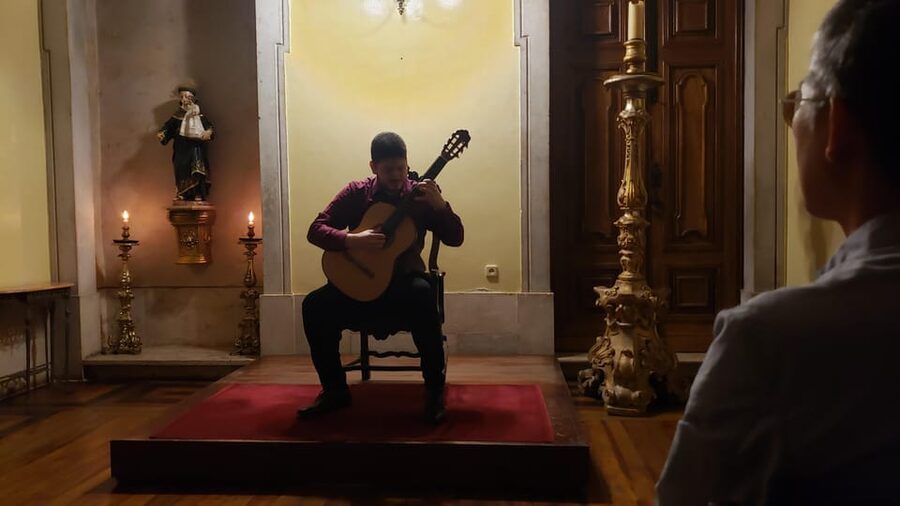
The concerts run Tuesday through Saturday at 7 PM. Since the schedule is fixed, check the date before building your dinner plans around it. The 50-minute duration leaves room for a meal afterward, but you should still allow time to locate the church entrance.
Use the main entrance of São Paulo’s Church as your meeting point. The activity information identifies the location clearly, but the concert room is private, so do not assume that you should wander through the church looking for it.
The host or greeter may speak English, Portuguese, or Spanish. Performers can also explain the pieces in more than one language, with João presenting in Portuguese and English on some evenings.
Dress is not specified, so there is no stated formal dress requirement. The important practical point is the venue itself: you are entering a historic church for a quiet concert. Respectful behavior and silence during the music are part of making the small format work.
Reserve ahead if the date matters to you. With only 20 places advertised for each performance, this is not designed for a large walk-up crowd. The small audience is the heart of the event, but it also limits last-minute flexibility.
The church adds real character
Many city concerts take place in modern rooms that could be anywhere. Saint Paul’s Church gives this one a clear Lisbon identity.
The Pombaline façade reflects the city’s rebuilding after the 1755 earthquake. The parish’s connection with the period of the Discoveries points to Lisbon’s long role as a meeting place for merchants and cultures. The square and its 1849 limestone fountain add another layer to the setting.
You may not receive a long formal explanation of all this, but the context changes how the evening feels. Classical guitar is often closely linked with Iberian and Portuguese traditions, and hearing it in an old Lisbon church makes that connection tangible.
The church is not presented as a grand concert auditorium. Its appeal comes from age, scale, and atmosphere. If you prefer polished modern venues with perfect sightlines and large productions, you may find the room modest. If you value place and closeness, the setting is a major part of the price.
Should you book Lisbon Classical Nights?
I would book this if you want a small, genuine-feeling music evening and enjoy the idea of hearing a talented guitarist close up. The combination of Portuguese repertoire, personal introductions, and a private church room gives you something more distinctive than a standard sightseeing stop.
The $23 price is fair for a 50-minute live performance in a historic setting, especially when the audience is limited to 20 people. The main limits are the short running time, the focus on solo guitar, and the lack of a guaranteed song list.
Choose a Tuesday through Saturday evening at 7 PM, arrive at São Paulo’s Church with time to find the main entrance, and expect a quiet recital rather than a grand show. If that sounds like your kind of Lisbon night, this is an easy recommendation.
FAQ
Where does Lisbon Classical Nights take place?
The concert takes place at Saint Paul’s Church, also called São Paulo’s Church, in Lisbon. The meeting point is the church’s main entrance.
What time does the concert start?
The concert starts at 7 PM and runs Tuesday through Saturday.
How long is the concert?
The concert lasts 50 minutes.
How many people can attend?
The audience is limited to 20 people per performance to keep the concert small and personal.
What music will be performed?
The program includes classical guitar works, Portuguese compositions, and hidden works by Portuguese composers. Depending on the performance, you may also hear Brazilian, Spanish, Argentinian, or more modern guitar music.
Will the performer explain the music?
Yes. The performers share insights about the pieces. João has introduced music in Portuguese and English, and the host or greeter can communicate in English, Portuguese, or Spanish.
Is the church visit included?
Yes. Entry to the church and the 50-minute concert in a private church area are included.
Can children attend?
Children under eight are not permitted to attend.
Just reviewed in Lisbon
- Lisbon: Morning of Equestrian Art with Lusitano Horses★ 4.4 · 87 reviews
- Lisbon: Entry Tickets to Mosteiro de São Vicente de Foram★ 4.6 · 50 reviews
- Lisbon: National Palace of Ajuda E-Ticket & City Audio Guide★ 4.1 · 87 reviews
- Lisbon: Early Morning TukTuk Tour – hotel/cruise ship pickup★ 4.9 · 45 reviews
- Sintra: Quinta da Regaleira e-Ticket & Sintra City Audios★ 4.1 · 12 reviews
- Lisbon E-Bike Tour TAGUS★ 5.0 · 3 reviews
- Lisbon: E-bike Trip from the Sintra Mountains to Cascais Sea★ 5.0 · 67 reviews
- Lisbon: Discover Belem by electric Tuk Tuk★ 4.9 · 86 reviews