
Reviewed · LISBON TRAM 28 TOURS
Lisbon Tram No. 28 Ride & Walking Tour
Lisbon’s famous Tram 28 is more than a sightseeing ride. It is a working public tram that squeezes through the Old Town, climbs steep hills, and opens a moving window onto Lisbon’s oldest neighborhoods. The ride is paired with a walk through Alfama, where the city’s narrow lanes, small squares, churches, and Fado culture make more sense on foot.
I like the small group, limited to 10 people, and the guides’ strong grasp of Lisbon’s past and present. I also like that the tour goes beyond the tram route to places such as Sé Cathedral, Saint Vincent Monastery, and the National Pantheon. The main consideration is that Tram 28 is public transport, so traffic, crowds, breakdowns, and route changes can affect the plan.
Key points
- Tram 28 is public transport: You ride the real historic tram, not a private sightseeing vehicle, so delays and substitutions are possible.
- Alfama is explored on foot: Expect steep, uneven streets, stairs, alleys, and charming little squares.
- The guides are a major strength: Nuno, also spelled Nono or Nunu in some bookings, is often praised for his history, humor, local tips, and willingness to answer questions.
- The route covers major landmarks: See Sé de Lisboa, Feira da Ladra on Tuesdays or Saturdays, Saint Vincent Monastery, and the National Pantheon.
- The group stays small: With no more than 10 participants, it is easier to hear the guide and ask questions.
- The tour costs $23: That is fair value if you want context and orientation, though the tram ride itself is not private.
A three-hour introduction to Lisbon’s oldest hills

This experience works well as a first look at Lisbon. It combines transport, views, history, and walking without trying to cover the whole city. You meet your guide at Praça Luís de Camões, near the statue, then look for the black backpack marked with the Lisbon Spirit logo.
The route begins with Tram 28, then shifts to a walking tour of Alfama. That change matters. From the tram, you see how Lisbon’s hills and streets fit together. On foot, you slow down and notice the tiled façades, old doorways, steep lanes, and everyday life that a passing tram cannot show you.
The three-hour length is enough for a useful orientation, but it is not an exhaustive tour of every landmark. You will get a broad story of Lisbon and Portugal, with extra attention to the old districts and Fado. If you want long visits inside each church or monument, you will need separate time afterward.
More Lisbon Tram 28 Tours:
- Lisbon: 72/96-Hour Hop-On Hop-Off Bus, Tram & Boat Ticket
★ 4.4 · 2,170 reviews - Lisbon: 3-in-1 Hop-On Hop-Off Bus and Tram Tours
★ 4.3 · 1,537 reviews - Lisbon: Tram 28 Entry Ticket & Audio Guide with 24-Hour Pass
★ 4.0 · 930 reviews
Riding the real Tram 28 through the Old Town
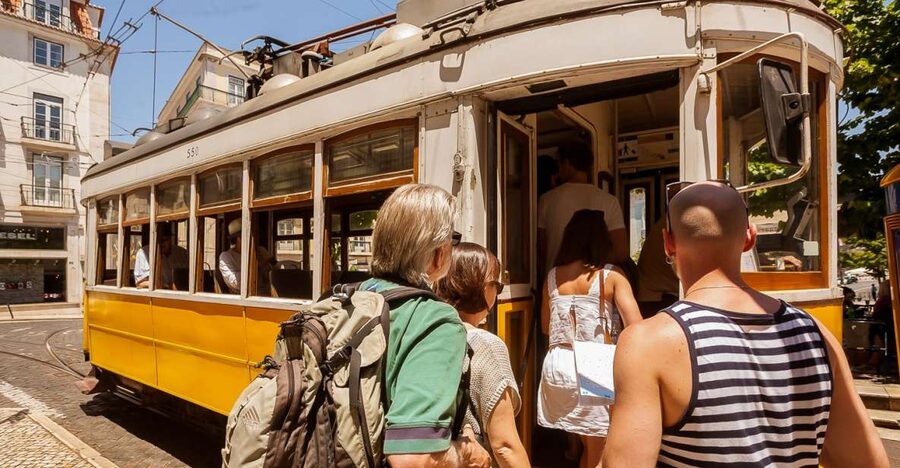
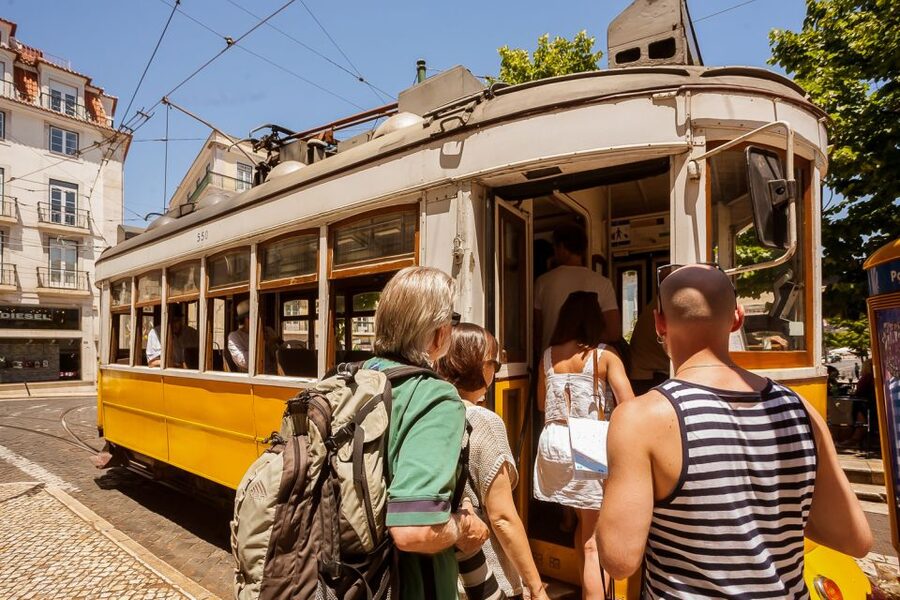
The tram is the star attraction, but it comes with a practical warning. Tram 28 is a regular mode of Lisbon public transport. It is not reserved for the group, and the provider cannot control traffic, parked cars, mechanical problems, or other delays.
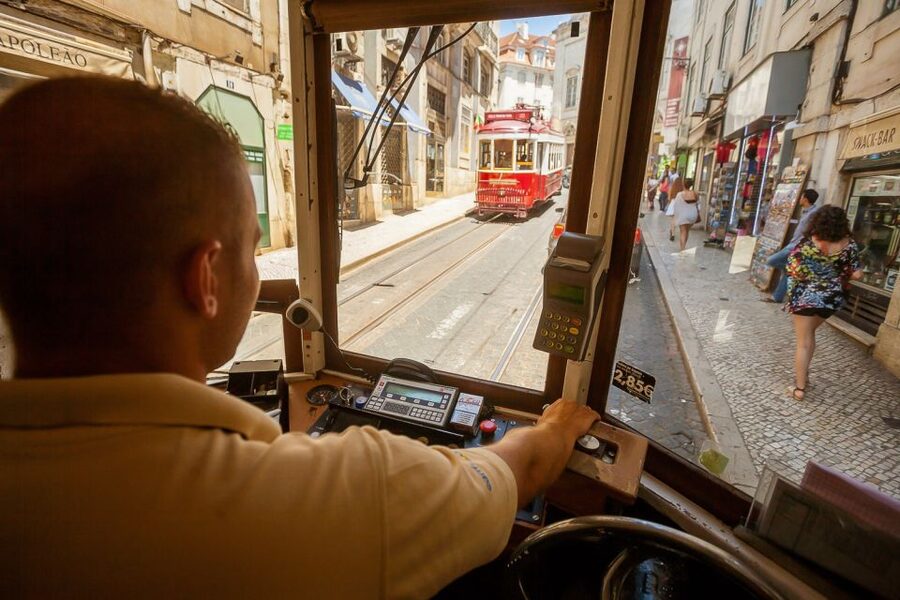
That unpredictability is part of the experience. The small yellow tram moves through tight streets and over Lisbon’s hills in a way that feels connected to local life. You are not watching the city from a sealed sightseeing bus. You are sharing a public route that residents use.
The ride can also be shorter or different from what you expect. One booking found that a broken-down car forced a route change. Another had to use a different combination of transport because of rush-hour traffic. A past participant also noted that the group used Tram 12 rather than Tram 28, which was disappointing after looking forward to the famous route.
So, book this for the chance to ride Tram 28, not as a guaranteed private or perfectly timed circuit. If the tram cannot run as planned, the guide may adjust the route with other public transport or continue the tour on foot. That flexibility is useful, but it means you should keep your expectations realistic.
City views from Lisbon’s steep streets
As the tram climbs, you get broad views over Lisbon and the river. These outlooks are one of the strongest reasons to take the tour early in your stay. The guide can point out different districts and explain how the old city sits across its hills.
The views are especially valuable because they help you understand Lisbon’s shape. Instead of seeing isolated sights, you begin to connect the river, the older hilltop neighborhoods, and the streets below. Several bookings describe the viewpoints as a highlight, while others praise the combination of tram travel and walking for giving a fuller sense of the city.
Do not expect every minute to offer a postcard view. Much of the tram ride passes through narrow streets, and the views depend on the route, traffic, and stopping points. Still, the changing perspective is a good complement to the close-up experience in Alfama.
Sé Cathedral and nearly a thousand years of change
The walking portion brings you closer to the places that define Lisbon’s oldest quarter. Sé de Lisboa, the city’s medieval cathedral, is an important stop because its walls hold layers of Lisbon’s past.
The cathedral is not presented simply as a photo stop. The guide uses it to explain how the city changed over centuries, with its architecture showing different periods of construction and repair. The description of the cathedral’s walls concealing and revealing almost 1,000 years of history captures the point well: you are looking at a building shaped by time, not a single neat architectural moment.
The tour does not include a separate cathedral entry or promise an extended interior visit. Its value here is the explanation and the setting. If you want to study the cathedral in detail, allow time to return independently.
More Lisbon Walking Tours:
- Lisbon: History, Stories and Lifestyle Walking Tour
★ 4.8 · 10,902 reviews - Best of Lisbon Small-Group Guided Walking Tour
★ 5.0 · 4,869 reviews - Lisbon: Food and Wine Small Group Walking Tour
★ 4.9 · 4,082 reviews - Best of Lisbon Walking Tour: Rossio, Chiado & Alfama
★ 4.9 · 2,700 reviews
Feira da Ladra on Tuesdays and Saturdays

If your tour falls on a Tuesday or Saturday, the route includes Feira da Ladra, Lisbon’s famous flea market. This gives the walk a different feel from a standard monument tour. Instead of seeing only grand buildings, you get a look at a long-running piece of local street life.
The market is not offered every day, so check the tour date before booking if it matters to you. On other days, the guide focuses on the neighborhood, historic sites, views, and lanes without the market stop.
A flea market can be crowded and visually messy, which is part of its appeal. You might find old objects, household goods, or items with unclear stories, but the tour is not presented as a dedicated shopping trip. Think of Feira da Ladra as a chance to see Lisbon’s social side and ask the guide how the market fits into the city.
Saint Vincent Monastery and the National Pantheon
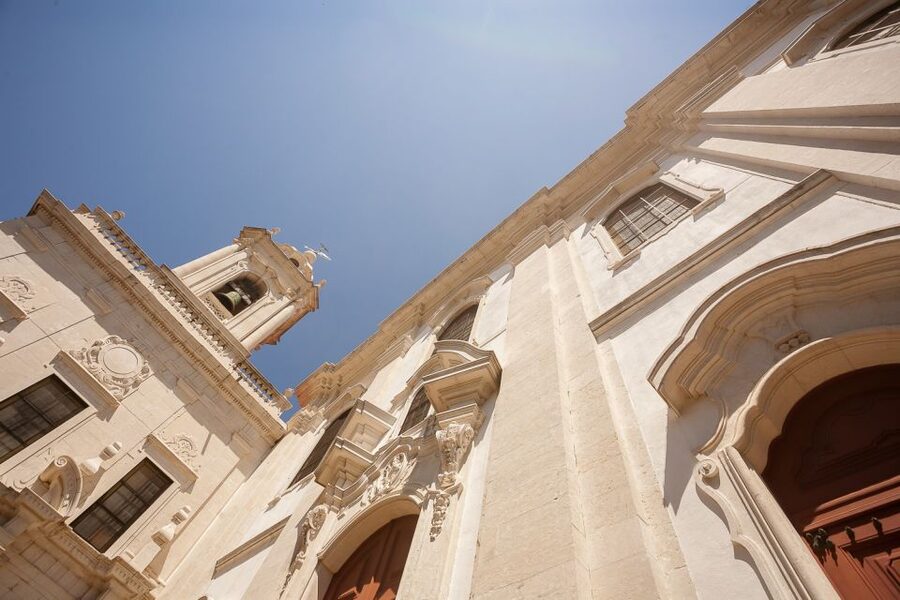
The route also includes the impressive Mosteiro de São Vicente de Fora, or Saint Vincent Monastery. Its importance is tied to both architecture and Lisbon’s religious and political story. The guide provides context so the building does not feel like just another stop on a list.
The National Pantheon is another strong landmark. Its large dome is easy to recognize from Lisbon viewpoints, and the tour gives you the story behind the building and its place in the city. Seeing the dome from a distance and then learning what it represents adds meaning to later walks around Lisbon.
The schedule is not built around lengthy interior visits. You will see these landmarks and hear about them, then continue through the surrounding district. That makes the tour a good sampler for first-time visitors. It is less suited to anyone who wants a slow architectural study with lots of time inside each site.
Walking Alfama, one steep lane at a time

Alfama is best understood at walking pace. Its streets twist through the hill, narrow in places and steep in others. Small squares appear between alleys, and the route reveals ordinary residential life alongside major monuments.
This is where comfortable shoes matter most. Several people specifically noted the uneven surfaces and amount of walking. The pace is generally relaxed, and one group ranging from age 17 to 83 managed it comfortably, but age and fitness are personal matters. You should be ready for hills and uneven ground rather than assuming this is an easy flat stroll.
The guide’s role is especially useful here. Without local direction, it is easy to wander without understanding how the lanes connect or why a particular corner matters. With a small group, you can stop for questions, and the guide can adjust the pace more easily than on a large coach tour.
Alfama is also a neighborhood, not an open-air museum. You will see people going about daily life, homes, cafés, and narrow passageways. That everyday setting is one of the tour’s best qualities, but you should be considerate around residential doorways and avoid treating the area as a film set.
Fado beyond the postcard image
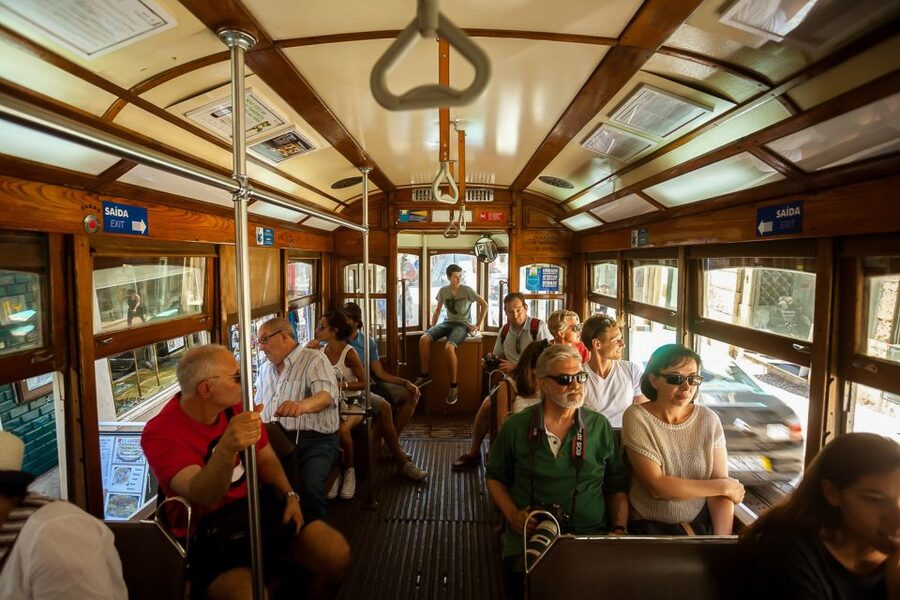
The tour introduces you to traditional Portuguese Fado, the music closely associated with Lisbon. The focus is on the culture and the small bars and cafés where Fado belongs, rather than a full evening concert.
That distinction matters. If you want a formal Fado performance, you will need to book a separate night out. This walk gives you background first, helping you recognize why Fado is tied so closely to Alfama and Lisbon’s identity.
The guide may also connect music with the city’s social and political past. The strongest guides on this route do more than recite dates. Nuno, whose name appears as Nono or Nunu in some bookings, is repeatedly praised for adding humor, local advice, and observations about politics, real estate, and modern Lisbon. That wider conversation helps the neighborhood feel current rather than frozen in history.
The guide makes the difference

The most consistently praised part of this experience is the guiding. Nuno is often singled out for his warmth, humor, and command of Lisbon and Portuguese history. He has also been described as staying beyond the scheduled time to answer questions or finish a conversation.
That does not mean every tour will be led by Nuno, and guide style can vary. The advertised language is English, and the group is limited to 10, which gives the guide room to explain details and respond to the people in front of him.
You can expect plenty of information. For some people, that is the main reason to book. One person found the history occasionally too detailed, while others wanted exactly that level of context. If you prefer a quick photo tour with little commentary, this may feel talk-heavy. If you want to understand Lisbon’s religion, politics, neighborhoods, and past, it should suit you well.
Is $23 good value?
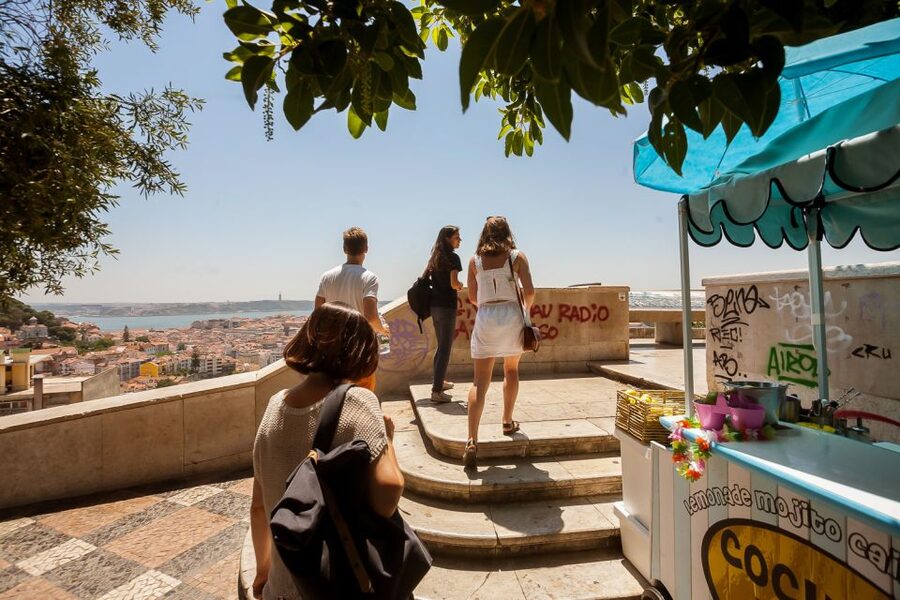
At $23 per person, the tour is reasonably priced for three hours with a guide, Tram 28 transport, and a walking route through Alfama. You are paying mainly for the interpretation and the structure, not for exclusive transport or entrance tickets.
The tram ride alone is easy to arrange independently, though doing so may involve queues, crowds, and uncertainty about where to get on. The tour adds a planned walk, landmark explanations, city orientation, and a chance to ask questions. That makes the price worthwhile for a first visit, especially if you want to understand what you are seeing rather than simply ride the tram.
The value is lower if you already know Lisbon well or plan to take Tram 28 on your own and explore Alfama independently. It is also worth remembering that pickup and drop-off are not included. The tour starts at Praça Luís de Camões and finishes away from the starting point, so you should be comfortable finding your way onward.
Free cancellation up to 24 hours before the start and the option to reserve now and pay later make it easier to fit into a changing itinerary. Those policies are useful, but they do not remove the need to check the starting time and plan for the walk home.
Who should book this Lisbon tour?
I would recommend it to first-time visitors who want a clear introduction to Lisbon’s Old Town without committing to a full-day excursion. It suits couples, families with older children, and mixed-age groups who can manage hills and uneven streets.
It is also a good choice if you enjoy history explained in a conversational way. The tour reaches beyond standard sightseeing, touching on Fado, local life, religion, politics, and the way Lisbon’s districts developed.
I would hesitate if your main goal is a guaranteed long ride on Tram 28. Public transport can change the plan, and the tram segment may be shorter than expected. I would also think twice if steep walking is difficult or if you want extensive time inside the cathedral, monastery, or National Pantheon.
Final verdict: book it for context, not certainty
Book this tour if you want Tram 28 combined with a useful walk through Alfama and a guide who can connect Lisbon’s landmarks to its music, politics, religion, and daily life. The small group and $23 price make it a strong orientation tour.
Skip it if you want private transport, a fixed route, or a full Fado performance. The best reason to choose it is not simply riding the famous tram. It is getting a local framework for Lisbon, then using that framework to explore the city on your own.
FAQ
How long does the Lisbon Tram 28 Ride and Walking Tour last?
The tour lasts three hours.
What language is the tour conducted in?
The tour is guided in English.
How many people are in the group?
The group is limited to 10 participants.
Where is the meeting point?
Meet at Praça Luís de Camões, near the statue. The guide wears a black backpack with the Lisbon Spirit logo.
Does the tour include Tram 28 transport?
Yes. The price includes a ride on Tram 28, along with the guided walking tour of Alfama.
Does the tour include hotel pickup or drop-off?
No. Pickup and drop-off are not included.
Will the tour always use Tram 28?
Tram 28 is public transport and can be affected by traffic, breakdowns, and other unpredictable conditions. The route or transport used may change if circumstances require it.
What should I bring?
Bring comfortable shoes. The walking route includes narrow, steep, and uneven streets in Alfama.
Just reviewed in Lisbon
- Lisbon: Morning of Equestrian Art with Lusitano Horses★ 4.4 · 87 reviews
- Lisbon: Entry Tickets to Mosteiro de São Vicente de Foram★ 4.6 · 50 reviews
- Lisbon: National Palace of Ajuda E-Ticket & City Audio Guide★ 4.1 · 87 reviews
- Lisbon: Early Morning TukTuk Tour – hotel/cruise ship pickup★ 4.9 · 45 reviews
- Sintra: Quinta da Regaleira e-Ticket & Sintra City Audios★ 4.1 · 12 reviews
- Lisbon E-Bike Tour TAGUS★ 5.0 · 3 reviews
- Lisbon: E-bike Trip from the Sintra Mountains to Cascais Sea★ 5.0 · 67 reviews
- Lisbon: Discover Belem by electric Tuk Tuk★ 4.9 · 86 reviews
Lisbon Tram 28 Tours, compared.

72/96-Hour Hop-On Hop-Off Bus, Tram & Boat Ticket
Read our review →

Tram 28 Entry Ticket & Audio Guide with 24-Hour Pass
Read our review →
Hills Red Tram Tour by Tram 28 Route 24-Hour Ticket
Read our review →
Guided Tuk-Tuk Tour Along the Historic Tram Line 28
Read our review →
Lisbon Hop-On Hop-Off Bus, Tram Tour, River Cruise for 72/96Hour
Read our review →
Hop-On Hop-Off Tour Bus with Three Routes Including Tram
Read our review →
Browse the lists this tour appears in