
Reviewed · ALFAMA AND OLD TOWN TOURS
Alfama Tour in Lisbon Old Town
Alfama is where Lisbon’s past feels closest to the surface, and this tip-based walking tour takes you through its old lanes, fountains, churches, and viewpoints in about two and a half hours. You’ll hear about Moorish rule, the Jewish quarter, fado, migration, dictatorship, and the earthquake while moving through a neighborhood that still feels like a lived-in town.
I like the excellent local storytelling and the chance to see Alfama without reducing it to postcard views. I also like the practical tips you receive along the way, including places to eat, listen to fado, and make better use of your time in Lisbon. The catch is simple: this is a hilly walk with stairs, and the guide’s fee is expected as a tip, so the advertised price is not the full cost.
Key points at a glance
- A 2.5-hour route through Lisbon’s oldest quarter: You move from Casa dos Bicos to the Sé Cathedral and Church of St. Anthony.
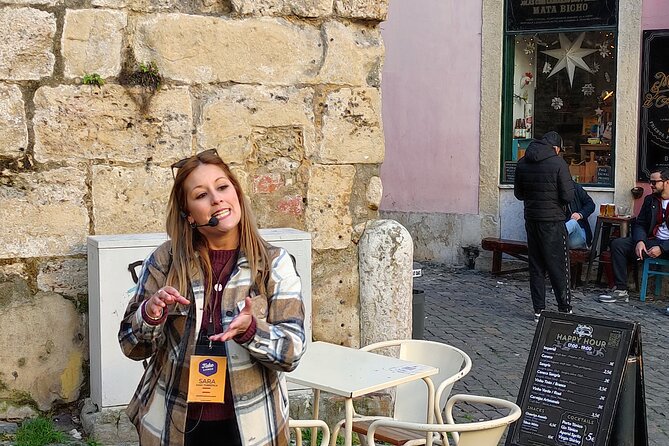
- Strong guides make the difference: Guides including Hugo, Cecilia, Claudia, Belen, Nina, and Fernanda are praised for clear English, humor, music, and vivid storytelling.
- The hills are real: Expect steep grades, uneven lanes, and stairs. Good shoes are essential.
- Postcard views come with historical context: Portas do Sol and Santa Luzia are far more useful when you understand what you are seeing below.
- Ginjinha may be part of the fun: The walk can include a small taste of Lisbon’s cherry liqueur, sometimes served in a chocolate cup.
- The price is flexible but not free: You pay a very low booking price, then offer a tip that reflects the experience.
Why Alfama works best on foot
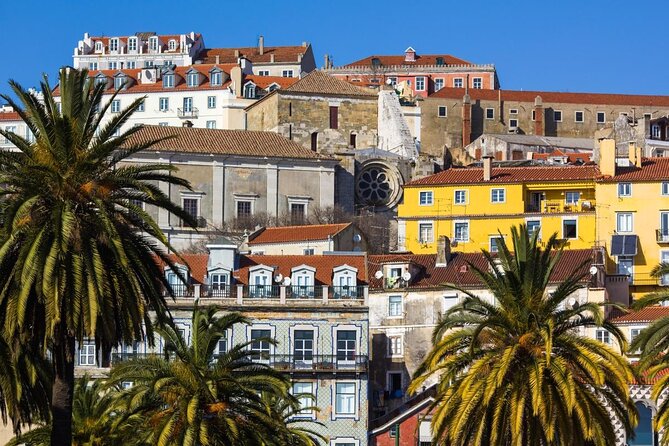
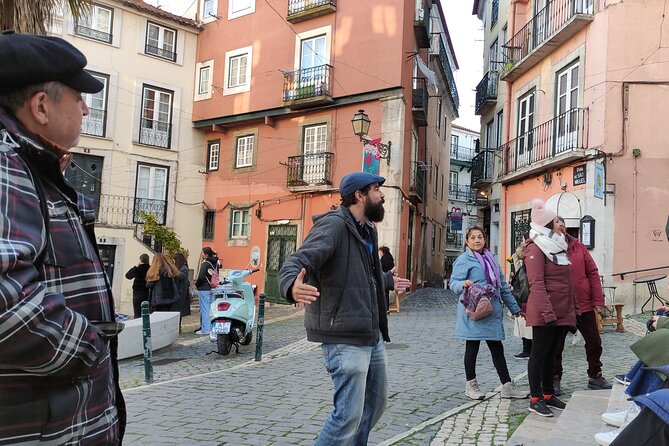
Alfama is not a district you understand from a passing tram ride. Its narrow lanes twist around the hillside, and the route can change character within a few minutes. One moment you are beside a tiled church square. The next, you are looking through a gap between old houses toward the Tagus.
A guide helps you read those changes. You will hear how the district survived the 1755 earthquake better than much of central Lisbon, and how its streets preserve traces of earlier Muslim, Jewish, and Christian communities. The walk also links old events to present-day life, rather than treating Alfama as a museum set.
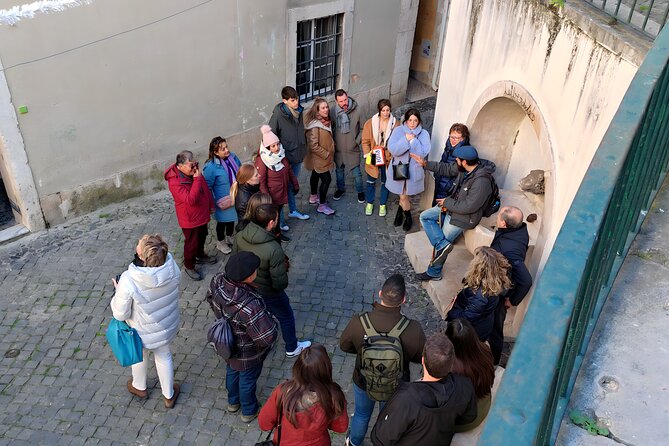
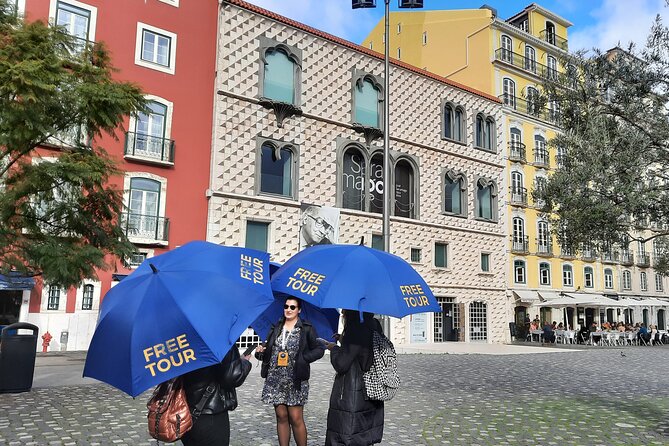
The experience begins at R. dos Bacalhoeiros 12A, near Casa dos Bicos. Look for the blue umbrellas. The meeting point can be confusing because several groups gather in the area, and nearby churches can make map directions less clear than expected. Arrive early and keep an eye out for the umbrella rather than relying only on your phone.
The listed start time is 3:30 pm. That makes the route useful on a day when you want a slower afternoon, though the description also indicates morning and afternoon options may be available. Check your confirmed time carefully before setting out.
More Alfama and Old Town Tours:
- Private Lisbon Sightseeing Tuk-Tuk Tour: Alfama, Belém & More
★ 5.0 · 4,277 reviews - Lisbon: Hills, Alfama, and Mouraria Tour by Electric Bike
★ 4.8 · 3,438 reviews - Best of Lisbon Walking Tour: Rossio, Chiado & Alfama
★ 4.9 · 2,700 reviews
Casa dos Bicos and the first old fountains
The first stop is Casa dos Bicos, home to the Lisbon Museum. Its diamond-shaped stone facade gives you an immediate visual clue that Lisbon’s old quarter is not built in one single style. You spend about 15 minutes here, but the museum admission is not included, and the walk does not go inside.
From there, the route moves to Chafariz D’El Rei, probably the city’s first public fountain. Built in the 13th century, it used water from the Alfama hillside. This is the sort of stop that can look like a minor architectural detail if you pass it alone. With a guide, it becomes a way to understand how people collected water and how the hillside shaped daily life.
The walk continues to Largo do Chafariz de Dentro, once known as the Horse Fountain. This is one of Alfama’s central squares and a good place to pause before the route climbs farther into the district. The explanation of its name and position beside the old Fernandina walls gives you a useful sense of how the medieval city was enclosed.
At Largo de São Rafael, the focus turns to remnants of old Alfama. This is not a grand monument stop. Its value lies in the small details and the stories attached to them. You should expect the guide to spend time explaining how the area changed while retaining its narrow lanes and close-knit feel.
Squares, churches, and everyday Alfama
Largo do Salvador is another modest square with a strong local atmosphere. The guide uses it to discuss customs, culture, and habits that have crossed generations. These pauses matter because they break up the climb and let you look at Alfama as a neighborhood, not just a collection of sights.
I especially like the inclusion of Igreja de São Miguel. The church and its square are linked to Lisbon’s Popular Saints festivities, which fill the city with street celebrations in June. You spend about 15 minutes here, enough time to hear the local connection without turning the stop into a formal church tour.
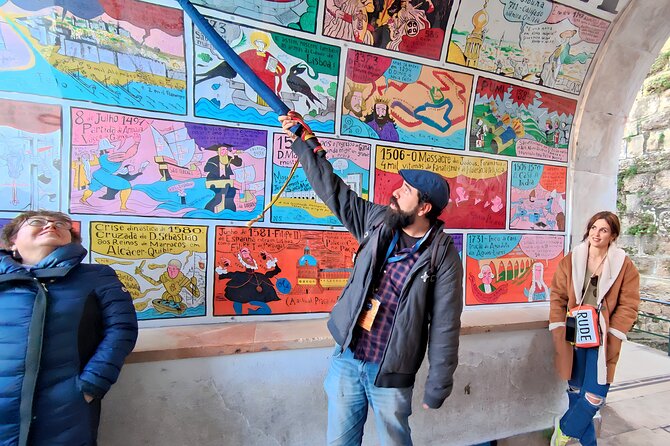
The walk then reaches the History of Lisbon mural by Nuno Saraiva. It is one of the route’s more modern touches, and it helps connect the city’s older stories with contemporary public art. A guide can point out details you might otherwise walk past, especially if you are more focused on finding the next viewpoint.
At this point, the route begins to feel more physical. Some guides adjust the pace and stop in shaded spots, while others may keep a more energetic rhythm. The most useful approach is to tell your guide early if you need a slower climb. The walk has been manageable for older participants when paced carefully, but you should still have moderate physical fitness.
The climb to Santo Estêvão and the postcard views
Depending on the group’s pace, the guide takes you through the maze of Alfama toward Miradouro de Santo Estêvão. The viewpoint is beside the Church of Santo Estêvão and offers a quieter pause than some of Lisbon’s better-known terraces.
This is a good point to appreciate how steep the district really is. The route is not a flat stroll beside the river. You may climb stairs and slopes that are challenging in heat or rain. Comfortable walking shoes are not optional here. A pair with firm soles will make the old paving much easier on your feet.
Miradouro das Portas do Sol is the grand visual reward. The terrace looks over Alfama and toward the river, and its broad view has appeared on countless Lisbon postcards. You will have time for photographs, but the best part is hearing what lies below: the lanes you have just walked, the churches you have passed, and the way the neighborhood spreads down the hill.
Miradouro de Santa Luzia follows, with its tiled details and romantic terrace. It is one of Lisbon’s most attractive stops, but it can also be busy. The guide’s historical explanation gives you a reason to linger beyond taking the standard photograph.
The views are excellent, but they are not the only reason to book this route. Without the earlier stops, Portas do Sol and Santa Luzia can become quick photo breaks. The tour gives those views a setting and a story.
Something different to do with a day in Lisbon:
- Lisbon City Center Tour – The Unmissable Lisbon
★ 5.0 · 22,234 reviews - Lisbon: Sintra, Pena, Regaleira, Cabo da Roca & Cascais
★ 4.7 · 19,656 reviews - Sintra: Pena Palace and Park Entrance Ticket
★ 4.2 · 17,410 reviews - Lisbon: Jerónimos Monastery Entrance Ticket
★ 4.1 · 14,164 reviews
Sé Cathedral and the end near St. Anthony
The route descends toward Lisbon Cathedral, or Sé de Lisboa, the city’s oldest and most important church. Construction began in the 12th century, making it one of the clearest reminders of Lisbon’s medieval Christian past.
The tour does not go inside. Entry costs €5 and is not included, so you can decide later if the interior suits your schedule and budget. This arrangement keeps the walk moving, but it also means you should not book the tour expecting a cathedral visit.
The final stop is the Church of St. Anthony. Lisbon holds Santo António especially dear, and the church provides a fitting end to a walk about the city’s customs, faith, and daily life. The tour ends in a different location from the starting point, so do not plan to return to Casa dos Bicos immediately afterward without allowing time for the walk back or arranging your next stop.
The full route includes 12 stops, with several 10 to 15 minute pauses. The published stop times add up to roughly two hours and 25 minutes, close to the stated two-and-a-half-hour duration. In practice, the exact finish can depend on the group’s pace, questions, photographs, and the number of stairs along the way.
Stories about fado, saudade, and Lisbon’s past
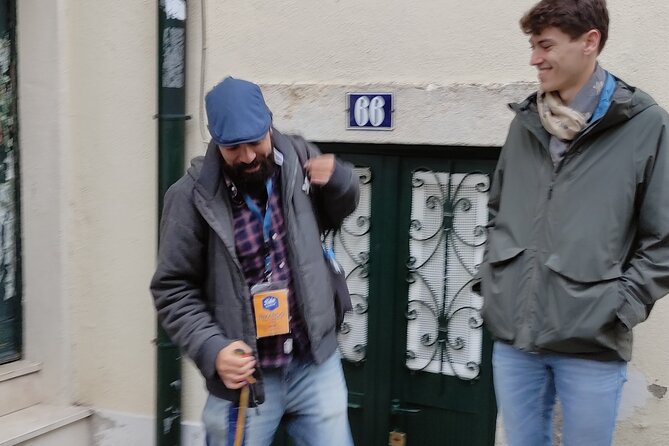
The strongest part of the experience is the guide’s ability to connect places with human stories. Hugo, for example, is noted for explaining fado as more than a music style. His discussion of saudade, the Portuguese feeling of longing and absence, gives the neighborhood’s music a social and emotional setting.
Other guides bring different strengths. Cecilia is described as an entertaining singer, while Claudia is praised for a lively manner and careful pacing. Belen is particularly good at linking Moorish and modern Lisbon, including the way the old streets resisted both the earthquake and later changes under the Salazar regime. Nina, Fernanda, Laura, Jessica, Joao, and Mariam are also named as engaging guides who explain architecture, culture, and local life in clear English.
Because the guide can change, you should not book solely for one person. Still, the range of strong guide reports suggests that the operator has a good bench of storytellers. The most useful guides do not simply recite dates. They answer questions, use humor, point out overlooked details, and make room for photographs.
A small taste of ginjinha may also be part of the walk. This cherry liqueur is often served in a small chocolate cup, and it gives the afternoon a distinctly Lisbon flavor. Food and drinks are not included, so treat this as a possible extra rather than a promised part of the price.
What the $3.62 price really means
At $3.62 per person, the booking price is remarkably low for a two-and-a-half-hour guided walk. But this is a pay-what-you-want format, and a tip at the end is welcomed and expected. You should think of the listed amount as a reservation charge, not the complete cost of the guiding.
That structure can offer good value when the guide is attentive and the group receives useful local advice. You are paying for more than directions between landmarks. A good guide can help you choose a fado venue, understand local food customs, plan the rest of your Lisbon visit, and avoid wasting time in the old quarter.
The group can include up to 25 people, though some departures are much smaller. A small group makes it easier to ask questions and keep a comfortable pace. A full group may feel slower at narrow viewpoints and on stairs, but it can also make the tip-based price feel especially good value.
The experience has a 4.9 rating from 4,936 ratings, with 99 percent recommending it. That is a strong signal, but you should still weigh the physical demands and the variable tip against your own expectations.
Practical advice before you go
Wear shoes with good grip. The hills and stairs are the main challenge, and old paving can be tiring even when the pace is gentle.
Bring water, especially if the afternoon is warm. No food or drinks are included, and the route has multiple climbs. Rain does not necessarily stop the walk, but wet paving can make the slopes less comfortable.
Give yourself extra time to find the blue umbrellas at the starting point. The meeting area can be crowded with several groups, and the exact spot may not be obvious from a map pin.
The tour is offered in English and uses a mobile ticket. Service animals are allowed, and the meeting area is near public transportation. You should have moderate physical fitness and be ready for a route that includes steep grades and stairs.
Free cancellation is available up to 24 hours before the start time for a full refund. Changes or cancellations made within 24 hours are not refunded. The tour also requires a minimum number of participants, so if the operator cancels for that reason, you are offered another date or experience, or a full refund.
Who should book the Alfama walk?
I would choose this tour if you want a human explanation of Lisbon rather than a quick checklist of monuments. It suits first-time visitors, curious walkers, and anyone who wants a better foundation before exploring fado, the old churches, or the city’s viewpoints alone.
It is also a good choice early in your Lisbon stay because the guide offers suggestions for the rest of your visit. You may find the local advice as useful as the formal route.
I would hesitate if you have difficulty with steep hills, stairs, or uneven streets. The walk can be paced slowly, but it cannot remove Alfama’s geography. If your main goal is to enter Lisbon Cathedral, this is not the right tour, since the cathedral interior is not included.
Should you book it?
Yes, if you can handle the hills and understand the tip-based pricing. The route gives you fountains, churches, public art, old walls, fado context, and superb views without requiring a full day. Its real value comes from the guide, so plan to tip fairly when the storytelling, pacing, and local advice serve you well.
If you want an easy, flat introduction to Lisbon, choose another activity. If you want Alfama to feel like a place where people lived, celebrated, worked, prayed, and sang, this walk is a strong choice.
FAQ
How long does the Alfama tour last?
The tour lasts approximately two hours and 30 minutes.
What time does the tour start?
The provided schedule lists a 3:30 pm start time. The activity information also indicates that morning or afternoon times may be available, so check the confirmed time when booking.
Where does the tour begin?
It begins at R. dos Bacalhoeiros 12A, 1100-070 Lisboa, Portugal. Look for the blue umbrellas.
Where does the tour end?
The tour ends at a different location from the starting point. The final listed stop is the Church of St. Anthony.
Is the tour conducted in English?
Yes. English is the offered language.
Is the tour suitable for people with limited mobility?
You should have moderate physical fitness. The route includes steep hills, stairs, and uneven streets, so it may not suit people who have difficulty with these conditions.
Are admission fees included?
Most stops are free, but Casa dos Bicos and Lisbon Cathedral do not include admission. Cathedral entry is listed as €5, and the tour does not go inside.
Can I cancel for a refund?
Yes. You can cancel at least 24 hours before the start time for a full refund. Cancellations or changes made less than 24 hours before the start time are not refunded.
Just reviewed in Lisbon
- Lisbon: Morning of Equestrian Art with Lusitano Horses★ 4.4 · 87 reviews
- Lisbon: Entry Tickets to Mosteiro de São Vicente de Foram★ 4.6 · 50 reviews
- Lisbon: National Palace of Ajuda E-Ticket & City Audio Guide★ 4.1 · 87 reviews
- Lisbon: Early Morning TukTuk Tour – hotel/cruise ship pickup★ 4.9 · 45 reviews
- Sintra: Quinta da Regaleira e-Ticket & Sintra City Audios★ 4.1 · 12 reviews
- Lisbon E-Bike Tour TAGUS★ 5.0 · 3 reviews
- Lisbon: E-bike Trip from the Sintra Mountains to Cascais Sea★ 5.0 · 67 reviews
- Lisbon: Discover Belem by electric Tuk Tuk★ 4.9 · 86 reviews
Alfama and Old Town Tours, compared.

Private Lisbon Sightseeing Tuk-Tuk Tour: Alfama, Belém & More
Read our review →
Hills, Alfama, and Mouraria Tour by Electric Bike
Read our review →
Best of Lisbon Walking Tour: Rossio, Chiado & Alfama
Read our review →
Lisbon Small-Group Food Tour with 18 Tastings in Alfama District
Read our review →
Lisbon E-Bike Tour Commerce Square, Mouraria and Alfama
Read our review →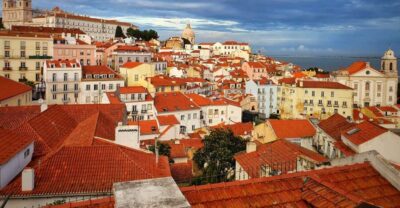
Old Town TukTuk Tour and Scenic Viewpoints in Alfama
Read our review →
Alfama Tour and Live Fado with Traditional Dinner
Read our review →
Browse the lists this tour appears in