
Reviewed · LISBON
Introduction to Climbing in Pilar 7 Lisbon
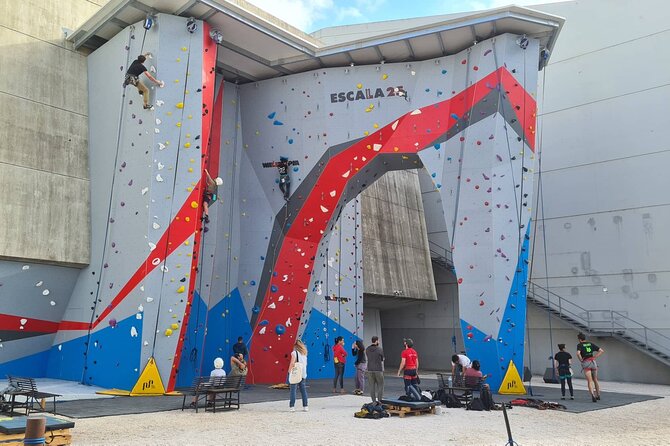
The striking part of this experience is simple: you get to learn climbing beneath Lisbon’s Ponte 25 de Abril, the city’s famous red suspension bridge. At Escala25, beginners use bouldering walls and auto-belay routes that reach up to 12 metres, with a guide beside you for the one-hour session.
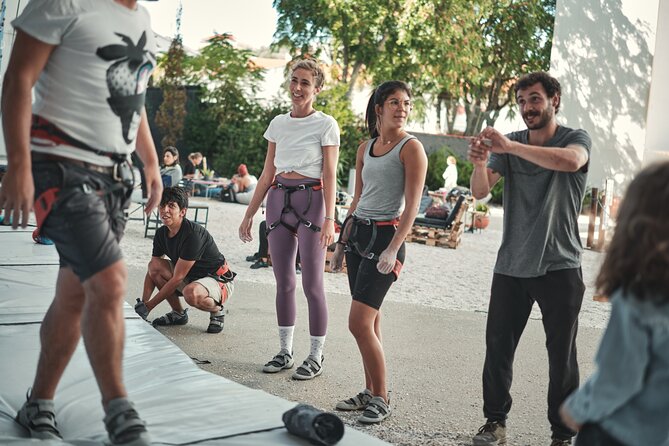
I like two things right away. The equipment and day pass are included, so you are not paying for a short lesson and then being sent away. I also like the small group limit of eight people, which gives the guide room to help with technique and confidence. Antonio has been praised for encouraging first-time climbers, while Patrick has helped beginners find their footing.
The main consideration is the weather. This is an outdoor activity, and poor conditions can lead to a date change or full refund. The climbing session itself lasts about an hour, so you should see the all-day access as a useful extra, not as part of a long guided tour.
Key points to know before climbing at Pilar 7
- Climb beneath the 25 de Abril Bridge: Escala25 places your activity beside one of Lisbon’s most recognizable structures.
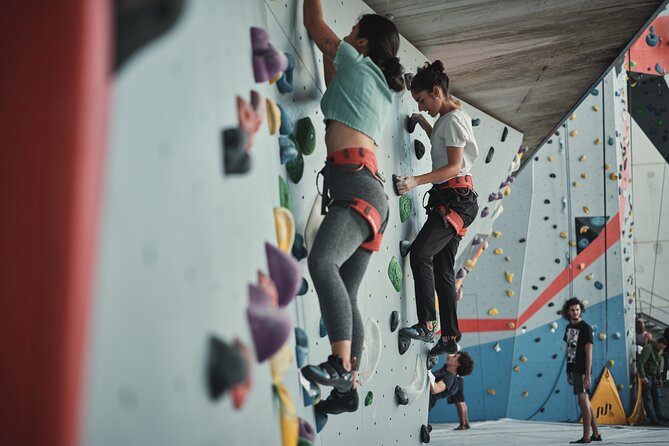
- Routes reach up to 12 metres: The auto-belay section lets beginners practice climbing without needing a partner to manage a rope.
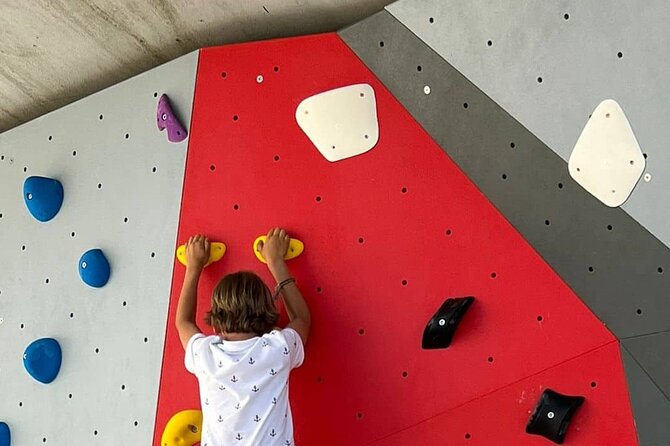
- Bouldering is part of the lesson: You can learn basic movement at lower height before trying taller routes.
- A guide stays with you for one hour: The session is built for first-timers and mixed ability groups.
- Your ticket includes a day pass and safety equipment: You can return to the climbing area after the guided introduction during the same day.
- The group is capped at eight people: This is more personal than a large activity with one instructor addressing a crowd.
Why climbing beneath the 25 de Abril Bridge feels different
Lisbon has no shortage of viewpoints, tiled streets, and riverfront walks. Escala25 gives you a very different way to see the city’s famous bridge. Instead of simply photographing the Ponte 25 de Abril, you are close to its structure, learning how to move across climbing routes beneath it.
The setting gives this beginner lesson a clear sense of place. You are not in a standard indoor gym with plain walls and no connection to Lisbon. You are at Avenida da Índia, beside Pilar 7, where the bridge itself becomes part of the experience.
The activity is called an introduction to climbing for good reason. You do not need previous climbing experience, and the session is designed for all ages and abilities. That does not mean every route will feel easy. It means you can begin with basic movement and build from there, with the guide helping you decide how much challenge suits you.
The setting also makes this a useful choice for families. Children and adults can take part together, and the climbing areas offer different levels of challenge. The information provided does not give a minimum age, height limit, or weight limit, so you should check those details before booking if they matter for your group.
Still choosing? These other Lisbon trips come up in the same search.
- Lisbon City Center Tour – The Unmissable Lisbon
★ 5.0 · 22,234 reviews - Lisbon: Sintra, Pena, Regaleira, Cabo da Roca & Cascais
★ 4.7 · 19,656 reviews - Sintra: Pena Palace and Park Entrance Ticket
★ 4.2 · 17,410 reviews
What happens during the one-hour introduction
Your meeting point is Escala25 at Avenida da Índia, Ponte 25 de Abril 52, Pilar 7, 1300-299 Lisbon. The activity begins and ends at the same place, which keeps the plan simple. You do not need to arrange transport between separate lesson sites.
The hour is focused on learning the basics. Expect the guide to introduce you to the climbing area, safety equipment, and the way the bouldering and auto-belay sections work. The exact teaching order is not specified, but the two areas give you a sensible progression: practice movement lower down, then try taller routes when you feel ready.
Bouldering lets you work on climbing technique without going high. You can focus on hand and foot placement, balance, and how to read a route. This is useful for first-time climbers because you can get used to the wall before facing the added height of a 12-metre route.
The auto-belay section provides the taller challenge. An auto-belay system catches you as you come down, so you do not need a climbing partner to operate the rope. The guide remains important here. You still need to use the equipment correctly, follow instructions, and choose a route that suits your ability.
The lesson is not a sightseeing tour with climbing added as a minor extra. It is an active introduction, so you should expect to spend the hour moving, listening, trying, and perhaps making several attempts at the same section. That is part of the appeal. You are given a real chance to learn rather than simply being strapped in for a quick photo.
The guide matters more than the wall
For a first climbing session, the instructor can make or break the experience. A tall route may look exciting, but a calm explanation and a little encouragement often matter more than the height. Antonio is specifically praised for helping beginners attempt climbs they did not expect to manage. Patrick is also singled out for being friendly and helpful.
Those details suggest the tone is supportive rather than competitive. You can ask for help, take a break, or try a different route without needing to prove anything. The group limit of eight should help the guide give attention to individual participants, although the amount of one-to-one time will depend on the group’s size and pace.
The activity also suits people with mixed experience. A first-timer can work on beginner routes while a more confident climber tries something harder. The information notes that more advanced climbers use the arch, so the venue is not limited to complete beginners. Still, this particular booking is an introduction, not a specialist coaching session for experienced climbers.
If you are booking for a family, set expectations before arriving. Some children may enjoy the height and challenge, while others may prefer bouldering. A good instructor can help, but the session will be more enjoyable if nobody feels pressured to reach the highest point.
Bouldering first, auto-belay second
The bouldering area is the natural starting point for many beginners. It gives you a chance to learn how climbing feels without immediately dealing with a tall wall. You can practice using your legs, shifting your weight, and looking for the next hold instead of pulling only with your arms.
That basic lesson has practical value. New climbers often grip too hard and tire quickly. They may also look only at their hands. A guided introduction can help you think about body position and route planning before you attempt the taller walls.
The auto-belay routes reach up to 12 metres, which is high enough to feel like a genuine challenge. The system removes the need for a rope partner, but it does not remove the feeling of height. If you are nervous, begin with a route that feels manageable and let the guide talk you through the process.
The venue can work for both cautious beginners and people who want a physical test. You might finish the hour proud of reaching the top of a route, or you might find that the best part was simply getting higher than expected. The session leaves room for both outcomes.
Something different to do with a day in Lisbon:
- Lisbon: Jerónimos Monastery Entrance Ticket
★ 4.1 · 14,164 reviews - Lisbon: History, Stories and Lifestyle Walking Tour
★ 4.8 · 10,902 reviews - Lisbon: Sunset Boat Party Cruise with DJ and Open Bar
★ 4.5 · 10,378 reviews - Lisbon: Pena Palace, Sintra, Cabo da Roca, & Cascais Daytrip
★ 4.7 · 9,981 reviews
What the day pass adds to the $34.69 price
At $34.69 per person, this is not just a one-hour guided lesson. The price includes the guide, safety equipment hire, and all-day entrance. That changes the value calculation.
If you only want a quick introduction and do not plan to climb again that day, you are mainly paying for the instruction and setting. Those are still meaningful parts of the cost, particularly if you want a guide to help you use the equipment safely.
If you have the time and energy to return to the climbing area, the all-day pass makes the price more attractive. You can use the introduction to learn the basics, take a break, and continue climbing during the same day. The supplied information does not explain the exact rules for re-entry or how long equipment remains available, so confirm those details at the venue.
The included equipment also saves you from arranging your own climbing gear. For a visitor on a Lisbon city break, that is convenient. You can add the activity to your plans without carrying specialist equipment around Portugal.
I would see this as a good-value choice for someone who wants a memorable activity rather than a simple sightseeing stop. It is less compelling if you have no interest in climbing after the first attempt, or if your schedule is so tight that you cannot make use of the day pass.
Who should book this Lisbon climbing experience
This activity is a strong fit for families, couples, and first-time climbers who want something physical and unusual. The available information says most people can participate, and the small group size should help keep the lesson manageable.
It also suits an adult who wants to test climbing without committing to a full course. You receive an introduction, equipment, and access in one booking. That makes it easier to find out if climbing is for you.
The experience may be especially appealing if you have already seen the 25 de Abril Bridge from the riverfront or a Lisbon viewpoint. Climbing beneath it gives you a closer connection to the structure and turns a familiar landmark into an activity.
You should think twice if you dislike heights, cannot take part in an active session, or want a long guided excursion through Lisbon. This is not a bridge tour, history talk, or city sightseeing experience. It is a one-hour climbing lesson in a memorable location.
People with previous climbing experience can also enjoy the venue, but the introduction may feel basic if you already know how to use climbing equipment and auto-belays. The all-day access may still make it worthwhile, especially if you want to climb at your own pace after the lesson.
Getting there and planning your visit

The meeting point is Escala25, at Avenida da Índia, Ponte 25 de Abril 52, Pilar 7, Lisbon. The site is near public transportation, and the activity returns to the same location. Service animals are allowed.
Give yourself enough time to reach the meeting point. The session lasts only about an hour, so arriving late could reduce the time available for instruction. Your confirmation is issued at booking, and you should keep the meeting details accessible on the day.
Wear clothing that lets you move comfortably. The provided information does not state a specific dress code, footwear rule, or changing-room arrangement, so ask Escala25 if you need exact guidance. The same applies to age restrictions and any limits for children.
The activity requires good weather. If conditions make the session unsafe, Escala25 offers another date or a full refund. You can also cancel for a full refund if you do so at least 24 hours before the start time. Cancellations or changes made inside that window are not refunded or accepted.
Is climbing at Escala25 worth your Lisbon time?
I would book this experience if you want to pair a famous Lisbon landmark with a hands-on activity. The bridge setting gives the lesson a strong sense of place, while the bouldering and auto-belay sections make it approachable for beginners.
The best value comes from using the included day pass. If you can stay longer, you get more from the equipment hire and the climbing area than you would from a one-hour lesson alone. Ask about the day pass details when you arrive so you know how to make use of it.
Book with realistic expectations. You will not spend the day touring the bridge, and the guided portion is only about an hour. But for that hour, you get instruction, safety gear, a small group, and a chance to climb up to 12 metres beneath one of Lisbon’s most recognizable structures.
If your family wants a shared challenge, or you and a partner want an unusual break from museums and viewpoints, this is a smart pick. If heights or active sports are not for you, choose a calmer Lisbon activity instead.
FAQ
Where does the climbing experience begin?
It begins at Escala25, Avenida da Índia, Ponte 25 de Abril 52, Pilar 7, 1300-299 Lisbon, Portugal.
Where does the activity end?
The activity ends back at the Escala25 meeting point.
How long does the introduction to climbing last?
The guided introduction lasts approximately one hour.
Is climbing equipment included?
Yes. Safety equipment hire is included in the experience.
Does the ticket include access beyond the guided hour?
Yes. The experience includes all-day entrance, along with the one-hour guided session.
How high are the climbing routes?
The auto-belay section has multiple routes reaching up to 12 metres high.
Is the activity suitable for beginners?
Yes. The introduction is designed for all ages and abilities, including people learning the basics of climbing.
How many people can join the activity?
The maximum group size is eight participants.
What happens if the weather is poor?
The experience requires good weather. If it is canceled because of poor conditions, you can choose another date or receive a full refund.
Just reviewed in Lisbon
- Private tour Lisbon – full day★ 5.0 · 8 reviews
- Private Tour: Portuguese Food and Wine Tour★ 5.0 · 33 reviews
- Lisbon Football Experience – Private stadium and Museum Tour★ 4.0 · 10 reviews
- Lisbon and Sintra Essence 8H – Private Tour★ 5.0 · 5 reviews
- Private Tour: Lisbon Sunset Walking Tour with Fado Show and Dinner★ 5.0 · 30 reviews
- Private Catamaran Tour: Lisbon coast cruise with barbecue and drinks★ 5.0 · 20 reviews
- Lisbon: Helicopter Tour over Cascais & Cabo da Roca★ 5.0 · 4 reviews
- Private Tour Fátima – Nazaré – Batalha – Óbidos★ 5.0 · 6 reviews