
Reviewed · LISBON
Lisbon’s Post-Colonial Feast
Lisbon’s food story reaches far beyond pastel de nata and cod. This five-hour walk links Brazilian, Goan, and other former-colony influences to the streets, squares, and food counters of central Lisbon. You eat as you learn, with the city’s colonial past kept firmly in view rather than polished away.
I like the small maximum of seven people, which makes it easier to ask questions and share a table. I also like the clear connection between each bite and Portugal’s past, from trade and migration to slavery, repression, and exploitation. The one caution is that this is a serious history walk as well as a food tour, and one planned Angolan stop may not always be available.
Key points to know
- A food tour with a difficult subject: Expect direct discussion of colonial rule, slavery, and the lasting effects on cuisine.
- Five hours and several stops: The route begins at Praça do Chile at 11 a.m. and finishes back at the same meeting point.
- A very small group: No more than seven people makes conversation with the guide and fellow diners easier.
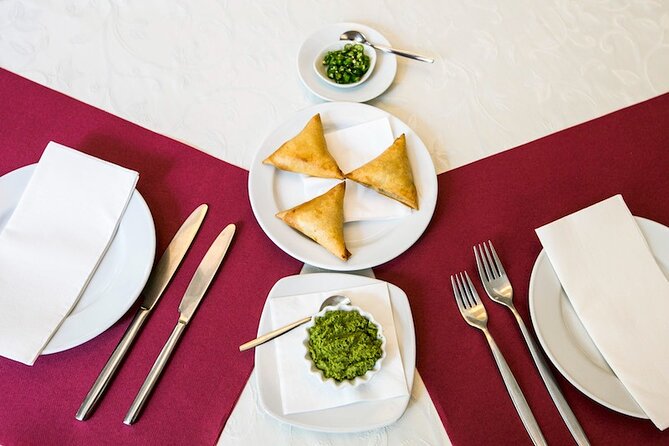
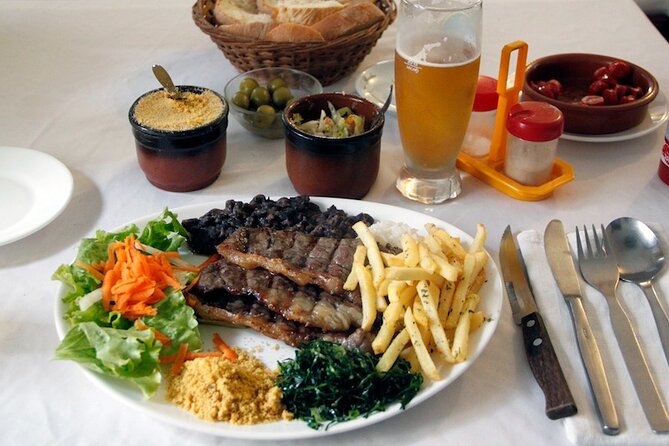
- Food from Portugal’s former colonies: Brazilian and Goan dishes are part of the experience, alongside Portuguese specialties and chocolate.
- Guide Celia has earned special praise: Her warmth and grasp of mixed Portuguese food cultures were singled out by one group.
- Plan for a substantial meal: The food comes in several stages, including chorizo stew, and can leave you very full.
Why this Lisbon food walk is different
Many Lisbon food tours focus on familiar Portuguese staples. This one asks a more useful question: how did Portugal’s former colonies shape what people eat in Lisbon today?
That question gives the walk its purpose. You are not simply moving between restaurants for snacks. You are looking at the links between migration, empire, trade, and the food now found in Portuguese neighborhoods. The guide discusses the country’s role in slavery, repression, and exploitation, so the pleasant parts of the meal sit beside a frank account of how these food traditions reached Portugal.
That balance matters. It keeps the tour from treating Brazilian, Goan, Angolan, or other foods as decorative additions to a Portuguese menu. Instead, you get a chance to understand the people and past behind them.
The tone is likely to suit you if you enjoy asking where a dish came from and who carried it across borders. It may be less suitable if you want a quick tasting route with little background. Five hours is a long time for a food walk, but the subject needs room, and the food stops are spread across a series of city locations.
Still choosing? These other Lisbon trips come up in the same search.
- Lisbon City Center Tour – The Unmissable Lisbon
★ 5.0 · 22,234 reviews - Lisbon: Sintra, Pena, Regaleira, Cabo da Roca & Cascais
★ 4.7 · 19,656 reviews - Sintra: Pena Palace and Park Entrance Ticket
★ 4.2 · 17,410 reviews
Starting at Praça do Chile at 11 a.m.
The walk begins at Praça do Chile 2 at 11 a.m. This is the point to arrive ready for a full morning and afternoon on foot. The activity ends back at the same meeting point, so you do not need to work out a separate return route at the end.
The meeting area is near public transportation, which helps if you are staying outside central Lisbon. You receive a mobile ticket, and the tour is offered in English. The group is capped at seven people, a useful detail for a walking tour that depends on conversation and shared tasting.
I would eat lightly before setting out. The day includes chocolate, chorizo stew, and several other foods, and one group of six found the meal so filling that they were glad an additional Angolan stop was no longer operating. That is not a complaint about the food. It is practical advice: do not treat this as a quick nibble between lunch plans.
Paço da Rainha and the first look at Lisbon’s food story
The first listed stop is Paço da Rainha, where you spend about 45 minutes taking in the sights on the way to a food stop. Admission is included, and there is no separate ticket to buy.
The value here is the slow beginning. Rather than sitting down immediately, the guide starts by placing you in the city and pointing out details along the route. The stop is described as a chance to reach a less obvious food find, so you should expect the walking and the setting to be part of the lesson.
Specific dishes at this first point are not fixed in the available details, so do not book expecting a named tasting here. The important thing is the way the route builds context before the larger food stops later in the day.
This early stretch also gives you time to get used to the group. With no more than seven people, introductions can feel natural rather than formal. If you have a question about Portugal’s former colonies, this is a good point to ask it before the tour moves into more specific food examples.
Campo dos Mártires da Pátria and the city’s difficult past
The walk continues to Campo dos Mártires da Pátria for another 45 minutes. Here, the emphasis shifts toward Lisbon’s history and culture.
This is where the tour’s subject becomes more than a menu. Portugal’s colonial story includes slavery, repression, and exploitation, and the guide addresses those facts directly. You may find the discussion uncomfortable at times, but that is part of its value. Food can make history feel close, and it is better to examine the difficult parts than to present colonial influence as a string of cheerful culinary exchanges.
I appreciate this kind of framing because it helps you read the city with more care. A dish shaped by Portugal’s former colonies did not arrive through a simple exchange between equal partners. People, ingredients, labor, and power all played a role. The tour gives you a way to think about those connections while you are still walking through Lisbon.
The square itself is also useful as a pause in a five-hour route. Forty-five minutes at each early stop means the day is not just a rush from one counter to another. The trade-off is pace: if you prefer a compact food crawl, this route may feel slow.
Something different to do with a day in Lisbon:
- Lisbon: Jerónimos Monastery Entrance Ticket
★ 4.1 · 14,164 reviews - Lisbon: History, Stories and Lifestyle Walking Tour
★ 4.8 · 10,902 reviews - Lisbon: Sunset Boat Party Cruise with DJ and Open Bar
★ 4.5 · 10,378 reviews - Lisbon: Pena Palace, Sintra, Cabo da Roca, & Cascais Daytrip
★ 4.7 · 9,981 reviews
Avenida da Fonte Luminosa and the theme of the day
At Avenida da Fonte Luminosa, the guide brings the theme of the walk into sharper focus during another 45-minute stop. You take in the surroundings while discussing the way post-colonial communities and food traditions fit into Lisbon today.
This part should help connect the earlier historical discussion with the tastings that follow. The tour is at its best when the guide explains not only what you are eating but why that food has a place in Portugal. The available details do not name every dish served at this point, so the exact menu may vary.
The setting also reinforces the idea that the tour is about communities, not only restaurant interiors. You move through the city and consider how food cultures become part of urban life. I would keep an open mind here, especially if you came expecting only classic Portuguese food. Brazilian or Goan dishes may not be your first thought when planning a Lisbon food tour, yet that is exactly what gives this walk its point.
Jardim do Torel and the next bite
Jardim do Torel is the fourth stop, with about 45 minutes to enjoy the site and find the next food tasting. As a garden setting, it offers a change of pace after the earlier city streets and historical discussion.
The tour description refers to the next best bite here, but it does not identify the exact food. You should understand this as part of a sequence rather than a guaranteed named dish. The guide decides how to tie the stop to the day’s subject, and the experience depends on what is available at the time.
A garden pause can be welcome during a long walk. It gives you a chance to eat at a calmer pace and talk with the small group. You may also find that the open setting makes it easier to compare impressions with people who have different reasons for booking. Some come for food, others for colonial history, and others simply want a less predictable way to see Lisbon.
Largo de São Domingos and the main food focus
The final listed stop is Largo de São Domingos, where you spend about an hour finding local specialties. This is the longest single stop, so it appears to be the main food-focused section of the route.
The square is associated here with specialties connected to the tour’s post-colonial theme. The supplied details specifically point to chocolate, chorizo stew, Brazilian food, Goan food, and food from other former Portuguese territories. Exact portions and dishes are not listed, so you should allow for some variation rather than expecting a fixed tasting menu.
This is also where the tour’s central idea becomes easiest to understand. A bowl of stew or a sweet can be enjoyable on its own, but the guide adds the missing context. You learn how Portugal’s food has been shaped by places it once controlled and by communities with their own traditions.
One former Angolan restaurant had closed unexpectedly when a recent group took the tour. That may affect the route or the number of tastings on a particular day. The guide may adjust the plan, and you should not assume that every stop will operate exactly as described. Still, the wider range of foods means the experience does not depend on a single restaurant.
What you may eat during the five hours
The food is varied enough to make this more than a pastry-and-coffee outing. Chocolate is included, along with chorizo stew and regional delicacies. Brazilian and Goan food are specifically part of the tour’s appeal, and an Angolan restaurant was previously included in the route before closing.
The combination gives you several types of tasting:
- Sweet food, including chocolate
- Hearty food, including chorizo stew
- Portuguese specialties shaped by outside influences
- Brazilian and Goan dishes
- Other regional foods connected to Portugal’s former colonies
The exact list is not fixed in the information provided, so I would avoid planning dinner at a nearby restaurant immediately afterward. The experience can be filling, especially if you try every serving. If you have dietary restrictions, the available details do not say how they are handled, so ask the provider before booking.
The best approach is to treat the meal as a guided introduction rather than a complete survey of all post-colonial cuisines in Lisbon. Five hours gives the guide time to make several connections, but no single walk can represent every community or dish.
The guide and the value of a seven-person group
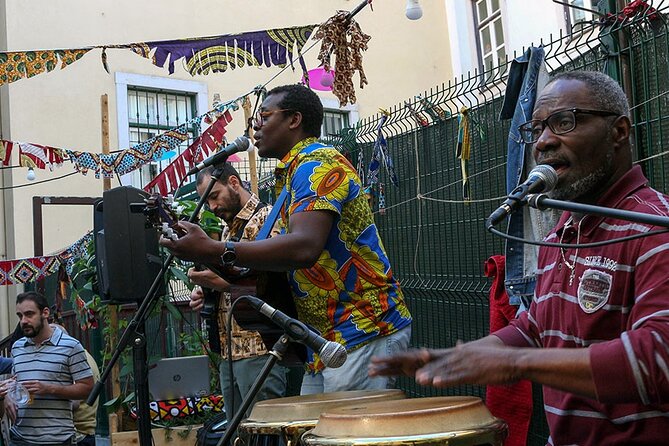
Guide Celia received particular praise for being warm and well informed about the mixed cultures that shaped Portuguese food. If she leads your walk, you can expect a personal style that suits a tour built around questions and discussion. Guides may vary, but the small group limit remains one of the strongest practical features.
A maximum of seven people changes the feel of the day. You can hear the guide without standing at the back of a crowd, and the group can usually stay together more easily at food counters and in public squares. It also makes it less awkward to ask about colonial history, migration, or an unfamiliar dish.
The format is a good match for solo visitors and couples who want a social experience without joining a large bus group. A group of six also works well for families or friends. One Portuguese father who had visited Lisbon for 50 years still found neighborhoods on this route that he had not explored before. That is a useful reminder that the walk is not only for first-time visitors.
Is $150 a fair price?
At $150 per person, this is not a bargain snack tour. The price makes more sense if you value the guide’s interpretation, the small group, and the amount of time spent eating and discussing the subject.
You are paying for roughly five hours, several food stops, a walking route, and an English-language guide. The group limit of seven is especially important in the price calculation. A cheaper large-group tour may offer more basic tastings but less room for conversation.
The value also depends on your interests. If you mainly want classic Portuguese dishes, you may find a shorter local food tour more direct. If you want to understand how Brazilian, Goan, Angolan, and other influences became part of Lisbon’s food culture, the longer format gives you more substance.
I would compare the cost with what you would spend on several separate meals, but do not expect the entire amount to represent food alone. The historical discussion, route, and guide are central to the experience.
Who should book this experience?
I would recommend it to you if you:
- Enjoy food with a clear historical and social setting
- Want to explore Portuguese connections with former colonies
- Prefer a small group to a large organized tour
- Are willing to discuss slavery, repression, and exploitation in a direct way
- Have five hours available for a slow walking and tasting route
- Like trying Brazilian, Goan, and less expected foods in Lisbon
You may want another tour if you need a very active sightseeing schedule, want only traditional Portuguese dishes, or have a limited appetite. The pace is measured, and the subject is heavier than the title alone might suggest.
The route includes several 45-minute sections before the final one-hour stop, so comfortable shoes and a flexible attitude will help. No special fitness requirement is stated, and most people can take part, but this is still a walking activity lasting about five hours.
Booking, cancellation, and practical details
Confirmation arrives when you book, and the experience is offered with a mobile ticket. It starts at 11 a.m. from Praça do Chile 2 in Lisbon and ends back there.
Free cancellation is available up to 24 hours before the start time for a full refund. Changes or cancellations made less than 24 hours before the start are not accepted for a refund. The cut-off uses local Lisbon time.
The tour requires good weather. If poor weather forces a cancellation, you are offered another date or a full refund. A minimum number of participants is also required, and if that number is not reached, you are offered another date, another experience, or a full refund.
The experience is near public transportation, and most people can participate. The group cannot exceed seven people. It is wise to reserve ahead, since the average booking time is about 55 days before the activity.
Should you book Lisbon’s Post-Colonial Feast?
Book it if you want Lisbon food with a serious story attached. The small group, five-hour format, and direct discussion of colonial power give the experience more weight than a standard tasting walk. Celia’s praised guidance, when available, adds a personal touch, and the range from chocolate to chorizo stew to Brazilian and Goan food keeps the meal varied.
Skip it if you want a fast tour of only familiar Portuguese dishes or if you prefer to avoid difficult historical subjects. For the right reader, though, this is a thoughtful way to connect Lisbon’s present-day food culture with the places and people that helped shape it.
FAQ
Where does the tour start?
It starts at Praça do Chile 2, 1170 Lisboa, Portugal.
What time does the experience begin?
The tour starts at 11 a.m.
Where does the tour end?
It ends back at the original meeting point.
How long does the tour last?
The experience lasts approximately five hours.
What language is the tour offered in?
It is offered in English.
How many people can join the tour?
The activity has a maximum of seven participants.
What foods are included?
The experience includes chocolate, chorizo stew, regional specialties, and foods connected with places such as Brazil and Goa. The exact menu is not specified.
Does the tour discuss Portugal’s colonial past?
Yes. The guide discusses slavery, repression, exploitation, and the relationship between Portugal and its former colonies.
Is the tour near public transportation?
Yes, the meeting point is near public transportation.
Can I cancel for a full refund?
Yes. You must cancel at least 24 hours before the experience starts. Poor weather or failure to meet the minimum number of participants can also lead to an alternative date or a full refund.
Just reviewed in Lisbon
- Private tour Lisbon – full day★ 5.0 · 8 reviews
- Private Tour: Portuguese Food and Wine Tour★ 5.0 · 33 reviews
- Lisbon Football Experience – Private stadium and Museum Tour★ 4.0 · 10 reviews
- Lisbon and Sintra Essence 8H – Private Tour★ 5.0 · 5 reviews
- Private Tour: Lisbon Sunset Walking Tour with Fado Show and Dinner★ 5.0 · 30 reviews
- Private Catamaran Tour: Lisbon coast cruise with barbecue and drinks★ 5.0 · 20 reviews
- Lisbon: Helicopter Tour over Cascais & Cabo da Roca★ 5.0 · 4 reviews
- Private Tour Fátima – Nazaré – Batalha – Óbidos★ 5.0 · 6 reviews