
Reviewed · ALFAMA AND OLD TOWN TOURS
Mouraria: The Multicultural District – Private Walking tour
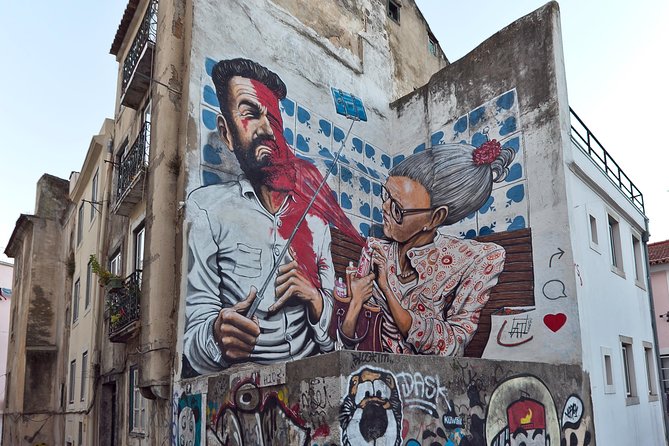
Mouraria is one of Lisbon’s most revealing neighborhoods. Once treated as a poor suburb, it carries Moorish roots, the early story of Fado, old churches, immigrant communities, and bold street art. This private walk connects those layers instead of treating the district as a quick photo stop.
I like the personal format, especially for a neighborhood where narrow lanes and tucked-away corners can be confusing. I also like the mix of viewpoints, architecture, music, and modern social projects. The main drawback is simple: three hours on steep, uneven Lisbon streets can feel tiring, and the tour does not include food or drinks.
- Start with a downtown view: Miradouro Chão do Loureiro gives you a useful first look at the city below.
- Trace Mouraria’s Moorish roots: Churches, old lanes, and the former remparts explain how the district took shape.
- Follow the story of Fado: Largo da Severa is linked to the music’s early life in Mouraria.
- See art in everyday places: Casa da Achada and Largo dos Trigueiros show how art has become part of the neighborhood.
- End in renewed Intendente: The final stop gives you a clear example of Lisbon’s urban change.
- Pay for privacy, not admission fees: At $32.51 per person, the value comes from the guide and the focused route, since all listed stops are free.
Why Mouraria Tells Lisbon’s Story So Well

Many Lisbon walks focus on grand squares, tiled facades, and the river. Mouraria gives you something less polished and, in some ways, more useful. Here, the city’s past and present sit close together.
The district began as a Moorish suburb after the Christian reconquest of Lisbon. Over time, it became associated with poverty and overcrowding. Today, Mouraria is also known for immigrant communities, small local businesses, public art, and its connection to Fado.
That mix gives this walk a clear purpose. You are not simply climbing streets to look at old buildings. You are learning why this part of Lisbon developed differently from the monumental center, and how it is changing again.
The private format matters here. A guide can pause when you have questions, adjust the pace, or spend more time on Fado, architecture, or street art. Luis is named as a guide who has led this walk with particular care, and his approach includes explaining the district’s less familiar corners rather than rushing between landmarks.
Starting Above Downtown at Chão do Loureiro
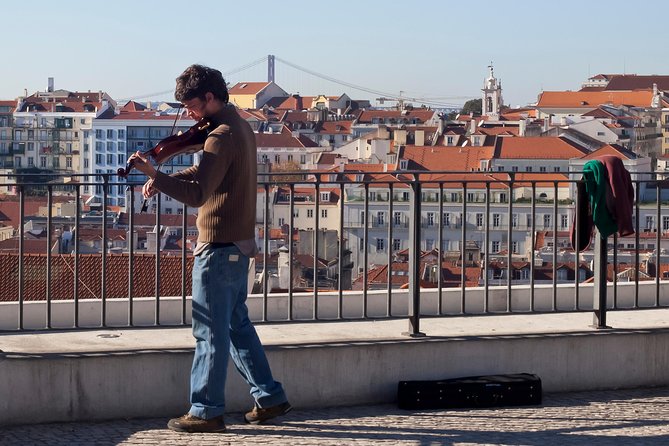
The walk begins at R. dos Fanqueiros 170, a practical downtown meeting point. From there, the first stop is Miradouro Chão do Loureiro, a viewpoint hanging above the lower city between Alfama and Mouraria.
You get about 20 minutes here, and that is a smart opening. Before entering the lanes, you can see how Lisbon’s hills, rooftops, and central streets fit together. The viewpoint helps you understand the district’s position rather than meeting it as a jumble of stairways.
There is no admission charge. The stop is mainly about orientation, so do not expect a long sightseeing visit. I would use the time to ask your guide how Mouraria connects with Alfama and the Baixa area. Those neighboring districts often blend together on a map, but their stories are not identical.
Bring shoes with a firm sole. The route is urban, but Lisbon’s slopes and paving can make a short distance feel longer than expected.
More Alfama and Old Town Tours:
- Alfama Tour in Lisbon Old Town
★ 5.0 · 4,936 reviews - Private Lisbon Sightseeing Tuk-Tuk Tour: Alfama, Belém & More
★ 5.0 · 4,277 reviews - Lisbon: Hills, Alfama, and Mouraria Tour by Electric Bike
★ 4.8 · 3,438 reviews
Church Doors and Mouraria’s Old Center
The next stop, Igreja Paroquial de São Cristóvão e São Lourenço, brings together several architectural periods. You will hear about a Mannerist church, a Baroque palace, a Gothic door, and one of Mouraria’s popular squares.
This is the sort of stop where a guide adds real value. Without context, an old church door or palace facade can look like one more piece of Lisbon stonework. With explanation, you begin to see how religious buildings, noble residences, and public spaces shaped the neighborhood.
The scheduled visit lasts about 20 minutes and is free. The stop is not presented as a long interior tour, so the emphasis is likely to be on the building’s place in Mouraria and the details visible along the route.
I appreciate that the walk does not reduce Mouraria to its Moorish past. The Christian architecture that followed is part of the district’s story too, and this church helps make that change visible.
Casa da Achada and the Art of Public Memory

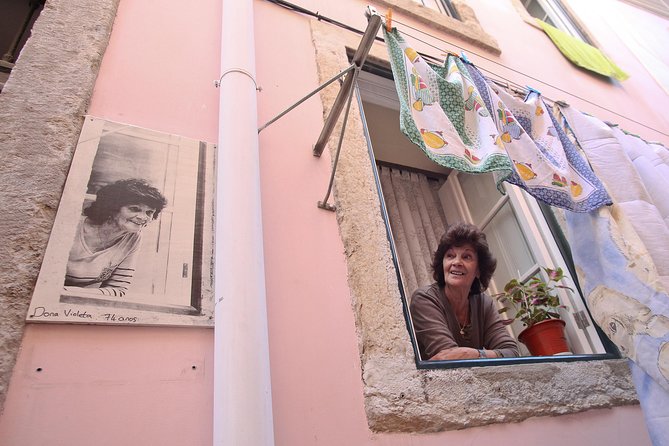
At Casa da Achada, you will visit a social and cultural center connected with the legacy of Mário Dionísio. The setting combines medieval buildings with 21st-century street art, which neatly captures Mouraria’s old-meets-new character.
The stop lasts around 15 minutes. That is enough time for an introduction, but not enough for a full cultural program or museum visit. Think of it as a focused look at how art and community work can give older neighborhoods a new public voice.
This stop also keeps the tour from becoming a procession of churches and viewpoints. Mouraria is not only a place to interpret from the past. It is a living district where social projects and new art respond to the streets around them.
You may find this part especially useful if you enjoy seeing how neighborhoods present themselves today. The guide can connect the art to the buildings and local identity, something that is easy to miss when walking alone.
Largo dos Trigueiros and Camila Watson’s Street Art
At Largo dos Trigueiros, the focus shifts to the street art projects of Camila Watson. The work is described as soulful, and the setting matters as much as the art itself. Murals and public projects here sit against the older fabric of Mouraria rather than inside a formal gallery.
The visit takes about 15 minutes. You will likely stop for photographs and hear how the projects relate to the district. Since the art is part of the public street, the experience depends on what is visible on the day and on the guide’s explanation.
This is one of the strongest reasons to take a local walk instead of following a standard city route. You get introduced to specific work in a particular neighborhood, not just told that Lisbon has street art.
I would not book this tour expecting a dedicated art crawl with dozens of murals. The appeal is the contrast: historic lanes, old buildings, and carefully placed modern work in the same small area.
More Lisbon Walking Tours:
- Lisbon: History, Stories and Lifestyle Walking Tour
★ 4.8 · 10,902 reviews - Best of Lisbon Small-Group Guided Walking Tour
★ 5.0 · 4,869 reviews - Lisbon: Food and Wine Small Group Walking Tour
★ 4.9 · 4,082 reviews - Best of Lisbon Walking Tour: Rossio, Chiado & Alfama
★ 4.9 · 2,700 reviews
Rua Marquês de Ponte de Lima and the Old Remparts

Rua Marquês de Ponte de Lima is presented as Mouraria’s first modern street, set against older palaces, churches, and convents. The contrast makes this a useful place to discuss urban change.
The street also includes the only genuine tower of the old remparts. That detail gives you something concrete to look for. Instead of hearing only broad dates and general history, you can connect the story to a surviving piece of the former defensive line.
The stop lasts about 15 minutes. You will not need an admission ticket, and the guide can point out how the newer street relates to the older buildings around it.
This is a good example of why a private guide helps. A tower can be easy to overlook when you are focused on cafes, traffic, or your next turn. Knowing what you are seeing changes the street from a passage into part of the city’s structure.
Nossa Senhora do Socorro and the Little Punjab

Igreja de Nossa Senhora do Socorro is described as a hub of Mouraria from the time when the area was a Moorish suburb. The stop also brings in the legacy of the Company of Christ and what is called the little Punjab.
That combination points to Mouraria’s layered identity. The church represents a long religious and civic story, while the neighborhood’s South Asian presence reflects more recent migration and daily life.
You have about 15 minutes here. The walk does not promise a food tasting or a visit inside a business, so the focus remains on place, history, and explanation. Still, this may be one of the most useful sections for understanding why Mouraria feels different from more carefully packaged parts of Lisbon.
The multicultural character is not treated as a decorative detail. It is part of the neighborhood’s current identity, placed alongside its Moorish beginnings and Portuguese traditions.
Largo da Severa and the Roots of Fado
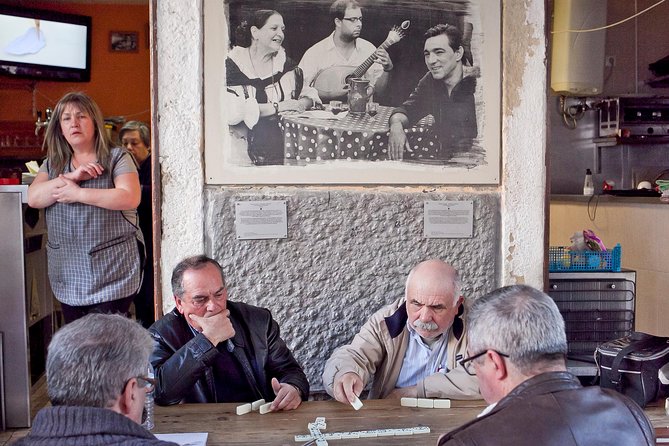
Largo da Severa is the musical heart of the route. It is described as the cradle of Fado, the mournful Portuguese music closely tied to Lisbon.
You get around 20 minutes here. That should give your guide time to explain how Fado is thought to have originated in Mouraria and why this area became associated with the music. The district’s narrow streets and working-class past help explain why Fado developed as more than a stage performance. It grew from local life, memory, hardship, and longing.
If Fado is high on your Lisbon list, this stop adds context that a concert alone cannot provide. You will understand the neighborhood behind the sound.
The wording matters: Fado is thought to have originated here. The guide should explain the tradition without presenting one neat, unquestioned origin story. That balance is useful, since cultural history often has more than one version.
Martim Moniz and Lisbon’s Many Communities
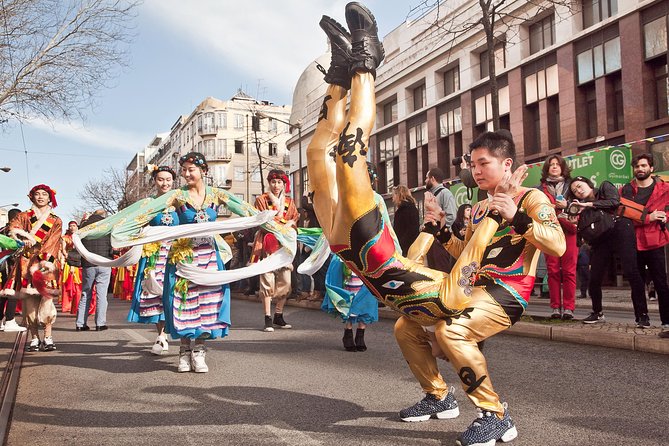
Praça Martim Moniz is one of Lisbon’s most multicultural squares. It provides a broad public setting after the tighter streets of Mouraria.
The visit lasts about 20 minutes. Here, the guide can help you read the square as part of modern Lisbon rather than simply as a transport point or open plaza. The square connects different parts of the city and reflects the many communities that now live, work, and meet in the area.
This is also a good place to think about the limits of a short walking tour. A square can be introduced in 20 minutes, but you will not learn every community’s story or explore every side street. The value is the framework. You leave with a better sense of why Mouraria is often described as multicultural and how that identity fits into the wider city.
The stop is free, like the others. Any drinks, snacks, or alcoholic beverages you buy along the way are your own cost.
Finishing in Intendente’s Urban Renewal Zone
The final stop is Largo do Intendente Pina Manique, near the Intendente underground station. The square is used as a case study in Lisbon’s urban renewal.
That makes a good ending. You have moved from Moorish suburb to Fado district, from old religious buildings to migration and street art, and finally to a neighborhood shaped by change. Intendente gives you a chance to discuss what happens when a once-neglected area receives new attention and investment.
The tour ends here, rather than returning to the original meeting point. That is convenient if you plan to continue exploring the area or use the metro. It also means you should not leave a car or other belongings at the starting point.
The endpoint is a practical advantage, but it is worth planning your next move before you start. Intendente is near the underground station with the same name, so you can continue your Lisbon day without retracing the route.
What the $32.51 Price Really Buys
At $32.51 per person, the tour is reasonably priced for a private three-hour walk, especially if two or more people share the booking. Group discounts may improve the value for a larger party.
You are not paying for monument admissions. Every listed stop is free. You are paying for the route, the explanations, the guide’s local focus, and the ability to ask questions without being part of a large group.
The package includes a local guide, professional guide, professional photographer guide, and private-tour format. That wording suggests the experience is built around guided interpretation and photography, though it does not promise a separate photographer at every departure.
For one person, the minimum booking requirement matters: at least two people must book. Adult pricing applies to all participants, so families should not expect a child rate based on the information available.
I see the best value for couples, friends, and small families who want to understand Mouraria rather than simply pass through it. If you prefer to wander alone and read at your own pace, the price may feel less attractive. If you want a route shaped around your interests, the private format earns its cost.
Timing, Language, and Practical Preparation
The walk lasts about three hours. That is long enough to cover nine stops but short enough to fit into a half-day plan. Because the route includes hills and old streets, I would schedule it when you have enough energy for walking rather than placing it after a full day of sightseeing.
It is offered in English, though the guide may be multilingual. Luis is a named guide associated with the experience, but a specific departure may be led by someone else.
Wear comfortable shoes and carry water. Drinks and snacks are not included, and neither are alcoholic drinks, though those can be purchased. The tour operates near public transportation, and most people can participate, but the supplied details do not promise a step-free route.
You receive confirmation at booking. The cancellation policy allows a full refund if you cancel at least 24 hours before the start time. Changes or cancellations made inside that period are not accepted for a refund.
Who Should Choose This Mouraria Walk
I would choose this tour if you want:
- A close look at a district often missed by first-time city routes
- Moorish, Christian, musical, and modern social history in one walk
- Street art placed in its neighborhood setting
- A private guide who can adjust the discussion to your interests
- A route that ends near a metro station rather than returning to the start
- A meaningful introduction to Fado before attending a performance
I would think twice if you want a relaxed, flat stroll, a food tour, or paid access to major monuments. This experience is about streets, context, and observation. It is not a tasting tour, a concert, or a formal museum visit.
Should You Book It?
Book it if you want to understand why Mouraria matters. The combination of Moorish roots, Fado, street art, immigrant communities, old churches, and urban renewal gives you a fuller picture of Lisbon than a standard postcard route.
The strongest parts are the private format, the Fado connection at Largo da Severa, and the art projects at Casa da Achada and Largo dos Trigueiros. Luis’s warm, adaptable guiding style has been especially well received, though guide assignment can vary.
At $32.51 per person, the walk offers fair value for a focused three-hour introduction. Bring good shoes, keep your expectations centered on local streets rather than grand interiors, and book this one if you want Lisbon explained at neighborhood level.
FAQ
How long is the Mouraria walking tour?
The tour lasts approximately three hours.
How much does the tour cost?
The listed price is $32.51 per person. Group discounts are available.
Is the tour private?
Yes. Only your group participates in the private tour.
What language is the tour offered in?
The tour is offered in English. It may be operated by a multilingual guide.
Where does the tour begin?
The meeting point is R. dos Fanqueiros 170, 1100-227 Lisboa, Portugal.
Where does the tour end?
The tour ends at Largo do Intendente Pina Manique, near the Intendente underground station.
What is included in the price?
The experience includes a local guide, professional guide, professional photographer guide, and private-tour service.
Are food and drinks included?
No. Snacks, drinks, and alcoholic drinks are not included. Alcoholic drinks are available to purchase.
Can I cancel for a full refund?
Yes. You can cancel at least 24 hours before the experience start time for a full refund. Cancellations or changes made less than 24 hours before the start time are not refunded or accepted.
Just reviewed in Lisbon
- Private tour Lisbon – full day★ 5.0 · 8 reviews
- Private Tour: Portuguese Food and Wine Tour★ 5.0 · 33 reviews
- Lisbon Football Experience – Private stadium and Museum Tour★ 4.0 · 10 reviews
- Lisbon and Sintra Essence 8H – Private Tour★ 5.0 · 5 reviews
- Private Tour: Lisbon Sunset Walking Tour with Fado Show and Dinner★ 5.0 · 30 reviews
- Private Catamaran Tour: Lisbon coast cruise with barbecue and drinks★ 5.0 · 20 reviews
- Lisbon: Helicopter Tour over Cascais & Cabo da Roca★ 5.0 · 4 reviews
- Private Tour Fátima – Nazaré – Batalha – Óbidos★ 5.0 · 6 reviews
Alfama and Old Town Tours, compared.

Private Lisbon Sightseeing Tuk-Tuk Tour: Alfama, Belém & More
Read our review →
Hills, Alfama, and Mouraria Tour by Electric Bike
Read our review →
Best of Lisbon Walking Tour: Rossio, Chiado & Alfama
Read our review →
Lisbon Small-Group Food Tour with 18 Tastings in Alfama District
Read our review →
Lisbon E-Bike Tour Commerce Square, Mouraria and Alfama
Read our review →
Old Town TukTuk Tour and Scenic Viewpoints in Alfama
Read our review →
Alfama Tour and Live Fado with Traditional Dinner
Read our review →Browse the lists this tour appears in