
Reviewed · ALFAMA AND OLD TOWN TOURS
Alfama Photo Walk – Lisbon Photography Experience Led by a Local
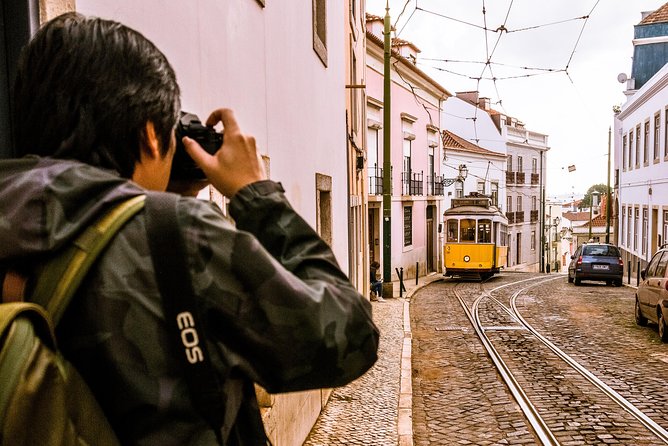
Alfama is one of Lisbon’s best places to learn street photography because every turn changes the picture: tight lanes, bright walls, old churches, moving trams, and sudden views over the Tagus. I like that Carlos Reveles teaches you to wait for the right moment rather than simply march you from one postcard view to the next. I also like the small maximum group of five, which leaves room for personal advice.
The main drawback is the walking itself. Alfama is steep and uneven, so you need good shoes and enough energy to carry your own camera for three hours. The $112.82 price is fair if you want real instruction, but it is more than a basic sightseeing walk.
Key points before you book
- Small groups make the instruction personal: The tour is limited to five people, so Carlos can adapt tips to your camera, phone, and experience.
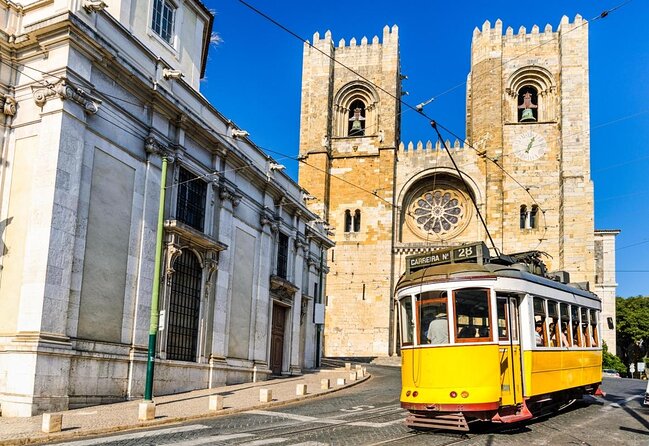
- You photograph several sides of Lisbon: The route includes Alfama’s lanes, São Vicente’s trams, church architecture, a rooftop viewpoint, and Lisbon Cathedral.
- The pace favors better pictures: You are given time to study light, choose an angle, and wait for a useful moment.
- Bring your own equipment: Photography gear is not supplied, so pack your camera, phone, spare battery, and any lens you plan to use.
- Expect hills and cobblestones: Comfortable walking shoes matter more here than fancy camera equipment.
- The timing has real value: Book it early in your Lisbon stay if you want local orientation and ideas for photographing the city on your own.
What this Alfama photo walk really offers
This is not a quick stop at two scenic viewpoints. It is a guided lesson in seeing Lisbon. Over about three hours, you walk from the Chafariz das Moiras to Largo da Sé while working on composition, light, timing, and subject choice.
Carlos Reveles combines photography instruction with local background. That combination matters. A good street photograph often depends on understanding the setting, not just adjusting a camera. As you move through Alfama, he can point out why one doorway works better than another, how a tram changes the balance of a picture, or where a small shift in position gives you cleaner lines.
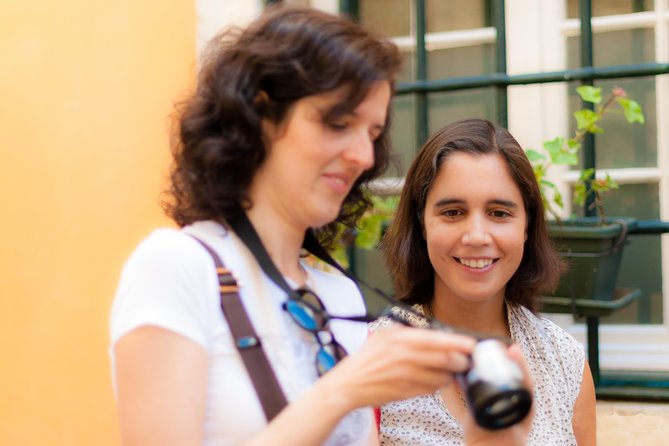
The group size is one of the strongest features. With no more than five people, this should feel far less rushed than a large photo class. You can ask about your own equipment and receive guidance suited to your level. The instruction is designed to work with different cameras and experience levels, so beginners do not need to arrive knowing technical photography terms.
You are responsible for your own equipment. A phone is likely enough for basic framing practice, while a camera gives you more control over shutter speed, focus, and exposure. The important point is to bring the device you actually want to use in Lisbon. This is a hands-on walk, not a demonstration where you watch someone else take the pictures.
More Alfama and Old Town Tours:
- Alfama Tour in Lisbon Old Town
★ 5.0 · 4,936 reviews - Private Lisbon Sightseeing Tuk-Tuk Tour: Alfama, Belém & More
★ 5.0 · 4,277 reviews - Lisbon: Hills, Alfama, and Mouraria Tour by Electric Bike
★ 4.8 · 3,438 reviews
Starting among Alfama’s narrow lanes
The first hour takes place in Alfama, the oldest-feeling part of the route and the place with the broadest range of subjects. Its narrow streets create compressed views, changing light, layered walls, and glimpses of ordinary neighborhood life.
This is where the teaching about light becomes especially useful. In a district with tight lanes and open corners, brightness can change quickly as you walk. One section may be shaded while the next catches strong sun. Carlos helps you read those changes and find practical shooting positions instead of relying on luck.
You will work with the kinds of scenes that make Alfama so appealing: doorways, walls, stairways, small squares, and people going about their day. The aim is not simply to collect famous views. You learn to notice how lines lead the eye, how a person can give scale to a street, and how waiting a few seconds can turn a plain frame into a more complete picture.
I especially like this part for people who tend to photograph everything from eye level. A local guide can encourage you to change height, move closer, leave more space, or use the shape of a street as a frame. Those are simple ideas, but they are often more useful than a long technical lecture.
The drawback is that Alfama’s beauty comes with physical work. The lanes are narrow, and the district is hilly. Cobblestones can make walking slower, and stopping to compose a picture means you may spend more time on your feet than you expect. Wear shoes with a firm sole and keep your camera bag light.
Trams and church lines in Graça and São Vicente
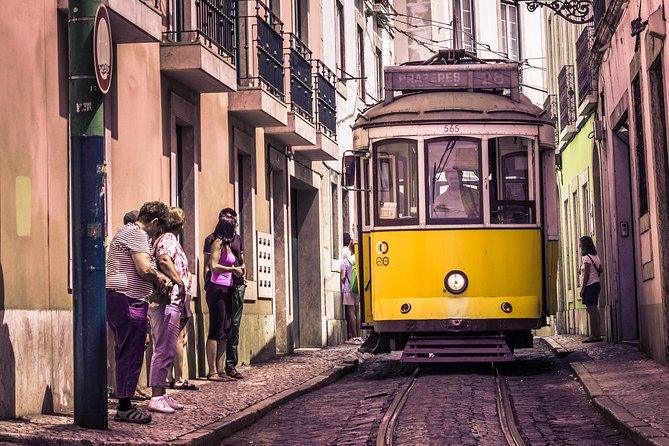
The route then moves toward Graça and São Vicente for about 30 minutes of focused practice. Here, the subject changes from intimate lanes to moving trams and formal church architecture.
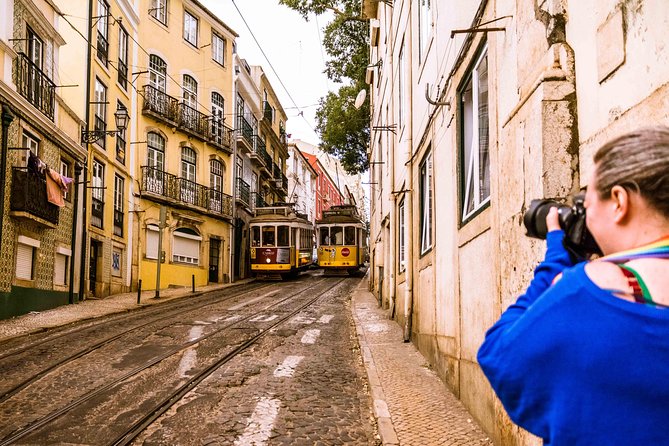
Photographing a tram in motion gives you a useful exercise in timing. You need to decide whether to freeze the vehicle sharply or allow some motion, then balance it with the street around it. Along Calçada de São Vicente, Carlos shows you how to work with both the moving subject and the fixed buildings.
This is a good lesson even if you have no interest in technical photography. It teaches you to watch what is about to happen instead of only recording what is already in front of you. You may find yourself thinking about position, background, direction, and timing in a more deliberate way.
At Igreja de São Vicente de Fora, the subject becomes architectural. The church gives you strong shapes and fixed lines, which are useful after the unpredictability of the trams. You can practice straightening verticals, filling the frame with detail, or setting the building against its surroundings.
The half-hour allocation means this is an introduction rather than an extended architecture class. That is appropriate for a walking tour, but anyone hoping to spend a long time inside or making highly detailed studies should keep expectations in check. The value is in learning how to approach different subjects within the same city walk.
The rooftop view from Miradouro de Santo Estevao
The stop at Miradouro de Santo Estevao lasts about 30 minutes and changes the rhythm again. After the close quarters of Alfama, you get a broad view over rooftops toward the Tagus River.
This is the place to practice wider compositions. Instead of concentrating on one doorway or passing tram, you need to decide how much sky, roofline, and water belongs in the frame. The viewpoint also gives you a chance to consider layers: foreground buildings, middle-distance rooftops, and the river beyond.
Carlos uses the stop to discuss how to make a broad view more than a flat record. You might look for a strong foreground shape, a diagonal roofline, or a detail that leads your eye outward. These ideas are useful later when you photograph Lisbon on your own from other viewpoints.
The stop is described as serene, which suits its role in the route. It gives you time to slow down and review what you have been doing. If you have been shooting quickly, this is a good moment to check your images and notice which angles are working.
Light will affect this stop. The experience requires good weather, and the quality of a distant view depends on conditions. If poor weather cancels the walk, you are offered another date or a full refund. Since the tour is built around outdoor photography, that policy makes practical sense.
More Lisbon Photo Shoots:
- Photoshoot with a Local Professional Photographer in Lisbon
★ 4.5 · 83 reviews - Romantic Photoshoot Experience for Couples in Lisbon
★ 4.9 · 78 reviews - Lisbon Cinematic Photoshoot with Top-Rated Photographer
★ 5.0 · 76 reviews - Lisbon: Private Tuk Tuk Tour with Polaroid Photos
★ 4.8 · 73 reviews
Small-scale Lisbon at Igreja de São Miguel
Igreja de São Miguel brings you back to a more intimate setting. The surrounding square offers classic Lisbon details, including a small chapel, local activity, and framing options created by the buildings around it.
This stop is useful because it shows how much can be found in an ordinary neighborhood square. You do not need a grand monument for a strong photograph. A doorway, a patch of light, a person crossing the square, or the relationship between the chapel and nearby buildings may provide the best subject.
The half-hour here gives you enough time to try more than one viewpoint. You can photograph the full setting, then move in for architectural details. If you are using a phone, this is a good place to test portrait and wide settings. If you are carrying a camera, you can compare a tight composition with one that leaves more space around the subject.
I like that this part of the route supports the tour’s focus on authentic daily scenes. You are not only being taken to famous monuments. You are also being shown how to look at a lived-in part of Lisbon and find visual interest without forcing the picture.
As with the rest of the walk, be respectful of local life. The guide can provide context, but you still need to use ordinary courtesy when photographing people, homes, and places of worship.
Finishing at Lisbon Cathedral
The walk ends at Largo da Sé, with Lisbon Cathedral as the final major subject. The cathedral is Lisbon’s oldest church and gives you a strong finish after the smaller-scale scenes of Alfama.
Here, you can work with dramatic light, urban layers, and close architectural details. A full view may show the cathedral in its square, while a tighter image can focus on stonework, arches, doors, or repeating forms. The surrounding city helps you practice including modern movement and old structures in the same frame.
Ending at the cathedral also makes the route useful for orientation. You begin near Chafariz das Moiras and finish at a central historic landmark, having crossed several distinct parts of the old city. You are not returned to the starting point, so plan your onward route from Largo da Sé.
The final half hour is not a formal museum visit. The attraction is used as a subject for photography, and admission is not included or required as part of the walk. If you want a longer interior visit, plan that separately.
How much instruction will you get?
The instruction is practical and adapted to your equipment. That means you should expect help with shooting positions, angles, timing, and light rather than a fixed classroom lesson that follows the same script for everyone.
Carlos’s advice includes knowing when to wait for a shot and how to choose a better angle. He also gives local context as you walk, which helps explain why the scene looks the way it does. The approach leaves room for you to make your own choices. You receive guidance without being told to copy the guide’s exact picture.
This balance suits a mixed group. A beginner can ask basic questions about framing and camera settings. Someone with more experience can spend the time refining composition or working with moving subjects. Because the group is small, you should have a better chance to ask for help with a particular problem.
Do not expect a finished photo package. The tour provides instruction, not photography equipment, snacks, drinks, or hotel transport. You leave with your own images and the ideas you practiced along the way.
Is $112.82 a fair price?
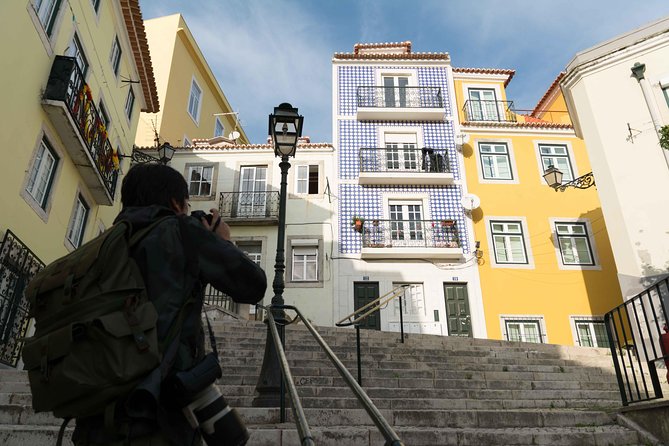
At $112.82 per person, this is not the cheapest way to see Alfama. You are paying for a three-hour walk, a specialist guide, local interpretation, and instruction in a group capped at five.
The value improves if photography is one of your main reasons for visiting Lisbon. A regular sightseeing walk may show you the same district, but it is unlikely to give you as much time to think about light, framing, and timing. The small group also matters because personal feedback is part of what you are buying.
For a casual photographer who only wants a few snapshots, the price may feel high. You can explore Alfama independently and enjoy the streets without taking a class. If you want to improve your pictures, understand why a scene works, and find less obvious positions, the cost is easier to justify.
Group discounts are available, which may help if you are booking with companions. The tour is offered in English and has a mobile ticket. It is near public transportation, but hotel pickup and drop-off are not included.
The walk is booked, on average, 16 days ahead. That does not guarantee every date will fill, but it is a useful sign that you should reserve early if your Lisbon schedule is fixed.
Who will enjoy this most?
I would recommend this for anyone who enjoys taking pictures and wants more than a list of landmarks. It is especially suitable if you are visiting Lisbon for the first time and want to get your bearings in the old city while learning where to look.
It also suits solo photographers. A small group gives you company without the scale of a large tour. Couples and friends can benefit from the shared pace, though you should be ready to pause often while someone composes an image.
The walk is less suitable if you dislike hills, uneven streets, or outdoor activity. It may also disappoint you if you want a private session, advanced studio-style instruction, or supplied camera equipment. The available information describes a small shared group, not an exclusive private booking.
Book it near the start of your stay if possible. The route can give you ideas for later visits to Lisbon’s streets and viewpoints, and the local tips may help you make better use of the rest of your time in the city.
Booking details that matter
You meet at Chafariz das Moiras, Largo do Correio-Mor, and finish at Largo da Sé. Check the meeting point carefully because the walk does not end where it begins.
Confirmation is sent when you book. Most people can take part, but you should still be comfortable walking uphill and standing for extended periods. Bring your camera or phone, comfortable shoes, water if you need it, and only the gear you can carry easily.
Free cancellation is available up to 24 hours before the local start time. If you cancel or request changes inside that 24-hour window, the payment is not refunded. If poor weather causes the provider to cancel, you are offered another date or a full refund.
Communication before the meeting matters. Make sure any special request is clear and watch for replies. One failed booking described in the available feedback turned into a dispute over messages, timing, and cancellation, so do not assume a last-minute change has been accepted unless you receive clear confirmation.
Should you book the Alfama Photo Walk?
Book this walk if you want to photograph Lisbon with purpose. Carlos Reveles offers a focused route through Alfama, Graça, São Vicente, and the cathedral area, with lessons in street scenes, trams, architecture, broad views, and local life.
The strongest reasons to go are the small group, the relaxed pace, and the chance to learn how to read light in a difficult but rewarding part of the city. The main cautions are the price, the hills, the need to bring your own equipment, and the strict 24-hour cancellation rule.
If you see Lisbon mainly through a camera, this is a good early-stay choice. If you only want a short introduction to Alfama, save the money and walk the district on your own.
FAQ
How long does the Alfama Photo Walk last?
The walk lasts approximately three hours.
Where does the photo walk begin?
It begins at Chafariz das Moiras, Largo do Correio-Mor, 1100-179 Lisboa, Portugal.
Where does the walk finish?
It finishes at Largo da Sé, 1100-401 Lisboa, Portugal.
How many people can join the tour?
The group has a maximum of five people.
Is photography equipment provided?
No. You must bring your own photography equipment.
What language is the tour offered in?
The tour is offered in English.
Is hotel pickup included?
No. Hotel pickup and drop-off are not included.
What happens if bad weather cancels the walk?
You are offered a different date or a full refund if the experience is canceled because of poor weather.
More Lisbon Walking Tours
- Lisbon: History, Stories and Lifestyle Walking Tour
★ 4.8 · 10,902 reviews - Best of Lisbon Small-Group Guided Walking Tour
★ 5.0 · 4,869 reviews - Lisbon: Food and Wine Small Group Walking Tour
★ 4.9 · 4,082 reviews - Best of Lisbon Walking Tour: Rossio, Chiado & Alfama
★ 4.9 · 2,700 reviews
Just reviewed in Lisbon
- Private tour Lisbon – full day★ 5.0 · 8 reviews
- Private Tour: Portuguese Food and Wine Tour★ 5.0 · 33 reviews
- Lisbon Football Experience – Private stadium and Museum Tour★ 4.0 · 10 reviews
- Lisbon and Sintra Essence 8H – Private Tour★ 5.0 · 5 reviews
- Private Tour: Lisbon Sunset Walking Tour with Fado Show and Dinner★ 5.0 · 30 reviews
- Private Catamaran Tour: Lisbon coast cruise with barbecue and drinks★ 5.0 · 20 reviews
- Lisbon: Helicopter Tour over Cascais & Cabo da Roca★ 5.0 · 4 reviews
- Private Tour Fátima – Nazaré – Batalha – Óbidos★ 5.0 · 6 reviews
Alfama and Old Town Tours, compared.
Private Lisbon Sightseeing Tuk-Tuk Tour: Alfama, Belém & More
Read our review →
Hills, Alfama, and Mouraria Tour by Electric Bike
Read our review →
Best of Lisbon Walking Tour: Rossio, Chiado & Alfama
Read our review →
Lisbon Small-Group Food Tour with 18 Tastings in Alfama District
Read our review →
Lisbon E-Bike Tour Commerce Square, Mouraria and Alfama
Read our review →
Old Town TukTuk Tour and Scenic Viewpoints in Alfama
Read our review →
Alfama Tour and Live Fado with Traditional Dinner
Read our review →Browse the lists this tour appears in