Reviewed · GUIDED
Lisbon Golden Age – Private Tour with Van and Local Guide
Lisbon’s Golden Age comes into focus on this private four-hour route, which links the hilltop views of Alfama with the grand monuments of Belém. Along the way, your guide connects espionage, royal power, African communities, slavery, humanism, and ocean voyages into one clear story.
I like the private air-conditioned van, especially because it cuts down on uphill effort and connects far-apart sights quickly. I also like the personal history lessons from guides such as Daniel and Diogo, who are praised for making complicated subjects easy to follow. The main drawback is pace: twelve stops in about four hours leaves little time for lingering, and major sites are mostly viewed from outside.
Key points to know before booking
- A private route from Alfama to Belém: You cover Lisbon’s oldest quarter, central squares, Bairro Alto, and the riverside monuments without sharing the vehicle with another group.
- The history goes beyond explorers: Expect stories about espionage, slavery, African communities, humanism, royal power, and the port economy.
- Castle and tower visits are exterior stops: The castle grounds and viewpoint are included, but not the interior of São Jorge Castle. Belém Tower is viewed from outside.
- Jerónimos includes the church: The monastery itself is viewed from outside, while the church can be visited. The church is closed on Mondays.
- Pastel de Belém is included: You receive the famous egg custard pastry in Belém, a welcome edible pause near the end.
- Pickup makes the route practical: Collection and return are available from central Lisbon hotels, the cruise terminal, or Lisbon Airport.
Why Lisbon’s Golden Age makes a strong four-hour theme
Many Lisbon tours give you a string of viewpoints and monuments without explaining how they fit together. This one has a clear subject: the period when Portugal’s ships helped turn Lisbon into a major center of trade, power, and ideas.
You begin where the city’s old hilltop districts meet the wide Tagus River. You finish in Belém, where the Age of Discoveries is carved into stone and expressed in Manueline architecture. That progression gives the route a useful shape. Lisbon is not just a pretty city of tiled facades and steep streets. It was also a place where royal ambition, commerce, religion, forced labor, and cultural exchange met.
I especially like that the story does not stop with famous navigators. You hear about a five-hundred-year-old espionage case, the fight against slavery, and the first European neighborhood inhabited entirely by African people. Those details make the past less polished and more human.
The private format helps here. You can ask your guide to slow down, explain a term, or relate one sight to another. Daniel and Diogo are both named as guides for this experience, and the feedback about them points to engaging explanations rather than a dry list of dates.
More Private in Lisbon:
- True 4Hour Private Tuk Tuk Tour: Discover Lisbon with a Local!
★ 5.0 · 8,008 reviews - Lisbon: Private Guided Tuk-Tuk Tour with Hotel Pickup
★ 4.9 · 4,552 reviews - Private Lisbon Sightseeing Tuk-Tuk Tour: Alfama, Belém & More
★ 5.0 · 4,277 reviews
Santa Luzia and São Jorge, Lisbon from its oldest hill
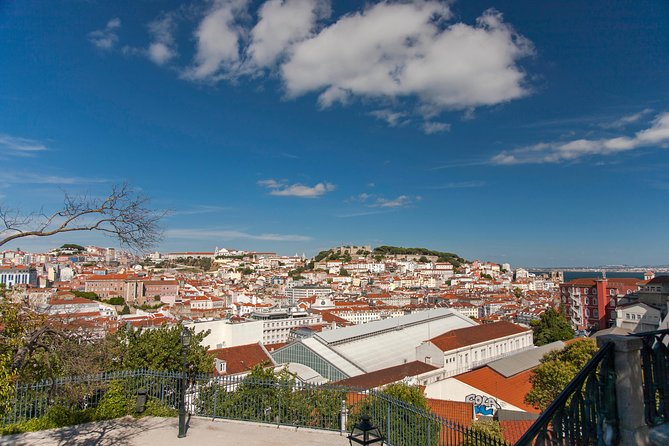
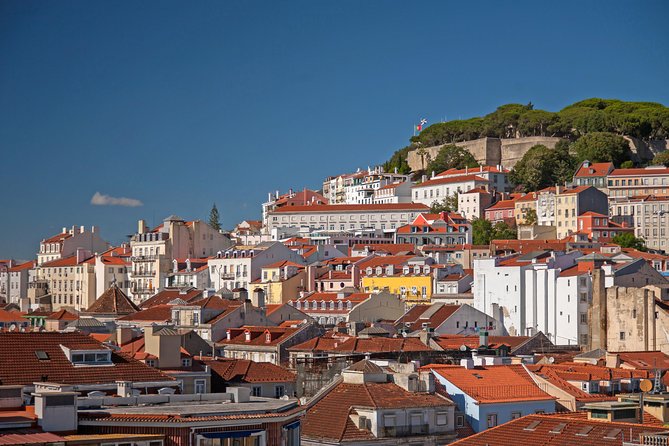
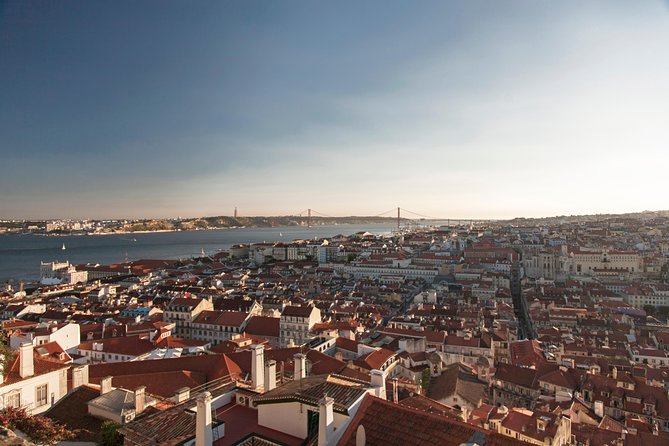
The first stop is Miradouro de Santa Luzia, one of Lisbon’s best places to get your bearings. You look over the Tagus, the red roofs of the old medieval district, and the open Atlantic beyond. It is a short stop of about twenty minutes, but it sets up the entire tour.
From here, Lisbon’s geography begins to make sense. The city climbs away from the river, while Alfama and the castle occupy the high ground. The view also explains why the river mattered so much to Portugal’s rise. Ships could reach the waterfront, while the hills offered protection and control.
Next comes Igreja de Santiago, a small but historically pointed stop. Your guide tells the story of a five-hundred-year-old espionage case connected to one of the major events of the modern period. Fifteen minutes is enough for the essential story, though you should not expect a long church visit or extended free time.
The route then reaches the São Jorge Castle Citadel and its belvedere. This is the place where Lisbon began its climb toward power, both literally and politically. From the hill, you can look across the old city and the river while your guide explains the fortress’s strategic importance.
Be clear about what is included. This is not an interior castle tour. You explore the citadel area and enjoy the views, but entrance inside São Jorge Castle is not part of the experience. That limitation matters if castle interiors are high on your list.
Walking through Alfama’s old streets
The descent into Alfama shifts the tour from broad views to street-level detail. This is Lisbon’s oldest neighborhood, and the route takes about thirty minutes through its narrow lanes and old buildings.
You learn how Alfama changed during the city’s Golden Age. The district is not presented as a frozen medieval quarter. Instead, it becomes part of a larger story about Lisbon’s growth, trade, and social change during the sixteenth century.
This is one of the more walking-focused sections, so comfortable shoes are sensible. The tour recommends smart casual clothing and comfortable footwear. If someone in your group has limited walking ability, tell the guide in advance. One account of the experience describes Daniel adapting the route for a husband who could not walk easily while still explaining the importance of each stop.
The van is useful, but it does not remove all walking. You still leave the vehicle at viewpoints, churches, squares, and monuments. The route works best for people who can manage short walks between stops, with the guide making reasonable adjustments within the established route.
Praça do Comércio and the city’s turn toward the world
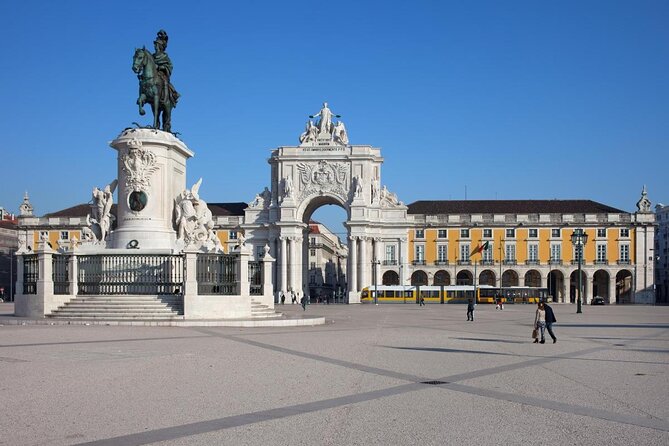
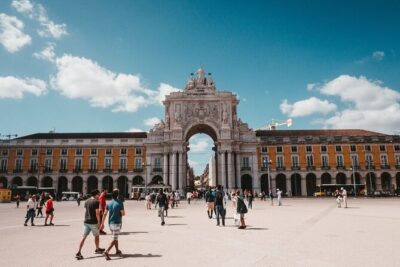
At Praça do Comércio, known historically as Terreiro do Paço, the scale changes again. This broad waterfront square occupies the site of the royal palace that once faced the river. It is easy to picture cargo, officials, sailors, and merchants moving through this part of Lisbon when overseas trade reshaped the city.
The stop lasts around fifteen minutes. That is enough to take in the grand setting and hear how Lisbon shifted from a medieval center into a more outward-looking port city. You will not have time for a long café break here, so treat it as a history stop and photo pause.
This is also a good place to ask your guide about the difference between Portugal’s religious ideals and the realities of expansion. The tour’s theme is not simply celebration. It includes the money, labor, belief, and power behind the voyages.
More Guided in Lisbon:
- Best of Lisbon Small-Group Guided Walking Tour
★ 5.0 · 4,869 reviews - From Lisbon: Fátima, Nazaré, Batalha, and Óbidos Guided Tour
★ 4.7 · 3,060 reviews - Guided Tour to Sintra, Pena, Regaleira, Cabo da Roca and Cascais
★ 5.0 · 2,978 reviews - Lisbon: São Jorge Castle E-Ticket and Audio Guide
★ 4.3 · 2,182 reviews
Bairro Alto, humanism, and an uncomfortable past
Bairro Alto adds a different layer to the story. During Portugal’s maritime expansion, sailors and boat builders filled these streets, linking the neighborhood to the port and the shipbuilding world.
The guide also points out a statue of a major intellectual who challenged seventeenth-century society and opposed slavery. This leads to Portugal’s first decree condemning slavery in 1761. That date comes much later than the first voyages, and the delay is worth noting. The tour gives you a chance to see the Age of Discoveries as a long period of debate and contradiction, not a single moment of triumph.
The stop is brief, about fifteen minutes. You will get the main idea rather than a full seminar on Portuguese abolition or colonial policy. Still, this is one of the route’s most useful subjects because it prevents the story from becoming a simple parade of heroic explorers.
Madragoa and Lisbon’s African connections
The route continues toward Madragoa, described as the first European neighborhood entirely inhabited by African people. The stop focuses on belief, custom, integration, and the cultural blending that took place in Lisbon.
This part gives the tour a wider human frame. Ships and trade brought people from many parts of the world into contact, but that contact was not always voluntary or equal. The story of Madragoa helps you think about who lived in Lisbon, how communities practiced their traditions, and how the city was shaped by people often left out of grand national stories.
You spend about fifteen minutes here. It is a short introduction, not a full neighborhood walk or museum visit. If this subject interests you, use the private setting to ask questions while the guide is still with you.
São Jerónimo Chapel and the road to Belém
The Chapel of São Jerónimo is a ten-minute stop before the main Belém sights. It offers a quieter moment after the busy central districts and gives you another look at the religious architecture tied to Portugal’s maritime age.
The chapel is described as a small historic site, so expectations should stay modest. You are getting a brief look and explanation rather than an extended interior tour. Its value lies in the way it breaks up the route and adds another piece to the story before the major monument of Jerónimos.
Jerónimos Monastery, Manueline style, and a useful timing tip
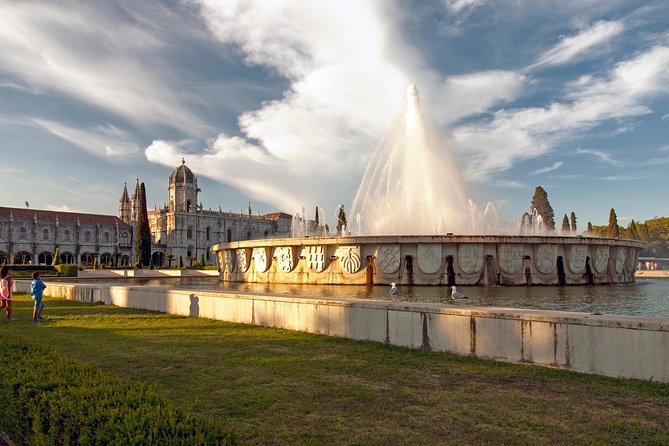
Jerónimos Monastery is the architectural centerpiece of the Belém section. From the outside, its Manueline decoration reflects Portugal’s sea voyages through ropes, maritime forms, and religious imagery. Your guide explains the monastery’s link to Lisbon’s Golden Age and the spiritual ideas surrounding the country’s imperial ambitions.
The monastery church is included, but the full monastery interior is not. The church is closed on Mondays, so Monday bookings need extra care. If seeing the church matters to you, choose another day or confirm the arrangement before booking.
The stop is around thirty minutes. That gives you enough time for the exterior and church visit when open, but not for a slow architectural study. Entrance fees are not included, so any admission charge that applies is your responsibility.
I like this arrangement for a short city tour because it gives you the key visual experience without pretending that a four-hour route can cover every room and cloister. If Jerónimos is your main reason for coming to Belém, plan a separate visit with more time.
Pastéis de Belém and the final riverside monuments
Near the end, you stop in Belém for a pastel de Belém tasting. This is the familiar Portuguese egg pastry tart associated with the district. It gives the tour a pleasant break and ties food to place rather than treating the pastry as a random snack.
The tasting is included, while other food and drinks are not. Fresh water is also provided in the van. One named guide, Daniel, is particularly praised for finishing the experience with pastéis de Belém, and another account calls the cake very good.
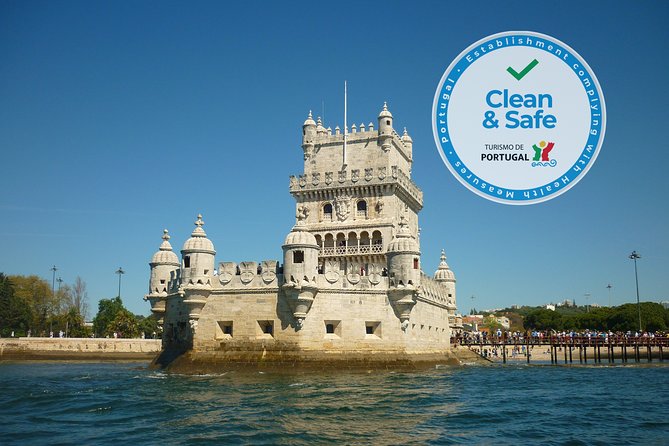
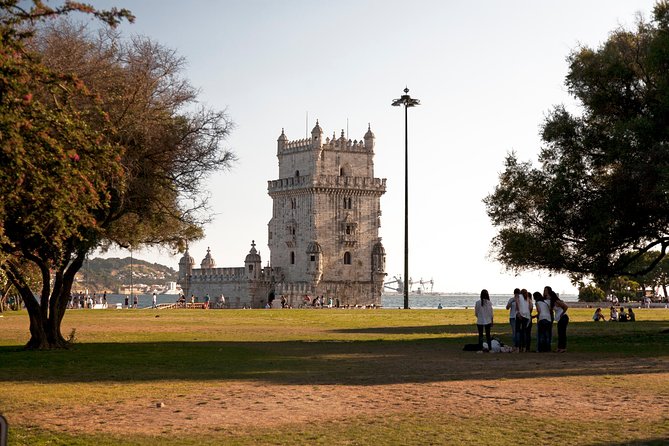
The final stops are beside the Tagus. Belém Tower is viewed from outside, so you see the fortified riverside landmark without an interior visit. Its position by the water makes the connection to Portugal’s maritime past plain.
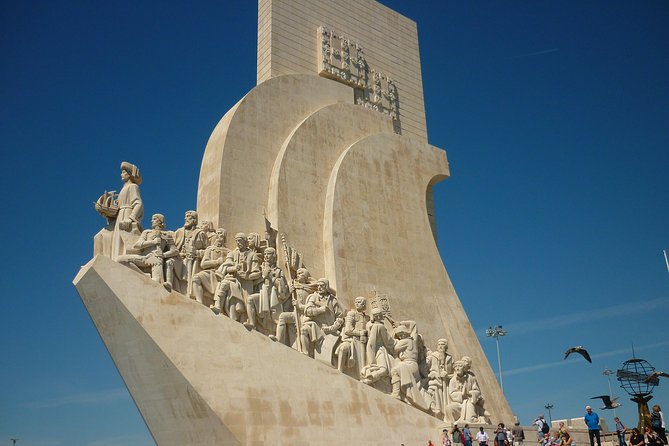
The Monument to the Discoveries follows or shares this closing section. Its sculpted figures face the river and honor the explorers who set out from Lisbon. Your guide places the monument in the larger story of the Golden Age, giving you a final chance to connect the city, the ships, the river, and the ambitions of the Portuguese court.
Again, the timing is tight. You have about fifteen minutes at Belém Tower and another fifteen at the Monument to the Discoveries. That is enough for photos and context, but not for a slow visit inside either attraction.
What the $156.53 price means
At $156.53 per person, this is not the cheapest way to see Lisbon. Its value comes from the private vehicle, pickup service, guide, and route design rather than from included admissions.
For a couple or small group, the price may make sense because you are not paying for a generic sightseeing loop. You have your own group, an air-conditioned van, and a driver-guide for about four hours. Hotel, cruise terminal, and airport pickup can also save time and reduce the hassle of arranging transport across Lisbon.
The price is harder to justify if you want long visits inside monuments. Castle entry is excluded, the tower is exterior only, and the monastery is mostly an outside stop with church access when open. You are paying for an efficient overview and a connected story, not a series of full museum visits.
Group discounts are available, though the exact savings are not provided. Since this is a private activity, ask about the total cost for your party before booking. The baggage allowance is limited to four medium-sized suitcases, which may suit an airport transfer but is not designed for a large amount of luggage.
Timing, pickup, and practical limits
The tour lasts about four hours and has a set start time. A delay of more than thirty minutes counts as a no-show, so be ready when the vehicle arrives. Pickup is available from central Lisbon hotels, the Lisbon cruise terminal, and Lisbon Airport, but you need to provide the location in advance.
The route is offered in English. Children must be accompanied by an adult, and most people can take part. Eating and smoking are not allowed inside the vehicle, except for the included pastry tasting at the proper stop.
From October through March, Lisbon gets dark from around 6 p.m. onward. That matters if you choose a late start, especially because several viewpoints and riverside monuments are best appreciated in daylight.
Changes and customizations must stay within the established route and mileage. You can ask questions and discuss reasonable adjustments, but do not expect a completely redesigned day.
Free cancellation is available up to twenty-four hours before the start time. After that point, the amount paid is not refunded, and late changes are not accepted.
Who should book this private Lisbon tour
I would choose this tour if you want a clear introduction to Lisbon’s Golden Age, prefer a private setting, and want transport between the city’s hills and Belém. It suits history lovers who care about more than famous buildings, especially those interested in slavery, migration, religion, political power, and the human side of Portugal’s overseas expansion.
It also fits a first visit when you want to see a lot in a short window. Cruise passengers, airport stopover visitors, and families who prefer their own vehicle can make good use of the pickup service.
I would hesitate if you want extended free time, independent wandering, or full interior visits at the castle, tower, and monastery. The route covers twelve stops, so you need to accept short visits and keep moving.
The strongest reason to book is the guide. Daniel and Diogo are both praised for turning Lisbon’s past into an engaging story, and the private format lets the guide adjust explanations to your interests. If that personal storytelling matters more to you than ticking off every entrance ticket, the $156.53 price can be fair.
FAQ
How long does the Lisbon Golden Age tour last?
The tour lasts approximately four hours.
Is pickup included?
Yes. Pickup and drop-off are available from central Lisbon hotels, the Lisbon cruise terminal, or Lisbon Airport. You need to provide the pickup location.
Is the tour private?
Yes. Only your group participates in the activity.
What language is the tour offered in?
The tour is offered in English.
Is São Jorge Castle included inside the price?
No. The route includes the São Jorge Castle Citadel and its belvedere, but not a visit inside the castle.
Can I visit Jerónimos Monastery during the tour?
The monastery is viewed from outside, and the church can be visited. The church is closed on Mondays. Entrance fees are not included.
Is the pastel de Belém included?
Yes. A pastel de Belém tasting is included. Other food and drinks are not included, though fresh water is provided.
What is the cancellation policy?
You can cancel up to twenty-four hours before the start time for a full refund. Cancellations or changes made less than twenty-four hours before the tour are not accepted for a refund.
Just reviewed in Lisbon
- Private tour Lisbon – full day★ 5.0 · 8 reviews
- Private Tour: Portuguese Food and Wine Tour★ 5.0 · 33 reviews
- Lisbon Football Experience – Private stadium and Museum Tour★ 4.0 · 10 reviews
- Lisbon and Sintra Essence 8H – Private Tour★ 5.0 · 5 reviews
- Private Tour: Lisbon Sunset Walking Tour with Fado Show and Dinner★ 5.0 · 30 reviews
- Private Catamaran Tour: Lisbon coast cruise with barbecue and drinks★ 5.0 · 20 reviews
- Lisbon: Helicopter Tour over Cascais & Cabo da Roca★ 5.0 · 4 reviews
- Private Tour Fátima – Nazaré – Batalha – Óbidos★ 5.0 · 6 reviews
Guided, compared.
Best of Lisbon Small-Group Guided Walking Tour
Read our review →
Fátima, Nazaré, Batalha, and Óbidos Guided Tour
Read our review →
Guided Tour to Sintra, Pena, Regaleira, Cabo da Roca and Cascais
Read our review →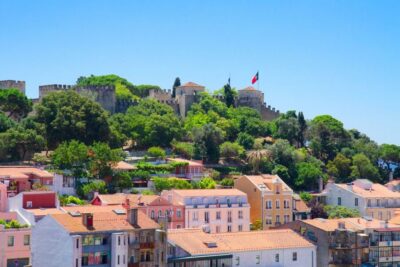
Welcome Lisbon Tour with Local Guide in Private Eco Tuk Tuk
Read our review →