Reviewed · TOURS
Lisbon: Highlights and Hidden Gems Tour
Lisbon’s long story unfolds block by block on this walk, from Roman ruins and Moorish walls to the scars left by the 1755 earthquake. You will also see old workers’ housing, a prison from the dictatorship, a buried street, and the grand square built where the Royal Palace once stood.
I like the small groups, limited to eight, because Peter or another guide can answer questions without turning the walk into a flag-following exercise. I also like the mix of major sights and tucked-away corners, plus the choice of a pastel de nata or ginginha at no extra cost.
The main drawback is its strongly historical focus. If you want a tour centered on modern food, nightlife, or broad sightseeing, this may feel too serious. You will also walk for about 2.5 hours over Lisbon’s hilly, uneven streets, so comfortable shoes matter.
Key points at a glance
- Three thousand years in one walk: Hear about Celts, Romans, Visigoths, Arabs, and Portuguese rulers as you move through the city.
- A small group of eight or fewer: The size works well in narrow streets and makes it easier to ask questions.
- Street art with a local connection: See a portrait of fado singer Amália Rodrigues among Lisbon’s public art.
- Earthquake evidence you can see: Visit a buried street and learn how Baixa was rebuilt with earthquake-resistant buildings.
- A thoughtful finish in Praça do Comércio: Stand where the Royal Palace once occupied the waterfront and learn what the square’s statues represent.
- A useful first-day orientation: The historical framework can help you choose what to explore during the rest of your Lisbon stay.
Why this Lisbon walk feels different
Many city walks give you a quick look at a cathedral, a castle, and a main square. This one tries to connect those places through the people and events that shaped them. You are not simply moving from one photo stop to the next. The guide explains how different cultures and rulers left their mark on Lisbon.
The route begins in Graça, an area that helps you see a less polished side of the city. You visit a church and old workers’ housing before moving toward São Vicente. That opening matters because it puts daily life alongside grand religious buildings. Lisbon’s story is not only about kings and explorers. It also includes workers, worshippers, prisoners, artists, and residents who rebuilt after disaster.
The small group is a real advantage here. With no more than eight people, you can follow the guide into narrower spaces and stop without blocking a large crowd. Peter is the named guide associated with several bookings, and the experience is available in English or French.
The pace is built around explanation rather than rushing. I would book it early in your Lisbon stay, especially if you want a better sense of the city before choosing which museums, churches, and neighborhoods deserve more of your time.
Still choosing? These other Lisbon trips come up in the same search.
- Lisbon City Center Tour – The Unmissable Lisbon
★ 5.0 · 22,234 reviews - Lisbon: Sintra, Pena, Regaleira, Cabo da Roca & Cascais
★ 4.7 · 19,656 reviews - Sintra: Pena Palace and Park Entrance Ticket
★ 4.2 · 17,410 reviews
Graça, workers’ housing, and São Vicente
Graça gives the tour a strong start. You visit a church and older workers’ housing, details that help show how Lisbon’s neighborhoods grew around work, faith, and community life. The setting is less formal than the city’s major monuments, which makes it a useful place to begin.
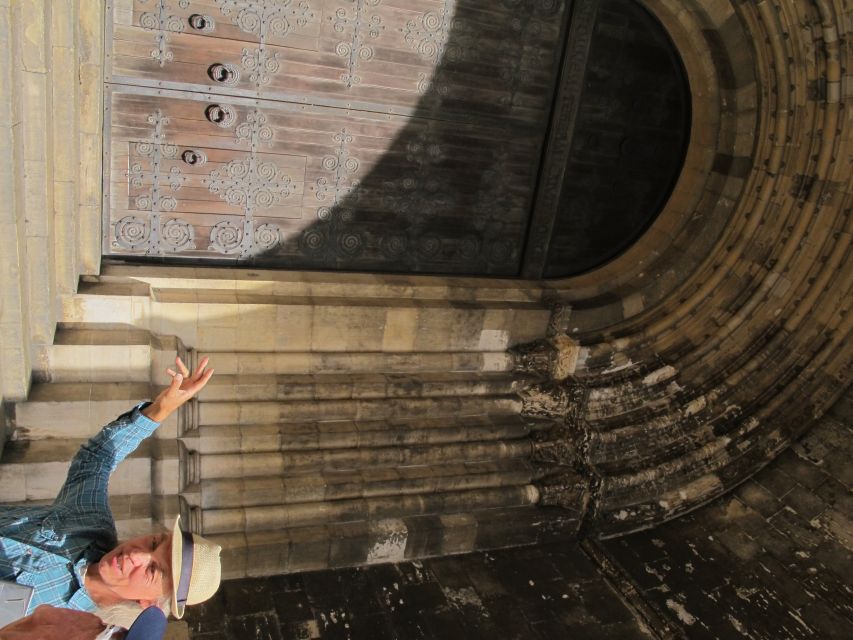
From there, the route continues to the São Vicente monastery. This is one of the tour’s more important stops, not only for its architecture but also for its royal connections. The Portuguese royal family is buried there, as is the Queen of England.
The guide uses places like this to tell a wider story about Portugal. You hear about the different peoples who shaped Lisbon, including Celts, Romans, Visigoths, Arabs, and Portuguese rulers. That broad timeline helps explain why the city can feel layered even when you are looking at one street or building.
Do not expect a long, quiet visit devoted only to the monastery. It is one part of a walking route that keeps moving through several periods of Lisbon’s past. If your priority is detailed religious art or an extended interior visit, you may want to return to São Vicente on your own.
Street art and the voice of Amália Rodrigues
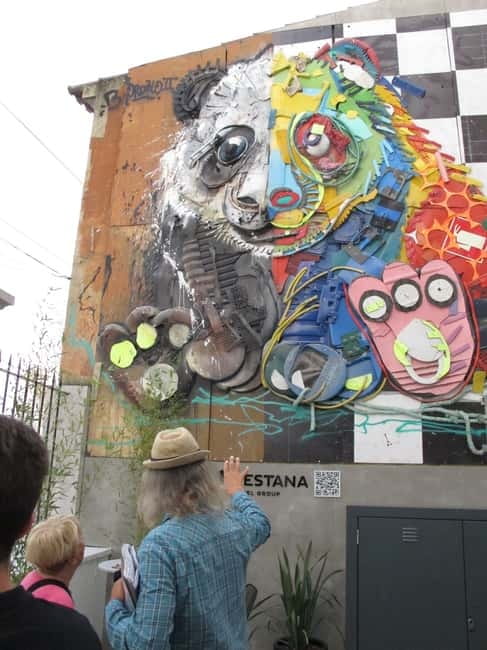
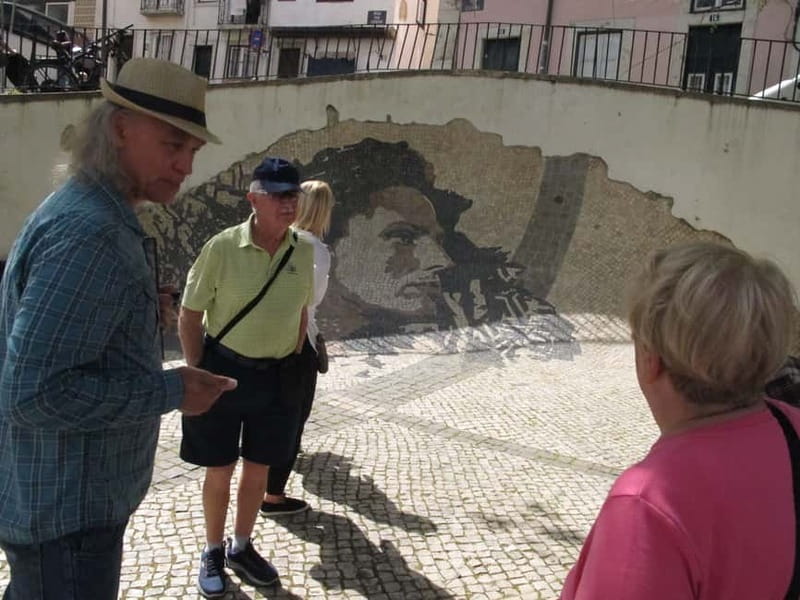
The walk also makes room for Lisbon’s modern visual culture. You see street art, including a portrait of Amália Rodrigues, one of the city’s best-known fado singers.
This is a nice change of pace after the older buildings and burial sites. It shows that Lisbon’s identity is still being expressed in public spaces, not just preserved in monuments. The portrait also connects the city’s streets with fado, the Portuguese music tradition most closely associated with Lisbon.
The tour does not appear to be a dedicated street-art walk, so you should not book it expecting a long catalogue of murals. Instead, the art is part of a larger historical route. That balance works well if you want to understand how older Lisbon and present-day Lisbon sit side by side.
The Castle area, medieval walls, and Roman theatre
Next, you reach the Castle area and the old city walls. This is where Lisbon’s defensive past becomes easier to picture. The medieval walls give you a physical sense of how the city was protected, while the narrow streets show how different the old center feels from the more orderly Baixa district.
The route also includes a Roman theatre. Its presence reinforces the central idea of the walk: Lisbon is not a city with just one founding story. Roman remains sit near medieval structures, religious buildings, later royal projects, and modern street art.
You also see the Cathedral and its stables. These stops add more detail to the Castle area and help place religious and practical buildings within the older city. The guide’s role is especially useful here because a wall or ruin can be easy to overlook without context.
A prison from the dictatorship is another stop. It brings Portugal’s more recent political past into the walk. The tour does not leave Lisbon’s history safely in the distant past. It moves from ancient settlement to medieval power and then to the dictatorship, giving you a clearer sense of how the city changed across very different eras.
Something different to do with a day in Lisbon:
- Lisbon: Jerónimos Monastery Entrance Ticket
★ 4.1 · 14,164 reviews - Lisbon: History, Stories and Lifestyle Walking Tour
★ 4.8 · 10,902 reviews - Lisbon: Sunset Boat Party Cruise with DJ and Open Bar
★ 4.5 · 10,378 reviews - Lisbon: Pena Palace, Sintra, Cabo da Roca, & Cascais Daytrip
★ 4.7 · 9,981 reviews
Lisbon’s earthquake scars in Baixa
The 1755 Lisbon earthquake is one of the central subjects of the tour. You see damage from the disaster, including a buried street, rather than hearing about it only as an abstract historical event.
That kind of evidence makes the story easier to grasp. The earthquake did not simply damage a few buildings. It reshaped the city and forced Lisbon to rethink how parts of its center should be built.
In Baixa, you learn about the earthquake-resistant buildings created during the rebuilding. This is one of the most useful parts of the tour for anyone interested in architecture or urban planning. The buildings are not just attractive streetscapes. They reflect a practical response to catastrophe.
I like this section because it links history to what you are looking at right now. You can see how disaster influenced the shape of the city, rather than treating 1755 as a date to memorize. The buried street is especially effective as a reminder that today’s Lisbon was built over earlier layers.
The route does require steady walking between districts. Lisbon’s streets can be steep and uneven, and the full tour lasts about 2.5 hours, with one account describing closer to three hours. Plan for the longer end if you prefer not to hurry.
Praça do Comércio and the lost Royal Palace
The walk ends at Praça do Comércio, one of Lisbon’s grandest open spaces. The square occupies the former site of the Royal Palace, so the setting gives the final part of the tour a strong sense of change and loss.
Here, the guide explains what happened in the square over the centuries and interprets the meaning of its statues. This is more useful than simply taking a wide photograph of the waterfront arcades. You learn why the space looks as it does and how it fits into Portugal’s royal and civic story.
Praça do Comércio also gives the tour a natural ending because it brings together several themes from the route: monarchy, disaster, rebuilding, public ceremony, and the city’s relationship with the Tagus. If you want to keep sightseeing afterward, you are already near one of Lisbon’s key central areas.
The booking information says the activity ends back at the meeting point, while the route description places the final stop at Praça do Comércio. Since meeting points may vary by booking option, check the exact arrangement before setting out.
The included pastel de nata or ginginha
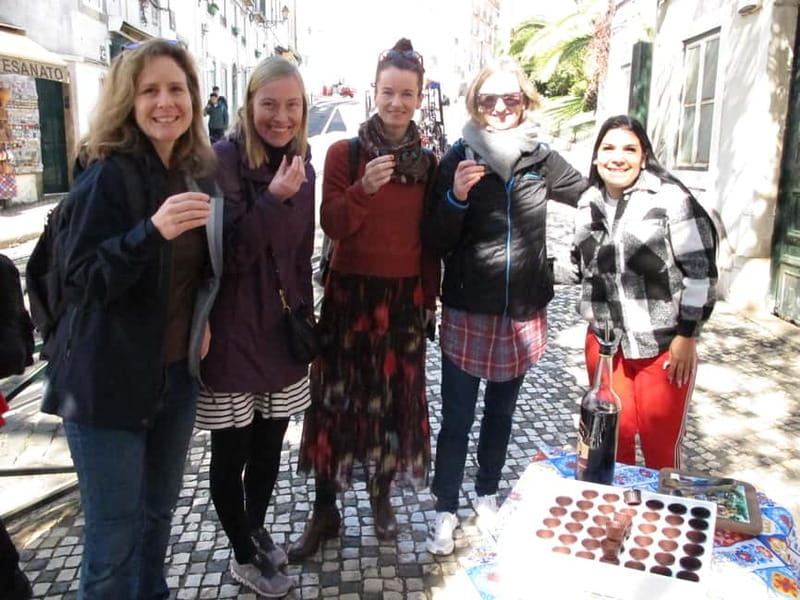
Your price includes a choice of one pastel de nata, Lisbon’s famous custard tart, or a ginginha, a cherry liqueur. It is a small inclusion, but it suits the tour because it gives you a taste of Portugal without turning the experience into a food tour.
Choose the pastry if you want a quick, familiar local snack. Pick the ginginha if you are comfortable with a small alcoholic drink and want to try a Lisbon specialty associated with the city.
The food or drink is not the reason to book this walk. Think of it as a pleasant extra at the end of a history-focused outing. If you want several tastings or a full introduction to Portuguese cooking, you will need a different kind of tour.
Is $40 a fair price?
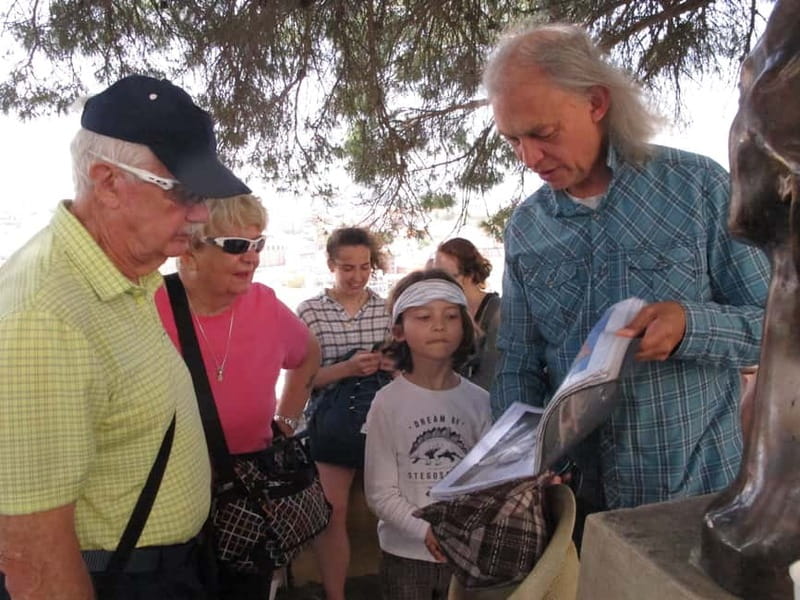
At $40 per person, the price is reasonable for a 2.5-hour small-group walk, especially when the group is capped at eight people. You are paying for a guide who can explain several periods of Lisbon’s past, take you through less obvious streets, and handle questions in English or French.
The value is strongest if you care about context. Roman remains, a medieval wall, a cathedral, and Praça do Comércio are more meaningful when someone explains how they connect. The included pastel de nata or ginginha adds a modest extra benefit, but the guide and the route are the main reasons the price works.
The value is weaker if you mainly want entrance to major monuments. The information provided does not promise extended interior visits or admission to a series of museums. You are paying for a guided walk through historic areas, not a package of ticketed attractions.
With only seven published ratings, the perfect score should be treated as encouraging rather than final proof of universal satisfaction. The strongest pattern is clear, though: the guide’s preparation, organization, and command of Lisbon’s past receive the most praise. You should book for the storytelling and small-group access, not for a long list of included admissions.
Who will enjoy this tour most?
I would recommend it to first-time visitors who want a framework for Lisbon. The route covers enough ground to show how the city developed, while the guide’s stories give you ideas for further exploring.
It also suits history-minded visitors who enjoy seeing physical traces of the past. Roman ruins, Moorish walls, medieval defenses, dictatorship-era history, and earthquake damage all appear within one outing.
The tour may be less suitable for very young children. Children under five are not permitted, and the historical emphasis may not hold the attention of older children who need frequent hands-on activities.
You should also think carefully about mobility. The experience is not suitable for wheelchair users or people with mobility impairments. It is a long walking tour through old parts of Lisbon, so good footwear is essential even if you are comfortable walking.
Practical booking advice
The duration is listed as 2.5 hours, though you should allow a little flexibility because one account describes learning and walking for three hours. Check available starting times and the exact meeting point for the option you choose.
You can cancel up to 24 hours ahead for a full refund, and the reserve-now, pay-later option keeps your plans flexible. Those policies are useful if your Lisbon schedule is still shifting.
The tour is offered in English and French. If you need another language, this is not the right choice based on the available information.
Book early in your visit if possible. The route introduces neighborhoods, monuments, and historical events that can help you make better choices for the rest of your stay. A later booking still works, but you lose some of that orientation benefit.
Should you book the Lisbon Highlights and Hidden Gems Tour?
Book it if you want Lisbon explained through its layers, not just photographed from the outside. The combination of Graça, São Vicente, street art, the Castle area, Roman remains, earthquake damage, and Praça do Comércio gives you a strong overview in a manageable half day.
I would especially choose it for Peter’s organized, story-led approach, the group limit of eight, and the chance to ask questions in a quieter setting. The main caution is simple: this is a history walk with plenty of pavement, not a relaxed food outing or a fast highlights bus tour.
If you enjoy old walls, political history, architecture, and the human stories behind Lisbon’s streets, $40 is a fair price. Wear supportive shoes, book it near the start of your stay, and choose the pastel de nata or ginginha as a small finish to a serious but rewarding city walk.
FAQ
How long does the Lisbon Highlights and Hidden Gems Tour last?
The tour lasts 2.5 hours. One account describes spending closer to three hours on the walk, so allow some extra time if you do not want to rush afterward.
What languages are available?
The live tour guide is available in English or French.
How large is the tour group?
The group is limited to eight participants.
What is included in the price?
You receive either a pastel de nata or a ginginha, a Portuguese cherry liqueur. The $40 price also covers the guided walking experience.
Where does the tour start?
The meeting point can vary depending on the option you book. Check the selected option for the exact starting location and time.
Where does the tour end?
The route description places the final stop at Praça do Comércio, while the activity details say it ends back at the meeting point. Check the arrangement for your selected booking option.
Is the tour suitable for wheelchair users?
No. The activity is not suitable for wheelchair users or people with mobility impairments.
Can children join the tour?
Children under five cannot join the activity. The tour is also strongly focused on history and involves about 2.5 hours of walking.
Just reviewed in Lisbon
- Lisbon: Morning of Equestrian Art with Lusitano Horses★ 4.4 · 87 reviews
- Lisbon: Entry Tickets to Mosteiro de São Vicente de Foram★ 4.6 · 50 reviews
- Lisbon: National Palace of Ajuda E-Ticket & City Audio Guide★ 4.1 · 87 reviews
- Lisbon: Early Morning TukTuk Tour – hotel/cruise ship pickup★ 4.9 · 45 reviews
- Sintra: Quinta da Regaleira e-Ticket & Sintra City Audios★ 4.1 · 12 reviews
- Lisbon E-Bike Tour TAGUS★ 5.0 · 3 reviews
- Lisbon: E-bike Trip from the Sintra Mountains to Cascais Sea★ 5.0 · 67 reviews
- Lisbon: Discover Belem by electric Tuk Tuk★ 4.9 · 86 reviews
Tours, compared.

Lisbon City Center Tour – The Unmissable Lisbon
Read our review →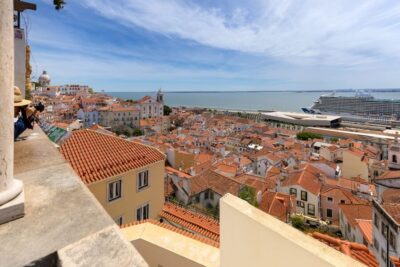

True 4Hour Private Tuk Tuk Tour: Discover Lisbon with a Local!
Read our review →
Winner 2025 Undiscovered Lisbon Food & Wine Tour by Eating Europe
Read our review →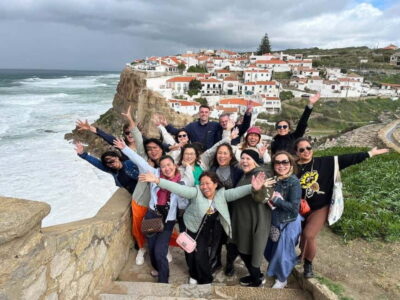
Sintra, Pena, Cabo da Roca, Cascais Tour with Pickup
Read our review →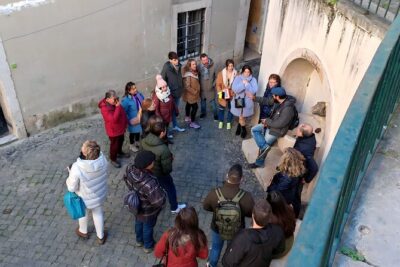

Best of Lisbon Small-Group Guided Walking Tour
Read our review →