
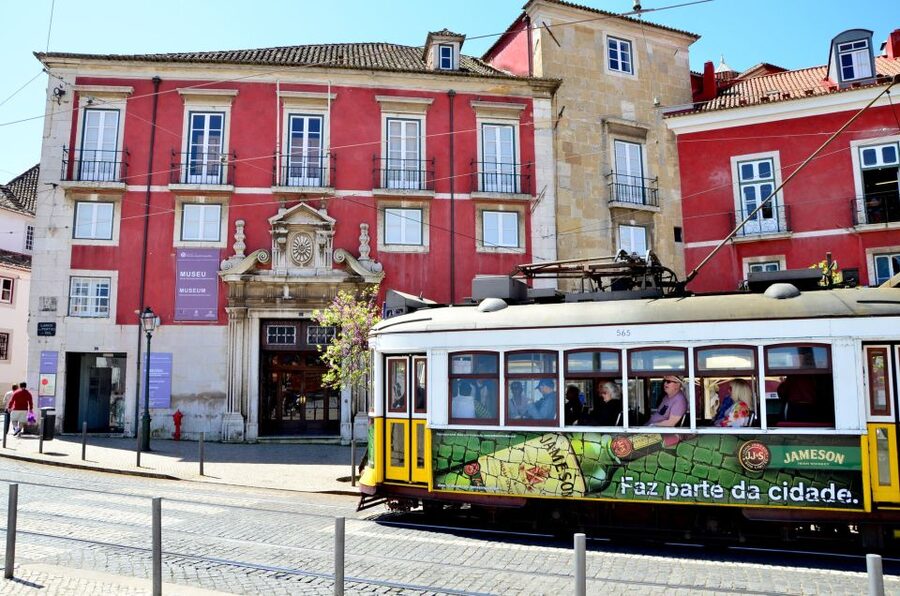
Reviewed · ALFAMA AND OLD TOWN TOURS
Best of Lisbon Walking Tour: Rossio, Chiado & Alfama
Lisbon reveals itself best on foot, and this tour connects its grand squares with the narrow lanes where the city feels most like itself. In three hours, you move from Rossio and Baixa to Chiado and Alfama, with plenty of context for the earthquake, dictatorship, revolution, and Fado along the way.
I like the food stops, especially the pastel de nata and the snack with wine in Alfama. I also like the way the route gives you practical bearings early in a visit, so you can later return to places that caught your eye. Guides including Filipa, Daniel, Maria, Carlos, and Martin are repeatedly praised for clear storytelling and useful local suggestions.
The main consideration is the walking itself. The route includes viewpoints, hills, winding lanes, and uneven streets, so comfortable shoes are essential. You see many major areas, but this is an orientation walk, not an in-depth visit inside every landmark.
Key points at a glance
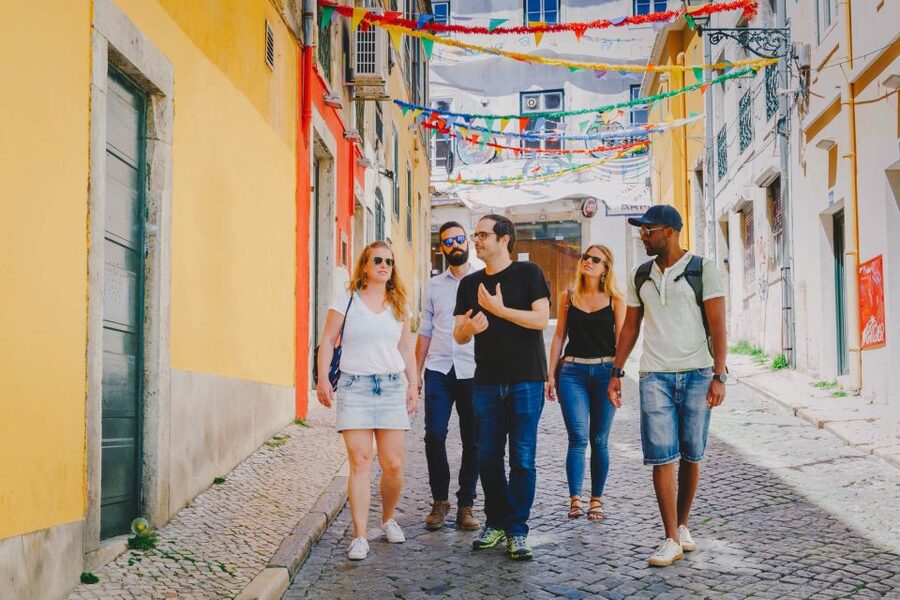
- Rossio to Praça do Comércio: Follow Lisbon’s central spine from the statue of Pedro IV to the city’s grand riverfront square.
- Revolutionary stories: Hear how the Carnation Revolution of 1974 ended 48 years of dictatorship at Carmo Square.
- Three famous neighborhoods: Compare rebuilt Baixa, elegant Chiado, and old Alfama on one continuous walk.
- Portuguese tastes: Sample a pastel de nata, a local snack, and wine, with codfish cake included on some departures.
- Useful city orientation: Pick up restaurant ideas, shortcuts, viewpoints, and neighborhood bearings for the rest of your stay.
- Strong guide-led experience: The guide makes the difference, and the named guides praised most often include Filipa, Daniel, Maria, Carlos, and Martin.
Why this three-hour Lisbon walk works
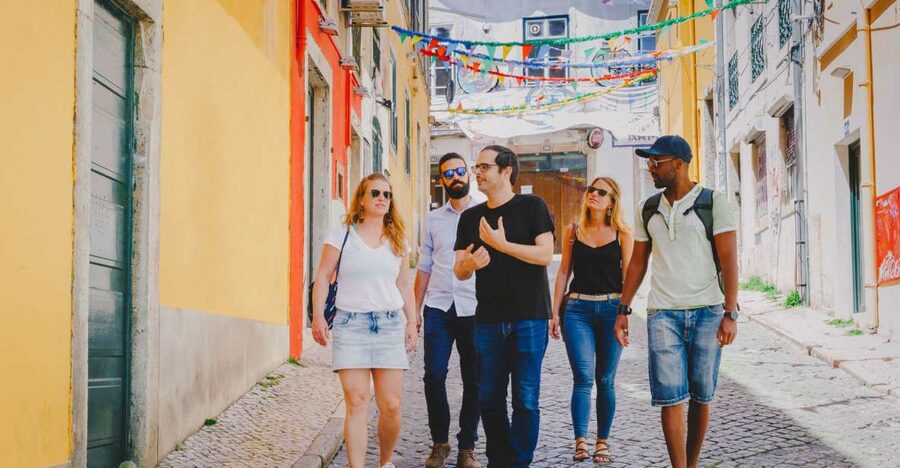
At $23 per person, this is priced as an accessible introduction to Lisbon rather than a premium private tour. You are paying mainly for a live English-speaking guide, a carefully linked route, and three small food and drink experiences.
That matters in Lisbon. The city’s central districts can look close on a map but feel quite different underfoot. Rossio, Baixa, Chiado, and Alfama each tell a separate part of the city’s story. A guide helps you connect those pieces instead of treating the walk as a string of unrelated photo stops.
The tour is also a good first-day choice. You get a sense of where the main squares are, how the central streets fit together, and where the hills begin to matter. Several guides also offer restaurant ideas and shortcuts, which can save time later.
At the same time, you should set your expectations correctly. The price does not include entrance fees or interior guiding at attractions. The experience is about streets, views, stories, and tastings. If you want to enter Lisbon Cathedral, explore a museum, or spend a long time inside a monument, plan those visits separately.
More Alfama and Old Town Tours:
- Alfama Tour in Lisbon Old Town
★ 5.0 · 4,936 reviews - Private Lisbon Sightseeing Tuk-Tuk Tour: Alfama, Belém & More
★ 5.0 · 4,277 reviews - Lisbon: Hills, Alfama, and Mouraria Tour by Electric Bike
★ 4.8 · 3,438 reviews
Rossio Square starts the story
Meet at the statue of Dom Pedro IV in Rossio Square. This is a practical starting point because Rossio sits at the center of Lisbon’s old and newer sections, and it is easy to recognize.
The square itself introduces you to Lisbon’s decorative pavement tradition and busy central setting. From here, the guide explains how the city uses its major squares as public rooms, connecting transport, shopping streets, monuments, and gathering places.
The first walking segment lasts about 15 minutes. It is not a long stop, but it gives you the city’s basic frame before the route moves onward.
You also look toward Rossio Railway Station, one of the most memorable buildings on this part of the walk. Its neo-Manueline facade uses elaborate stonework and theatrical arches. The station is still a working transport point, but the tour treats it mainly as an architectural stop and photo opportunity.
That balance is useful. You get the story and the exterior without spending time waiting for an entrance or standing in a formal museum setting.
Restauradores and Lisbon’s political past
The next section brings you to St. Dominic’s Square and Restauradores Square. The stop at St. Dominic’s is brief, around 10 minutes, but it adds another layer to the center’s public spaces.
In Restauradores Square, focus on the obelisk in the middle. It commemorates Portugal’s restoration of independence from Spain. The guide uses this monument to explain a major turning point in Portuguese national history.
This is one of the tour’s strengths. Instead of handing you a list of dates, the guide links political events to the places around you. That approach helps you remember why a monument exists, not just what it is called.
The walk then heads toward Carmo Square. Allow about 15 minutes for the guided stop and surrounding views. The route is not simply flat pavement from one square to the next, so this is where your footwear begins to matter.
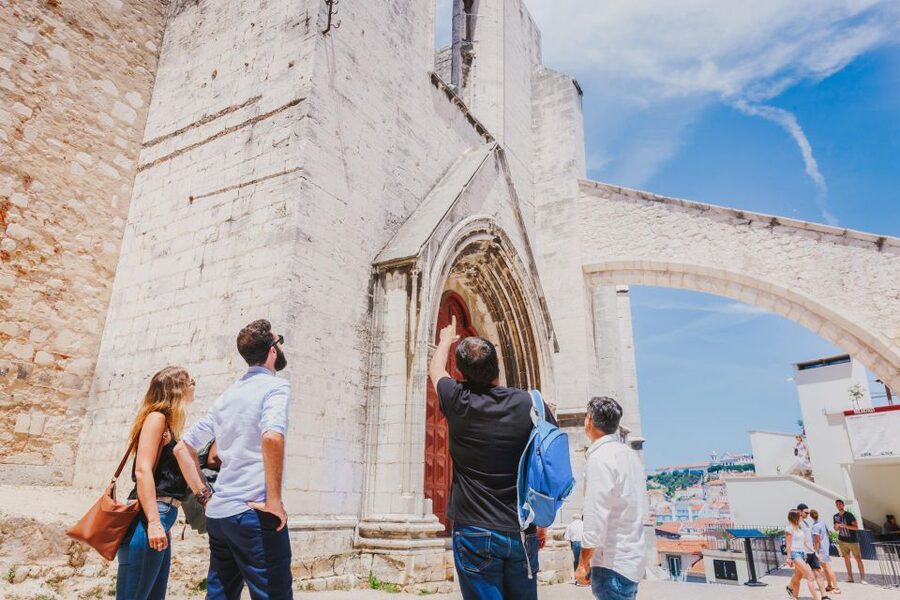
Carmo Square and the Carnation Revolution
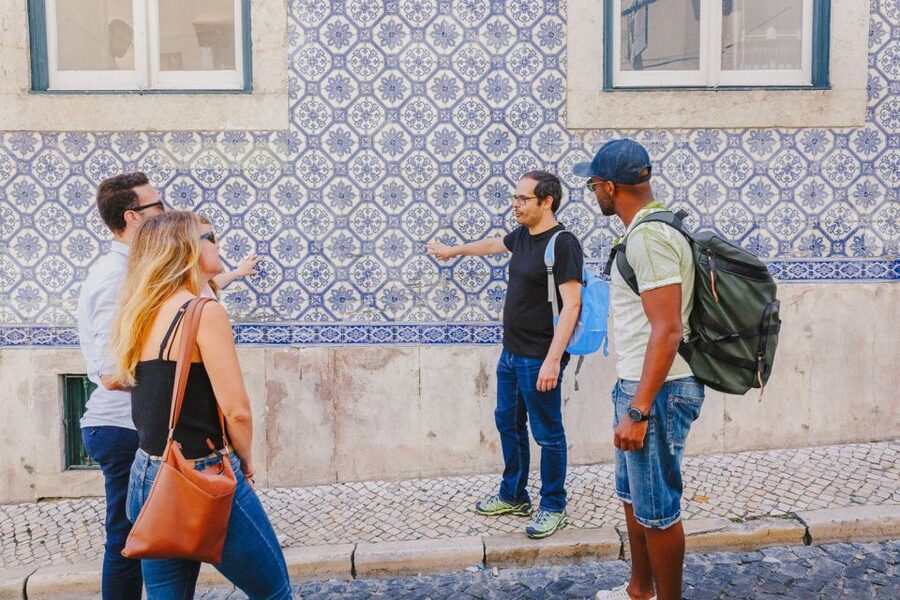
Carmo Square is one of the most important stops for understanding modern Portugal. Here, the guide explains the Carnation Revolution of 1974, which brought an end to 48 years of dictatorship.
The subject gives the tour a useful modern counterpoint to Lisbon’s older monuments. You are not hearing only about monarchs, overseas expansion, and earthquakes. You are also learning how Portugal changed in living memory.
The square provides a visual setting for the story, and the stop includes time for photographs and scenic views. The guide’s delivery matters here. Guides such as Daniel and Maria are praised for making political history easy to follow, while other guides, including Joana, Guilherme, and Natalia, are noted for a good mix of facts, humor, and local perspective.
Do not expect a long political lecture. The tour keeps moving, and the purpose is to give you a clear sense of the event and its place in Lisbon’s story.
More Lisbon Walking Tours:
- Lisbon: History, Stories and Lifestyle Walking Tour
★ 4.8 · 10,902 reviews - Best of Lisbon Small-Group Guided Walking Tour
★ 5.0 · 4,869 reviews - Lisbon: Food and Wine Small Group Walking Tour
★ 4.9 · 4,082 reviews - Age of Discoveries Walking Tour in Belém
★ 5.0 · 1,513 reviews
Chiado brings cafés, shops, and literary Lisbon
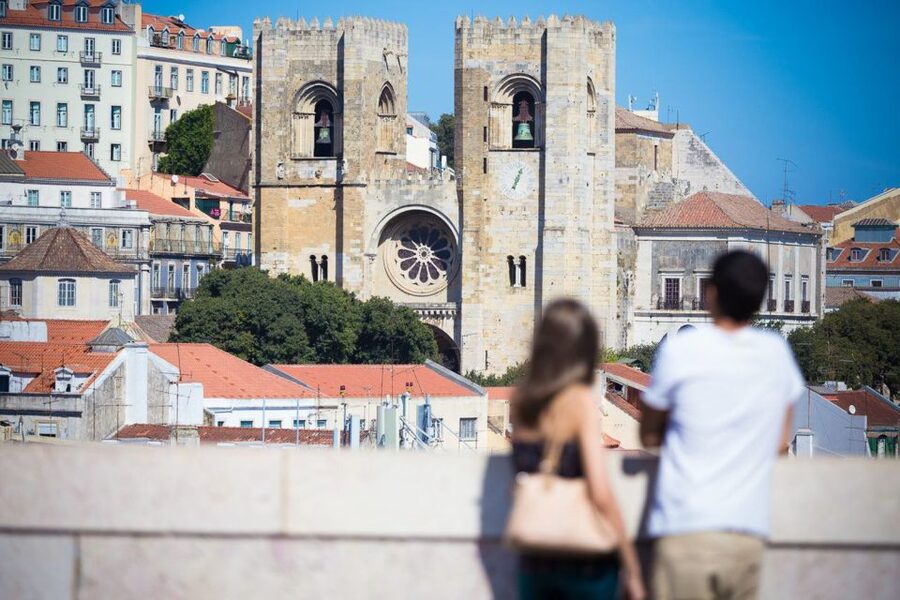
From Carmo, the route continues into Chiado. This is the polished, cultural side of central Lisbon, with old cafés, boutiques, theaters, and bookstores.
You mainly pass through the neighborhood while the guide points out its character and important places. That format works well if you want a first look before returning on your own. It also keeps the tour from becoming too slow.
Chiado feels different from Baixa below it. Baixa follows a more planned layout, while Chiado has a more layered urban feel, with shops and cultural venues packed into streets that rise and fall around the central grid.
This is a good point to ask your guide for recommendations. Daniel, Carlos, Maria, and other guides are praised for restaurant suggestions and practical advice. You may also hear useful tips on where to explore after the tour, though the exact recommendations naturally depend on your guide.
Baixa explains the earthquake rebuild
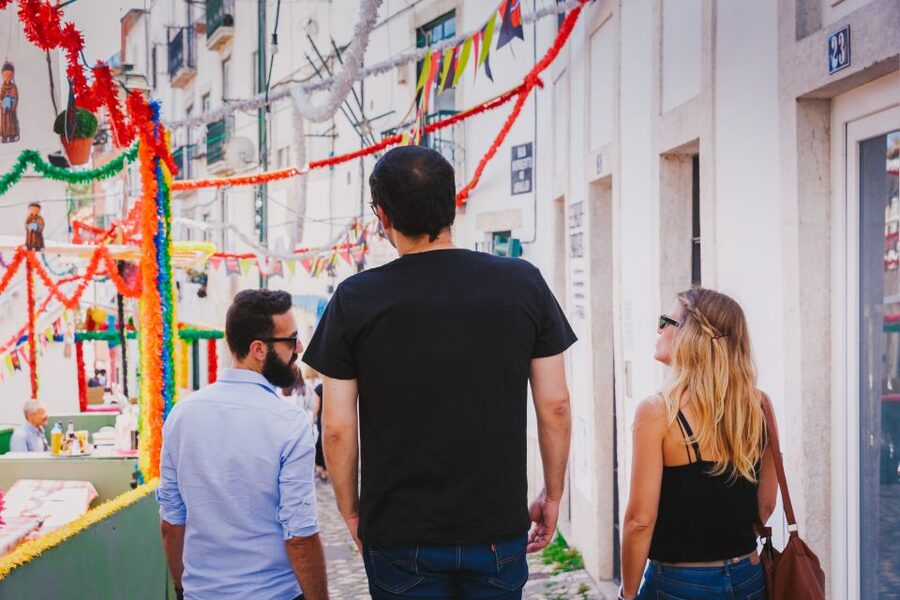
The tour then reaches Baixa de Lisboa, the central district rebuilt after the 18th-century earthquake. This is where the city’s planning becomes easiest to see.
The guide explains how Baixa was reconstructed with new rules of urban design and anti-seismic building methods. The broad streets and orderly blocks are not accidental. They reflect an effort to create a safer, more controlled city after disaster.
For you, the value is in seeing how urban planning shapes a place. Baixa is not just a shopping district or a route between sights. Its layout is part of Lisbon’s story.
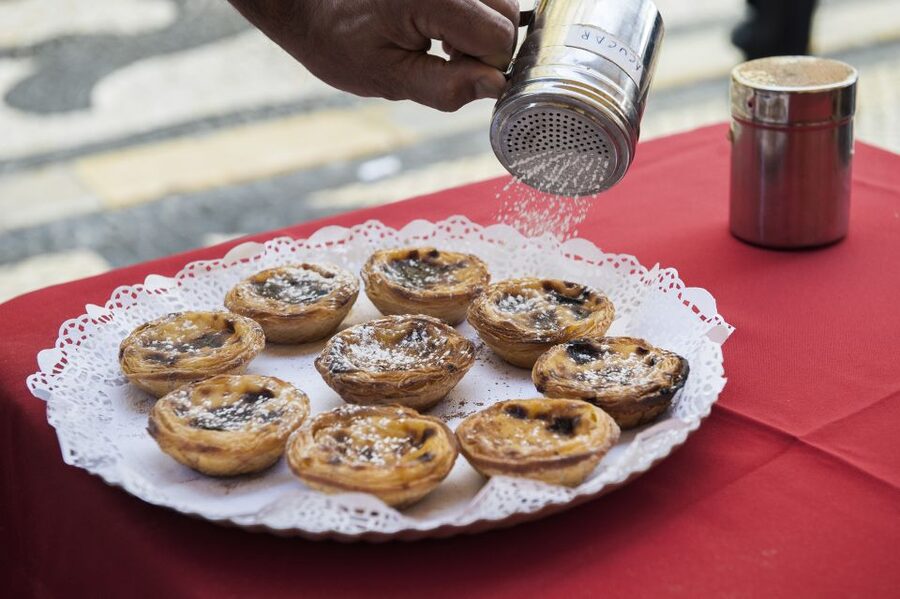
A food tasting takes place in Baixa, including a pastel de nata. This small custard tart is one of Portugal’s best-known pastries, with crisp pastry and a soft egg custard center. The tasting is brief, but it breaks up the walking and gives the history a local flavor.
Some departures also include a codfish cake as the savory snack. The exact serving can depend on the tour arrangements, but you should expect one included snack tasting in addition to the tart and wine.
Viewpoints make the hills worthwhile
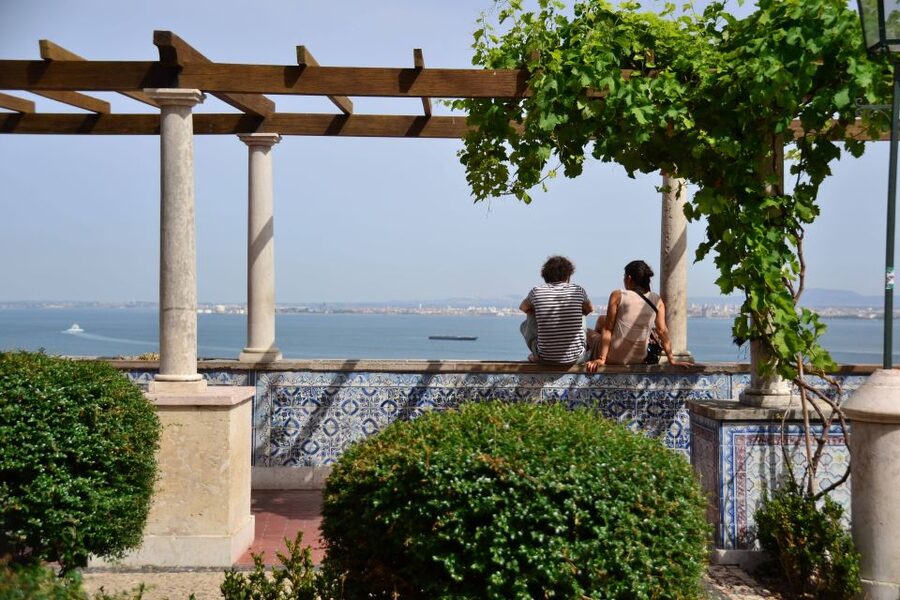
The route includes two viewpoint stops, each listed at about 10 to 15 minutes. These pauses are important because Lisbon’s hills can make a central walk feel more demanding than its distance suggests.
At a viewpoint, you get time for photographs and a broader sense of the city’s layout. The views also help you understand the relationship between the lower central districts and the higher neighborhoods.
The tour does not give a named viewpoint for every stop, so do not book it expecting a specific landmark platform. Think of these pauses as scenic breaks built into the route.
They also prevent the walk from becoming a nonstop march. You stop, listen, look around, and catch your breath before continuing.
Alfama changes the pace
The final major neighborhood is Alfama, Lisbon’s oldest area and the part of the tour that many people find most memorable. Its narrow alleys and winding streets feel very different from the straight lines of Baixa.
The route through Alfama lasts about 30 minutes, longer than several earlier stops. That gives the guide time to explain the neighborhood’s Moorish influence, its street pattern, tiled building facades, and local traditions.
One useful question to ask concerns the tiles on Alfama’s buildings. A guide can explain why tiled facades became such a familiar part of Lisbon’s appearance. This kind of small detail often makes the neighborhood more rewarding than simply taking photographs.
The tour also introduces Fado, Lisbon’s distinctive musical tradition. You should not expect a full Fado concert as part of the activity. Instead, the guide gives you an up-close cultural introduction while you walk through the streets where the music belongs.
That distinction matters. If Fado is a major reason for your visit, you will need a separate evening performance. But this stop can help you decide if you want to seek one out.
The Alfama tasting adds a local pause
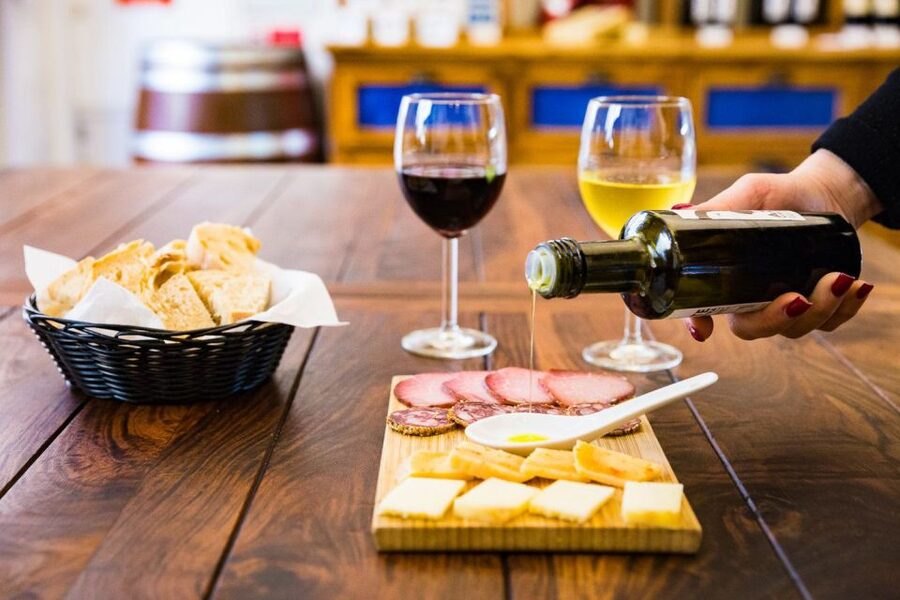
In Alfama, the tour includes a wine tasting and snack tasting. The supplied information identifies wine as an included item, and several departures have featured green wine with a savory Portuguese snack.
This is not a formal food tour with several courses. It is a short pause built into a neighborhood walk. I like that format because it keeps the focus on Lisbon while giving you a taste of local life.
The tasting also gives the group a chance to slow down and talk. Guides such as Carlos A, Jose Luis, and Daniel are praised for answering questions patiently and making the experience feel social without turning it into a performance.
If you do not drink wine, the activity information does not specify a substitute. Keep that in mind when deciding if the tasting element is important to you.
Ending at Praça do Comércio
The walk ends at Terreiro do Paço, better known as Praça do Comércio. This vast square faces the river and served as the former entrance hall of Lisbon.
It is a fitting finish. You begin in Rossio, the center of the city’s inland activity, and end at the grand riverfront gateway. Along the way, you have crossed the main central districts and moved from national monuments to neighborhood streets.
The final location is also practical. You can continue exploring the riverfront, return toward Baixa, or use the square as a reference point for later walks. The activity does not include onward transport, so you are free to choose your next stop.
What the guides add to the route
The route is fixed, but the personality of the guide shapes the experience. The strongest guide comments repeatedly point to warmth, humor, clear explanations, and local recommendations.
Filipa is praised for combining history with current culture. Daniel is described as energetic and good at bringing a mixed group together. Maria is often praised for her humor, local pride, and lively delivery. Carlos is noted for patience, clear explanations, and practical help. Martin is praised for making the history engaging without overloading the group.
Other named guides include Joana, Guilherme, Natalia, Ricardo, Jose, Alex, Caterina, Fatima, and Catherine. Since the guide is assigned by departure, you cannot assume one particular person will lead your tour.
The overall rating is 4.9 from about 2,700 reviews, which is unusually strong. The most consistent praise concerns the guides rather than any single monument. That tells you what you are buying: a human explanation of Lisbon, not special access to attractions.
How demanding is the walk?
The activity lasts three hours, though some departures have run longer when the guide and group continued talking. The official route includes several walking sections, scenic stops, and time in Alfama.
You should bring comfortable shoes and comfortable clothes. That advice is not filler. Lisbon’s slopes, stone paving, and winding streets can make a three-hour route tiring, especially in poor weather.
The walk is best for people who enjoy moving through a city instead of sitting on a bus. It suits first-time visitors, couples, solo visitors, and families with older children who can manage the hills.
It may be less suitable if you have difficulty with slopes or uneven surfaces, or if you want a slow, museum-focused morning. No entrance fees are included, and attractions are viewed from outside unless stated otherwise.
Is $23 a fair price?
Yes, provided you value orientation and explanation. For $23, you receive a three-hour guided walk, a pastel de nata, a snack tasting, and a wine tasting. That is a low-cost way to cover several central neighborhoods with a guide who can explain what you are seeing.
The price is less compelling if you want extended food sampling or admission to major sights. This is not a substitute for a full food tour, a Fado performance, or an inside visit to every landmark.
I see the best value in taking it near the beginning of your Lisbon stay. You can use the guide’s restaurant suggestions, note the areas you want to revisit, and understand the city’s main layout before spending money on separate attractions.
Free cancellation up to 24 hours before the start and reserve-now, pay-later terms also give you some planning flexibility. Check the available start times when booking.
Who should book this Lisbon tour?
Book it if you want a clear first look at central Lisbon, prefer walking to bus sightseeing, and enjoy history presented through streets and public squares.
It is especially useful if you want both older Alfama and planned Baixa in one morning. The food stops make the route feel less formal, while the Carnation Revolution discussion adds modern context that many basic city walks skip.
You may want something else if your priority is a long Fado experience, a detailed culinary tour, or entry into Lisbon’s monuments. You will see and discuss the landmarks, but the tour does not include attraction entrance fees or interior guiding.
For most first visits, I would book this near the start of the trip. Guides such as Filipa, Daniel, Maria, and Carlos have the kind of local warmth and practical sense that can help you feel at home in Lisbon quickly.
FAQ
Where does the tour start?
The tour starts at the statue of Dom Pedro IV in Rossio Square.
Where does the tour finish?
The tour finishes at Terreiro do Paço, also known as Praça do Comércio.
How long does the walking tour last?
The scheduled duration is three hours. Some departures may run longer depending on the guide and group.
What language is the tour offered in?
The live guided tour is offered in English.
What food and drink are included?
The tour includes one pastel de nata, one snack tasting, and one wine tasting.
Is codfish cake included?
The included snack has been served as a codfish cake on some departures. The activity information guarantees one snack tasting, but not a specific snack for every departure.
Does the tour include attraction entrance fees?
No. Entrance fees and guiding inside attractions and sites are not included.
Do I need comfortable shoes?
Yes. The route includes several walking sections, viewpoints, hills, and the winding streets of Alfama, so comfortable shoes are recommended.
Are pets allowed?
No. Pets are not allowed on the tour.
Can I cancel for a full refund?
Yes. You can cancel up to 24 hours in advance for a full refund. You can also reserve now and pay later.
Just reviewed in Lisbon
- Lisbon: Morning of Equestrian Art with Lusitano Horses★ 4.4 · 87 reviews
- Lisbon: Entry Tickets to Mosteiro de São Vicente de Foram★ 4.6 · 50 reviews
- Lisbon: National Palace of Ajuda E-Ticket & City Audio Guide★ 4.1 · 87 reviews
- Lisbon: Early Morning TukTuk Tour – hotel/cruise ship pickup★ 4.9 · 45 reviews
- Sintra: Quinta da Regaleira e-Ticket & Sintra City Audios★ 4.1 · 12 reviews
- Lisbon E-Bike Tour TAGUS★ 5.0 · 3 reviews
- Lisbon: E-bike Trip from the Sintra Mountains to Cascais Sea★ 5.0 · 67 reviews
- Lisbon: Discover Belem by electric Tuk Tuk★ 4.9 · 86 reviews
Alfama and Old Town Tours, compared.

Private Lisbon Sightseeing Tuk-Tuk Tour: Alfama, Belém & More
Read our review →
Hills, Alfama, and Mouraria Tour by Electric Bike
Read our review →
Lisbon Small-Group Food Tour with 18 Tastings in Alfama District
Read our review →
Lisbon E-Bike Tour Commerce Square, Mouraria and Alfama
Read our review →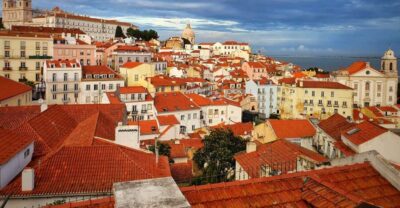
Old Town TukTuk Tour and Scenic Viewpoints in Alfama
Read our review →
Alfama Tour and Live Fado with Traditional Dinner
Read our review →
Browse the lists this tour appears in