
Reviewed · BELéM TOURS
Belém District and the Salazar Dictatorship Legacy – Private Walking Tour
Belém’s grand monuments tell only half the story. This private walk uses the district’s squares, gardens, monuments, and surviving exhibition details to explain Salazar’s Estado Novo dictatorship and the political message behind the 1940 Portuguese Exhibition. You’ll learn why Portugal’s Age of Discoveries was used to shape national identity, and how everyday life fit into that picture.
I like the small private format, which lets Luís Maio adjust the pace and answer detailed questions. I also like the unusual focus: instead of simply ticking off Jerónimos Monastery, the Discoveries Monument, and Belém Tower, you’ll connect them to censorship, empire, propaganda, and the daily life of an authoritarian state.
The main thing to consider is that this is an outdoor history lesson, not an entry tour. You’ll see the monastery and tower from outside, and three hours of walking can feel long in sun or rain. One person found the emphasis too far from their interests and wished there had been time to visit the monastery, so make your priorities clear at the start.
Key points to know before you book
- Salazar’s 1940 Exhibition is the central theme: Belém becomes a way to understand propaganda, empire, and dictatorship.
- Luís Maio leads a personal, image-filled walk: He is praised for clear explanations, historical detail, and adapting the route to the group.
- The tour covers seven outdoor stops: You’ll move from Afonso de Albuquerque Square to the Belém Tower Garden.
- The historic interiors are not included: Plan another visit for Jerónimos Monastery, museums, and paid attractions.
- The private format is useful for serious questions: Your group alone participates, with morning or afternoon departures.
- Good shoes and weather planning matter: The tour lasts about three hours and requires steady walking outdoors.
Why Belém’s modern history is easy to miss
Most first visits to Belém follow a familiar path: admire Jerónimos Monastery, photograph the Discoveries Monument, look at Belém Tower, and stop for a pastry. Those sights are worth your time, but they can leave a gap in Portugal’s story.
This tour fills that gap by placing the 1940 Portuguese Exhibition at the center. Held during the dictatorship, the exhibition presented a carefully managed image of Portugal. It celebrated the country’s maritime past, its empire, its Catholic tradition, and an idealized national character.
That framing gives the familiar monuments a different meaning. The Discoveries Monument is not just a dramatic tribute to navigators. Its imagery also belongs to a political period that looked backward to justify the present. The public gardens and exhibition structures are not merely decorative. They help show how architecture and ceremony could serve a government’s message.
I find this approach more useful than a simple chronology of Portuguese kings and battles. You still hear about older Belém, the Age of Discoveries, and the monastery, but the main question is how those earlier periods were selected and presented in the twentieth century.
Luís Maio is particularly suited to this kind of tour. The supplied information identifies him by name, and his guiding style comes through clearly: he brings historical images, remembers dates, answers political questions, and adjusts the depth to the group. He has also connected Portuguese history to South African history and other European authoritarian regimes, which can make the subject easier to place in a wider context.
More Belém Tours:
- Lisbon: Jerónimos Monastery Entrance Ticket
★ 4.1 · 14,164 reviews - Private Lisbon Sightseeing Tuk-Tuk Tour: Alfama, Belém & More
★ 5.0 · 4,277 reviews - Age of Discoveries Walking Tour in Belém
★ 5.0 · 1,513 reviews
Starting at Afonso de Albuquerque Square
The walk begins at Belém River Station on Avenida Brasília and moves first to Afonso de Albuquerque Square. This opening stop sets up the area’s long story, from the era of overseas expansion to the 1940 Exhibition.
You’ll spend about 15 minutes here, with no admission fee. That may sound brief, but the purpose is to get your bearings and establish the main themes before moving toward the larger monuments.
Afonso de Albuquerque is tied to Portugal’s imperial past, so this is a good place to consider how national heroes were chosen and displayed. The tour does not treat the Discoveries period as a simple adventure story. It asks you to notice how later governments used that past to create a public image of Portugal.
This is also where the private setting helps. If you already know the broad outline of Portuguese exploration, you can move quickly toward the political material. If you need more background, Luís can build it in before the 1940 Exhibition becomes the focus.
Vasco da Gama Garden and the old town
At Vasco da Gama Garden, the discussion turns to old Belém and what remains of it. The stop lasts about 15 minutes and is free.
The value here is not a single grand building. It is the chance to think about what was removed, rebuilt, or visually overshadowed by the monumental version of Belém you see today. The district can feel carefully arranged for visitors, but the tour draws attention to the older settlement beneath that presentation.
This part should appeal to you if you want more than famous façades. It helps explain how Belém became a ceremonial waterfront rather than simply a historic neighborhood. Expect the guide to point out details that are easy to pass without context, including architectural features and remnants connected with the exhibition period.
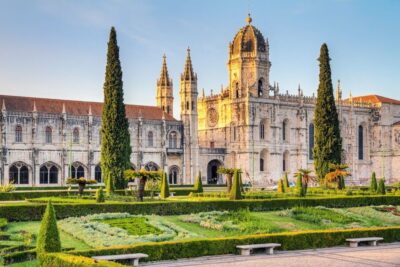
Jerónimos Monastery, viewed through its façade
Jerónimos Monastery is the most substantial early monument on the route. The stop takes around 20 minutes and covers the façade and interior spaces from an explanatory point of view, but the tour does not include entry.
The monastery is usually presented as a masterpiece of late Gothic architecture, and it is that. Here, you also hear about its historical and religious meaning, along with the symbolic weight placed on it by later national narratives.
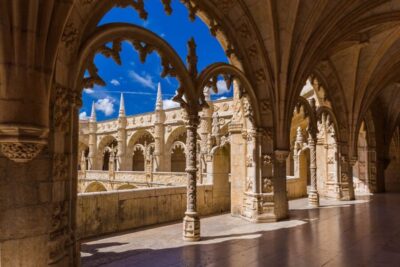
Be clear about the limitation. You will not replace a proper visit inside Jerónimos with this stop. The cloisters and interior details deserve separate time, and one practical tip is to remain in Belém after the walk if you want to visit the monastery, museums, or other attractions.
That said, a guide can give the building useful context before you enter later on your own. Instead of seeing carved stone as decoration alone, you’ll have a better sense of how the monastery fits into Portugal’s maritime ambitions and national storytelling.
More Lisbon Walking Tours:
- Lisbon: History, Stories and Lifestyle Walking Tour
★ 4.8 · 10,902 reviews - Best of Lisbon Small-Group Guided Walking Tour
★ 5.0 · 4,869 reviews - Lisbon: Food and Wine Small Group Walking Tour
★ 4.9 · 4,082 reviews - Best of Lisbon Walking Tour: Rossio, Chiado & Alfama
★ 4.9 · 2,700 reviews
Praça do Império and the 1940 Exhibition
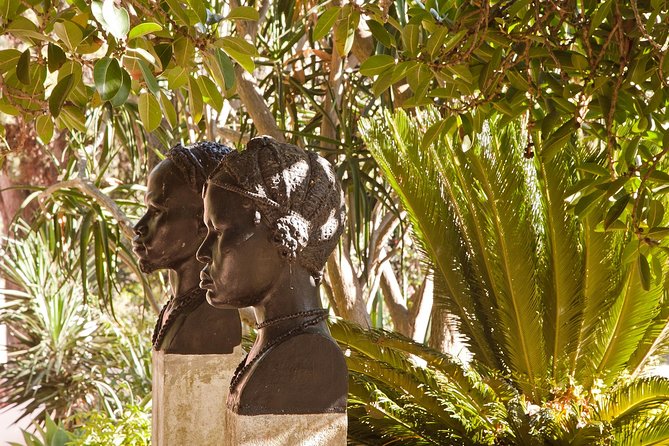
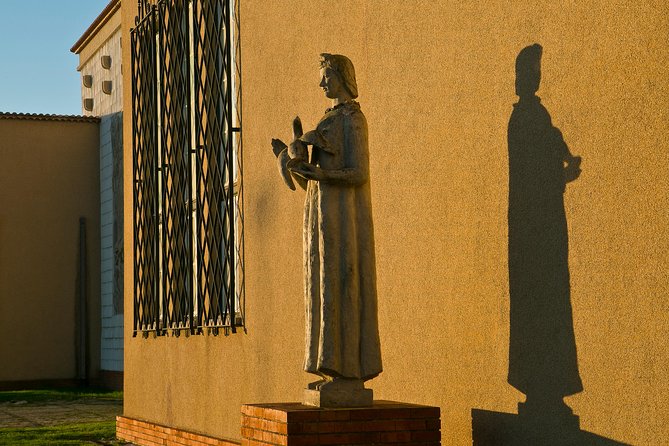
Jardim da Praça do Império is the heart of the modern-history portion of the walk. The square served as a major hub of the Portuguese World Exhibition in 1940, and the tour pauses at several details: heraldic flower beds, the monumental fountain, and the seahorses.
These may sound like minor features, but they are precisely the sort of things you could walk past without explanation. Their arrangement helped create a formal public setting for the exhibition. The square presented Portugal as orderly, historic, Catholic, and connected to a worldwide empire.
The 1940 Exhibition took place under António de Oliveira Salazar, who ruled Portugal’s Estado Novo regime for decades. The tour uses the exhibition as a way to discuss dictatorship without turning the walk into a dry political lecture. You learn about public ceremony, national myths, censorship, social roles, and the distance between official images and ordinary life.
One memorable subject is the role of women in the exhibition. The government misrepresented the contribution of ten female artists because it wanted to promote a narrow image of Portuguese women as homemakers. Details such as this bring the political system down to a human scale.
The guide also explains the exhibition’s oddities and contradictions. A reconstructed sixteenth-century caravel was built for the event, but it sank. The Popular Art Museum, discussed later, also reveals how modern design and national folklore could sit uneasily together.
The Discoveries Monument and its political message
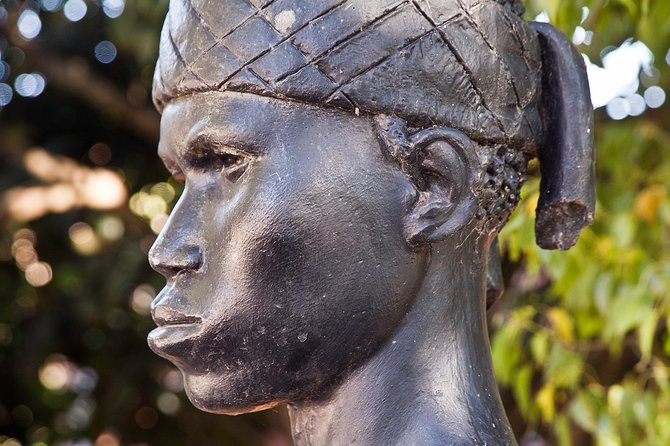
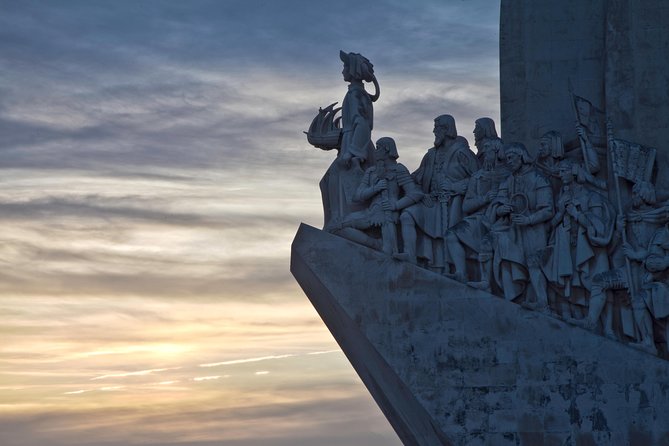
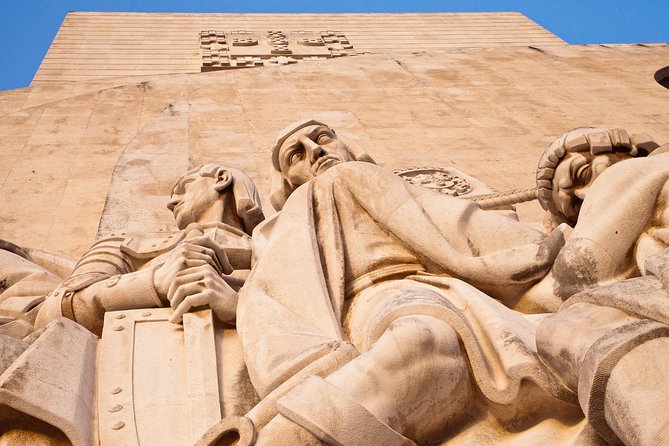
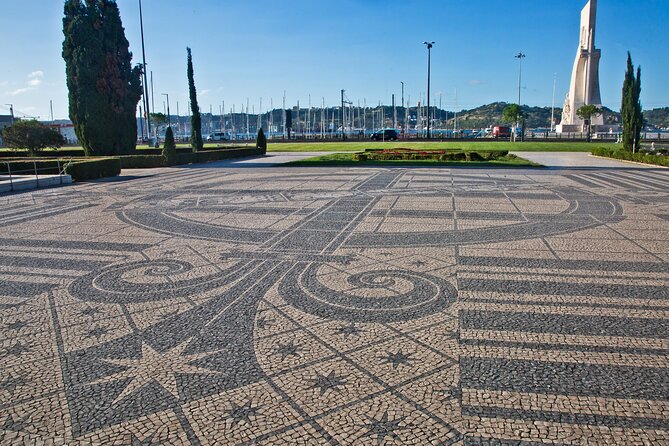
The Padrão dos Descobrimentos is the most obvious visual symbol on the route. You’ll spend about 20 minutes walking around it and looking at the wind rose set into the pavement at its base.
The monument shows figures associated with Portugal’s maritime expansion, with Henry the Navigator at the front. A common question is who all those carved people are and why there are so few explanations on site. This tour answers that question while also asking what the monument was meant to communicate when it was created for the 1940 Exhibition.
That distinction matters. The monument’s heroic style can make exploration look clean and uncomplicated. The tour gives you the political setting behind the design, showing how the regime used the Age of Discoveries to support an image of national greatness and global importance.
You’ll have time for photographs, but this is not just a photo stop. Luís has been praised for bringing images from different periods to help explain how Belém changed. The pavement wind rose is another useful detail: it makes the monument’s message physical, turning the ground itself into part of the presentation.
If you prefer quick sightseeing, 20 minutes of explanation here may feel slow. If you want to understand why the monument looks the way it does, the time is well spent.
The Popular Art Museum’s strange modern role
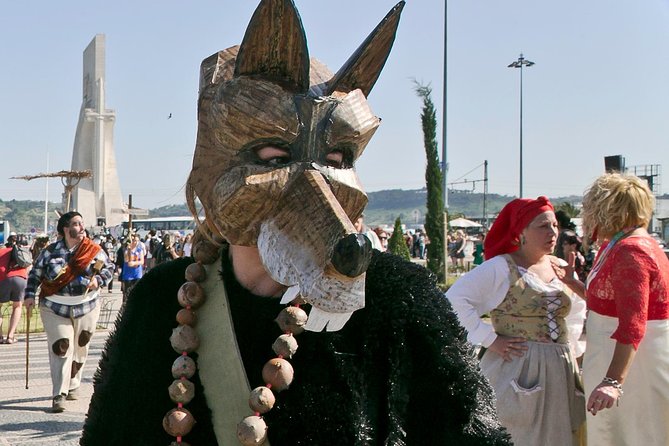
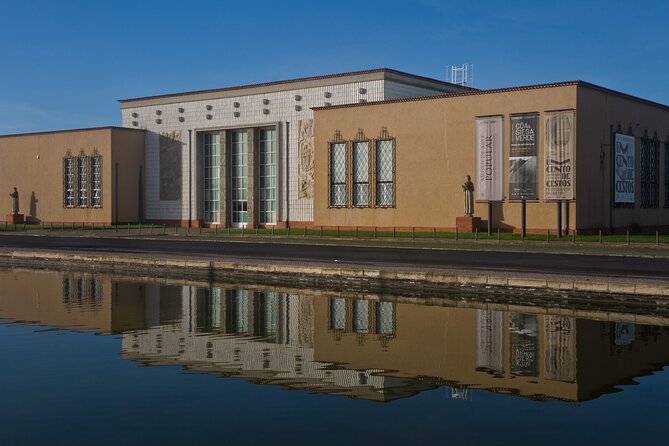
The Museu de Arte Popular receives about 10 minutes. The building is described as a conundrum and an oddity of Modernist Lisbon, which is a good warning that this is not a standard museum highlight.
Its importance lies in the tension between modern design and the regime’s preferred picture of Portuguese folk culture. The museum and its surroundings show how a government could package regional traditions for public display while promoting a single national identity.
You may not spend long here, but the stop adds an important layer to the tour. Dictatorship was not expressed only through statues and grand ceremonies. It also shaped how ordinary people, rural life, crafts, dress, and local customs were presented.
The museum itself is not entered during the walking tour. If its collections interest you, you’ll need to return independently, and you should allow additional time in Belém after the tour.
Belém Tower Garden and the Restelo neighborhood
The final stop is the Belém Tower Garden, reached after about 15 minutes of discussion around the tower and the Restelo upper-class neighborhood that developed after the 1940 Exhibition.
Belém Tower is the other great monument of the Discoveries period. From the garden, you can consider both its original maritime role and its later use as part of a carefully arranged heritage district. The contrast between old fortress, exhibition-era planning, and modern Lisbon gives the walk a satisfying finish.
The endpoint is Belém Tower Garden on Avenida Brasília. The tower itself is not entered, so plan a separate visit if you want to see its interior.
Ending here also makes the route practical. You can continue exploring Belém, take public transport, or stay for museums and the monastery. The tour does not include transportation, hotel pickup, or drop-off, so you handle your own way to the starting point and onward from the garden.
What the private format adds
This is a private tour, with only your group participating. A minimum of two people is required, so it works best for a couple, friends, or a small family group rather than a solo booking.
The strongest benefit is flexibility. Luís has adjusted explanations to suit guests who already knew some Portuguese history, connected the material to South Africa when useful, and reduced time in direct sun on a hot day. He has also found shaded or seated places when possible, which matters during a three-hour outdoor walk.
The tour can also continue productively when the group is small. One booking involved only two people, and the guide did not cancel. Instead, he asked about their interests and shaped the discussion around them.
That flexibility works both ways. Tell the guide if you want more political history, more architecture, or more background on the Discoveries. If you want to enter Jerónimos Monastery, say so at the beginning, but understand that the tour is designed as an exterior walk and may not leave time for admission.
Price, timing, and practical value
At $33.55 per person, the price is reasonable for a private three-hour tour, especially if two or more people share the experience. You are paying for a personal guide rather than a large-group script, plus the ability to ask questions and adjust the conversation.
The value depends on your interests. If you want a quick introduction to Belém’s three famous sights, a shorter general sightseeing walk may suit you better. If you want to understand the connection between monuments, dictatorship, propaganda, and everyday life, this tour offers more substance than its modest price suggests.
You can choose a morning or afternoon departure. The tour averages about 89 days of advance booking, so I would reserve early if your Lisbon dates are fixed.
Wear smart casual clothing and comfortable walking shoes. The route is outdoors, and weather matters. The operator offers a different date or a full refund if poor weather forces cancellation, while you can cancel for a full refund up to 24 hours before the start time.
The meeting point is near public transportation, and the endpoint is near Algés train, tram, and bus connections. Parking is not included and may be payable at check-in. Food, drinks, hotel transfers, and transportation between attractions are also not included.
Who should book this Belém walk
I would choose this tour if you are interested in twentieth-century Portugal, authoritarian politics, architecture, empire, or the way governments shape public memory. It is especially useful if you have already seen Belém’s main monuments and want to understand what lies behind their official story.
History enthusiasts will get the most from it, but you do not need specialist knowledge. Luís explains the larger picture and can follow up on detailed questions. The tour also suits people who like photographs, since the guide is identified as a professional photographer and the route has many useful viewpoints.
I would be more cautious if you dislike long explanations or want to spend most of the time inside monuments. The tour is not a museum visit, and its emphasis on the 1940 Exhibition may not suit someone seeking only medieval or maritime history.
At 4.9 out of 5, with 98 percent recommendation and 41 ratings, the experience has a strong record. The one clear warning is useful: the subject matter takes time, and not every stop will match every interest.
Should you book it?
Book this tour if you want Belém to make political and historical sense, not just look impressive in photographs. The private setting, careful pacing, and Luís Maio’s focus on the 1940 Exhibition make it a thoughtful way to understand the years of Salazar’s rule.
Skip it if your main goal is entering Jerónimos Monastery or Belém Tower during the three-hour slot. In that case, visit those sites separately and consider this walk as an added layer for a later day. For curious visitors who want Portugal’s modern past brought into view, the modest price makes this a strong choice.
FAQ
How long does the Belém dictatorship tour last?
The walking tour lasts approximately three hours.
Is the tour private?
Yes. Only your group participates, and a minimum of two people is required per booking.
Who guides the tour?
The guide identified in the tour information and detailed feedback is Luís Maio. He is described as a local professional guide and professional photographer guide.
What language is the tour offered in?
The tour is offered in English.
Does the tour include entry to Jerónimos Monastery?
No. The tour discusses the monastery’s façade and interior spaces, but admission is not included. You should plan a separate visit if you want to go inside.
Does the tour include entry to Belém Tower?
No. The route finishes in the Belém Tower Garden, but transportation and attraction admission are not included.
Where does the tour start and end?
It starts at Belém River Station, Avenida Brasília, 1300-598 Lisbon, and ends at Belém Tower Garden, Avenida Brasília, 1400-038 Lisbon.
What happens if the weather is poor?
The experience requires good weather. If it is canceled because of poor weather, you will be offered another date or a full refund. You can also cancel up to 24 hours before the start time for a full refund.
Just reviewed in Lisbon
- Private tour Lisbon – full day★ 5.0 · 8 reviews
- Private Tour: Portuguese Food and Wine Tour★ 5.0 · 33 reviews
- Lisbon Football Experience – Private stadium and Museum Tour★ 4.0 · 10 reviews
- Lisbon and Sintra Essence 8H – Private Tour★ 5.0 · 5 reviews
- Private Tour: Lisbon Sunset Walking Tour with Fado Show and Dinner★ 5.0 · 30 reviews
- Private Catamaran Tour: Lisbon coast cruise with barbecue and drinks★ 5.0 · 20 reviews
- Lisbon: Helicopter Tour over Cascais & Cabo da Roca★ 5.0 · 4 reviews
- Private Tour Fátima, Nazaré, and Óbidos Day Trip from Lisbon★ 5.0 · 25 reviews
Belém Tours, compared.

Private Lisbon Sightseeing Tuk-Tuk Tour: Alfama, Belém & More
Read our review →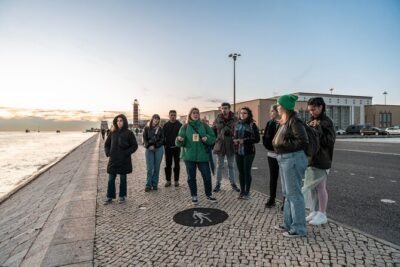


Lisbon Bike Tour: Downhill Downtown Lisbon to Belém
Read our review →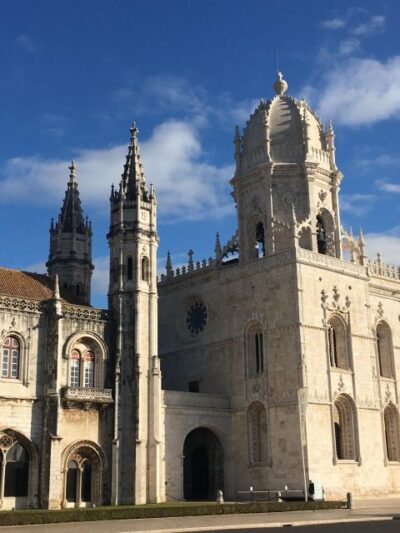
Belem Walking Tour with Jeronimos Monastery Ticket
Read our review →
Lisbon Hop-On Hop-Off Tour: 48-Hour in Belém & Modern Lisbon
Read our review →Browse the lists this tour appears in