
Reviewed · LISBON
Fall in love in Lisbon!
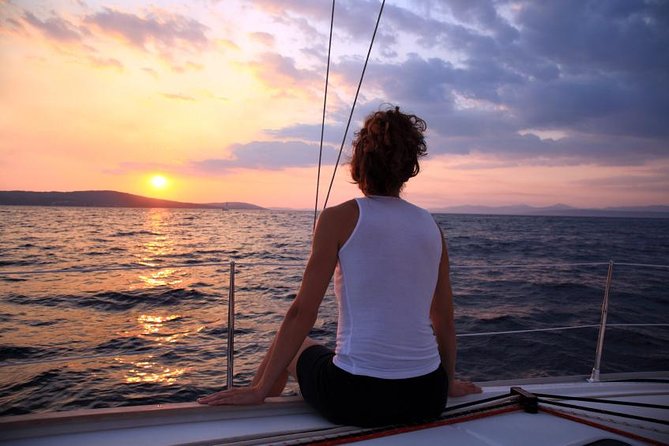
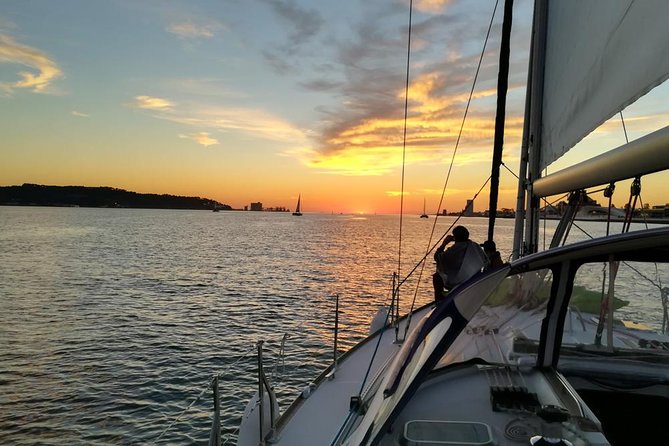
Lisbon is at its best from the Tagus, when the city’s hills, towers, and bridges turn toward the sinking sun. This private sail gives you a front-row view, with the Belém monuments and São Jorge Castle appearing from a calm, uncluttered angle that streets cannot provide.
I like the thoughtful extras: Portuguese sparkling wine, fruit, and a sweet are included, and the boat is reserved for your group of up to two. I also like the crew’s careful approach to safety. The main drawback is the price, $833.47 per group, which makes this a special-occasion splurge rather than an easy add-on.
Key points at a glance
- Sunset from the Tagus: See Lisbon’s waterfront monuments in the softest light of the day.
- Private for two: You share the boat only with your own companion and crew.
- Many landmarks from the water: The route includes Belém Tower, the Monument of Discoveries, MAAT, Alfama, and Christ-King.
- Romantic refreshments: Portuguese sparkling wine, fruit, a sweet, and bottled water are included.
- Experienced crew: Luís and Joana are named in past accounts as the skipper and companion on this sailing experience.
- Fixed commitment: The booking is non-refundable and cannot be changed after purchase.
Why Lisbon looks different from a sailboat
Lisbon rises in layers above the Tagus. From the water, you can read the city more clearly: the low waterfront gives way to old neighborhoods, church towers, palace buildings, and the hills behind them.
A sunset sailing trip also gives you a useful sense of Lisbon’s connection to the sea. The Portuguese maritime story is not tucked away in a museum here. It appears in the Monument of Discoveries, the monastery from which navigators departed, the defensive towers at Belém, and the broad river mouth leading toward the Atlantic.
The boat does not stop so you can tour each sight on foot. This is a sightseeing sail, not a series of shore visits. You see the buildings from the river, hear about their place in Lisbon’s story, and enjoy the changing light without spending the evening walking between monuments.
The private format matters. You can focus on the person beside you, ask the crew about the waterfront, or simply watch the sky change. With only your group aboard, the mood is much more personal than a large sightseeing cruise.
Still choosing? These other Lisbon trips come up in the same search.
- Lisbon City Center Tour – The Unmissable Lisbon
★ 5.0 · 22,234 reviews - Lisbon: Sintra, Pena, Regaleira, Cabo da Roca & Cascais
★ 4.7 · 19,656 reviews - Sintra: Pena Palace and Park Entrance Ticket
★ 4.2 · 17,410 reviews
The private boat and what is included
The price is $833.47 for up to two people, so the cost works out to about $416.74 each if you fill the booking. That is expensive for two and far above the price of a standard river cruise, but the comparison is not quite like for like.
You are paying for a private boat, a crew, a set departure at sunset, and drinks and food for two. The experience is aimed at couples marking an anniversary, proposal, honeymoon, birthday, or simply a memorable evening in Lisbon. If you only want a quick view of the waterfront, a regular cruise will offer better value.
The package includes all fees and taxes, an exclusive tour, a local guide, bottled water, alcoholic beverages, and the romantic tasting. That tasting includes Portuguese sparkling wine, fruit, and a sweet. You also receive a Lisbon Sight Sailing Navigator certificate, a small keepsake rather than a major part of the experience.
Past accounts identify Luís and Joana as especially friendly and careful crew members. The available details also point to close attention to boat safety and prevention measures. Crew assignments can change, so treat those names as useful context rather than a firm promise for your departure.
From Brasília Avenue to the Monument of Discoveries
The meeting point is Av. Brasília 5, in the Belém area. You will need to make your own way there because hotel pickup and return are not included. The location is near public transportation, but you should allow enough time to reach the waterfront before departure.
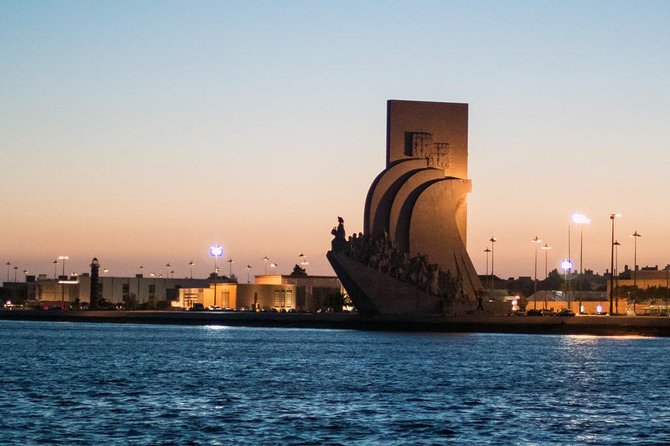
Once the boat is on the Tagus, one of the first major sights is the Monument of Discoveries. The 50-meter structure is shaped like a ship, with two sloping sides meeting at a prow. Henry the Navigator leads a line of 32 carved figures connected to Portugal’s Age of Discoveries, including Vasco da Gama, Luís de Camões, Pedro Álvares Cabral, and Fernão de Magalhães.
The monument you see today is a later version of a structure first built for the 1940 Portuguese World Exhibition. The original was made from temporary materials and dismantled in 1943. From the river, its ship-like form makes immediate sense, especially as the boat moves past it.
The South and Southeast River Station near Commerce Square may also appear early or late in the route, depending on the sailing direction. Opened in 1932 and renovated most recently in 2021, it remains a working transport point for boats crossing to the south bank.
Belém’s monastery, tower, and modern art
Jerónimos Monastery is one of Lisbon’s great architectural sights. Its 16th-century stonework represents the wealth and confidence of Portugal’s maritime era. The monastery sits near the river beside Empire Square, close to the point from which Portuguese navigators once departed.
You will not go inside during this sailing, so I would visit the monastery separately if its cloisters and church are high on your list. From the water, the value is the setting: a major monument facing the same river that shaped the city’s history.
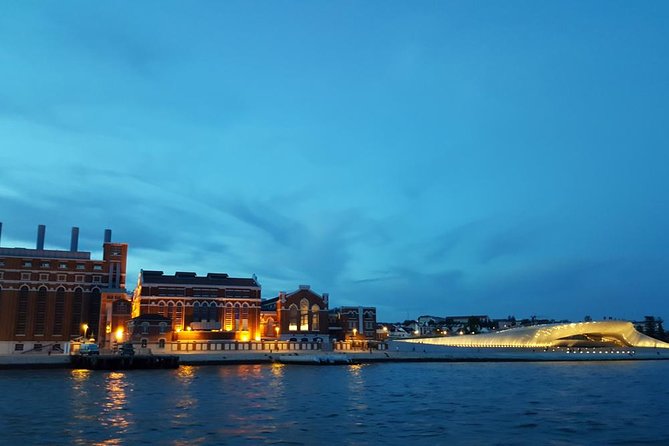
Nearby, MAAT brings a sharp change in mood. The Museum of Art, Architecture and Technology opened in 2016 and occupies a futuristic building designed by Amanda Levete. Its curved exterior and riverside position make it easy to spot from a boat.
The contrast between Jerónimos and MAAT is one of the nicest parts of the waterfront. One points to the 16th century, the other to contemporary design and new cultural life. You get both without changing locations.
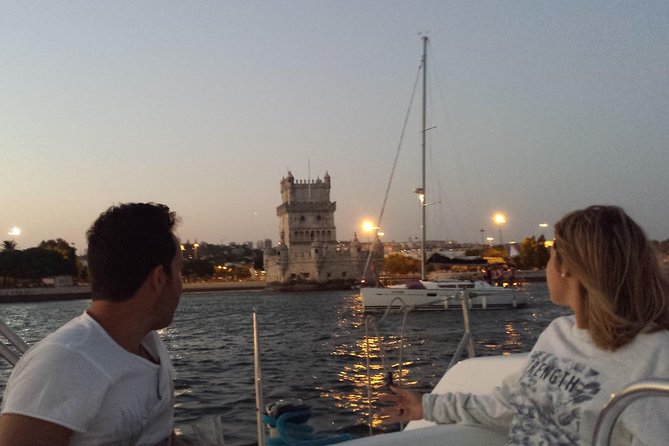
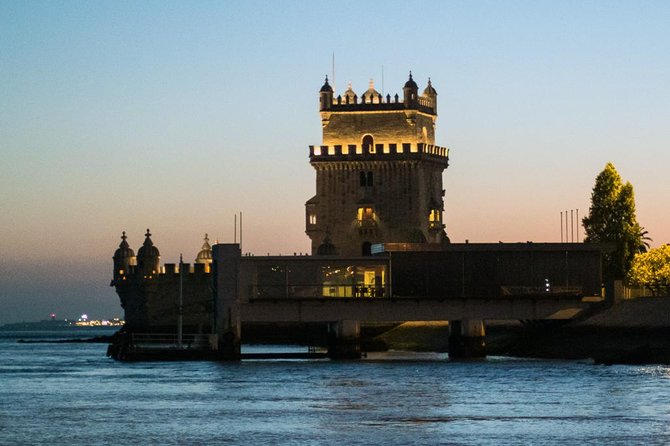
Belém Tower is the famous finishing piece of this stretch. Built at the narrowest point of the Tagus estuary, it was designed to defend Lisbon. The tower was once surrounded by water, although a pedestrian bridge now links it symbolically to land. From the river, its defensive purpose is easier to understand than it is from a crowded shore approach.
Something different to do with a day in Lisbon:
- Lisbon: Jerónimos Monastery Entrance Ticket
★ 4.1 · 14,164 reviews - Lisbon: History, Stories and Lifestyle Walking Tour
★ 4.8 · 10,902 reviews - Lisbon: Sunset Boat Party Cruise with DJ and Open Bar
★ 4.5 · 10,378 reviews - Lisbon: Pena Palace, Sintra, Cabo da Roca, & Cascais Daytrip
★ 4.7 · 9,981 reviews
The bridge, Christ-King, and the open river
The suspension bridge connecting Lisbon and Almada is often compared with San Francisco’s Golden Gate Bridge. It was built by the same North American company and was originally known as Ponte Salazar. Today it is one of the strongest visual markers of the city.
Passing beneath or near the bridge gives the boat ride a sense of scale. The red structure stretches across the water while Lisbon’s hills rise behind it. You also see why the crossing matters: it links the two banks and carries a major share of movement between Lisbon and Almada.
On the south bank, Christ-King faces Lisbon with open arms. The monument has an 82-meter structure, including its portico, topped by a 28-meter statue. It was built after a 1940 vow by Portugal’s bishops asking for protection from the Second World War. Portugal remained neutral during the conflict.
The view toward Christ-King is one of the reasons this trip works especially well for couples. You get the monument, the bridge, and the city together in one broad river scene. As daylight fades, the scale of the estuary becomes part of the experience.
Farther toward the river mouth, you might see Bugio Lighthouse. It sits on a sandbank where the Tagus meets the Atlantic, and its isolated position gives it a very different feel from the city landmarks. You may also pass the Maritime Traffic Control Centre, or VTS Tower, which monitors shipping movements in the estuary and manages the port area.
Alfama and Lisbon’s old hilltop views
From the water, Alfama appears as a dense climb of old buildings and narrow streets beneath São Jorge Castle. It is Lisbon’s oldest neighborhood and one of Europe’s oldest urban quarters, with the Tagus forming one of its edges.
You cannot reproduce Alfama’s steep lanes from a sailboat, but you can understand its position. The district climbs toward the castle, the National Pantheon, and São Vicente de Fora. Its waterfront side shows why the neighborhood has long been tied to the river.
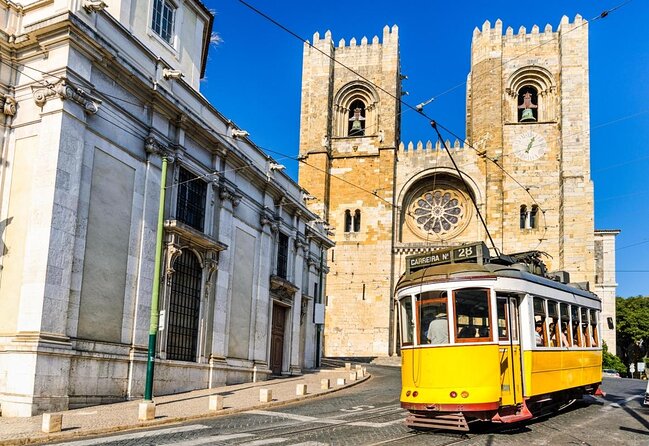
The sailing route also brings Lisbon Cathedral into view. Construction began in the second half of the 12th century after the Christian reconquest of Lisbon. It is the city’s oldest church and contains a treasury with relics, jewels, and sacred art.
São Jorge Castle sits higher still. The fortifications began in the 10th and 11th centuries, when Lisbon was an important Muslim port. In 1147, Afonso Henriques, Portugal’s first king, took the city and castle from the Moors. The castle’s height gives you one of the clearest visual anchors of old Lisbon.
The National Pantheon, formerly the Church of Santa Engrácia, is another strong landmark in Alfama. Its dome and pale stone are easy to pick out from the river. The building contains the remains of notable Portuguese figures and offers wide views over the city when visited separately.
São Vicente de Fora adds another church and monastery to the hill. It sits near the National Pantheon and the Feira da Ladra flea market, and its position gives it a fine outlook across Lisbon and the Tagus.
The waterfront’s quieter cultural sights
The route includes several sights that are less familiar than Belém Tower but help fill out the city’s story. The National Ancient Art Museum occupies the former Palácio dos Condes de Alvor and holds more than 500 years of European, African, and Asian art.
From the river, the building is part of the wider waterfront composition. If you want to visit it later, allow time for sculpture, painting, goldwork, and decorative arts rather than treating it as a quick stop.
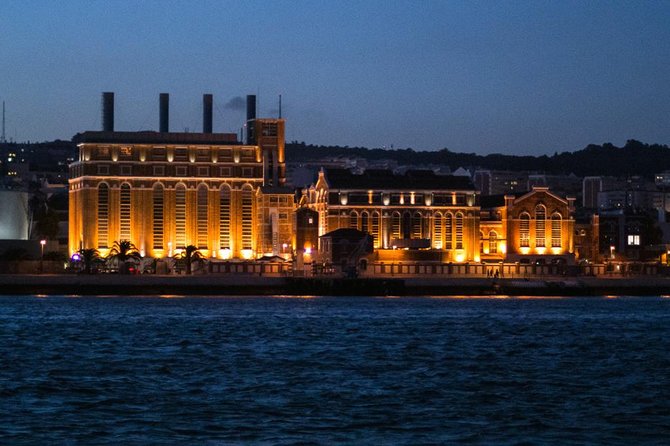
The old Central Tejo power station is another change of pace. Built in 1908, it supplied electricity to the Lisbon region until 1972. It later reopened as the Electricity Museum, with restoration work bringing the industrial buildings and equipment back for public viewing.
The Lisbon Folk Art Museum began as a pavilion for the 1940 Portuguese World Exhibition and opened as a museum in 1948. It is now linked with the Ethnology Museum and offers another look at Portuguese cultural life beyond the grand monuments.
You may also see the Champalimaud Foundation. This research and medical center was created through the will of António Champalimaud and is devoted to biomedical research and clinical care. Its modern riverside architecture fits naturally into the newer side of Lisbon’s waterfront.
Commerce Square, Cais do Sodré, and the 1755 earthquake
Commerce Square opens directly toward the Tagus and is one of the city’s most memorable urban spaces. The square took its current form after the earthquake of November 1, 1755, which destroyed much of central Lisbon, including palaces, convents, hospitals, schools, and the royal palace.
The rebuilding plan created a broad square facing the estuary. From the river, you can see why the space feels grand: the city opens toward the water rather than closing in around it. It is also used for major events, including Lisbon’s New Year’s Eve fireworks.
Cais do Sodré lies farther along the central waterfront. In the 17th century it was known as a port for vessels heading to Portugal’s colonies. By the 19th century, bars and entertainment venues had made it a meeting place for sailors and adventurers.
These sights give the tour a useful rhythm. You move from monumental Belém to old Alfama, then toward the working and social waterfront. The route is not only a parade of pretty buildings. It shows how Lisbon grew around the river.
Sunset timing, comfort, and practical limits
The experience lasts about two hours and 30 minutes. That is enough time to see a broad section of the Tagus, but not enough to spend long at each landmark. Think of it as a moving panorama with a romantic meal-and-drink element, not a guided museum tour.
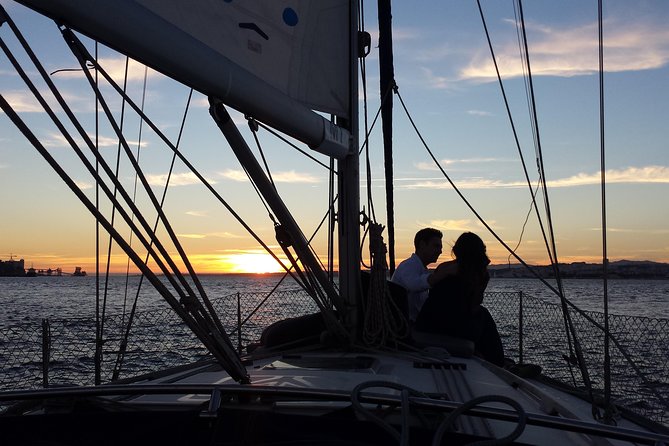
The sunset timing is the main reason to book. Light changes quickly over Lisbon, so the order and appearance of sights may vary with the season and the skipper’s route. A private boat gives the crew room to choose good viewpoints, but no sailing can guarantee a cloudless sky or a perfect sunset.
The boat has been described as large, safe, and comfortable in past accounts. Still, you are on open water. Bring a light extra layer if you tend to feel cool near the river, though the supplied information does not specify onboard clothing or seating arrangements.
Most people can participate, and the activity is near public transportation. Pickup and return are not provided, so plan your route to Av. Brasília 5 in advance. The tour ends back at the meeting point.
The booking is non-refundable and cannot be changed for any reason. That makes weather and personal scheduling worth considering before you pay. Confirmation is provided at booking, and the mobile ticket is convenient for keeping the reservation on your phone.
Who should book this sailing?
I would choose this for a couple who wants one polished, private evening rather than several cheaper sightseeing stops. It is also a good fit if you have already seen Lisbon on foot and want to experience the city from the river.
The tour suits people who value privacy, a personal crew, and a memorable setting more than maximum sightseeing detail. The certificate and tasting add a little ceremony, while the included sparkling wine, fruit, sweet, and water keep the evening easy.
I would not choose it for a budget-conscious first-time visit, a family seeking an active tour, or anyone who wants to enter the monuments. You will see a lot, but you will not tour Jerónimos Monastery, Belém Tower, São Jorge Castle, or the museums during the sailing.
Should you book Lisbon Sight Sailing?
Book it if the occasion matters and you want Lisbon’s riverfront framed by sunset, with only your companion and crew aboard. The strongest points are the private setting, careful crew, broad route, and the chance to see Belém, Alfama, the bridge, and Christ-King in one evening.
Skip it if $833.47 feels hard to justify or if your priority is visiting interiors. For the right couple, though, this is less a transport option than a planned romantic moment on the Tagus, with Lisbon providing the scenery.
FAQ
How long does the sunset sailing last?
The experience lasts approximately two hours and 30 minutes.
How many people can join the private tour?
The price covers one group of up to two people. Only your group participates in the private activity.
Where does the sailing begin?
The meeting point is Av. Brasília 5, 1350-353 Lisboa, Portugal.
Where does the experience end?
The sailing ends back at the meeting point.
Is hotel pickup included?
No. Pickup and return are not included, so you must make your own way to the meeting point.
What food and drinks are included?
The package includes Portuguese sparkling wine, fruit, a sweet, bottled water, and alcoholic beverages.
Are fees and taxes included in the price?
Yes. All fees and taxes are included.
Which Lisbon sights can I see from the boat?
The route includes sights such as the Monument of Discoveries, Jerónimos Monastery, MAAT, Alfama, São Jorge Castle, Christ-King, Belém Tower, Commerce Square, and the 25 de Abril suspension bridge.
Will I visit the monuments?
No. The experience is a sailing sightseeing tour. You view the landmarks from the Tagus rather than touring their interiors.
Can I cancel or change the booking?
No. This experience is non-refundable and cannot be changed for any reason.
Just reviewed in Lisbon
- SINTRA – CABO DA ROCA – CASCAIS: A magical escape★ 5.0 · 33 reviews
- Exclusive Private Tour to Sintra, Pena Palace & Cascais★ 5.0 · 91 reviews
- Private Tour to Fátima Nazaré and Óbidos from Lisbon★ 5.0 · 34 reviews
- Tomar and Castle of Almourol Private Full-Day Tour from Lisbon★ 4.5 · 3 reviews
- Private Tour to Évora with Wine tasting★ 5.0 · 3 reviews
- Fatima e Tomar Full Day Private Tour from Lisbon★ 4.0 · 4 reviews
- From Lisbon to Sintra, Cabo da Roca + Wine Tasting, Hotel Pick-Up★ 5.0 · 13 reviews
- Private Tour of Sintra and Pena skip the line tickets★ 5.0 · 32 reviews