Reviewed · TOURS
Half Day Tour to Modern Lisbon
Lisbon’s old quarters get most of the attention, but this tour takes you to the city’s newer face: sweeping curves at MAAT, the bold structures of Parque das Nações, and a cable-car ride above the Tagus. It is a useful way to see how Portugal turned former industrial and waterfront areas into modern public spaces.
I like the private format, which gives your group a more personal ride in an air-conditioned vehicle with WiFi and bottled water. I also like the mix of architecture and river views, especially the chance to compare Belém’s maritime monuments with the newer buildings beside them.
The main caution is that the advertised stops are not guaranteed in full. One guest said guide Nelson L was punctual and friendly but visited three of the four described sites, adding street art and LX Factory instead. The private guide is also listed as not included, despite the tour description referring to a private guide, so confirm exactly who will accompany you and what is covered before paying.
Key points to know before booking
- Two very different modern districts: Compare the Expo-built Parque das Nações with the contemporary buildings of Belém.
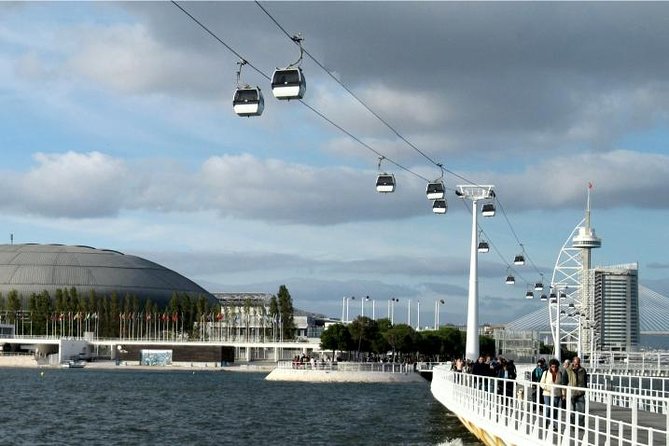
- A quiet cable-car ride: The Telecabine Lisbon offers views over the marina, Tagus estuary, and nearby Expo architecture.
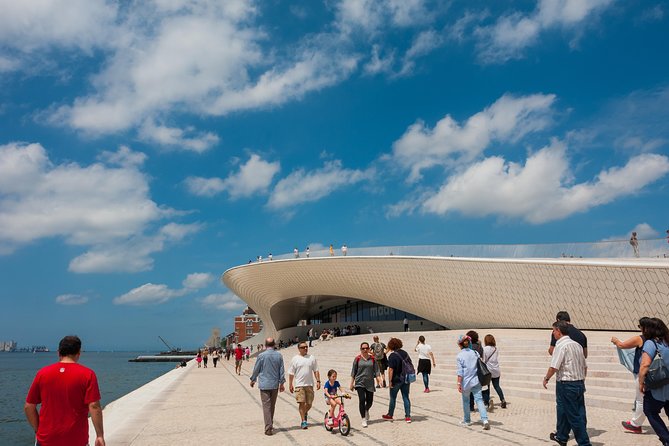
- MAAT is the visual centerpiece: Its curved, tile-covered roof forms part of the riverside promenade.
- Private transport saves time: An air-conditioned vehicle connects widely separated areas during a four-hour outing.
- Tickets cost extra: Museum and cable-car admission, meals, and gratuities are not included.
- The route can change: The driver may substitute other sights, and extra time costs 30 euros per hour.
Why modern Lisbon is worth seeing
Lisbon is often presented through its hills, yellow trams, tiled walls, and grand squares. Those are important parts of the city, but they tell only one story. This tour focuses on the buildings and districts that belong to a newer Portugal, particularly the development linked to the 1998 World Expo.
That makes the route useful for anyone who has already seen the classic center or wants a broader view of Lisbon’s architecture. You get a look at how the city uses the Tagus waterfront today, not just how it used the river during Portugal’s age of exploration.
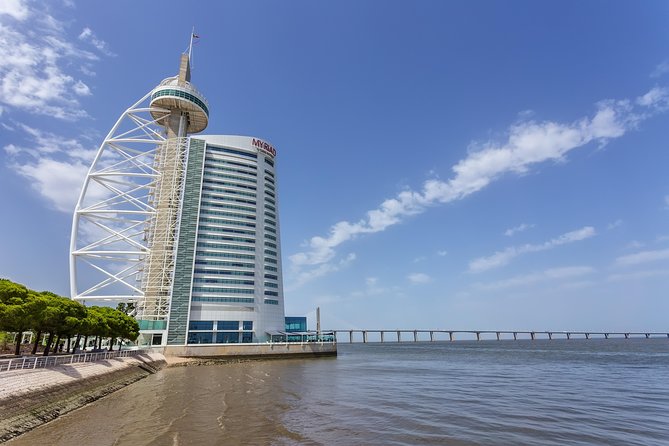
The two main areas feel quite different. Parque das Nações is a purpose-built modern district with broad public spaces, contemporary buildings, and a marina. Belém is older and more layered, with famous maritime monuments beside newer cultural and scientific institutions.
I like that contrast. You are not simply driven from one modern building to another. You can see how new architecture works beside Lisbon’s older identity, sometimes blending into it and sometimes deliberately challenging it.
Still choosing? These other Lisbon trips come up in the same search.
- Lisbon City Center Tour – The Unmissable Lisbon
★ 5.0 · 22,234 reviews - Lisbon: Sintra, Pena, Regaleira, Cabo da Roca & Cascais
★ 4.7 · 19,656 reviews - Sintra: Pena Palace and Park Entrance Ticket
★ 4.2 · 17,410 reviews
Parque das Nações and the Telecabine ride
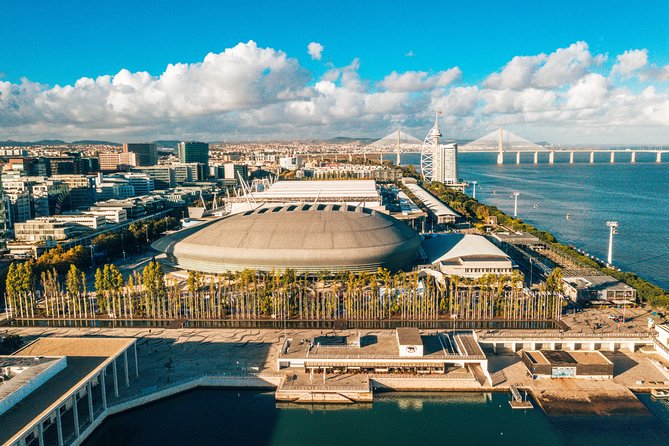
The cable-car portion takes place at the Telecabine Lisbon North Station. From the cabin, you look over the Parque das Nações marina and the Tagus estuary nature reserve. The ride is described as quiet and panoramic, making it one of the easiest parts of the tour for taking in the district as a whole.
From above, the area’s planning becomes clearer. Instead of seeing one building at a time from street level, you can understand the relationship among the waterfront, marina, public spaces, and large Expo-era structures.
The ride also gives you views of the Portuguese Pavilion, designed by Álvaro Siza Vieira. Its design uses two side-by-side volumes separated by what is described as a construction seam. One section forms a covered square beneath a thin concrete canopy supported by stainless steel tie rods and side porticoes.
That level of structural detail matters because the Portuguese Pavilion is not merely a large exhibition hall. It shows how modern Portuguese architecture can use simple shapes and engineering features to create a strong public presence.
The cable-car ticket is not included, so budget for that separately. The supplied information does not give the current admission price, and the exact operating arrangements may affect how long you spend there. Ask your driver or guide before the tour begins if the ride is definitely part of your planned route.
Parque das Nações is also one reason the private vehicle is useful. It is well connected by public transport, but this tour pairs it with distant Belém stops. Having transportation between the two areas saves you from arranging separate rides during a short morning or afternoon.
MAAT and the curve of the Tagus
MAAT, the Museum of Art, Architecture and Technology, is likely to be the most memorable building on the route. It sits on the Tagus in Belém, where its low, arched form follows the line of the riverside promenade.
The building was designed by Amanda Levete Architects’ studio. Its exterior is covered with 15,000 glazed tiles, and visitors can walk across the roof. The result is less like a conventional box-shaped museum and more like a sculpted continuation of the riverfront.
You are scheduled to have about an hour and a half at MAAT, but admission is not included. The museum connects with the Central Tejo Power Station, an important example of Portuguese industrial architecture from the first half of the 20th century. This pairing gives the stop more substance than a quick look at a photogenic exterior.
You can see a conversation between old industry and new cultural design. The power station recalls the machinery and infrastructure that helped run the city, while MAAT turns the waterfront into a place for art, architecture, technology, and public debate.
If you care about the inside of the museum, confirm how much time is available for entry. Four hours must cover several locations, driving, and the cable car, so the full visit may need to be selective. If your priority is the building itself, you may prefer to spend more time outside, walking over the roof and along the promenade.
The museum’s position also makes it a practical photography stop. The curving roof, glazed surface, river, and older Belém buildings provide several different views in a compact area. You do not need to understand every architectural theory behind MAAT to appreciate its shape, but the guide can help explain why it looks so different from Lisbon’s traditional buildings.
Centro Cultural de Belém beside older Lisbon
The Centro Cultural de Belém is another key example of modern Lisbon. Designed by Manuel Salgado and Vittorio Gregotti, it was built on a site where contemporary architecture sits close to some of the city’s best-known older buildings.
The center is useful as a comparison point. MAAT is fluid and curved, while the Centro Cultural de Belém uses a more solid, modular arrangement. Its design does not try to imitate the nearby historic architecture. Instead, it creates a calmer modern counterpoint.
This is one of the tour’s better ideas: showing that contemporary Lisbon is not limited to glass towers or futuristic shapes. Modern architecture can also mean controlled blocks, public courtyards, and carefully planned connections between cultural buildings.
The exact visit may vary. The tour information says that listed places are indications of points of interest and may or may not be visited. That wording is important. If you want to enter the Centro Cultural de Belém or spend time inside its cultural spaces, ask for confirmation rather than assuming the stop includes admission.
Something different to do with a day in Lisbon:
- Lisbon: Jerónimos Monastery Entrance Ticket
★ 4.1 · 14,164 reviews - Lisbon: History, Stories and Lifestyle Walking Tour
★ 4.8 · 10,902 reviews - Lisbon: Sunset Boat Party Cruise with DJ and Open Bar
★ 4.5 · 10,378 reviews - Lisbon: Pena Palace, Sintra, Cabo da Roca, & Cascais Daytrip
★ 4.7 · 9,981 reviews
The Champalimaud Foundation at the water’s edge
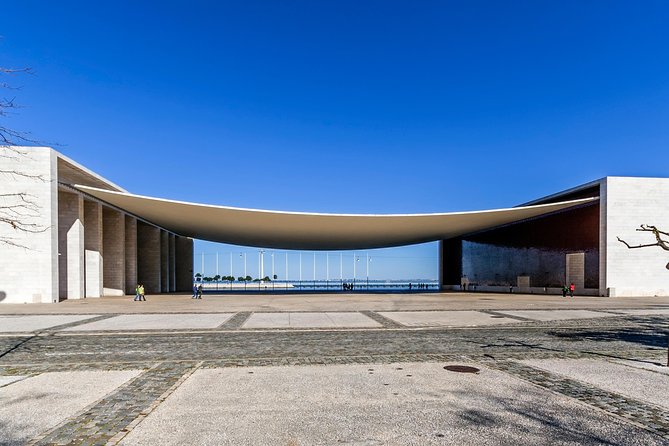
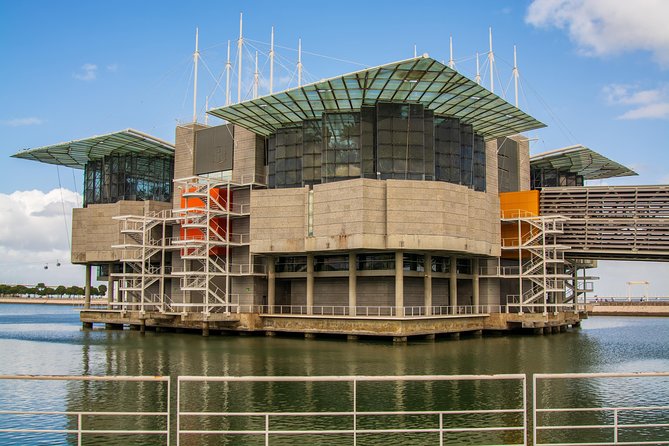
The Champalimaud Foundation offers a different mood again. Also known as the Centre of Research into the Unknown, it faces the Tagus between the Torre de Belém and the Doca de Pedrouços.
Its work centers on biomedical research, but the building itself is a major part of the experience. Architect Charles Correa designed it with the idea that architecture could approach sculpture, beauty, and even therapy. You do not need to visit the research facilities to see the value of that concept. The setting and forms make the building feel closely tied to the water.
This stop adds an important layer to the tour. MAAT is a museum, and the Centro Cultural de Belém is a cultural complex. The Champalimaud Foundation shows how ambitious contemporary design can support scientific work as well.
The location also brings together several periods of Portuguese history. The Torre de Belém recalls the country’s maritime past, the nearby docks point to years of working waterfront activity, and the foundation represents modern research. Few stops explain Lisbon’s changing relationship with the Tagus as clearly.
The itinerary does not specify how long you will spend at the foundation or whether you enter the building. Treat it as an exterior architecture stop unless your guide tells you otherwise.
A private vehicle, a flexible route, and some uncertainty
The tour lasts about four hours and includes private transportation in an air-conditioned vehicle. WiFi and bottled water are provided, which are modest details but useful during a compact route that crosses Lisbon.
A private tour can be especially helpful here because the stops are spread across different parts of the city. You are not trying to connect Parque das Nações with Belém by public transport while also watching the clock. Your group travels together, and the driver can adjust the pace to some degree.
The tradeoff is that the experience may depend heavily on the person assigned to your group. Nelson L is specifically identified as a punctual and friendly guide, but you should not assume he will be your guide. The information also creates a small contradiction: the overview describes a private guide, while the included and excluded sections say private guide is not included.
Ask these questions before departure:
- Is a licensed private guide included, or is the driver providing commentary?
- Are the Telecabine and museum tickets part of the final price?
- Which four stops are confirmed?
- How much time will be spent inside MAAT?
- Can the route be adjusted toward architecture, museums, or river views?
The driver can extend the tour by one hour for 30 euros, payable directly to the driver. That could help if you want more time at MAAT or if traffic reduces your visit time, but agree on the cost before extending.
The route may also change. One reported experience included three of the four planned sites, plus street art and LX Factory. That kind of substitution may be welcome if you enjoy local urban culture, but it is less useful if you are booking specifically for every named building.
Is $168.20 a fair price?
At $168.20 per person, this is not a budget sightseeing ride. Its value depends on how many people are in your private group and what kind of guidance you receive.
For a larger group, private transport across Lisbon can make the price easier to justify. You are paying for a vehicle, a dedicated route, bottled water, WiFi, and the convenience of moving between Parque das Nações and Belém without arranging separate transport. The experience also gives you several architectural viewpoints in half a day.
For one or two people, the cost feels harder to defend, especially because tickets, meals, gratuities, and possibly a private guide are extra. The four-hour duration is enough for an overview, not a full museum day or a slow architectural walk.
The high advance-booking pattern, about 92 days on average, suggests that you should reserve ahead if your dates are fixed. Still, I would first confirm the guide arrangement and stop list. A lower price is not useful if the tour does not include the sites you most want to see.
Group discounts are offered, so larger parties should check the final per-person price. The private format is best value when several people share the vehicle and want the comfort of a custom route.
Who will enjoy this tour most?
I would recommend it to you if you:
- Want to see a side of Lisbon beyond the old center
- Like contemporary architecture and urban planning
- Have only half a day for Belém and Parque das Nações
- Prefer private transportation to connecting several public transport routes
- Want river views from both street level and a cable car
- Are comfortable paying extra for tickets and possible guide services
It may be less suitable if you want a fixed, detailed museum itinerary. The listed attractions may change, and the tour does not guarantee that every building will be visited. It is also not the best choice for someone who wants a long, unhurried visit inside MAAT or the Centro Cultural de Belém.
The experience suits curious first-time visitors and repeat visitors who have already seen Lisbon’s traditional highlights. I especially like it for people who enjoy seeing how cities change over time. You get historic Belém, Expo-era planning, industrial architecture, scientific research, and modern art in one compact outing.
Should you book the Modern Lisbon tour?
Book it if your goal is a guided overview of Lisbon’s newer architecture, with private transport and strong Tagus views. The cable car and MAAT are the most distinctive elements, while the Champalimaud Foundation and Centro Cultural de Belém add useful context.
Before booking, confirm whether a private guide is included, which stops are guaranteed, and the separate cost of tickets. If you can accept some route flexibility, this is a practical and visually varied way to see modern Lisbon in four hours.
If every stop matters to you, choose a tour with a fixed itinerary instead. This experience offers convenience and a personal format, but its value depends on clear communication about the guide, admissions, and substitutions.
FAQ
How long does the Modern Lisbon tour last?
The tour lasts approximately four hours.
Is hotel pickup available?
Pickup is offered, but the provided information does not specify the exact pickup locations. Confirm your meeting point when booking.
Is this a private tour?
Yes. Only your group participates. However, the tour details give conflicting information about whether a private guide is included, so confirm this before booking.
Are museum and cable-car tickets included?
No. Tickets are listed as not included. Meals and gratuities are also extra.
What transportation is provided?
The tour includes private transportation in an air-conditioned vehicle, along with WiFi on board and bottled water.
Can the tour run longer than four hours?
Yes. The driver can extend the tour by one hour for 30 euros, payable directly to the driver.
Can I cancel for a full refund?
You can cancel up to 24 hours before the experience starts for a full refund. Cancellations or changes made less than 24 hours before the start time are not accepted for a refund.
Just reviewed in Lisbon
- Private tour Lisbon – full day★ 5.0 · 8 reviews
- Private Tour: Portuguese Food and Wine Tour★ 5.0 · 33 reviews
- Private Tour: Lisbon Sunset Walking Tour with Fado Show and Dinner★ 5.0 · 30 reviews
- Lisbon Football Experience – Private stadium and Museum Tour★ 4.0 · 10 reviews
- Lisbon and Sintra Essence 8H – Private Tour★ 5.0 · 5 reviews
- Private Catamaran Tour: Lisbon coast cruise with barbecue and drinks★ 5.0 · 20 reviews
- Lisbon: Helicopter Tour over Cascais & Cabo da Roca★ 5.0 · 4 reviews
- Private Tour Fátima – Nazaré – Batalha – Óbidos★ 5.0 · 6 reviews
Tours, compared.
Lisbon City Center Tour – The Unmissable Lisbon
Read our review →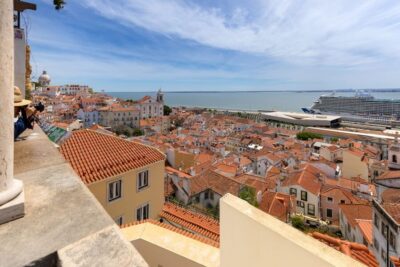

True 4Hour Private Tuk Tuk Tour: Discover Lisbon with a Local!
Read our review →
Winner 2025 Undiscovered Lisbon Food & Wine Tour by Eating Europe
Read our review →
Sintra, Pena, Cabo da Roca, Cascais Tour with Pickup
Read our review →

Best of Lisbon Small-Group Guided Walking Tour
Read our review →