
Reviewed · LISBON WALKING TOURS
Half-Day Walking Tour about the African Presence in Lisbon
Lisbon’s African story is not tucked away in a museum. It runs through Alfama’s old lanes, the former port, grand squares, churches, and city markets. This walking tour follows those connections from the medieval period through the slave trade, abolition, and Portugal’s colonial era.
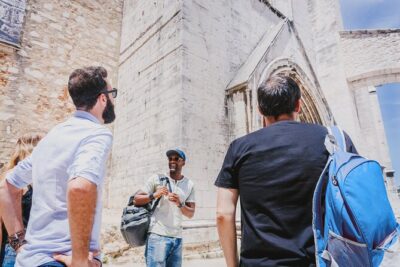
I like the small groups, capped at 15, because they leave room for questions. I also like the personal approach of Alcides, often called Al, whose Cape Verdean background gives the subject a human voice. The main drawback is the price: at $179.74 per person, this is costly for a walking tour, especially if your guide is less clear or the start runs late.
Key points to know before booking
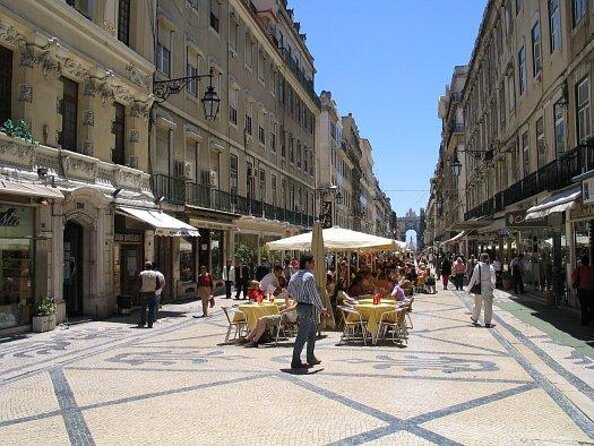
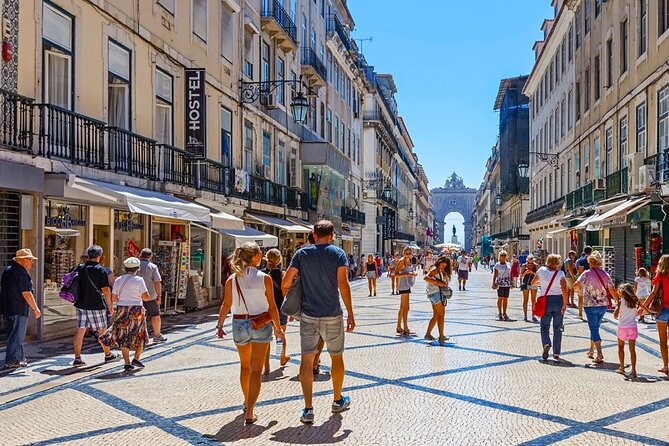
- African history in everyday Lisbon: The route connects ordinary streets and major monuments to Africa, slavery, religion, migration, and colonial power.
- Alcides, or Al, is the key to the experience: His stories and personal connection to Cape Verdean heritage are central to the tour’s appeal.
- A serious walking workout: The route lasts about 3 to 4 hours and crosses several central neighborhoods, so comfortable shoes matter.
- Small groups help: With no more than 15 people, you can ask questions and hear the guide more easily than on a large city tour.
- No admission fees are included because none are needed: The tour focuses on outdoor places, churches, streets, fountains, gardens, and public squares.
- The value depends heavily on the guide: Strong guides make this an excellent introduction to Lisbon. A poor start, unclear English, or weak presentation would make the high price harder to justify.
Why this Lisbon walk matters
Many first-time visitors meet Lisbon through yellow trams, tiled façades, fado, and viewpoints over the Tagus. Those are worthwhile, but they leave out a major part of the city’s story. Portugal’s links with Africa shaped Lisbon’s population, commerce, religion, politics, and wealth for centuries.
This tour makes that past visible in places you might otherwise pass without a thought. A fountain becomes evidence of social divisions. A former port becomes a place to discuss the arrival of enslaved Africans in Europe. A statue in a garden opens a conversation about abolition.
I appreciate that the tour does not treat African history as a side note. It places African people within the wider story of Lisbon and Portugal, including their work, religious life, social position, resistance, and influence. It also covers the Moorish connection and the interaction between Africans and Portuguese society after the 1755 earthquake.
The subject is serious. You should expect discussion of forced labor, slavery, colonialism, and the long consequences of the transatlantic slave trade. This is not a light sightseeing circuit with a few historical facts added at the end.
More Lisbon Walking Tours:
- Lisbon: History, Stories and Lifestyle Walking Tour
★ 4.8 · 10,902 reviews - Best of Lisbon Small-Group Guided Walking Tour
★ 5.0 · 4,869 reviews - Lisbon: Food and Wine Small Group Walking Tour
★ 4.9 · 4,082 reviews
Starting at Restauradores Square
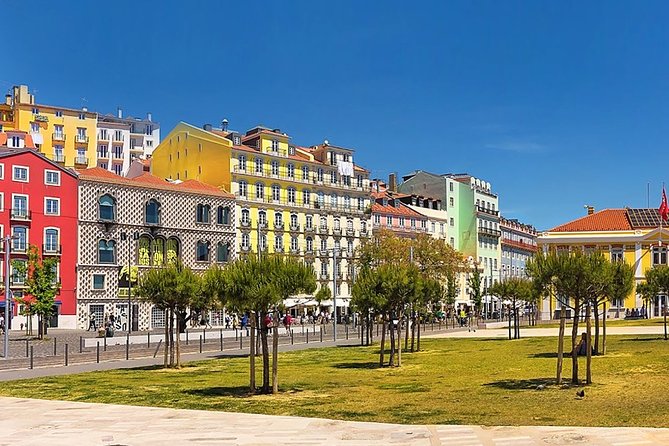
The tour begins at 9:00 a.m. in Praça dos Restauradores, one of the most central meeting points in Lisbon. Confirm the exact meeting spot before setting out. One person specifically found the starting place important enough to stress, and central Lisbon can feel confusing when you are hurrying through unfamiliar streets.
Starting in the morning has practical advantages. The walk begins before the full heat and crowds of the day, and you still have much of the afternoon available for museums, viewpoints, or a slower lunch.
The group can include up to 15 people, though some departures may be much smaller. A group of four made it easy for one guide to answer questions and adjust the pace. That personal contact matters on a tour built around explanation rather than entrance tickets.
Alfama and the Arab foundations of Lisbon
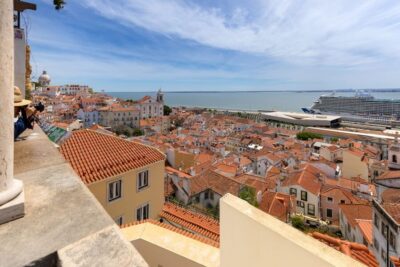
The first major stop is Alfama, Lisbon’s oldest neighborhood. Here the guide introduces Africa’s roots and connections with other peoples, including the Arab influence that shaped this part of the city.
Alfama is a useful place to begin because the neighborhood itself encourages close attention. Its lanes, slopes, and old buildings make a simple street walk feel connected to earlier periods. You are not only listening to a date-filled lecture. You are looking at the physical setting where different cultures, religions, and communities met.
The stop is listed at about 20 minutes, though the route between locations adds much more time on foot. Do not expect to cover every corner of Alfama. The point is to establish the themes that guide the rest of the morning.
This is also where a good guide can make a major difference. Al has been praised for explaining Portugal’s connections with Spain and the wider African world in a clear, engaging way. His English is described as excellent, and his Cape Verdean ancestry gives him a personal connection to some of the subjects under discussion.
Chafariz D’El Rei and the city’s social divisions
At Chafariz D’El Rei, the focus shifts to the fountain and the social classes of medieval Lisbon. Africans appear in this story, not as an abstract population but as people located within the city’s social order.
The stop is short, around 10 minutes, so listen closely and ask questions. This is the kind of place that can be easy to overlook if you are walking alone. A guide helps explain why a fountain matters and how public spaces reflected power, work, and status.
I like this part of the route because it shows the tour’s method. It does not rely only on famous monuments. It uses modest city features to discuss how people lived and how social divisions were displayed.
More Half-Day in Lisbon:
- Lisbon: 7 Hills Half-Day Electric Bike Tour
★ 4.9 · 1,592 reviews - Lisbon Private And Customizable Half-Day Tour
★ 5.0 · 633 reviews - Sintra Half-Day Private Tour – A Journey through Wonderland
★ 5.0 · 601 reviews - Lisbon: Half-Day Sintra Tour with Pena Palace and Regaleira
★ 4.9 · 570 reviews
Campo das Cebolas and Lisbon’s old port
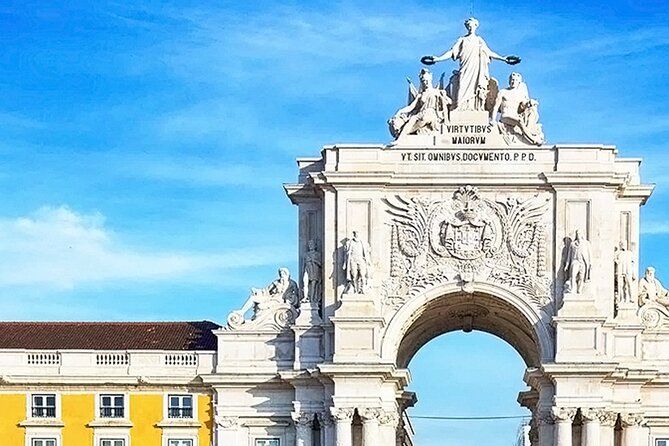
Campo das Cebolas once formed part of Lisbon’s old port. Here the tour addresses the arrival of the first African slaves in Europe and Portugal’s role in the slave trade.
This is one of the heaviest stops emotionally and historically. The waterfront is now part of the city’s everyday public life, but the tour asks you to consider what happened in this area before modern Lisbon took shape.
You will spend about 10 minutes at the stop, but the subject deserves more than a quick fact. Ask the guide how this port connected to wider routes and how the movement of enslaved people affected Lisbon. The best moments on this tour come when you treat the stops as prompts for discussion rather than as photo opportunities.
Praça do Comércio and the public face of power
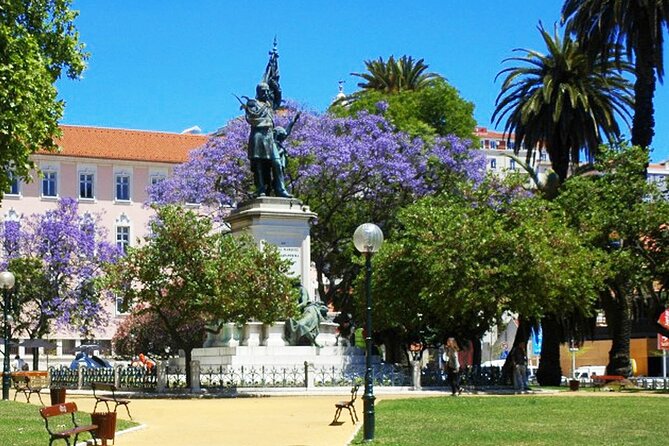
Praça do Comércio, also known as Terreiro do Paço, is one of Lisbon’s grandest squares. It has hosted important events in Portuguese history and is also tied to the country’s slave trade.
The setting can make the discussion especially striking. The broad square and elegant arcades project order, wealth, and confidence. The tour adds the less comfortable question of how that power was built and who paid the price.
This is a good place to pause and look around before moving on. The square is impressive on its own, but the African history tour changes how you read it. Instead of seeing only a ceremonial center, you begin to see a link between commerce, empire, government, and human suffering.
Baixa after the 1755 earthquake
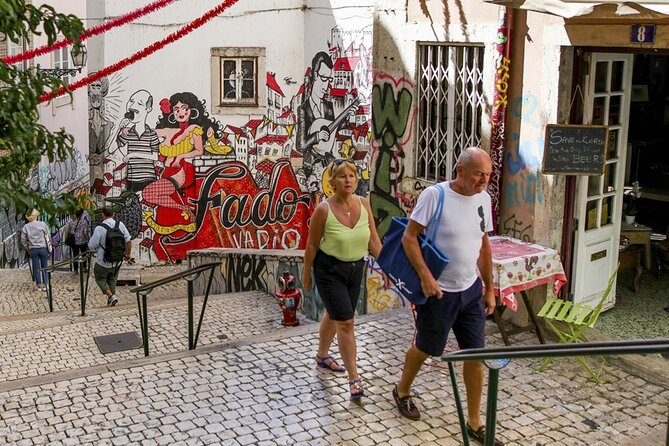
The route then passes through Lisbon’s central district, much of which was destroyed in the 1755 earthquake. The discussion turns to the interaction of Africans within Portuguese society and the way the city changed afterward.
This section helps connect the older port and medieval neighborhoods with the rebuilt city. It also prevents the tour from becoming a simple list of slave-trade sites. You are asked to think about daily life, social integration, and the place of Africans in a society that was constantly being rebuilt and reorganized.
Because the itinerary lists this section without a numbered stop, the precise pause may depend on the guide and the group’s pace. That flexibility can be useful, but it also means the tour may not feel perfectly scripted at every departure.
Calle Rosa de Lisboa and working African women
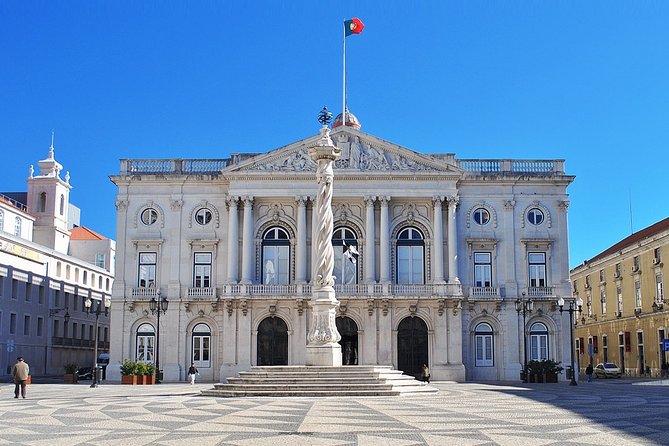
Calle Rosa de Lisboa is associated with African women who provided services. The stop is only about 10 minutes, but it adds an important gendered part to the story.
Large historical subjects often focus on kings, merchants, laws, and ships. This location shifts attention to women’s labor and the services they provided in the city. It also gives you a more grounded sense of how African residents fit into Lisbon’s working life.
Listen for the details here, since a short stop can pass quickly. The meaning of the street comes mainly through the guide’s explanation rather than through a large monument or sign.
Time Out Market and changing work spaces
Today, Time Out Market is one of Lisbon’s best-known food destinations. During the tour, it becomes a place to discuss the work of many Africans in an earlier period.
That contrast is useful. Lisbon’s popular places are not separate from the city’s past. Markets and work spaces changed purpose, but the people who labored there were part of the city’s economic life.
The stop lasts about 10 minutes. It is also a practical point in the walk because the market is familiar and easy to recognize. The tour may include a wine tasting at the end on some departures, but that is not presented as a guaranteed feature, so do not book solely for that extra.
Jardim Dom Luís and the statue of Sá da Bandeira
At Jardim Dom Luís, the guide points out the statue of the Marquis Sá da Bandeira, identified with the abolition of slavery in Portuguese territory and colonies.
A statue can tell you what a country chose to honor, but it does not tell the whole story by itself. The value here is the explanation around the monument: abolition, political responsibility, and the gap between legal change and its consequences.
The stop is brief, about five minutes. I would pay attention to the guide’s wording and use the opportunity to ask how abolition unfolded in Portuguese territories. This is one of several places where the tour moves beyond the first arrival of enslaved Africans and considers what happened afterward.
The Brazilian consulate and the Atlantic system
Outside the Consulate-General of Brazil, the discussion turns to the transatlantic slave trade and its consequences.
This stop broadens the route beyond Lisbon. Portugal’s history in Africa and Brazil cannot be understood as a local story confined to one square or harbor. The Atlantic connected Portugal, Africa, Brazil, and other parts of the colonial world through trade, forced migration, and political control.
The stop lasts around 10 minutes and is likely to be discussion-heavy rather than visually dramatic. That is typical of this experience. You are paying for the guide’s interpretation and connections, not for a special admission or an elaborate display.
Rossio, integration, and colonial expansion
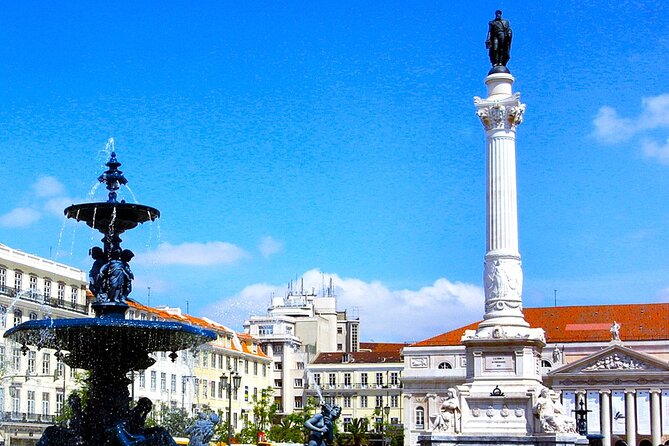
Praça Dom Pedro IV, usually called Rossio, is one of central Lisbon’s busiest squares. Here the tour considers the integration of Africans and the creation of colonies.
Rossio is a good place to discuss visibility. It is an ordinary meeting point in modern Lisbon, yet the square can also open questions about who was present in the city, how people were categorized, and how Portugal’s colonial ambitions shaped national identity.
The route then reaches Igreja de São Domingos. The church offers a chance to discuss how Africans participated in Catholic religious life and the achievements connected with that integration.
This pairing works well. The square represents public urban life, while the church turns attention to faith and community. The tour does not portray African people only as victims of Portuguese expansion. It also addresses participation, adaptation, achievement, and the ways people made a place for themselves within institutions.
Rossio Station and the image Portugal wanted to project
The final listed stop is Estação do Rossio, built in the 19th century in the Manueline architectural style. The station represents Portugal’s image of its golden age and its effort to claim a place among European powers dividing Africa into colonies at the Berlin Conference of 1884.
The building’s decorative style gives the discussion a strong visual anchor. Architecture here is not just decoration. It can express national pride, historical memory, and a desire to present Portugal as an important imperial power.
The itinerary also refers to a square connected with the restoration of Portugal’s independence from Spain, where many African slaves fought. Since the route description does not clearly assign a separate number to that stop, the guide may fold it into the central Lisbon portion of the walk.
Pace, comfort, and the practical side of the walk
The listed stop times add up to less than three hours, but the full activity lasts about 3 to 4 hours. The difference is walking between neighborhoods, explanations along the way, questions, and possible pauses.
Take the physical requirement seriously. The route covers Alfama, the old port area, Baixa, Rossio, and several central sites. One person described it as a real walking tour and recommended good shoes and even a pain reliever. I would not plan a strenuous activity immediately afterward.
Restroom planning is also worth considering. The route does not promise scheduled restroom breaks, and one departure had to stop randomly at a hotel where the group did not feel especially welcome. Use a restroom before meeting and plan around the fact that this is a moving city walk.
The experience is offered in English and allows service animals. It is near public transportation, but you should still arrive early enough to locate Praça dos Restauradores without stress.
Is $179.74 a fair price?
At $179.74 per person, this is expensive compared with a standard free or low-cost city walking tour. There are no admission tickets to offset the price, since the stops are public streets, squares, gardens, fountains, and churches.
The value rests almost entirely on the guide. With Al or another strong guide, you receive a focused lesson in a part of Lisbon’s past that ordinary sightseeing often leaves out. A small group also gives the guide room to answer specific questions and adjust the conversation.
The price is harder to defend if the tour starts late, the guide is difficult to understand, or the presentation lacks energy. One such experience was described as merely adequate and overpriced. That is a fair warning, not a reason to reject the tour outright.
I would view this as a specialist history tour rather than a general introduction to Lisbon. If you want a polished sightseeing overview with major interiors and entry tickets, spend your money elsewhere. If African history, slavery, colonialism, and overlooked parts of Portugal’s past are central to your trip, the cost may make sense.
Who should book this experience?
I would recommend it most to history-minded visitors who want context before exploring Lisbon on their own. It works particularly well early in a stay, since it gives you a new way to read Alfama, Baixa, Rossio, and the waterfront afterward.
It also suits people who enjoy asking questions. The strongest experience comes when you engage with the guide, especially on subjects such as Moorish influence, Cape Verdean connections, Catholic integration, abolition, and the creation of colonies.
This is less suitable if you want a relaxed stroll with little discussion. The subject is serious, the pace can be demanding, and the route does not promise regular comfort breaks. You should also be comfortable with the possibility that the guide’s quality may vary.
Should you book the African Presence in Lisbon walk?
Book it if you want Lisbon’s African story placed at the center of your sightseeing rather than treated as a footnote. The route is unusually focused, the small group is helpful, and Alcides, or Al, can make the history personal, clear, and memorable.
I would hesitate only if the price is a major concern or if you need a gentle walk with carefully planned facilities. Before booking, confirm the meeting point, wear solid shoes, and arrive ready to ask questions. For the right audience, this is a thoughtful way to see familiar Lisbon streets with new eyes.
FAQ
How long does the African Presence in Lisbon tour last?
The tour lasts approximately 3 to 4 hours.
What time and where does the tour start?
It starts at 9:00 a.m. at Restauradores Square, Praça dos Restauradores, 1250-001 Lisbon, Portugal.
Where does the tour end?
The activity ends back at the meeting point in Restauradores Square.
Is the tour offered in English?
Yes. The tour is offered in English.
How large is the group?
The tour has a maximum of 15 participants. Some departures may be smaller.
What level of fitness is needed?
A moderate level of physical fitness is recommended. The experience involves walking through several Lisbon neighborhoods for 3 to 4 hours, so comfortable walking shoes are important.
Can I cancel for a full refund?
Yes. You can cancel at least 24 hours before the local start time for a full refund. Cancellations or changes made less than 24 hours before the start are not refunded. Poor weather or failure to meet the minimum number of participants may result in a different date, another experience, or a full refund.
Just reviewed in Lisbon
- Private tour Lisbon – full day★ 5.0 · 8 reviews
- Private Tour: Portuguese Food and Wine Tour★ 5.0 · 33 reviews
- Lisbon Football Experience – Private stadium and Museum Tour★ 4.0 · 10 reviews
- Lisbon and Sintra Essence 8H – Private Tour★ 5.0 · 5 reviews
- Private Tour: Lisbon Sunset Walking Tour with Fado Show and Dinner★ 5.0 · 30 reviews
- Private Catamaran Tour: Lisbon coast cruise with barbecue and drinks★ 5.0 · 20 reviews
- Lisbon: Helicopter Tour over Cascais & Cabo da Roca★ 5.0 · 4 reviews
- Private Tour Fátima – Nazaré – Batalha – Óbidos★ 5.0 · 6 reviews
Lisbon Walking Tours, compared.
Best of Lisbon Small-Group Guided Walking Tour
Read our review →
Best of Lisbon Walking Tour: Rossio, Chiado & Alfama
Read our review →

Lisbon Roots – Small group Food & Culture Walking Tour w/tastings
Read our review →
Starter Walking Tour to the highlights in German
Read our review →
Browse the lists this tour appears in