
Reviewed · LISBON
Lisbon Awakens: A Culinary Crossroads, Reborn.
Lisbon Awakens is less a quick tasting tour than a half-day lesson in how Portugal’s past reaches your plate. You’ll start at Jardim da Estrela, then wander through Campo de Ourique for pastries, coffee, wine, spirits, savory food, and neighborhood stories tied to Portugal’s trade and former colonies.
I like the tiny group, capped at seven, and the way guides such as Kika, Inês, Gisela, Laura, and Celia connect each bite to a place and a story. I also like that this is not a race through central Lisbon’s postcard sights. You spend time in a real neighborhood, with stops that can include family restaurants, traditional shops, and the Campo de Ourique market.
The main consideration is appetite and stamina. At roughly five and a half hours, with food at as many as eight stops, this is a full meal in walking-tour form. Skip a large breakfast, tell the company about allergies or dietary limits, and expect a fair amount of standing and strolling.
Key points at a glance

- Food replaces lunch: Plan for enough samples to make a generous meal, from sweets and coffee to savory dishes, wine, and spirits.
- Campo de Ourique is the setting: You explore a lived-in Lisbon neighborhood rather than staying around the city’s most obvious sights.
- Guides make the difference: Kika, Inês, Gisela, Laura, Gisela, Celia, and others are praised for linking food with Portuguese culture and history.
- The group stays personal: With a maximum of seven people, it is easier to ask questions and discuss food preferences.
- The walk begins at Jardim da Estrela: The meeting point is at the park, beside the Basilica da Estrela, and the tour ends there too.
- Book it early in your stay: The food vocabulary and neighborhood tips can help you make better choices for the rest of your time in Lisbon.
Why this Lisbon food walk feels different
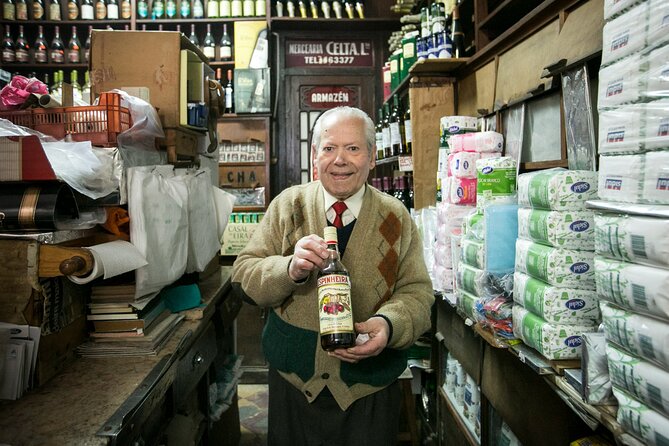
Many city food tours are built around a checklist of famous dishes. This one takes a broader view. Portugal’s food culture is presented as the result of movement: spices, ingredients, customs, and cooking ideas traveled through the country’s overseas connections and returned in altered form.
That gives the day a useful shape. You are not simply told that a pastry is traditional. You learn how convents, churches, trade, and everyday neighborhood life helped shape what appears in a café or restaurant today.
The tour also spends much of its time in Campo de Ourique, a district known for traditional food shops and a small market. That choice matters. You get a feel for how Lisbon eats away from the most heavily visited areas, while still seeing places that are easy to reach by public transport.
I especially like this balance of food and place. You may begin with espresso and banana bread in the park, then move through sweets, savory plates, drinks, and market samples. The route gives you a useful first look at Lisbon, not just a table full of snacks.
Still choosing? These other Lisbon trips come up in the same search.
- Lisbon City Center Tour – The Unmissable Lisbon
★ 5.0 · 22,234 reviews - Lisbon: Sintra, Pena, Regaleira, Cabo da Roca & Cascais
★ 4.7 · 19,656 reviews - Sintra: Pena Palace and Park Entrance Ticket
★ 4.2 · 17,410 reviews
Meeting at Jardim da Estrela and the Basilica
The walk starts at Jardim da Estrela, at Praça da Estrela, near the Basilica da Estrela. The basilica is the first major point of interest, and the planned stop lasts about an hour.
This opening section sets the tone. Churches and convents are used to explain how food traditions survived, changed, and became part of daily Portuguese life. Pastries and spices are not treated as isolated recipes. They become clues to the country’s religious and trading past.
The meeting point is practical as well as pleasant. One tour experience began at the park gates, with the basilica directly across from the meeting area. If you arrive early, you may have time to look at the church before the walk begins, though admission to the tour stops is listed as free rather than as a separately guided interior visit.
At this stage, your guide may introduce the day’s food route and explain how the tastings fit together. Kika, also referred to as Francesca in one account, is a former teacher, and her strength is turning a large subject into an easy conversation. Inês is praised for her local roots and broad knowledge of Lisbon. The exact guide varies, so you should expect the same general format but not a fixed personality or script.
Campo de Ourique Market and neighborhood food shops
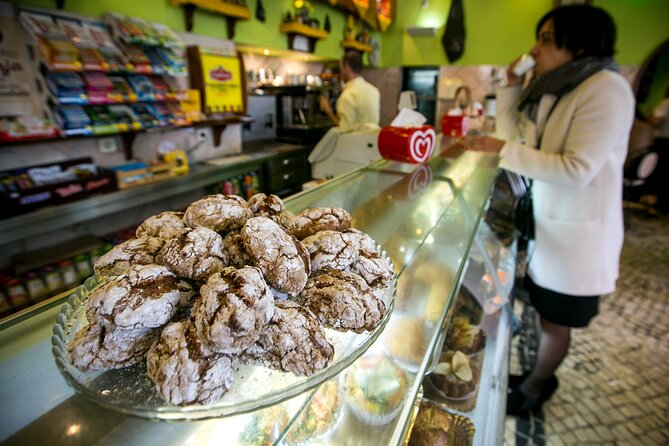
The next listed stop is Mercado de Campo de Ourique, with about 45 minutes set aside. Campo de Ourique is a traditional neighborhood with food shops, cafés, restaurants, and a compact market that gives the tour a useful change of pace.
At the market, you can expect several samples rather than one formal meal. One account describes meeting a market vendor named Fred and trying several bites, with time to buy snacks to take away. That is the sort of detail that makes a market stop more useful than a quick photo break. You can see how individual sellers and small businesses fit into the neighborhood’s food life.
The market also gives you a chance to compare styles. A carefully chosen market sample may show one side of Portuguese food, while a family restaurant later in the route gives you another. The day is built around that contrast, moving between popular places and smaller stops you might not find on your own.
Do not expect the market portion to be a private tasting room. It is a public market, and the pace can depend on the sellers and the size of your group. The small tour limit helps, but you may still spend some time standing while food is collected and explained.
Custard tarts at Jardim da Parada
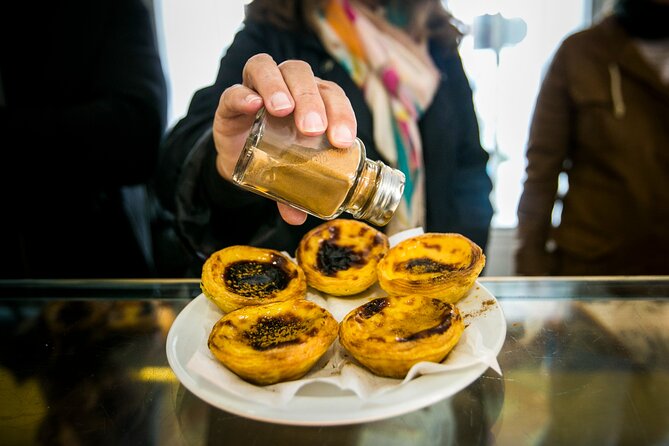
Jardim da Parada is scheduled for about 45 minutes and brings a change from market browsing to one of Portugal’s best-known sweets: the custard tart.
The setting is part of the appeal. You taste the tarts among 19th-century tiles and mature trees, rather than eating them in a rushed line at a crowded landmark. The tour uses this pause to connect the pastry with the city’s religious and culinary traditions.
You will likely appreciate the rhythm here. After walking and listening, you have time to sit, taste, and ask questions. Several guides are praised for giving the group room to relax instead of filling every minute with a lecture.
Custard tarts are familiar to many visitors, but context still helps. You can compare what you taste on this walk with pastries you find later in Lisbon, and you will have a better sense of why texture, freshness, and setting matter. The tour is not only about discovering something obscure. It is also about seeing a familiar food with more attention.
Something different to do with a day in Lisbon:
- Lisbon: Jerónimos Monastery Entrance Ticket
★ 4.1 · 14,164 reviews - Lisbon: History, Stories and Lifestyle Walking Tour
★ 4.8 · 10,902 reviews - Lisbon: Sunset Boat Party Cruise with DJ and Open Bar
★ 4.5 · 10,378 reviews - Lisbon: Pena Palace, Sintra, Cabo da Roca, & Cascais Daytrip
★ 4.7 · 9,981 reviews
Igreja do Santo Condestável and a quieter Lisbon

The route includes about 25 minutes at Igreja do Santo Condestável, described as a newer Gothic church in a neighborhood associated with artists and writers.
This stop widens the tour beyond food. Lisbon is not presented only through old monuments and famous viewpoints. You also see a district shaped by local institutions, creative life, and modern religious architecture.
The church visit is shorter than the opening basilica stop, so think of it as a focused pause rather than a long architectural tour. Its value comes from the way your guide places the surrounding neighborhood in context. You may hear more about the people and communities connected to the area, then return to the food route with a clearer sense of place.
This is also where the tour’s format may appeal to you if you prefer local texture over a long list of landmark interiors. The churches support the story, but food remains the main thread.
What you may eat and drink
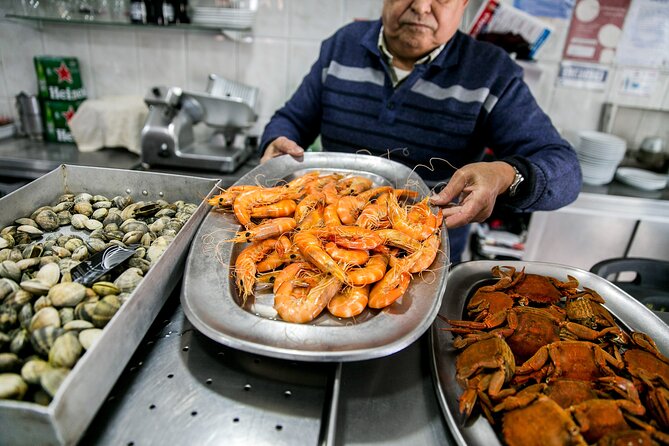
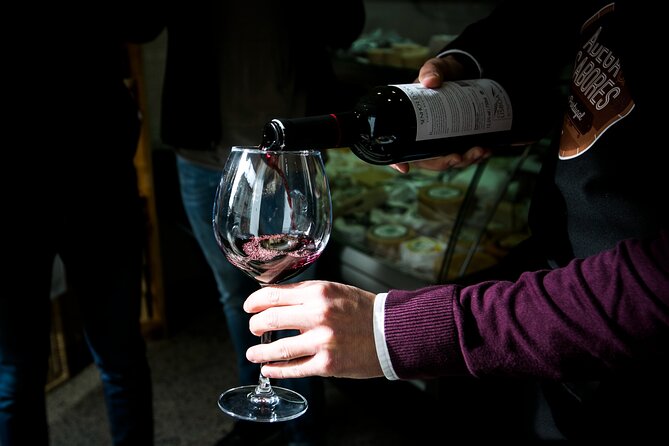
The exact menu can change, and the supplied details do not promise a fixed list of dishes. Still, the food pattern is clear. You should expect sweet and savory tastes, coffee, wine, spirits, traditional Portuguese dishes, and samples that reflect outside influences on Portuguese cooking.
Past experiences include espresso, banana bread, fish, meat, sweets, coffee, wine, and other local specialties. One group enjoyed a mix that began with sweet foods and ended with savory dishes. Another had an extra plate arranged for a person who did not care for fish, which suggests that the guide may try to handle preferences when notified in advance.
That does not mean every dietary need can be met. Send allergies and dietary restrictions before the tour, as requested by the operator. Do not wait until the first restaurant. The more notice you give, the more useful the guide’s planning can be.
The food is generous enough that breakfast deserves thought. Several accounts advise eating lightly or not at all beforehand, and one describes no fewer than eight stops. I would treat this as lunch plus tastings, not as a few token samples.
The guides are a major part of the value
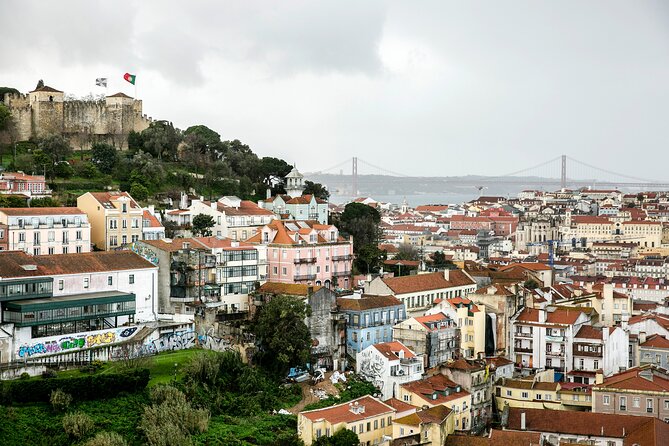
The strongest feature of this experience is the guide’s ability to connect facts without making the day feel like a classroom. Kika is repeatedly praised for teaching Portugal’s culture, food, exploration, and trade in a clear, lively way. Inês is noted for growing up in the area and knowing Lisbon’s food community well.
Gisela is described as warm, funny, and good at answering questions. Laura is praised for combining food, drinks, Portuguese history, and neighborhood knowledge. Celia is singled out for storytelling, while Martim is associated with a personal neighborhood experience.
These names are useful because they show the range of the guiding team, but you cannot choose a particular guide from the information provided. The quality of the day will depend partly on who leads your departure and how much you take part in the conversation.
The small group helps here. With no more than seven people, you can ask why a dish is prepared a certain way, discuss what you are tasting, or mention a food concern without trying to catch a guide’s attention across a crowd.
Is $150 a fair price?
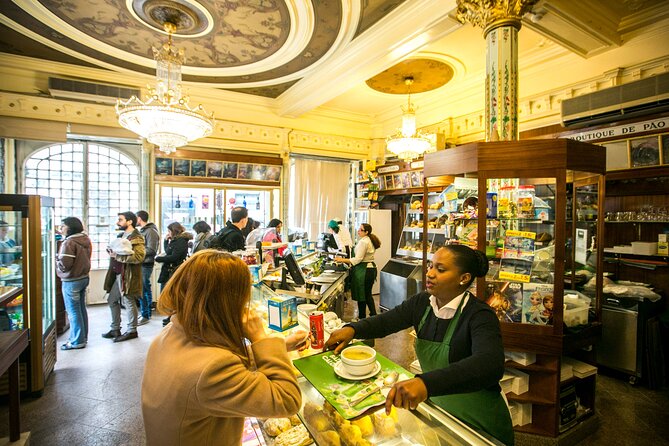
At $150 per person, this is not a budget snack crawl. The value depends on what you want from a food tour.
If you only want to try a custard tart, visit a market, and find a few restaurants, you can spend less by exploring independently. Lisbon is full of cafés and food shops, and a careful eater can build a pleasant day without paying for a guide.
The price makes more sense if you value the interpretation. You are paying for about five and a half hours, a small group, multiple tastings, drinks, neighborhood access, and a guide who explains how food connects to Portugal’s past and present. You also avoid the work of choosing stops and guessing what is worth ordering.
I would consider it good value for a first or second day in Lisbon, especially if food is central to your trip. You can use the tips later, return to a market or café, and make more informed choices elsewhere in Portugal. If you already know Portuguese cuisine well, the historical and neighborhood angle may matter more than the food itself.
Walking, timing, and practical planning
The walk is described as easy by one person with bad knees, but the tour still lasts around five and a half hours. You will be on your feet for parts of the day, and food stops may involve standing. Comfortable shoes are sensible, even though a formal distance is not provided.
Public transportation is nearby, which makes the Jardim da Estrela meeting point reasonably simple to reach. The activity ends back at the same meeting point, so avoid booking a tightly timed attraction across town immediately afterward.
The tour is offered in English and uses a mobile ticket. Confirmation arrives when you book. Most people can take part, but the available information does not promise step-free access or detail the route’s hills, stairs, or restroom arrangements.
The tour requires good weather and a minimum number of participants. If poor weather cancels it, you can receive another date or a full refund. The same choice applies if the minimum group size is not reached.
Cancellation is free up to 24 hours before the start time. After that point, the amount paid is not refunded, and changes made inside the 24-hour window are not accepted. The cut-off follows Lisbon local time.
Who should book Lisbon Awakens?
I would choose this tour if you want food to explain the city, not just fill your stomach. It suits first-time visitors, people curious about Portuguese culture, and anyone who likes a long, social walk with plenty of conversation.
It is also a smart early-stay booking. You will gain a neighborhood orientation, learn foods and drinks to seek out, and pick up useful context for the rest of your trip.
I would think twice if you prefer a short, tightly timed tasting, dislike group walks, or want a guaranteed menu. The route is personal and flexible in spirit, but the exact food and guide can vary.
Should you book it?
Book Lisbon Awakens if you can spare the full morning or afternoon and want a generous meal wrapped in stories about Portugal, Lisbon, and Campo de Ourique. The strongest reasons are the group size, the number of tastings, and the guides’ clear gift for making food history understandable.
Skip it only if $150 feels high for a meal, or if you would rather explore cafés at your own pace. For most first-time visitors who want an informed introduction to Lisbon’s food culture, this is a sound opening move. Arrive hungry, share your dietary needs early, and leave room for dessert.
FAQ
How long does Lisbon Awakens last?
The experience lasts approximately 5 hours and 30 minutes.
How much does the tour cost?
The listed price is $150 per person.
Where does the tour begin?
It begins at Jardim da Estrela, Praça da Estrela, 1200-667 Lisboa, Portugal.
Where does the tour end?
The activity ends back at the same meeting point at Jardim da Estrela.
What language is the tour offered in?
The tour is offered in English.
How many people can join?
The maximum group size is seven travelers.
Is food included?
The tour includes enough bites and samples to add up to a generous meal, along with drinks and tastings described in the experience details.
Should I eat breakfast before the tour?
It is best not to eat a large breakfast. The route can include many tastings, with one account describing stops at eight places.
Can I report allergies or dietary restrictions?
Yes. You should send your allergies or dietary restrictions to the provider before the experience.
What happens if I need to cancel?
You can cancel at least 24 hours before the start time for a full refund. Cancellations and changes made less than 24 hours before the start time are not accepted for a refund.
What happens if bad weather cancels the tour?
You will be offered a different date or a full refund if poor weather causes the cancellation.
Is the tour guaranteed to run?
The experience requires a minimum number of participants. If that minimum is not met, you will be offered a different date or experience, or a full refund.
Just reviewed in Lisbon
- Lisbon: Morning of Equestrian Art with Lusitano Horses★ 4.4 · 87 reviews
- Lisbon: Entry Tickets to Mosteiro de São Vicente de Foram★ 4.6 · 50 reviews
- Lisbon: National Palace of Ajuda E-Ticket & City Audio Guide★ 4.1 · 87 reviews
- Lisbon: Early Morning TukTuk Tour – hotel/cruise ship pickup★ 4.9 · 45 reviews
- Sintra: Quinta da Regaleira e-Ticket & Sintra City Audios★ 4.1 · 12 reviews
- Lisbon E-Bike Tour TAGUS★ 5.0 · 3 reviews
- Lisbon: E-bike Trip from the Sintra Mountains to Cascais Sea★ 5.0 · 67 reviews
- Lisbon: Discover Belem by electric Tuk Tuk★ 4.9 · 86 reviews