
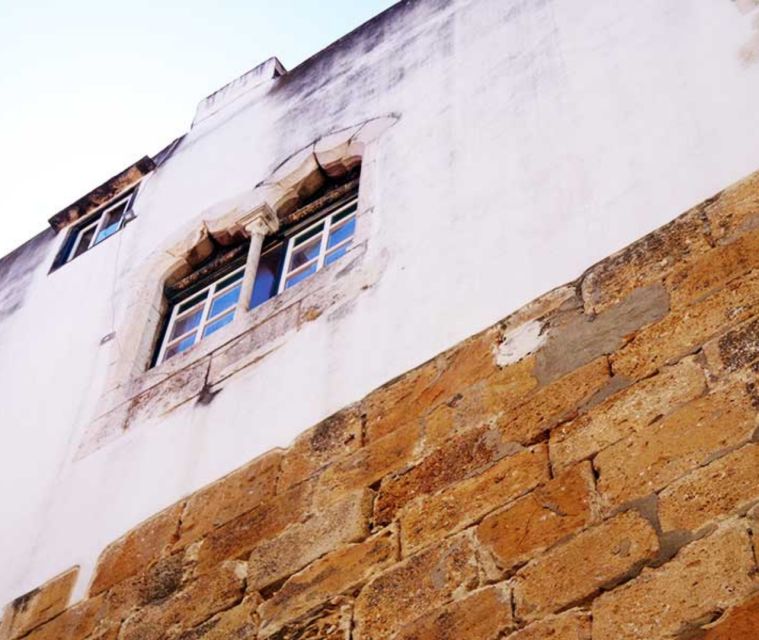
Reviewed · HISTORICAL TOURS
Lisbon: Jewish History Tour of Lisbon
Lisbon’s Jewish story is largely written in places where the evidence has vanished. This three-hour walk brings that absent past into view, from Praça do Comércio and the Exodus to the medieval Jewish quarters of Alfama and the 1506 Pessah massacre near Rossio. I like the route for two reasons: it connects Jewish history to Lisbon’s wider story, and its guides, including José, Filipa, Rita, and Jorge, are praised for turning difficult material into clear, engaging conversation. The main drawback is also central to the experience: few physical remains survive, so you must be comfortable learning through explanation rather than grand monuments.
I also like the private-group format and the chance to adapt the route to your starting point or available time. You will walk through the castle hill, Alfama, Baixa, Mouraria, and central squares, so comfortable shoes matter. This is not a museum visit with a long list of artifacts. It is a thoughtful city walk built around streets, memory, historical context, and the legacy of a community that spread far beyond Portugal.
Key points to know before you book
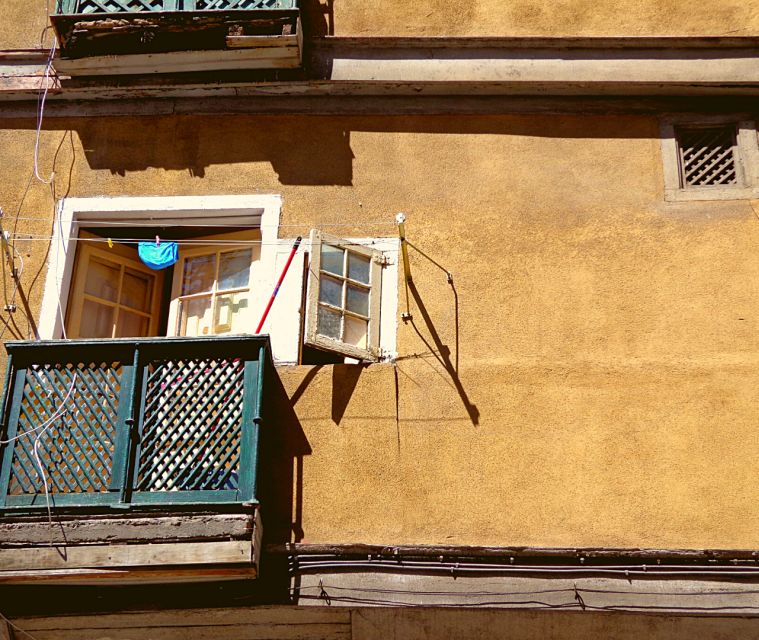
- Three hours on foot: The route covers Praça do Comércio, Alfama, Baixa, Mouraria, Praça da Figueira, and Rossio.
- History without many surviving landmarks: Your guide reconstructs Jewish Lisbon through oral history, neighborhoods, churches, Roman remains, and the wider city setting.
- A wider story than medieval Lisbon: The tour reaches forced conversions, the New Christian community, Portuguese culture, overseas diaspora, and WWII refugees.
- Private and adaptable: The route can be adjusted for different time frames and starting points.
- Strong guide-led experience: José, Filipa, Rita, Jorge, and other guides are praised for clear explanations, storytelling, and answering questions.
- Bring supportive shoes: You will cover a fair distance through historic districts, including some uneven or hilly streets.
Starting at Praça do Comércio and the story of the Exodus
Meet your guide under the large triumph arch at Praça do Comércio. Look for an orange backpack or a Lisbon Walker tote bag with the company’s large logo. This is a practical meeting point in a grand public square, and it gives the tour an immediate sense of scale.
The square is connected here with the origin of the Exodus, setting up one of the tour’s wider themes: Lisbon’s Jewish story is not isolated from the movement of people across borders. As you move through the city, the guide places local events alongside the diaspora that spread from Lisbon toward the Atlantic, the Mediterranean, Asia, and northern Europe.
I like this opening because it avoids treating Jewish history as a small side note. You begin with a major Lisbon landmark and then trace how religion, commerce, migration, politics, and geography shaped the city. The guide also brings in historical figures who help explain the community’s role in Portuguese culture, science, and gastronomy.
The opening is more about orientation than objects. Do not expect a preserved synagogue or a complete medieval street scene at the start. The value comes from learning how to read the city around you.
More Lisbon Jewish Heritage Tours:
- Lisbon Jewish Heritage and History – Private Tour Van
★ 5.0 · 294 reviews - Lisbon: Jewish Walking Tour
★ 4.9 · 96 reviews - Lisbon: Jewish History in Portugal Guided Walking Tour
★ 4.6 · 52 reviews
Praça do Município, Rua do Comércio, and the riverfront story
From Praça do Comércio, the route passes through Praça do Município and Rua do Comércio, then continues toward Casa dos Bicos and Ribeira. These stops help connect Jewish life with Lisbon’s commercial and civic center.
The itinerary does not present each place as a surviving Jewish monument. Instead, your guide explains how these parts of Lisbon fit into the city’s past and how Jewish residents participated in urban life. The movement through streets and public squares is important because it shows that the community was part of the working city, not simply a separate historical footnote.
Casa dos Bicos gives the walk a particularly recognizable point along the route. Ribeira adds the riverfront setting that helps you think about Lisbon’s wider connections. The tour uses these locations to move from local history toward the movement of people, ideas, and families across the Atlantic and beyond.
This section is also where a good guide makes a major difference. José is praised for connecting Portuguese history with Jewish and New Christian life, while Filipa is noted for telling the story clearly and keeping the pace comfortable. The route can feel like a standard city walk if the explanation is thin, but the available guide feedback points to a more conversational experience, with time for questions and context.
Alfama and the medieval Jewish quarters
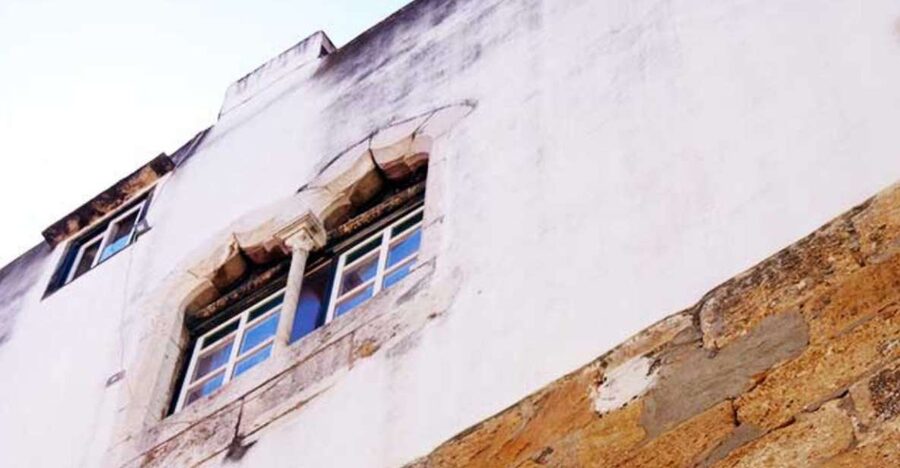
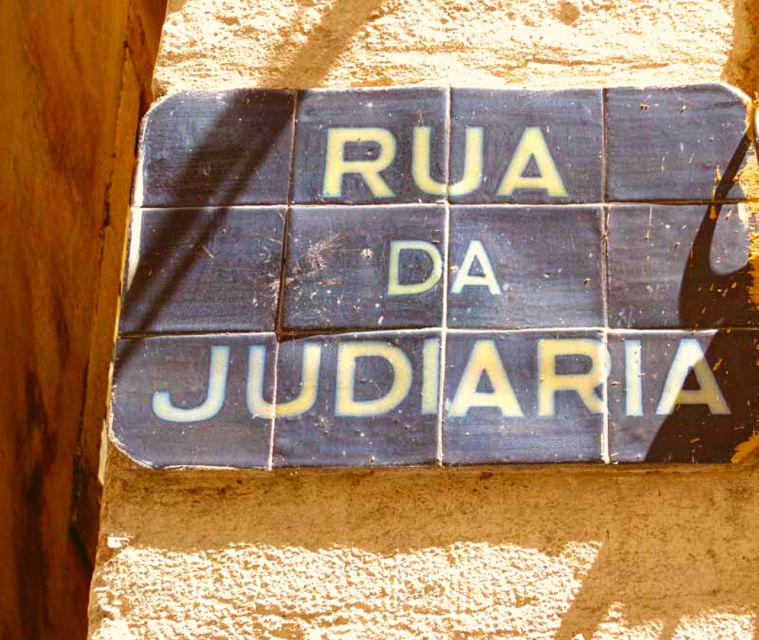
Alfama is one of the most important parts of the walk. The tour explores the Jewish quarter and the medieval system of segregation, known as the Judiarias. You will see the neighborhood as a physical setting for a community that once lived, worked, worshipped, and traded in Lisbon.
The key thing to understand is that Alfama does not offer a neatly preserved Jewish quarter for you to enter. The streets remain, but much of the Jewish presence must be reconstructed through history. Your guide’s job is to explain what the district meant, where Jewish life fit into medieval Lisbon, and how later events changed the area.
I would give this part your full attention rather than rushing to take photographs. The most useful details are likely to be spoken explanations about how segregation worked and how the community’s legacy continued after official changes and forced conversions.
The castle hill and Alfama also mean walking through old streets. Several people found the route manageable, while others noted that it covered a fair distance. One guide adjusted the pace and allowed rest stops during a hot day, and another account described the hill climbing as limited. Still, you should wear comfortable shoes and be ready for a city walk rather than a flat promenade.
Baixa, forced conversions, and the New Christian story
The route then reaches Baixa, where the story turns toward forced conversions and the transformation of Jewish life in Portugal. This is one of the tour’s strongest features because it explains that conversion did not simply end the story. It created a complicated New Christian history that shaped families, identity, public life, and memory.
Your guide places the forced conversions within the history of Lisbon rather than presenting them as a single isolated event. That approach helps you understand why the Jewish legacy continued in Portuguese culture, science, and gastronomy even when open Jewish practice became dangerous or impossible.
Baixa is also a useful setting for this part of the story because it is a central district rather than a distant archaeological site. You are walking through the living city while hearing about pressure, adaptation, and loss. The contrast can be sobering.
This is where the tour may feel more like a history seminar conducted outdoors than a conventional sightseeing outing. If you want a short list of beautiful buildings and quick photo stops, the amount of explanation may feel heavy. If you want to understand how Jewish life affected Portugal’s broader story, this section offers real value.
More Historical Tours in Lisbon:
- Lisbon: History, Stories and Lifestyle Walking Tour
★ 4.8 · 10,902 reviews - Lisbon: Live Fado Show with Port Wine in Historic Center
★ 4.7 · 4,166 reviews - Lisbon: Fado Show with Wine in a Historic Venue
★ 4.8 · 1,294 reviews - Explore Lisbon by Tuk Tuk: History and Viewpoints
★ 5.0 · 840 reviews
Rossio and the Pessah massacre of 1506
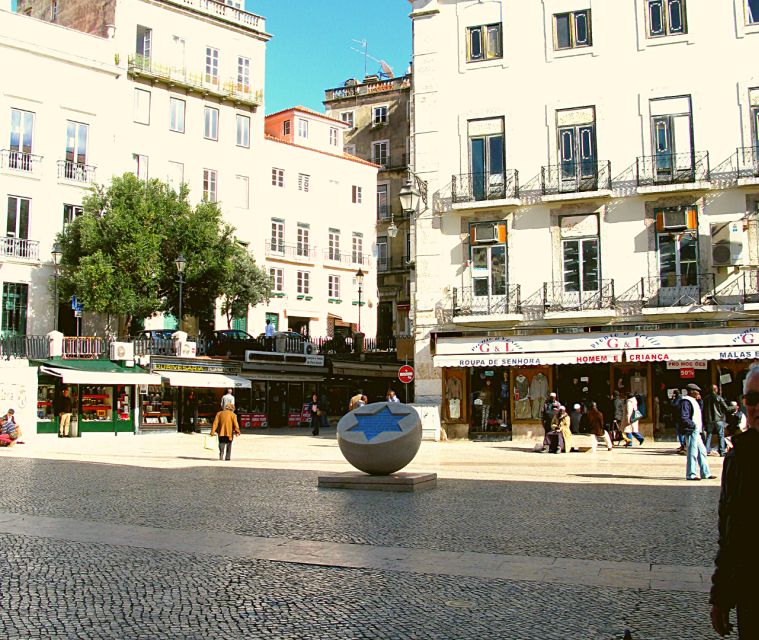
Rossio brings the tour to one of its darkest episodes: the 1506 Pessah massacre. The guide explains the events and their place in the history of Lisbon’s Jewish and New Christian communities.
The stop matters because Rossio is an ordinary public square in the modern city. Hearing about violence in a familiar urban place can make the past feel less remote. You are not looking at a preserved memorial complex, so the guide’s words and the surrounding city do most of the work.
This part requires a thoughtful guide. The strongest accounts of the experience praise José, Filipa, and others for presenting difficult history with clarity and care. You can ask questions as the story develops, which is useful when the subject involves forced conversion, persecution, and the blurred boundary between Jewish and New Christian identity.
The lack of physical evidence is especially noticeable here. Several people came away wishing the synopsis had made this clearer before booking. I would plan on a story-driven visit, not an artifact-heavy one.
Mouraria, Praça da Figueira, and the city beyond the main route
Mouraria, Praça da Figueira, and the streets around the central districts extend the story beyond a single quarter. These places help you see how Lisbon changed over time and how traces of earlier communities can survive in urban patterns, names, traditions, and historical memory even when buildings are gone.
The route’s value lies in the connections your guide makes. You may hear about churches and other sites that help explain the changing religious and political environment. One guide also included hidden Roman remains and churches, giving the walk a broader Portuguese setting without losing its Jewish focus.
That flexibility is useful for repeat visitors to Lisbon. You are not limited to a standard list of famous monuments. The guide can adapt the walk to different time frames and starting points, though the listed experience is built around roughly three hours.
If you are traveling with older relatives or anyone who tires easily, tell the guide at the start. A private group makes it easier to discuss pace and questions, and the guide may adjust the route. The tour information does not promise a fully step-free or accessible route, so do not assume every historic street will be easy for everyone.
WWII refugees and Lisbon’s modern Jewish presence
The walk does not stop with medieval history. It also covers Lisbon’s contemporary Jewish presence and the passage of WWII refugees through Portugal during the 1940s.
This later material gives the tour a useful second half. Without it, you might leave thinking Jewish Lisbon disappeared entirely after the medieval period and the Inquisition. The modern section shows that the city remained connected to Jewish life and to the movement of refugees during one of Europe’s most dangerous periods.
The route includes the Resistance Museum, which adds a modern political and social setting. The exact balance between medieval and modern material may depend on your guide and the time available, but the tour clearly aims to move across centuries.
I especially value this wider time frame because it keeps the experience from becoming only a story of destruction. You learn about persecution and forced conversion, but also about survival, movement, culture, and the continuing links between Lisbon and Jewish communities elsewhere.
Why the guide matters more than the buildings
This tour rises or falls with its guide. The physical remains are limited, so a guide who can explain place, context, and chronology is essential.
José receives especially strong praise for his command of Portuguese history, Jewish communities, and New Christian life. Filipa and Fellipe are also praised for storytelling, clear English, and an ability to keep people engaged. Rita is described as friendly and full of information, while Jorge is praised for turning extensive historical knowledge into an enjoyable walk.
The languages offered are English and Portuguese. The experience is a private group, which gives you room to ask about a family connection, a historical figure, a religious practice, or a point that was not clear.
I would not choose this tour mainly for a particular guide unless the booking system lets you confirm one. Guides can vary, and the provider may assign someone different. Still, the consistent praise for explanation, storytelling, and patience suggests that the company understands how much this subject depends on presentation.
What $106 means for value
The price is $106 per person for the three-hour guided tour. That is not a budget walk, especially because food, drinks, hotel pickup, and drop-off are not included.
The value depends on what you want from Lisbon. You are paying for a private-group experience, a specialist subject, a route that can be adapted, and a guide who does more than point out buildings. For someone researching family history, studying Jewish Portugal, or wanting a focused account of Lisbon’s past, the cost may be reasonable.
The calculation is less favorable if you expect a museum-style collection of artifacts. The tour has few surviving physical remains, and that limitation is worth considering before you pay. You are buying interpretation and access to a connected story, not a long sequence of preserved Jewish monuments.
A practical plan is to pair this walk with a museum or synagogue visit elsewhere in your Lisbon schedule if you want objects and interiors. This tour gives you the city streets and historical framework. Another visit could provide the material evidence that Lisbon itself often lacks.
Timing, walking, and how to prepare
The activity lasts three hours, though the booking information lists validity for one day and allows you to check available starting times. The route crosses several central districts, so the total effort is more than a short square-to-square stroll.
Wear comfortable shoes. That is the one clear packing tip, and it matters on old streets and the castle hill. Bring water, especially in warm weather, although food and drinks are not provided.
Meet under the triumph arch at Praça do Comércio and look for the orange backpack or Lisbon Walker tote bag. There is no hotel pickup or drop-off, so plan your own way to the square and away from the final stop.
Cancellation is free up to 24 hours before the activity for a full refund. You can also reserve now and pay later, which helps if you are still arranging your Lisbon schedule.
Who should book this Lisbon walk?
I would recommend it most strongly to you if you enjoy history told through streets and neighborhoods. It suits people interested in Jewish life, the Inquisition, New Christians, Portuguese culture, diaspora, or WWII refugee routes.
It is also a good choice if you have already seen Lisbon’s main landmarks and want a more focused theme. The route still passes famous central places, but the guide uses them to tell a less familiar story.
I would be cautious if you need a large collection of visible remains, a short and flat route, or a tour centered on food and architecture. The subject is serious, the walking is real, and the evidence is often oral rather than physical.
FAQ
How long does the Jewish History Tour of Lisbon last?
The guided tour lasts three hours. The activity is listed as valid for one day, with starting times available according to the booking schedule.
Where does the tour meet?
Meet under the large triumph arch at Praça do Comércio in Lisbon.
How will I recognize the guide?
Look for a guide carrying an orange backpack or a Lisbon Walker tote bag with the large Lisbon Walker logo.
Which languages are available?
The tour is offered in English and Portuguese.
Is this a private tour?
Yes. The group type is listed as a private group.
What places does the route cover?
The route includes Praça do Comércio, Praça do Município, Rua do Comércio, Casa dos Bicos, Ribeira, the Resistance Museum, Mouraria, Praça da Figueira, Rossio, Alfama, Baixa, and the castle hill.
Does the tour include hotel pickup?
No. Hotel pickup and drop-off are not included.
Are food and drinks included?
No. Food and drinks are not included in the price.
What should I bring?
Bring comfortable shoes because the experience is a walking tour covering several historic districts.
Can the tour be adapted?
Yes. The route can be tailor made for different time frames and starting points.
What is the cancellation policy?
You can cancel up to 24 hours in advance for a full refund. The reserve-now, pay-later option is also available.
Should you book it?
Book this tour if you want Lisbon’s Jewish past explained through the city itself. The best parts are the route through Alfama, Baixa, Mouraria, and Rossio, the discussion of forced conversions and the 1506 Pessah massacre, and the link between medieval communities, modern Jewish life, and WWII refugees.
Go in knowing that you will see few physical remains. If that sounds disappointing, choose a museum-focused experience instead. If you value careful storytelling, a private group, and a wider view of Portugal’s past, the $106 cost can be justified, especially with a guide such as José, Filipa, Rita, or Jorge leading the walk.
Just reviewed in Lisbon
- Lisbon: Morning of Equestrian Art with Lusitano Horses★ 4.4 · 87 reviews
- Lisbon: Entry Tickets to Mosteiro de São Vicente de Foram★ 4.6 · 50 reviews
- Lisbon: National Palace of Ajuda E-Ticket & City Audio Guide★ 4.1 · 87 reviews
- Lisbon: Early Morning TukTuk Tour – hotel/cruise ship pickup★ 4.9 · 45 reviews
- Sintra: Quinta da Regaleira e-Ticket & Sintra City Audios★ 4.1 · 12 reviews
- Lisbon E-Bike Tour TAGUS★ 5.0 · 3 reviews
- Lisbon: E-bike Trip from the Sintra Mountains to Cascais Sea★ 5.0 · 67 reviews
- Lisbon: Discover Belem by electric Tuk Tuk★ 4.9 · 86 reviews
Historical Tours, compared.
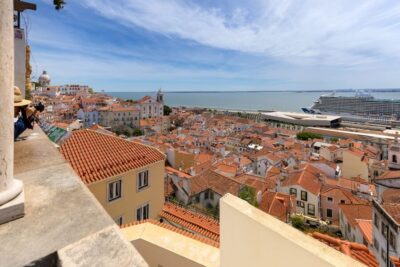
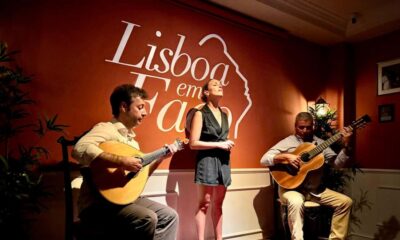
Live Fado Show with Port Wine in Historic Center
Read our review →

Explore Lisbon by Tuk Tuk: History and Viewpoints
Read our review →
Daytime or Sunset Boat Cruise with History and Wine
Read our review →
Private Tuk Tuk Tour Through Lisbon’s Historical Streets
Read our review →
Lisbon Sunset Sailing with Portuguese Wine and History
Read our review →
Guided Tuk-Tuk Tour Along the Historic Tram Line 28
Read our review →Browse the lists this tour appears in