
Reviewed · LISBON FOOD TOURS
Lisbon: Local Market, Food, and Culture Walking Tour
Lisbon’s food culture makes more sense when you eat your way through it, and this three-hour tour gives you a useful first taste. You begin at Mercado da Ribeira, cross the Tagus to Cacilhas for seafood, then return to the city center for bifana, ginjinha, cheese, wine, and other Portuguese bites. I like the ferry ride for the city views, and I like the small maximum of 12 people, which keeps questions and conversation easy.
I also like the mix of eating and context. Guides including Luis, Bruno, Alexandra, and Tania have been praised for making the food stops lively while explaining Lisbon’s culture and past. The main drawback is the amount of walking, plus stairs and ferry access, so this is not a good fit for wheelchair users, people with mobility impairments, or pregnant women.
Key points to know before you book

- A Portuguese breakfast starts the day: Coffee and a pastel de nata at Mercado da Ribeira offer a simple, very local opening.
- The Tagus crossing is part of the experience: The ferry to Cacilhas takes about 15 minutes each way and gives you a different view of Lisbon.
- Cacilhas brings seafood into the picture: Expect fish soup and a shrimp patty on the south bank.
- The final tastings cover classic Lisbon flavors: Bifana, ginjinha, salty snacks, cheese, wine, and Portuguese coffee round out the route.
- Small groups make the guide matter: The limit is 12 people, with English, Spanish, or Portuguese guiding available.
- Timing can affect the market stop: One food stop may be winding down by about 2 p.m., so check the available starting time carefully.
Why this Lisbon food walk works so well
Food tours are most useful early in a city visit. They give you a few dishes to order later, show you where ordinary people eat, and help you understand local habits without asking you to read a menu full of unfamiliar words.
This tour has a particularly good shape. It is not only a string of tastings in central Lisbon. You start at the river, take public transport across the Tagus, eat seafood in Cacilhas, and return to Baixa and Rossio. That change of setting helps you see Lisbon as a working city rather than just a set of postcard streets.
You should expect a friendly, informal outing rather than a formal culinary lecture. The guide explains the food and the city as you walk, with time built in for eating and questions. The strongest guide names associated with this experience are Luis, Bruno, Alexandra, and Tania, and the comments about them focus on warmth, humor, clear answers, and useful cultural background.
The group limit of 12 is important. It is large enough to keep the tour social, but small enough for the guide to answer questions without shouting across a crowd. I would choose this over a large coach-style food outing if you want conversation and a closer look at daily life.
More Lisbon Food Tours:
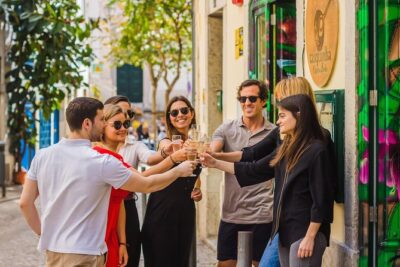
- Winner 2025 Undiscovered Lisbon Food & Wine Tour by Eating Europe
★ 5.0 · 6,390 reviews - Lisbon: Food and Wine Small Group Walking Tour
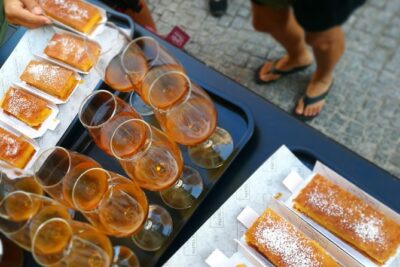
★ 4.9 · 4,082 reviews - Lisbon Small-Group Food Tour with 18 Tastings in Alfama District
★ 5.0 · 1,967 reviews
Starting with coffee and pastel de nata at Mercado da Ribeira
The meeting point is outside the river-side entrance of Time Out Market Lisboa. From there, the experience moves into Mercado da Ribeira, also known as the market associated with the Time Out complex.
The first tasting is coffee with a pastel de nata, Lisbon’s famous custard tart. This is presented as a Portuguese-style breakfast, so do not arrive expecting a full meal. It is a small but smart opening: you get a familiar local staple before moving into more savory food.
The market stop lasts about 30 minutes and includes time for a photo. The market itself is one of Lisbon’s best-known food halls, but the tour’s purpose is not simply to let you wander among counters. The guide uses the stop to place the food in the wider story of Lisbon’s eating habits and city life.
Pay attention to the start time. One person found that the market was already packing up by about 2 p.m. when they arrived. Since the exact starting times depend on availability, I would avoid assuming that every departure gives you the same market atmosphere. If seeing the market operating at full pace is important to you, check the schedule before booking.
The pastel de nata is also a useful test of what you want from the tour. You receive a taste and some context, not a long pastry class. If you want to compare bakeries on your own afterward, you will have a clear idea of the classic flavor and texture to look for.
The 15-minute ferry ride to Cacilhas

After the market, you board a ferry and cross the Tagus to Cacilhas, on Lisbon’s south bank. The crossing takes about 15 minutes, and it is one of the most appealing parts of the route because the city looks different from the water.
This is not a sightseeing cruise with a running commentary. The value is simpler. You get a break from walking, a chance to look back at Lisbon, and a practical taste of how the two sides of the river connect.
The ferry also gives the tour a sense of movement. Many Lisbon food walks stay within Baixa, Chiado, or Alfama. Here, you leave the central streets and see a second setting before returning for more tastings. That makes the three hours feel less repetitive.
You will want comfortable shoes even though part of the route is by boat. The tour includes considerable walking, and ferry access can involve uneven surfaces or steps. Bring water, especially in summer, and use sunscreen in hot weather.
Seafood and river views in Cacilhas

Cacilhas is the seafood chapter of the tour. Here, fish soup and a shrimp patty are included among the tastings, with seafood taking center stage.
This stop lasts about 45 minutes, giving you more time than the first market visit. That matters because seafood is best appreciated when you can slow down, ask the guide what you are eating, and take in the surroundings rather than rushing from one sample to the next.
The south-bank setting adds value. You are not only sampling a dish in a central tourist district. You are crossing to an area known in the experience for its seafood and looking back toward Lisbon from across the river. The view is part of the reason this stop feels different from the others.
The food is served as a tasting rather than a complete restaurant lunch. If you arrive very hungry, keep that in mind. The full sequence includes several savory samples, but portions are not described as a substitute for a large meal.
Cacilhas is also where the tour’s transport and food elements meet most clearly. You ride the ferry, see the city from another angle, then eat food suited to a riverside district. For me, this is the most distinctive section of the route.
More Lisbon Walking Tours:
- Lisbon: History, Stories and Lifestyle Walking Tour
★ 4.8 · 10,902 reviews - Best of Lisbon Small-Group Guided Walking Tour
★ 5.0 · 4,869 reviews - Best of Lisbon Walking Tour: Rossio, Chiado & Alfama
★ 4.9 · 2,700 reviews - Age of Discoveries Walking Tour in Belém
★ 5.0 · 1,513 reviews
Returning to Baixa for classic Lisbon bites
The ferry takes you back across the Tagus, and the tour continues in Baixa de Lisboa. This central district is one of the main stages for the walking portion, and the tasting here includes salty delicacies, Portuguese coffee, wine, and cheese.
The exact selection of salty items is not specified, so you should expect a range rather than one guaranteed dish. That flexibility can be useful because the guide and food stops may adjust what is available. It also means you should tell the operator about food restrictions in advance so arrangements can be made.
This is where the tour becomes especially practical for your own Lisbon meals. You can ask how people order, when a snack is normally eaten, and which flavors are common in everyday Portuguese food. The guide’s role is more than carrying you from one counter to another. A good guide connects the bite in front of you with the customs around it.
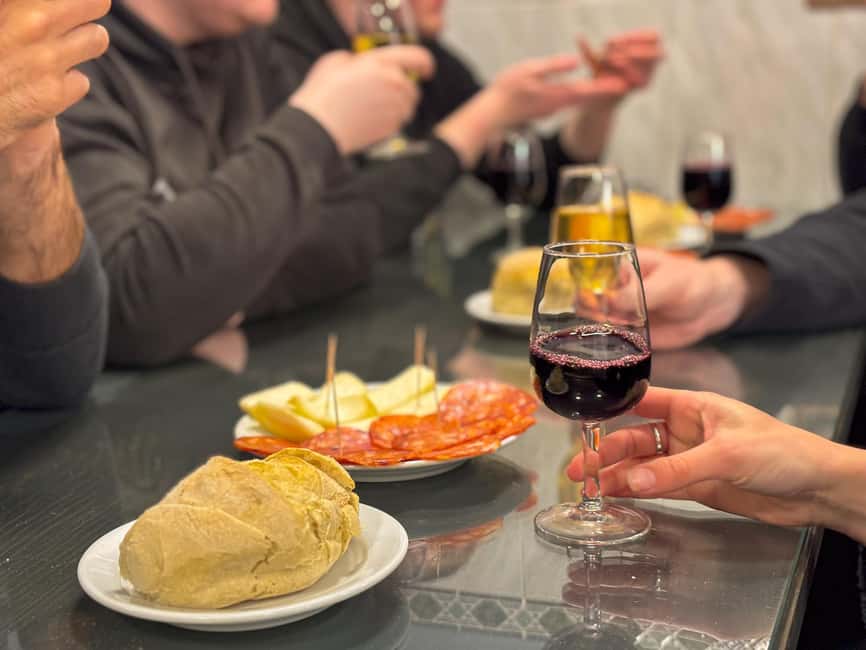
The wine and cheese tasting provides a change of pace from pastries and seafood. It also keeps the food sequence from becoming too narrow. You get sweet, salty, savory, and drink-based tastes across the afternoon or morning, depending on the departure.
Baixa is also a busy central area, so do not expect a quiet village atmosphere. The reward is convenience and a strong sense of Lisbon’s everyday center. The tradeoff is that the streets can feel crowded, and the group must keep moving at times.
Rossio Square and the final tasting round
The final section takes you toward Rossio Square, where another 45-minute food stop is planned. The included specialties here include bifana and ginjinha.
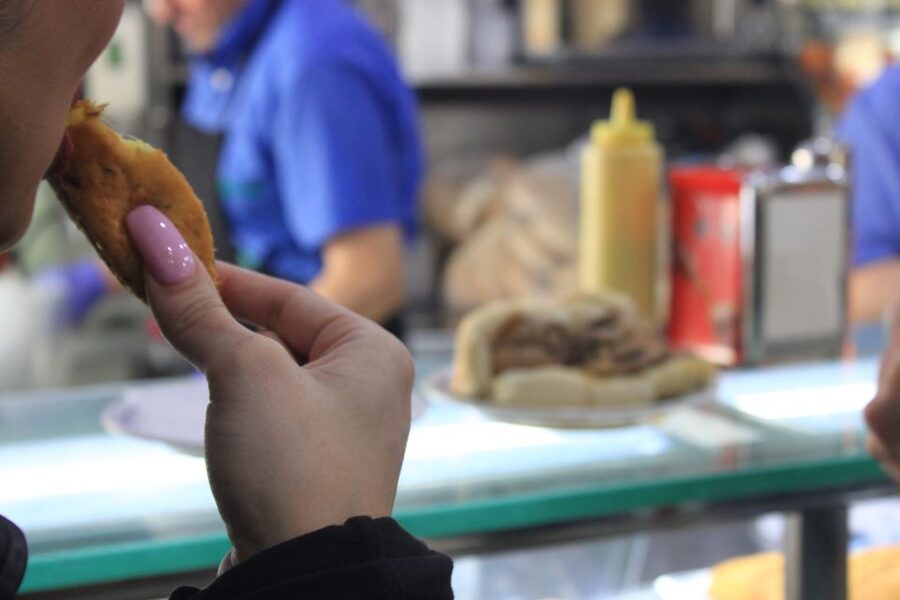
A bifana is a Portuguese pork sandwich, usually served simply and eaten as an unfussy snack. It gives you a useful contrast with the pastel de nata: one is sweet and custardy, the other is savory and filling. If you find Portuguese food easiest to understand through ordinary street and café fare, this will be one of the most useful tastings.
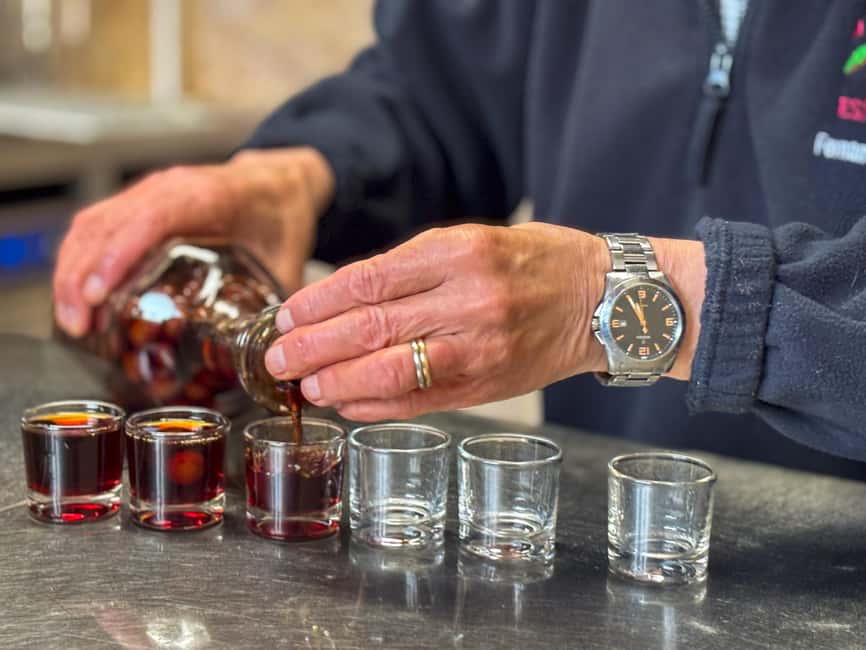
Ginjinha is Lisbon’s well-known sour-cherry liqueur. The portion is a taste, not an invitation to turn the tour into a drinking session. Still, it is a memorable part of the city’s food culture and gives the tour a local drink to add to your list.
Rossio Square is the stated end point of the route. The booking information also describes the activity as ending back at the meeting point, so I would confirm the exact end arrangement when you reserve, especially if you have a timed train, museum visit, or dinner booking. Either way, the route is designed to finish in central Lisbon rather than in Cacilhas.
The last stop is useful for planning your next meal. By then, you will have sampled enough to know whether you want a full bifana, another pastry, a drink, or a proper seafood dinner later.
What the $82 price includes
At $82 per person, this is not a cheap snack crawl. The price pays for a three-hour small-group outing, several tastings, a professional local guide, and the ferry journey to Cacilhas and back.
The value depends on how you use the information. If you want only a pastel de nata and a drink, you can spend far less on your own. If you want the guide’s explanations, a planned sequence of stops, seafood across the river, and several traditional tastes without sorting out the route yourself, the price becomes easier to justify.
I would also count the ferry crossing as part of the value. It is transport rather than a separate cruise, but it adds a scenic element and changes the character of the tour. You are getting more than a food hall visit followed by a walk around the same few blocks.
The group size helps too. With no more than 12 people, the guide can respond to questions and keep the group together without the feel of a mass tour. The experience is strongest for someone who values guidance and variety over choosing every restaurant independently.
Do not book it as a replacement for lunch unless you know you are satisfied with tasting portions. The tour includes many foods, but the information provided does not promise a full meal at any one stop.
Guides, languages, and the tone of the outing
The tour is offered in English, Spanish, and Portuguese. A departure may use up to two languages, so your guide may switch between languages during the walk. If you need a fully single-language experience, check that point when selecting your date.
The guide names connected with particularly strong feedback are Luis, Bruno, Alexandra, and Tania. Their praised qualities are practical ones: Luis explains the city, food, and culture with energy; Bruno combines information with fun; Alexandra handles questions well; and Tania offers useful background while keeping the pace enjoyable.
That matters because food tours rise or fall on the person leading them. The included dishes are appealing, but a guide who can explain what you are tasting and why it matters adds much more value than a printed list of snacks.
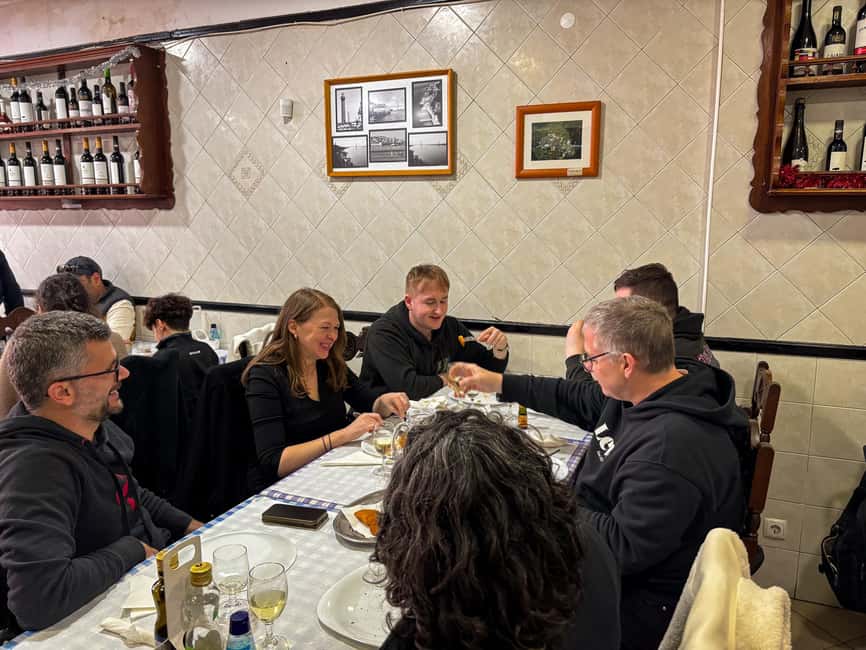
The tone is informal and social. You will walk, stop, eat, talk, and move on. It is a good choice if you like asking questions and sharing a table or tasting stop with a small group. It is less suitable if you want a quiet, private meal or a highly structured lecture.
Walking, weather, and practical comfort
Wear tennis shoes or other supportive walking shoes. The route covers Mercado da Ribeira, ferry access, Cacilhas, Baixa, and Rossio, with considerable time on foot.
Carry a bottle of water. In summer, bring sunscreen. In winter, bring a jacket because the ferry and riverside sections can feel cold. These are small preparations, but they make a noticeable difference on a route that combines outdoor walking with stops indoors.
The activity is not suitable for wheelchair users or people with mobility impairments, and it is not suitable for pregnant women. The listing also warns about the amount of walking, so anyone with knee, balance, or stamina concerns should think carefully before booking.
Food restrictions should be given in advance. The tour includes seafood, meat, dairy, alcohol, and other varied foods, but the available information does not promise that every tasting can be replaced on the spot.
Free cancellation is available up to 24 hours before the activity for a full refund, and you can reserve now and pay later. Those terms help if your Lisbon schedule is still changing, but you should still check the departure time and meeting details before finalizing other plans.
Who should choose this Lisbon tour?
I would recommend it to first-time visitors who want a quick introduction to Portuguese food and a bit of city orientation. It is also a good fit for couples, friends, and solo visitors who enjoy walking and do not mind eating in several short stages.
It suits curious eaters more than serious food specialists. You will sample a broad selection, but the focus is on everyday culture and city context rather than technical cooking methods or an in-depth wine lesson.
It can also work well near the start of your stay. After three hours, you will know what a pastel de nata, bifana, ginjinha, fish soup, shrimp patty, cheese, and Portuguese wine taste like. You can then decide which ones deserve a second visit.
I would skip it if you have limited mobility, dislike ferry rides, need a large guaranteed meal, or want to avoid seafood, meat, dairy, or alcohol. I would also think twice if your only free time falls near the market’s possible closing period and seeing an active market is your main goal.
Should you book the Lisbon market and food walk?
Book this tour if you want a social introduction to Lisbon through food, with enough history and local context to make the tastings meaningful. The ferry to Cacilhas is the unusual touch, and the small group, varied stops, and strong guide feedback make the $82 price reasonable for many visitors.
Skip it if you prefer to design your own food route or need a fully accessible activity. For everyone else, wear good shoes, arrive ready to taste rather than feast, and check the start time so Mercado da Ribeira is still operating when you get there.
FAQ
Where does the tour start?
It starts in front of the river-side entrance of Time Out Market Lisboa.
Where does the tour finish?
The route itinerary finishes at Rossio Square. The activity information also describes the end as back at the meeting point, so confirm the precise end arrangement when booking.
How long does the tour last?
The tour lasts three hours.
What languages are available?
The live guide can lead the tour in English, Spanish, or Portuguese. Up to two languages may be spoken during one departure.
How many people can join?
The maximum group size is 12 people.
What food and drinks are included?
Included tastings include pastel de nata, Portuguese coffee, fish soup, a shrimp patty, salty delicacies, bifana, ginjinha, cheese, and wine.
Does the tour include a ferry ride?
Yes. The route includes a ferry to Cacilhas, taking about 15 minutes, followed by a return ferry of about 15 minutes.
What should I bring?
Bring comfortable walking shoes and a bottle of water. Sunscreen is recommended in summer, and a jacket is useful in winter.
Is the tour suitable for people with mobility impairments or wheelchair users?
No. The activity is not suitable for people with mobility impairments, wheelchair users, or pregnant women.
Just reviewed in Lisbon
- Lisbon: Private Tour Sintra, Cabo da Roca and Cascais★ 4.9 · 46 reviews
- Lisbon: Fun Beer Bike by the Seafront★ 4.9 · 23 reviews
- Lisbon: Full-Day Sesimbra Kayak Tour with Picnic★ 4.9 · 12 reviews
- Portuguese Wine History & Amazing Landscape★ 4.9 · 26 reviews
- Lisbon: Private Full Day City Tour★ 4.6 · 38 reviews
- Lisbon: Full-Day Private Guided Tour to Fátima★ 5.0 · 12 reviews
- Lisbon: From the center to Belém by E-Bike★ 5.0 · 6 reviews
- Lisbon: Full-Day Kayak Tour with Picnic and Transfer★ 5.0 · 4 reviews
Lisbon Food Tours, compared.
Winner 2025 Undiscovered Lisbon Food & Wine Tour by Eating Europe
Read our review →
Lisbon Small-Group Food Tour with 18 Tastings in Alfama District
Read our review →
Baixa District Food Tour with Dinner and Drinks
Read our review →
Devour Lisbon: The Ultimate Portuguese Food Tour
Read our review →
Lisbon Food Tour with 10+ Tastings of Local Delicacies & Wines
Read our review →
Award-Winning Original Lisbon Food Wine Tour: 19 Curated Tastings
Read our review →
Lisbon Roots – Small group Food & Culture Walking Tour w/tastings
Read our review →Browse the lists this tour appears in