Reviewed · TOURS
Lisbon Revelation Tour
Lisbon’s story unfolds best on foot, and this tour traces a smart route from the grand riverfront to one of the city’s finest viewpoints. You’ll move through the rebuilt Baixa district, old Carmo, Chiado, and São Roque while your guide connects earthquakes, monarchy, religion, and the 1974 democratic revolution.
I love the small maximum group of 16, which makes it easier to hear the guide and ask questions. I also like the morning timing and final hilltop view, since you finish early enough to return to a favorite place or keep exploring. The main catch is simple: this is a real walking tour, with hills and steps, and the English commentary depends on getting a guide who can manage a mixed group well.
Key points at a glance
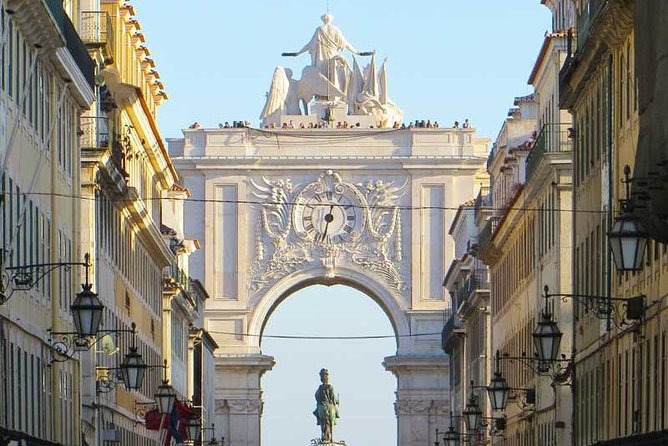
- A useful first look at central Lisbon: Follow a clear route from Praça do Comércio through Baixa, Rossio, Chiado, and São Roque.
- History tied to real places: Learn how the 1755 earthquake shaped downtown and why Largo do Carmo matters in modern Portugal.
- A strong final view: Finish at Miradouro de São Pedro de Alcântara, looking across toward Castle Hill.
- Small-group format: The tour is limited to 16 people, a practical size for questions and guide-led storytelling.
- A local taste included: Your guide provides either a pastel de nata or a small ginjinha tasting.
- Good use of a morning: The 10 a.m. start leaves much of the afternoon open for museums, neighborhoods, or a return visit.
From royal square to rebuilt downtown
The tour begins at Cervejaria Antártida on the western side of Praça do Comércio, also called Terreiro do Paço. Arrive with a little time to spare. This is a large open square, and the meeting point is at the edge rather than in the middle of the plaza.
Praça do Comércio is the right place to begin because Lisbon’s political and commercial life once gathered here. The square faces the Tagus, with its yellow buildings forming three sides and the river opening the fourth. Your guide uses the setting to explain the old royal center and the power once concentrated around this waterfront.
You get about 20 minutes here. That is enough to take in the scale, hear the main story, and orient yourself, but not enough for a long architectural study. The square itself is free to see, though any admission charge listed for a particular attraction is not included.
From the waterfront, the route moves into Baixa. This is the downtown grid rebuilt after the devastating 1755 earthquake. The broad streets and ordered blocks feel different from the older, more tangled streets climbing toward the hills. That contrast is one of the tour’s strengths: you do not just hear about the rebuilding, you walk through its result.
Still choosing? These other Lisbon trips come up in the same search.
- Lisbon City Center Tour – The Unmissable Lisbon
★ 5.0 · 22,234 reviews - Lisbon: Sintra, Pena, Regaleira, Cabo da Roca & Cascais
★ 4.7 · 19,656 reviews - Sintra: Pena Palace and Park Entrance Ticket
★ 4.2 · 17,410 reviews
Rossio, Restauradores, and the shape of Lisbon
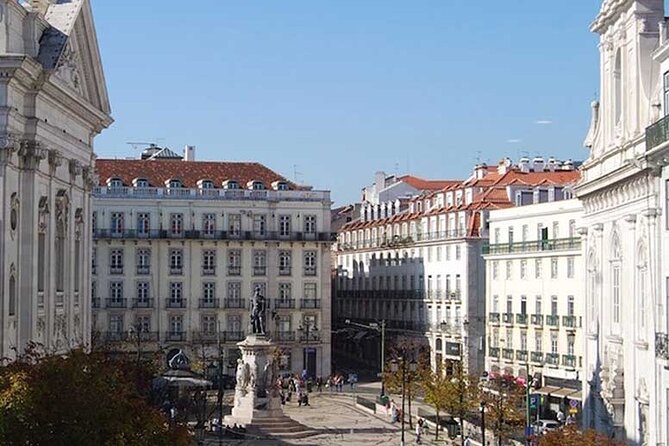
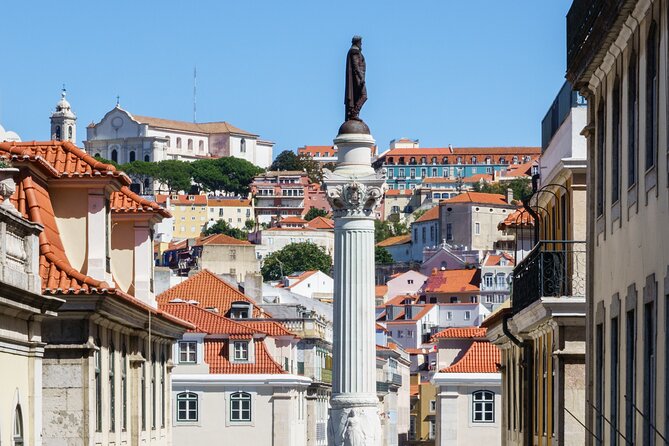
The Baixa section takes in Rossio and Restauradores, two major squares that help you understand how central Lisbon works. Rossio, formally Praça Dom Pedro IV, is described as the heart of downtown, and it still feels like a natural meeting point.
You have time at Praça da Figueira, a traditional market square, before reaching Restauradores. The stops at Figueira and Restauradores are brief, only about five minutes each, so expect interpretation rather than a long break. If you want photographs, take them promptly and keep listening for the group’s movement.
Restauradores brings the tour into the setting of a European capital, with its formal avenues and public monuments. From there, the route continues through Rossio, where the guide can tie together the city’s rebuilding, public life, and changing role as Portugal’s capital.
The pace is one of the better features here. You are not parked in one square for too long, yet the route does not simply become a march between landmarks. One past participant found the timing just right, and that makes sense for an introductory tour. You cover a lot, but the stops remain manageable.
Santa Justa and the climb toward Carmo
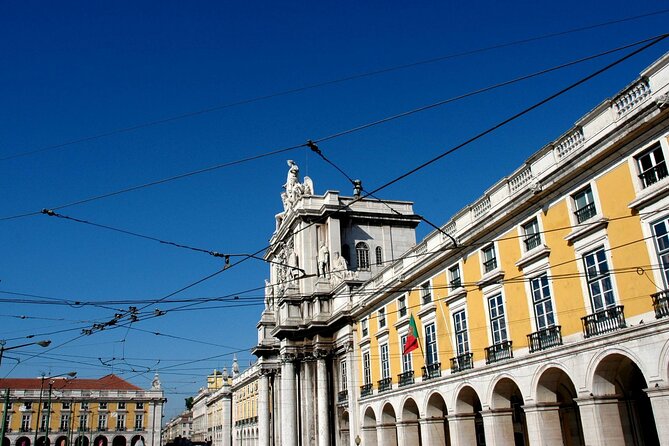
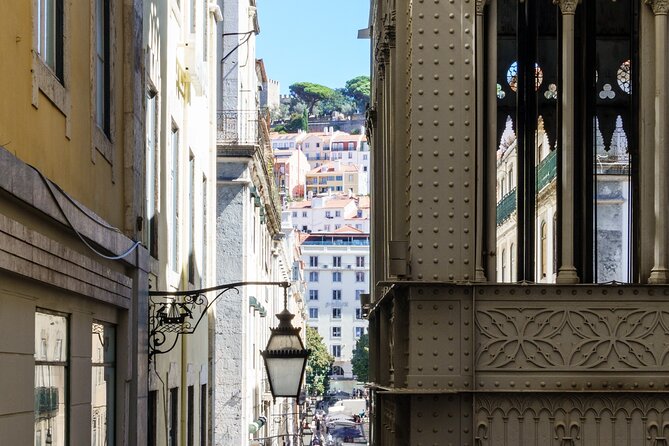
The Elevador de Santa Justa is one of Lisbon’s most recognizable pieces of ironwork. The tour pauses for around 10 minutes and explains its place in the downtown district, including the promise of a 360-degree view over Baixa.
Do not confuse seeing the lift with riding it. The tour information lists admission as free for this stop, but it does not promise a ride or include a ticket. If taking the elevator is important to you, ask your guide how to return later and check the current arrangements on your own.
The walking route then heads toward Largo do Carmo. This is where the physical character of Lisbon becomes clearer. You will encounter elevation and some steps. The slope is manageable for many people with moderate fitness, but it is not a flat stroll beside the river.
Largo do Carmo carries major political meaning. It was the setting for the democratic revolution of 1974, an event that ended decades of dictatorship in Portugal. A good guide can make this stop more than a date in a textbook by showing how the square’s physical setting relates to the event.
The tour also points out Carmo’s Gothic monument, the Convent of Our Lady of Mount Carmel. Its roofless arches are among the most memorable sights in central Lisbon. The tour does not include an interior visit, so treat this as an introduction and return later if you want more time.
Chiado, Carmo, and Lisbon’s literary side
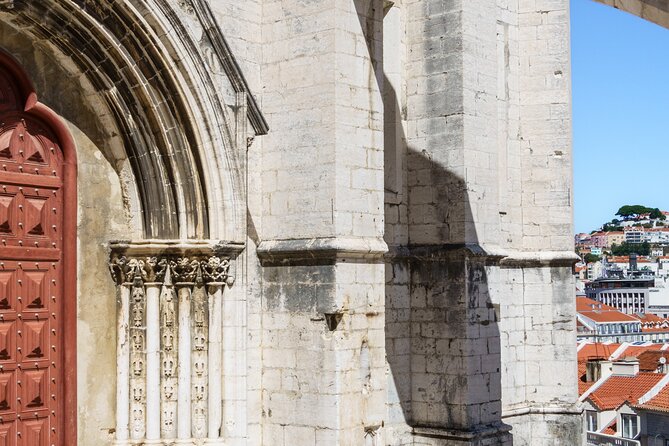
Chiado and Carmo form a useful bridge between old religious Lisbon and the city’s more polished cultural center. The route includes a tribute to Portugal’s great poet of the Discoveries, as well as the lively bohemian district associated with cafés, shops, theaters, and literary life.
The supplied route does not assign a separate stop number to every point in this section, so you should think of it as a walking passage rather than a set of formal visits. That is part of the appeal. Lisbon makes more sense when you see how one district flows into another.
Your guide’s commentary matters most here. The strongest feedback names guides including Filipa, Hugo, Alex, José, Mia, and Julia, with particular praise for clear explanations, personal warmth, useful suggestions, and stories that connect buildings with the people who used them. Guide assignments can change, so you should not book expecting one particular person. Still, the range of specific praise suggests that the operator has several guides who can bring the route to life.
The English-only format is worth noting. One Portuguese-speaking participant said José helped with translation during the walk, but that assistance cannot be promised. If you need regular translation, this may not be the right choice. If you can follow English comfortably, the tour is designed around English commentary.
Something different to do with a day in Lisbon:
- Lisbon: Jerónimos Monastery Entrance Ticket
★ 4.1 · 14,164 reviews - Lisbon: History, Stories and Lifestyle Walking Tour
★ 4.8 · 10,902 reviews - Lisbon: Sunset Boat Party Cruise with DJ and Open Bar
★ 4.5 · 10,378 reviews - Lisbon: Pena Palace, Sintra, Cabo da Roca, & Cascais Daytrip
★ 4.7 · 9,981 reviews
São Roque and a baroque surprise
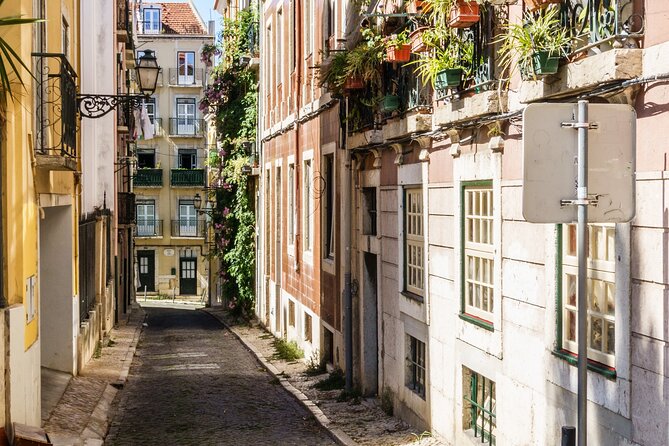
Igreja de São Roque gives the route a new visual note. After the broad squares and earthquake-era streets, this church introduces Lisbon’s ornate Baroque tradition.
You get about 10 minutes here, with admission listed as free. That is enough to enter if the tour’s timing and church access allow, but do not expect a long guided examination of every chapel and object. The point is to see the contrast: Lisbon’s religious interiors could be lavish even when the surrounding streets looked plain.
This is also a useful reminder that the tour is an overview. It gives you a framework for deciding what deserves a longer visit later. If church art is a priority, you will want extra time beyond the group’s schedule.
A final view at São Pedro de Alcântara
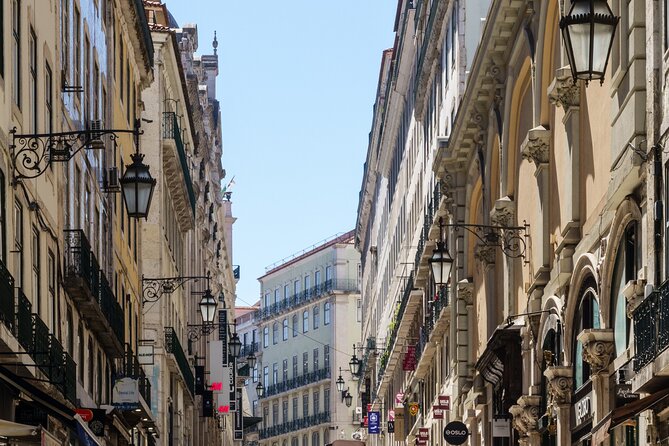
The walk ends at Miradouro de São Pedro de Alcântara, a terrace with a wide view toward Castle Hill. You can see why this is a satisfying finish. After starting at the Tagus and crossing the lower city, you end above the rooftops with Lisbon spread out below.
The view is not just a photo stop. It helps you map the city in your head. You have walked through Baixa, climbed toward Chiado, and reached a terrace facing the hill crowned by the castle area. For a first morning in Lisbon, that is useful orientation.
The final stop lasts about 10 minutes, though the full experience runs roughly three to four hours. The endpoint is not back at Praça do Comércio, so plan your next move from São Pedro de Alcântara. You are near central Lisbon and public transportation, but the tour data does not specify a particular route onward.
What the food tasting adds
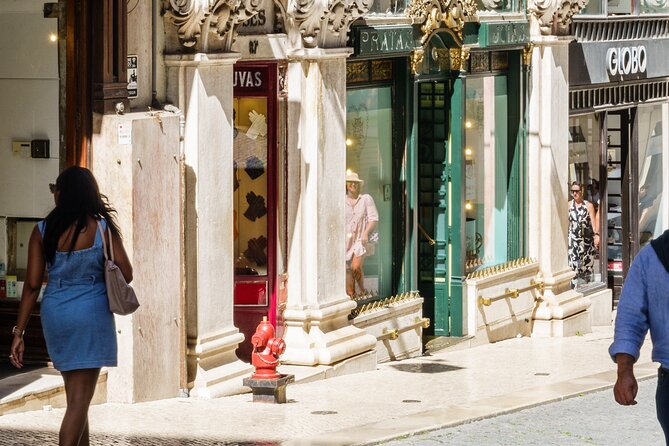
The price includes a choice between a pastel de nata and a ginjinha. The pastel de nata is Lisbon’s famous custard tart, while ginjinha is a cherry liqueur. This is a small inclusion, not a meal, but it gives the tour a local flavor without taking much time from the walking route.
If you do not drink alcohol, choose the pastry. If you are curious about Portuguese drinks and are of legal drinking age, the ginjinha offers a quick taste of a local tradition. The information does not specify the tasting location or the exact portion, so keep your expectations modest.
I like this kind of inclusion because it fits the tour. You are not pulled away for a long restaurant stop, yet you get one edible connection to the city. Bring water as well. The tasting does not replace hydration, especially on a warm day.
Is $30.25 a fair price?
At $30.25 per person, this is good value if you want a structured introduction rather than a self-guided walk. You receive three to four hours with a professional art historian guide, a carefully arranged route through several central districts, historical explanation, and one small food or drink tasting.
The value improves if this is your first day in Lisbon. The route gives you a working map of the center and helps you decide where to spend your independent time. It also saves you from piecing together the earthquake story, the 1974 revolution, the Gothic ruins, the Baroque church, and the major squares on your own.
The price is less compelling if you prefer to enter every attraction or spend a long time at each one. This tour is about context and orientation. It does not include a full museum program, a formal ride on Santa Justa, or extended access to each sight.
The group cap of 16 is another reason the fee feels reasonable. A smaller group usually means you can hear the explanation and ask a question without turning the walk into a private tour. It is not the same as booking a one-to-one guide, but it should feel more personal than a large coach excursion.
Walking conditions and useful preparation
Wear proper walking shoes. The route includes slopes and some steps, especially as you leave the lower downtown area and head toward Carmo and São Pedro de Alcântara. One account described the elevation as manageable, but the same practical lesson applies: comfortable shoes will matter more than stylish ones.
Bring water, and dress for the forecast. The tour operates in all weather, so rain or sun will not automatically change the plan. A light waterproof layer, sun protection, and shoes with a secure sole are sensible choices.
You need a moderate level of physical fitness. This is not a demanding hike, but it is also not suitable for someone who needs a completely level route or frequent long rests. Children must be accompanied by an adult, and service animals are allowed.
The start time is 10 a.m. and the tour is offered in English. It is typically booked well ahead, with an average booking lead time of 62 days. That does not mean you must reserve two months out, but it does suggest booking early if your Lisbon dates are fixed.
Confirmation is sent within 48 hours, subject to availability. The experience requires a minimum number of participants, so a cancellation for that reason can lead to another date or a full refund. You can cancel for a full refund up to 24 hours before the start time. If you cancel later, the amount paid is not refunded.
One practical caution: make sure your confirmation shows the Lisbon meeting point at Cervejaria Antártida, Praça do Comércio, rather than relying on memory or an old instruction. One poor account involved a guide not appearing after the person went to a meeting point in Porto, which does not match this Lisbon experience. That may have been a booking or location mix-up, but checking the city and address before setting out is wise.
Who will get the most from this walk?
I would choose this tour for a first visit, a short stay, or the first full morning of a longer trip. It gives you the main central districts without claiming to show every corner of Lisbon.
It also suits you if you enjoy history presented through streets and buildings. The tour links the earthquake rebuilding, royal power, religious art, the Discoveries era, and the 1974 revolution. You will not simply collect square names. You will see how different periods overlap in one compact part of the city.
It may not suit you if you want a slow photographic walk, a food-focused experience, or a tour devoted to one subject. The route covers a lot of ground and keeps moving. You will need to return independently to any place that deserves more time.
Should you book the Lisbon Revelation Tour?
Yes, if you want a reasonably priced, small-group introduction to central Lisbon with strong historical content and a good final view. The route is well chosen, the morning schedule leaves your afternoon open, and the pastry or ginjinha adds a pleasant local touch.
Book it with sensible expectations. You are paying for a guided overview, not a series of lengthy interior visits. Wear good shoes, carry water, confirm the Lisbon meeting point, and be ready for hills. If that sounds like your kind of first morning, this tour should help you get your bearings fast and give the rest of your Lisbon visit more shape.
FAQ
Where does the Lisbon Revelation Tour start?
It starts at Cervejaria Antártida Lisboa, on the western side of Praça do Comércio, at R. C 20-23, 1100-038 Lisbon.
Where does the tour finish?
The tour ends at Miradouro de São Pedro de Alcântara on R. de São Pedro de Alcântara, 1250-238 Lisbon.
What time does the tour begin?
The scheduled start time is 10 a.m.
How long does the experience last?
The walking tour lasts approximately three to four hours.
Is food or drink included?
Yes. The experience includes a choice of one pastel de nata or a ginjinha tasting.
Can I cancel for a full refund?
Yes. You can cancel at least 24 hours before the start time for a full refund. Cancellations or changes made less than 24 hours before the start are not refunded or accepted.
Just reviewed in Lisbon
- Lisbon: Morning of Equestrian Art with Lusitano Horses★ 4.4 · 87 reviews
- Lisbon: Entry Tickets to Mosteiro de São Vicente de Foram★ 4.6 · 50 reviews
- Lisbon: National Palace of Ajuda E-Ticket & City Audio Guide★ 4.1 · 87 reviews
- Lisbon: Early Morning TukTuk Tour – hotel/cruise ship pickup★ 4.9 · 45 reviews
- Sintra: Quinta da Regaleira e-Ticket & Sintra City Audios★ 4.1 · 12 reviews
- Lisbon E-Bike Tour TAGUS★ 5.0 · 3 reviews
- Lisbon: E-bike Trip from the Sintra Mountains to Cascais Sea★ 5.0 · 67 reviews
- Lisbon: Discover Belem by electric Tuk Tuk★ 4.9 · 86 reviews
Tours, compared.
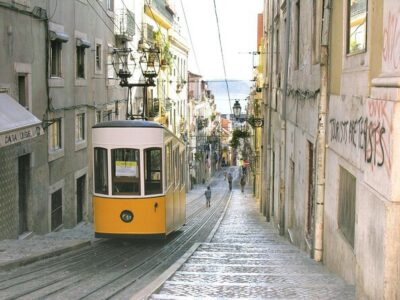
Lisbon City Center Tour – The Unmissable Lisbon
Read our review →

True 4Hour Private Tuk Tuk Tour: Discover Lisbon with a Local!
Read our review →
Winner 2025 Undiscovered Lisbon Food & Wine Tour by Eating Europe
Read our review →
Sintra, Pena, Cabo da Roca, Cascais Tour with Pickup
Read our review →
Best of Lisbon Small-Group Guided Walking Tour
Read our review →