
Reviewed · LISBON
Multicultural Lisbon: Stories, Art, Music, Flavor & Secrets
Lisbon’s multicultural soul comes alive on this five-hour walk through Mouraria and Graça, where street art, immigrant-run cafés, music, and food matter more than checking off monuments. You begin at Martim Moniz, climb through old neighborhoods, and finish the evening with live music at a local venue.
I like the small group of no more than 10 people, which gives the guide room to adjust the pace and follow your interests. I also like the mix of experiences: African or other international flavors, political street art, a sunset view, and live music instead of one more standard sightseeing loop.
The main consideration is physical. You will climb about 200 steps, walk uphill, and spend roughly five hours on your feet. Dinner and drinks are not included, and the music venue can change from one evening to the next.
Key points to know before booking
- Mouraria sets the tone: Start in one of Lisbon’s most diverse quarters, with stories of migration, music, and neighborhood change.
- Teddy is a named guide: Teddy leads the experience when available, and the tour can also run in English, French, Romanian, or Spanish.
- The 200-step climb matters: Graça’s viewpoint is rewarding, but this walk is not suitable for people with mobility impairments.
- Food is part of the story: Snacks are included, while the main meal and drinks at the restaurant stop cost extra.
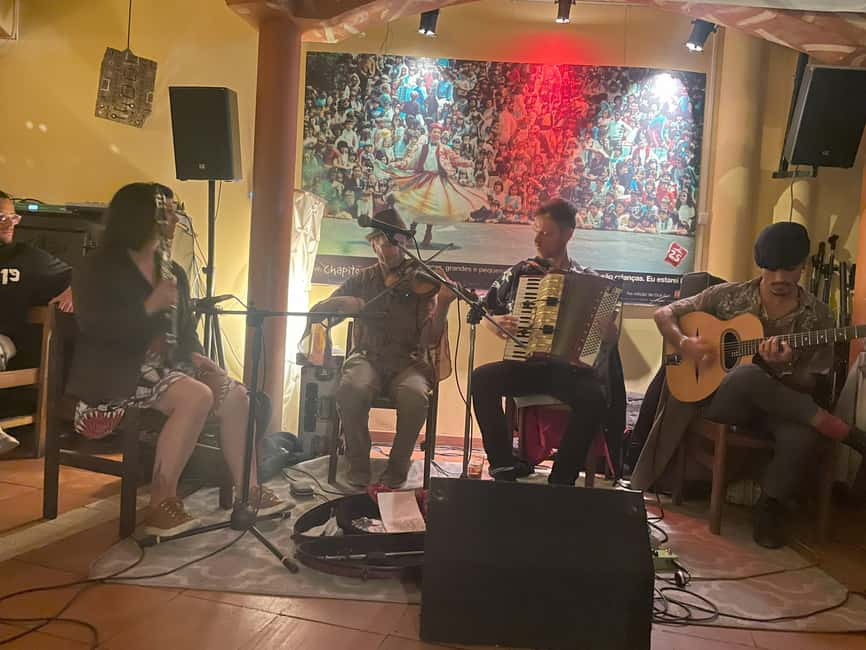
- The music is flexible: You may hear an Afro-Lusophone guitar session, samba, Cumbia, Forró, jazz, or a local jam, depending on the night.
- It is an evening experience: The walk starts about two hours before sunset and ends at a selected music venue, with Chapitô listed as the final stop.
A different way to meet Lisbon
Many Lisbon walks keep to the postcard route: grand squares, tiled façades, and famous viewpoints. This one takes a less polished path through neighborhoods where the city’s African, Brazilian, Asian, and Portuguese influences meet in ordinary streets, small businesses, art-covered walls, and music rooms.
That focus gives the experience a clear purpose. You are not simply shown what a building looks like. You are encouraged to think about who lives in the area, how local culture changes, and why Mouraria and Graça have become important places for artists, immigrants, musicians, and community groups.
The tone is informal and personal. The tour is built around stories and encounters rather than a rigid lecture. A small group helps here. With a maximum of 10 people, you can ask questions without holding up a large crowd, and the guide can spend more time on subjects that catch your interest.
Teddy is named as one of the guides, and the personal feedback about his approach points to a host who enjoys connecting the city’s many sides. If Teddy leads your walk, expect the evening to feel more like being shown around by an enthusiastic local than being marched from sight to sight.
Still choosing? These other Lisbon trips come up in the same search.
- Lisbon City Center Tour – The Unmissable Lisbon
★ 5.0 · 22,234 reviews - Lisbon: Sintra, Pena, Regaleira, Cabo da Roca & Cascais
★ 4.7 · 19,656 reviews - Sintra: Pena Palace and Park Entrance Ticket
★ 4.2 · 17,410 reviews
Starting at Martim Moniz and entering Mouraria
Meet outside the main entrance of Hotel Mundial in Martim Moniz Square. This is a useful starting point because Martim Moniz is one of Lisbon’s clearest meeting places for different cultures. The square sits near the edge of Mouraria and gives the guide an easy place to introduce the neighborhood.
The first major section takes about an hour in Mouraria. This is one of Lisbon’s oldest quarters and one of its most culturally mixed. The streets are not simply a pretty backdrop. They carry stories about migration, music, economic pressure, and neighborhood renewal.
You may pass cafés filled with local art and small businesses that reflect the area’s international character. The value here is context. A guide can point out details you might walk past alone and explain how a district gains a reputation, changes over time, and still keeps its local identity.
The pace should allow time to look around, but remember that this is an active neighborhood rather than an open-air museum. Streets can be steep, uneven, or narrow. Comfortable shoes will make a real difference.
Martim Moniz, street art, and the city’s creative voice
The walk also includes a short guided look at Praça do Martim Moniz, followed by time in Graça. The street art portion is one of the strongest reasons to choose this experience over a standard city walk.
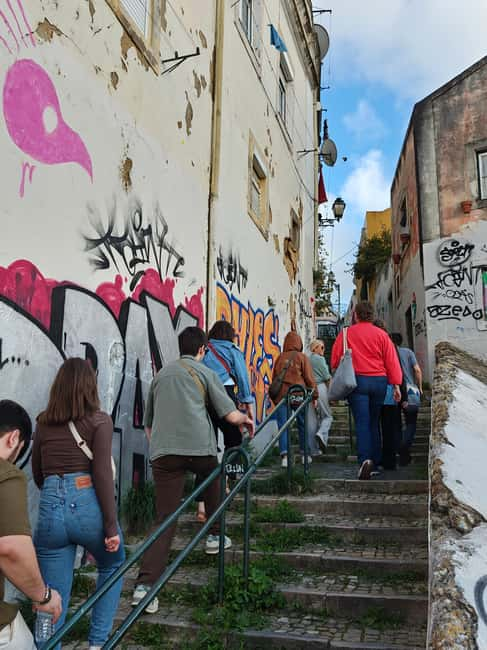
Lisbon’s murals and graffiti are not treated as decoration alone. The guide connects them with political ideas, poetry, social change, and the creative life of the city. That makes the art easier to read. You get more than a photograph of a colorful wall; you get a sense of why that wall matters.
In Graça, expect bold murals and unexpected patches of color as the route climbs. The neighborhood has a more residential feel than the central tourist streets, though the route still includes well-known scenic points. The uphill section is part of the experience, but it is also the point where less mobile participants may struggle.
The tour information describes a walk of about 200 steps to reach the viewpoint, with no elevator. I would take that warning seriously. If stairs and uphill streets are difficult for you, this is not the right Lisbon activity.
Snacks, cafés, and a meal with local character
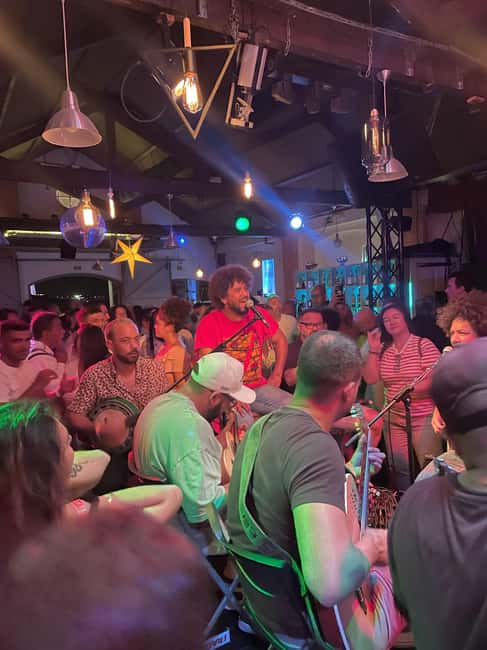
Food appears in several forms during the evening. Snacks are included, and the walk may feature African or other international flavors in a musical setting. There is also a stop for local snacks in Graça.
These tastings are small but useful. They give you a sense of how food carries migration stories and family traditions. You should not book this expecting a full food tour, though. The tasting element supports the cultural walk rather than replacing it.
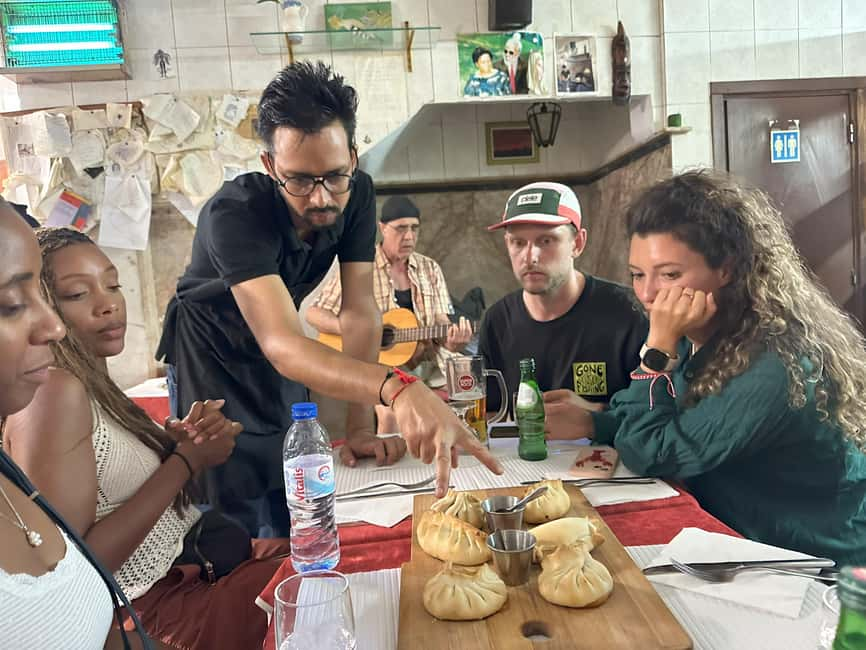
Later, the group stops at a family-run or immigrant-owned restaurant in the Castelo area. The setting is described as warm and personal, with the food and hospitality playing equal parts. This is likely to be one of the evening’s most memorable moments, especially if you prefer modest local places to formal dining rooms.
Read the cost details carefully. Snacks are included, but the main meal and drinks are not. The schedule allows about an hour for dinner, so you should budget for a proper meal if you want one. Bring cash, as it is specifically recommended for the experience.
Something different to do with a day in Lisbon:
- Lisbon: Jerónimos Monastery Entrance Ticket
★ 4.1 · 14,164 reviews - Lisbon: History, Stories and Lifestyle Walking Tour
★ 4.8 · 10,902 reviews - Lisbon: Sunset Boat Party Cruise with DJ and Open Bar
★ 4.5 · 10,378 reviews - Lisbon: Pena Palace, Sintra, Cabo da Roca, & Cascais Daytrip
★ 4.7 · 9,981 reviews
Climbing to Graça and watching Lisbon turn gold
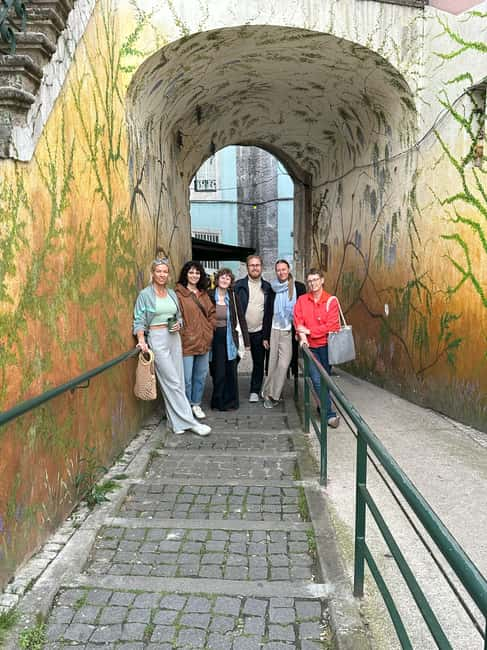
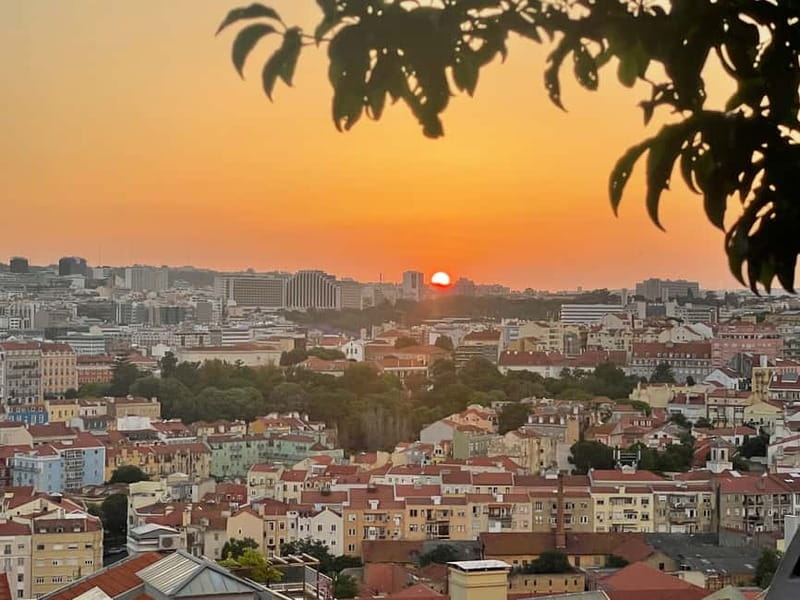
The walk begins about two hours before sunset. That timing is well chosen. You spend the first part in Mouraria and Graça, then reach a scenic miradouro as the light begins to soften.
The viewpoint gives you a broad look over Lisbon as the sun drops. This is not just a quick photo stop. It provides a pause after the uphill walk and lets you see how the city’s hills, rooftops, and neighborhoods fit together.
You should also plan for changing weather. The activity runs rain or shine, and Lisbon’s evenings can turn cool. Bring layers and an umbrella. A rain shower would not cancel the route, so do not rely on a last-minute weather forecast alone.
The route is not designed for a hurried visit. The guide may spend time telling stories, pointing out details, or changing the order of the evening according to the group and the available music. That flexibility is a strength if you like open-ended experiences, but it may frustrate you if you want every minute fixed in advance.
The music changes from night to night
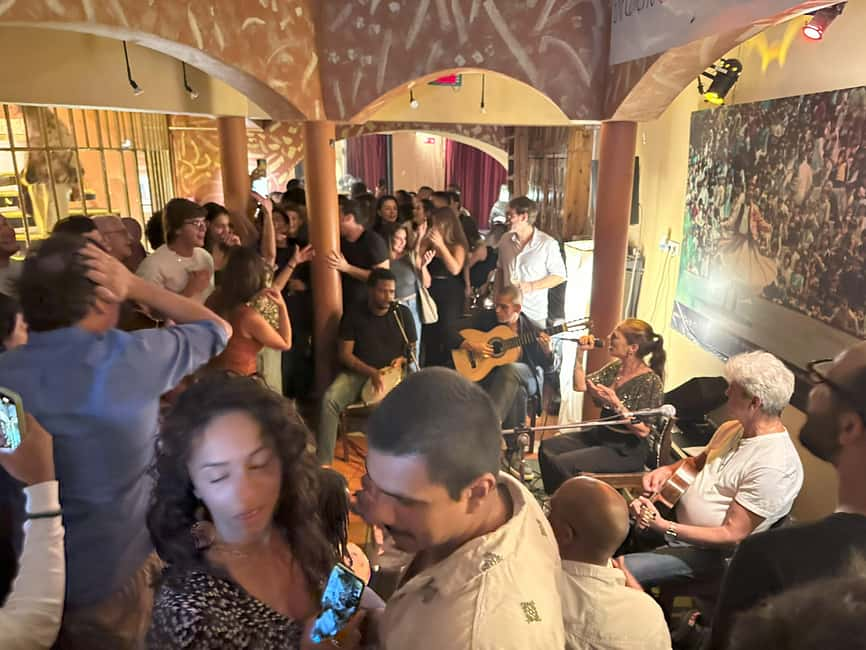
Live music is the evening’s final act. The exact venue and style depend on what is available that night. Possibilities include an Alfama jam session, Afro-Lusophone guitar, Brazilian samba roda, Cumbia, Forró, or jazz in a small local venue.
This uncertainty is worth understanding. You are not buying a guaranteed concert by a named performer. You are buying access to Lisbon’s local music scene, with the chance of finding a style that fits the evening.
The changing format also keeps the experience from feeling mechanical. One evening may lean toward a relaxed guitar session, while another could end with a livelier group rhythm. The listed final stop is Chapitô, but the evening information also says the guide selects a venue based on the best option available that night. Confirm the final meeting and end point when you book.
The music setting can be especially valuable after the walking portion. You have already seen neighborhoods, heard stories, and tasted food. The performance then gives those cultural threads a living sound rather than leaving them as background information.
What the five-hour format means for you
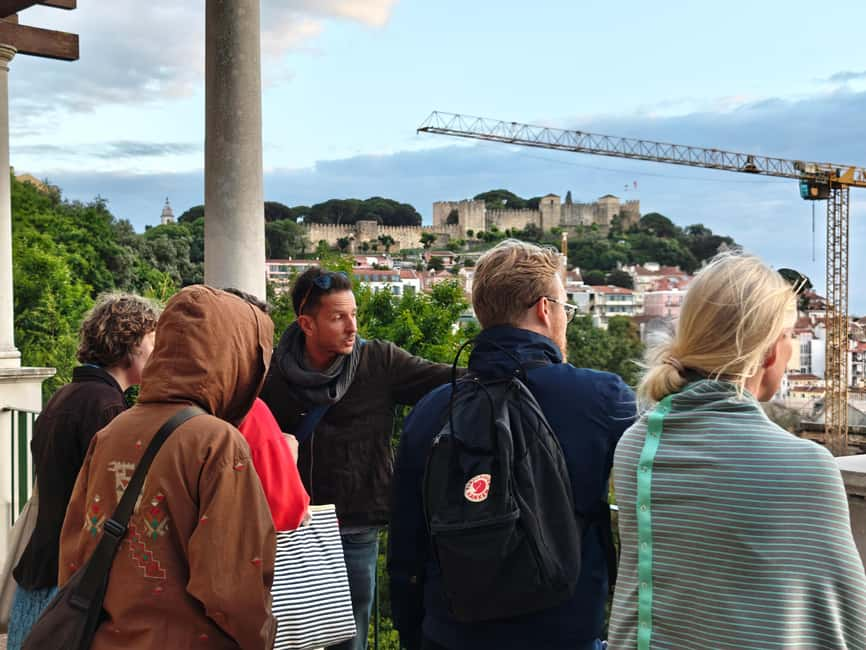
Five hours is a substantial amount of time for one Lisbon activity. You will see several districts, stop for food, pause at a viewpoint, and spend time with music. That makes the $66 price reasonable if you are interested in several types of experience at once.
The value is less clear if you mainly want famous monuments. This tour does not focus on entry to historic buildings or formal attractions. You are paying for a guide, access to local places, tastings, stories, and a small-group evening rather than tickets.
The price includes 23 percent VAT. Snacks are included, but you should add money for dinner and drinks. You may also need to pay separately if the evening includes a formal concert or special event. Such an entry fee is not part of the standard price.
There is free cancellation up to 24 hours before the activity, and you can reserve now and pay later. Those terms help if your Lisbon plans are still shifting, but the physical demands and evening timing matter more to your decision.
Who will enjoy this walk most
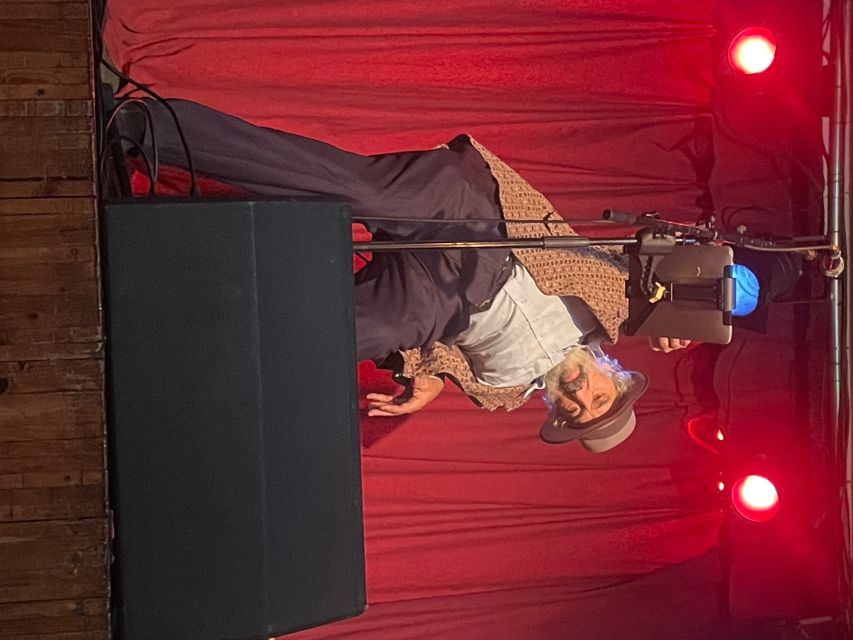
I would choose this experience if you want to see Lisbon through its people, music, food, and street art. It suits curious adults who prefer neighborhood stories to a list of major sights.
It is also a good choice for a first evening in Lisbon if you want several ideas for the rest of your stay. The guide can introduce you to districts, food styles, music traditions, and viewpoints that you might otherwise miss.
The tour is not suitable for children under 4, and the general description also says it is not suitable for children under 14. Since the information gives both age limits, families should confirm the current rule before booking. It is also listed as unsuitable for people over 80 and people with mobility impairments.
You will need comfortable walking shoes, a layer for the evening, an umbrella, and cash. The route includes stairs and hills, so this is not a good match if you want a gentle, flat stroll.
Should you book Multicultural Lisbon?
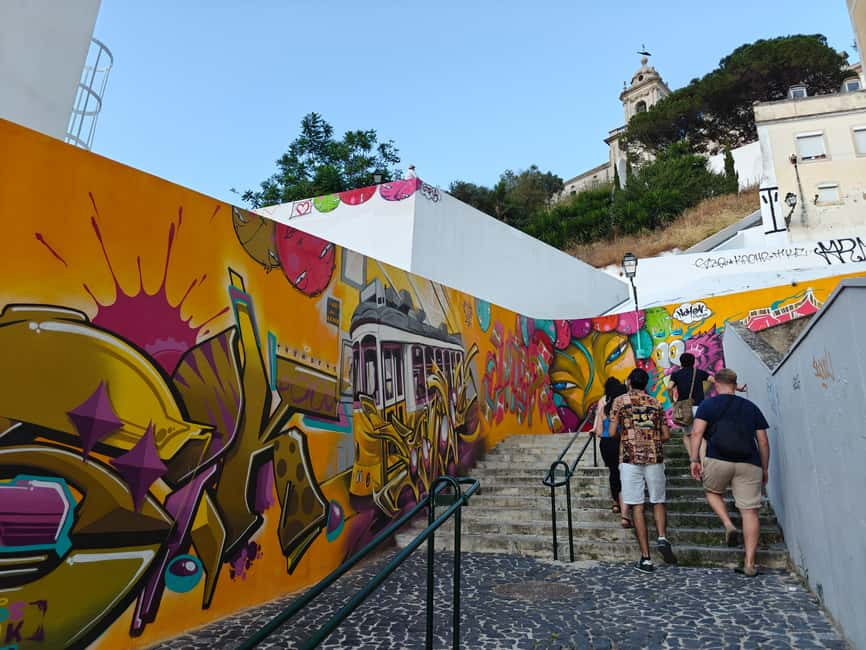
Book it if you want stories, street art, food, and music in one evening, and you are happy to let the exact music venue and flavor of the night change. The strongest parts are the small group, the Mouraria and Graça route, the immigrant-run food stop, and the chance to hear live music in a less formal setting.
Skip it if your priority is major monuments, a fixed concert program, or a low-effort walk. The climb is real, dinner costs extra, and the experience depends on the night’s available music.
For the right person, $66 is a fair price for five hours of guiding and several different cultural stops. Wear sensible shoes, arrive ready for hills, and keep the rest of your evening open. Lisbon’s best moments here are not scheduled like a museum visit.
FAQ
Where does the tour begin?
The tour begins outside the main entrance of Hotel Mundial in Martim Moniz Square.
How long does the experience last?
The experience lasts about five hours. It begins approximately two hours before sunset, with the exact starting time depending on availability.
Which neighborhoods does the walk visit?
The route includes Mouraria, Martim Moniz, Graça, Castelo, and a final music stop. Alfama may also be part of the evening music plan, depending on the venue.
How many people are in the group?
The group is limited to 10 participants.
Which languages are available?
The tour can be offered in English, French, Romanian, or Spanish.
Is dinner included?
No. Snacks are included, but the main meal and drinks at the restaurant stop are paid separately.
How many stairs are involved?
You will climb about 200 steps to reach the miradouro. There is no elevator.
What should I bring?
Bring comfortable walking shoes, layers, an umbrella, and cash.
Is live music guaranteed at one specific venue?
No specific venue is guaranteed. The evening ends at a selected live music venue based on the best available option that night. Possible styles include Afro-Lusophone guitar, samba, Cumbia, Forró, jazz, or a local jam session.
Just reviewed in Lisbon
- SINTRA – CABO DA ROCA – CASCAIS: A magical escape★ 5.0 · 33 reviews
- Private Tour to Fátima Nazaré and Óbidos from Lisbon★ 5.0 · 34 reviews
- Exclusive Private Tour to Sintra, Pena Palace & Cascais★ 5.0 · 91 reviews
- Tomar and Castle of Almourol Private Full-Day Tour from Lisbon★ 4.5 · 3 reviews
- Private Tour to Évora with Wine tasting★ 5.0 · 3 reviews
- Fatima e Tomar Full Day Private Tour from Lisbon★ 4.0 · 4 reviews
- From Lisbon to Sintra, Cabo da Roca + Wine Tasting, Hotel Pick-Up★ 5.0 · 13 reviews
- Private Tour of Sintra and Pena skip the line tickets★ 5.0 · 32 reviews