Reviewed · TOURS
Roman Lisbon Tour
Lisbon’s Roman past is easy to miss beneath its later streets and buildings. This three-hour private tour brings it into view, beginning at the Portas do Sol viewpoint and moving through theaters, baths, temples, factories, and underground remains.
I like the way the tour links big historical ideas to physical places, especially the Roman theater and the underground archaeological structures. I also like the history-trained guides, with Paulo, Sandra, and Ingo singled out for warmth, preparation, and clear storytelling.
The main consideration is pace. You cover several sites in three hours, and some stops are underground or archaeological rather than fully preserved monuments. Comfortable shoes are important, and the $88 price makes the most sense if you value a private guide and focused access.
Key points to know before you book
- Portas do Sol puts Roman Lisbon in context with one of the city’s finest elevated views.
- The Roman theater sits inside a European capital, an unusual survival that gives the ancient city a clear physical anchor.
- Lisbon Cathedral’s cloister contains Roman street remains, showing how old layers sit beneath later buildings.
- The Casa dos Bicos stop includes Roman walls and factory remains, adding a practical look at trade and daily work.
- The underground section reveals homes, streets, garum factories, pools, and artifacts that are easy to overlook without a guide.
- The private format and four language choices make this a good fit for families, couples, and small groups with a strong interest in history.
Starting above the rooftops at Portas do Sol
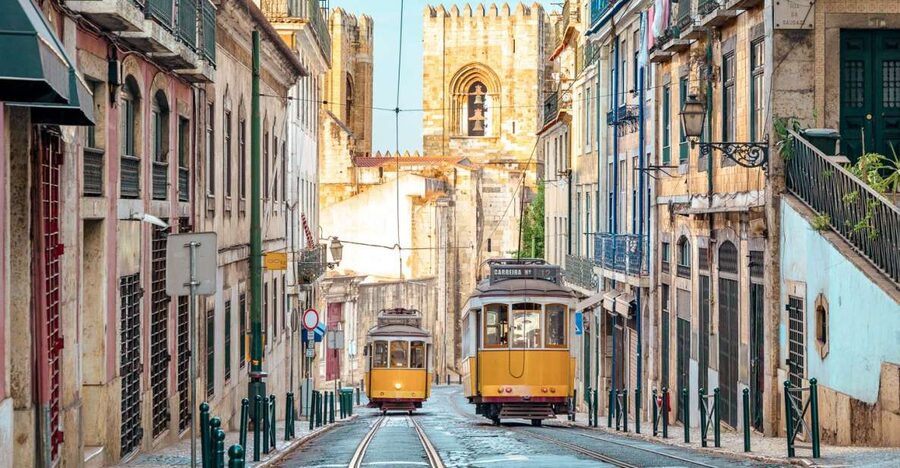
The meeting point is next to the entrance of the Arts Decorativas Portuguesas Museum. From there, the tour begins at the Portas do Sol viewpoint, a smart choice because it lets you see Lisbon before you start reading its past underfoot.
Your guide uses the view to explain how Lisbon developed during the Roman era. That opening matters. Instead of dropping you straight into a fragment of wall or a dark archaeological room, the tour first gives you a sense of the city’s position and growth.
The story reaches back before Rome. Lisbon has been linked with Phoenician and Greek settlement, and local legend says Odysseus founded the city. Treat that Odysseus connection as legend, not established fact, but it helps explain why Lisbon has long carried an air of extreme age.
The Roman period is the main subject. Lisbon became an important trading place during the empire, and the tour uses surviving structures to show more than military conquest or emperors. You get a look at commerce, domestic life, public facilities, and urban planning.
I like this start for another reason: the view helps you understand that Roman Lisbon was a working city, not an isolated ruin. The guide can connect the city’s location with its role in trade, then show you the remains that support that story.
Still choosing? These other Lisbon trips come up in the same search.
- Lisbon City Center Tour – The Unmissable Lisbon
★ 5.0 · 22,234 reviews - Lisbon: Sintra, Pena, Regaleira, Cabo da Roca & Cascais
★ 4.7 · 19,656 reviews - Sintra: Pena Palace and Park Entrance Ticket
★ 4.2 · 17,410 reviews
The Roman theater, a rare ancient stage
The Roman theater is one of the strongest stops on the route. The tour describes it as the only theater after Rome located within the walls of a European capital. That claim gives the site real weight, but the appeal is not just the title.
A theater shows how Roman life included performance, public gatherings, and shared civic space. It helps you picture Lisbon as a city with organized entertainment and public culture, not simply a port that moved goods.
Expect the guide to explain what you are seeing and how the theater fits into the Roman city. The remains are archaeological, so you should not expect a complete building with intact walls rising around you. The value comes from learning how to read the surviving structure.
This is where a history-trained guide earns the fee. Without explanation, ancient foundations can look like disconnected stones. With careful context, they become part of an urban plan. Paulo, Sandra, and Ingo have each been praised for bringing warmth and strong historical connections to the experience, and that personal delivery matters at a site like this.
For families, the theater may be the easiest place to hold a child’s attention. It has a clear purpose and a memorable story. One family specifically found the visit especially useful for a child interested in Roman history.
Roman streets beneath Lisbon Cathedral
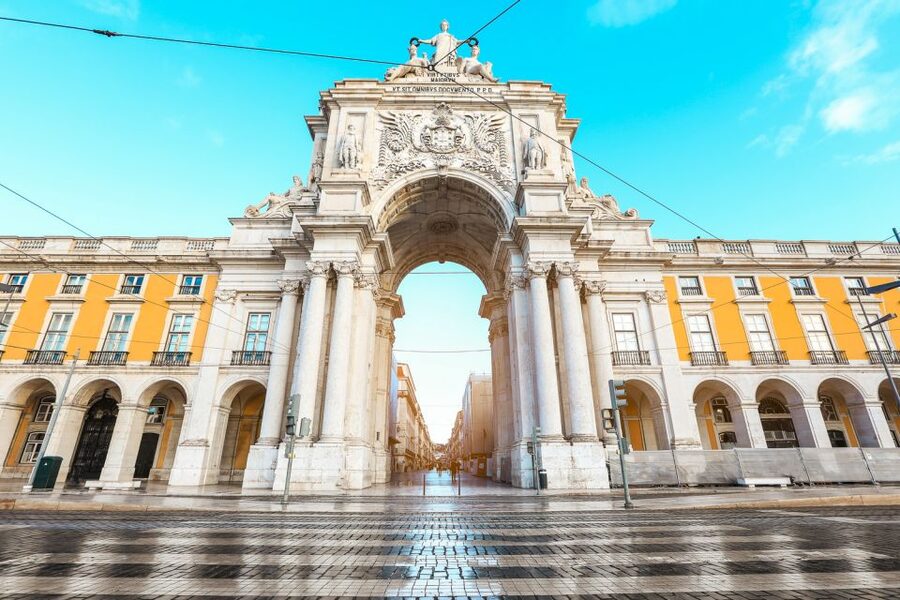
The next major stop is the cloister of Lisbon Cathedral. Here, Roman streets survive beneath or within the later religious complex, giving you a direct lesson in how Lisbon was built in layers.
This is one of the most interesting parts of the route because the setting is not a separate archaeological park. You are seeing Roman remains in a place shaped by later centuries. The cathedral cloister makes that overlap visible.
The tour includes entrance to the cathedral cloister, so this is not just a quick look from outside. The Roman remains are part of a broader architectural setting, and the guide helps explain how the ancient streets relate to the buildings around them.
I find this kind of stop more useful than a single isolated ruin. It shows you that old Lisbon was not erased when new buildings arrived. Streets, foundations, and urban lines can remain below later construction, sometimes hidden in plain sight.
You should be ready for a slower look here. Archaeological details reward attention, but they may not make an instant impression if you prefer grand, complete monuments. The guide’s explanation is a major part of what makes the cloister worthwhile.
Baths and the Temple of Cibele
The route then passes through a Roman bath and the Temple of Cibele. These two sites broaden the picture of Roman Lisbon.
A bath tells you about public life, hygiene, social contact, and the organization required to heat and supply a large building. Even partial remains can raise practical questions: how did water move through the city, who used these spaces, and how did public facilities fit into everyday routines?
The Temple of Cibele adds a religious dimension. Along with the theater and baths, it shows that Roman Lisbon included places for entertainment, civic life, hygiene, and worship. That range is one of the tour’s strengths.
The exact condition and presentation of archaeological sites can vary, so you should not expect every stop to offer a complete structure. Some remains may be easier to appreciate after your guide explains the original purpose. This is a history walk, not a sequence of dramatic photo stops.
That distinction is useful when comparing tours. If you want polished monuments and long stretches of untouched architecture, this may feel modest. If you enjoy piecing together a city from fragments, it offers more substance than a quick sightseeing loop.
Something different to do with a day in Lisbon:
- Lisbon: Jerónimos Monastery Entrance Ticket
★ 4.1 · 14,164 reviews - Lisbon: History, Stories and Lifestyle Walking Tour
★ 4.8 · 10,902 reviews - Lisbon: Sunset Boat Party Cruise with DJ and Open Bar
★ 4.5 · 10,378 reviews - Lisbon: Pena Palace, Sintra, Cabo da Roca, & Cascais Daytrip
★ 4.7 · 9,981 reviews
Casa dos Bicos and the working side of Roman Lisbon
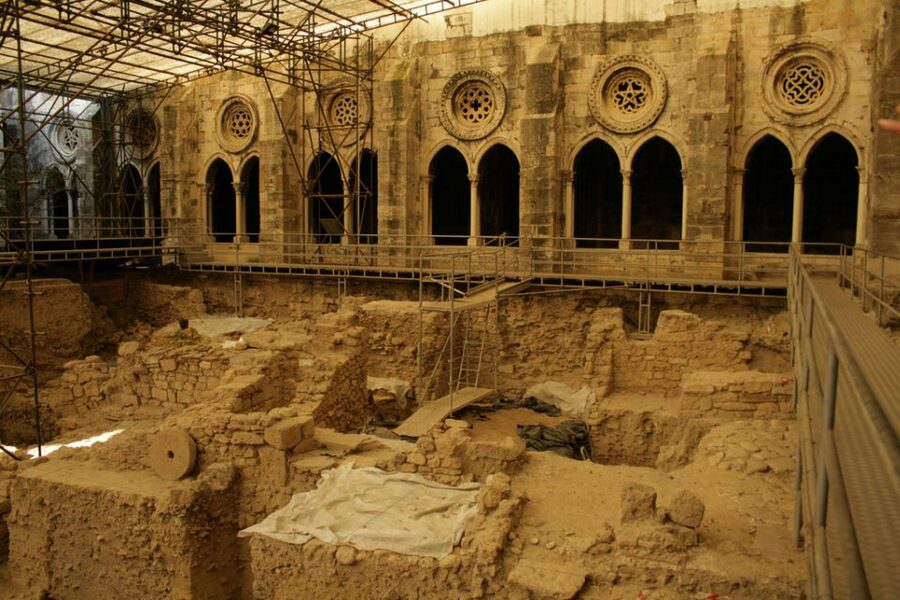
At Casa dos Bicos, the tour adds Roman walls and Roman factories to the story. This is a particularly helpful change of focus. The theater and temple show public and religious life, while the factories point to production and trade.
The tour also refers to garum factories in the underground section. Garum was a Roman fish sauce, and its production connects Lisbon to the food industry and commercial networks of the ancient world. You are not just hearing about rulers or battles. You are learning about the goods people made, sold, and used.
Casa dos Bicos also helps show how later Lisbon can sit directly over Roman remains. The building is part of the modern city, yet pieces of the Roman wall and factory activity survive below or within the surrounding archaeological record.
This is a good stop for anyone who wants daily life rather than only famous monuments. Factories can seem less glamorous than temples, but they often tell you more about how a city functioned. Trade made Roman Lisbon important, and these remains give that idea a physical form.
The stop may require patience. Factory foundations and wall fragments do not always explain themselves. I would listen closely to the guide here and ask questions, especially if you want to understand how production connected to the port and wider Roman economy.
Going underground for homes, streets, and pools
The final part leads underground, where you can see archaeological structures including upper-class houses, streets, garum factories, swimming pools, and other artifacts.
This is likely the most unusual section of the tour. Underground Lisbon offers a sense of discovery, but it also demands a different kind of attention. You are looking at preserved structures in a confined archaeological setting, not walking through a restored Roman neighborhood.
The range of remains is what makes this section valuable. Upper-class houses can show how the city’s wealthier residents lived. Streets reveal the plan and movement of the Roman settlement. Factories point to work and commerce. Swimming pools add another detail to urban life and public or private amenities.
I like the way the underground stop rounds out the tour. You begin with a city view, visit public and religious sites, then finish with homes, work areas, streets, and water features. The sequence gives you several ways to think about Roman Lisbon.
The underground portion may be less comfortable for anyone who dislikes enclosed spaces, although no specific access details are provided. Since the tour moves through several archaeological areas, wear shoes that can handle a fair amount of walking and uneven surfaces. Comfortable footwear is specifically recommended.
What the private format changes
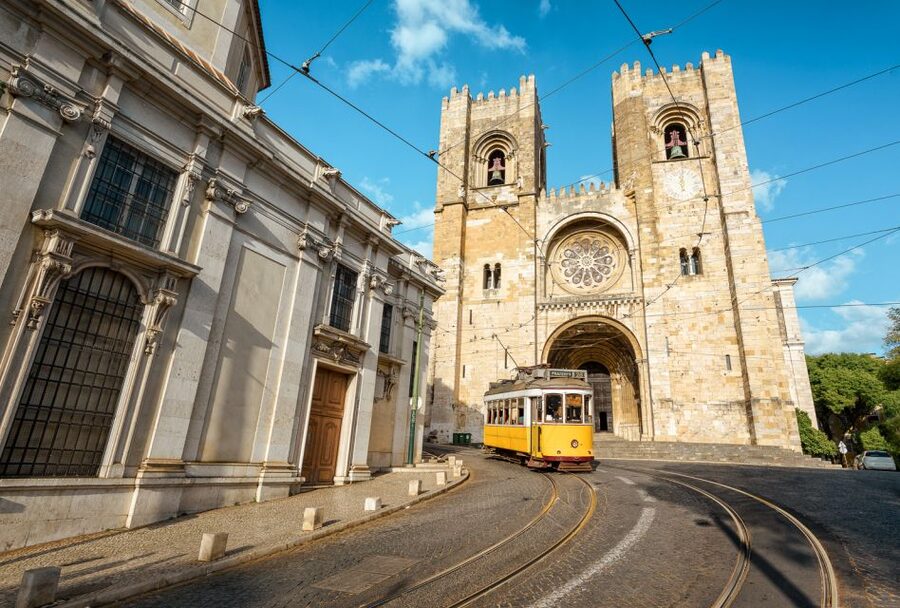
This is a private group tour, which makes the $88 per-person price easier to assess. You are not paying only for entry to a single monument. The fee covers a history-trained guide, entrance to the Roman theater, the cathedral cloister, and other archaeological sites, plus the structure needed to connect them.
The value is strongest for a small group that wants to ask questions. A private guide can adjust explanations to your interests, such as Roman architecture, religion, trade, family life, or Lisbon’s later development. The supplied information does not promise a custom route, so I would not assume every stop can be changed, but the private format should make conversation easier than a large group walk.
At $88 per person, this is not a budget stroll. It can be good value if you would otherwise visit several sites separately and struggle to connect them. It is less compelling if you mainly want free exterior views or a broad introduction to Lisbon without a strong Roman focus.
The four language options are useful: English, Spanish, French, and Portuguese. Guide quality can vary from one departure to another, but Paulo, Sandra, and Ingo have each been identified as warm and well prepared. Ingo, who once filled in for another guide, was especially praised for linking Roman Lisbon with later periods of Portuguese history. That is a useful skill because the city’s past is layered rather than neatly divided.
Who will get the most from this tour
I would choose this tour if you like archaeology, ancient cities, or the practical side of history. It suits couples and families who want more than a standard sightseeing circuit, and the private setup can work well for a group with different ages or levels of interest.
It is also a good pick for repeat visitors to Lisbon. The route points out places you might pass without noticing, including Roman remains tucked into the cathedral complex and later buildings.
Families should consider the interests of younger children. A child fascinated by Roman history may love the theater, baths, factories, and underground structures. A child who needs constant movement and visual drama may find some foundations and artifacts harder to follow.
You should also be comfortable with a three-hour walking experience. The tour includes several sites, and no meal or drinks are included. Bring your passport or ID card, wear comfortable shoes, and plan to eat or drink before or after the tour.
The tour does not allow alcohol or drugs. That is a basic rule, but it is worth knowing when planning a day around several activities.
Languages, timing, and cancellation flexibility
The tour lasts three hours, with starting times based on availability. Check the schedule before booking, especially if you are fitting it between Lisbon Cathedral, the Alfama district, or another timed visit.
The guide can conduct the tour in English, Spanish, French, or Portuguese. If language matters to your group, select carefully at booking rather than assuming every departure uses English.
You can cancel up to 24 hours in advance for a full refund. The reserve-now, pay-later option also gives you some breathing room while arranging your Lisbon plans. These policies do not change the nature of the tour, but they reduce the risk of committing too early.
The meeting point is next to the entrance of the Arts Decorativas Portuguesas Museum. Give yourself enough time to find that spot, since the route begins at Portas do Sol and you do not want to start the day in a rush.
Should you book the Roman Lisbon Tour?
Book it if you want to understand how Lisbon worked during the Roman period, not just take a picture beside an old wall. The theater, cathedral cloister, baths, Temple of Cibele, Casa dos Bicos, and underground remains create a strong three-hour introduction to the city’s ancient layers.
I would be especially inclined to book for a private family group, an archaeology fan, or anyone who enjoys a guide who can connect separate sites into one story. The strongest feature is the human explanation, with guides such as Paulo, Sandra, and Ingo bringing warmth and historical detail to places that could otherwise seem fragmentary.
Skip it if you want a relaxed food tour, a short panoramic walk, or grand ruins that look much as they did in Roman times. At $88, the tour asks you to pay for interpretation and access across several sites. For the right audience, that is the point. You leave with a clearer sense of Lisbon as a Roman trading city, built over and around the remains of earlier lives.
FAQ
Where does the Roman Lisbon Tour meet?
It meets next to the entrance of the Arts Decorativas Portuguesas Museum.
How long does the tour last?
The tour lasts three hours.
What is the tour price?
The price is $88 per person.
Is the tour private?
Yes. It is operated as a private group tour.
Which languages are available?
The guide can lead the tour in English, Spanish, French, or Portuguese.
What sites are included?
The route includes Portas do Sol, the Roman theater, Lisbon Cathedral’s cloister, a Roman bath, the Temple of Cibele, Casa dos Bicos, and underground archaeological structures.
Is entrance included?
Yes. Entrance to the Roman theater, the cathedral cloister, and other archaeological sites is included.
Are food and drinks included?
No. Meals and drinks are not included.
What should I bring?
Bring a passport or ID card and wear comfortable shoes.
Can I cancel the booking?
Yes. You can cancel up to 24 hours in advance for a full refund. You can also reserve now and pay later.
Just reviewed in Lisbon
- Private tour Lisbon – full day★ 5.0 · 8 reviews
- Private Tour: Portuguese Food and Wine Tour★ 5.0 · 33 reviews
- Lisbon Football Experience – Private stadium and Museum Tour★ 4.0 · 10 reviews
- Lisbon and Sintra Essence 8H – Private Tour★ 5.0 · 5 reviews
- Private Tour: Lisbon Sunset Walking Tour with Fado Show and Dinner★ 5.0 · 30 reviews
- Private Catamaran Tour: Lisbon coast cruise with barbecue and drinks★ 5.0 · 20 reviews
- Lisbon: Helicopter Tour over Cascais & Cabo da Roca★ 5.0 · 4 reviews
- Private Tour Fátima – Nazaré – Batalha – Óbidos★ 5.0 · 6 reviews
Tours, compared.

Lisbon City Center Tour – The Unmissable Lisbon
Read our review →

True 4Hour Private Tuk Tuk Tour: Discover Lisbon with a Local!
Read our review →
Winner 2025 Undiscovered Lisbon Food & Wine Tour by Eating Europe
Read our review →
Sintra, Pena, Cabo da Roca, Cascais Tour with Pickup
Read our review →
Best of Lisbon Small-Group Guided Walking Tour
Read our review →