
Reviewed · LISBON STREET ART TOURS
Lisbon: Kickstart Street Art Walking Tour
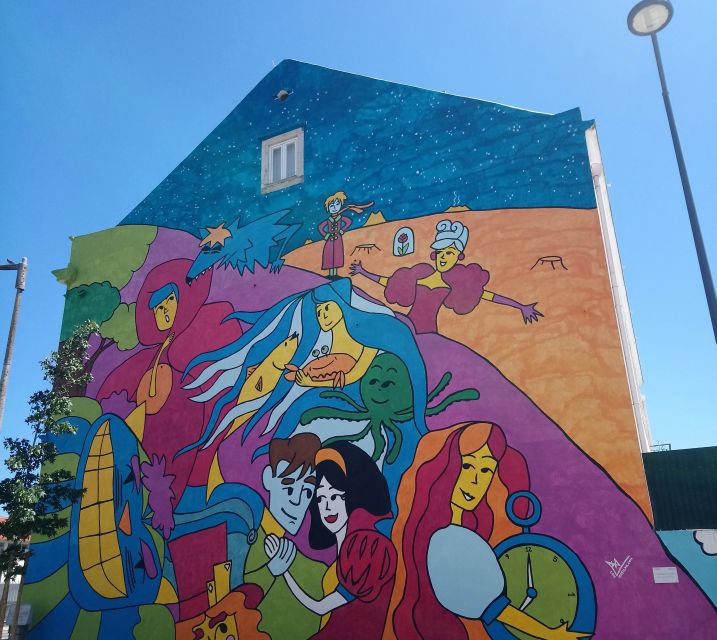
Lisbon’s Graça neighborhood is a first-rate place to see street art because the work is spread through old streets, back alleys, walls, and stairways rather than packed into one formal gallery. This 90-minute walk gives you the names, stories, and local context needed to notice art that you might otherwise pass by.
I like the way the tour connects modern murals with Lisbon’s older neighborhoods. I also like the access to lesser-seen works, including the women artists’ gallery created for International Women’s Day 2025 and fresh pieces around Rua Josefa de Obidos. The main drawback is the terrain: Graça is hilly, with stairs, and the tour is not suitable for people with mobility impairments.
Key points at a glance
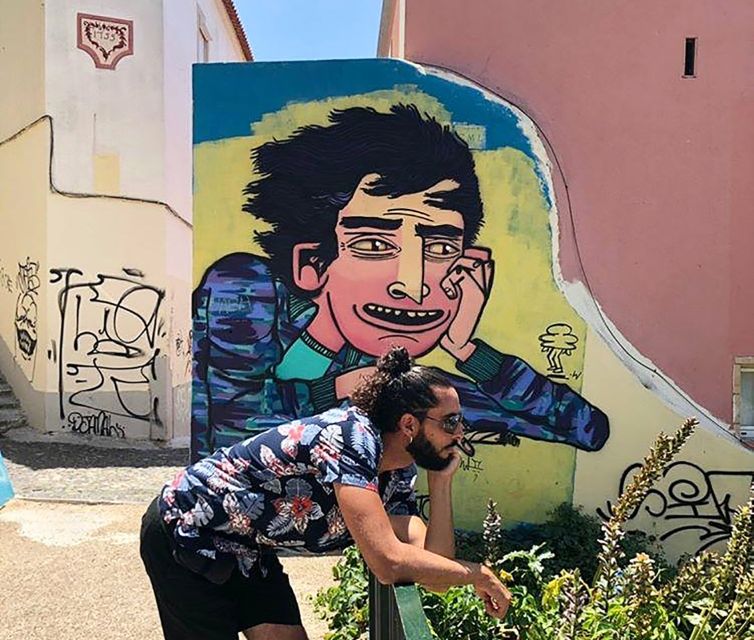
- Graça gives you street art and old Lisbon in one walk: Expect hills, historic streets, and walls covered in work by local and international artists.
- The guides add real artistic context: Igor and Cátia are artists or closely involved with Lisbon’s art scene, and their explanations go beyond naming the painter.
- Big names appear along the route: Look for works by Vhils, Obey Giant, Add Fuel, Isa Silva, Daniel Eime, Ozearv, Jorge Romão, Lili Marlit, and Moami.
- The International Women’s Day 2025 gallery is a special stop: It gathers work by women artists in a setting you would be unlikely to find by simply sightseeing.
- You learn how street art works: The guide explains graffiti etiquette, artist rivalries, ownership, and the codes of the scene.
- At $23, the tour is a useful introduction: It is short enough to fit into a busy Lisbon day, but long enough to change how you see the city’s walls.
Why Graça is the right place to start with Lisbon street art
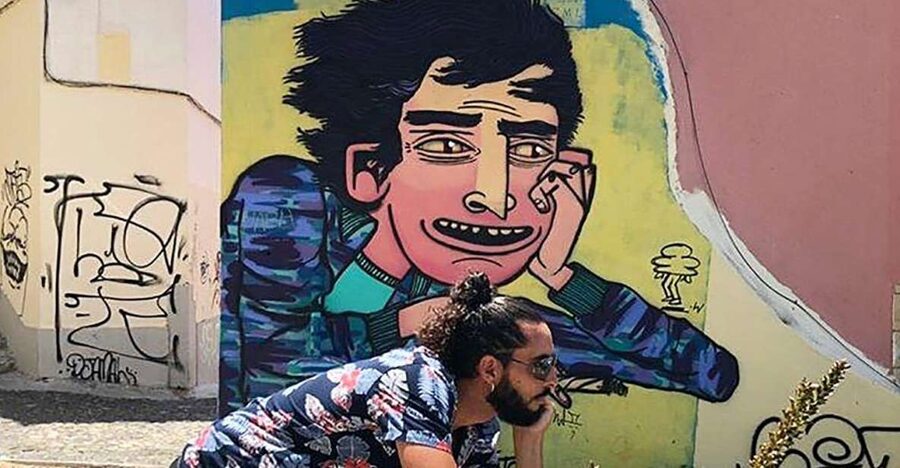
Lisbon’s street art is not confined to one colorful lane. It appears on building facades, retaining walls, shuttered spaces, side streets, and surfaces that are easy to miss from a passing tram. Graça gives you a strong introduction because the neighborhood mixes old Lisbon character with a steady supply of large-scale and small-scale work.
The meeting point is in front of the Coreto da Graça at Largo da Graça, about 50 meters from Desgraça Restaurant. That is a practical place to begin, since you are already in one of the city’s hilltop neighborhoods rather than spending the first part of the tour crossing town.
I would arrive a few minutes early and wear shoes with a firm sole. You will be looking upward, stopping on uneven streets, and walking over slopes. Lisbon’s hills are part of the setting, not an incidental nuisance, so this is not the best activity for anyone who struggles with stairs or prolonged walking.
The walk also gives you an overview of the surrounding historical area. You are not simply moving from mural to mural. The streets and buildings help explain why a work was placed where it was, how public art changes a neighborhood, and how Lisbon’s older fabric now sits alongside modern visual culture.
More Lisbon Street Art Tours:
- Lisbon: Street Art Tour
★ 4.9 · 1,324 reviews - Lisbon: Street Art Tuk Tuk Tour
★ 4.9 · 372 reviews - LISBON Street Art Tour
★ 5.0 · 371 reviews
Meeting Igor, Cátia, and the people behind the walls
The strongest part of this experience is the guide. Igor and Cátia are the names most often associated with the tour, and the available guides also include other English-speaking members of the Street Buddha Tours team. Igor is an artist himself, while Cátia is also involved in art, which gives both of them a useful connection to the local scene.
That matters because street art is easy to reduce to a quick photograph and a vague comment about color. A good guide helps you ask better questions. Who made the work? Was it commissioned or painted independently? Why was that wall chosen? What clues reveal a dispute, collaboration, or change in the neighborhood?
Igor’s approach, in particular, includes teaching you how to read a piece instead of deciding only if you like it. That can include the artist’s technique, visual symbols, placement, scale, and links to other works. Cátia’s explanations bring similar attention to the artists and the physical setting.
You should also ask questions. The tour is compact, and the more curious you are, the more you can get from the guide. Several people who joined the walk received extra recommendations for documentaries, artists, and places to explore later, although you should not assume that every guide will provide the same follow-up material.
The consistently high rating of 4.9 from 717 reviews reflects a clear pattern: the guides are praised for being warm, funny, engaged, and well informed about the art. That does not mean every guide will have the same personality, but the guide-led interpretation is plainly the tour’s main asset.
The first murals: learning to look before you photograph
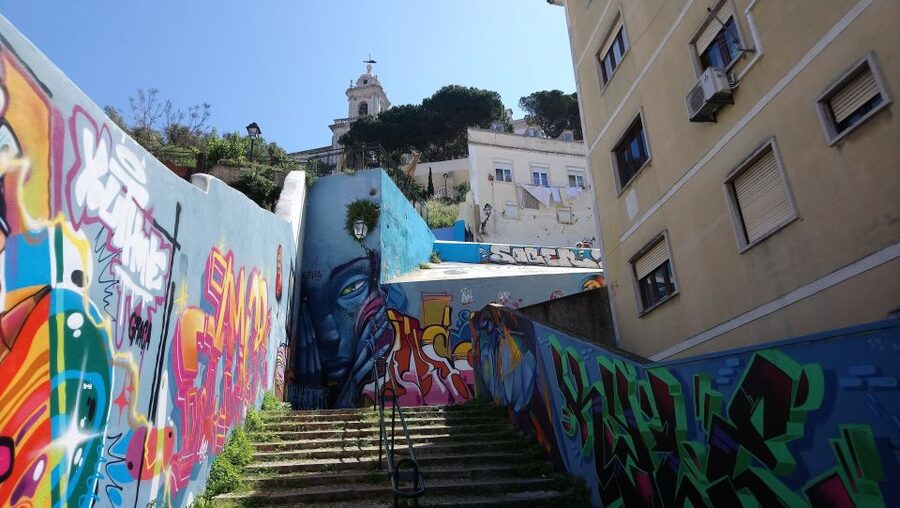
Early in the walk, your guide introduces the basic language of Lisbon’s street art. You will hear about the difference between graffiti and street art, the etiquette of painting in public, and the codes that artists use among themselves.
This is valuable even if you do not think of yourself as an art person. The guide explains how artists can mark territory, respond to one another, claim a wall, or create visual rivalries. A piece may look like a single image to you at first, but its location, neighboring work, and style can add another layer.
I like this part because it changes the rest of your Lisbon visit. After the tour, you are more likely to notice small tags, large commissioned murals, altered posters, and fresh paint on streets you have already walked. One visitor described returning to familiar areas and suddenly seeing many pieces that had previously gone unnoticed. That is exactly the practical benefit of an introductory art walk.
The tour is not built around a single famous attraction. Some works may be bold and easy to spot, while others sit in side streets or back alleys. That mix keeps the walk from feeling like a simple checklist, although it also means the art can change over time. Freshly painted spots, including areas around Rua Josefa de Obidos, are part of the appeal, but no outdoor street art route stays fixed forever.
Vhils, Obey Giant, and Lisbon’s international connections
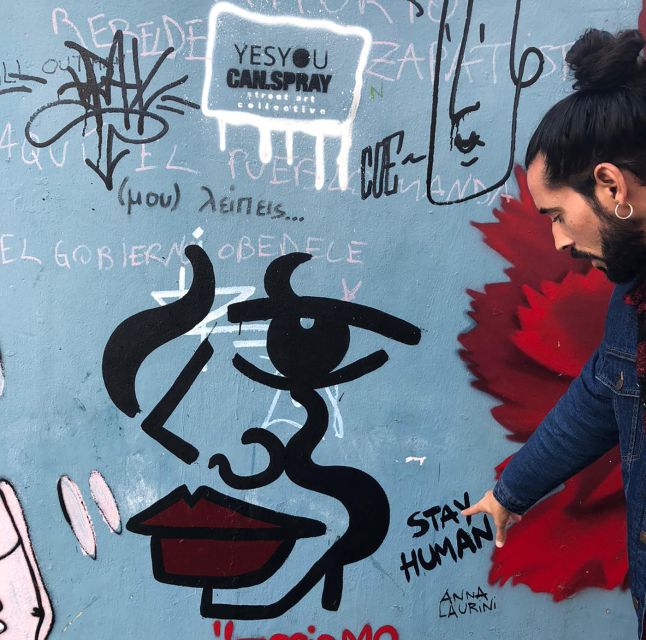
A major strength of the walk is the range of artists. You can see work connected with Vhils, Obey Giant, Add Fuel, Isa Silva, Daniel Eime, and Ozearv, along with pieces by Jorge Romão, Lili Marlit, and Moami.
Vhils is especially important to Lisbon’s contemporary art identity, and his work rewards a closer look at surface and texture. Obey Giant brings an international name and a recognizable visual language. Add Fuel is associated with a different approach, one that connects contemporary urban art with Portuguese tile traditions.
The guide’s job is not just to point toward these names. You learn how artists with different backgrounds and methods share the same urban setting. Some work may have city support, while other pieces reflect the more independent side of street culture. The contrast helps you understand that street art is not one style and does not come from one kind of artist.
You may also encounter work that is less familiar but just as interesting. That is a good reason not to treat the tour as a celebrity-art hunt. The lesser-known artists show how broad Lisbon’s scene is, and the guide can explain why a particular wall matters even when you have never heard of the painter.
More Lisbon Walking Tours:
- Lisbon: History, Stories and Lifestyle Walking Tour
★ 4.8 · 10,902 reviews - Best of Lisbon Small-Group Guided Walking Tour
★ 5.0 · 4,869 reviews - Lisbon: Food and Wine Small Group Walking Tour
★ 4.9 · 4,082 reviews - Best of Lisbon Walking Tour: Rossio, Chiado & Alfama
★ 4.9 · 2,700 reviews
The International Women’s Day 2025 gallery
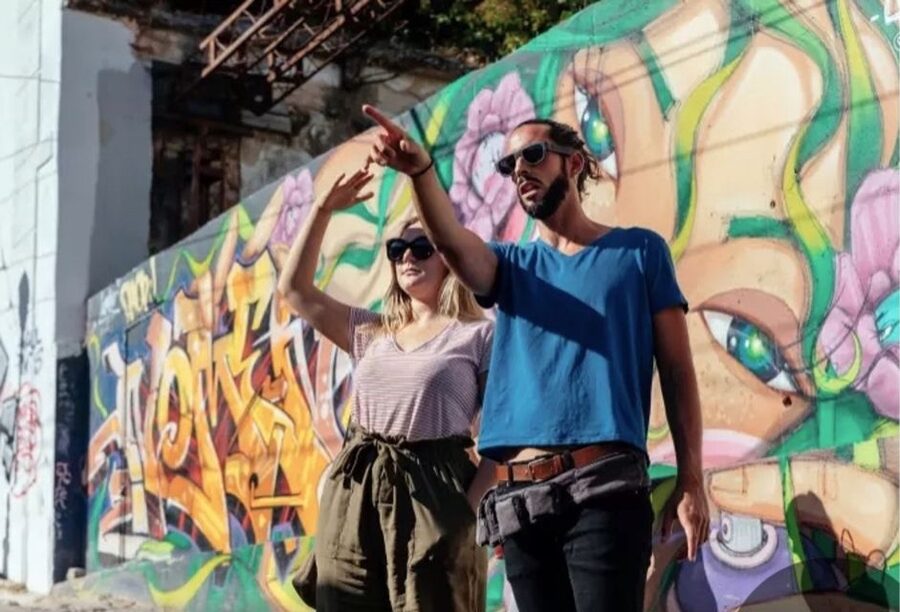
The gallery created for International Women’s Day 2025 is one of the most distinctive features of this route. It brings together work by women artists in a space that turns a social theme into a visual experience.
This stop adds balance to a street art tour that could otherwise focus mainly on the best-known male artists. It also shows how public art can be used to give visibility to artists and subjects that have not always received equal attention.
The setting matters. You are not visiting a quiet museum with labels beside every piece. You are seeing art integrated into Lisbon’s streets, where the work interacts with walls, weather, architecture, and daily life. Your guide provides the context that a formal label might offer, while also explaining how the pieces fit into the local scene.
Because this is outdoor art, the exact appearance of the gallery can change. New work may be added, older work may weather, and sections can be altered. That is not a flaw, but you should approach the stop as a current snapshot of Lisbon’s street art rather than a permanent exhibition.
Rua Josefa de Obidos and the value of fresh paint
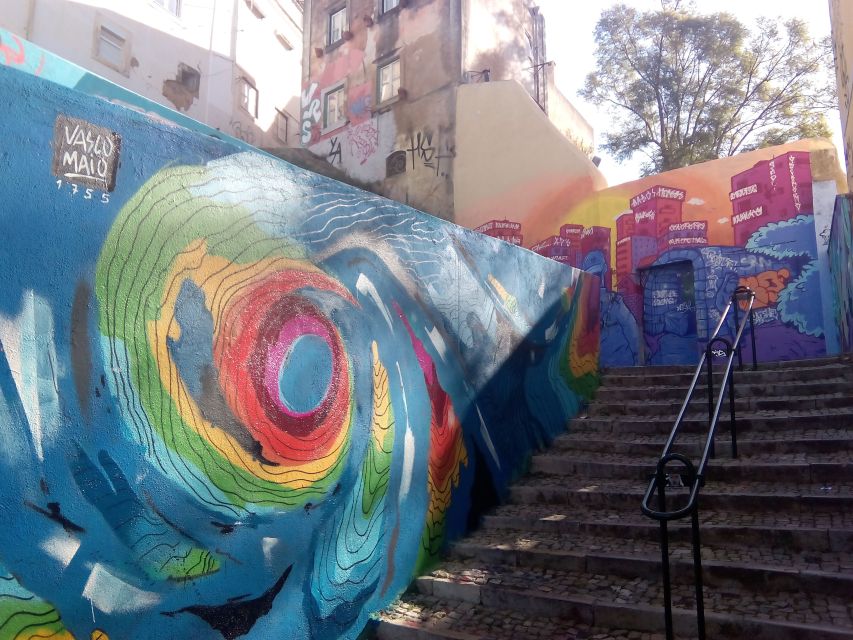
The walk includes freshly painted spots such as Rua Josefa de Obidos. This is useful for anyone who wants to see the scene as something active rather than frozen in the past.
New paint tells you that Lisbon’s street art continues to develop. A wall is not always the final version you will see in a photograph or guidebook. Works disappear, change, or are painted over. That constant movement is part of the culture, though it can disappoint you if you arrive expecting every piece to match an online image.
This is one reason I prefer a live guide to a self-guided mural map. A map can show you where a famous work was documented. A local guide can point out what is new, what has changed, and what deserves attention now. The guide may also explain the difference between a city-supported project and an unauthorized piece.
You should bring a phone or camera if you like taking pictures, but do not let photography replace looking. Large works can be difficult to frame in narrow streets, and bright sun can affect the colors on a wall. Sunglasses, a hat, and sunscreen are sensible, especially during the warmer part of the day.
How the 90-minute format works for your day
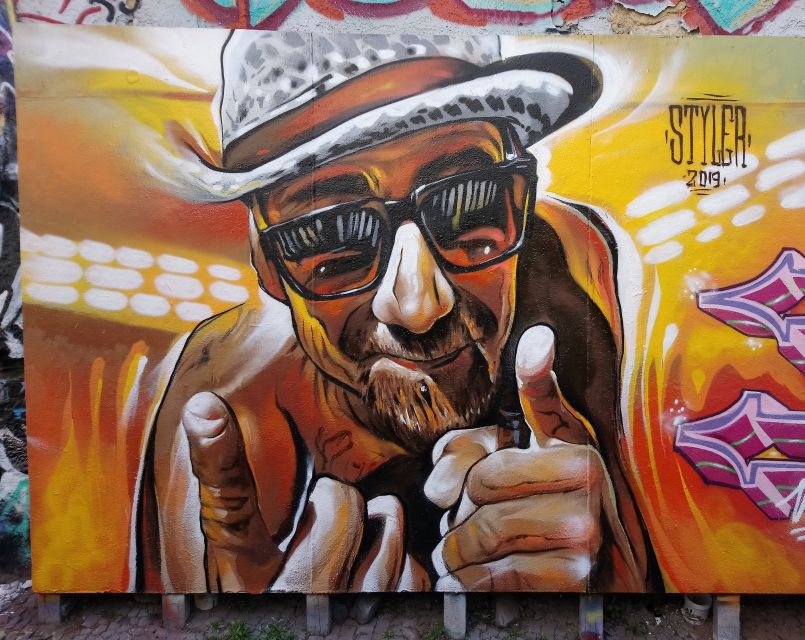
Ninety minutes is a good length for a first street art experience. It is long enough to cover several artists and explain the main ideas, but short enough to fit before lunch, after a morning of sightseeing, or alongside another Lisbon activity.
The compact format has limits. You will not see every important mural in Lisbon, and you will not receive a full survey of the city’s art scene. Think of this as a strong starting point that teaches you what to look for and gives you a neighborhood-based introduction.
The tour is offered as a private or small-group experience, depending on the booking option. A smaller group can make it easier to hear the guide, ask questions, and stop in narrow streets without blocking the path. The exact feel depends on the group size and guide assigned to your departure.
The tour is conducted in English. It includes the walk, a live guide, an exclusive street art souvenir, and hand sanitizer. Food, drinks, hotel pickup, and hotel drop-off are not included, so plan to meet at Largo da Graça and arrange anything you need before or after the walk.
At $23 per person, I see good value here if you want interpretation rather than only directions to walls. The cost is modest compared with a longer museum tour, and the local setting gives you a more personal sense of Lisbon. If you only want to photograph murals without hearing context, you could explore on your own for less.
Who will enjoy this walk, and who should skip it
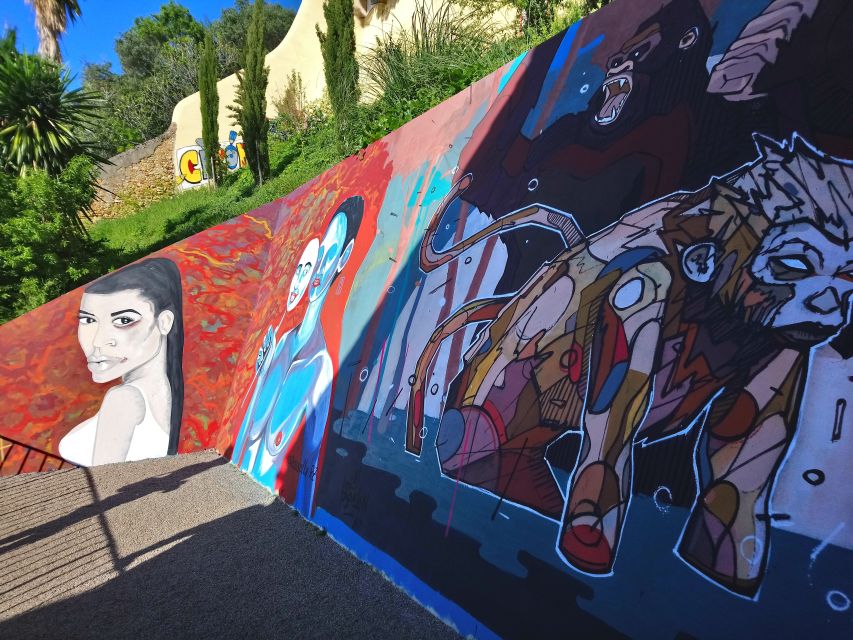
I recommend the tour to first-time Lisbon visitors who want a quick introduction to the city’s creative side. It also suits repeat visitors who have seen the main monuments and want to understand the streets they are walking through.
Families can enjoy it too. The guide experience has worked well with children, and the large murals give younger visitors something concrete to look at. Still, parents should judge their children’s tolerance for hills, stairs, and standing stops.
You do not need an art background. In fact, the tour may be most useful if you are curious but unsure how to approach street art. The guide explains the subject in plain terms and connects it to history, culture, and neighborhood life.
I would not choose this activity if you have a mobility impairment, dislike hills, or need a fully accessible route. Large luggage and large bags are not allowed, so leave them at your accommodation. Comfortable shoes are essential, and a sun hat, sunglasses, and sunscreen are sensible additions.
Should you book the Graça street art walk?
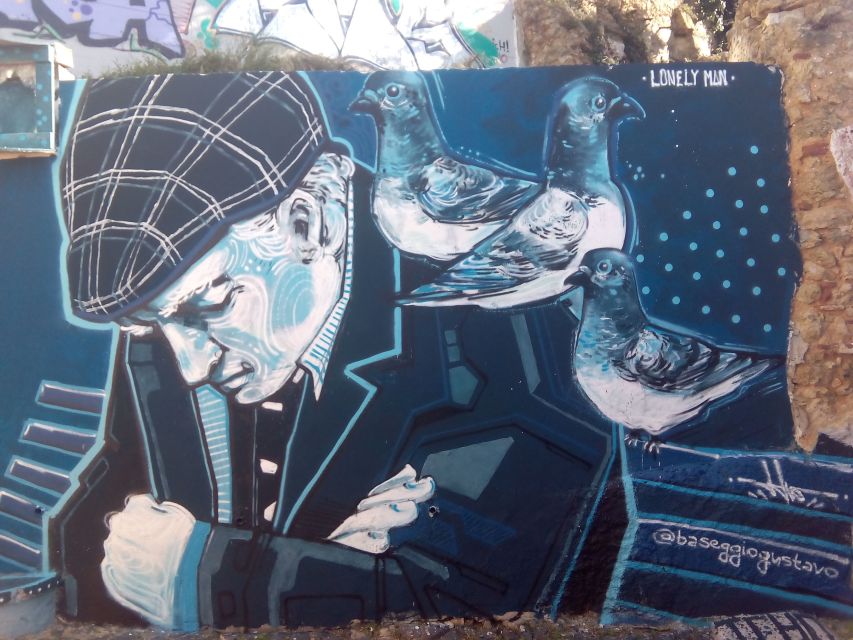
I would book it if you want to see Lisbon through more than its churches, viewpoints, and tiled facades. The walk’s best feature is the guide’s interpretation, especially when Igor or Cátia can explain the artists, local rules, social context, and rivalries behind the images.
Book it early in your Lisbon stay if possible. The tour can sharpen your eye for the rest of your visit, and you may start spotting pieces in Alfama, Graça, or other neighborhoods on your own. At $23, it is a reasonable price for a lively 90-minute introduction.
Skip it if steep streets are a serious problem or if you want a broad, citywide catalog of murals. For everyone else, this is a focused, personal way to meet Lisbon’s street art scene and learn why the city’s walls deserve a closer look.
FAQ
Where does the Lisbon street art tour meet?
Meet in front of the Coreto da Graça at Largo da Graça, about 50 meters from Desgraça Restaurant.
How long is the street art tour?
The walking tour lasts 90 minutes.
What language is the tour conducted in?
The live tour guide speaks English.
How much does the tour cost?
The listed price is $23 per person.
Which artists can I see?
The tour includes works by Vhils, Obey Giant, Add Fuel, Isa Silva, Daniel Eime, Ozearv, Jorge Romão, Lili Marlit, and Moami, among others.
Does the tour include the International Women’s Day 2025 gallery?
Yes. The route includes a gallery created for International Women’s Day 2025.
Is hotel pickup included?
No. Hotel pickup and drop-off are not included. You must make your own way to the meeting point.
Are food and drinks included?
No. Food and drinks are not included.
Is the tour suitable for people with mobility impairments?
No. The route includes stairs and hills, and it is not suitable for people with mobility impairments.
What should I bring?
Bring comfortable shoes, sunglasses, a sun hat, and sunscreen. Large bags and luggage are not allowed.
Just reviewed in Lisbon
- Lisbon: Morning of Equestrian Art with Lusitano Horses★ 4.4 · 87 reviews
- Lisbon: Entry Tickets to Mosteiro de São Vicente de Foram★ 4.6 · 50 reviews
- Lisbon: National Palace of Ajuda E-Ticket & City Audio Guide★ 4.1 · 87 reviews
- Lisbon: Early Morning TukTuk Tour – hotel/cruise ship pickup★ 4.9 · 45 reviews
- Sintra: Quinta da Regaleira e-Ticket & Sintra City Audios★ 4.1 · 12 reviews
- Lisbon E-Bike Tour TAGUS★ 5.0 · 3 reviews
- Lisbon: E-bike Trip from the Sintra Mountains to Cascais Sea★ 5.0 · 67 reviews
- Lisbon: Discover Belem by electric Tuk Tuk★ 4.9 · 86 reviews
Lisbon Street Art Tours, compared.



3-Hour Guided Street Art Walking Tour of Lisbon
Read our review →



Browse the lists this tour appears in