

Reviewed · LISBON STREET ART TOURS
Lisbon Street Art Tour
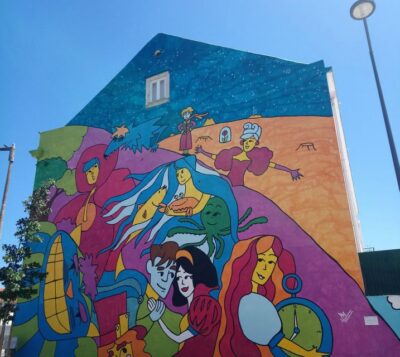
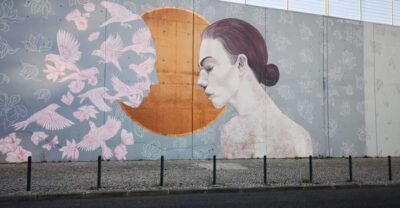
Lisbon’s street art is not confined to one gallery or a tidy outdoor district. It turns up on broad walls, narrow lanes, old façades, and corners where a beautiful tile panel may sit beside a sharp political image. This two-hour walk through Graça and Mouraria gives you a useful way to read that mix, with French-speaking guide Peter explaining the artists, materials, and ideas behind the work.
I like the focus on both famous names and lesser-known local artists, and I like the small group limit of eight people. The included pastel de nata or ginginha adds a pleasant Lisbon touch. The main drawback is the walking: steep, uneven streets and a meeting point in front of a church make this a poor fit for anyone with mobility impairments.
Key Points
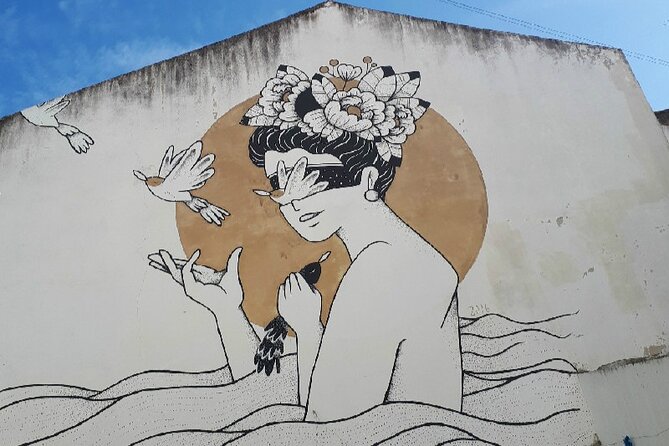
- Graça and Mouraria provide the main route: Two old Lisbon neighborhoods supply a strong mix of large murals, small pieces, tiles, and public sculpture.
- Major artists appear alongside local talent: Look for work linked to Shepard Fairey, Vhils, Bordalo II, TV Boy, Joana Vasconcelos, Andrea Tarli, Urban Solid, and Utopia.
- Peter leads the tour in French: He explains each work, the methods used, and the social or political questions behind it.
- The art is treated as more than decoration: You’ll discuss censorship, public space, politics, society, and what makes something art.
- A Lisbon snack is included: Choose a pastel de nata or a serving of ginginha, while other drinks cost extra.
- The format stays small and flexible: Eight participants is the maximum, and cancellation is free up to 24 hours before the start.
Reading Lisbon Through Its Walls
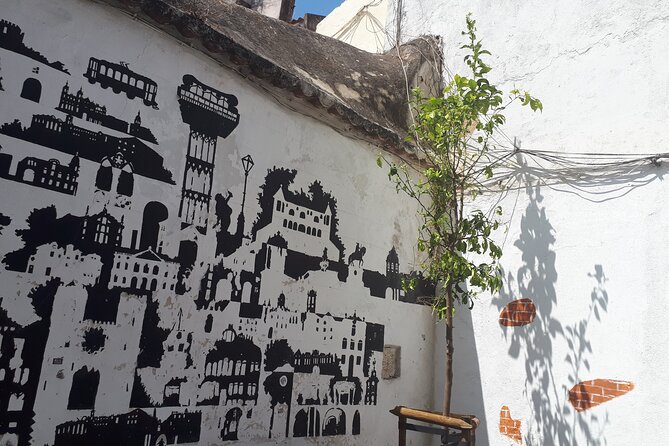
A street art tour can easily become a hunt for colorful backdrops. This one aims for something more useful: it asks you to slow down and consider why a piece is on that wall, what technique created it, and how public art changes the place around it.
That matters in Lisbon, where street art shares space with old tilework, statues, weathered stone, and ordinary neighborhood life. You are not simply moving from one mural to the next. You are looking at how new work sits against an older city.
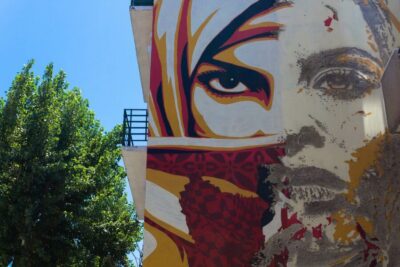
The tour covers artists from Portugal and abroad. Shepard Fairey gives the route an international connection, while Vhils and Bordalo II help show the range of Portuguese street art. Other names on the route include TV Boy, Joana Vasconcelos, Andrea Tarli, Urban Solid, and Utopia.
You may know only one or two of these artists before arriving. That is part of the appeal. The route is designed to show how different the term street art can be. Some pieces are large and direct. Others are smaller, tucked into corners, or made with materials that reward a closer look.
More Lisbon Street Art Tours:
- Lisbon: Street Art Tour
★ 4.9 · 1,324 reviews - Lisbon: Kickstart Street Art Walking Tour
★ 4.9 · 717 reviews - Lisbon: Street Art Tuk Tuk Tour
★ 4.9 · 372 reviews
Starting in Graça
The walk begins at a church meeting point in the Graça area. The exact church should be confirmed when you book, since the supplied information identifies the meeting spot only in those terms. Arrive in comfortable shoes, carry water, and be ready to walk uphill and downhill.
Graça is a good setting for this kind of tour because the neighborhood offers a mix of residential streets, open walls, old buildings, and city views. The art is not presented as a separate attraction with a gate and ticket booth. You encounter it as part of the everyday streetscape.
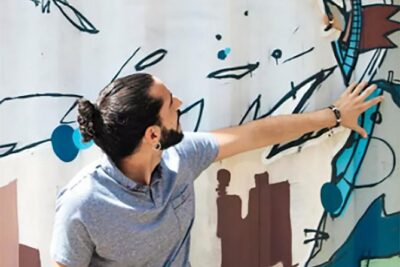
Peter’s role is important here. Each work is discussed rather than simply pointed out. You’ll hear about the artist when that information is available, the materials or method used, and the idea the work may be raising.
That approach helps when a piece looks simple at first glance. A mural may depend on stencils, pasted images, painted layers, carved surfaces, found materials, or a combination of methods. Knowing how it was made can change how you see it.
The route also includes artists who are still building their names. That keeps the walk from feeling like a checklist of only the most famous walls. You get a sense of Lisbon as a working art city, not just a place displaying a few famous pieces.
Moving Through Mouraria
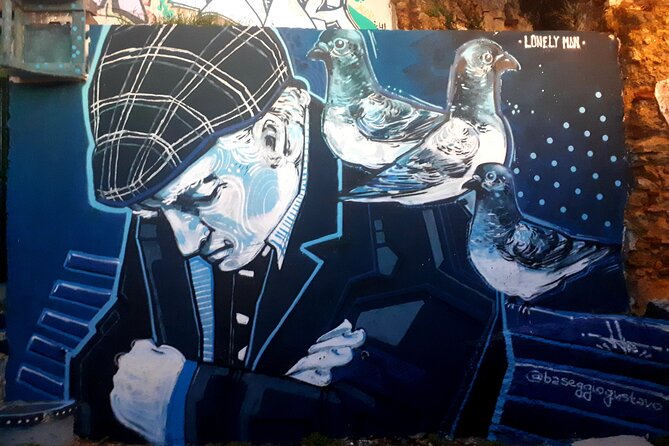
The tour then focuses on Mouraria, one of Lisbon’s older central neighborhoods. Here, street art appears among narrow streets and older façades, so the setting becomes part of the discussion.
The experience does not promise every major work in Lisbon. That would be impossible in two hours. Instead, it concentrates on two areas with especially strong collections. This is a sensible choice: a limited route gives Peter time to explain what you are seeing instead of rushing you across the city.
Mouraria also adds a strong local character to the walk. You might find large wall paintings on a main street, then turn into a smaller lane for a much more modest work. One of the pleasures of the tour is learning not to overlook the little pieces. Several kinds of public art may appear in a single block, including sculptures and Lisbon’s familiar ceramic tiles.
The pace is meant to be conversational, not athletic. Still, Lisbon’s hills and paving can make two hours feel more demanding than the clock suggests. If you have knee, balance, or walking concerns, consider that limitation carefully before booking.
From Shepard Fairey to Bordalo II
The artist list gives the tour a useful spread. Shepard Fairey is perhaps the most recognizable international name, known for bold graphic imagery and work that often carries a political charge. His presence helps connect Lisbon’s walls to a wider street-art conversation.
Vhils represents a very different approach. His work is associated with working into surfaces rather than simply placing paint on top, which makes the wall itself part of the image. Peter’s explanation of technique is especially useful with artists like this because the process can be hard to understand from a quick glance.
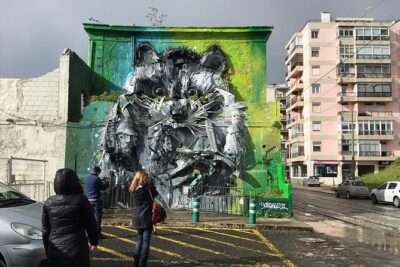
Bordalo II brings another strong idea to the route. His work is known for using discarded materials and turning waste into large animal forms and other public pieces. That opens a natural discussion about consumption, pollution, and the line between sculpture and street art.
The other artists add further contrast. TV Boy, Joana Vasconcelos, Andrea Tarli, Urban Solid, and Utopia show that Lisbon’s public art does not follow one house style. You can expect changes in scale, color, material, mood, and subject from stop to stop.
I like that the tour includes both established artists and newer local voices. A famous name can draw you in, but the lesser-known work often makes the city feel more personal. You are not only collecting photographs. You are learning how to notice an artist’s choices.
Something different to do with a day in Lisbon:
- Lisbon City Center Tour – The Unmissable Lisbon
★ 5.0 · 22,234 reviews - Lisbon: Sintra, Pena, Regaleira, Cabo da Roca & Cascais
★ 4.7 · 19,656 reviews - Sintra: Pena Palace and Park Entrance Ticket
★ 4.2 · 17,410 reviews - Lisbon: Jerónimos Monastery Entrance Ticket
★ 4.1 · 14,164 reviews
Art That Starts an Argument
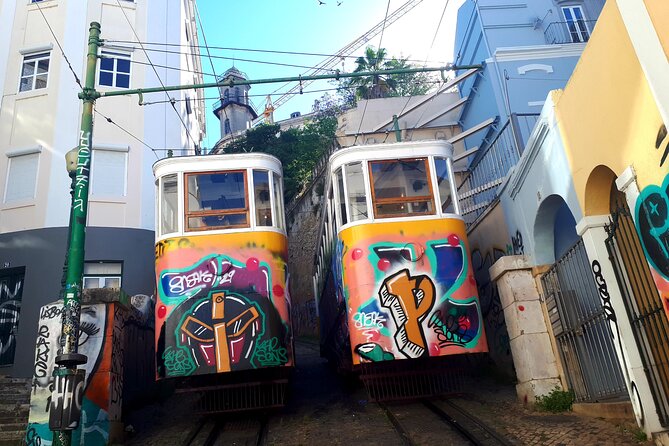
The best part of this experience may be the discussion. Street art raises practical questions that a museum label cannot always answer.
Who owns the wall? When does an unauthorized painting become part of a neighborhood’s identity? Is a political image still effective after it has become a popular photo stop? Does using rubbish as art change how people think about waste, or does it simply make a striking object?
Peter uses the works to open these kinds of questions. The discussion can touch on social and political issues, the place of art in public life, and the basic question of what art is. You do not need a background in art history to take part. The tour is built around looking closely and thinking out loud.
The guide also uses artists’ own words when those are available. That adds useful context without turning the walk into a lecture. You get the artist’s stated intention, then a chance to consider how the finished work functions in the street.
This format suits curious people who want more than a list of names. It may be less suitable if you want a quick photo walk with little explanation. Two hours allows discussion, but it also means you will not see every corner of either neighborhood.
Women and a Changing Street-Art Scene
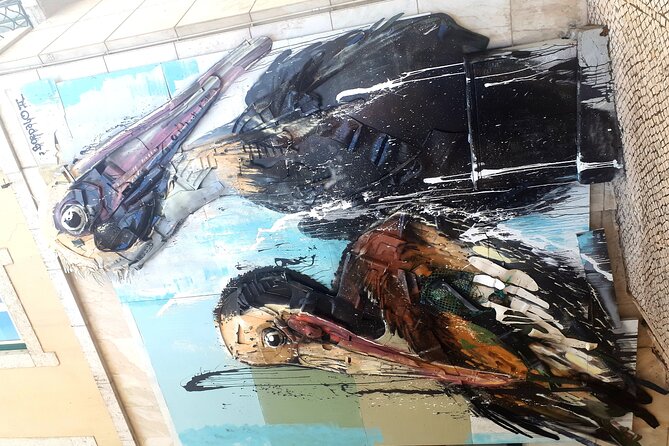
The tour also looks at how women are entering a field that has traditionally been dominated by men. This is an important part of the experience because street art is not only about images on walls. It is also about who gets public space, whose voice is visible, and who is recognized as an artist.
Joana Vasconcelos provides one connection to the wider Portuguese art scene, while the full discussion places women’s growing presence within a larger change in public art. The tour does not treat the subject as a token side note. It connects it to questions about visibility, authority, and access.
That perspective gives the walk more range. You are not only asking if a mural looks good. You are also considering who made it, whose stories appear in public, and how the art world decides which names become famous.
The Tilework and Sculpture Along the Way
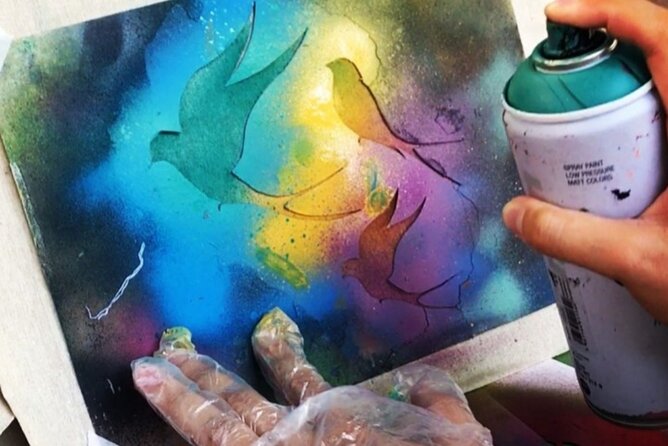
Lisbon’s street art cannot be separated neatly from the city’s older public decoration. Beautiful ceramic tiles appear throughout the city, and this walk makes room for them alongside sculptures and painted works.
That contrast is one of the route’s strengths. A traditional tile panel and a fresh mural may use very different methods, yet both shape how you experience the street. One may be designed as a formal architectural feature, while the other may be temporary, provocative, or adapted to a rough wall.
The mix also prevents the tour from becoming repetitive. You are not looking at two hours of painted rectangles. The city supplies changes in texture, age, scale, and material.
For you, this means the walk can work even if your interest in street art is still developing. If a particular mural does not speak to you, the tiles, sculpture, or neighborhood architecture may hold your attention until the next stop.
The Lisbon Treat at the End
The included tasting is simple but well chosen. You receive either a pastel de nata, Lisbon’s familiar custard tart, or ginginha, a wild cherry liqueur. The booking details do not specify how the choice is handled, so check with Peter on the day if you have a preference.
Coffee and other hot or cold drinks are not included. That is a small point, but it matters if you expect the pastry to come with a café. Plan to pay separately for any extra drink.
A couple of recent outings also included an unexpected Fado detour, with a singer performing several songs. That sounds like a charming addition, but it should be treated as a possible extra rather than a guaranteed part of the advertised route. The core experience is the street art walk and the included Lisbon specialty.
Price, Group Size, and Timing
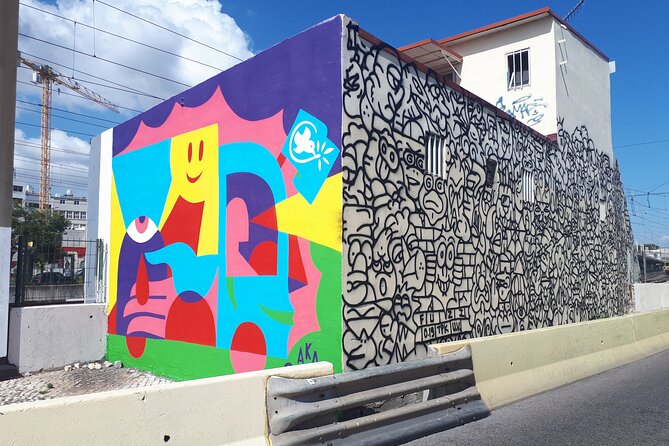
At $41 per person, the tour sits in a reasonable range for a two-hour guided walk, particularly because the group is limited to eight people and the tasting is included. The value depends on how much explanation you want.
If you only want to photograph murals, you can explore public streets on your own for free. The fee pays for Peter’s route planning, commentary, artist context, and the chance to ask questions in a small group. For anyone new to Lisbon’s street-art scene, that guidance can save time and help you notice work you might otherwise pass without seeing.
The two-hour length is also practical. It fits neatly into a morning or afternoon and leaves room for another activity. At the same time, it is long enough to cover both Graça and Mouraria without trying to force the entire city into one outing.
The French-language format is a key booking detail. The listed live guide language is French, so you should be comfortable following a tour in French. The small group size makes it easier to hear and participate than on a large coach-style walk.
Free cancellation up to 24 hours before the start gives you some protection if your Lisbon plans shift. You can also reserve now and pay later, which helps if you are arranging several activities before your trip.
Who Will Get the Most From This Walk
I would choose this tour if you like urban art, local neighborhoods, and discussion. It is especially useful if you want help understanding technique and meaning rather than simply locating famous walls.
It also suits returning visitors who have already seen Lisbon’s main monuments. Graça and Mouraria offer a different way to spend two hours, with art woven into ordinary streets instead of displayed behind museum doors.
Families with older children may enjoy the variety of large murals, small works, recycled materials, and political ideas, though the walking and discussion may not suit very young children. Anyone with mobility limitations should avoid booking, since the activity is specifically listed as unsuitable for people with mobility impairments.
You should also skip it if you need an English-language tour. The available language is French. That is not a minor detail, since the explanations and conversations are central to the experience.
Should You Book the Lisbon Street Art Tour?
Book it if you want a thoughtful introduction to Lisbon’s public art, prefer a small group, and can manage hilly city walking. Peter’s French-language commentary, the mix of major and emerging artists, and the inclusion of tiles, sculpture, and social questions give the outing more substance than a simple mural hunt.
The $41 price is fair for two hours with a maximum of eight participants and a pastel de nata or ginginha included. Just confirm the church meeting point, wear solid walking shoes, bring water, and remember that a Fado performance may be an occasional bonus rather than a set part of the tour.
FAQ
Where does the Lisbon Street Art Tour take place?
The tour focuses on the Lisbon neighborhoods of Graça and Mouraria, both known for collections of street art and other forms of public art.
How long is the tour?
The activity lasts two hours.
What language is the tour offered in?
The live tour guide language is French.
Who is the guide?
The guide is named Peter.
How many people can join the group?
The group is limited to eight participants.
Which artists might I see?
The tour includes work by Shepard Fairey, Vhils, Bordalo II, TV Boy, Joana Vasconcelos, Andrea Tarli, Urban Solid, and Utopia, along with other local and international artists.
Is food or drink included?
You receive either a pastel de nata or ginginha. Coffee and other hot or cold drinks are not included.
Is the tour suitable for people with mobility impairments?
No. The activity is listed as unsuitable for people with mobility impairments. Comfortable shoes and water are recommended.
Can I cancel the booking?
Yes. You can cancel up to 24 hours before the tour for a full refund. Reserve now and pay later is also available.
Just reviewed in Lisbon
- Private tour Lisbon – full day★ 5.0 · 8 reviews
- Private Tour: Portuguese Food and Wine Tour★ 5.0 · 33 reviews
- Lisbon Football Experience – Private stadium and Museum Tour★ 4.0 · 10 reviews
- Lisbon and Sintra Essence 8H – Private Tour★ 5.0 · 5 reviews
- Private Tour: Lisbon Sunset Walking Tour with Fado Show and Dinner★ 5.0 · 30 reviews
- Private Catamaran Tour: Lisbon coast cruise with barbecue and drinks★ 5.0 · 20 reviews
- Lisbon: Helicopter Tour over Cascais & Cabo da Roca★ 5.0 · 4 reviews
- Private Tour Fátima, Nazaré, and Óbidos Day Trip from Lisbon★ 5.0 · 25 reviews
Lisbon Street Art Tours, compared.
3-Hour Guided Street Art Walking Tour of Lisbon
Read our review →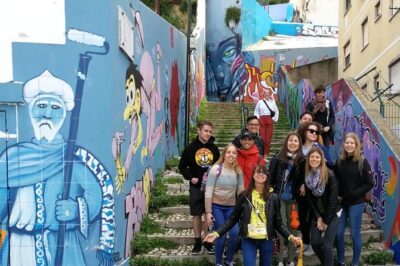
Browse the lists this tour appears in