

Reviewed · LISBON STREET ART TOURS
Lisbon: Street Art Tour
Lisbon’s street art is not just decoration pasted onto old walls. It can point to Portugal’s political past, neighborhood identity, social concerns, and the personal style of an artist. This three-hour walk takes you from Bairro Alto to Graça, using murals, tiny details, and street sculptures to explain how the city sees itself.
I like two things in particular: you get a local art guide, often Erica, Maria, or Laith, rather than a general guide reading from a script; and the route connects several neighborhoods instead of keeping you in one tourist pocket. The smaller pieces are just as important as the giant walls, and you learn to spot work you would otherwise pass by.
The trade-off is physical. You cover a lot of ground through hilly Lisbon, including uneven or unpaved stretches. Comfortable shoes are essential, and this tour is not suitable for wheelchair users. The $40 price is fair if you want context and conversation, not simply a photo walk.
Key points to know before you book
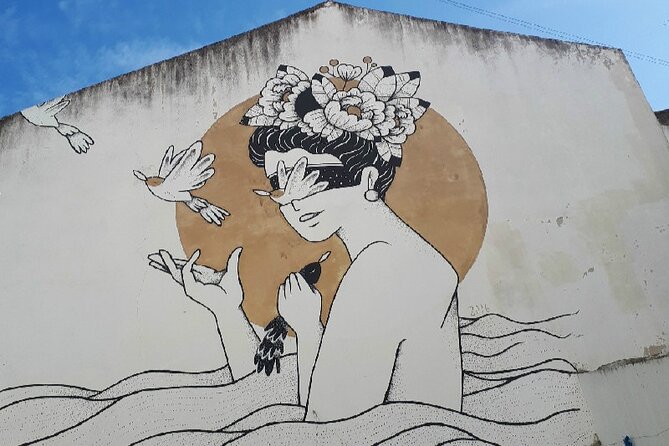
- Five neighborhoods in three hours: The route links Bairro Alto, Chiado, Baixa, Mouraria, and Graça.
- Street art with context: Your guide explains artistic methods, artists, local communities, and Portugal’s social and political background.
- A guide who treats art seriously: Erica, Maria, and Laith are praised for clear English, warm conversation, and strong subject knowledge.
- Small details matter: Expect famous murals, small works, street sculptures, and pieces you might easily miss on your own.
- A real walking workout: Hills, stairs, cobbles, and uneven ground are part of the Lisbon experience.
- Flexible booking: You can cancel up to 24 hours ahead for a full refund and reserve without paying immediately.
Why this Lisbon street art tour is more than a mural checklist
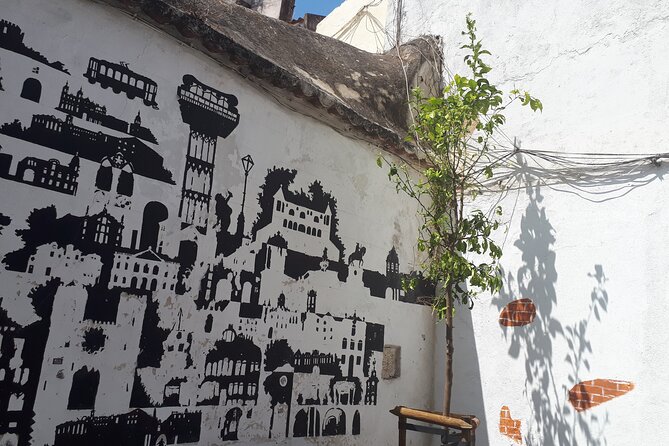
A basic street art walk can become a parade of colorful walls: stop, photo, next wall. This experience aims for more. You look at how a piece fits its street, neighborhood, and moment in Portuguese life.
That difference matters in Lisbon. The art is spread through ordinary streets, steep lanes, old buildings, and large public walls. Some works are easy to spot. Others are small, partly hidden, or placed where you would normally hurry past. The guide’s job is not only to point but to teach you how to look.
The strongest part of the experience is the link between art and place. A mural in Bairro Alto is not treated exactly like one in Mouraria or Graça. You get discussion of style, technique, artists, local communities, and the social or political ideas behind the work.
Guides also bring different strengths. Erica is repeatedly praised for storytelling, clear English, and her ability to connect art with Lisbon’s culture. Maria is described as warm and well informed about both neighborhoods and art. Laith is praised for bringing academic detail without making the walk dry. The guide assigned to your date may vary, but the pattern is clear: this is built around a personal guide, not an audio recording.
More Lisbon Street Art Tours:
- Lisbon: Kickstart Street Art Walking Tour
★ 4.9 · 717 reviews - Lisbon: Street Art Tuk Tuk Tour
★ 4.9 · 372 reviews - LISBON Street Art Tour
★ 5.0 · 371 reviews
Starting at R. Luz Soriano 67
The walk begins at R. Luz Soriano 67, in front of the Interpress building. Arrive ready to walk rather than carrying shopping bags or large luggage, which is not allowed.
The start in this part of Lisbon gives the guide a useful setting for explaining how art occupies the city. You are not being driven from one attraction to another. You begin on foot, with the streets themselves becoming the gallery.
I would wear shoes with good grip and bring water. The tour runs for three hours, and although the pace is described as manageable, several people specifically note that you cover a lot of ground. Rain does not automatically ruin the experience, but wet cobbles and steep streets make footwear even more important.
Bairro Alto: the main opening chapter
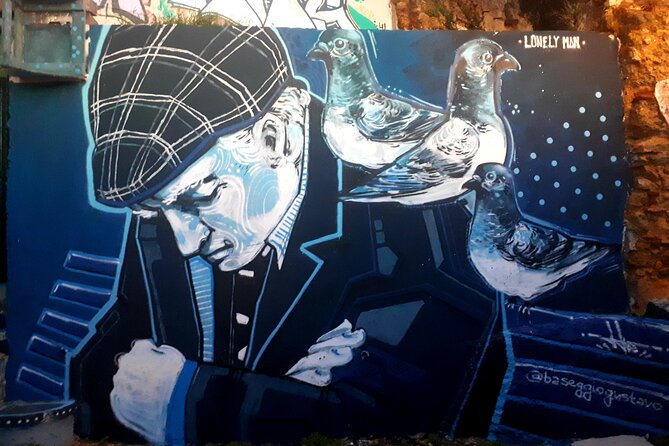
The first guided section lasts about an hour in Bairro Alto, making it the longest single stop. That gives your guide time to establish the basics: what counts as street art, how different techniques work, and why context changes the way you read a piece.
Bairro Alto is a useful opening because it combines Lisbon’s modern creative side with its older street pattern. You can expect a mix of larger works and smaller interventions rather than one uniform style. The guide may discuss how artists use a wall, doorway, corner, or other part of the built setting instead of treating every surface as a blank canvas.
This is also where the tour’s storytelling style matters most. Erica has been praised for explaining not only who made a work but how it fits Lisbon’s changing creative identity. Laith has been praised for linking art to the city’s social and political life while keeping the discussion light enough to follow during a walk.
The possible drawback is that you may spend a full hour looking closely at art when you could cover more ground. For an art lover, that is a plus. If you only want a quick photo tour, the detail may feel slow.
Chiado: a short shift in mood
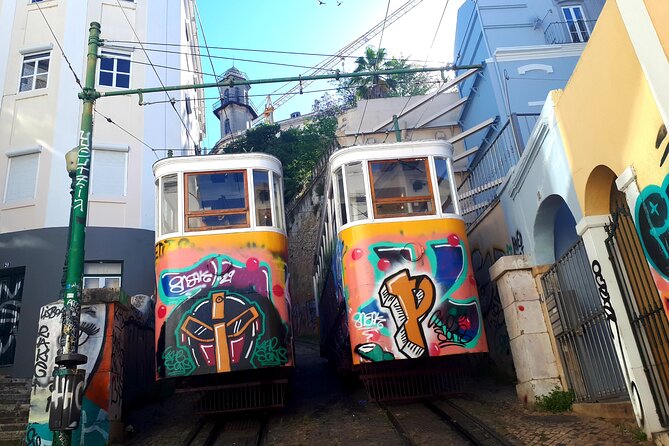
The Chiado section lasts around 20 minutes. It is brief, but it helps show how street art changes as the setting changes.
Here, pay attention to the contrast between established city streets and unofficial or temporary art. The guide can help you read small pieces that are easy to dismiss as random marks. One of the most useful lessons from the tour is that street art is not only giant murals. Scale, placement, lettering, image, and technique all affect how a work speaks to the street.
Chiado is also a good place to ask questions. The group moves on quickly, so keep your eyes open and ask about anything that catches your attention. Several guides are praised for welcoming questions and adjusting explanations to the group.
Something different to do with a day in Lisbon:
- Lisbon City Center Tour – The Unmissable Lisbon
★ 5.0 · 22,234 reviews - Lisbon: Sintra, Pena, Regaleira, Cabo da Roca & Cascais
★ 4.7 · 19,656 reviews - Sintra: Pena Palace and Park Entrance Ticket
★ 4.2 · 17,410 reviews - Lisbon: Jerónimos Monastery Entrance Ticket
★ 4.1 · 14,164 reviews
Baixa de Lisboa: art in the city center
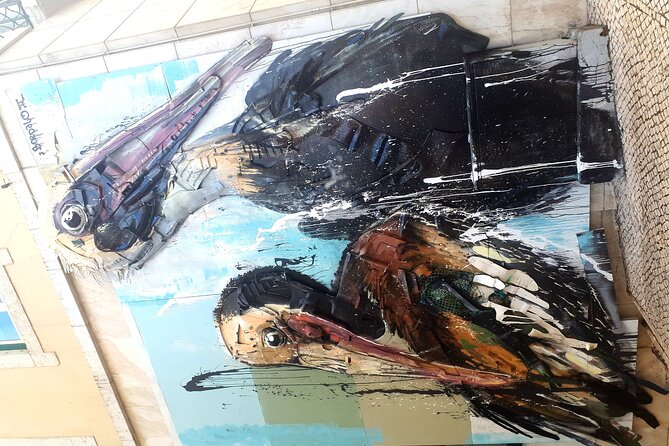
The walk continues into Baixa de Lisboa for another 20-minute guided section. This is a central part of Lisbon, so you get a useful comparison between art in a heavily visited area and work found in quieter lanes.
The guide may point out how a piece changes the way you read a familiar street. You are still seeing central Lisbon, but the focus shifts from grand facades and standard sightseeing to details at eye level, above shopfronts, or along side streets.
This part also gives the tour a practical benefit beyond the scheduled route. Once you learn to look for small works and repeated visual clues, you may start noticing art across the rest of your stay. Several people found themselves spotting pieces after the tour that they would previously have ignored.
Do not expect Baixa to be a dedicated gallery stop. It is a short section within a moving walk. Its value lies in comparison: the same city can present art differently in a central commercial district than in a neighborhood with a stronger local identity.
Mouraria: where art and community meet
Mouraria receives about 30 minutes. This is one of the more meaningful stops because the guide can connect street art with neighborhood life, identity, and the ways communities are represented.
The tour does not treat art as separate from the people who live around it. You learn to consider who made a work, who sees it every day, and how residents may interpret it. That broader view is one reason this walk appeals to people who know little about street art but want to understand Lisbon through local culture.
Mouraria also helps explain why the guide’s role is important. A list of artist names and dates would not tell you how a neighborhood responds to public art. A good guide can add the human layer, answer questions, and explain why one piece feels welcome while another may be contested or temporary.
This section is not a substitute for a dedicated neighborhood tour. You will not explore every corner of Mouraria. Instead, you get a focused look at how art and place affect one another.
Graça: the long finish and Lisbon views
The final stop, Graça Historic District, lasts about an hour. It is another substantial section and a strong finish because the district brings together narrow streets, steep walking, local character, and views across Lisbon.
Expect the route to end higher than it began. Several people describe the walk as a workout, especially because of Lisbon’s hills. That effort is part of the appeal, but it is not a minor detail. If you have mobility limits, knee problems, or dislike prolonged uphill walking, think carefully before booking.
Graça also gives the guide room to bring together the themes of the day: artistic technique, neighborhood identity, Portuguese culture, and the changing role of street art. You may see large murals here, along with smaller works that reward close attention.
One useful touch is that the guide can help you orient yourself after the walk. Since there is no metro stop in Graça, one guide helped a participant find a tram option for continuing across town. Transport help is not listed as a formal part of the tour, so do not count on personal route planning, but it shows the practical value of having a local person beside you.
What the guides add to the experience
The guide is the main reason to choose this tour over wandering with a map. City Guru uses English-speaking guides, and the strongest feedback centers on their ability to explain art clearly without losing the connection to Lisbon.
Erica is praised for her eye for detail, storytelling, and ability to place each work within the city’s culture. Maria is praised for warmth, patience, and strong knowledge of art, neighborhoods, and Portuguese history. Laith is praised for his personal connection to the local art scene and his ability to discuss social and political ideas in an engaging way.
The guide names can vary by date, and you cannot book a specific person from the information provided. Still, the experience appears designed around guides with a serious interest in art, not just a memorized sightseeing route.
I also like that the discussion includes methods and styles. You are not limited to learning the artist’s name. You may hear how a work was made, why a certain surface was used, or how artists relate to one another and to the community around them.
Group size, pace, and practical comfort
The tour is promoted as an experience away from large crowds and groups. Several bookings were private or had small groups, and the small-group format made it easier for people to ask questions. Group size can vary, so do not assume every departure will be private.
Three hours sounds long until you consider the route. The walk is broken into neighborhood sections, with regular stops to look and talk. One participant found the pace comfortable despite initial concern about walking for three hours. Others stressed that you should be reasonably fit.
Bring:
- Comfortable walking shoes
- Water
- Weather protection if rain is possible
- A light bag rather than oversize luggage
The route includes unpaved or uneven terrain. It is not suitable for wheelchair users. No food or drinks are included, and hotel pickup and drop-off are not provided, so plan your arrival and departure independently.
Is $40 a good price?
At $40 per person, this is not the cheapest way to see Lisbon’s walls. You can walk through several neighborhoods for free and find plenty of art without a guide.
The price makes more sense if you want interpretation. You are paying for three hours with an English-speaking guide who can explain artists, technique, local context, Portuguese history, and the social role of public art. You also save time by moving through five areas in a planned sequence.
I would consider it good value early in a Lisbon visit. The route helps you understand the city and trains your eye for the rest of your trip. If you already have strong knowledge of Lisbon street art, the value depends on the guide and your interest in discussion. If you are new to the subject, the tour offers far more than a collection of photo stops.
You can reserve now and pay later, and cancellation is free up to 24 hours before the start for a full refund. Those terms are useful when your Lisbon schedule is still shifting.
Who should book this walk?
I would recommend it to art lovers, curious first-time visitors, photographers, and anyone who prefers local stories to a standard monument checklist. It is also a smart choice if you have already taken a conventional Lisbon history tour and want another way to understand the city.
You do not need to know anything about graffiti before you go. The guides explain the difference between styles and techniques, and the route includes enough history and cultural context to make the subject accessible.
I would hesitate if you want a flat route, a short outing, or a fully accessible activity. I would also avoid carrying luggage. This is an active city walk, not a seated gallery visit.
Final call: book it if you want to see Lisbon differently
Book this street art tour if you want to understand why a mural belongs on a particular wall and what it says about the neighborhood around it. The strongest feature is the guide-led interpretation, especially the storytelling and local context associated with Erica, Maria, and Laith.
The walk is active, the hills are real, and the route does not include food, transport, or hotel pickup. But for $40, you get five districts, three hours of focused attention, and a better eye for the art hiding in plain sight. If you want Lisbon beyond the usual postcard views, this is a strong choice.
FAQ
How much does the Lisbon Street Art Tour cost?
The price is $40 per person.
How long does the tour last?
The walking tour lasts three hours.
What language is the tour offered in?
The live tour is offered in English.
Where does the tour begin?
Meet the guide at R. Luz Soriano 67, in front of the Interpress building.
Which Lisbon neighborhoods are included?
The route includes Bairro Alto, Chiado, Baixa de Lisboa, Mouraria, and the Graça Historic District.
Is hotel pickup included?
No. Hotel pickup and drop-off are not included.
Are food and drinks included?
No. You need to arrange your own food and drinks.
What should I bring?
Bring comfortable shoes. The route includes unpaved or uneven terrain.
Is the tour suitable for wheelchair users?
No. The tour is not suitable for wheelchair users because of the walking conditions.
Can I cancel for a refund?
Yes. You can cancel up to 24 hours in advance for a full refund. You can also reserve now and pay later.
Just reviewed in Lisbon
- Lisbon: Morning of Equestrian Art with Lusitano Horses★ 4.4 · 87 reviews
- Lisbon: Entry Tickets to Mosteiro de São Vicente de Foram★ 4.6 · 50 reviews
- Lisbon: National Palace of Ajuda E-Ticket & City Audio Guide★ 4.1 · 87 reviews
- Lisbon: Early Morning TukTuk Tour – hotel/cruise ship pickup★ 4.9 · 45 reviews
- Sintra: Quinta da Regaleira e-Ticket & Sintra City Audios★ 4.1 · 12 reviews
- Lisbon E-Bike Tour TAGUS★ 5.0 · 3 reviews
- Lisbon: E-bike Trip from the Sintra Mountains to Cascais Sea★ 5.0 · 67 reviews
- Lisbon: Discover Belem by electric Tuk Tuk★ 4.9 · 86 reviews
Lisbon Street Art Tours, compared.
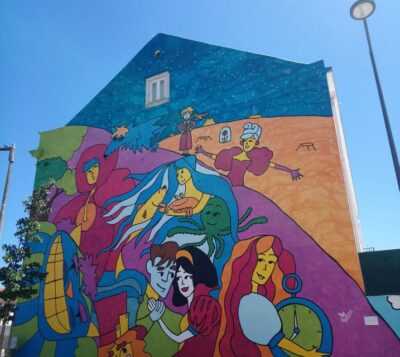



3-Hour Guided Street Art Walking Tour of Lisbon
Read our review →


Browse the lists this tour appears in