
Reviewed · LISBON WALKING TOURS
Secret Lisbon Walking Tour
Lisbon’s secret corners are often tucked behind ordinary doors, under old streets, or beside landmarks you might otherwise pass without a second glance. This small-group walk takes you from a medieval monastery and hidden graves to Fado’s birthplace, wartime spy stories, and the former Royal Palace at Praça do Comércio.
I like the unusual access, especially Independence Palace’s secret garden and the old spaces connected with Lisbon’s Jewish, royal, religious, and musical past. I also like the human scale: with no more than eight people, you can ask questions and keep up with a guide such as Peter, who is praised for his humor and French fluency. The drawback is that you do not always choose between the Doll’s Hospital and Independence Palace, and the 2.5-hour walk is not suited to people with mobility impairments.
Key points
- A medieval crypt and graves underfoot: Begin with Nossa Senhora da Graça and the lesser-seen remains around it, including a crypt linked to a major 2017 discovery.
- Fado begins in Mouraria: Hear how Lisbon’s great musical tradition took root roughly 200 years ago.
- Stories of spies and refugees: Rossio Square becomes a setting for wartime escape stories, cafés, and Jewish refugees.
- Rare indoor visits: The route includes either the Doll’s Hospital or Independence Palace, depending on the option booked.
- A city layered in time: Roman streets, a hippodrome, medieval hospitals, royal buildings, and Moorish decoration all appear in one walk.
- A low-stress booking setup: The tour lasts 2.5 hours, costs $41 per person, and allows cancellation up to 24 hours ahead for a full refund.
Lisbon’s secret history, one doorway at a time
The Secret Lisbon Walking Tour is designed for people who have already seen the broad strokes of the city, or who would rather begin with its odd corners than its postcard views. You still hear a short introduction to Lisbon’s past, but the focus quickly shifts to places and stories that standard sightseeing routes tend to skip.
That means this is not a simple march from one famous square to the next. You cross areas linked to monasteries, Jewish history, Fado, freemasonry, royal power, wartime espionage, and Lisbon’s old nightlife.
The price is $41 per person. For 2.5 hours in a group capped at eight, that is a reasonable rate if the included entries are important to you. You are paying for a live guide, access to at least one unusual interior, and a route built around interpretation rather than grand monuments alone.
The tour is offered in English and French. Peter is one guide associated with the experience, and his approach includes humor, questions, and a more playful way of explaining the city. Since guide assignments can vary, check the language and meeting point attached to your chosen date.
More Lisbon Walking Tours:
- Lisbon: History, Stories and Lifestyle Walking Tour
★ 4.8 · 10,902 reviews - Best of Lisbon Small-Group Guided Walking Tour
★ 5.0 · 4,869 reviews - Lisbon: Food and Wine Small Group Walking Tour
★ 4.9 · 4,082 reviews
Nossa Senhora da Graça and the 2017 crypt discovery
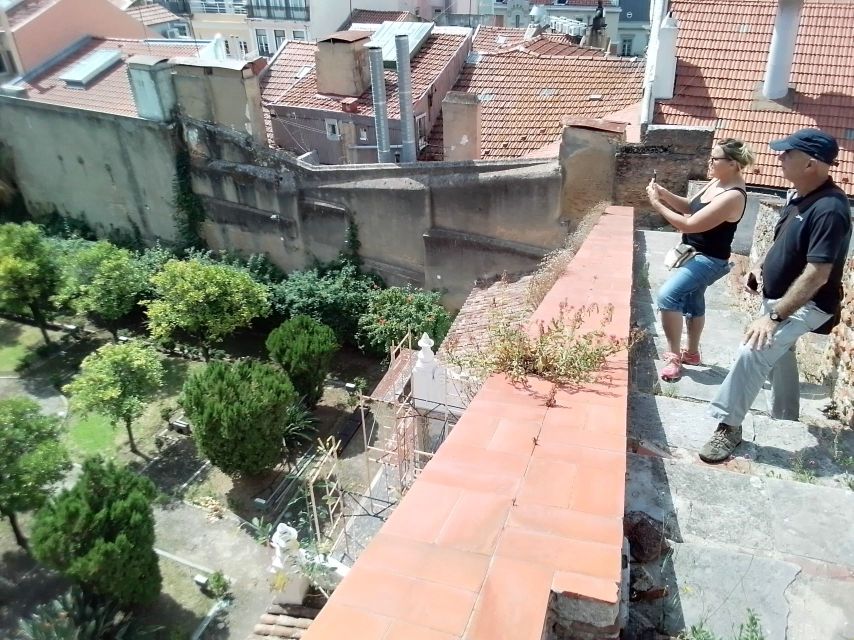
The walk starts with the medieval monastery of Nossa Senhora da Graça. The building gives the guide a useful place to explain how Lisbon developed, but the real interest is below and around the monastery.
You visit a secret crypt and hear about a striking discovery made in 2017. The details of that discovery are part of the guide’s storytelling, and this stop sets the tone for the rest of the morning: Lisbon’s past is not always displayed behind a large museum entrance. Sometimes it is in a dim corner, beneath a religious building, or hidden in plain sight.
Near the monastery, the route passes over graves that are no longer obvious to the modern eye. That can sound grim, but it is a practical way to understand how tightly old Lisbon was built. Churches, monasteries, burial grounds, homes, and streets occupied the same compact spaces.
I like this opening because it gives you physical evidence of the city’s age before the walk turns to stories of music, politics, and war. The one caution is that old religious and burial sites can involve uneven surfaces or narrow access. Anyone who has trouble walking should think carefully before booking.
Freemasons, street art, and the descent to Mouraria
From the monastery, the route moves past an old freemason hangout. You do not simply get a definition of freemasonry. The point is to connect a specific Lisbon place with the city’s secret societies, private meetings, and political currents.
This is also where the walk shows its contrast between old and new Lisbon. The route passes striking street art before heading down toward Mouraria. The art is not presented as a separate gallery visit. Instead, it becomes part of the city’s current street life, set against buildings and stories that reach back many centuries.
Mouraria is one of the most useful areas for understanding Lisbon beyond the big squares. It is tied to the early development of Fado, and the guide takes you to the spot associated with the music’s beginnings around 200 years ago.
That stop matters because Fado is not just a performance for visitors. It is part of Lisbon’s identity, and hearing about its beginnings in the neighborhood where it took shape gives the music a social setting. You may not hear a live singer on this walk, but you do get the place-based story behind the sound.
Cemeteries, an old well, and Lisbon’s Doll’s Hospital
The route continues to another medieval cemetery. The guide explains who was buried there and what the site tells you about the city’s former residents. These smaller places can be more revealing than a grand church because they bring daily life into the story: who lived here, where people were buried, and how the city used limited space.
Nearby, you hear about Lisbon’s oldest well, now tucked inside a hotel. It is an excellent example of the tour’s method. You are not only seeing famous monuments. You are learning to notice the small survival of earlier Lisbon inside modern buildings.
Then comes the Doll’s Hospital. This unusual establishment has its own history, and you see its secret door. It is an unexpected stop, especially for anyone who likes the stranger side of a city.
I would treat this part as a matter of taste. One participant felt the Doll’s Hospital was less worthwhile and would have preferred a choice of indoor site. Another way to see it is that the stop breaks up the heavier material about graves, massacres, and war. If you are fascinated by curious local institutions, it may be a highlight. If you want every minute devoted to major historical events, it may feel like a detour.
The booking information says the experience includes entrance to Independence Palace or the Doll’s Hospital, depending on the option selected. Check your specific choice before paying, since the route may not offer a free decision on the day.
Something different to do with a day in Lisbon:
- Lisbon City Center Tour – The Unmissable Lisbon
★ 5.0 · 22,234 reviews - Lisbon: Sintra, Pena, Regaleira, Cabo da Roca & Cascais
★ 4.7 · 19,656 reviews - Sintra: Pena Palace and Park Entrance Ticket
★ 4.2 · 17,410 reviews - Lisbon: Jerónimos Monastery Entrance Ticket
★ 4.1 · 14,164 reviews
Roman races and a medieval hospital
The next section reveals how many older layers sit beneath central Lisbon. You pass the site of a Roman hippodrome, then hear about a medieval hospital.
These places are valuable even if little remains to see. The guide helps you picture the city before its modern streets and squares took their current shape. A Roman racing site suggests a very different public life, while a medieval hospital points to the institutions that served people long before modern medicine.
This is where a live guide earns the fee. A marker or plaque might tell you that something once stood here. A good explanation connects the place to the wider city and gives you a reason to look again.
The route is still a walking tour, not a museum visit. Do not expect long indoor stops at every location. Much of the experience comes from standing in ordinary streets and learning what used to occupy them.
Independence Palace and its little-known garden
Independence Palace is one of the strongest parts of the experience for anyone who wants to enter buildings that are not part of every standard Lisbon itinerary. The tour includes access to the palace or the Doll’s Hospital, depending on the booking option.
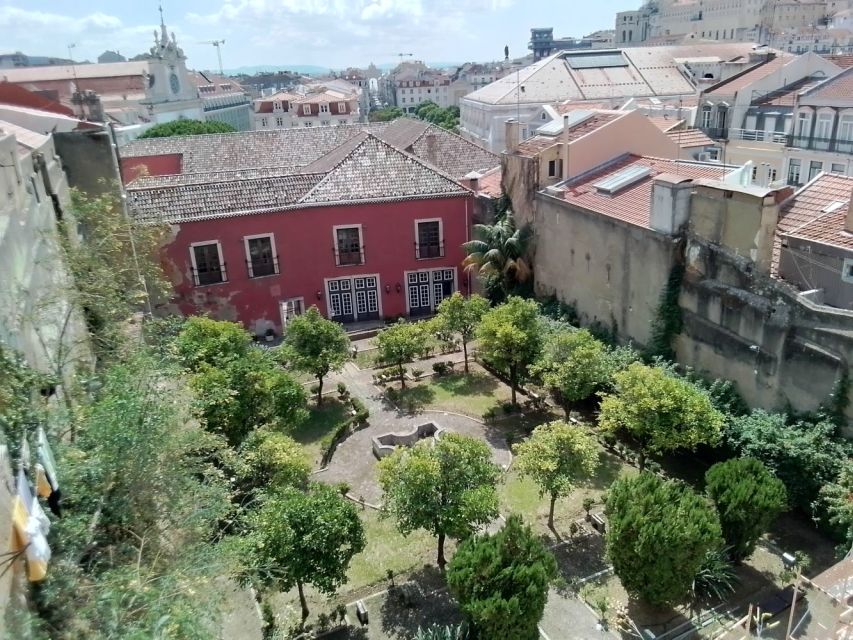
Inside Independence Palace, you visit a secret garden. The appeal is not only the garden itself. It is the sense of entering a place that many people pass without seeing.
The palace also helps connect the walking route to Portugal’s political past. The name points toward national independence, while the garden offers a quieter pause after the route’s darker cemetery and hospital stories.
If you are comparing this walk with a standard city tour, this kind of access is the main difference. You are not spending the morning waiting in line at a famous attraction. You are stepping into a less familiar building and hearing why it matters.
Largo dos Domingos and the 1506 massacre
At Largo dos Domingos, the guide discusses the massacre of Lisbon’s Jews in 1506. This is one of the most difficult parts of the tour, and it should not be treated as a colorful anecdote.
The guide also points out the burned-out Dominican Church. The damaged church and the story of the massacre show how religious hatred and public violence shaped Lisbon’s past. For me, this gives the tour moral weight. Lisbon’s history is not only royal palaces, music, and pretty streets. It also includes persecution, fear, and the destruction of a community.
This stop may feel heavy, particularly if you prefer a light introduction to the city. Still, it is valuable context for understanding Portugal’s Jewish history and the forces that shaped the center of Lisbon.
Rossio Square, spies, and Jewish refugees
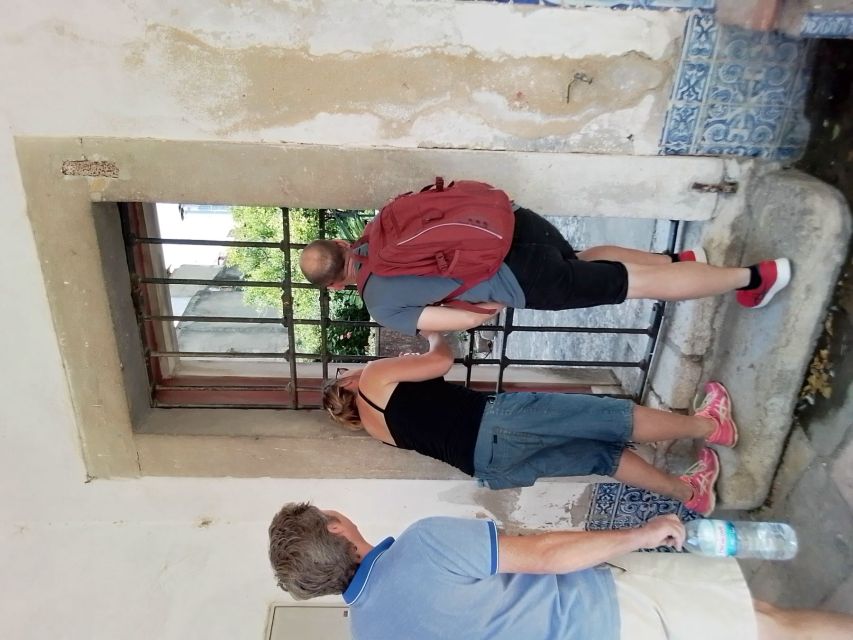
At Rossio Square, the route turns to the Second World War. The cafés around the square were used by spies and Jewish refugees, making this familiar public space part of a much larger European story.
This is a strong example of how the tour changes your view of places you may already have visited. Rossio is often treated as a central meeting place, a transport hub, or a quick photo stop. Here, you hear about people passing through Lisbon under pressure, watching for information, safety, or a route out of Europe.
The subject fits the tour’s wider interest in hidden lives. The square looked ordinary, but its cafés once carried tension and uncertainty. You learn to look beyond the paving stones and grand façades.
Lisbon’s oldest streets and the Roaring Twenties
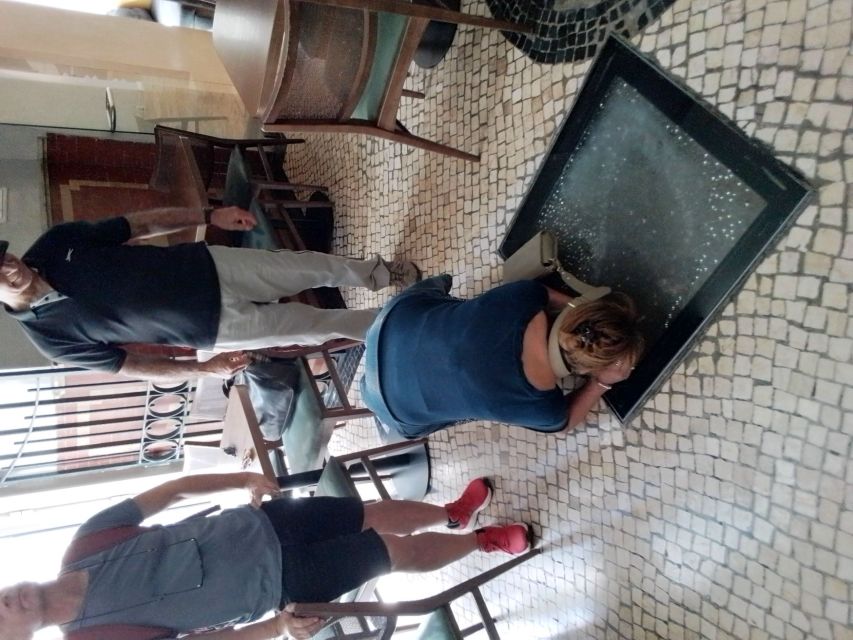
The walk then follows one of Lisbon’s oldest streets, with origins reaching back to Roman times. The street also became a setting for casinos and nightclubs during Lisbon’s Roaring Twenties.
This is a lighter change of pace after the 1506 massacre and the wartime stories. It also shows that Lisbon’s nightlife did not begin with today’s bars and music venues. The city has long attracted people seeking entertainment, money, privacy, and a little risk.
The guide’s stories about casinos and clubs help you picture a more glamorous, mischievous side of the city. You may not enter the old venues, but the street itself becomes a record of changing tastes and social habits.
A Moorish-style palace and a final taste of Lisbon
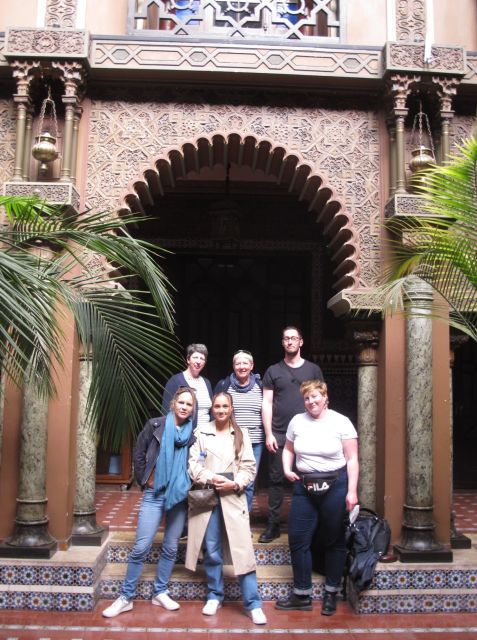
The tour finishes in a beautiful former palace decorated in the Moorish style. This gives the walk a visual finish after so much emphasis on hidden evidence and difficult history.
The final location also fits the route’s interest in layers. Lisbon’s buildings reflect centuries of contact between cultures, changing rulers, religious communities, and artistic styles. The palace offers a chance to appreciate decoration and atmosphere after the guide has spent much of the walk explaining what lies beneath or behind the city.
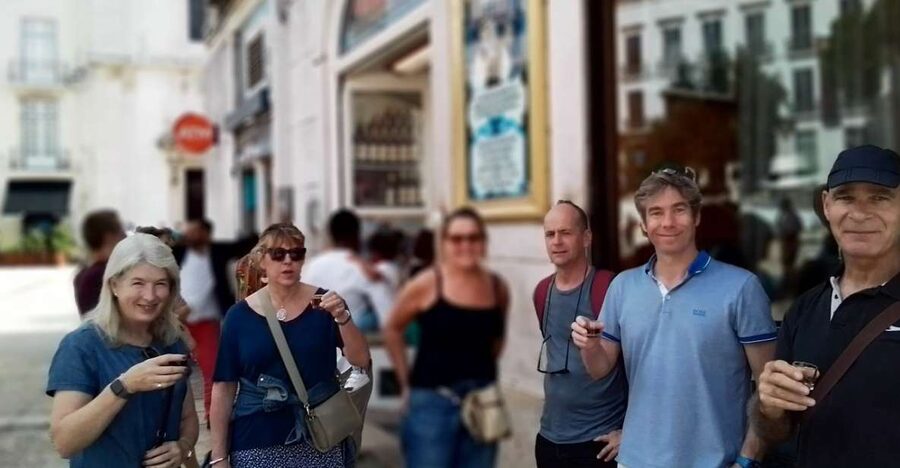
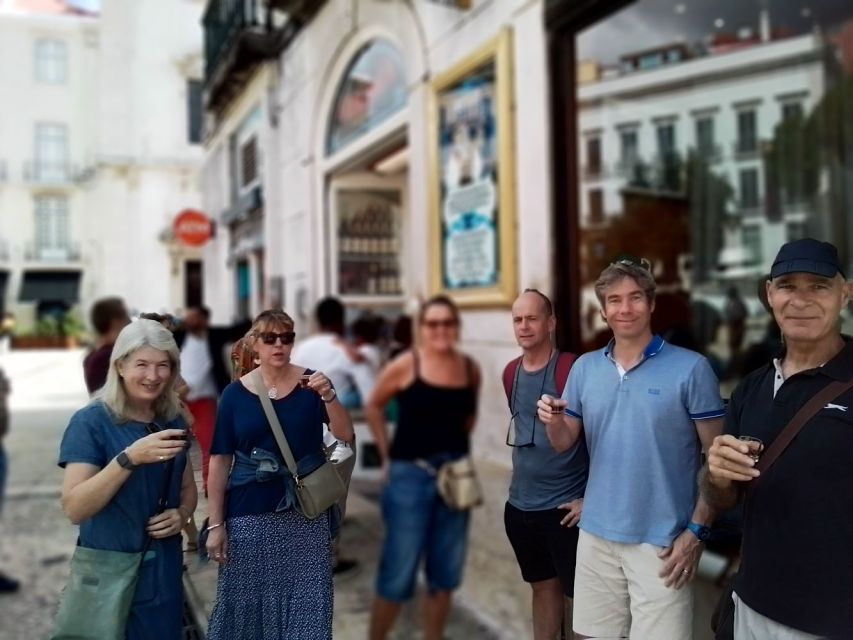
The included treat is either a pastel de nata or ginjinha. It is a small detail, but a useful one. A custard tart gives you a classic Lisbon snack, while ginjinha offers a taste of the city’s cherry liqueur tradition. The listing says one is included, not both, so do not count on receiving the two together.
Group size, pace, and practical fit
The group is limited to eight people. That is a real benefit on a route involving crypts, older buildings, and story-heavy stops. You can hear the guide without fighting a large crowd, and it is easier to ask about a detail that catches your attention.
The duration is 2.5 hours. That is long enough to cover a broad set of subjects without taking up the whole day. I would book it early in your Lisbon stay if you want the stories to shape the way you explore afterward. It also works on the final day, as one participant found, but an earlier booking gives you more time to return to areas that interest you.
The meeting point can vary by booking option, so check the exact instructions carefully. One participant once went to the wrong meeting place, but Peter waited patiently and helped resolve the mix-up. That is encouraging, but you should still confirm the location rather than rely on last-minute help.
The tour is not suitable for children under five or people with mobility impairments. The route includes old streets, graves, and historic interiors, so comfortable walking shoes are sensible. No special equipment is listed, and there is no promise of seating at every stop.
Free cancellation is available up to 24 hours before the tour for a full refund. You can also reserve now and pay later, which helps if you are still arranging a Lisbon schedule.
Who should book the Secret Lisbon Walking Tour?
I would choose this tour if you like overlooked places, local stories, and history that does not stop at kings and monuments. It suits solo visitors, couples, friends, and small family groups with older children or teenagers, provided everyone can manage the walking and the darker subjects.
It is especially good for repeat visitors who have already seen Lisbon’s main viewpoints and squares. First-time visitors can enjoy it too, but you should not expect a broad introduction to every major attraction. The route is selective and story-led.
The strongest reasons to book are the group size, the range of subjects, and the chance to enter places you would not normally find on your own. The main reasons to hesitate are the walking demands, the serious sections on persecution and war, and the possibility that the Doll’s Hospital may not appeal to you.
Should you book it?
At $41, I think the Secret Lisbon Walking Tour offers good value if your idea of sightseeing includes crypts, old graves, Fado origins, secret doors, and stories about people who passed through Lisbon in dangerous times. The current rating is 4.9 from nine ratings, and the clearest praise centers on the guides’ warmth, structure, humor, language skills, and ability to answer questions.
Book it if you want a small, personal walk with unusual access and a guide who can connect scattered details into a story. Skip it if you need a step-free route, want only cheerful sightseeing, or feel strongly about choosing every indoor stop yourself.
FAQ
How long does the Secret Lisbon Walking Tour last?
The tour lasts 2.5 hours.
How much does the tour cost?
The price is $41 per person.
What languages are available?
The live tour is available in English and French.
How large is the group?
The group is limited to eight participants.
Is entrance included?
Entrance to Independence Palace or the Doll’s Hospital is included, depending on the option booked.
Is food or drink included?
You receive either a pastel de nata or ginjinha.
Can children join the tour?
Children under five are not permitted according to the activity information.
Is the tour suitable for people with mobility impairments?
No. The activity is not suitable for people with mobility impairments.
Just reviewed in Lisbon
- Private tour Lisbon – full day★ 5.0 · 8 reviews
- Private Tour: Portuguese Food and Wine Tour★ 5.0 · 33 reviews
- Lisbon Football Experience – Private stadium and Museum Tour★ 4.0 · 10 reviews
- Lisbon and Sintra Essence 8H – Private Tour★ 5.0 · 5 reviews
- Private Tour: Lisbon Sunset Walking Tour with Fado Show and Dinner★ 5.0 · 30 reviews
- Private Catamaran Tour: Lisbon coast cruise with barbecue and drinks★ 5.0 · 20 reviews
- Lisbon: Helicopter Tour over Cascais & Cabo da Roca★ 5.0 · 4 reviews
- Private Tour Fátima – Nazaré – Batalha – Óbidos★ 5.0 · 6 reviews
Lisbon Walking Tours, compared.

Best of Lisbon Small-Group Guided Walking Tour
Read our review →

Best of Lisbon Walking Tour: Rossio, Chiado & Alfama
Read our review →

Lisbon Roots – Small group Food & Culture Walking Tour w/tastings
Read our review →
Starter Walking Tour to the highlights in German
Read our review →
Browse the lists this tour appears in