
Reviewed · LISBON WALKING TOURS
3-Hour Private Guided Walking Tour of Lisbon
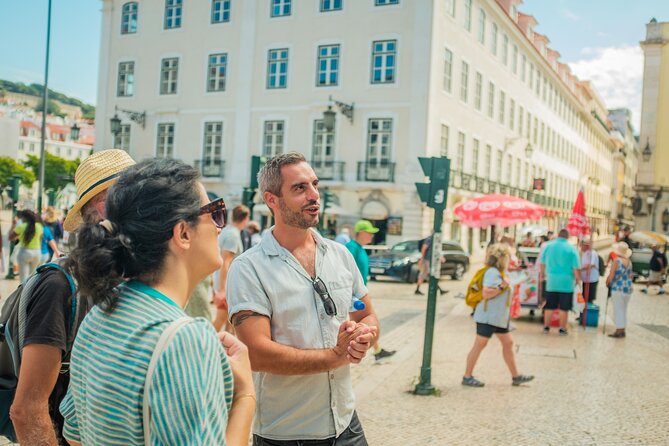
Lisbon reveals itself best on foot, and this private three-hour route links many of the city center’s essential sights in one tidy walk. You begin at Rossio, pass through Mouraria and Alfama, pause at two fine viewpoints, then finish in Baixa and Chiado at Praça Luís de Camões.
I like the small private format, which gives your group of up to eight a more personal outing than a large city walk. I also like the balance between major sights, such as Lisbon Cathedral and Praça do Comércio, and local details, such as A Ginjinha and the Mouraria fado stops. The main consideration is pace: sixteen stops in three hours leaves limited time at each one, and the tour is listed as being in French, despite the overview also mentioning English, so confirm the language before booking.
Key points at a glance
- Sixteen central Lisbon stops: The route covers Rossio, Mouraria, Alfama, Baixa, and Chiado without sending you far from the historic center.
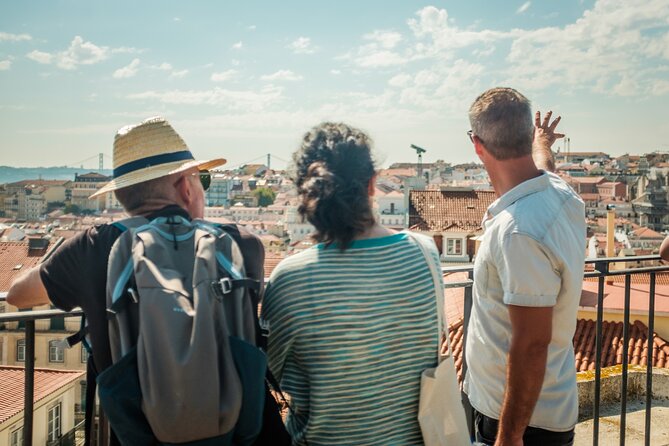
- Two Alfama viewpoints: Santa Luzia and Portas do Sol show the old quarter from different angles.
- A private group of up to eight: You pay $204.38 for the group, not for each person.
- A taste of local life: The stop at A Ginjinha introduces Lisbon’s traditional cherry liqueur.
- A guide-led history walk: Pedro is specifically praised for his friendly manner and strong knowledge of Lisbon’s past.
- A practical finish in Chiado: The tour ends at Praça Luís de Camões, a useful place to continue exploring on foot.
A smart first look at central Lisbon
This tour works as a compact introduction to Lisbon’s historic core. It begins beside the Teatro Nacional Dona Maria II at Praça Dom Pedro IV, usually called Rossio, and ends at the statue in Praça Luís de Camões. That route gives you a clear east-to-west sweep through several districts.
You are not simply checking off monuments. The walk moves from grand civic spaces to working neighborhoods, then up toward the viewpoints of Alfama before returning to the broad streets of Baixa and the polished feel of Chiado. That changing character is one of the best reasons to choose a walking tour here.
The schedule is brisk. Most stops last ten minutes, with five minutes at A Ginjinha and fifteen minutes at several major sights. You should think of this as a guided orientation, not a tour with long interior visits. The guide’s explanations are likely to be the main event, while the buildings and viewpoints provide the setting.
Because this is private, your group is the only group taking part. That matters if you want to ask questions, keep the pace together, or hear the explanation without a crowd around you. The maximum group size is eight, so the value is strongest for a family or group of friends sharing the cost.
More Lisbon Walking Tours:
- Lisbon: History, Stories and Lifestyle Walking Tour
★ 4.8 · 10,902 reviews - Best of Lisbon Small-Group Guided Walking Tour
★ 5.0 · 4,869 reviews - Lisbon: Food and Wine Small Group Walking Tour
★ 4.9 · 4,082 reviews
Rossio opens the story
The first stop is Estação do Rossio, one of Lisbon’s most striking railway stations. The visit is scheduled for ten minutes, enough to take in the ornate exterior and understand why the station is treated as an attraction rather than merely a transport hub.
From there, you move into Praça Dom Pedro IV, the broad Rossio square. It is one of Lisbon’s emblematic public spaces and a useful place to understand the shape of the city center. The square gives the tour a strong start because it combines grand architecture, open space, and the everyday movement of central Lisbon.
Next comes A Ginjinha, a tiny traditional stop with a very different mood. You spend only five minutes here, but the point is simple: this is where you can encounter ginjinha, the typical cherry liqueur associated with Lisbon. The tour information does not state that a tasting is included, so treat this as a stop at the venue rather than a guaranteed drink.
Praça da Figueira follows. It is described as the smaller sister of Rossio, and that comparison helps you see how neighboring squares can have their own identity. Ten minutes here keeps the focus on the setting and the guide’s explanation instead of turning the walk into a long pause.
Mouraria brings in Lisbon’s music
I like the shift into Mouraria because it gives the route more texture than a parade of famous monuments. The Monumento Mouraria Berço do Fado introduces the district as a birthplace associated with fado, Portugal’s deeply expressive musical tradition.
The nearby Fado Vadio stop is a graffiti work on a wall in Mouraria. It is a modest sight, but that is exactly its value. A walking tour can point out pieces of neighborhood character that you might pass without noticing if you were following only a standard monument list.
You have about ten minutes at each Mouraria stop. That is enough for the guide to explain the connection between the district and fado, but not enough for a performance or a long cultural program. If music is your main interest, you should see this section as an introduction and not a substitute for a separate fado evening.
The guide listed for this experience is Pedro, and a direct description of his style highlights his friendly manner and strong grasp of Lisbon’s history. That is important here. Mouraria benefits from explanation because its meaning is not always obvious from a quick look at a monument or painted wall.
Alfama and the two essential viewpoints
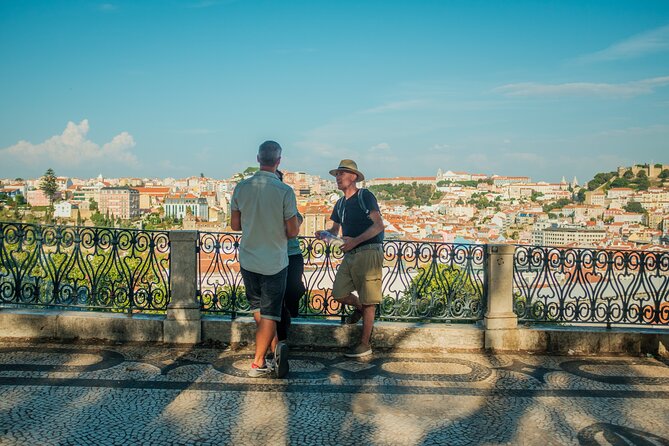
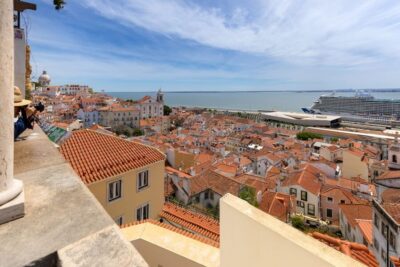
The route then reaches Miradouro Chão do Loureiro, a belvedere with a view over Lisbon’s historic center. This is one of the places where a short pause pays off. After the tighter streets and neighborhood stops, you get a wider sense of how the old center fits together.
From there, the walk enters Alfama, Lisbon’s best-known historic district. The scheduled fifteen minutes is brief, but the district itself is the visual centerpiece of the route. Alfama is known here for its timeless character, and the tour gives you a guided look rather than leaving you to wander without context.
Two viewpoints follow: Miradouro de Santa Luzia and Miradouro das Portas do Sol. They sit close to each other, but the route treats them as separate stops because each gives a different angle over Alfama. You get fifteen minutes at Santa Luzia and ten minutes at Portas do Sol.
That is a good use of time. A single viewpoint can feel like a quick photo stop, while two nearby overlooks let you compare the views and see more of the district’s layout. You should still be ready for a walking route that includes viewpoints and the older quarters of Lisbon. Comfortable footwear is a sensible choice, even though the tour information does not specify the surface or number of steps.
The viewpoints are also useful for orientation. They help connect Alfama’s close-set streets with the larger sweep of the historic center. If you are new to Lisbon, this is the part of the walk most likely to help you understand the city visually.
More 3-Hour Experiences in Lisbon:
- Lisbon: 3-Hour Tour by E-Bike
★ 4.8 · 1,150 reviews - 3-Hour Lisbon 7 Hills Electric Bike Tour
★ 5.0 · 818 reviews - 3-Hour Guided Street Art Walking Tour of Lisbon
★ 5.0 · 278 reviews - Lisbon: 3-Hour The Slave Trade – An Historical Walking Tour
★ 4.9 · 179 reviews
Lisbon Cathedral and the rebuilt Baixa
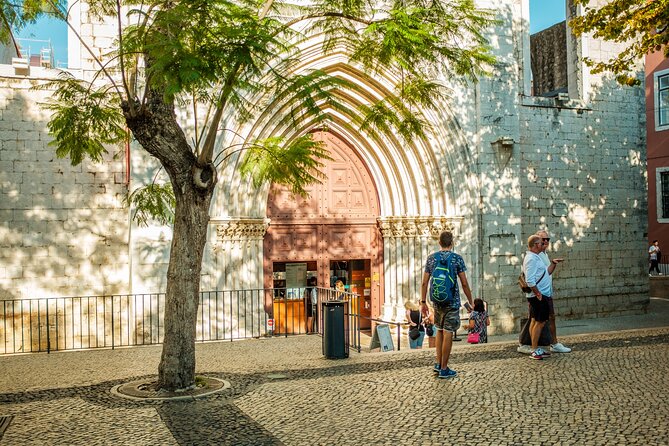
Lisbon Cathedral, or Sé, comes after the viewpoints. The stop lasts fifteen minutes and is billed as the city’s most beautiful church. The schedule confirms a visit to the cathedral, but it does not state that an interior admission ticket is included or that you will have a long interior tour.
That distinction matters. The cathedral is a major landmark, but fifteen minutes is a short window. You will likely receive a concise explanation and time to look around, rather than a detailed architectural visit. If seeing the interior is a priority, ask the provider what this stop includes before you book.
The route then descends into Baixa de Lisboa, the central district rebuilt after the earthquake of 1755. This is one of the most useful historical transitions in the tour. You have just seen older, irregular quarters, and now you encounter a district shaped by a deliberate rebuilding plan.
Ten minutes in Baixa gives the guide a chance to explain why the streets and public spaces feel so different from Alfama. You can begin to read Lisbon as a city of layers: older hillside neighborhoods beside a planned central district, with grand squares tying the two together.
Praça do Comércio beside the Tejo
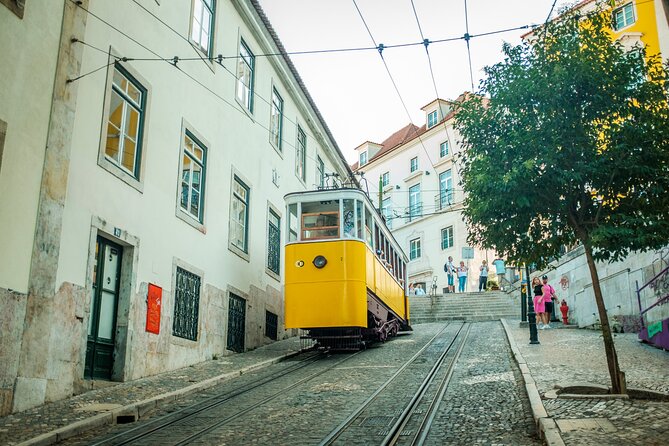
Praça do Comércio, also called Terreiro do Paço, is one of the walk’s longest stops at fifteen minutes. It is a broad and impressive square facing the Tagus River, and it provides a strong visual change after the narrower spaces of Alfama and Mouraria.
This is a good place to pause and take stock of the route. You have moved through neighborhood streets, historic religious sites, viewpoints, and the rebuilt center. The riverfront setting gives the final part of the tour a sense of scale.
The tour does not list a river cruise or a museum visit here. Its value is the square itself and the guide’s explanation. You can use the time for photographs, but the best benefit is learning how this space fits into Lisbon’s civic and commercial life.
Chiado finishes the walk in style
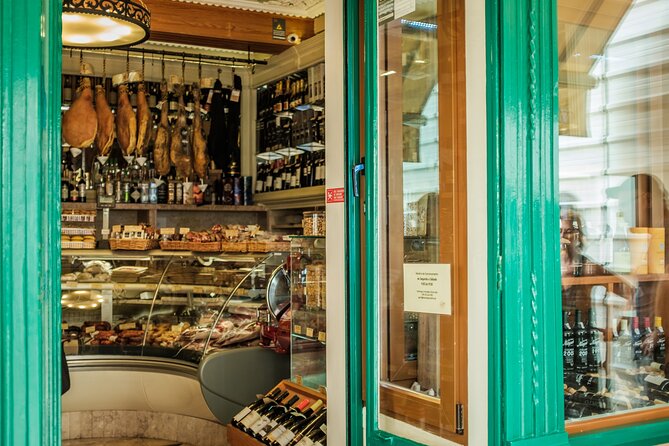
The final neighborhood is Chiado, described as the more chic side of Lisbon. That makes a useful contrast with Mouraria and Alfama. The walk does not treat Lisbon as one uniform old quarter. It shows you how the city changes from fado-linked streets to broad central avenues and then to a more polished district.
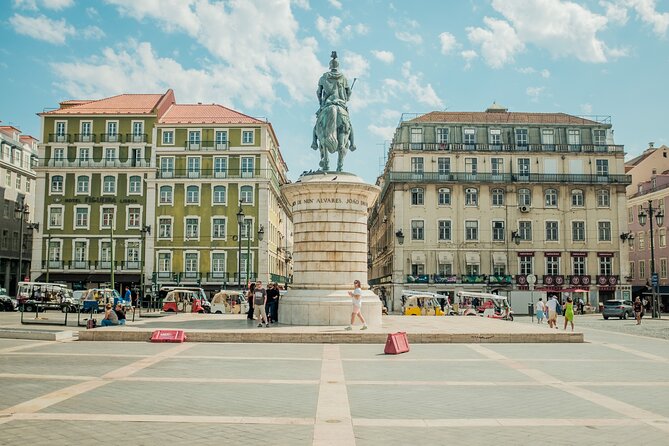
The last stop is Praça Luís de Camões, where the tour ends at the foot of the statue. This is a clear and practical endpoint. You are not left at an unnamed street corner, and the square gives you a natural place to continue your own walk through Chiado.
The full route is well suited to your first day in Lisbon because it gives you a mental map. Afterward, you can decide which district deserves more time. You might return to Alfama, spend longer in Baixa, or use Chiado as a base for further sightseeing.
What $204.38 means for your group
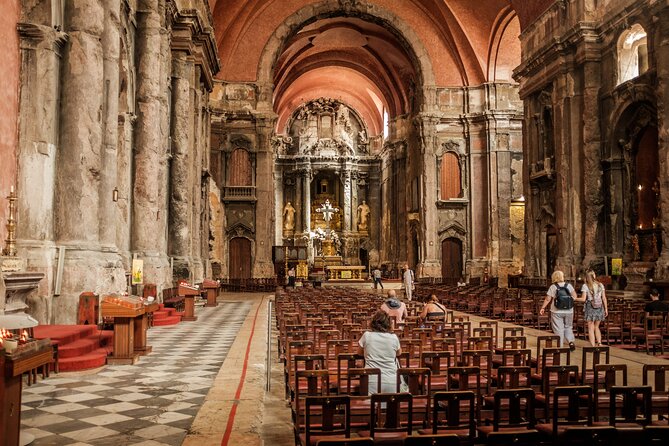
The listed price is $204.38 per group for up to eight people. For a full group, that works out to about $25.55 per person. For four people, it is about $51.10 each. For two people, it is about $102.19 each.
That makes the tour a better deal for a family or group of friends than for a solo visitor. A private guide for three hours costs more than joining a large public walk, but you are paying for a private format, a fixed route, and the chance to keep the explanation focused on your group.
The route also includes many free-admission stops. The price is not buying a string of entrance tickets. It is paying for the guide’s time, local context, and the convenience of moving through several central districts without planning the sequence yourself.
I would compare the cost with your group size and priorities. If you want a personal introduction and have six to eight people sharing the price, the value is quite good. If you are alone or mainly want long visits inside monuments, the short stops and group price may feel less attractive.
The experience is often booked about 24 days ahead, so it is sensible to plan early if your dates are fixed. Confirmation is sent within 48 hours, subject to availability. Free cancellation is available if you cancel at least 24 hours before the start time. Changes or cancellations inside that window are not accepted for a refund.
Language, meeting point, and practical details
The meeting point is beside the Teatro Nacional Dona Maria II at Praça Dom Pedro IV. The end point is Praça Luís de Camões, at the foot of the statue. Both are named public locations, which makes them easier to identify than a vague neighborhood meeting spot.
There is a language detail you should not ignore. The general tour information says English is offered, while the additional details say the experience is in French only. Since that is a direct conflict, confirm the operating language before paying. The guide’s name Pedro is associated with the experience, but the information does not guarantee that he will lead every departure.
The tour is near public transportation, and service animals are allowed. Most people can participate according to the supplied details. No separate accessibility specification is provided, so contact the provider if your group has particular mobility needs.
The experience is private, and only your group participates. That is especially useful when you want to ask about Lisbon’s history, spend a little longer at one viewpoint, or keep children engaged. Still, the published schedule is tight, so do not assume every stop can be extended.
Who should book this Lisbon walk?
I would recommend it to first-time visitors who want a fast, guided overview of the central districts. It is also a strong fit for families and small groups that prefer a private guide to a large public tour.
It suits people who enjoy seeing a lot in a short time. You will visit sixteen places in three hours, including stations, squares, a church, viewpoints, a cathedral, and several neighborhoods. The range is impressive, but the tradeoff is that each stop receives only a short explanation.
It is less suited to you if your main goal is a long museum visit, a full fado performance, or an extended tasting. Those are not part of the stated program. The Mouraria section introduces fado, and A Ginjinha introduces a traditional drink, but neither is presented as a full evening activity.
Should you book it?
Book this tour if you want a private introduction to Lisbon’s historic center and value a guide’s local explanation more than long stops inside individual sights. The route is especially appealing for groups of four to eight, when the fixed price becomes easier to share.
Before booking, confirm whether your departure will be in English or French. Also ask what access is included at Lisbon Cathedral and whether the A Ginjinha stop includes a purchase or tasting. With those points clear, this is a well-shaped first look at Rossio, Mouraria, Alfama, Baixa, and Chiado, with the city’s best-known viewpoints placed right in the middle.
FAQ
How long does the Lisbon walking tour last?
The tour lasts approximately three hours.
How many people can join the private tour?
The private tour is available for a group of up to eight people.
What is the price of the experience?
The listed price is $204.38 per group of up to eight people.
Where does the tour start?
The tour starts at Teatro Nacional Dona Maria II, Praça Dom Pedro IV, in Lisbon.
Where does the tour end?
The tour ends at Praça Luís de Camões, at the foot of the statue.
Is the tour offered in English or French?
The general information lists English, while the additional details say French only. You should confirm the operating language before booking.
Is the tour private?
Yes. Only your group participates in the activity.
Can I cancel for a full refund?
Yes, if you cancel at least 24 hours before the experience’s start time. Cancellations or changes made less than 24 hours before the start time are not refunded.
Just reviewed in Lisbon
- Private tour Lisbon – full day★ 5.0 · 8 reviews
- Private Tour: Portuguese Food and Wine Tour★ 5.0 · 33 reviews
- Lisbon and Sintra Essence 8H – Private Tour★ 5.0 · 5 reviews
- Private Tour: Lisbon Sunset Walking Tour with Fado Show and Dinner★ 5.0 · 30 reviews
- Lisbon Football Experience – Private stadium and Museum Tour★ 4.0 · 10 reviews
- Private Catamaran Tour: Lisbon coast cruise with barbecue and drinks★ 5.0 · 20 reviews
- Lisbon: Helicopter Tour over Cascais & Cabo da Roca★ 5.0 · 4 reviews
- Private Tour Fátima – Nazaré – Batalha – Óbidos★ 5.0 · 6 reviews
Lisbon Walking Tours, compared.

Best of Lisbon Small-Group Guided Walking Tour
Read our review →

Best of Lisbon Walking Tour: Rossio, Chiado & Alfama
Read our review →

Lisbon Roots – Small group Food & Culture Walking Tour w/tastings
Read our review →
Starter Walking Tour to the highlights in German
Read our review →
Browse the lists this tour appears in