
Reviewed · LISBON VIEWPOINT TOURS
Discover Bairro Alto’s Hidden Gems and Stunning Viewpoints
Lisbon’s hills make more sense when you walk them with the city’s stories in place. This 2.5-hour route links Rossio, Bairro Alto, and Largo do Carmo, moving from a grand railway façade to the square named for Portugal’s national poet and the ruins of a Carmelite church.
I like the route’s strong historical thread and its low starting price of $3.61. I also like that the guide covers more than monuments, including plague, urban growth, and earthquake damage. The main drawback is the donation model: you should plan to contribute another 10 to 20 euros, and the stated finish differs from the final sightseeing stop.
Key points to know
- Rossio Station is the architectural opener: Its intertwined horseshoe portals and Neo-Manueline façade give the tour an immediate visual highlight.
- Camões Square connects poetry with empire: You learn why Luís de Camões remains central to Portuguese identity.
- Bairro Alto is explained through social change: The guide links its growth to overcrowding, plague, religion, and the expansion of Lisbon.
- Largo do Carmo carries both medieval and modern meaning: The Carmelite church and convent began as a vow after the Battle of Aljubarrota and later became a powerful reminder of Lisbon’s destruction.
- The walk requires moderate fitness: Expect city streets and Lisbon’s famous slopes rather than a flat museum visit.
- The price needs context: The advertised amount is very low, but the suggested guide contribution is an important part of the real cost.
Why this short walk helps you read central Lisbon
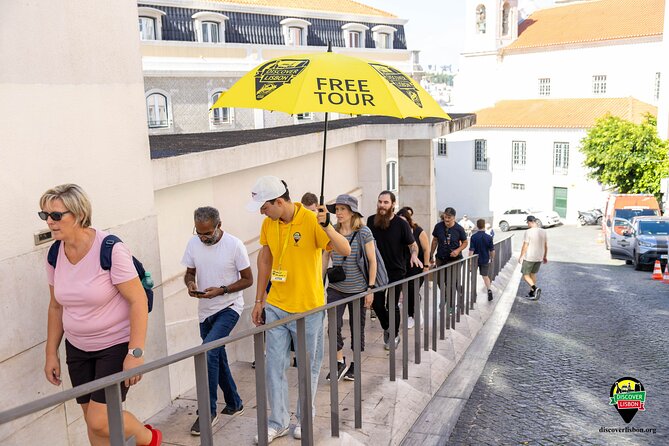
Lisbon can feel like a collection of pretty squares, tiled façades, steep lanes, and lookout points. This walk gives those places a sequence. You begin in Rossio, pass through the area around Chiado and Bairro Alto, and finish near Santa Catarina.
That progression matters. You are not simply ticking off monuments. You are seeing how Lisbon grew beyond its old walls, how religious foundations shaped neighborhoods, and how disaster changed the city.
The English-speaking guide is the key part of the experience. There is no named guide provided, so you cannot request a particular person in advance. What you can expect is a local guide focused on Portuguese culture, famous buildings, the earthquake, and useful facts about Lisbon.
The route lasts about two hours and 30 minutes. That is long enough for a proper orientation but short enough to fit into a first day in the city. You will not enter a long list of paid attractions, though. The main value comes from explanation, street-level context, and the connections between the stops.
More Lisbon Viewpoint Tours:
- Lisbon: City Highlights and Viewpoints E-Bike Tour
★ 4.9 · 1,556 reviews - Lisbon: Old Town TukTuk Tour and Scenic Viewpoints in Alfama
★ 5.0 · 974 reviews - Explore Lisbon by Tuk Tuk: History and Viewpoints
★ 5.0 · 840 reviews
Starting in Rossio at Praça Dom Pedro IV
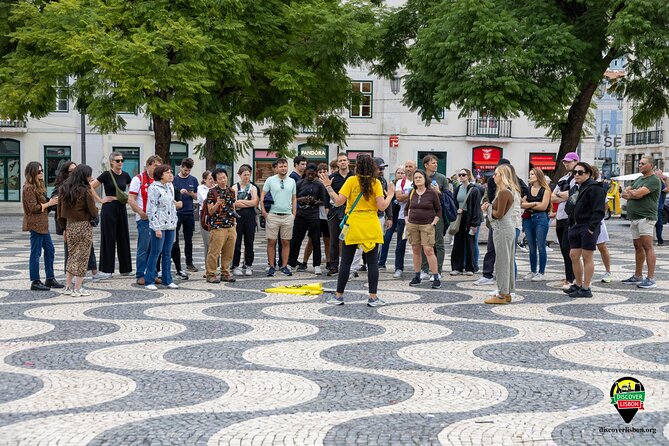
The walk begins at Praça Dom Pedro IV, usually called Rossio. This is one of the best places in central Lisbon to get your bearings. The square has a broad, open feel, patterned paving, and a constant flow of people crossing between Baixa, Chiado, and the train station.
The first 25 minutes are used to introduce Rossio and the surrounding center. That opening is practical because it places Lisbon’s modern activity beside its older urban story. The city’s main center was rebuilt and reorganized after the 1755 earthquake, and the guide includes the destruction caused by that disaster as part of the wider explanation.
You should listen for the difference between what survived and what was rebuilt. Lisbon’s central streets can look orderly and planned, while the upper neighborhoods feel far less regular. This walk helps explain why the city has that change in texture.
There is no admission charge for this stop. As with the rest of the route, the guide’s interpretation is the main product, not entry to an attraction.
Rossio Station and its theatrical façade
Rossio Train Station is one of the most memorable sights on the route. It was designed by José Luís Monteiro between 1886 and 1887 for the Portuguese Royal Railway Company, then completed in 1890.
Its purpose was practical: connecting Lisbon with Sintra. Its appearance is anything but plain. The façade is a Romantic recreation of the Manueline style, an ornate form associated with early 16th-century Portugal. The design uses stone carving and dramatic shapes to make a railway station feel almost like a ceremonial building.
The two intertwined horseshoe portals are the detail to watch for. Above them, the words Central Station appear in the original design. The entrance can look more like a temple than a place where commuters catch a train, which is exactly what makes the building useful in a walking tour. It gives you a clear example of how Portugal used national architectural symbols in the 19th century.
The stop lasts about 25 minutes and is free. You will spend most of that time outside, studying the façade and hearing why the Neo-Manueline style mattered. If you want a tour filled with interior visits, this will feel limited. If you enjoy architecture explained in place, it is one of the strongest stops.
Camões Square and Portugal’s national poet
The walk continues to Praça Luís de Camões, a square named for Luís de Camões. He wrote Os Lusíadas, the epic poem about Vasco da Gama’s sea route to India.
Camões is not presented as just another statue or name on a street sign. The guide explains how important his work became to Portuguese identity. The Portuguese language is sometimes called the language of Camões, a sign of how strongly his writing is tied to national culture.
You will also hear the story that Camões lost one eye in battle in Ceuta. That detail adds a human edge to a figure who can otherwise seem distant and monumental. The square is a useful pause before the route enters Bairro Alto because it brings together literature, military history, overseas expansion, and public memory.
Allow about 30 minutes here. The stop is free, but the subject is dense. If you want only photographs and quick facts, the time may feel generous. I think it earns the time because Camões helps explain how Portugal remembers its past, particularly the age of ocean voyages.
Something different to do with a day in Lisbon:
- Lisbon City Center Tour – The Unmissable Lisbon
★ 5.0 · 22,234 reviews - Lisbon: Sintra, Pena, Regaleira, Cabo da Roca & Cascais
★ 4.7 · 19,656 reviews - Sintra: Pena Palace and Park Entrance Ticket
★ 4.2 · 17,410 reviews - Lisbon: Jerónimos Monastery Entrance Ticket
★ 4.1 · 14,164 reviews
Entering Bairro Alto through plague and urban growth
Bairro Alto is often treated as Lisbon’s nightlife district. This walk gives you an earlier and less polished story. The guide explains how the neighborhood developed as Lisbon’s population grew in the late 15th century.
The area around today’s Camões Square once marked an entrance to the city. Lisbon had a Fernandine wall and the Santa Catarina gate nearby. Beyond the wall were properties linked to wealthy noble families, as well as a cemetery for victims of the Black Death.
In 1506, King Manuel I requested a relic of Saint Roch from Venice and placed it in a small hermitage near the cemetery. As the city grew and plague affected Lisbon, poorer residents and sick people moved toward the area to be close to the church. An urban plan followed to house the growing population.
This is the kind of explanation that improves a walk through Bairro Alto. You begin to see the neighborhood not just as a set of narrow streets but as a place shaped by pressure, illness, faith, and social class.
The Bairro Alto portion takes about 30 minutes. There is no admission fee, and the streets themselves are the attraction. The drawback is physical rather than financial. Lisbon’s central hills can be tiring, and the tour asks you to keep walking rather than settle into one place. A moderate fitness level is recommended.
Largo do Carmo and a church born from a battlefield vow
Largo do Carmo is the final major sightseeing stop listed for the route. The church and convent were founded by Nuno Álvares Pereira, a general who supported King John in the fight against Castilian troops.
Before the Battle of Aljubarrota in 1385, Pereira vowed to build what he called the world’s most beautiful church if the Portuguese won. Portugal was victorious, and he funded the Carmelite church and convent. Construction was completed in 1423. Pereira then joined the Carmelite order and spent the rest of his life there.
That story gives Largo do Carmo a personal scale. You are not looking only at an old religious complex. You are looking at the result of a military vow, a royal conflict, and a man who later gave up his former life to join the order.
The Carmelite church is also tied to Lisbon’s earthquakes and destruction. The open roof and damaged structure make the effects of the 1755 earthquake unusually easy to understand. Rather than hearing only a date and a casualty figure, you see a building that still carries the physical mark of disaster.
The listed time here is about 15 minutes. That is enough for an introduction, though not a long architectural study. If you want to spend more time examining the Carmo ruins or visit an interior attraction, check what is included before booking. This experience focuses on the guided walk, and entrance fees are not included.
The viewpoint detail and the route’s stated finish
The title promises viewpoints, and the route does move toward elevated parts of central Lisbon. The meeting information gives the end point as Miradouro de Santa Catarina, also known as the Santa Catarina viewpoint.
There is a small point to clarify. The sightseeing sequence names Largo do Carmo as the final stop, while the end point is listed as Miradouro de Santa Catarina. These are not the same place. The walk may continue after the Carmo discussion, or the end point may refer to where the guide leaves the group. Confirm the final arrangement at the start, especially if you have a dinner booking or transport connection.
The Santa Catarina finish is useful because it leaves you near a notable viewpoint and public transportation. It also gives the route a scenic ending rather than stopping beside the first major church. Still, do not assume that every viewpoint or attraction is a formal stop with extended commentary. The available details specifically identify the meeting end point, not a full description of what you will see there.
What the $3.61 price really means
At $3.61 per person, the advertised price is unusually low for a guided walk lasting two and a half hours. You should treat it as a starting price rather than the full amount you are likely to spend.
A guide contribution of 10 to 20 euros is not included. That contribution is the practical cost to budget for, in addition to any food, transport, or attraction entry you choose during the day. The walk itself does not include private transportation, and the Santa Justa elevator is not included.
Even with the contribution, the value can be good if you want a broad introduction to central Lisbon. You receive an English-speaking local guide, cultural and historical background, explanations of the earthquake, and stories linked to major monuments. You do not pay for a series of admissions, so the walk works best for someone who values context over access inside buildings.
The provider also offers discounts for booking other experiences for the rest of the day and night in Lisbon. The details of those discounts are not specified, so ask before relying on them when planning your budget.
Who should book this Lisbon walk
I would recommend this experience to a first-time Lisbon visitor who wants an orientation through the central neighborhoods. It suits you especially well if you like architecture, national history, and stories about how ordinary people and city institutions shaped a place.
It is also a good fit for a short stay. The route covers several major areas without taking an entire day, leaving time for other sights. Since the walk is offered in English, it is practical for English-speaking visitors who want more than a guidebook paragraph at each square.
You should think twice if you want a small, intimate group. The maximum group size is 50 people, which is large enough to make it harder to hear or stay close to the guide on narrow streets. The available details do not promise a whisper system or a smaller group.
You should also reconsider it if your priority is entering monuments. The tour is built around outdoor stops and commentary. Entry to the Santa Justa elevator is specifically excluded, and no paid attraction admissions are included.
Service animals are allowed, and the route is near public transportation. Still, the moderate fitness requirement matters. The hills and walking pace may be uncomfortable if you have difficulty with uneven or sloping city streets.
Booking, timing, and cancellation
Confirmation is provided at booking, and the activity is typically reserved about five days ahead. That timing suggests you do not need to plan months in advance, though popular dates can still fill.
Free cancellation is available if you cancel at least 24 hours before the local start time. Changes or cancellations made inside that 24-hour window are not accepted for a refund.
Bring a phone with the mobile ticket available. Arrive at Praça Dom Pedro IV, near Rossio, rather than heading directly to the Carmo area. Since the end point is listed separately from the final sightseeing stop, ask the guide to confirm the route and finish before setting off.
Should you book it?
Book this walk if you want a compact, story-led introduction to central Lisbon at a modest overall cost. Its best moments are Rossio Station’s ornate façade, Camões Square’s literary connection, Bairro Alto’s social history, and the damaged Carmelite church at Largo do Carmo.
Skip it if you want a small group, extensive interior visits, or a fully flat route. Also account for the 10 to 20 euro guide contribution, the possible group size of up to 50 people, and the difference between the Largo do Carmo stop and the stated finish at Santa Catarina.
For a first day in Lisbon, I think the route earns its place. It gives you a useful mental map, explains why the neighborhoods look different, and leaves you with a practical starting point for exploring on your own.
FAQ
Where does the tour start?
It starts at Praça Dom Pedro IV in Lisbon, near Rossio.
Where does the tour end?
The stated end point is Miradouro de Santa Catarina. Largo do Carmo is listed as the final major sightseeing stop, so confirm the exact finish with the guide.
How long does the experience last?
The walk lasts approximately two hours and 30 minutes.
What language is the tour offered in?
The experience is offered in English.
Is the guide contribution included in the price?
No. A contribution of 10 to 20 euros is not included.
Is transportation included?
No. Private transportation is not included. The route is near public transportation.
Is entry to the Santa Justa elevator included?
No. Entry to the Santa Justa elevator is specifically excluded.
What happens if I need to cancel?
You can receive a full refund if you cancel at least 24 hours before the local start time. Cancellations or changes made less than 24 hours before the start are not accepted for a refund.
Just reviewed in Lisbon
- Private tour Lisbon – full day★ 5.0 · 8 reviews
- Private Tour: Portuguese Food and Wine Tour★ 5.0 · 33 reviews
- Private Tour: Lisbon Sunset Walking Tour with Fado Show and Dinner★ 5.0 · 30 reviews
- Lisbon Football Experience – Private stadium and Museum Tour★ 4.0 · 10 reviews
- Lisbon and Sintra Essence 8H – Private Tour★ 5.0 · 5 reviews
- Private Catamaran Tour: Lisbon coast cruise with barbecue and drinks★ 5.0 · 20 reviews
- Lisbon: Helicopter Tour over Cascais & Cabo da Roca★ 5.0 · 4 reviews
- Private Tour Fátima – Nazaré – Batalha – Óbidos★ 5.0 · 6 reviews
Lisbon Viewpoint Tours, compared.
Old Town TukTuk Tour and Scenic Viewpoints in Alfama
Read our review →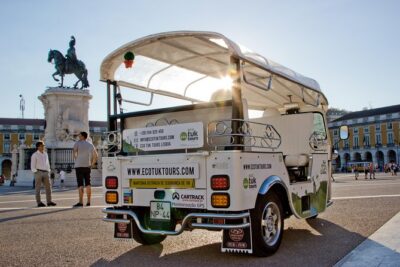
Explore Lisbon by Tuk Tuk: History and Viewpoints
Read our review →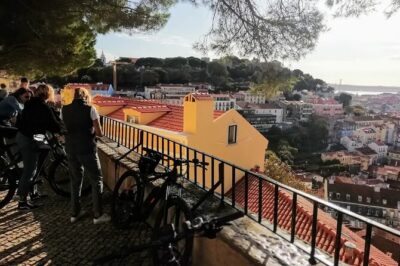
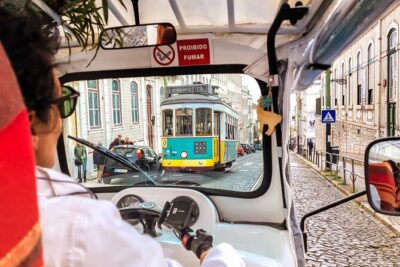
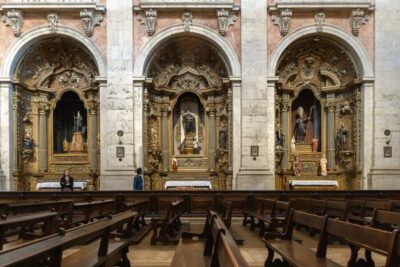
Graça Church | Convent & Terrace viewpoint access
Read our review →
Browse the lists this tour appears in