

Reviewed · LISBON WALKING TOURS
Highlights and Secrets of Lisbon Private Walking Tour
Lisbon’s best introduction may be a walk that links its grand squares with its everyday pleasures. This private route moves from Praça Luís de Camões through Baixa and Alfama, pairing the Carmo Convent and Lisbon Cathedral with custard tarts, local coffee, and a small glass of ginjinha.
I like the way the tour gives you both famous sights and ordinary Lisbon flavors. I also like the private format, which lets your guide answer questions and point out details that are easy to miss in a larger group. The main caution is the route’s scope: three hours covers a lot of ground, so this is an orientation walk, not a slow visit to every interior.
Key points at a glance
- Custard tart, coffee, and ginjinha: Three classic tastes give the walk a strong local feel.
- Private guiding: Only your group takes part, with Rodrigo singled out for being attentive, fun, and well informed.
- Major Lisbon landmarks: See Carmo Convent, Santa Justa Elevator, Praça do Comércio, Casa dos Bicos, and Lisbon Cathedral.
- A walk through changing Lisbon: The route runs from Chiado and Baixa into Alfama, ending at the Fado Museum.
- Flexible booking times: Departure times are offered in half-hour increments, useful when fitting the tour around trains, flights, or other plans.
- Value depends on group size: At $79.52 per person, the price makes more sense for a small private group than for a solo visitor.
From Praça Luís de Camões into Lisbon’s old center
The walk begins at Praça Luís de Camões, a useful meeting point between Chiado and Bairro Alto. The square honors Luís de Camões, Portugal’s great poet and a central figure in the Portuguese language. It also gives your guide a natural place to explain how Lisbon’s literary, religious, and commercial districts fit together.
From here, the route heads to Rua do Loreto, where you stop at one of Lisbon’s traditional cafés. You taste a pastel de nata, the small custard tart that has become Portugal’s most famous pastry, along with local coffee. This is a short stop, but it matters. Food gives you a quick way into the city, and your guide can explain what makes this snack part of daily Portuguese life.
The tasting is included in the tour’s plan, but the information does not spell out whether every additional order is covered. If you want another coffee or pastry, ask your guide before ordering. The stop lasts about 20 minutes, enough for a taste rather than a long café break.
More Lisbon Walking Tours:
- Lisbon: History, Stories and Lifestyle Walking Tour
★ 4.8 · 10,902 reviews - Best of Lisbon Small-Group Guided Walking Tour
★ 5.0 · 4,869 reviews - Lisbon: Food and Wine Small Group Walking Tour
★ 4.9 · 4,082 reviews
Gold, wood, and quiet corners at São Roque
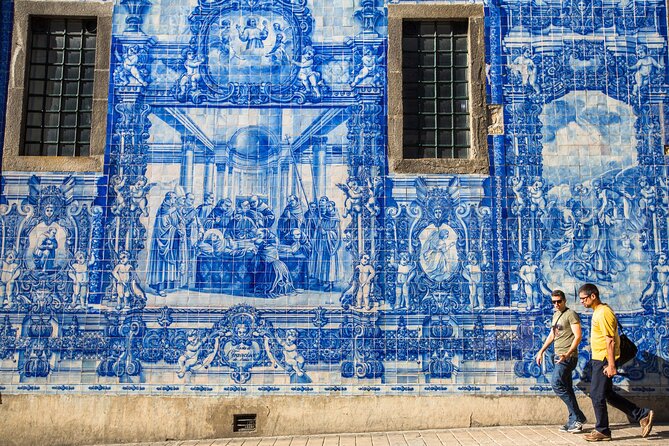
The Church of Saint Roch is next. From the outside, it may not prepare you for the decoration inside. The church is associated with the Brotherhood of Misericordia and contains elaborate wood and gold work, a reminder of how much wealth and influence religious brotherhoods once held in Lisbon.
You get about 10 minutes here, so expect a focused look rather than a long religious-art visit. That short timing suits the overall design of the tour. You are not parked in one building for an hour. Instead, you keep moving, using each stop to understand another piece of the city.
This is one place where a private guide has a practical advantage. You can ask why a certain chapel or decorative detail matters instead of simply passing through with a list of dates. The guide’s role is especially useful when the church’s art feels dense and unfamiliar.
Trindade’s old brewery and its unusual tiles
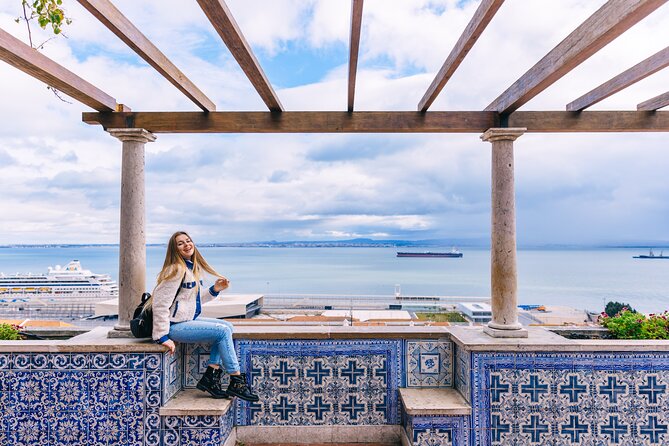
At Trindade, you see Lisbon’s oldest brewery and the palace that once housed it. The building is noted for its azulejos, the painted ceramic tiles used throughout Portugal, including tiles with masonic symbols.
The stop lasts only about 10 minutes, but it adds a different layer to the route. Lisbon is not only churches and royal squares. It also has places tied to brewing, dining, decoration, and city life. The palace setting makes this more interesting than a simple look at a modern bar.
You should treat this as a guided exterior and context stop unless your guide tells you there is time or access to see more. The tour description does not promise a brewery tasting here, so the main value is the building and its tiles, not a drink.
The Carmo Convent and the earthquake that changed Lisbon
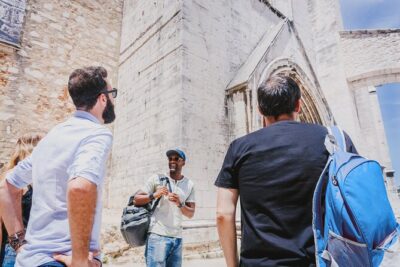
The Carmo section is one of the strongest parts of the walk. You enter the Carmo Archaeological Museum with a skip-the-line ticket and see the Gothic church left open to the sky after the 1755 earthquake.
The roofless arches make the damage easy to understand. You are not just hearing about the earthquake in a classroom-style explanation. The remains show how a working religious building was transformed by disaster and then preserved as a place of memory.
The convent also connects to modern Portuguese politics through the Carnation Revolution. That gives your guide two stories to tell in one setting: the old city shaped by the earthquake and the twentieth-century city shaped by political change.
Plan on 25 minutes here. That is enough to see the main ruins and hear the explanation, though anyone who likes archaeology may want more time. The skip-the-line entry is a useful inclusion, especially if the museum is busy. It also means the tour is not limited to an outside view of one of Lisbon’s most recognizable sites.
Something different to do with a day in Lisbon:
- Lisbon City Center Tour – The Unmissable Lisbon
★ 5.0 · 22,234 reviews - Lisbon: Sintra, Pena, Regaleira, Cabo da Roca & Cascais
★ 4.7 · 19,656 reviews - Sintra: Pena Palace and Park Entrance Ticket
★ 4.2 · 17,410 reviews - Lisbon: Jerónimos Monastery Entrance Ticket
★ 4.1 · 14,164 reviews
Santa Justa and the Baixa view
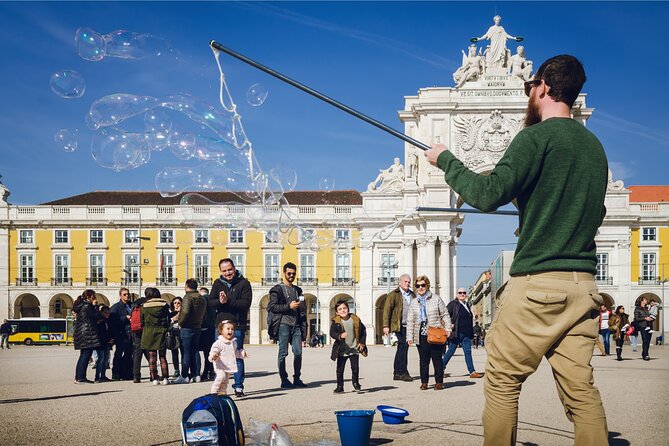
The Elevador de Santa Justa is one of Lisbon’s most recognizable pieces of engineering. Built in the early 1900s, the iron elevator links the lower Baixa district with the higher streets near Carmo. From its viewpoint, you can look across Baixa Pombalina toward Alfama and São Jorge Castle.
The tour gives you about 15 minutes here. The important detail is that admission is not included. You may look at the elevator and its setting as part of the walk, but using the lift or entering its paid viewpoint may cost extra.
That distinction matters when you compare the price. The tour includes the Carmo museum ticket, but not every attraction on the route has an included admission. Ask your guide what the current entry arrangement is if riding the elevator is important to you.
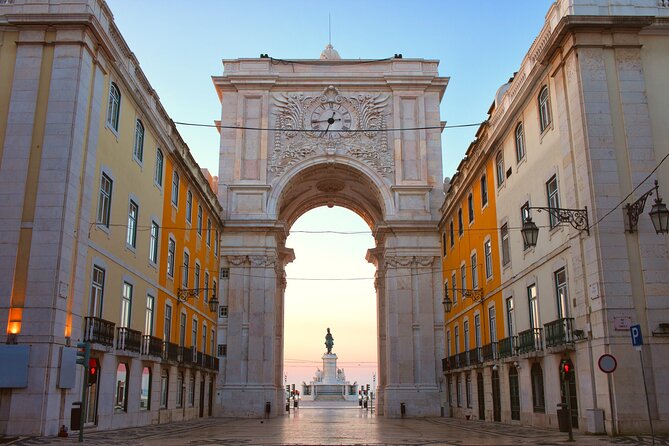
After Santa Justa, the route follows elegant Rua Garrett, then continues into Baixa Pombalina. You walk along Rua Augusta toward the monumental arch. This stretch helps you see how Lisbon was rebuilt after the earthquake in a more ordered, planned style.
Praça do Comércio and the rebuilt waterfront
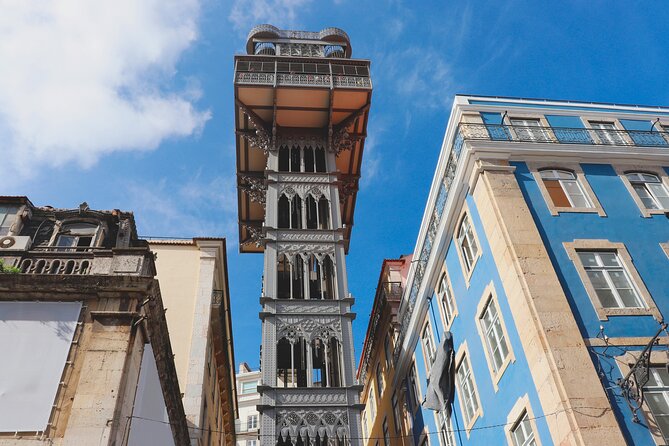
Praça do Comércio opens the city toward the Tagus River. The square was rebuilt after the 1755 earthquake and designed with masonic symbols. Its scale feels different from the narrow streets around Carmo and Alfama, so the change in space is part of the experience.
The tour points out the Cais das Colunas, the marble landing that once welcomed kings, queens, and presidents. It is a small detail, but a useful one. You begin to see the waterfront not just as a scenic place for photographs, but as a formal entrance to Lisbon.
You have about 15 minutes in the square. That gives you time to take in the arcades and riverfront, but not much time for a separate museum visit. If you want to linger by the water or take photographs at length, you may need to do that after the tour.
A surviving church and Lisbon’s women’s story
The Church of Nossa Senhora da Conceição Velha offers a compact but distinctive stop. It survived the earthquake and has a Manuelino facade, the ornate Portuguese style associated with the country’s maritime era. The tour also connects the church with women, though the exact details are best drawn out by asking your guide questions on site.
Ten minutes is brief, yet this stop breaks up the larger monuments with something more specific. You see how Lisbon’s churches differ from one another, and you get another reminder that the earthquake did not erase every older building.
The stop is free according to the tour details. As with all active churches, the interior experience can depend on what is happening there at the time, so keep the visit respectful and follow your guide’s lead.
Casa dos Bicos and a modern literary connection
Casa dos Bicos is easy to recognize because of its diamond-shaped stone facade. The palace belonged to the first governor of the Indies and now houses the foundation connected with José Saramago, the only Portuguese writer to win the Nobel Prize in Literature.
This is a good example of the tour’s time span. In a few minutes, you move from Portugal’s overseas empire to modern Portuguese literature. The building itself is worth seeing, but the Saramago connection makes it more than a striking facade.
The listed stop lasts 10 minutes and does not include a separate museum admission. Think of it as a short exterior and context visit unless your guide advises otherwise. If you want to explore the Saramago foundation in depth, plan another visit.
Lisbon Cathedral and the road into Alfama
The Lisbon Cathedral, or Sé, is next. It was built on the site of a former mosque, and its architecture combines Romanesque, Gothic, and neo-Gothic elements. That mixture gives your guide plenty to explain, particularly if you are trying to understand how Lisbon changed after the Christian reconquest and through later rebuilding.
You get about 15 minutes here. The route focuses on the cathedral as part of the city walk, not as a long architectural study. If the church is open and you want more time inside, ask whether you can return after the tour.
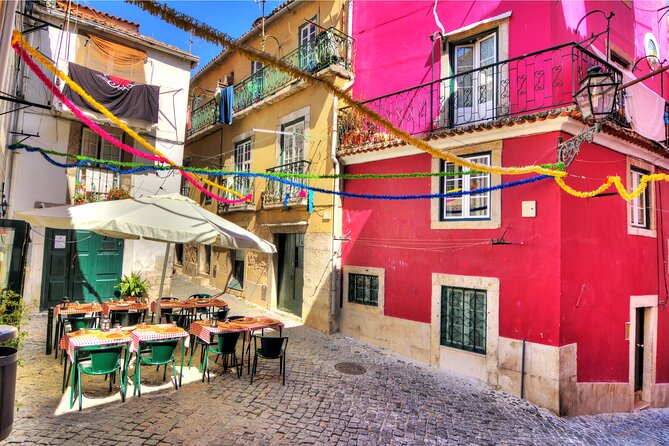
From the cathedral, the route moves toward Alfama. The character of the walk changes again. The broad squares and planned Baixa streets give way to an older quarter, with a more intimate feel and a closer connection to everyday neighborhood life.
Santo Estevão, ginjinha, and the Alfama finish
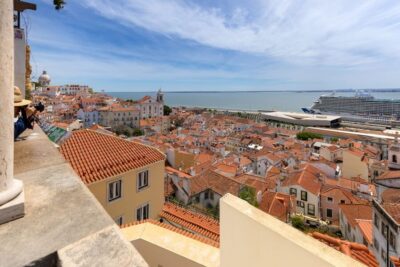
Miradouro de Santo Estevão is one of the tour’s most appealing pauses. From this viewpoint, you look across Lisbon while tasting ginjinha, the sweet cherry liqueur associated with the city. The drink is described as being served by the ladies of Alfama, adding a personal local touch to the stop.
The tasting lasts about 15 minutes, followed by a walk through the old quarter while you continue enjoying the ginjinha. This is a smart way to end the sightseeing portion. You get a view, a local drink, and time in Alfama rather than another formal building.
If you do not drink alcohol, ask about the tasting before booking or at the start of the tour. The supplied details do not state that a nonalcoholic substitute is available. Also remember that ginjinha is sweet but still alcoholic, so pace yourself if you have dinner, a performance, or other plans afterward.
Fado Museum and what you get from the guide
The walk ends at the Fado Museum in Largo do Chafariz de Dentro. The museum tells the story of fado, Portugal’s signature musical tradition. Admission is not included, so the tour provides the location and introduction rather than a full museum visit.
Ending here makes sense. You have crossed from Lisbon’s literary and commercial center into Alfama, the district most closely tied to the city’s older street life and fado culture. Your guide also offers advice about where to go, eat, and spend time next.
That final local guidance may be one of the private tour’s best benefits. If you want a fado performance, a meal, or a second look at Alfama, use the last few minutes to ask direct questions. The tour does not promise a fado show, and it does not include museum entry, but it leaves you in a useful area for continuing your evening.
Is $79.52 per person a fair price?
At $79.52 per person, this is not the cheapest way to see Lisbon. The value depends heavily on the size of your group. A private guide costs more than a large shared walk, but the price becomes easier to justify when divided among several people.
You are paying for about three hours of guiding, a broad route, the Carmo museum entry, and food and drink tastings described as part of the experience. You also avoid the effort of planning a route between Chiado, Baixa, the cathedral, and Alfama.
For one person or a couple on a tight budget, the cost may feel high. For a family or small group that wants a guide to itself, it can be a sensible use of money, especially at the start of a Lisbon stay.
The tour is booked well in advance on average, around 80 days, so popular departure times may not remain open close to your visit. The wide choice of start times, offered within half-hour intervals, helps you fit it around your schedule.
Who will get the most from this walk?
I would choose this tour for a first visit to Lisbon, especially if you want a quick sense of how the city’s districts connect. It suits people who like architecture, food, viewpoints, and local stories in one outing rather than a single museum-focused visit.
It is also a good fit for a private family group. Children may respond better to the pastry, elevator, ruined convent, and viewpoint than to a long formal lecture. Older visitors should consider the walking route and Lisbon’s changing levels before booking, since the experience moves through several districts and includes Alfama.
The guide quality matters here. Rodrigo received especially strong praise for being fun, attentive, and able to answer questions. That does not guarantee that every departure will have Rodrigo, so check the assigned guide if his participation is important to you.
One serious warning deserves attention. A booking problem was reported in which the group waited more than 45 minutes while trying to locate the guide, followed by a dispute about the charge. The provider said the guide had been at the meeting place and had tried to call. The lesson is simple: arrive at Praça Luís de Camões early, check the exact meeting point, keep your phone available, and contact the provider promptly if you cannot find the guide.
Should you book the Highlights and Secrets of Lisbon walk?
Book it if you want a private, fast-moving introduction to Lisbon that mixes major sights with pastry, coffee, and ginjinha. The route has a clear sense of place, and the best moments come from the links between stops: the earthquake at Carmo and Praça do Comércio, the old cathedral site, the move into Alfama, and the final connection to fado.
Skip it if you want long, unhurried visits inside each attraction or if you prefer to explore at your own pace. Santa Justa and the Fado Museum require extra payment, and three hours is not enough for detailed museum time.
For a small group that values personal guidance, this is a strong first-day choice. Confirm the meeting point, ask about your guide, and treat the walk as a well-planned introduction rather than the complete Lisbon experience.
FAQ
How long does the Lisbon private walking tour last?
The tour lasts approximately three hours.
Where does the tour begin?
It begins at Praça Luís de Camões, Largo Luís de Camões, 1200-243 Lisboa, Portugal.
Where does the tour end?
It ends at the Fado Museum in Alfama, at Largo do Chafariz de Dentro 1, 1100-139 Lisboa, Portugal.
Is this a private tour?
Yes. Only your group participates in the activity.
What food and drinks are included?
The experience includes a pastel de nata, local coffee, and a tasting of ginjinha liqueur.
Is admission to the Carmo Archaeological Museum included?
Yes. The tour includes a skip-the-line ticket for the Carmo Archaeological Museum.
Are the Santa Justa Elevator and Fado Museum admissions included?
No. Admission to the Santa Justa Elevator and the Fado Museum is not included.
Can I cancel for a full refund?
Yes. You can cancel at least 24 hours before the experience start time for a full refund. Cancellations or changes made less than 24 hours before the start time are not accepted for a refund.
Just reviewed in Lisbon
- Private tour Lisbon – full day★ 5.0 · 8 reviews
- Private Tour: Portuguese Food and Wine Tour★ 5.0 · 33 reviews
- Lisbon Football Experience – Private stadium and Museum Tour★ 4.0 · 10 reviews
- Lisbon and Sintra Essence 8H – Private Tour★ 5.0 · 5 reviews
- Private Tour: Lisbon Sunset Walking Tour with Fado Show and Dinner★ 5.0 · 30 reviews
- Private Catamaran Tour: Lisbon coast cruise with barbecue and drinks★ 5.0 · 20 reviews
- Lisbon: Helicopter Tour over Cascais & Cabo da Roca★ 5.0 · 4 reviews
- Private Tour Fátima, Nazaré, and Óbidos Day Trip from Lisbon★ 5.0 · 25 reviews
Lisbon Walking Tours, compared.
Best of Lisbon Small-Group Guided Walking Tour
Read our review →
Best of Lisbon Walking Tour: Rossio, Chiado & Alfama
Read our review →

Lisbon Roots – Small group Food & Culture Walking Tour w/tastings
Read our review →
Starter Walking Tour to the highlights in German
Read our review →
Browse the lists this tour appears in