
Reviewed · CITY TOURS
Lisbon city tour on history, culture and current topics
Lisbon reveals itself best on foot, and this walk takes you from the grand stonework of Rossio to the narrow lanes of Alfama. Along the way, you get history, culture, and current local topics, not just a checklist of sights. Guides Sara, Melina, and Pedro are specifically named in the experience information, and each brings a friendly, personal approach.
I like two things right away: the small maximum of 12 people, which makes questions practical, and the route itself, which connects four very different districts. I also like the useful extras, including a local pastry or liqueur tasting and a recommendation sheet for food and sightseeing.
The tradeoff is the walking. You will go uphill and downhill, sometimes on Lisbon’s uneven streets, and there is no private transport. This is not the right pick if stairs, slopes, or a three-and-a-half-hour walk would be a problem.
Key points at a glance
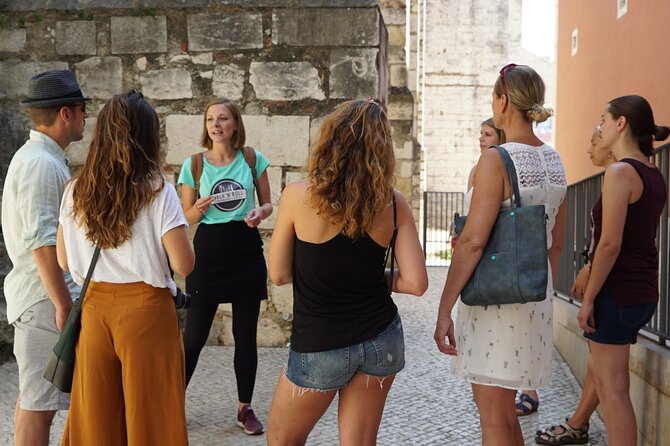
- Four central districts in one walk: See Baixa, Chiado, Bairro Alto, and Alfama in a single route.
- Santa Justa from two angles: View the famous elevator from street level, then from a lookout with views toward Baixa and Lisbon Castle.
- A proper break at São Pedro de Alcântara: The itinerary allows 40 minutes at one of Lisbon’s finest viewpoints.
- German-speaking guidance: The walk is designed for German speakers and covers Portuguese history, daily life, culture, and current topics.
- A small group capped at 12: You get a better chance to hear the guide and ask about places you will visit later.
- Ends beside the Tejo: The final stop is Praça do Comércio, a convenient place to continue exploring central Lisbon.
From Rossio Square into Lisbon’s lower town
The walk begins at the north fountain of Praça Dom Pedro IV, usually called Rossio, between the statue of King Pedro IV and the National Theatre. This is a sensible meeting point. It is central, easy to reach by public transport, and gives the guide an open setting in which to introduce Lisbon.
Rossio is one of the city’s grand public squares, with patterned paving, fountains, and a strong connection to Lisbon’s civic life. From here, the group moves into Baixa, the lower town laid out in a more orderly grid than the older hills around it.
I like this opening because it gives you a quick orientation. Lisbon can feel confusing at first, with the river, hills, trams, and old lanes pulling in different directions. Starting in Baixa helps you understand how the flat central district relates to the higher neighborhoods.
The first stops are brief, about 10 minutes each. That keeps the pace moving, but it also means this is an overview walk rather than a series of long monument visits. You will see the major areas and receive context, then return on your own if one spot deserves more time.
More Historical Tours in Lisbon:
- Lisbon: History, Stories and Lifestyle Walking Tour
★ 4.8 · 10,902 reviews - Lisbon: Live Fado Show with Port Wine in Historic Center
★ 4.7 · 4,166 reviews - Lisbon: Fado Show with Wine in a Historic Venue
★ 4.8 · 1,294 reviews
Santa Justa and the Carmo ruins
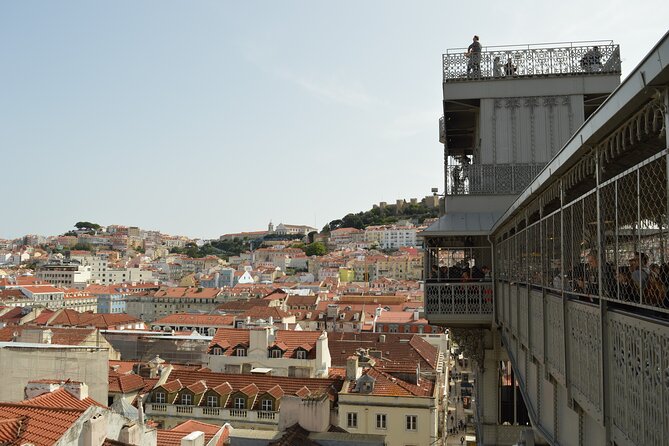
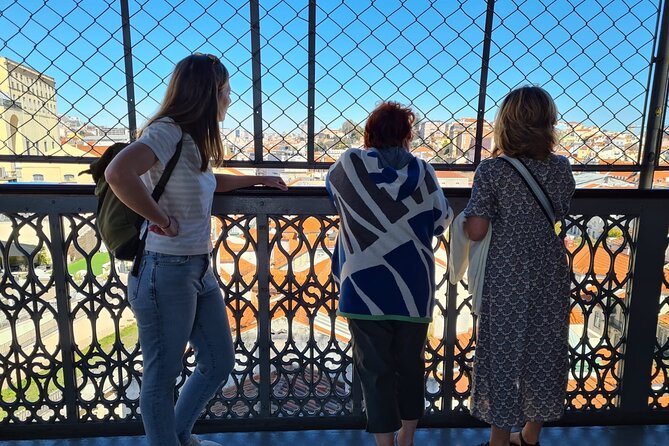
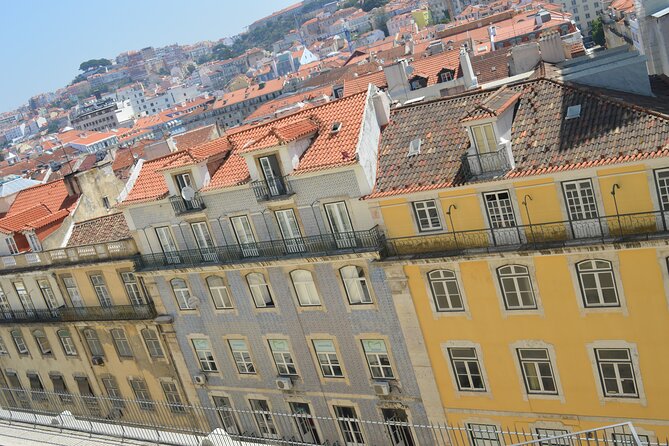
The Santa Justa elevator is one of Lisbon’s most recognizable pieces of ironwork. On this walk, you first see it from below, where its tall structure rises between the streets of Baixa and Chiado. Then the route takes you to an observation point with views over the lower town and toward Lisbon Castle.
That two-part approach is useful. From street level, you appreciate the engineering and the way the elevator links two levels of the city. From above, you understand its place in Lisbon’s steep layout. You are not simply looking at a famous structure. You are seeing why it was built and how the neighborhoods fit together.
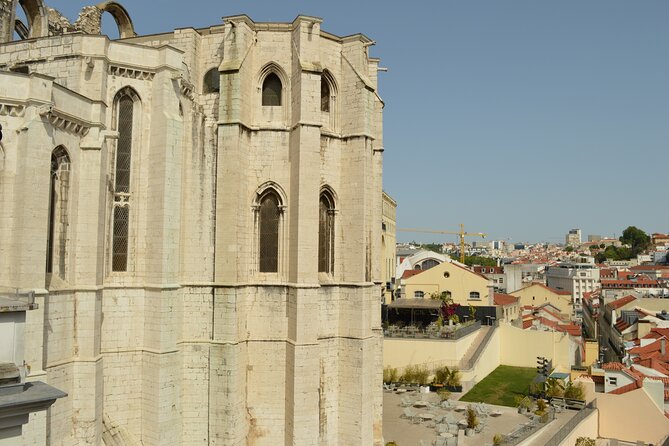
The next stop is the Carmo Convent, viewed from outside. Its roofless Gothic ruins are among Lisbon’s most memorable sights, and they carry a clear connection to the city’s past. The stop lasts about 15 minutes, enough for an explanation and a look around, but not a full interior visit.
That distinction matters if you want to explore the Carmo Archaeological Museum or spend time inside the ruins. Admission is not part of this walk. The value here is the guide’s context and the efficient introduction, not an extended monument visit.
Chiado, the poets’ quarter
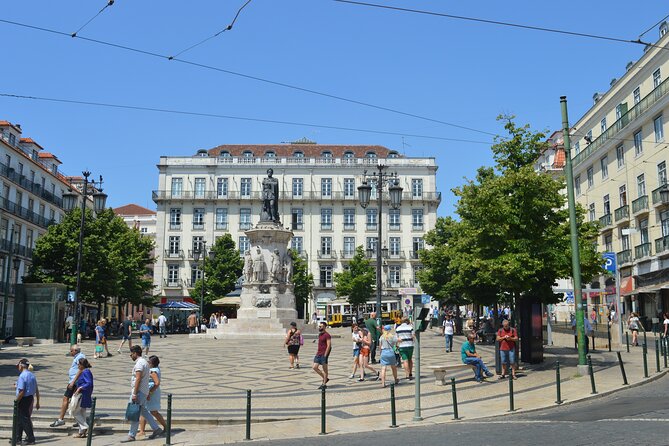
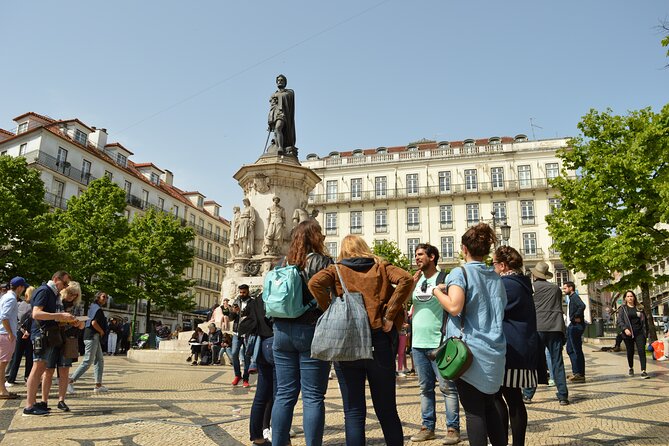
From Carmo, the walk continues through Chiado, known here as the poets’ quarter. The route gives you about 20 minutes in the district before reaching Praça Luís de Camões, its largest square.
Chiado is a good place to see Lisbon’s more polished central side. It connects shops, cafés, literary associations, theaters, and public squares, while still keeping the city’s hills close at hand. The guide’s discussion of Portuguese writers and cultural life helps give the streets more meaning than they would have on a quick shopping stop.
Praça Luís de Camões is also a useful transition point. From here, the mood changes as the route climbs toward Bairro Alto. You move from the formal lower city into a neighborhood built around narrow streets, residential buildings, and evening social life.
The schedule allows about 15 minutes at the square. That is enough to pause, listen, and get oriented. If you want a long café stop or detailed shopping time in Chiado, plan to return later.
Bairro Alto before the nightlife begins
Bairro Alto has a split personality. During the day, it can feel surprisingly quiet, with ordinary residential life behind the shutters and doors. At night, the same streets become a bar district.
Seeing it in daylight is one of the more useful parts of the route. You get a chance to notice the neighborhood as a place where people live, not only as a nightlife zone. The guide also discusses how the area changes after dark, which gives you a better sense of Lisbon’s daily rhythm.
The route spends around 20 minutes here before continuing to Miradouro de São Pedro de Alcântara. This section includes an uphill climb, so take the physical warning seriously. You do not need athletic ability, but you should be comfortable walking on slopes and standing for long periods.
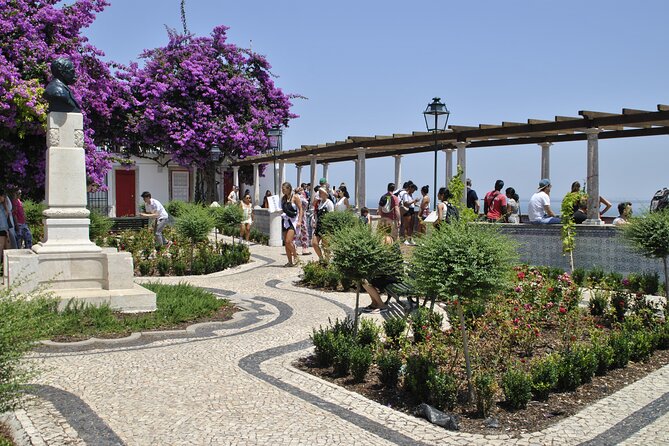
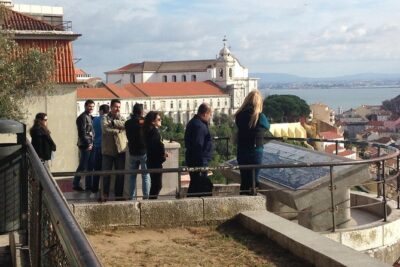
The lookout is given 40 minutes, the longest pause on the route. That is a good choice. The view opens across central Lisbon toward the castle and surrounding hills, and a proper break helps after the climb.
This is also where the tasting fits naturally. The included refreshment is listed as a local pastry or liqueur. Specific feedback about the experience refers to pastéis de nata and ginjinha, the familiar sour-cherry liqueur, but the exact tasting should be understood as one local item rather than a full food tour.
If you are curious about ginjinha, this is a fun chance to learn how to say and order it. If you prefer a pastry, you may receive a sweet local bite instead. Either way, it is a small addition, but it breaks up the walk and adds a taste of Lisbon without turning the activity into a meal.
More City Tours in Lisbon:
- Lisbon City Center Tour – The Unmissable Lisbon
★ 5.0 · 22,234 reviews - Lisbon: Daytime/Sunset/Night City Sailboat Tour with Drink
★ 4.9 · 3,114 reviews - Lisbon: City Highlights and Viewpoints E-Bike Tour
★ 4.9 · 1,556 reviews - Lisbon: Private City Tour by Eco Tuk Tuk
★ 4.9 · 1,215 reviews
Rua Augusta and the route toward Alfama
After the viewpoint, the route passes along Rua Augusta, Lisbon’s main shopping street, for about 10 minutes. This is a brief taste rather than a dedicated shopping session.
Rua Augusta leads toward Praça do Comércio, but the walk reaches that square only at the end. Before then, the group turns toward Alfama. That change gives the route a strong sense of contrast: from the broad, straight streets of Baixa to the irregular lanes of Lisbon’s oldest quarter.
You should not expect every street to be covered in detail. The route has a lot to accomplish in three and a half hours. Its strength is the sequence, showing how Lisbon changes from district to district, rather than lingering in one neighborhood.
Alfama’s winding lanes and Santa Luzia
Alfama is the oldest district on the route and one of the places where walking matters most. Its streets twist, narrow, and climb, making the area difficult to understand from a vehicle. The group spends about 30 minutes exploring the quarter.
This is where a guide can help you notice small details and connect them to Lisbon’s past. The route is built around the shape of the neighborhood, its viewpoints, and its winding alleys. You will have a clearer sense of how Alfama differs from Baixa, Chiado, and Bairro Alto.
The path then reaches Miradouro de Santa Luzia, described as Lisbon’s most beautiful viewpoint. The stop lasts about 10 minutes. It is a short pause, so have your camera ready and listen closely while the guide explains what you are seeing.
The practical downside is the ground underfoot. Alfama’s slopes and uneven paving can be tiring, especially after the earlier climb to São Pedro de Alcântara. Wear comfortable shoes with a secure grip. This is not a polished, level promenade.
Finishing at Praça do Comércio and the Tejo
The final stop is Praça do Comércio, also called Terreiro do Paço, on the bank of the Tejo River. Its broad open space and triumphal arch provide a fitting end after the tight streets of Alfama.
The square is easy to use as a base for the rest of your day. You can stay by the river, continue along the waterfront, return into Baixa, or use public transport from central Lisbon. Ending here also gives you a clear mental map: the neighborhoods you crossed are now behind you, and the river marks the southern edge of the city center.
The final stop is scheduled for about 10 minutes. The guide does not provide private transport, and the activity ends in the square rather than returning you to Rossio. That is convenient if you plan to continue sightseeing, but you should allow extra time to reach your hotel.
What the guide adds beyond a map
The experience is conducted in German, which is its main audience. Its subject matter goes beyond dates and buildings, covering Portuguese history, culture, daily life, and current topics.
The strongest praise attached to the experience focuses on the guides’ personal style. Sara is associated with practical insider advice and an entertaining approach, while Melina is described as especially friendly and helpful. Pedro is repeatedly singled out for his humor, clear answers, city knowledge, and ability to connect historical information with everyday life.
You should not assume which guide will lead your departure, but the named guides give you a useful sense of the tone. This is not presented as a silent march between monuments. The guide is expected to answer questions, point out less obvious places, and offer suggestions for the rest of your stay.
The restaurant advice may be one of the most useful extras. Several pieces of feedback describe using the recommendations later, with good results. The included recommendation sheet gives you something to keep after the walk, although the quality of any restaurant visit will still depend on your own choice and timing.
Is $45.86 good value?
At $45.86 per person, this costs more than a tip-based walk, but the comparison is not quite like for like. You are paying for a scheduled three-and-a-half-hour German-language tour, a small group capped at 12, a tasting, and written recommendations.
The small group matters in Lisbon. The route includes viewpoints, narrow streets, and busy central areas where a very large group can become awkward. With 12 or fewer people, it should be easier to hear the guide and ask about food, neighborhoods, or practical plans.
The value is strongest if you want a well-shaped introduction on the first day or two of your visit. You see four central districts, learn how they relate, and receive ideas for what to do afterward. If you already know Lisbon well, or want long interior visits at monuments, the price may feel less attractive.
All listed stops are viewed from outside or in public spaces. There is no private transport and no major admission included. Think of this as a guided orientation with local context, not a museum-heavy sightseeing package.
Who should book this walk?
I would choose it for a German-speaking visitor who wants to understand Lisbon quickly and prefers a human guide to a phone map. It suits first-time visitors especially well, since the route covers the city center’s main districts without spending the whole day on one attraction.
It is also a good match if you enjoy asking questions. The small group and the guide’s focus on current topics, food, and local life make the format more useful than a basic monument recital.
I would be cautious if you have walking difficulties, poor balance, or limited stamina. The organizer recommends moderate to good fitness, and that is fair. Expect hills, uneven streets, and a long period on your feet. Good weather is also required. If conditions are poor and the walk is canceled, you can choose another date or receive a full refund.
You receive confirmation at booking, and free cancellation is available up to 24 hours before the start time. Inside that 24-hour window, the payment is not refunded, and changes are not accepted.
Should you book the Lisbon city tour?
Book it if you want a small-group German walking tour that gives you a useful first look at Lisbon rather than a deep visit to one monument. The route is well chosen, the views are excellent, and the tasting and restaurant suggestions add practical value.
Skip it if you need step-free sightseeing, dislike hills, or prefer to explore at your own slow pace. For most reasonably fit first-time visitors who want history, local context, and a clear sense of Lisbon’s neighborhoods, $45.86 is a fair price for a strong introduction.
FAQ
How long does the Lisbon city tour last?
The tour lasts approximately 3 hours and 30 minutes.
In which language is the tour conducted?
The city walk is conducted in German.
Where does the tour begin?
It begins at the north fountain of Praça Dom Pedro IV, also known as Rossio Square, between the King’s Statue and the National Theatre.
Where does the tour end?
The tour ends at Praça do Comércio, also called Terreiro do Paço, beside the Tejo River.
Is food or drink included?
One local tasting is included. It is described as a local pastry or liqueur. Specific examples associated with the experience include pastéis de nata and ginjinha.
Is the walk suitable for people with walking difficulties?
No. The experience is not suitable for people with walking difficulties. A moderate to good level of fitness is recommended because the route includes uphill and downhill walking.
Just reviewed in Lisbon
- Private tour Lisbon – full day★ 5.0 · 8 reviews
- Private Tour: Portuguese Food and Wine Tour★ 5.0 · 33 reviews
- Lisbon Football Experience – Private stadium and Museum Tour★ 4.0 · 10 reviews
- Lisbon and Sintra Essence 8H – Private Tour★ 5.0 · 5 reviews
- Private Tour: Lisbon Sunset Walking Tour with Fado Show and Dinner★ 5.0 · 30 reviews
- Private Catamaran Tour: Lisbon coast cruise with barbecue and drinks★ 5.0 · 20 reviews
- Lisbon: Helicopter Tour over Cascais & Cabo da Roca★ 5.0 · 4 reviews
- Private Tour Fátima – Nazaré – Batalha – Óbidos★ 5.0 · 6 reviews
City Tours, compared.
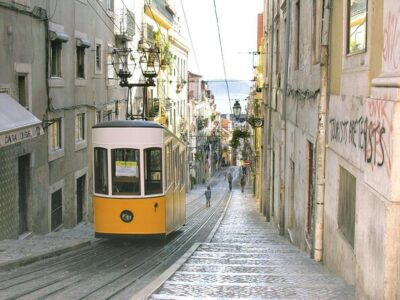
Lisbon City Center Tour – The Unmissable Lisbon
Read our review →
Daytime/Sunset/Night City Sailboat Tour with Drink
Read our review →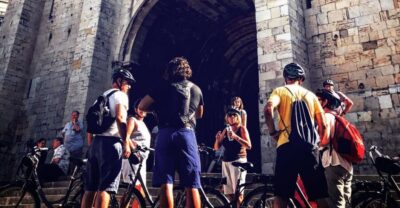

Browse the lists this tour appears in