
Reviewed · LISBON WALKING TOURS
Lisbon Essential Walking Tour: History, Stories and Lifestyle
Lisbon’s story makes the most sense when you walk it from hilltop to river. This tour links Bairro Alto, San Roque, Carmo, Baixa, Alfama, and the cathedral, adding a tram ride and a coffee-and-pastry break along the way. It is a useful first look at a city that can otherwise feel like a pile of beautiful but disconnected neighborhoods.
I like the strong historical thread, especially the way the route connects the 1755 earthquake, the Carnation Revolution, Portuguese Catholic art, fado, and the city’s older quarters. I also like the human touch from guides such as Ricardo, Beatrice, Paulo, Ana, and Sofia, who bring personal stories and practical advice about restaurants, fado, and getting around.
The catch is simple: this is a real hill walk, not a gentle stroll. The route covers close to four miles according to one detailed account, with steep streets, steps, and uneven paving. Wear good shoes, bring water, and think twice if walking for three hours is difficult.
Key points to know before booking
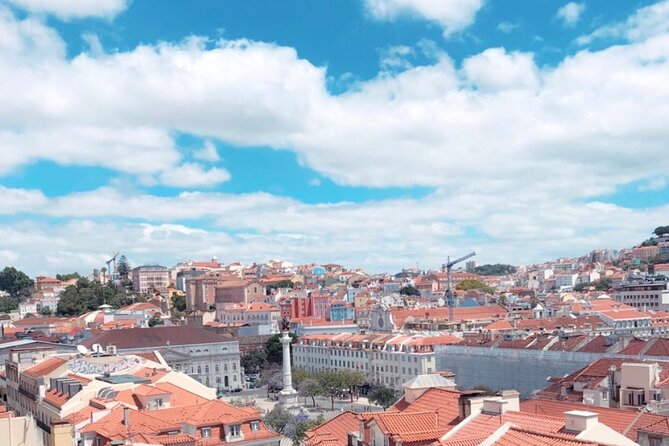
- See Lisbon from several angles: Look across Baixa and the Tagus from São Pedro de Alcântara, then take in Alfama from Portas do Sol.
- The history connects the sights: Learn how the 1755 earthquake reshaped the city and why Carmo matters to the 1974 Carnation Revolution.
- San Roque is a surprise: Its plain exterior gives way to an ornate interior filled with gilding, tiles, and paintings.
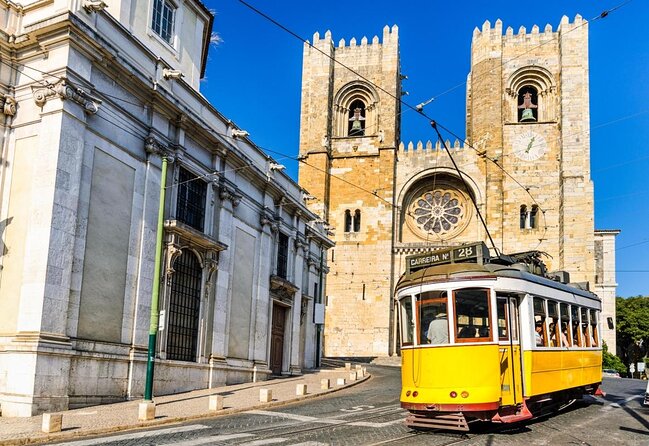
- A Tram 28 ride is included: The tram adds a practical taste of Lisbon’s famous public transport to the walking route.
- Coffee and pastry break: A local café stop gives your feet a rest and includes coffee with cake or a pastry.
- Small-group format: The group is limited to 15 people, which should make questions and conversation easier.
Why this makes a smart first morning in Lisbon
At $30.25 per person, this is priced more like an orientation walk than a full sightseeing package. You are not paying for a string of costly entry tickets. Instead, your fee covers a local guide, the tram trip, coffee and cake, and insurance, while many of the major sights are viewed from public streets or entered without a separate charge.
That is good value if you want the city to make sense quickly. Lisbon’s neighborhoods sit on different hills and have distinct personalities. Without a guide, you can easily walk from Bairro Alto into Baixa and then wonder why the buildings, streets, and mood have changed so sharply.
The tour is especially useful on your first day. You get a map in your head, learn which areas you want to revisit, and pick up practical suggestions from the guide. Ricardo is praised for making the past easy to follow, while Beatrice is noted for helping with city navigation and explaining the tram. Paulo is described as friendly and funny, with useful recommendations at the end.
The experience has a strong record overall, with a 4.8 rating from 316 reviews and 95 percent of customers recommending it. That does not mean every departure will be perfect. One booking problem involved an incorrect meeting point and the guide not receiving the reservation, while another person found the explanations unclear and did not enjoy the walking portion. Those cases are worth keeping in mind, particularly if you need precise meeting instructions.
More Lisbon Walking Tours:
- Lisbon: History, Stories and Lifestyle Walking Tour
★ 4.8 · 10,902 reviews - Best of Lisbon Small-Group Guided Walking Tour
★ 5.0 · 4,869 reviews - Lisbon: Food and Wine Small Group Walking Tour
★ 4.9 · 4,082 reviews
Bairro Alto begins the city story
The walk starts in Bairro Alto, a neighborhood with about five centuries of history. It is a fitting place to begin because Lisbon’s past is not presented as a list of dates. You start by seeing how the city grew, changed, and recovered.
The 1755 earthquake is a major part of the story. After the disaster, families from Baixa and nearby districts moved into or helped renew parts of Bairro Alto. Your guide uses this opening section to explain how Lisbon developed across its hills and how the earthquake changed the city’s shape.
Expect about 15 minutes here. That is not long enough for a full neighborhood tour, but it gives you a useful frame for the rest of the walk. You will also begin to understand why Lisbon rewards people who look up, down, and across the valley instead of walking only along the main streets.
São Pedro de Alcântara brings the first great view
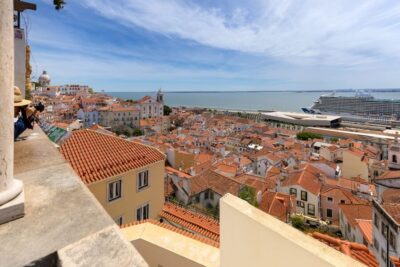
From Bairro Alto, you pass through the garden at Miradouro de São Pedro de Alcântara. The viewpoint looks over Baixa and toward the south bank of the Tagus River, so it is a good moment to pause and place the city geographically.
I like this stop because it turns the hills from a nuisance into part of Lisbon’s appeal. From above, the city’s slopes, rooftops, and river setting become easier to understand. Your guide can point out the areas you will later visit on foot.
The stop lasts about 15 minutes and is free. Bring your camera, but also listen to the explanation. A view is more useful when you know what you are looking at.
San Roque hides an ornate interior
Igreja de São Roque is one of the most rewarding stops on the route. The church was built by the Jesuits and was among the first Jesuit churches in Portugal, and among the earliest anywhere in the world.
From the outside, the church looks restrained. Inside, the mood changes. Gilding, tiles, and paintings create a dense display of Mannerist and Baroque decoration. The contrast is exactly what makes the visit memorable.
You spend about 20 minutes here. That is enough for an introduction, though art lovers may wish they had more time to examine every detail. The church and museum are listed as free admission on this tour, so the stop adds real value without requiring another ticket.
Several guides, including Ricardo and Paulo, are praised for turning historical information into stories rather than delivering a dry lecture. That matters here. São Roque is much easier to appreciate when you understand why the Jesuits built it and how different the interior is from the simple façade.
Something different to do with a day in Lisbon:
- Lisbon City Center Tour – The Unmissable Lisbon
★ 5.0 · 22,234 reviews - Lisbon: Sintra, Pena, Regaleira, Cabo da Roca & Cascais
★ 4.7 · 19,656 reviews - Sintra: Pena Palace and Park Entrance Ticket
★ 4.2 · 17,410 reviews - Lisbon: Jerónimos Monastery Entrance Ticket
★ 4.1 · 14,164 reviews
Carmo connects architecture with revolution
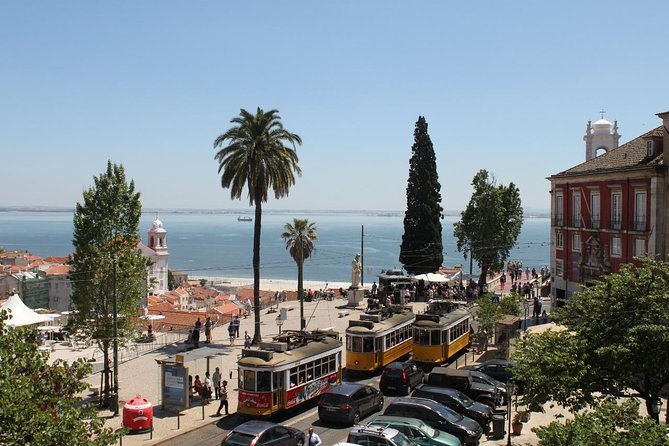
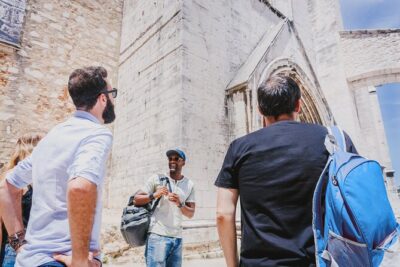
The walk then heads downhill to Carmo convent and church. The Gothic remains are striking, but Carmo is important for more than its appearance. This is where the Carnation Revolution began in 1974, ending nearly five decades of dictatorship in Portugal.
That political connection gives the stop extra weight. You are not just looking at old stone. You are standing at a place tied to a major change in modern Portuguese life.
The stop takes around 20 minutes. The walk downhill may feel easier than the opening climb, but Lisbon’s pavement can still be tiring. Comfortable shoes are not optional here, especially if you plan to continue exploring after the tour.
Carmo also shows how the route mixes art, architecture, and politics. That variety keeps the three hours moving. You are not asked to focus on one period of Lisbon’s past from start to finish.
Santa Justa offers a famous city angle
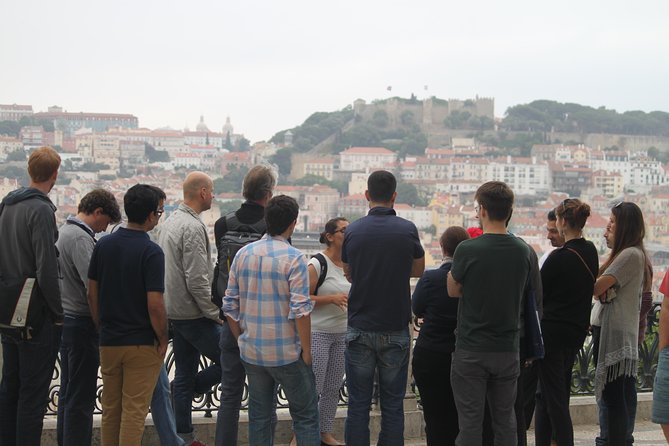
A short walk farther brings you to the Santa Justa elevator. This Gothic Revival structure is one of Lisbon’s most recognizable monuments and provides one of the city’s best viewpoints.
The elevator itself is not included as a separate admission. The tour gives you about 15 minutes at this stop, so you should not book it expecting a long visit inside or an extended wait for the lift. Ask your guide exactly what the group will do here on the day.
Even from street level, Santa Justa helps explain the practical problem Lisbon’s hills have always created. The city’s lifts, trams, and funiculars are not just decorative attractions. They make it possible to move between neighborhoods built at very different heights.
Baixa supplies coffee, cake, and a reset
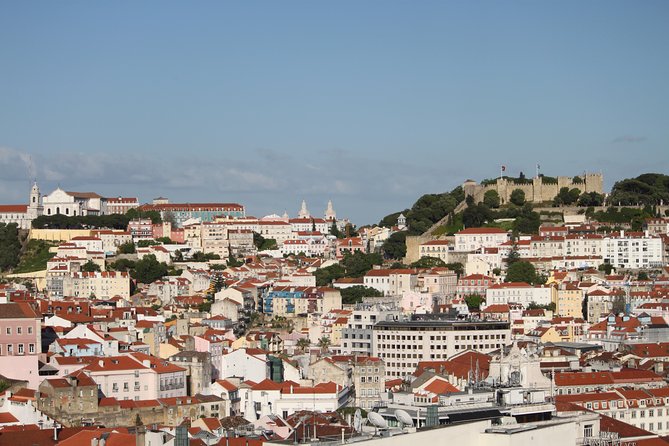
The group continues into Baixa, Lisbon’s central lower district. Here you stop at a local café for coffee and a pastry or cake. The break lasts about 15 minutes and is included in the price.
This is a small feature, but it improves the whole experience. Three hours of hills and city pavement can wear you down, and a short café stop gives you time to sit, ask questions, and absorb what you have seen.
The food is not meant to replace lunch. Other food and drinks are not included, so plan to eat before or after the walk. Still, the break gives you a taste of local café culture and adds a pleasant pause between the central streets and the uphill route toward Alfama.
The café location may be described as the Academic Milk Bar in some tour experiences, and the stop is associated with a pastry break. If you have allergies or specific dietary needs, ask the guide what is available rather than assuming the included snack will suit you.
Praça da Figueira leads to the tram
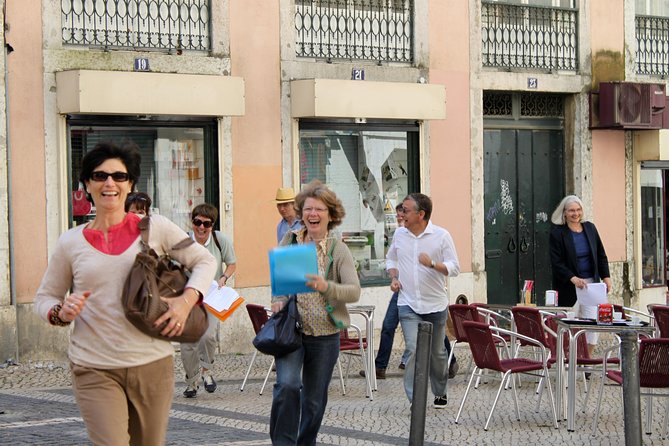
After the break, the route passes through Praça da Figueira and other parts of Baixa. This section helps you see the center as a working part of Lisbon, not only as a collection of monuments.
The tour then includes a tram ride uphill from the castle area toward Portas do Sol. The ride is one of the most appealing practical touches. You get a short taste of the transport system that helps Lisbon manage its steep streets, without spending the entire tour waiting in a tram queue or riding across the city.
The details describe this as a Tram 28 experience. It is important to keep expectations sensible. A 15-minute timetable is given for this section, so the ride is a brief part of the tour, not a full route from end to end. Crowds and service conditions can affect the exact experience.
Still, this is a good use of time. You walk enough to see the city closely, then use the tram as locals do to gain height. It also gives your legs a break before the final section.
Alfama brings the oldest streets into view
At Portas do Sol, the tour takes in the Monastery of São Vicente de Fora, the National Pantheon, and Alfama. The viewpoint is a natural place to pause before entering the neighborhood’s narrow streets.
Alfama is one of Lisbon’s oldest and most traditional districts. Its lanes run down toward the Tagus, and the area is linked with fado houses and the festivals of popular saints, especially St. Anthony.
This is the part of the walk where good guiding matters most. Alfama can feel confusing, and its narrow lanes do not always reveal their story at a glance. Beatrice is praised for explaining the origins of fado and for leading the group confidently through the old streets. Other guides are noted for sharing personal stories and giving suggestions for places to hear fado later.
You spend about 20 minutes in Alfama before reaching the cathedral. That is enough for an introduction, not enough to explore every lane or visit every building. If you enjoy the area, you will want to return on your own when you are not keeping pace with a group.
Lisbon Cathedral finishes the walk
The tour ends at Lisbon Cathedral, built in 1150, three years after the city was retaken from the Moors. The building has changed over time, so it shows a mix of architectural styles rather than one perfectly uniform design.
This is a sensible ending. You finish in a part of Lisbon where several historic neighborhoods meet, and you can continue exploring Alfama, walk toward the river, or use public transport to reach another part of the city.
The cathedral is the final sight rather than the start of a separate long visit. If you want to explore inside at length, check the opening arrangements for your date and return after the tour if needed.
Pace, group size, and physical effort
The group is limited to 15 people. That is small enough for questions and personal attention, while still large enough to keep the price moderate. Guides such as Ana, Ricardo, Beatrice, Paulo, Joao, Lucie, and Sofia have all been singled out for clear explanations, humor, or strong local knowledge.
The physical side deserves more attention than the headline description suggests. The tour lasts about three hours and includes hills, steps, narrow pavement, and roughly four miles of walking according to one account. Wear supportive shoes and carry water.
Most people can take part, and service animals are allowed. The tour is near public transportation, but transfers to and from the meeting point are not included. The exact meeting instructions deserve careful checking, since one booking went wrong because the guide received neither the correct reservation information nor the correct meeting location.
The experience is offered in more than one language, with the language selected at booking. The main details list English, so confirm your chosen language before paying.
Who gets the most value from this tour
I would choose this for a first day in Lisbon, especially if you want history and orientation rather than a museum-heavy outing. It suits couples, families with older children, and solo visitors who like asking questions while walking.
It is also useful if you have only a short stay. One person who had just one day in Lisbon found the amount of context especially useful, and that makes sense. The tour gives you a quick grasp of the main central districts, then leaves you with ideas for restaurants, fado, and later sightseeing.
I would not choose it for someone who dislikes hills, wants long visits inside monuments, or prefers a slow café-focused afternoon. The tour moves through many places, so each stop is an introduction. You will need to return on your own for a fuller look at São Roque, Carmo, Alfama, or the cathedral.
Booking value and cancellation terms
At $30.25, the included tram ride and café stop make this a fair buy, particularly when you factor in a three-hour guide-led introduction. The main value is not admission savings. It is the way the route connects Lisbon’s geography, art, politics, religion, and everyday life.
The tour is often reserved about 29 days ahead, so popular dates may fill early. Confirmation is normally sent at booking, though reservations made within 18 hours of departure are confirmed as soon as possible and depend on availability.
Free cancellation is available up to 24 hours before the start time for a full refund. Changes or cancellations inside that window are not accepted or refunded.
Should you book it?
Book this tour if you want a clear first picture of Lisbon, a local guide, a short tram ride, a pastry break, and stories that link the city’s main historic areas. The strongest guides, including Ricardo, Beatrice, Paulo, Ana, and Sofia, appear to make the past lively and easy to follow.
Skip it if a three-hour hill walk sounds unpleasant or if you want detailed visits inside every sight. For most first-time visitors who can manage the pace, this is a well-priced introduction that helps the rest of Lisbon fall into place.
FAQ
How long does the Lisbon Essential Walking Tour last?
The tour lasts approximately three hours.
What sights are included?
The route includes Bairro Alto, São Pedro de Alcântara, São Roque church and museum, Carmo convent and church, Santa Justa elevator, Baixa, Praça da Figueira, Alfama, and Lisbon Cathedral.
Is the tram ride included?
Yes. A tram trip is included in the tour price.
Is food included?
Coffee and cake or a pastry at a local café are included. Other food and beverages are not included.
How large is the group?
The tour has a maximum of 15 people.
Can I cancel for a full refund?
Yes, if you cancel at least 24 hours before the scheduled start time. Cancellations or changes made less than 24 hours before the tour are not refunded or accepted.
More Historical Tours in Lisbon
- Lisbon: Live Fado Show with Port Wine in Historic Center
★ 4.7 · 4,166 reviews - Lisbon: Fado Show with Wine in a Historic Venue
★ 4.8 · 1,294 reviews - Explore Lisbon by Tuk Tuk: History and Viewpoints
★ 5.0 · 840 reviews - Lisbon: Daytime or Sunset Boat Cruise with History and Wine
★ 4.9 · 819 reviews
Just reviewed in Lisbon
- Lisbon: Morning of Equestrian Art with Lusitano Horses★ 4.4 · 87 reviews
- Lisbon: Entry Tickets to Mosteiro de São Vicente de Foram★ 4.6 · 50 reviews
- Lisbon: Early Morning TukTuk Tour – hotel/cruise ship pickup★ 4.9 · 45 reviews
- Lisbon: National Palace of Ajuda E-Ticket & City Audio Guide★ 4.1 · 87 reviews
- Sintra: Quinta da Regaleira e-Ticket & Sintra City Audios★ 4.1 · 12 reviews
- Lisbon E-Bike Tour TAGUS★ 5.0 · 3 reviews
- Lisbon: E-bike Trip from the Sintra Mountains to Cascais Sea★ 5.0 · 67 reviews
- Lisbon: Discover Belem by electric Tuk Tuk★ 4.9 · 86 reviews
Lisbon Walking Tours, compared.
Best of Lisbon Small-Group Guided Walking Tour
Read our review →

Best of Lisbon Walking Tour: Rossio, Chiado & Alfama
Read our review →

Lisbon Roots – Small group Food & Culture Walking Tour w/tastings
Read our review →
Starter Walking Tour to the highlights in German
Read our review →
Browse the lists this tour appears in