
Reviewed · LISBON WALKING TOURS
Best of Lisbon Small-Group Guided Walking Tour
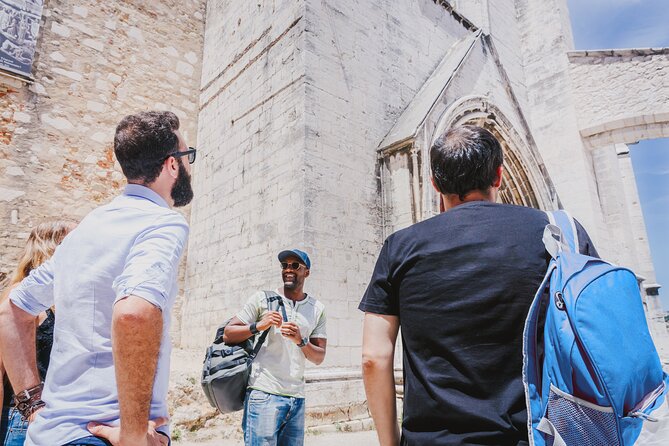
Lisbon’s story comes into focus as you walk from grand squares to steep Alfama lanes. This half-day route links the earthquake-rebuilt Baixa, the elegant Chiado district, the Carnation Revolution site at Carmo, and the riverfront Praça do Comércio without making you plan the connections yourself.
I like the small maximum of 14 people, which gives you a fair chance to hear the guide and ask questions. I also like the practical mix of history, viewpoints, and food: a pastel de nata, a wine tasting, and a tapa help break up the walking. The main consideration is the route’s length and hills, especially in Alfama, and the tour does not include entry to museums, churches, or monuments.
Key points to know before booking
- A broad first look at Lisbon: Cover Rossio, Restauradores, Carmo, Chiado, Baixa, Alfama, and Praça do Comércio in roughly three to four hours.
- A genuinely small group: The tour is limited to 14 people, a useful size for questions and personal attention.
- Food is part of the route: You receive a pastel de nata plus wine tasting and a tapa.
- Strong historical range: Hear about independence from Spain, the 1755 earthquake, the 1974 Carnation Revolution, and fado.
- Walking is manageable but real: Baixa is relatively level, yet viewpoints and Alfama bring hills, steps, and uneven streets.
- Good first-day timing: The route gives you a city layout and ideas for what to explore later on your own.
Why this route works for a first day in Lisbon
At $23.94 per person, this is priced as an affordable orientation walk rather than a full sightseeing package. You are paying for a local English-speaking guide and a carefully connected route, not for admission to attractions. That distinction matters: if you want to enter the Santa Justa Lift, museums, or churches, you will need to arrange and pay for those separately.
The route is useful because central Lisbon can feel confusing at first. Streets change character quickly. Rossio opens into Restauradores, Chiado slips toward Baixa, and Alfama seems to fold in on itself. A guide helps you understand how these areas relate before you spend the rest of your visit exploring them independently.
The tour also gives you a quick introduction to different sides of Lisbon. You see formal squares, grand architecture, old religious buildings, shopping streets, earthquake-era planning, Moorish-influenced lanes, viewpoints, and the Tagus waterfront. That is a lot of ground for one morning or afternoon.
I would book it near the start of a Lisbon stay. You can use the guide’s suggestions to plan later meals, viewpoints, and neighborhood walks. Guides associated with this experience include Felipe, Maria, Jose, Filipa, Joana, Catarina, and others. The strongest feedback consistently points to guides who explain clearly, answer questions, set a steady pace, and offer useful ideas for the rest of your visit.
More Lisbon Walking Tours:
- Lisbon: History, Stories and Lifestyle Walking Tour
★ 4.8 · 10,902 reviews - Lisbon: Food and Wine Small Group Walking Tour
★ 4.9 · 4,082 reviews - Best of Lisbon Walking Tour: Rossio, Chiado & Alfama
★ 4.9 · 2,700 reviews
Rossio Square begins the city lesson
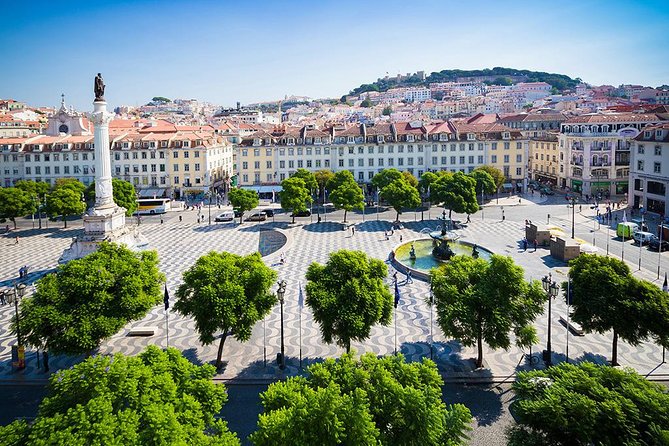
Meet at Praça Dom Pedro IV, usually called Rossio, in central Lisbon. This is a sensible starting point because it introduces you to the city’s public heart and puts you close to several major sights.
You will learn how the square’s patterned Portuguese pavement was laid out to resemble ocean waves. The black-and-white design is easy to admire while you listen, and the setting gives you an early lesson in how Lisbon combines urban beauty with practical public space.
The stop is brief, about 10 minutes, so do not expect a long architectural study. It is more of a starting point that helps you read the city around you. From here, the route moves toward São Domingos Church, where you spend about five minutes.
The church gives the walk an older, more solemn pause. Since no interior admission is included, your visit is primarily guided sightseeing rather than a formal church tour. That is typical of this experience: you get context and a look at the site, then keep moving.
Restoradores and Rossio Station reveal Portugal’s past
At Restauradores Square, an obelisk recalls Portugal’s restoration of independence from Spain in 1640. The guide explains the 60 years of Spanish rule and the war that followed. The obelisk lists battles and dates, turning an open city square into a concise lesson in national history.
The stop lasts about five minutes. You will not linger long, but the explanation helps you notice why the monument is there instead of treating it as decoration.
Nearby, Rossio Station offers one of the route’s best architectural moments. Its exterior uses Manueline-inspired details, including ornate stonework and dramatic arched entrances. The station dates from the 19th century, and you hear how its rail connection toward Sintra required major engineering work.
You may also hear a train head into the tunnel. That small bit of live city activity helps make the stop feel more immediate than a simple photograph outside a building. Again, you are viewing the station from the outside rather than taking a rail trip or entering a paid attraction.
The route also includes a look at Lisbon’s grand, expensive avenue. The timing and exact emphasis can vary, but it gives you a contrast with the older lanes and squares you see elsewhere.
Carmo Square connects medieval Lisbon with 1974
Largo do Carmo is one of the most meaningful stops on the route. Its setting includes the remains of the Carmo convent, and its modern political importance comes from the 1974 Carnation Revolution.
Here you learn how Portugal’s 48-year dictatorship collapsed. The guide connects the square to the peaceful military and civilian movement that changed the country. This is one of the tour’s best examples of how Lisbon’s history is not only about kings, explorers, and earthquakes. It also includes events within living memory.
You spend about 10 minutes here. That is enough for an introduction, though not enough for a detailed political history. If the Carnation Revolution interests you, note the site and return later for a longer look.
The Santa Justa Lift is nearby. The route allows about 10 minutes to admire the structure and its views, but it does not include a ride or guaranteed entry. The lift is one of the most recognizable monuments in central Lisbon, and the guide explains how it links the lower Baixa streets with the higher Carmo area.
This is also where the walking difficulty can increase. Some groups use public elevators and escalators when available, and past guide feedback highlights this as a helpful way to reduce needless climbing. Still, you should expect a city walk, not a level promenade.
Something different to do with a day in Lisbon:
- Lisbon City Center Tour – The Unmissable Lisbon
★ 5.0 · 22,234 reviews - Lisbon: Sintra, Pena, Regaleira, Cabo da Roca & Cascais
★ 4.7 · 19,656 reviews - Sintra: Pena Palace and Park Entrance Ticket
★ 4.2 · 17,410 reviews - Lisbon: Jerónimos Monastery Entrance Ticket
★ 4.1 · 14,164 reviews
Chiado brings cafés, shops, and old Lisbon style
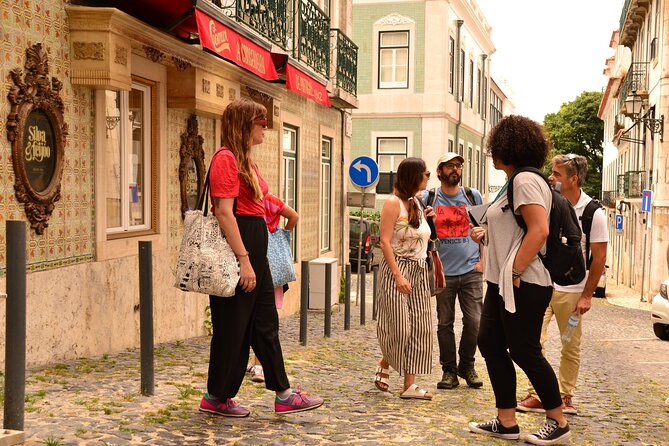
From Carmo, you continue into Chiado, an elegant 19th-century neighborhood once associated with Lisbon’s intellectual and wealthy residents. Its streets are lined with boutiques, theaters, bookstores, cafés, and old façades.
The stop lasts about 10 minutes, but the route through the district is part of the pleasure. You can look for surviving cafés and shop fronts, compare the streets with the more formal Baixa grid, and notice how Lisbon’s commercial center changes from block to block.
Your guide may also point out ways to return here later. Chiado is a practical area for browsing, eating, and taking a slower walk after the tour. The guide’s recommendations are one of the most useful extras reported in connection with this experience, especially for people visiting Lisbon for the first time.
The main limitation is that the tour moves through Chiado rather than giving you time to shop or sit in a café. Keep a note of places you want to revisit.
Baixa explains the earthquake in stone and street plans

Rua Augusta leads you into Baixa, the city center rebuilt after the great 1755 earthquake. The route gives you about 15 minutes to understand the district’s grid, broad streets, and planned layout.
This is where the tour moves beyond a list of pretty buildings. You learn how the rebuilding introduced new urban rules and earthquake-conscious construction methods. Baixa’s orderly streets make more sense once you understand that the neighborhood was planned as a response to disaster.
The area is relatively flat, which provides a welcome break after Carmo and before Alfama. It is also a good place to look up at façades, compare the width of streets, and watch how Rua Augusta funnels you toward the river.
The guide cannot cover every detail in a short visit. If architecture is your main interest, you may want a separate walk focused on Pombaline design. For most people, though, this explanation gives enough background to make later sightseeing more rewarding.
The viewpoint adds a welcome pause
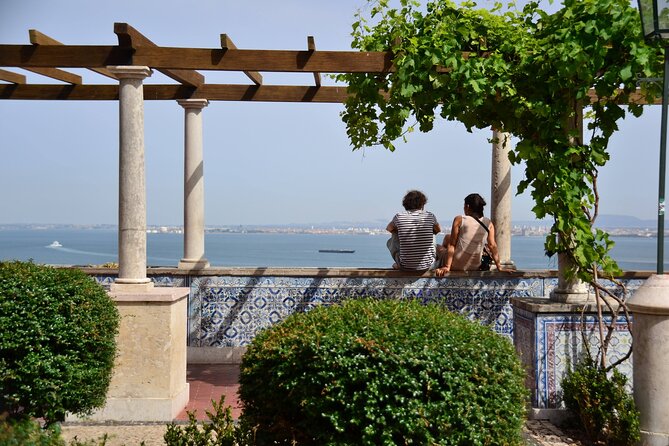
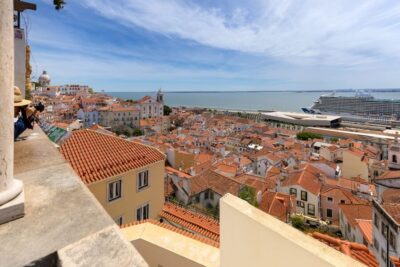
Miradouro Chão do Loureiro provides a panoramic stop of about five minutes. The viewpoint helps you see Lisbon as a city of stacked levels, old roofs, broad avenues, and water beyond.
Five minutes is short, so keep your camera ready and do not expect a long rest. The stop is still valuable because the walking route has been mostly street-level. A viewpoint gives you a quick sense of how the neighborhoods fit together.
The exact view will depend on conditions and the group’s pace, but this is a useful point to pause, take photographs, and catch your breath before entering Alfama.
Alfama is the most atmospheric part of the walk

Alfama is the oldest neighborhood on the route and the place where the walking becomes most irregular. You move through narrow lanes and winding streets associated with Moorish influence and fado music.
The guide explains how fado developed as Portugal’s famously melancholy musical tradition and points out restaurants and small venues tucked into the neighborhood. You are not attending a fado performance, but you get a sense of how the music belongs to the streets and evening culture of Alfama.
This is also the part of the tour where comfortable shoes matter most. The group may encounter hills, uneven pavement, and steps. Several guide accounts describe the pace as reasonable, with stops to handle the climbs, but you still need moderate physical fitness.
I like the contrast here. Earlier stops explain grand squares and planned streets. Alfama feels more intimate and less orderly. You see why a guide helps, since it is easy to pass through without understanding the district’s character.
Do not expect to visit Lisbon Cathedral on this route. One piece of feedback specifically wished the cathedral had been included, so you should add it to your own plans if it matters to you. The route focuses on the neighborhood rather than trying to enter every nearby sight.
Snacks and wine make the history easier to absorb
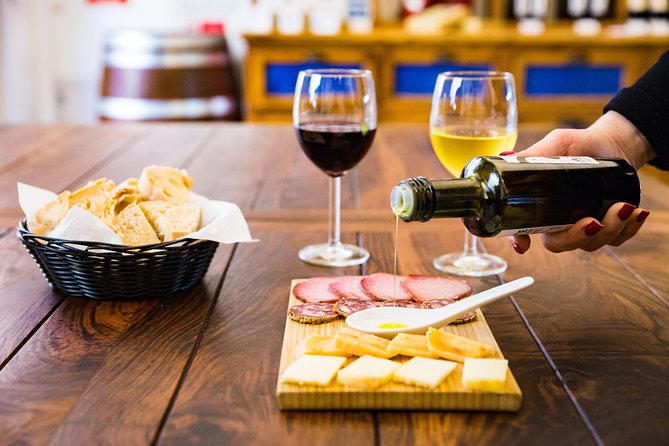
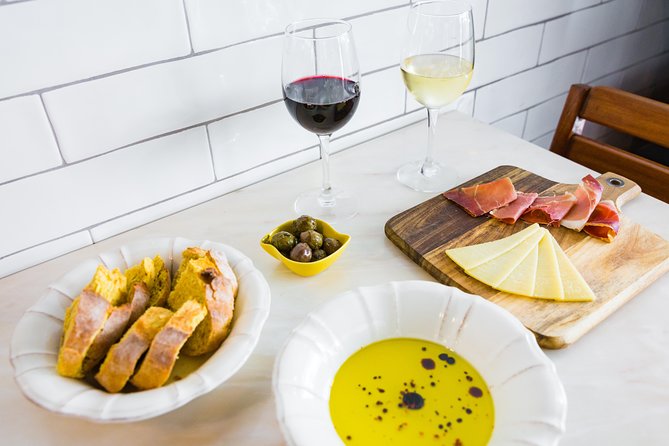
A pastel de nata is included, along with a wine tasting and a tapa. These are not full meals, and the tour does not cover other food or drinks, but they give the walk a pleasant local flavor.
The pastry is a useful early or mid-tour break. The wine and tapa offer a more social pause, and the food stop can help turn a long explanation into something more relaxed. Vegetarian requests have been accommodated in at least one reported experience, but you should communicate dietary needs when booking rather than assume every option will suit you.
The food is also part of the value calculation. At $23.94, the included tasting makes the price more appealing, especially when combined with a three to four hour guided route. Still, you should not book this as a food tour. The central purpose is city orientation and history.
Praça do Comércio closes the route by the river
The final stop is Praça do Comércio, Lisbon’s grand riverfront square. You finish near the Tagus after walking through the city’s central districts, and the change in scale is striking.
The square occupies the former site of the Royal Ribeira Palace, destroyed in the 1755 earthquake. Its rebuilding became part of the planned Baixa project, so the stop ties together the earthquake story, Pombaline city design, and Lisbon’s connection to the Atlantic.
You hear how the reception hall once welcomed people arriving from the sea. The square’s open arcades and river-facing position make that history easy to picture.
The tour ends here after about 10 minutes. This is convenient if you want to continue along the waterfront, return to Baixa, or use the rest of the day for another neighborhood. It is not a hotel drop-off, so plan your own way back.
Pace, group size, and practical comfort
The experience lasts about three to four hours and is limited to 14 people. That is small enough for the guide to answer questions and notice when the group needs a pause, while still large enough to include a mix of ages and interests.
The route is active. You walk between many stops, and Alfama brings the most demanding streets. Wear sturdy, comfortable shoes and bring water. Lisbon’s pavement can be hard on feet, and the walking surface changes as you move between Baixa’s broad streets and the older lanes.
The tour runs in English and includes a mobile ticket. It begins at Praça Dom Pedro IV and ends at Praça do Comércio, with public transportation nearby. Hotel pickup and drop-off are not included.
Service animals are allowed. The tour requires moderate physical fitness, and entry to museums and monuments is not included. If you need a slower or more accessible route, check the current arrangements before booking, since the walk includes historic streets and hills.
The cancellation terms are simple: you receive a full refund if you cancel at least 24 hours before the start time. Cancellations or changes inside that window are not refunded, and the operator may offer another date or a full refund if the minimum group size is not met.
Who should book this Lisbon walking tour?
I would recommend it most strongly for a first visit, a short stay, or the first full day after arriving. You get the city’s basic layout, several major neighborhoods, a few strong viewpoints, and a useful introduction to Portugal’s political and architectural past.
It also suits independent people who want help getting oriented but do not want a tightly packaged bus tour. You remain on foot, see everyday streets up close, and finish with plenty of time to continue on your own.
It is less suitable if you already know central Lisbon well or want detailed entry visits inside monuments. One person found the stops too familiar and wanted more walking, which is a fair criticism for repeat visitors. The tour is designed as an overview, not as a specialist route.
Should you book it?
Book this tour if you want an affordable, efficient introduction to central Lisbon and like learning through stories while walking. The combination of a small group, strong guide-led history, Alfama lanes, viewpoints, and Portuguese snacks gives you a lot for the price.
Skip it if you prefer to explore at your own pace, need extensive time inside monuments, or already know Rossio, Baixa, Chiado, and Alfama. For most first-time visitors, though, this is a smart way to get your bearings, learn what deserves a second look, and begin the rest of your Lisbon visit with a clearer plan.
FAQ
How long does the Best of Lisbon walking tour last?
The tour lasts approximately three to four hours.
Where does the tour begin?
It begins at Praça Dom Pedro IV, also known as Rossio Square, at 1100 Lisbon.
Where does the tour end?
The tour ends at Praça do Comércio, also called Commerce Square, near the Tagus River.
How large is the group?
The maximum group size is 14 people.
What language is the tour offered in?
The tour is offered in English.
Is a local guide included?
Yes. A local guide is included.
Is food included?
A pastel de nata pastry, wine tasting, and tapa are included. Other food and drinks are not included unless specifically stated.
Does the price include monument or museum admission?
No. Entry to museums and monuments is not included.
Is hotel pickup and drop-off included?
No. You make your own way to the starting point and continue independently from the ending point.
Can I cancel for a full refund?
Yes. You can cancel at least 24 hours before the start time for a full refund. Cancellations or changes made less than 24 hours before the start time are not refunded.
Just reviewed in Lisbon
- Lisbon: Morning of Equestrian Art with Lusitano Horses★ 4.4 · 87 reviews
- Lisbon: Entry Tickets to Mosteiro de São Vicente de Foram★ 4.6 · 50 reviews
- Lisbon: National Palace of Ajuda E-Ticket & City Audio Guide★ 4.1 · 87 reviews
- Lisbon: Early Morning TukTuk Tour – hotel/cruise ship pickup★ 4.9 · 45 reviews
- Sintra: Quinta da Regaleira e-Ticket & Sintra City Audios★ 4.1 · 12 reviews
- Lisbon E-Bike Tour TAGUS★ 5.0 · 3 reviews
- Lisbon: E-bike Trip from the Sintra Mountains to Cascais Sea★ 5.0 · 67 reviews
- Lisbon: Discover Belem by electric Tuk Tuk★ 4.9 · 86 reviews
Lisbon Walking Tours, compared.

Best of Lisbon Walking Tour: Rossio, Chiado & Alfama
Read our review →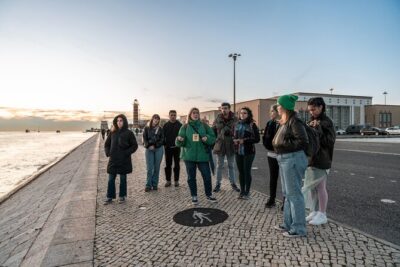

Lisbon Roots – Small group Food & Culture Walking Tour w/tastings
Read our review →
Starter Walking Tour to the highlights in German
Read our review →
Walking Tour in the Center (Max 12 Participants)
Read our review →Browse the lists this tour appears in