
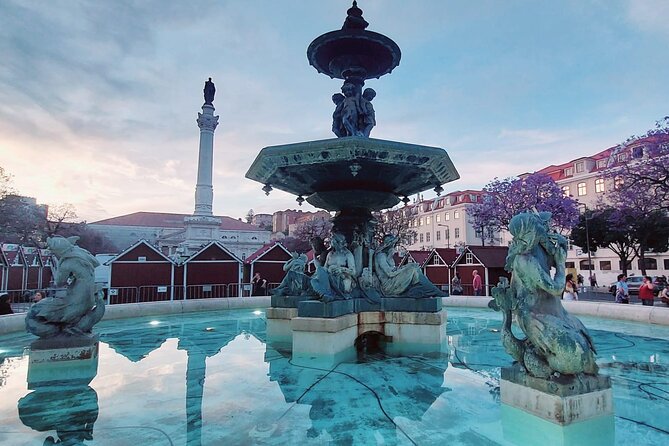
Reviewed · LISBON WALKING TOURS
Historical Walking Tour of Lisbon
Lisbon’s past unfolds square by square on this walk, from Rossio’s patterned pavement to the Carmo ruins and the high view near Santa Justa. You’ll hear about ancient settlement, royal power struggles, the 1755 earthquake, the Age of Discovery, and the 1974 Carnation Revolution without spending your first day buried in a museum.
I like the story-first approach, especially the way guides such as Logan, Nuno, Kiara, Bruno, André, and Constança connect buildings to people and turning points. I also like the practical finish: food ideas, viewpoints, and things to do after the tour.
The catch is the walking. Lisbon’s cobblestones can be uneven, and the route includes hills. Bring comfortable shoes, water, and sunscreen, and allow a little extra time if your group pauses often.
Key points at a glance
- Rossio to Carmo in one sweep: The route links six central Lisbon stops over roughly 2 hours and 45 minutes.
- History with a local voice: Expect stories about Portugal’s rulers, writers, earthquakes, explorers, and revolutionaries.
- A memorable bookshop visit: Chiado includes a chance to see the world’s oldest bookshop.
- A powerful earthquake stop: Largo do Carmo and the Convento do Carmo show what Lisbon lost and what survived in 1755.
- Useful advice at the end: Your guide offers suggestions for food, viewpoints, shops, and later activities.
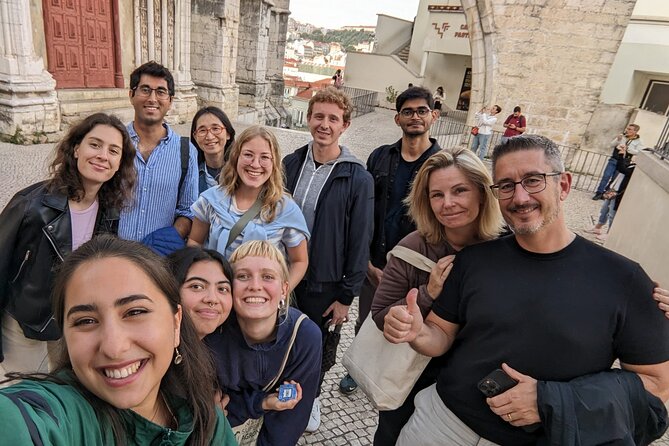
- Small enough to stay personal: The group is limited to 20 people, with the tour offered in English.
Start in Rossio, where Lisbon’s story begins
Meet at Praça Dom Pedro IV, better known as Rossio Square. It is an easy central meeting point, and the patterned pavement immediately gives you something to notice while the group gathers.
The guide begins with Lisbon’s earliest chapter, including the first people who settled in the area around 3,000 years ago. That opening helps you see the city as more than a pleasant collection of tiled façades and steep streets. Lisbon has been shaped by many layers of settlement, trade, power, and rebuilding.
Rossio is also a useful place to learn how to read Lisbon’s public spaces. Look down at the intricate stone floor work, then look across the square at the flow of city life. The stop lasts about 15 minutes, so expect an introduction rather than a long lecture.
I like starting here because it gives you a mental map before the walking gets more involved. If this is your first morning in Lisbon, you’ll begin to recognize the central district instead of moving through it as a blur of plazas and streets.
More Lisbon Walking Tours:
- Lisbon: History, Stories and Lifestyle Walking Tour
★ 4.8 · 10,902 reviews - Best of Lisbon Small-Group Guided Walking Tour
★ 5.0 · 4,869 reviews - Lisbon: Food and Wine Small Group Walking Tour
★ 4.9 · 4,082 reviews
Praça da Figueira and the struggles for Portugal’s crown
From Rossio, the walk continues to Praça da Figueira, or Fig Tree Square. This broad central space once held Lisbon’s largest public hospital, which was destroyed in the 1755 earthquake.
The guide uses the square to explain the political struggles that shaped Portugal, including battles over the crown involving neighboring powers. This is a good reminder that Lisbon’s story is not only about ships and overseas expansion. Royal succession, alliances, and conflict also directed the country’s course.
The stop takes about 15 minutes. That timing keeps the tour moving, but it also means you should listen closely and ask questions while the group is together. The square itself is open and easy to find, making it a practical early stop for getting oriented.
Rua Augusta and the city rebuilt through reason
The route then heads along Rua Augusta, Lisbon’s main central artery. This walk is less about one single monument and more about seeing how the city fits together.
Here, you’ll hear how the Age of Enlightenment influenced Lisbon’s architecture and urban design. That context matters because the downtown grid feels different from the older, more irregular streets found elsewhere in the city. The route lets you connect the clean lines of the rebuilt center with the ideas that shaped its planning.
Rua Augusta can be busy, so keep an eye on the guide and listen for the next meeting point if the group stretches out. The walk through the street also gives you time to absorb details between the formal stops.
Praça do Comércio and the earthquake that changed Lisbon
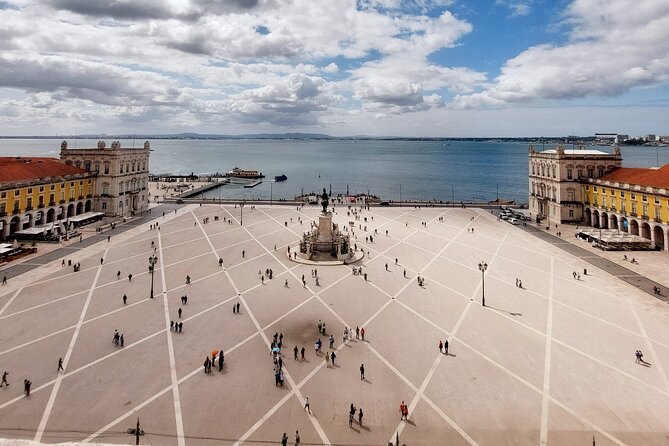
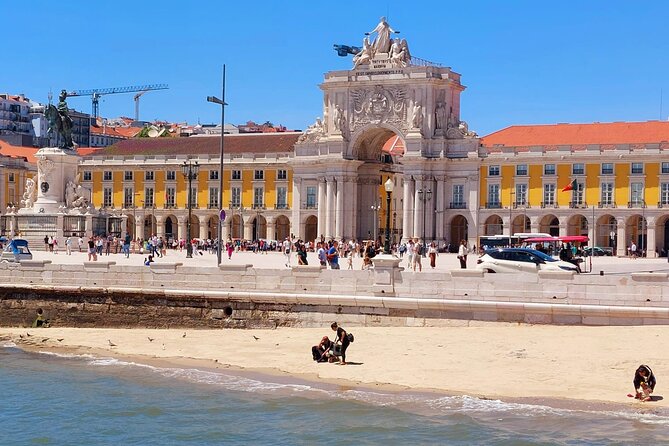
Praça do Comércio, also known as Terreiro do Paço, is the largest and most dramatic square on the route. It has served for thousands of years as an entry point to the city, and its open space makes the scale of Lisbon’s waterfront easier to understand.
The guide covers the Age of Discovery, the 1755 earthquake, and the rebuilding that followed. You’ll also hear about the people who helped shape the new city. This is the tour’s longest formal stop, at about 30 minutes, and it deserves the extra time.
Praça do Comércio works especially well as a history lesson because the setting helps you picture Lisbon’s links to the river and the wider world. The square’s size also gives the group room to pause without blocking a narrow street.
If you are especially interested in architecture, listen for the connection between the disaster and the redesigned downtown. The point is not simply that an earthquake destroyed Lisbon. It is how the city responded, and how that response still guides what you see today.
Something different to do with a day in Lisbon:
- Lisbon City Center Tour – The Unmissable Lisbon
★ 5.0 · 22,234 reviews - Lisbon: Sintra, Pena, Regaleira, Cabo da Roca & Cascais
★ 4.7 · 19,656 reviews - Sintra: Pena Palace and Park Entrance Ticket
★ 4.2 · 17,410 reviews - Lisbon: Jerónimos Monastery Entrance Ticket
★ 4.1 · 14,164 reviews
Chiado, books, cafés, and Lisbon’s writers
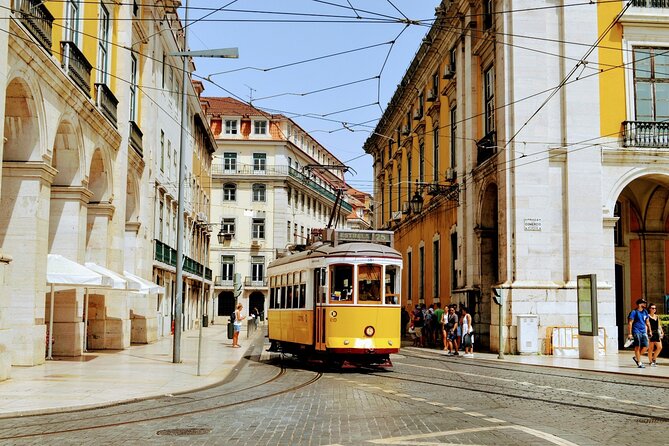
The walk climbs toward Chiado, Lisbon’s arts district. This part of the route shifts from earthquakes and royal politics to literature, cafés, theaters, bookshops, and nightlife.
Chiado is tied to some of Portugal’s best-known poets and writers. You’ll hear the stories behind those cultural figures while walking through one of the city’s most social areas. The tour also includes a chance to visit the world’s oldest bookshop, a detail that gives the stop real character rather than making it just another square on a map.
The bookshop visit is one of the most distinctive elements of the tour. It adds a physical experience to the storytelling, and it gives you a reason to return to Chiado on your own.
The stop lasts about 20 minutes. That is enough for an introduction and a quick look, but not enough for a long browse through every shelf. If books are a major interest, you may want to return later with more time.
Largo do Carmo and the 1974 Carnation Revolution
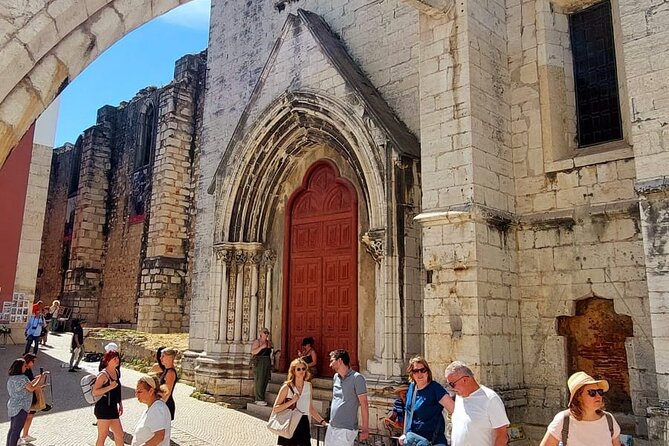
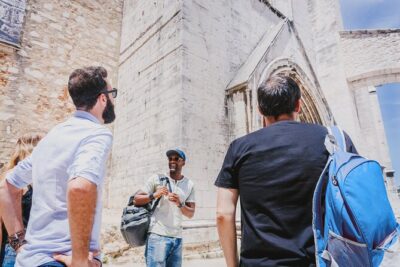
At Largo do Carmo, the subject turns again, this time to survival, memory, and political change. The square is home to the Convento do Carmo, described as the city’s second-oldest building and one of the few major structures to endure the 1755 earthquake.
The open roof of the convent ruins gives the place a striking feel, but the guide also connects it to modern Portuguese history. Largo do Carmo was a key setting during the 1974 Carnation Revolution, the peaceful military coup that ended decades of dictatorship. That contrast makes this stop especially effective: medieval stonework and a modern political turning point share the same small square.
The stop lasts roughly 30 minutes. Guides often use this time for fuller storytelling, so it is a good place to ask questions about Portugal’s recent past. Several guides, including Constança and António, are described as especially good at making history easy to follow and bringing events to life through clear stories.
There is also a practical benefit here. The tour ends in this upper part of downtown, so you finish near one of Lisbon’s most useful central areas rather than being left at the starting point.
Santa Justa and a final view over downtown
The final stop is the Elevador de Santa Justa, where you can pause for a bird’s-eye view of central Lisbon. The scheduled stop lasts about 15 minutes.
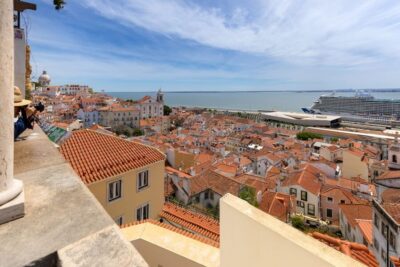
The view gives the walking route a proper ending. From above, you can better understand the relationship between the lower downtown streets, Chiado, the surrounding hills, and the city center. It also gives your feet a short break before you continue with your day.
Your guide uses this final pause to offer local suggestions, including food and viewpoints. This part can be very useful early in a Lisbon stay, since you can turn the advice into a plan for lunch, dinner, or an evening walk.
The tour ends at the Carmo Archaeological Museum in Largo do Carmo, not back at Rossio. Keep that in mind when planning your next stop. The finish is in the upper downtown area, with a view across the center.
What the guides add to the experience
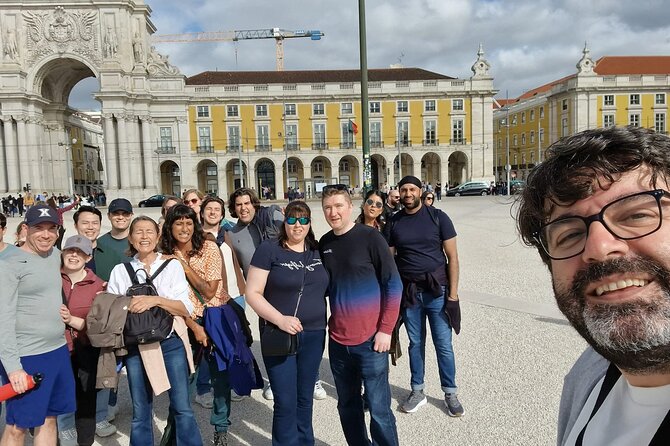
The route is fixed, but the guide shapes the day. The strongest quality to look for is clear storytelling rather than a long list of dates.
Logan is described as an animated storyteller who connects Lisbon’s history with practical details, from local foods to ways of handling the hills. Nuno is noted for a captivating style and a strong grasp of Lisbon and Portuguese history. Kiara brings cultural context and keeps a comfortable pace, while Bruno is praised for answering questions and going further into topics that interest the group.
André is particularly attentive to group comfort. He checks that everyone can hear and keep up, encourages questions, and shares ideas for food and later sightseeing. Constança is described as engaging with the whole group, adjusting the pace for different ages, and offering suggestions for places to explore after the walk.
You may receive one of these guides or another member of the team. The important point is that the tour depends heavily on the person leading it. The supplied guide names show a pattern of friendly, energetic hosts, but individual style can vary.
Walking conditions, pace, and group size
This is a walking tour through central Lisbon, not a gentle flat stroll. You’ll cross attractive but sometimes uneven cobblestones and deal with uphill streets as the route moves from the lower center toward Chiado and Carmo.
Wear shoes with good support. A water bottle and sunscreen are sensible, especially in warm weather. One family found that the guide adjusted the pace for a broad age range, but you should still be ready to walk for nearly three hours.
The group can include up to 20 people. That is small enough for questions and guide interaction, though a full group may take longer to cross streets and gather at busy stops. The tour is offered in English, and most people can participate. Service animals are allowed, and the route is near public transportation.
The meeting point at Rossio is central and straightforward. The end point at the Carmo Archaeological Museum is higher in downtown, so you may want to check your onward route before starting.
Is the $3.62 price good value?
At the listed price of $3.62 per person, the value is unusually strong if the tour runs as described. You receive nearly three hours of guided sightseeing, a route through several major areas, historical explanation, and practical advice for the rest of your stay.
The real value is not admission to attractions, since the listed stops have no admission charge. You are paying for orientation and interpretation. A square can look pleasant on its own, but a guide can explain why it was rebuilt, what happened there, and how it connects to the next part of the city.
The price also makes this a low-risk way to begin a Lisbon visit. If you are unsure how much history you want, you can get a broad foundation before choosing museums or paid sites.
Still, a low price does not remove the need to plan well. The tour requires good weather, and poor weather may lead to a new date or a full refund. Free cancellation is available up to 24 hours before the start time, while later cancellations and changes are not refunded or accepted.
Who should book this Lisbon walk?
I would choose this tour if you want a first look at Lisbon that combines major sights with a clear story. It suits people who enjoy history, ask questions, and want local ideas for food and later sightseeing.
It is also a good fit for families with older children or teenagers who respond well to stories. One young participant, aged 13, found the history engaging, which suggests the guides can make the subject accessible rather than dry.
You may want a different option if you dislike walking on cobblestones, need a fully flat route, or prefer to spend long periods inside one monument. This tour samples several areas, but it does not replace a detailed visit to the Carmo convent, a museum, or a bookshop.
Should you book the Historical Walking Tour of Lisbon?
Book it if you want to get your bearings early, understand why Lisbon looks the way it does, and collect useful ideas for the rest of your stay. The route covers a lot of ground, and the mix of earthquake stories, literary Lisbon, royal conflict, and the Carnation Revolution gives the city a human shape.
I would schedule it near the start of your visit, when the advice on food, viewpoints, and neighborhoods can still guide your plans. Just wear proper shoes, allow for hills, and remember that the tour ends at Carmo rather than Rossio. For the listed price, it offers a lively and practical introduction to central Lisbon.
FAQ
Where does the Historical Walking Tour of Lisbon start?
The tour starts at Rossio Square, officially Praça Dom Pedro IV, at Praça do Rossio, 1100-200 Lisboa, Portugal.
Where does the tour end?
It ends at the Carmo Archaeological Museum in Largo do Carmo, 1200-092 Lisbon, in the upper part of downtown.
How long does the tour last?
The tour lasts approximately 2 hours and 45 minutes.
What language is the tour offered in?
The tour is offered in English.
How much does the tour cost?
The listed price is $3.62 per person.
What places does the tour visit?
The route includes Rossio Square, Praça da Figueira, Rua Augusta, Praça do Comércio, Chiado, Largo do Carmo, and the Elevador de Santa Justa.
Is the tour suitable for most people?
Most people can participate, but you should be prepared for extended walking, cobblestones, and uphill streets.
Is the tour limited in size?
Yes. The maximum group size is 20 people.
Can I cancel for a full refund?
Yes, if you cancel at least 24 hours before the experience starts. Cancellations or changes made less than 24 hours in advance are not refunded or accepted. If poor weather causes the tour to be canceled, you will be offered another date or a full refund.
More Historical Tours in Lisbon
- Lisbon: Live Fado Show with Port Wine in Historic Center
★ 4.7 · 4,166 reviews - Lisbon: Fado Show with Wine in a Historic Venue
★ 4.8 · 1,294 reviews - Explore Lisbon by Tuk Tuk: History and Viewpoints
★ 5.0 · 840 reviews - Lisbon: Daytime or Sunset Boat Cruise with History and Wine
★ 4.9 · 819 reviews
Just reviewed in Lisbon
- Private tour Lisbon – full day★ 5.0 · 8 reviews
- Private Tour: Portuguese Food and Wine Tour★ 5.0 · 33 reviews
- Lisbon Football Experience – Private stadium and Museum Tour★ 4.0 · 10 reviews
- Lisbon and Sintra Essence 8H – Private Tour★ 5.0 · 5 reviews
- Private Tour: Lisbon Sunset Walking Tour with Fado Show and Dinner★ 5.0 · 30 reviews
- Private Catamaran Tour: Lisbon coast cruise with barbecue and drinks★ 5.0 · 20 reviews
- Lisbon: Helicopter Tour over Cascais & Cabo da Roca★ 5.0 · 4 reviews
- Private Tour Fátima, Nazaré, and Óbidos Day Trip from Lisbon★ 5.0 · 25 reviews
Lisbon Walking Tours, compared.
Best of Lisbon Small-Group Guided Walking Tour
Read our review →
Best of Lisbon Walking Tour: Rossio, Chiado & Alfama
Read our review →

Lisbon Roots – Small group Food & Culture Walking Tour w/tastings
Read our review →
Starter Walking Tour to the highlights in German
Read our review →
Browse the lists this tour appears in