
Reviewed · LISBON STREET ART TOURS
Lisbon: Street Art and Historical Walking Tour
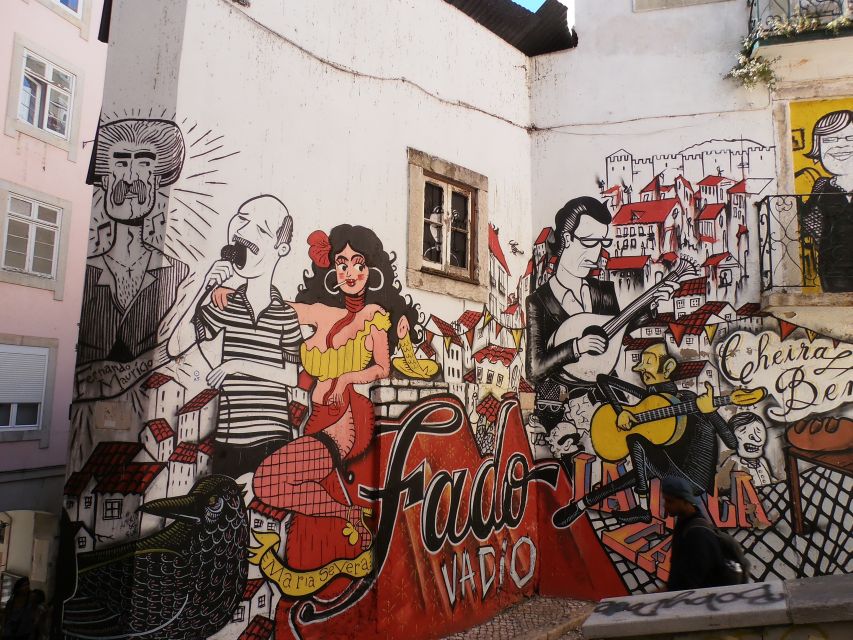
Lisbon’s street art is not tucked away in a gallery. It appears on old walls, beside worn stone lanes, and in neighborhoods where daily life carries on around it. This three-hour walk links that art with Graça, Mouraria, and Alfama, so you see both the painted work and the city that gives it meaning.
I like two things right away: the small group, limited to eight people, keeps the walk personal; and the route brings together art, history, and some of Lisbon’s finest viewpoints. Guides including Rui, Andriy, and Andre have led this experience, with Rui earning special praise for explaining the artists, their politics, and their working methods.
The main consideration is the terrain. Lisbon is hilly, with uneven paving, cracks, and protruding stones, and the tour is not suitable for people with mobility impairments. Much of the route trends downhill, but comfortable shoes remain essential.
Key points to know before you book

- Start above the rooftops at Miradouro da Graça: The meeting point gives you an immediate view over Lisbon, the Tagus area, and the city’s layered hills.
- See street art by major Portuguese names: Works connected with Vhils, Nomen, Odeith, and Gonçalo Mar are part of the route.
- Walk through three old districts: Graça, Mouraria, and Alfama each show a different side of Lisbon’s character and street life.
- Pair art with classic viewpoints: Miradouro da Graça and Miradouro Portas do Sol give the walk its postcard moments.
- Keep the group small: With no more than eight participants, it is easier to ask questions and stay close to the guide.
- Plan for real city walking: This is not a flat promenade. Wear sturdy shoes and expect uneven streets and hills.
Why this walk gives you more than painted walls
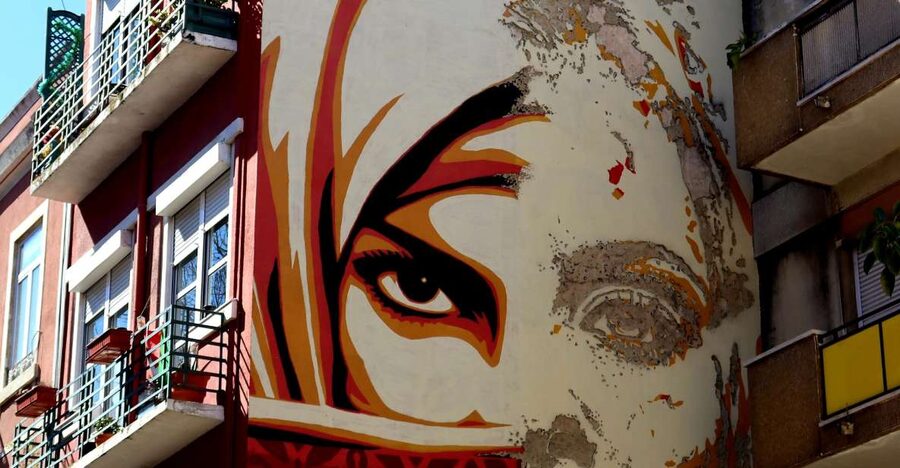
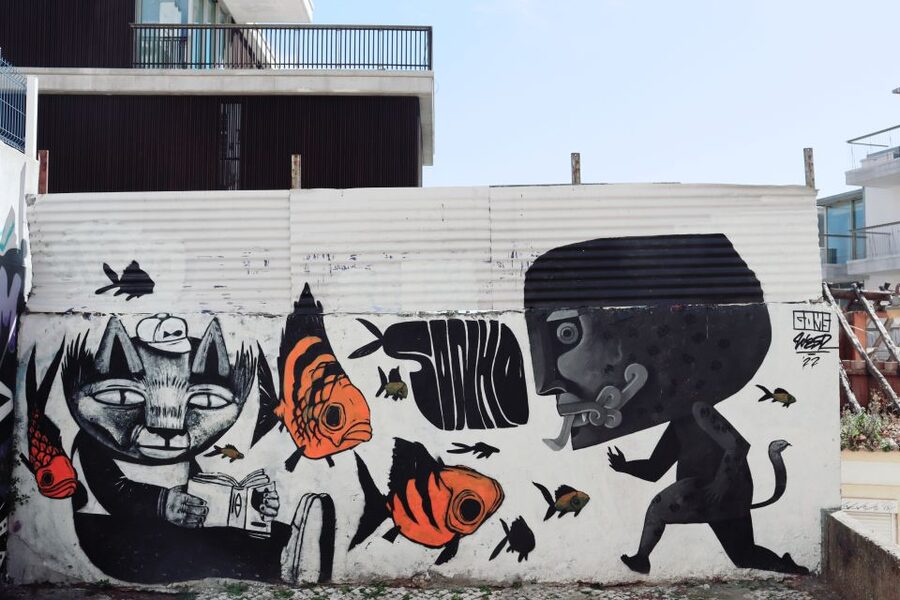
Lisbon has plenty of guided walks, but this one takes a useful side road. You are not simply shown a series of murals and asked to admire the colors. The guide explains who made the work, what the images can mean, and how street art fits into Lisbon’s cultural and political life.
That context matters. A large piece by Vhils, Nomen, Odeith, or Gonçalo Mar is easier to appreciate when you know something about the artist’s approach. The guide can also point out the difference between a commissioned piece and unauthorized graffiti, along with the way the city allows certain works to remain part of the streetscape.
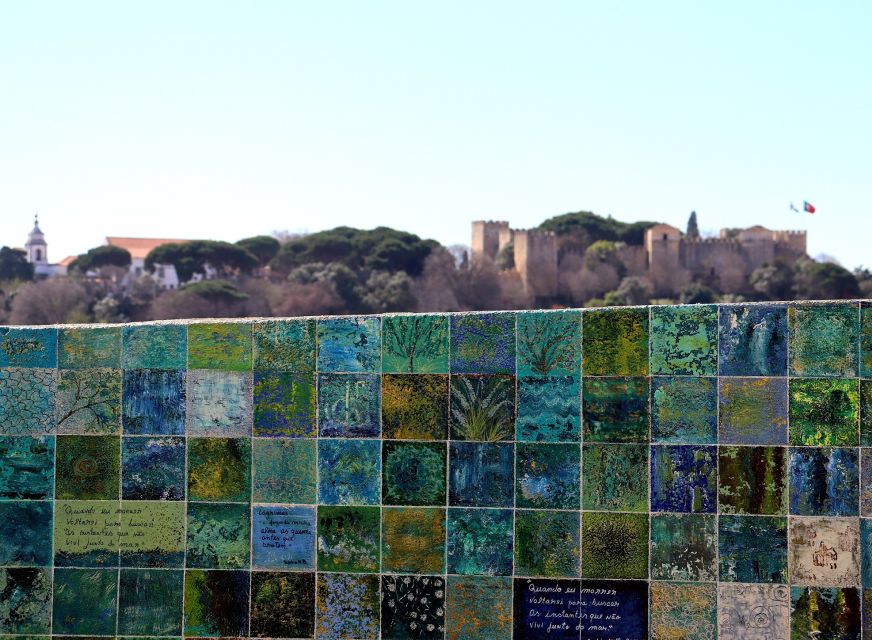
I especially like the mix of subjects. One moment you are discussing an artist’s identity or political message. Soon after, you are looking across tiled roofs toward São Jorge Castle or walking through an old quarter where the lanes are still part of everyday life. The result feels broader than a standard art tour.
The tour has a rating of 4.9 from 42 reviews, and the strongest praise centers on the guides’ explanations, the route through less-visited parts of the city, and the way the art is tied to Portuguese history. That is useful evidence for anyone deciding between a general city walk and this more focused option.
More Lisbon Street Art Tours:
- Lisbon: Street Art Tour
★ 4.9 · 1,324 reviews - Lisbon: Kickstart Street Art Walking Tour
★ 4.9 · 717 reviews - Lisbon: Street Art Tuk Tuk Tour
★ 4.9 · 372 reviews
Starting at Miradouro da Graça
Meet beside the church at Miradouro Sophia de Mello Breyner Andresen, commonly called Miradouro da Graça. The address is Calçada da Graça, 1100-265 Lisboa, and the viewpoint makes a practical starting point because you begin with a clear sense of Lisbon’s hills and rooftops.
This first stop is not just a place to gather. It gives you a visual map of the city before you start walking. You can take in the spread of Lisbon, the rooftops below, and the setting around the viewpoint. The tour then uses that elevated position as a starting line for a route through older neighborhoods.
Bring your booking details and arrive ready to walk. The meeting point is by the church, not a hotel or a transportation terminal, so checking the location before setting out is sensible. One past participant particularly valued receiving a picture of the meeting place and map coordinates, which points to a simple but important tip: do not rely on finding the church by chance.
Graça and the first street art stories

Graça is a good place to begin because it combines broad views with narrow streets and local city life. The tour introduces you to Lisbon’s street art scene here, then connects the work to the people and ideas behind it.
The best part of this section is the guide’s interpretation. You are encouraged to look beyond the painted surface and consider the artist’s background, choices, and purpose. Rui, who has led the walk, was singled out for turning his personal interest in street art into a careful explanation of the city’s artists and their motives.
That can make a real difference if you are not an art specialist. You do not need to know the difference between stencil work, large-scale murals, and other urban techniques before you arrive. The tour is intended to work for dedicated street art fans and for people who normally walk past painted walls without giving them much thought.
The commentary also covers the history and politics connected with the city. It does not treat Lisbon’s art as decoration floating free from its surroundings. Instead, the guide helps you build your own view of what the work is saying.
Mouraria, where the route feels more local
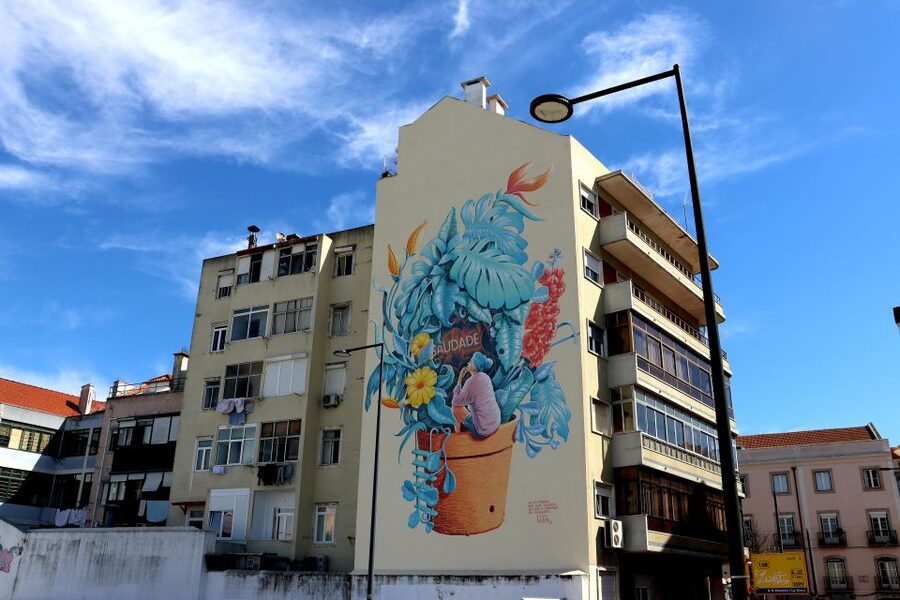
The walk continues toward Mouraria, one of the districts that helps you see Lisbon away from the most familiar postcard stops. Here, the value is not one single monument. It is the combination of street art, old streets, and the daily setting around them.
You may notice that Mouraria feels different from the grander parts of central Lisbon. The route takes you through a part of the city that many visitors might otherwise miss, and the guide explains what you are seeing rather than simply moving the group from wall to wall.
This is also where the small group helps. With a maximum of eight people, you can ask why a particular work is located in one place, what is known about its artist, or how the city treats public art. A large group would make those stops less relaxed, especially on narrow streets.
The route does require attention underfoot. Lisbon’s paving can be uneven, and one guide was praised for watching the group around traffic, cracks in the sidewalks, and raised stone tiles. That is a small but meaningful part of the experience. The tour is active, and you should keep your eyes on the street as well as the walls.
More Lisbon Walking Tours:
- Lisbon: History, Stories and Lifestyle Walking Tour
★ 4.8 · 10,902 reviews - Best of Lisbon Small-Group Guided Walking Tour
★ 5.0 · 4,869 reviews - Lisbon: Food and Wine Small Group Walking Tour
★ 4.9 · 4,082 reviews - Best of Lisbon Walking Tour: Rossio, Chiado & Alfama
★ 4.9 · 2,700 reviews
Alfama and views from Portas do Sol
Alfama brings another shift in mood. Its maze-like streets and old buildings offer a strong contrast with the larger painted works you may have seen earlier. The art is still the focus, but the neighborhood itself becomes part of the lesson.
The route includes Miradouro Portas do Sol, one of the city’s best-known viewpoints. Here you can pause for broad views and take in the relationship between Lisbon’s hills, rooftops, and the Tagus area. It is an obvious photo stop, but the guide’s commentary gives it more purpose than a quick picture and move on.
São Jorge Castle is also part of the view and the historical discussion. You do not enter the castle on this tour, so anyone wanting an inside visit will need separate time and admission. Still, seeing it from the viewpoints helps place the surrounding districts in context.
Alfama is a good example of why this tour works best for people who want several themes at once. You get street art, city views, older neighborhoods, and a guide’s explanation of Lisbon’s cultural heritage in one outing. If you prefer a tour devoted only to murals, the history and viewpoints may slow the pace. I think that wider approach is the point.
What the guide adds to the art
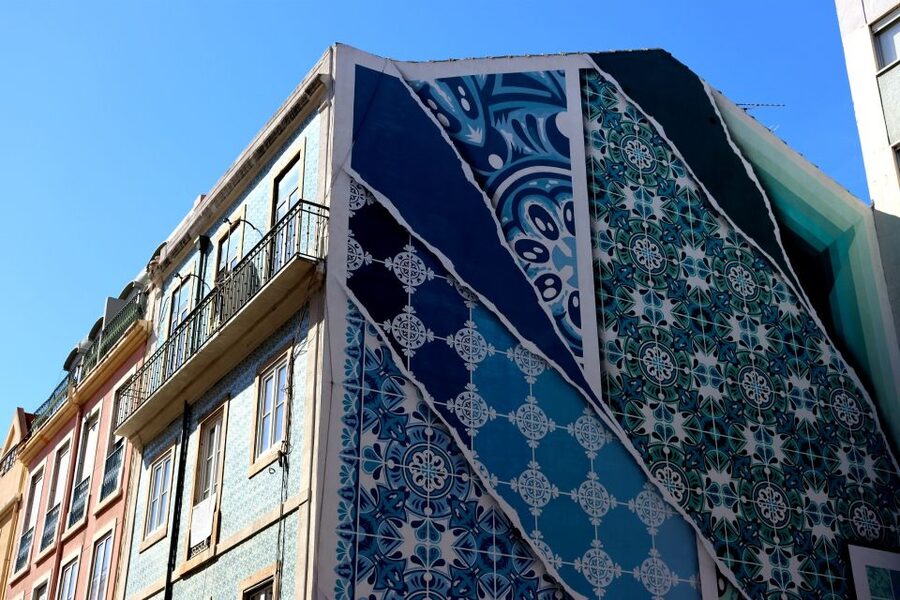
The guide is the key variable in any walking tour, and the strongest part of this experience is the quality of the explanations. Rui is named repeatedly in the supplied feedback, while Andriy and Andre are also mentioned as guides. The exact guide for your departure can vary, but the format is built around a live English-speaking local guide.
Good street art commentary should answer more than What is that? It should help you understand who created the piece, why it may be in that location, and what it says about the city. This tour aims to do that by linking the artists with Lisbon’s history, politics, literature, and culture.
One past participant described the tour as suitable even for someone with no background in art. That is an important point. You are not expected to arrive with a list of artists memorized. The guide supplies the framework and gives you a way to read the work for yourself.
The personal side of the guiding also matters. Rui was praised for patience, enthusiasm, and adapting the amount of information to the group. That balance is valuable because too little explanation turns the walk into a photo hunt, while too much can make three hours feel like a lecture.
The walking pace, hills, and practical demands
The advertised duration is three hours, which is long enough to cover several districts without taking up an entire day. One useful detail is that much of the route is downhill. That does not make it effortless, since downhill streets can still be hard on knees and ankles, and the paving is uneven.
Wear comfortable walking shoes with good support. Avoid treating this as a casual stroll in soft sandals. You should also be prepared for traffic crossings, rough surfaces, and narrow streets. The tour is not suitable for people with mobility impairments, and the physical demand is the main limitation to consider.
There is no hotel pickup or drop-off. You meet at Miradouro da Graça and finish somewhere along the route, so plan your day around reaching the starting point and continuing afterward without expecting transport to return you to your hotel.
Meals and drinks are not included. Three hours is manageable without a meal break, but you should carry water, especially in warm weather. The supplied information does not promise a café stop, so do not book this expecting a food experience.
Is the $35 price good value?
At $35 per person, the tour offers a useful amount for a three-hour small-group experience. You are paying for a guide, local taxes and fees, access to a carefully arranged route, and interpretation that would be difficult to recreate on your own.
The value is strongest if you want more than a list of street art locations. You could walk through Graça, Mouraria, and Alfama without paying anything, but you would not necessarily know which artists you were seeing or how the work relates to Lisbon’s culture. The guide turns scattered walls and viewpoints into a connected story.
The price also compares well for a group capped at eight people. A small group makes it easier to hear the guide and ask questions, and it reduces the stop-and-start feeling that can come with a large walking party.
It is less compelling if your main goal is simply to see as many murals as possible. A self-guided walk costs less, and you can move at your own speed. You also need to supply your own background research. For me, the $35 makes sense for visitors who value clear explanations and want to combine art with neighborhood history.
Who should book this experience?
I would choose this tour if you enjoy street art, photography, city history, or seeing neighborhoods beyond the main sights. It also suits first-time visitors who want to get their bearings from high viewpoints before exploring the older quarters below.
Families with older children may find the subject matter engaging, especially if the children enjoy visual art. The walking conditions still matter, and younger children who tire quickly may not enjoy three hours on hilly, uneven streets.
Art lovers will get the most from the discussion of Vhils, Nomen, Odeith, and Gonçalo Mar, but you do not need specialist knowledge. The format is also a good choice for anyone who wants to understand Lisbon’s modern culture alongside its older districts.
I would think twice if you need step-free access, dislike hills, or want to spend most of the day inside historic buildings. This is an outdoor walk, not a museum tour, and the city’s pavement is part of the challenge.
Free cancellation up to 24 hours before the start and the option to reserve now and pay later make the booking less restrictive. Availability and starting times vary, so check those details for your chosen date.
Should you book the Lisbon street art walk?
Book it if you want a thoughtful three-hour introduction to Lisbon’s urban art and older neighborhoods. The best reasons are the small group, the viewpoints at Miradouro da Graça and Portas do Sol, and the guide’s ability to explain the artists rather than simply point at their work.
The route is especially useful early in your stay. You will see areas you may want to revisit, learn how the hills fit together, and leave with a better sense of what to look for on your own.
Skip it if uneven streets are a serious problem or if you want a flat, fast tour focused only on famous landmarks. For everyone else, $35 is a fair price for an intimate walk that joins Lisbon’s art, history, and everyday neighborhoods.
FAQ
How long is the Lisbon street art and historical walking tour?
The tour lasts three hours.
Where does the tour meet?
Meet by the church at Miradouro Sophia de Mello Breyner Andresen, also known as Miradouro da Graça. The address is Calçada da Graça, 1100-265 Lisboa, Portugal.
Which neighborhoods does the tour visit?
The route includes Graça, Mouraria, and Alfama.
Which viewpoints are included?
The tour starts at Miradouro da Graça and continues to Miradouro Portas do Sol.
Which street artists might I learn about?
The tour includes work by local and international urban artists such as Vhils, Nomen, Odeith, and Gonçalo Mar.
Is the tour conducted in English?
Yes. It has a live English-speaking guide.
How many people are in the group?
The group is limited to eight participants.
Is the tour suitable for people with mobility impairments?
No. The tour is not suitable for people with mobility impairments. Comfortable walking shoes are recommended because the route includes hills and uneven streets.
More Historical Tours in Lisbon
- Lisbon: Live Fado Show with Port Wine in Historic Center
★ 4.7 · 4,166 reviews - Lisbon: Fado Show with Wine in a Historic Venue
★ 4.8 · 1,294 reviews - Explore Lisbon by Tuk Tuk: History and Viewpoints
★ 5.0 · 840 reviews - Lisbon: Daytime or Sunset Boat Cruise with History and Wine
★ 4.9 · 819 reviews
Just reviewed in Lisbon
- Lisbon: Morning of Equestrian Art with Lusitano Horses★ 4.4 · 87 reviews
- Lisbon: Entry Tickets to Mosteiro de São Vicente de Foram★ 4.6 · 50 reviews
- Lisbon: National Palace of Ajuda E-Ticket & City Audio Guide★ 4.1 · 87 reviews
- Lisbon: Early Morning TukTuk Tour – hotel/cruise ship pickup★ 4.9 · 45 reviews
- Sintra: Quinta da Regaleira e-Ticket & Sintra City Audios★ 4.1 · 12 reviews
- Lisbon E-Bike Tour TAGUS★ 5.0 · 3 reviews
- Lisbon: E-bike Trip from the Sintra Mountains to Cascais Sea★ 5.0 · 67 reviews
- Lisbon: Discover Belem by electric Tuk Tuk★ 4.9 · 86 reviews
Lisbon Street Art Tours, compared.

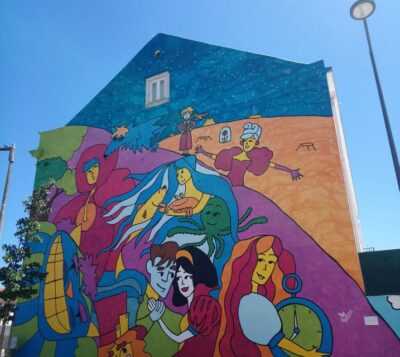


3-Hour Guided Street Art Walking Tour of Lisbon
Read our review →
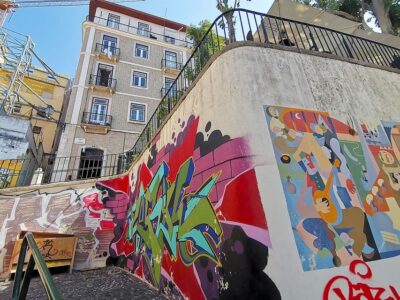

Browse the lists this tour appears in