
Reviewed · 1-DAY TOURS
Lisboa Story Centre: 1-Day Admission Ticket
Lisboa Story Centre turns Lisbon’s past into a walk-through show, with period sets, projected scenes, sound, and sensory effects. The most gripping section recreates the 1755 earthquake, then follows the Marquis of Pombal as he rebuilds the capital. It gives you a quick, clear framework before you explore Lisbon’s streets and monuments.
I like the chronological route, which helps you connect the city’s Roman, medieval, maritime, and modern chapters. I also like the multilingual audio guide, available in eight languages with child and adult versions in Portuguese. The main drawback is comfort: one recent visit found the installations lacking air conditioning, and the modern period may feel too brief for anyone wanting a full account of present-day Lisbon.
Key points
- Six areas across 2,200 square meters: Five main galleries are on the ground floor, with a virtual city model upstairs.
- A strong 1755 earthquake presentation: Sound, images, and staged surroundings bring the disaster and its aftermath to life.
- Lisbon’s maritime past gets a physical setting: You enter a 16th-century warehouse and see goods linked to New World trade.
- Audio guidance keeps the story moving: Portuguese, English, Spanish, French, Italian, German, Russian, Mandarin, and Japanese are available.
- A useful family stop: The playful format is easier for children to follow than a traditional text-heavy museum.
- Allow about an hour: The ticket is valid for one day, but the central experience itself takes roughly 60 minutes.
Start at Terreiro do Paço with Lisbon’s story in one place
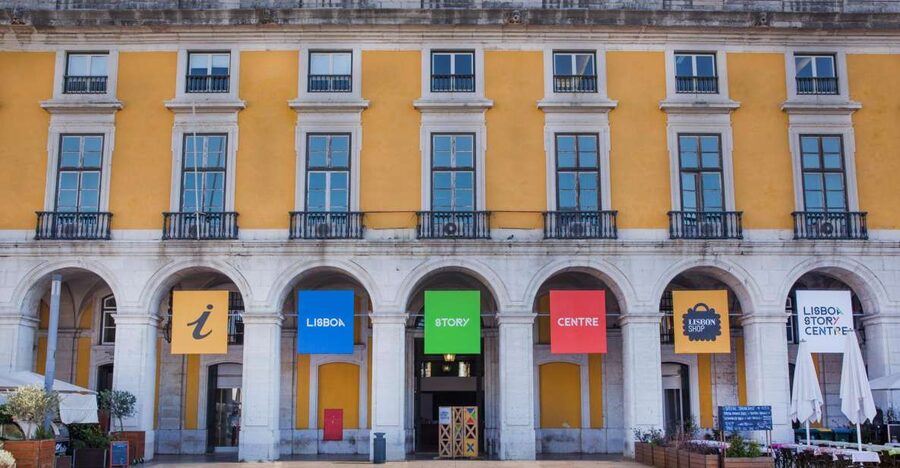
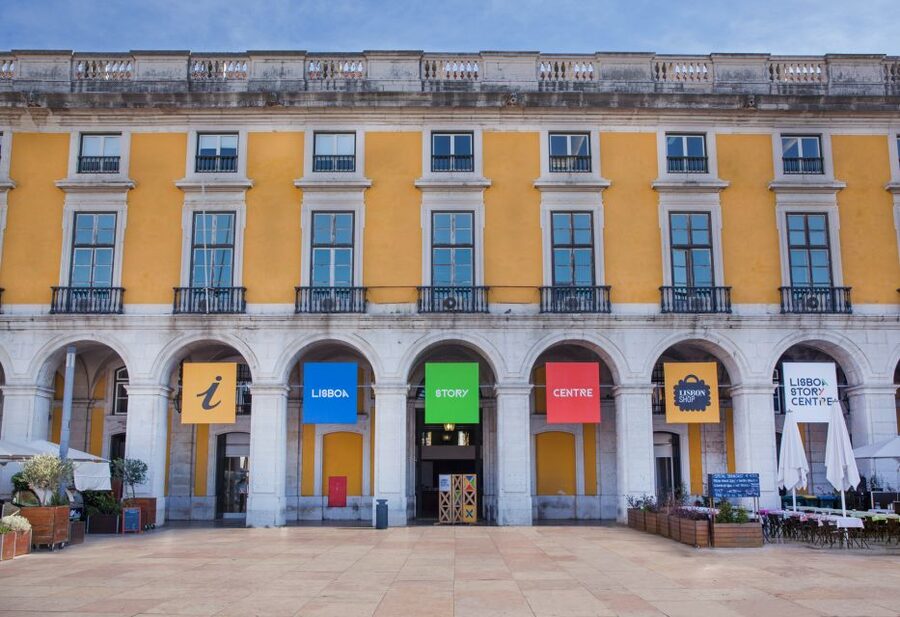
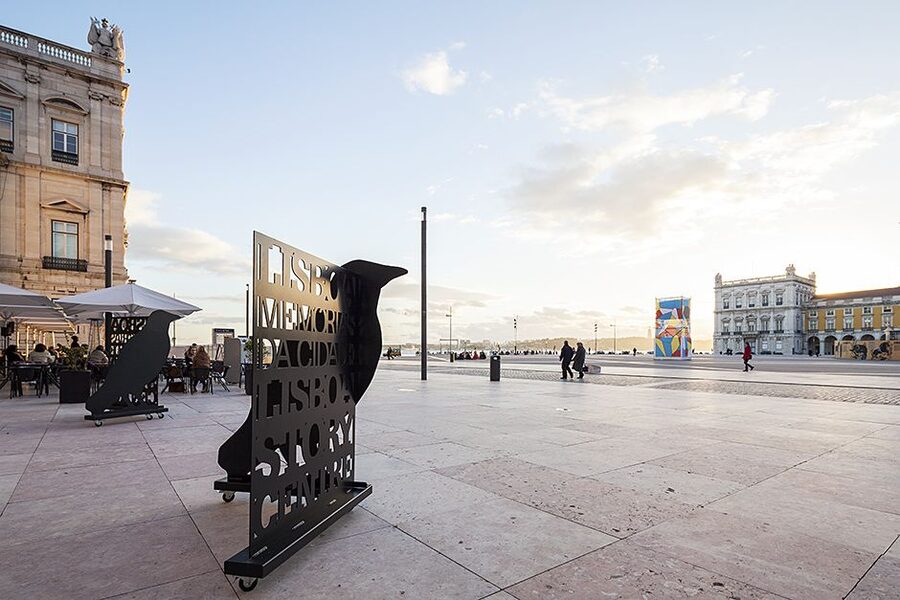
The Lisboa Story Centre sits in the East Wing of the renovated Terreiro do Paço, the broad riverside square better known as Praça do Comércio. That setting matters. You begin in one of Lisbon’s most important public spaces, then learn why the square looks the way it does.
Inside, the experience is arranged as a guided passage through time rather than as a collection of unrelated objects. You receive an audio guide and move through six public areas. The first five are on the ground floor and follow Lisbon’s story in chronological order. The sixth area is upstairs and shifts from staged history to a large-scale look at the city itself.
The format is simple to follow. Recorded narration tells you what you are seeing while sets, multimedia scenes, and sensory effects supply the atmosphere. I find this useful in Lisbon, where the city’s long past can otherwise feel scattered among churches, ruins, tiled façades, and grand squares.
This is not a quiet museum built around original paintings or rare objects. It is a visitor attraction that explains major events through presentation and storytelling. If you like clear context and theatrical displays, it works well. If you prefer long labels, archaeological detail, or a large collection of original artifacts, you may find it light.
More 1-Day Tours in Lisbon:
- Sintra and Cascais Small-Group Day Trip from Lisbon
★ 5.0 · 7,018 reviews - Three Cities in One Day: Porto, Nazare and Obidos from Lisbon
★ 4.5 · 3,572 reviews - From Lisbon: Day Trip to Porto, Óbidos, and Nazaré
★ 4.5 · 1,311 reviews
The earliest chapters give you a quick city primer
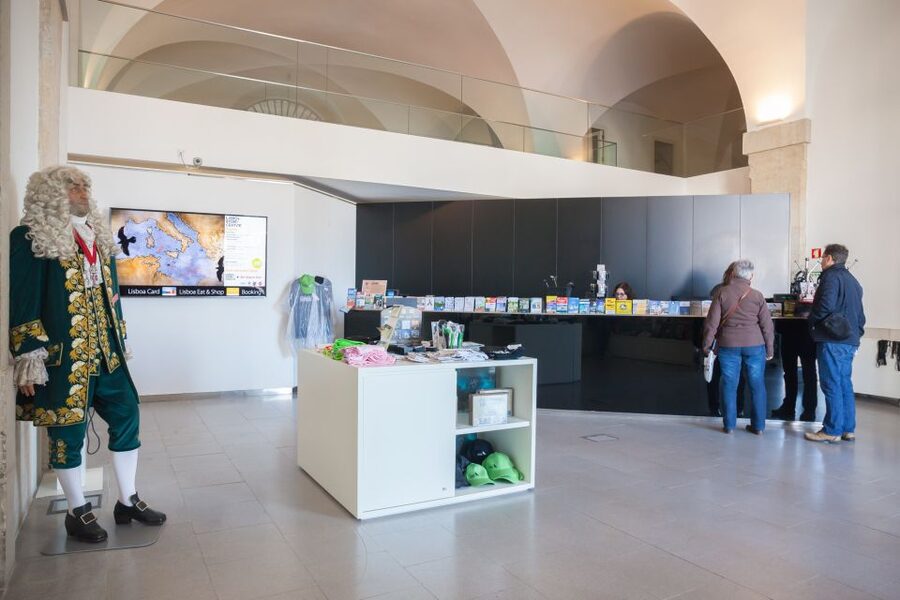
The first part covers Lisbon from its earliest civilizations through the later stages of its development. The information is presented in broad strokes, giving you the main sequence rather than a specialist account of every century.
That approach suits a short visit. You do not need to arrive with background knowledge, and the audio guide helps connect one period to the next. The chronological order also gives families an easy structure to follow. Children can understand that the city changed over time, even when the details of politics and trade become more complex.
The trade-off is depth. Covering Lisbon’s entire story in about an hour means some periods receive only a short treatment. You should think of this section as preparation for sightseeing, not a substitute for a full museum or history book.
The attraction uses elaborate sets instead of asking you to stand in front of rows of objects. That can make the past easier to picture. You might find the presentation especially useful at the start of a Lisbon visit, when you want to know how the city’s districts, buildings, and waterfront fit into the larger story.
Step into a 16th-century warehouse
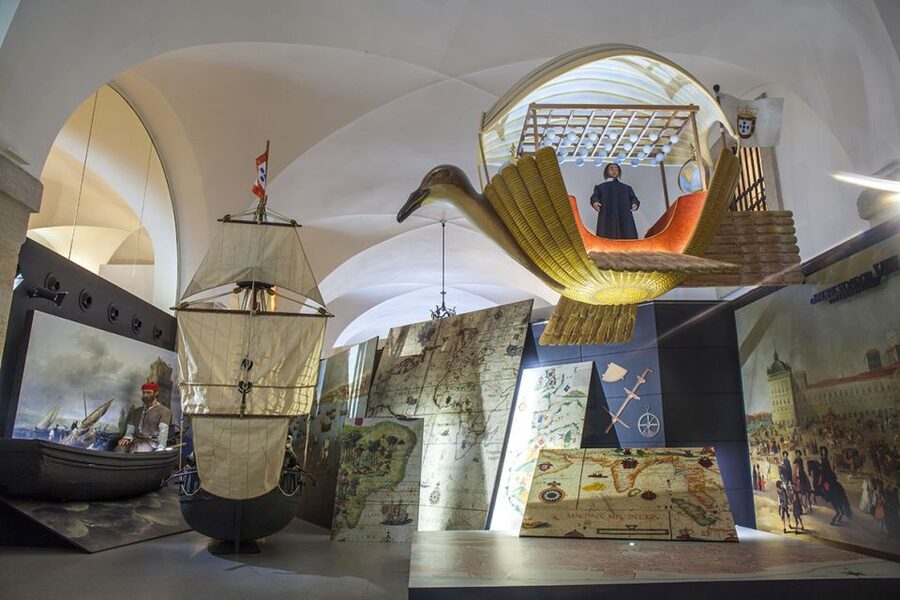
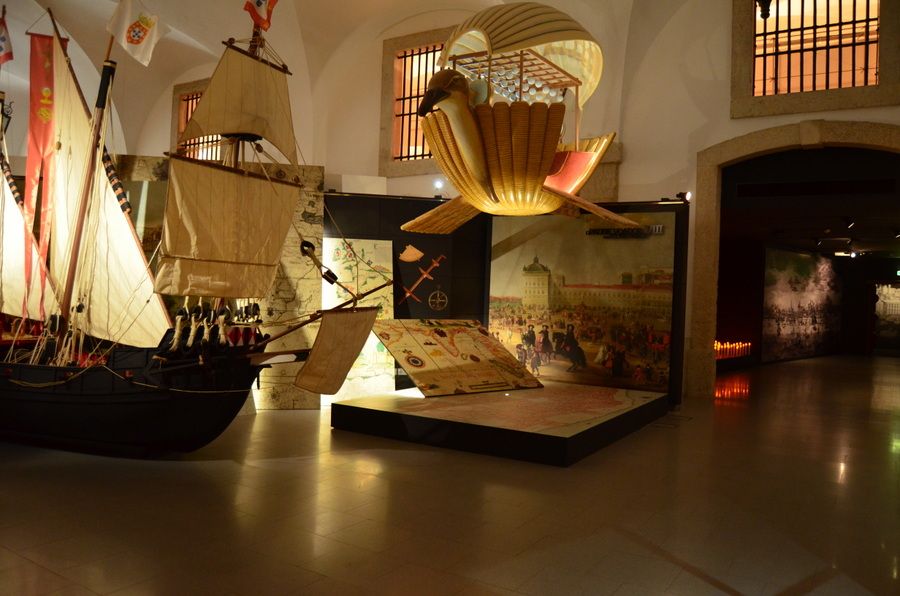
One of the more memorable settings is a recreation of a 16th-century warehouse. Here, Lisbon’s role in overseas trade becomes easier to imagine through displays of products from the New World and the presence of caravela ships.
This section connects the city to Portugal’s maritime expansion without leaving you to decode a map or a dense wall of text. The warehouse setting gives the subject a practical feel: goods arrived, were stored, and moved through a port city tied to distant routes.
The presentation also helps explain why Lisbon became such an important capital and trading center. You see the city not only as a place of palaces and churches, but as a working waterfront shaped by ships, cargo, and long-distance exchange.
At the same time, the material is necessarily selective. The display gives you a broad introduction to maritime Lisbon rather than a full account of Portugal’s overseas empire. I would treat it as a prompt to look more closely at the waterfront, the square outside, and Lisbon’s maritime monuments during the rest of your visit.
The 1755 earthquake is the emotional center
The strongest section recreates the events of All Saints’ Day in 1755, when an earthquake devastated Lisbon and led to fires and destruction across the city. The presentation uses an immersive combination of sound, visuals, and staged surroundings to convey the shock and disorder.
This is the point where the centre’s theatrical style makes the most sense. A paragraph about an earthquake can feel distant. A carefully designed sequence of sights and sounds gives you a better sense of why the event changed Lisbon’s buildings, streets, government, and identity.
The attraction does not treat the earthquake as an isolated disaster. It shows the consequences and moves into the reconstruction that followed. That link is essential, because the broad grid and uniform façades around Terreiro do Paço are part of the answer to what happened in 1755.
The effects may not suit every visitor. Anyone sensitive to loud sound, dark rooms, or dramatic staging should take that into account. The experience is designed to make the event felt, not simply listed, so it can be more intense than a conventional gallery.
More Tickets in Lisbon:
- Sintra: Pena Palace and Park Entrance Ticket
★ 4.2 · 17,410 reviews - Lisbon: Jerónimos Monastery Entrance Ticket
★ 4.1 · 14,164 reviews - Lisbon: Oceanário de Lisboa Entrance Ticket
★ 4.6 · 9,943 reviews - Quinta da Regaleira Skip-the-Ticket-Line Entry & Audioguide
★ 4.2 · 3,316 reviews
Follow the Marquis of Pombal’s rebuilding plan
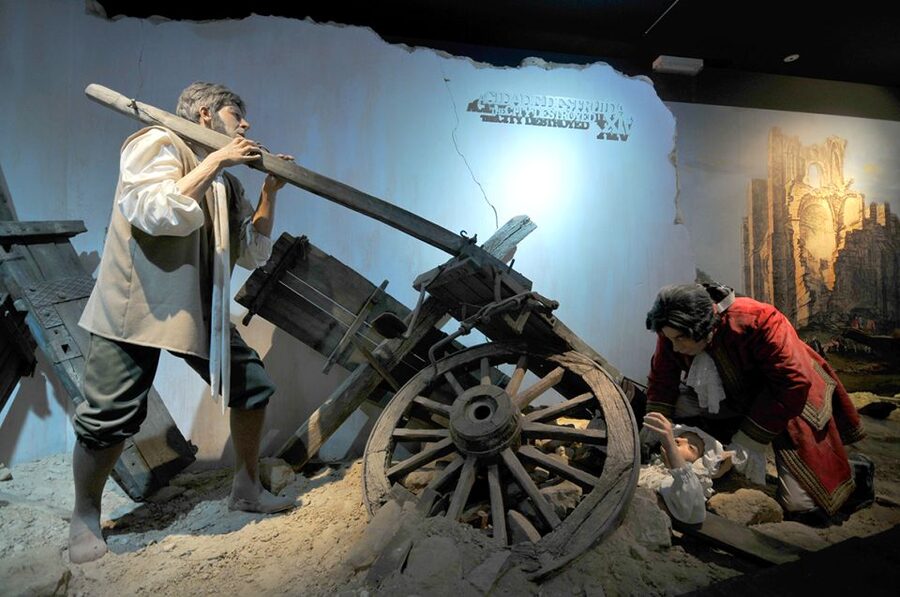
After the earthquake, the story turns to the Marquis of Pombal and his far-reaching plans to rebuild Lisbon. This section explains how the capital was reshaped after the disaster and helps you read the Baixa district with more understanding.
The value here is practical. Once you know that central Lisbon was rebuilt according to a clear plan, the wide streets and ordered blocks around Praça do Comércio make more sense. The city stops looking like a random collection of attractive façades and starts to read as a deliberate response to catastrophe.
The centre presents Pombal’s role as part of the city’s larger recovery. You see how leadership, planning, and construction affected daily life and the capital’s appearance. For a first-time visitor, this is one of the most useful pieces of background in the attraction.
Again, the treatment is brisk. You will not get a detailed study of every architectural decision or political conflict. What you do get is enough context to improve your walk through Baixa afterward. I would visit the Story Centre before spending time around the square and the rebuilt downtown streets.
The virtual model shifts your view to modern Lisbon
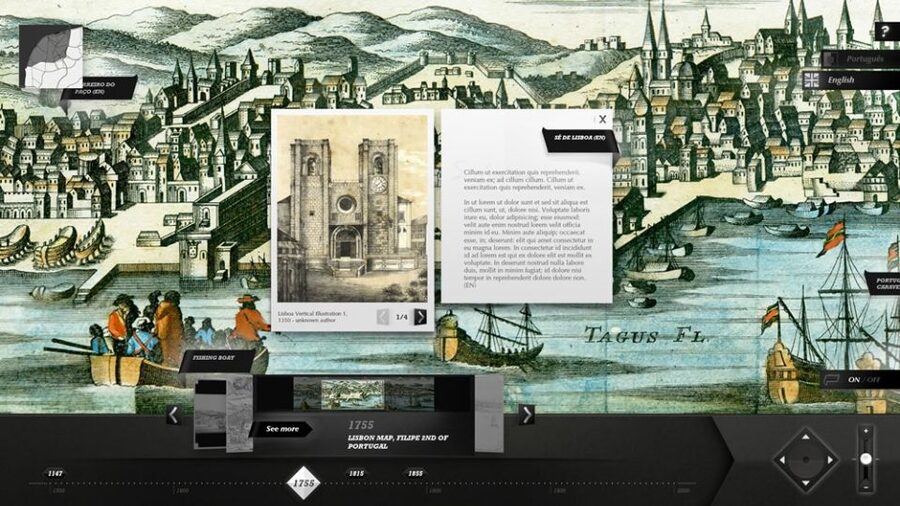
The sixth area is on the first floor and features a virtual scale model of the capital. This gives you a citywide view that the earlier rooms cannot provide.
You can use the model to look at different architectural types and see how Lisbon developed across its hills, central districts, waterfront, and newer areas. The attraction also provides more historical detail here and encourages you to discover modern Lisbon beyond the older core.
This is a helpful change of pace after the staged rooms. Instead of following one event after another, you step back and look at the city as a whole. It can help you decide what to explore next, especially if Lisbon is unfamiliar and the many districts seem hard to place.
One point needs realistic expectations. The main historical journey reaches the present day, but contemporary Lisbon is handled briefly. If your main interest is current culture, neighborhoods, nightlife, or recent urban change, this section will not replace time spent outside.
A temporary exhibition area is also included. Its subject relates to the centre’s main themes, but the supplied information does not identify the current exhibition, so check what is showing when you plan your visit.
The audio guide makes the 60-minute route easy to follow
The included audio guide is central to the experience. You are not simply walking through rooms and guessing how each display fits the timeline. The narration leads you from one episode to the next and is available in Portuguese, English, Spanish, French, Italian, German, Russian, Mandarin, and Japanese.
Portuguese has both adult and child versions. That is a useful touch for families, since younger children can receive a simpler explanation while adults follow the fuller account.
The guide also lets you set your own pace within the attraction’s structure. You can listen, look around, and move on when ready. The presentation is designed to take about 60 minutes, though the ticket remains valid for one day during opening hours.
The audio narration is not a named live guide, so you should not expect conversation, personal recommendations, or questions answered on the spot. Its strength is consistency and language choice. For many visitors, that is enough, especially when the visual scenes carry much of the story.
Families get a playful history lesson, with a few limits
The centre’s strongest audience is likely families and first-time visitors who want an accessible introduction to Lisbon. The staged rooms, sound effects, and short chronological chapters are easier for many children to follow than a traditional museum filled with written panels.
A family can also fit the visit into a busy day. The full route takes about an hour, leaving time for the square, the waterfront, lunch, or another nearby sight. The child audio option in Portuguese adds flexibility for Portuguese-speaking families.
Still, the attraction is not a play space. Children who need constant movement may find the narrated sequence slow in places, while older students looking for detailed history may want more information afterward. I would frame it as a strong introduction, then use the city itself as the next classroom.
Adults without children can enjoy it too, particularly if you want a clear account of the earthquake and reconstruction before walking through Baixa. The attraction’s straightforward style is part of its appeal, though visitors seeking a solemn, object-based museum should choose accordingly.
Plan around opening hours and room comfort
Lisboa Story Centre is open daily from 10:00 to 19:00, with last admission at 18:00. The one-day ticket gives you flexibility, but the main route is short enough that you can fit it into a morning or afternoon plan.
Because the centre is in Terreiro do Paço, it works well as part of a central Lisbon day. You can pair it with time in the square and nearby downtown streets rather than making a separate trip only for the attraction.
The site is wheelchair accessible. That is important for anyone planning a mixed group, though the information provided does not detail every route feature or seating arrangement.
Pay attention to the temperature. A recent visit found that the installations did not have air conditioning. On a hot day, the theatrical rooms and equipment may feel less comfortable, so an earlier visit could be a sensible choice if the schedule allows.
The ticket includes skip-the-ticket-line access, which can save time when the centre is busy. The exact admission price is not provided here, so judge the value against your own plans. For a family or first-time visitor, the combination of a central location, audio guide, and one-hour format can justify the cost. For someone already planning several museums or who wants detailed modern history, the value may be less convincing.
You can cancel up to 24 hours ahead for a full refund, and reserve now while paying later. Those terms are useful if your Lisbon schedule is still shifting.
Who should book Lisboa Story Centre?
I would book it if you want a clear introduction to Lisbon before exploring the city on foot. It is especially suited to families, first-time visitors, and anyone who wants the 1755 earthquake and Pombal’s reconstruction explained in one orderly visit.
I would be more cautious if you want a deep account of contemporary Lisbon, a large collection of original objects, or a quiet museum experience. The modern era receives limited attention, and the presentation depends heavily on staged scenes and multimedia effects.
The best use of the ticket is to visit early in your Lisbon stay, then walk through Terreiro do Paço and Baixa with the story fresh in your mind. Book it if a lively, guided history lesson sounds useful. Skip it if your schedule is tight and you already know Lisbon’s past well.
FAQ
How long does the Lisboa Story Centre visit take?
The main journey through the attraction takes about 60 minutes. The ticket is valid for one day, so you can visit during the published opening hours.
Where is Lisboa Story Centre located?
It is located at Terreiro do Paço, 78-81, 1100-148 Lisbon, in the East Wing of the renovated square.
What are the opening hours?
The centre is open every day from 10:00 to 19:00. Last entrance is at 18:00.
Is an audio guide included?
Yes. Admission includes an audio guide.
Which audio guide languages are available?
Audio guides are available in Portuguese, Spanish, English, Japanese, French, German, Russian, Mandarin, and Italian. Portuguese includes adult and child versions.
What does the exhibition cover?
The exhibition covers Lisbon from its earliest civilizations through the present day. Key sections address maritime trade, the 1755 earthquake, the earthquake’s consequences, and the Marquis of Pombal’s reconstruction plans.
How many exhibition areas are there?
There are six public areas. Five main areas are on the ground floor, and the sixth is on the first floor with a virtual scale model of Lisbon.
Is Lisboa Story Centre wheelchair accessible?
Yes, the attraction is wheelchair accessible.
Can I skip the ticket line?
Yes. The activity includes skip-the-ticket-line access.
Can I cancel my booking?
Yes. You can cancel up to 24 hours in advance for a full refund. You can also reserve now and pay later.
Just reviewed in Lisbon
- Lisbon: Morning of Equestrian Art with Lusitano Horses★ 4.4 · 87 reviews
- Lisbon: Entry Tickets to Mosteiro de São Vicente de Foram★ 4.6 · 50 reviews
- Lisbon: National Palace of Ajuda E-Ticket & City Audio Guide★ 4.1 · 87 reviews
- Lisbon: Early Morning TukTuk Tour – hotel/cruise ship pickup★ 4.9 · 45 reviews
- Sintra: Quinta da Regaleira e-Ticket & Sintra City Audios★ 4.1 · 12 reviews
- Lisbon E-Bike Tour TAGUS★ 5.0 · 3 reviews
- Lisbon: E-bike Trip from the Sintra Mountains to Cascais Sea★ 5.0 · 67 reviews
- Lisbon: Discover Belem by electric Tuk Tuk★ 4.9 · 86 reviews
1-Day Tours, compared.

Sintra and Cascais Small-Group Day Trip from Lisbon
Read our review →
Fatima Batalha Nazare & Obidos Small Group Day Trip
Read our review →
Arrabida and Sesimbra Small-Group Day Trip from Lisbon with Wine Tasting
Read our review →
Best Sintra Day Trip From Lisbon – Pena, Cabo Da Roca & Cascais
Read our review →

Sintra, Pena Palace, Cabo da Roca, Cascais Day Trip from Lisbon
Read our review →
Sintra Sights, Cabo da Roca, & Cascais Day Trip
Read our review →
Browse the lists this tour appears in