
Reviewed · LISBON WALKING TOURS
Lisbon: 3-Hour The Slave Trade – An Historical Walking Tour
Portugal’s role in the Atlantic slave trade is written into Lisbon’s streets, grand buildings, and oldest neighborhoods, but it is easy to miss if you stick to the usual sightseeing script. This three-hour walk brings that history into view, from the origins of slavery in Iberia to Portugal’s colonies, Brazil, abolition, and African liberation movements.
I like the small-group format, which gives Rui Fernandes room to answer questions and adjust the pace. I also like the guide’s personal connection to the subject and his use of historical pictures to make unfamiliar events easier to grasp. The main consideration is the subject itself: this is a serious, often painful tour, not a light introduction to Lisbon.
The tour is listed at $35 per person, a fair price for three hours with a specialist guide. One practical note: the booking information gives both six and eight as the group limit, so check the specific date when reserving.
Key points at a glance

- Begins in Alfama: Meet at Largo do Chafariz de Dentro, in Lisbon’s oldest district.
- Connects famous places to slavery: Streets, churches, public squares, monuments, and grand buildings become evidence in a larger story.
- Led by Rui Fernandes: Rui brings training in history, political science, and economics, along with a personal connection to the subject.
- Covers four centuries: The walk examines Iberian slavery, the Atlantic trade, Brazil, Portuguese Africa, abolition, and liberation struggles.
- Made for questions: The slow pace, small group, and coffee break leave room for discussion.
- Easy to fit into a Lisbon visit: The route is described as mostly flat or gently inclined, though comfortable shoes remain essential.
Why this history belongs in your Lisbon plans

Many visitors come to Lisbon for tiled facades, lookout points, old trams, and maritime discoveries. Those sights are still here, but the usual Age of Discovery story can feel incomplete if it leaves out the people who were captured, sold, transported, and forced to work.
This tour places Portugal’s wealth and overseas expansion beside the human cost of that system. The guide addresses the Atlantic slave trade as a crime against the people caught in it, while also explaining the political, religious, and economic forces that helped it grow.
That balance matters. You are not simply given a list of dates or shown a monument with a brief caption. You are asked to connect Lisbon’s prosperity with the systems that helped produce it. You also look at how slavery shaped later racism and how its effects remain part of present-day Portugal.
The tour covers a large subject in a short time, so it is best for you if you want a serious introduction rather than a narrow tour of one memorial or museum. Rui’s background in history, political science, and economics suits the subject well. His approach links individual lives with larger institutions and trade networks.
More Lisbon Walking Tours:
- Lisbon: History, Stories and Lifestyle Walking Tour
★ 4.8 · 10,902 reviews - Best of Lisbon Small-Group Guided Walking Tour
★ 5.0 · 4,869 reviews - Lisbon: Food and Wine Small Group Walking Tour
★ 4.9 · 4,082 reviews
Starting in Alfama at Largo do Chafariz de Dentro
Your meeting point is Largo do Chafariz de Dentro, a square in Alfama. This is a useful beginning because Alfama is one of Lisbon’s oldest districts, with a street plan that helps you picture the city before later expansion.
From here, the walk uses both back streets and main avenues. That contrast is part of the lesson. A narrow lane can raise questions about daily life, movement, and housing, while a grand public building can lead to a discussion of commerce, power, and state wealth.
You should not expect every stop to have a large plaque explaining its connection to slavery. Some places matter because of what happened there, what they once housed, who used them, or how their names and functions changed. Rui uses the city itself as evidence, helping you read familiar buildings in a new way.
The exact sequence of stops can vary with the group and the guide’s answers. That flexibility is useful on a topic with so many connected threads. It also means this is not a tightly choreographed photo stop tour. The focus is the story, not collecting a fixed number of sights.
From Iberian slavery to the Atlantic trade
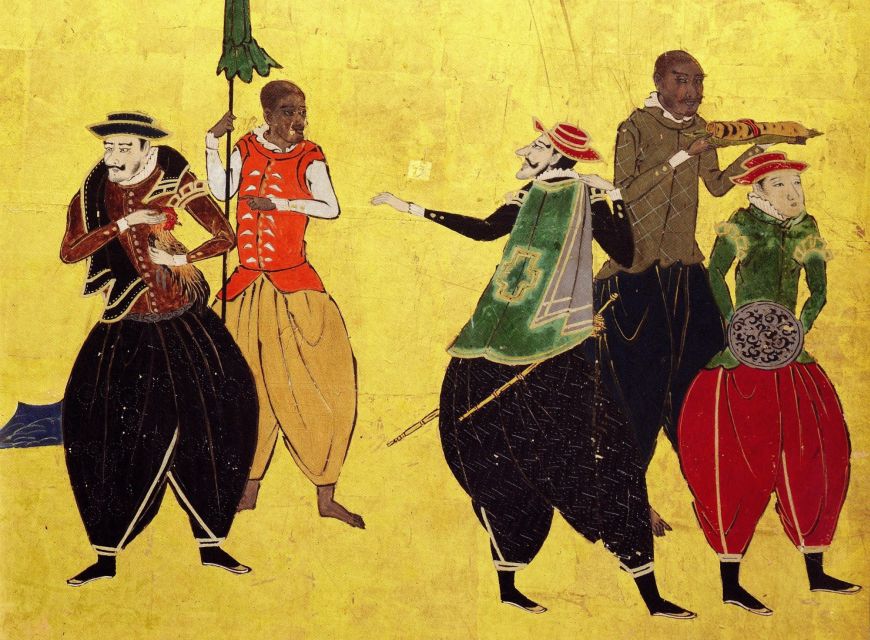
One early part of the walk explains that slavery did not begin with Portugal’s voyages into the Atlantic. The discussion includes the roots of slavery in the Iberian Peninsula, giving you a wider setting before turning to Portugal’s role in the transatlantic system.
That context helps avoid a common mistake: treating the Atlantic slave trade as if it appeared without earlier traditions of captivity, labor, religion, and law. The tour then follows Portugal’s part in developing the Atlantic trade during the first half of the 15th century, under the direction of Prince Henry the Navigator.
The scale is difficult to grasp. The tour places Portugal within a system that carried an estimated 12 to 14 million Africans across the Atlantic over roughly four centuries. The numbers matter, but Rui also works to keep the subject human rather than turning it into statistics alone.
You will hear about the Age of Discovery in a fuller way than the familiar story of ships, maps, and trade routes. Maritime skill and overseas expansion brought power and wealth, but they also enabled kidnapping, sale, forced labor, family separation, and long-term racial oppression.
Reading Lisbon’s churches, squares, and grand buildings
The city portion is where the tour earns its place as a walking experience. Instead of discussing the slave trade in a classroom removed from Lisbon, you move through places shaped by the money, institutions, and people involved in it.
Churches provide a way to discuss religion and the moral arguments used to support, question, or regulate slavery. Public squares and major avenues open the subject of commerce, government, ceremonies, and the display of national success. Buildings that now serve another purpose may have earlier links to trade or social life.
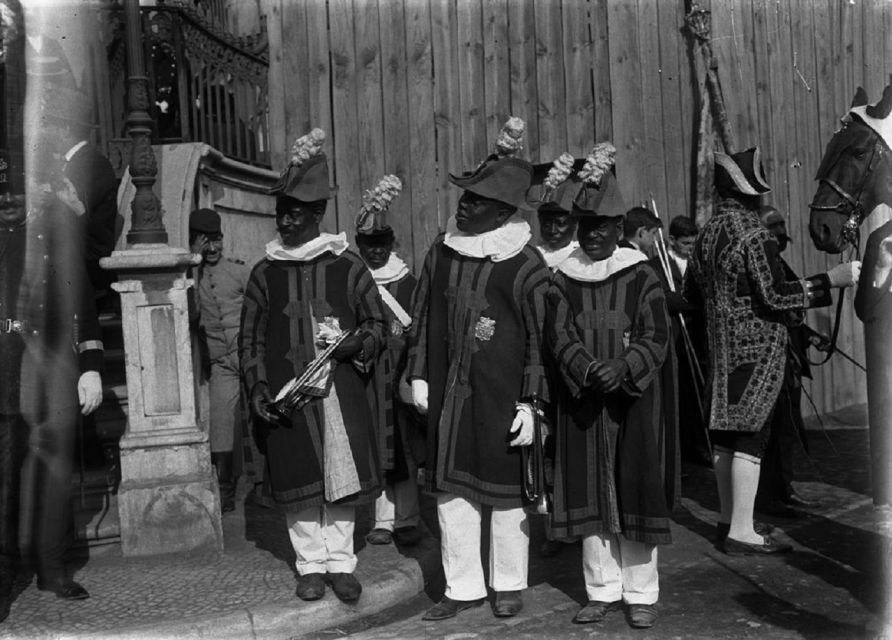
Rui also explains how Black communities were present in historical Lisbon. That helps correct the impression that Africans appeared only as cargo in a distant overseas story. Enslaved Africans lived and worked in Portugal, and their presence affected the daily life of the capital.
Some stops may feel less visually dramatic than a palace or viewpoint. That is a fair trade for a tour about a history that has often been overlooked in ordinary sightseeing. You need to listen closely, since the meaning may come from a past use, a street name, or a connection that is not obvious from the facade.
More 3-Hour Experiences in Lisbon:
- Lisbon: 3-Hour Tour by E-Bike
★ 4.8 · 1,150 reviews - 3-Hour Lisbon 7 Hills Electric Bike Tour
★ 5.0 · 818 reviews - 3-Hour Guided Street Art Walking Tour of Lisbon
★ 5.0 · 278 reviews - 3 Hours Private Lisbon Food Tuk Tour
★ 5.0 · 145 reviews
Daily life for enslaved people in Lisbon
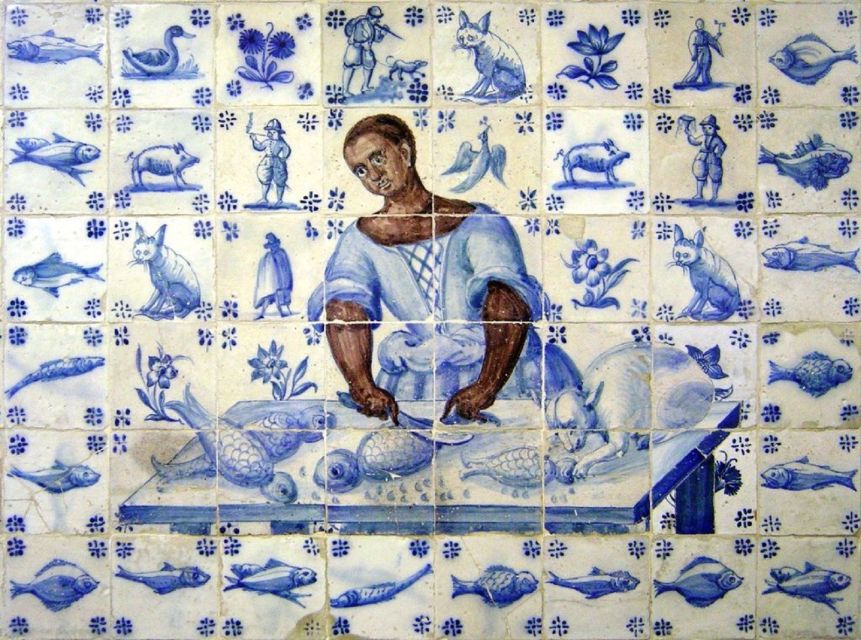
A strong feature of the walk is its attention to ordinary life. The subject is not limited to kings, merchants, navigators, or laws. You also examine what life could involve for an enslaved person living in Lisbon.
The tour addresses work, status, movement, and the social position of enslaved Africans. These details help you understand slavery as a daily system, not just a series of voyages. A monument or church can look very different once you consider the people who cleaned, carried, served, built, or labored within the city.
Rui’s use of pictures is helpful here. Historical images can add faces, clothing, occupations, and physical settings to material that might otherwise remain abstract. The guide has been praised for bringing visual material to the walk, and this is one of the reasons to choose a guided experience instead of trying to follow the subject alone.
The subject can be emotionally demanding. I would not schedule this immediately before a carefree food tour if you want time to process what you have heard. On the other hand, the pace is relaxed, and the guide makes room for questions rather than rushing from one fact to the next.
Brazil, Portugal, and the business of slavery
Brazil receives particular attention because it was central to Portugal’s overseas economy and to the wider slave system. The walk shows how Lisbon’s fortunes were tied to Brazil and how people, goods, capital, and political decisions moved between Portugal and its colony.
This section is valuable if you know the broad outline of Portuguese exploration but have not connected Lisbon to Brazil’s plantation economy and forced labor. It also helps explain why slavery cannot be separated from discussions of trade, taxation, shipping, land, and imperial power.
The course is not just about one country acting alone. Portugal’s role is examined within the longer history of slavery and the Atlantic world. That wider frame lets you see how different governments, merchants, religious institutions, and colonial systems interacted.
Rui’s training in economics and political science is useful here. The walk does not treat the trade as a string of isolated cruel acts. It shows how institutions made exploitation profitable and durable, and how economic interests shaped political choices.
Abolition, African colonies, and liberation
Later sections turn toward the abolition of the slave trade in Portugal, Portuguese colonies in Africa, and the struggles of African nationalists for liberation. This brings the story beyond the 15th and 16th centuries and prevents the false impression that the subject ended when the Atlantic trade was formally abolished.
Abolition is presented as a political process, not a single clean break. You also consider the colonial systems that continued after the Atlantic trade and the resistance that challenged Portuguese rule in Africa.
This part may be especially useful if you are staying in Lisbon before visiting other Portuguese-speaking countries or regions with connections to Portuguese colonial history. The tour gives you terms and context that can make later museum visits, monuments, and conversations easier to understand.
It also brings the discussion into the present. The link between past slavery, colonialism, racism, and modern Portugal is one of the more important reasons to take this walk. You are encouraged to ask how history appears in contemporary society, rather than treating it as safely finished.
Rui Fernandes as your guide
Rui Fernandes is the guide most closely associated with this experience. The supplied information identifies him as an African guide with a background in history, political science, and economics. His approach is built around clear explanation, patient answers, and a willingness to follow thoughtful questions.
That last point matters. A specialized history tour can become a lecture, but the small group makes conversation possible. Rui remembers participants’ names, checks that everyone can follow, and adjusts the pace when needed. His English is described as clear, and he uses pictures when a visual reference helps.
The personal connection to African history adds another layer, though the tour remains focused on research and Lisbon rather than on autobiography. The guide’s passion is apparent, but the strongest feature is the way he connects personal stories to wider systems.
You should feel free to ask about Portugal’s history beyond slavery, local food, shops, or public transportation. Rui provides practical Lisbon suggestions as well as historical context, which makes the tour useful early in your stay.
Pace, terrain, breaks, and group size
The walk lasts about three hours, though some groups may spend closer to three and a half hours when questions continue. That is worth knowing before you schedule a museum or meal immediately afterward.
The pace is generally slow and relaxed. Several participants have found the route mostly flat or limited to mild inclines, which makes it more manageable than some Lisbon walks. Still, Alfama has cobbled streets, and Lisbon is not a perfectly level city. Wear comfortable shoes and expect uneven paving.
A coffee and bathroom break are included. In warm weather, the guide may look for shade, and the stop can include a cafe and a pastel de nata. It is a small detail, but a useful one during a long discussion on a hot day.
The experience is advertised as a small group, with the information giving a maximum of six in one place and eight in another. Confirm the limit for your chosen departure. A group of six allows much more conversation than a large city tour, especially when discussing a difficult subject.
Is $35 a fair price?
At $35 per person, the value depends on what you want from Lisbon. If you are looking only for a fast introduction to the main sights, a free city walk may cover more ground. If you want to understand how those sights connect to Portugal’s slave-trade and colonial past, this tour offers more substance for a modest fee.
The price includes the live guide and local taxes and fees. Hotel pickup and drop-off are not included, so you must reach Largo do Chafariz de Dentro on your own. The meeting point is in central Lisbon’s historic core, but allow time to find the square, particularly if you are not familiar with Alfama’s winding streets.
I think the price is strongest for students of history, visitors with African or Portuguese family connections, and anyone who wants a fuller picture of Lisbon. You are paying for subject knowledge, time for questions, and an interpretation of places you could otherwise walk past without understanding.
Free cancellation up to 24 hours before the start and a reserve-now, pay-later option make it easier to fit into a changing itinerary. Check the current departure time when booking, since the start time depends on availability.
Who should take this Lisbon walking tour?
Choose it if you want history that goes beyond palaces and navigation legends. It suits adults and older children who can focus for several hours, people studying Portugal or the Atlantic world, and visitors who want to think carefully about the city they are seeing.
It is also a good choice if you have already taken a general Lisbon tour and want a more focused subject. The walk can fill gaps left by bus tours and broad city introductions.
You may want to skip it if you prefer a light, entertainment-first outing or if a detailed discussion of enslavement and colonial violence would make your holiday feel too heavy. This is not a tour that hides the moral weight of the subject.
For the best experience, take notes or mark the places you visit on your phone afterward. One useful improvement would be a take-home map, since the route links many locations and names. Even without one, the walk gives you a new way to read Lisbon’s center.
Should you book it?
Book this tour if you want to understand Lisbon through a part of its past that is still often left out. Rui Fernandes brings a clear structure, strong subject knowledge, visual material, and patience with questions, while the small group keeps the experience personal.
The main tradeoff is emotional and intellectual rather than practical. Three hours is a long time for a difficult topic, and the amount of information can feel dense. Yet that is also the point. If you want a more honest account of Portugal’s prosperity, African presence, Atlantic trade, and colonial legacy, this is one of the most worthwhile specialist walks in Lisbon.
FAQ
Where does the tour meet?
Meet your guide at Largo do Chafariz de Dentro, a square in Lisbon’s Alfama district.
How long does the walking tour last?
The scheduled duration is three hours. Some groups may take closer to three and a half hours when there are many questions and discussions.
What language is the tour conducted in?
The live tour is conducted in English.
Who leads the tour?
The tour is led by Rui Fernandes, an African guide with a background in history, political science, and economics.
What subjects does the tour cover?
It covers slavery in the Iberian Peninsula, the birth of the Atlantic slave trade, the Age of Discovery, daily life for enslaved people in Lisbon, Brazil, abolition in Portugal, Portuguese colonies in Africa, and African liberation movements.
How many people are in the group?
The experience is advertised as a small-group tour. The information gives both six and eight as the maximum, so confirm the group limit for your selected date.
Is a break included?
Yes. The tour includes one coffee break and one bathroom break.
Is hotel pickup included?
No. Hotel pickup and drop-off are not included. You are responsible for reaching the meeting point.
What should I bring?
Bring comfortable shoes. Pets are not allowed on the tour.
More Historical Tours in Lisbon
- Lisbon: Live Fado Show with Port Wine in Historic Center
★ 4.7 · 4,166 reviews - Lisbon: Fado Show with Wine in a Historic Venue
★ 4.8 · 1,294 reviews - Explore Lisbon by Tuk Tuk: History and Viewpoints
★ 5.0 · 840 reviews - Lisbon: Daytime or Sunset Boat Cruise with History and Wine
★ 4.9 · 819 reviews
Just reviewed in Lisbon
- Lisbon: Morning of Equestrian Art with Lusitano Horses★ 4.4 · 87 reviews
- Lisbon: Entry Tickets to Mosteiro de São Vicente de Foram★ 4.6 · 50 reviews
- Lisbon: National Palace of Ajuda E-Ticket & City Audio Guide★ 4.1 · 87 reviews
- Lisbon: Early Morning TukTuk Tour – hotel/cruise ship pickup★ 4.9 · 45 reviews
- Sintra: Quinta da Regaleira e-Ticket & Sintra City Audios★ 4.1 · 12 reviews
- Lisbon E-Bike Tour TAGUS★ 5.0 · 3 reviews
- Lisbon: E-bike Trip from the Sintra Mountains to Cascais Sea★ 5.0 · 67 reviews
- Lisbon: Discover Belem by electric Tuk Tuk★ 4.9 · 86 reviews
Lisbon Walking Tours, compared.
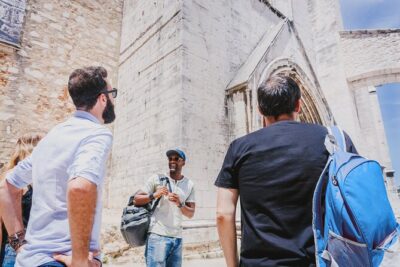
Best of Lisbon Small-Group Guided Walking Tour
Read our review →
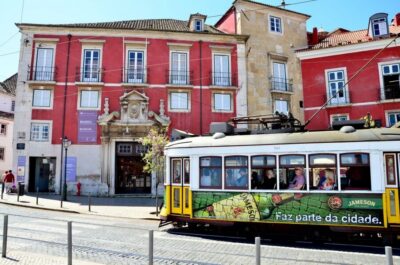
Best of Lisbon Walking Tour: Rossio, Chiado & Alfama
Read our review →

Lisbon Roots – Small group Food & Culture Walking Tour w/tastings
Read our review →
Starter Walking Tour to the highlights in German
Read our review →
Browse the lists this tour appears in