Reviewed · TICKETS
Lisbon: Entry Tickets to Mosteiro de São Vicente de Foram
São Vicente de Fora is one of Lisbon’s best-value historic visits, especially if you want more than a quick look inside a church. The $9 ticket opens the monastery’s church, Bragança Royal Pantheon, tile-covered rooms, exhibitions, cistern, and panoramic viewing areas.
I like the unusually large collection of glazed tiles left in their original places, and I like that the visit is not built around a crowded timed tour. The main drawback is that you explore without a guide or audio guide, so the written panels and map do much of the explaining.
- The original tile collection: See one of the world’s largest groups of glazed tiles still fixed where they were placed.
- The Royal Pantheon: Visit the burial place of Portugal’s last royal family from the Bragança Dynasty.
- The 360-degree view: Look across Lisbon and the river from the monastery’s higher areas.
- La Fontaine exhibition: Find 38 fables presented in glazed tile panels.
- A working medieval cistern: See an unusual piece of practical medieval engineering.
- A $9 self-guided visit: Spend the valid day exploring at your own pace, with no guided-tour surcharge.
Why São Vicente de Fora Deserves Your Time
Lisbon has no shortage of grand churches, lookout points, and tile-covered buildings. São Vicente de Fora brings all three together, then adds royal tombs, exhibitions, and a monastery complex with layers of Portuguese history.
The site began in the 12th century under D. Afonso Henriques. It was rebuilt in the 16th century by D. Filipe I, also known as Philip II of Spain, and the result is one of Portugal’s major examples of Mannerist architecture.
That history matters because the building is not tied to only one ruler or one period. Later kings from the Bragança Dynasty reused and reshaped the monument, leaving you with a place that mixes religious life, royal power, decorative art, and ordinary practical features.
I especially like the balance of grand and unexpected details. You can move from a royal pantheon to a working medieval cistern, then from a richly decorated sacristy to a series of illustrated fables. It is not just a church visit with a few side rooms.
Starting Inside the Church of São Vicente de Fora
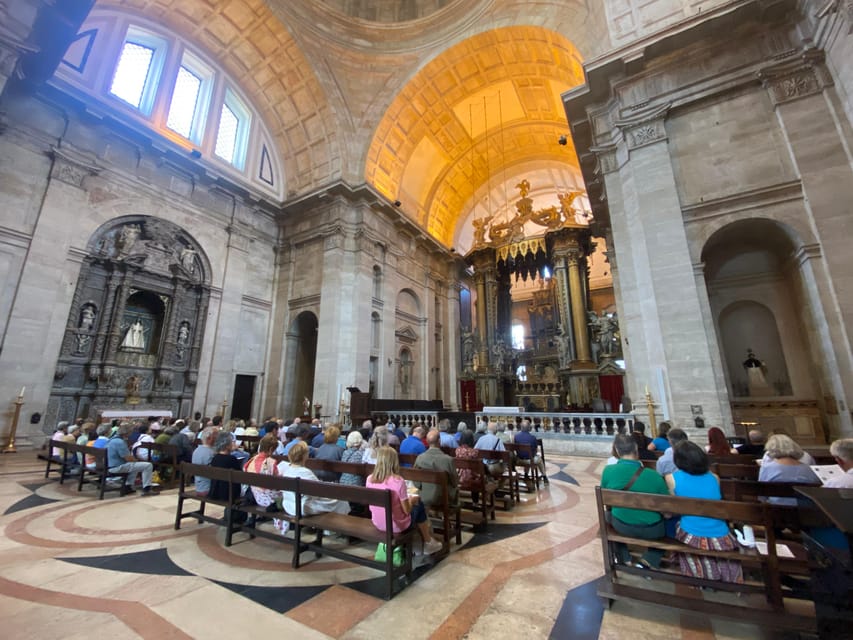
Your visit begins at the ticket office inside the Church of São Vicente de Fora. That starting point is useful because the church gives you an immediate sense of the scale and purpose of the monument before you explore the other areas.
The church is presented as one of Lisbon’s most beautiful. The wider complex helps explain why. This was a religious building closely connected with royal authority, and its decoration was meant to make that connection visible.
Take a little time at the beginning to get your bearings. You receive a flyer with a map and a short description of the monastery, while explanatory panels throughout the visit provide more context. Since there is no audio guide, reading these panels will help you understand what you are seeing rather than simply moving from decorated room to decorated room.
The visit is self-guided, which suits people who prefer to set their own pace. I would take time with the details instead of rushing straight toward the view. The tile panels reward close attention, and the exhibitions give the complex more substance than a quick photo stop.
More Tickets in Lisbon:
- Sintra: Pena Palace and Park Entrance Ticket
★ 4.2 · 17,410 reviews - Lisbon: Jerónimos Monastery Entrance Ticket
★ 4.1 · 14,164 reviews - Lisbon: Oceanário de Lisboa Entrance Ticket
★ 4.6 · 9,943 reviews
The Tile Collection in Its Original Setting
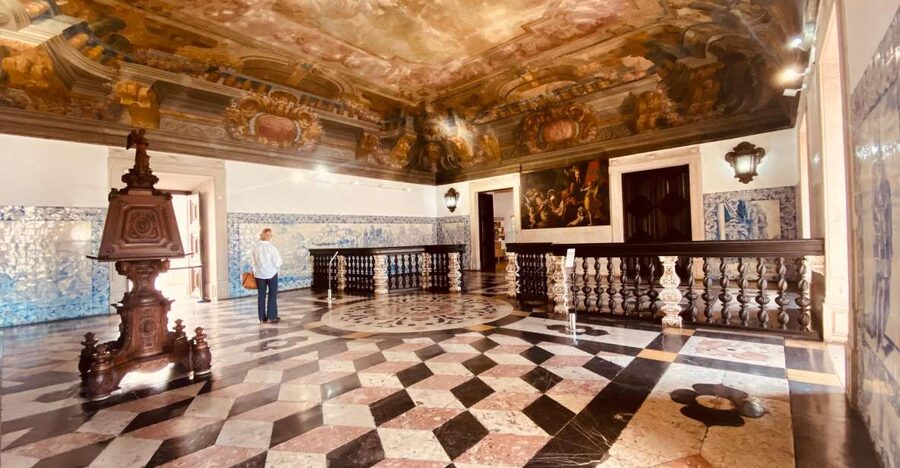
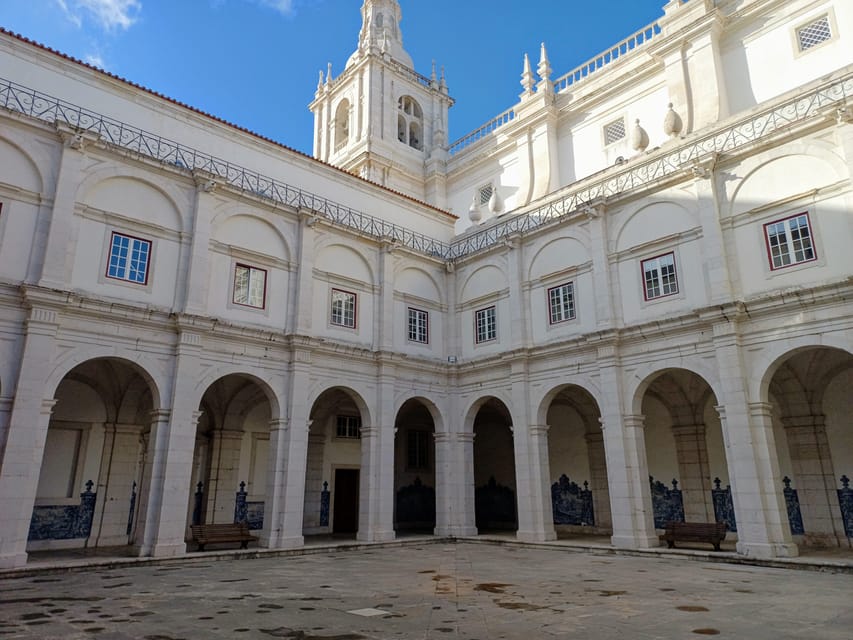
The tiles are the main reason I would recommend this visit. São Vicente de Fora contains one of the world’s largest collections of glazed tiles still in their original locations. The supplied description identifies it as the second monument in the world with the most tiles in situ, while also calling it Portugal’s largest collection of baroque glazed tiles in their original place.
That distinction is worth understanding. You are not walking through a modern tile museum where panels have been removed and arranged behind glass. Much of what you see remains part of the rooms and passageways for which it was made.
The original setting changes how you read the decoration. Tiles are not simply isolated works of art. They help shape the room, guide your eye, and show how decorative schemes once worked as part of daily religious and royal life.
Look closely at the panels rather than treating the walls as a single blue-and-white backdrop. The designs, scenes, and repeated patterns are easier to appreciate when you slow down. The building gives you a chance to see how Portuguese tilework functions as architecture, not just ornament.
If tiles are your main interest, allow more time than you might expect. The ticket includes access to all the exhibitions and areas on the visitor circuit, so there is enough here for a focused cultural visit rather than a quick glance inside the church.
The Baroque Sacristy and Inlaid Marble

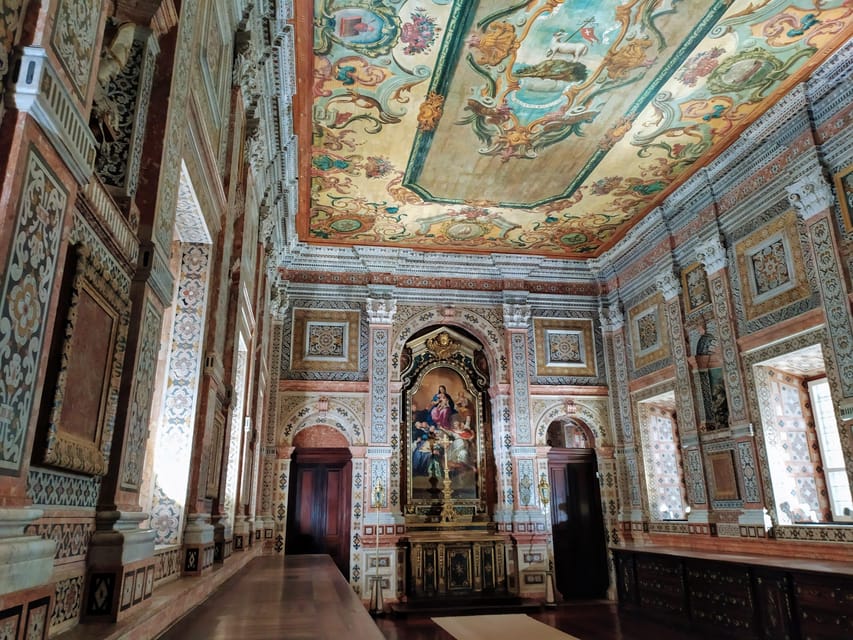
Another highlight is the sacristy, whose walls are fully decorated with inlaid marbles. This room offers a change from the glazed tiles and shows a different form of decorative craftsmanship.
The contrast is part of the pleasure. Tilework can feel patterned, pictorial, and distinctly Portuguese, while the marble decoration gives the space a more formal and polished character. Together, these rooms show the range of materials used to express the importance of the monastery.
The sacristy also helps you understand that the building’s appeal is not based on one famous object. You move through a sequence of rooms, each with a different visual emphasis. That makes the visit more rewarding for anyone who enjoys architecture and interiors, not only churchgoers.
The supplied information does not promise access to every part of the monastery. Your ticket covers the marked visitor circuit, while areas outside that circuit are not included. Keep that limit in mind if you arrive expecting to wander through every door.
The Bragança Royal Pantheon
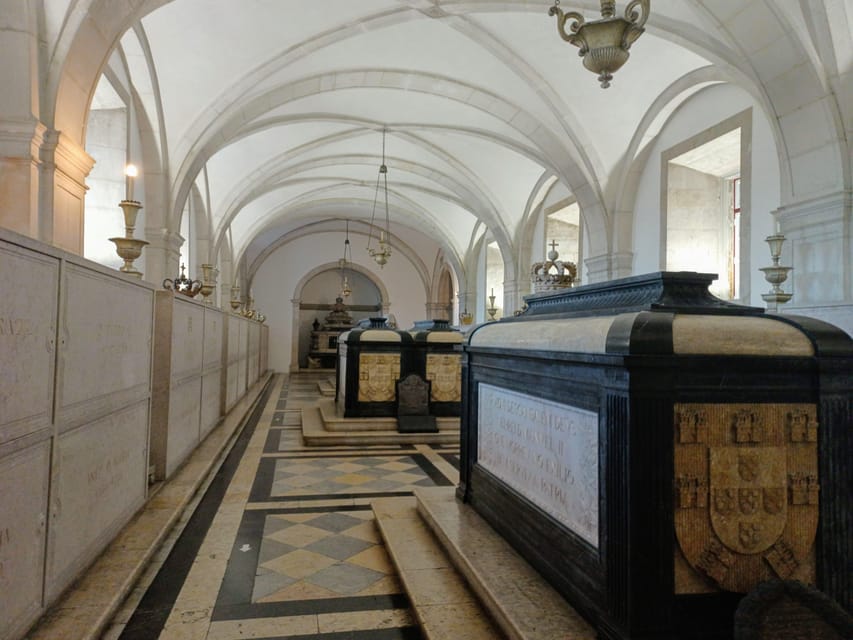
The Royal Pantheon is one of the most important stops. It holds the tombs of Portugal’s last royal family, the Bragança Dynasty, and gives the monastery a direct connection to the country’s monarchy.
A royal burial place changes the tone of the visit. The building is not only a religious monument or an art collection. It is also a place connected with the final resting places of rulers and members of the royal family.
I find this section valuable because it gives a human scale to the political story. Names, tombs, and a dedicated burial space make the succession of dynasties feel less abstract. You are seeing where the last Portuguese royal family was entombed, not just reading about royal power on a wall panel.
Approach the pantheon respectfully. It is part of an active historic monument and a place of burial, not merely a decorative room. The ticket includes it, so you do not need to pay a separate charge to see this part of the complex.
Something different to do with a day in Lisbon:
- Lisbon City Center Tour – The Unmissable Lisbon
★ 5.0 · 22,234 reviews - Lisbon: Sintra, Pena, Regaleira, Cabo da Roca & Cascais
★ 4.7 · 19,656 reviews - Lisbon: History, Stories and Lifestyle Walking Tour
★ 4.8 · 10,902 reviews - Lisbon: Sunset Boat Party Cruise with DJ and Open Bar
★ 4.5 · 10,378 reviews
La Fontaine’s 38 Fables in Tile
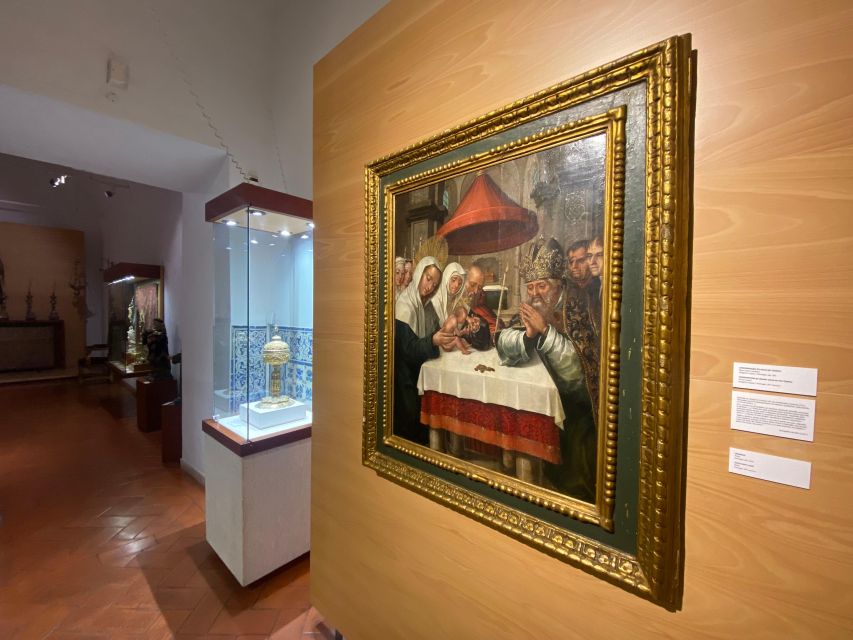
The exhibition of 38 fables by Jean de La Fontaine is one of the more unusual features at São Vicente de Fora. The stories are shown in glazed tile panels, creating a meeting point between literature, illustration, and Portuguese decorative art.
This exhibition gives you a different way to look at the tiles. Instead of seeing only abstract patterns or religious scenes, you can follow familiar moral tales through images fixed to the walls. The result is more playful than the royal and religious sections of the monastery.
I would not rush through this exhibit. It is one of the parts that can make the visit memorable for children and adults alike, especially if you enjoy finding the story in a visual scene. The available information does not identify all the individual fables or explain whether translations are provided, so the panels and any on-site descriptions will guide your understanding.
The exhibition also adds variety to the route. After the church, pantheon, and formal rooms, the fables offer a more accessible and story-driven section.
The Medieval Cistern and the Panoramic View
The medieval cistern is a small but revealing feature. It still works, which makes it more interesting than a preserved structure that has lost its original purpose. It shows that the monastery was also a functioning place that needed water systems and practical infrastructure.
Details like this are easy to miss if you focus only on grand decoration. I like including them in a visit because they show how people lived and worked inside historic buildings. A royal monument still required basic systems to support daily life.
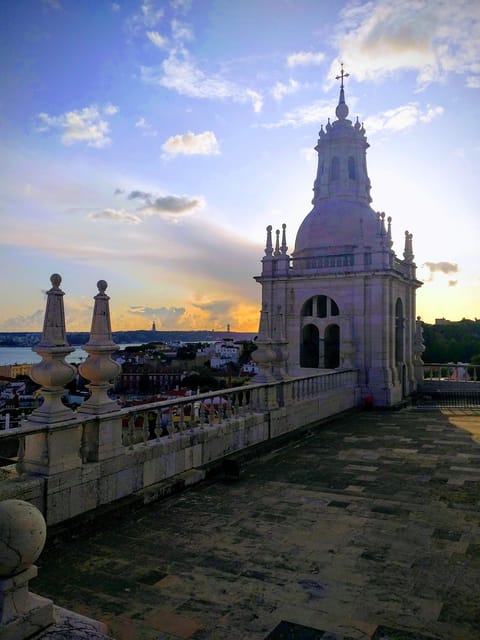
The panoramic view is the other major reward. From the monastery, you can look over Lisbon and the river, with a wide view that helps place the monument within the city.
The view is especially useful after seeing the interior. You begin to understand São Vicente de Fora not as an isolated church, but as part of Lisbon’s wider urban setting. The experience description calls it a magnificent panoramic view and specifically notes a 360-degree outlook.
I would save a few minutes for this area rather than treating it as a quick photo stop. The weather will affect how much you can see, and the information provided does not guarantee clear conditions or specify exactly which landmarks are visible. Still, the view gives the visit a strong finish.
How Long You Need and How the Visit Works

The ticket is valid for one day, with starting times depending on availability. That gives you some flexibility, but you should check the available time before booking rather than assuming you can arrive at any hour.
There is no stated fixed tour duration. Since the visit is self-guided and includes several exhibitions and rooms, your timing depends on how closely you read the panels and study the decoration.
For a quick look, you might move through the main sections fairly fast. I would allow enough time for the church, tile collection, Royal Pantheon, La Fontaine exhibition, sacristy, cistern, and view without rushing. The more important point is not to confuse a $9 admission with a five-minute stop. The complex contains enough material to reward a proper visit.
The ticket office is inside the church, and the activity ends back at the same meeting point. You do not need a separate transportation arrangement as part of the experience, since no transport is included or described.
What Is Included, and What Is Not
The $9 admission includes entry to the monastery, access to all exhibitions and areas on the official visitor circuit, a bathroom, explanatory panels, and a flyer with a map and short description.
That is a strong package for the price. You are paying for access to several distinct parts of the complex, not just the church nave. The Royal Pantheon, tile collections, exhibitions, cistern, and view all add value.
The limits are clear. A guided tour is not included, and neither is an audio guide. You also cannot enter areas outside the visitor circuit. If you want a specialist to explain the Mannerist architecture, royal succession, or tile scenes as you go, this ticket alone will not provide that.
The host or greeter languages are English, Spanish, French, Portuguese, and Italian. That does not mean a guided tour is included in those languages. It means assistance may be available in those languages, while your actual visit remains self-guided.
Practical Rules Before You Go
Smoking, food, drinks, alcohol, and drugs are not allowed. Large bags and luggage are also not permitted, so this is not a convenient stop for storing a suitcase between transport connections.
The simple rule is to arrive with only what you need for the visit. A small personal bag may be acceptable, but the information specifically excludes luggage or large bags. If you are carrying substantial belongings, make another storage plan before arriving.
The complex includes explanatory panels and a printed map, which is helpful because there is no audio guide. If you prefer learning through spoken commentary, bring your own background notes or plan to read carefully as you move through the rooms.
Free cancellation is available up to 24 hours before the visit for a full refund, and you can reserve now while paying later. These options are useful if your Lisbon schedule is still shifting, but check the exact booking conditions and available starting time before confirming.
Who Will Enjoy This Visit Most?
I would recommend São Vicente de Fora to anyone who likes architecture, historic interiors, royal sites, tilework, or city views. It also works well for visitors who want a quieter monument and prefer to explore without being tied to a guide’s pace.
Families may enjoy the La Fontaine fables because the illustrated stories break up the more formal church and royal sections. Children who are interested in castles, kings, or pictures may find more to follow here than in a plain church visit.
It is also a good choice for repeat visitors to Lisbon. If you have already seen the city’s most famous viewpoints and want a monument with more depth, this complex gives you several themes in one stop.
I would be more cautious if you dislike reading signs or prefer a fully narrated tour. The absence of a guide and audio guide means you must create your own structure. The flyer and panels help, but they do not replace a dedicated historian.
Is the $9 Ticket Worth It?
For $9, I think the value is excellent. You receive access to a major Lisbon monument, a large in-situ tile collection, the Bragança Royal Pantheon, a marble-decorated sacristy, an unusual working cistern, 38 La Fontaine fables, and a city-and-river view.
The price is especially fair if you take time with the interiors. If you only want a quick photograph from a viewpoint, you may not use the full ticket. But if you care about Portuguese history and decorative art, this is much more than a lookout with a church attached.
The rating of 4.6 from 50 reviews fits the experience described here: strong cultural value, an attractive view, and a distinctive tile exhibition, with the main limitation being the lack of guided commentary.
Should You Book São Vicente de Fora?
Book it if you want a self-guided cultural visit with plenty to see for a modest price. The best reasons are the original tilework, the Bragança Royal Pantheon, the La Fontaine panels, and the panoramic view over Lisbon and the river.
Skip it only if you need a guide to explain every room or if you are carrying large luggage. For everyone else, this is an easy way to spend part of a Lisbon day in a monument that combines royal history, church art, practical medieval features, and one of the city’s rewarding views.
FAQ
Where does the São Vicente de Fora visit begin?
The visit begins at the ticket office inside the Church of São Vicente de Fora.
Where does the activity end?
The activity ends back at the same meeting point inside the church.
How much does admission cost?
The entry ticket costs $9 per person.
How long is the ticket valid?
The ticket is valid for one day. Available starting times depend on the date and booking availability.
Is a guided tour included?
No. A guided tour is not included.
Is an audio guide included?
No. An audio guide is not included. Informative panels and a flyer with a map and short description are provided.
What areas can I visit with the ticket?
The ticket includes the monastery, all exhibitions and areas on the official visitor circuit, the Royal Pantheon, the tile collections, and the other included sections of the visit. Areas outside the circuit are not included.
Which languages are available for assistance?
Host or greeter assistance is listed in English, Spanish, French, Portuguese, and Italian.
Can I cancel the booking?
Yes. You can cancel up to 24 hours in advance for a full refund.
Just reviewed in Lisbon
- Lisbon: Morning of Equestrian Art with Lusitano Horses★ 4.4 · 87 reviews
- Lisbon: National Palace of Ajuda E-Ticket & City Audio Guide★ 4.1 · 87 reviews
- Lisbon: Early Morning TukTuk Tour – hotel/cruise ship pickup★ 4.9 · 45 reviews
- Sintra: Quinta da Regaleira e-Ticket & Sintra City Audios★ 4.1 · 12 reviews
- Lisbon E-Bike Tour TAGUS★ 5.0 · 3 reviews
- Lisbon: E-bike Trip from the Sintra Mountains to Cascais Sea★ 5.0 · 67 reviews
- Lisbon: Discover Belem by electric Tuk Tuk★ 4.9 · 86 reviews
- Lisbon Bike Rental Explore At Your Pace★ 4.3 · 18 reviews
Tickets, compared.



Quinta da Regaleira Skip-the-Ticket-Line Entry & Audioguide
Read our review →
Luz Stadium Tour & SL Benfica Museum Ticket w/Scarf
Read our review →
Sintra & Cascais Small Group Tour with Tickets
Read our review →