
Reviewed · LISBON WALKING TOURS
Lisbon: History, Stories and Lifestyle Walking Tour
Lisbon’s past comes alive on this tour in places where it actually happened. You’ll hear how the Carnation Revolution began near Carmo Convent, ride a classic tram into Alfama, and finish at a cathedral built soon after Lisbon was taken back from the Moors. The history is tied to real streets and buildings, not delivered as a dry lecture.
I like the clear mix of sights and daily life. The tram ride gives your feet a break while taking you toward the city’s oldest quarter, and the coffee and pastel de nata stop adds a simple local pleasure. Guides such as Paulo, Beatrice, Ricardo, Anna, and João are repeatedly praised for warmth, humor, and strong storytelling.
The main consideration is Lisbon’s hills. The pace includes plenty of stops and can suit people who are not especially fit, but you still walk downhill, uphill, through narrow lanes, and sometimes up steps. Bad weather or a tram problem can also force a route change, so keep a little flexibility in your schedule.
Key points at a glance
- Five centuries of Bairro Alto: Start in a district shaped by Lisbon’s growth and rebuilt after the 1755 earthquake.
- A tram ride with a purpose: The short journey links the central sights with the castle area and Alfama.
- Carmo’s revolution story: Learn why this Gothic convent became tied to the end of Portugal’s long dictatorship.
- Views from São Pedro de Alcântara: Look across Baixa and toward the south bank of the Tagus.
- Coffee and pastel de nata included: A small stop helps turn a history tour into a taste of everyday Lisbon.
- A strong choice for first-time visitors: The route gives you an early map of the city’s central neighborhoods.
A useful first look at Lisbon
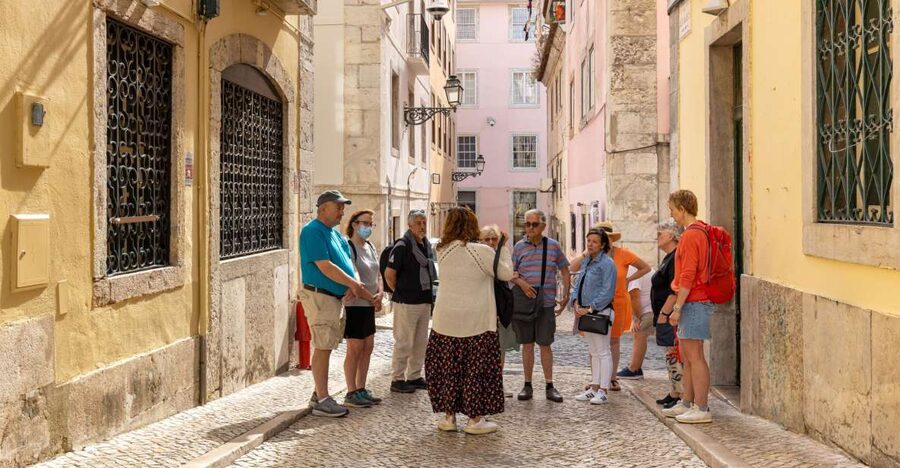
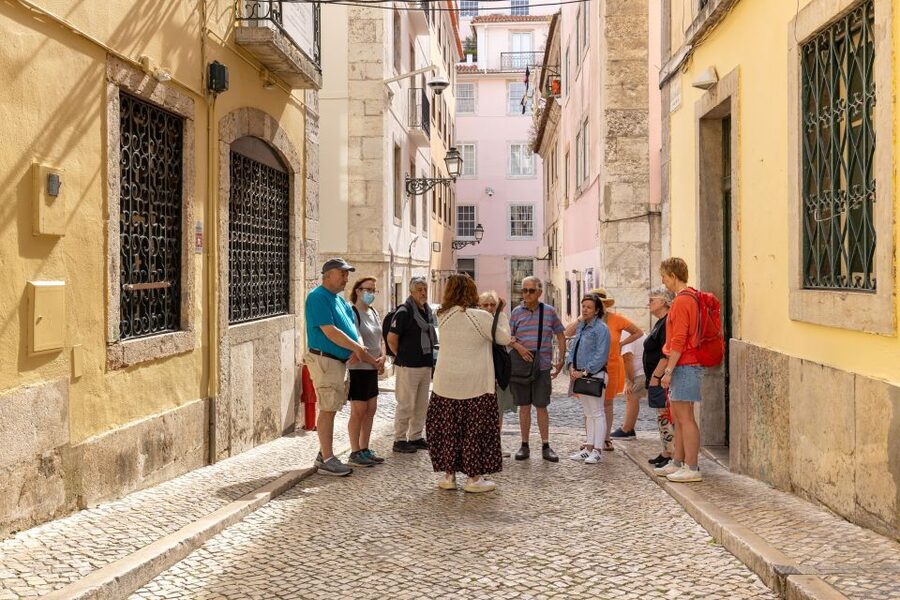
This three-hour walking tour works best as an introduction. Lisbon is spread across steep hills, and its districts can feel disconnected when you first arrive. This route joins several of the city’s key areas in one outing, helping you understand how Bairro Alto, Baixa, the castle hill, and Alfama fit together.
You will not tour each church or monument in full. Instead, your guide uses the streets, viewpoints, façades, and ruins as pages in a quick city lesson. That makes the experience especially useful on your first day, when you want to learn where to return later.
The tour is offered in English, Portuguese, Spanish, Italian, German, and French. You can book a private option or join a small group. The exact meeting point can change with the option you choose, so check that detail before setting out.
More Lisbon Walking Tours:
- Best of Lisbon Small-Group Guided Walking Tour
★ 5.0 · 4,869 reviews - Lisbon: Food and Wine Small Group Walking Tour
★ 4.9 · 4,082 reviews - Best of Lisbon Walking Tour: Rossio, Chiado & Alfama
★ 4.9 · 2,700 reviews
Bairro Alto and the city after 1755
The tour begins in Bairro Alto, a neighborhood dating from the 16th century. Its name means upper district, and its location gives you an immediate feel for Lisbon’s habit of climbing, dropping, and climbing again.
Your guide explains how the area changed after the earthquake of 1755. Families from Baixa and other parts of the city moved into the district, helping reshape it. That story gives useful context for Lisbon’s mixed appearance, where old lanes, rebuilt streets, grand churches, and newer shops sit close together.
This is a good place to ask questions. The best guides on this tour, including Paulo, Ricardo, Beatrice, and Anna, are praised for explaining both major events and small local details. You may hear about the city’s political past, changing neighborhoods, customs, and everyday life rather than only dates and rulers.
São Pedro de Alcântara and the wide city view
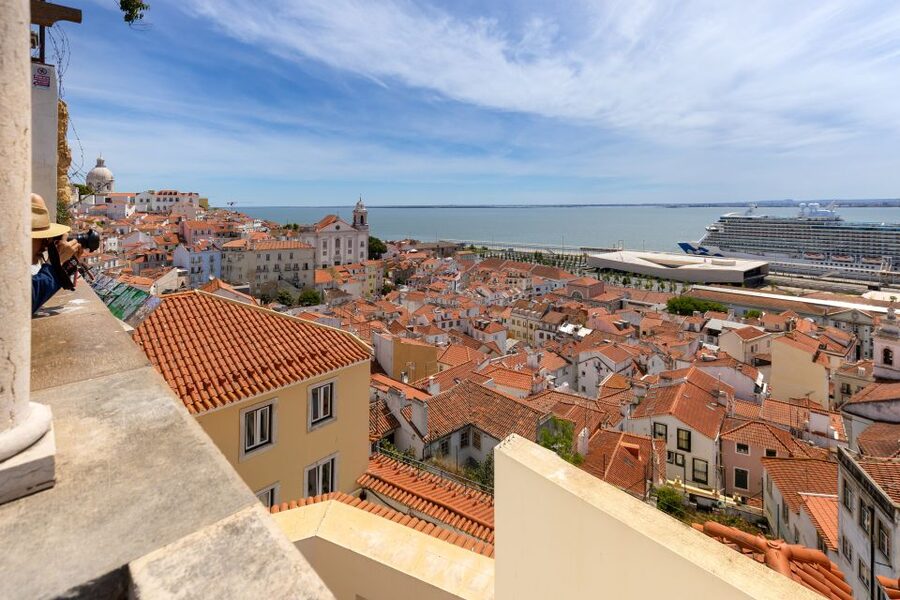
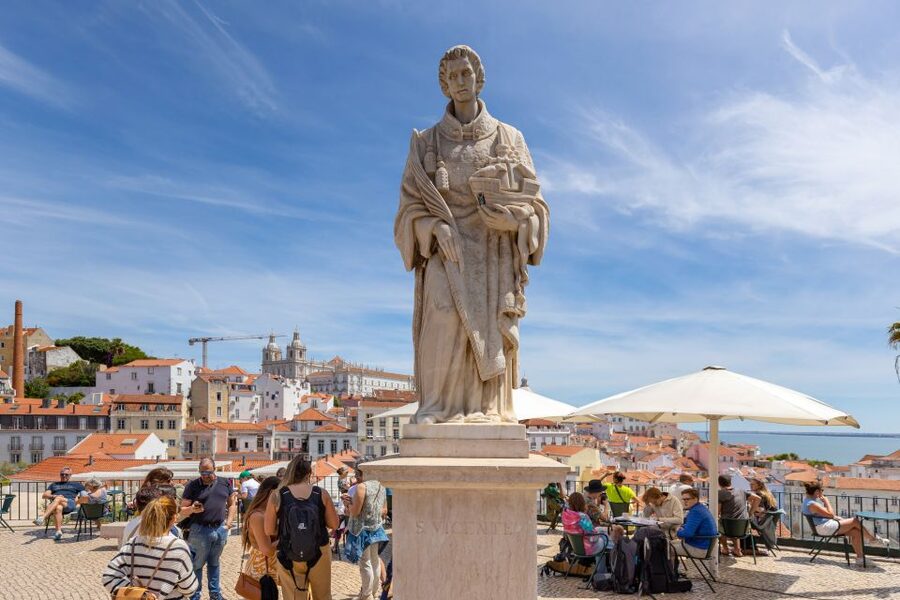
At the garden of São Pedro de Alcântara, you pause for one of the route’s finest views. Baixa spreads below, and the Tagus and its south bank open beyond the rooftops.
Bring a phone or camera, but give yourself time to look without a screen. This viewpoint helps you read Lisbon’s shape. You can see why getting around the city involves slopes, stairways, and public transport, and why viewpoints are such a regular part of a Lisbon visit.
The pause also matters physically. Three hours on Lisbon’s paving stones can be tiring, so regular stops make the walk easier. Several people have found the pace relaxed, with time for photographs and explanations. Still, a viewpoint is not the same as a rest day. Wear shoes with a firm sole and expect uneven surfaces.
San Roque Church and a lavish interior
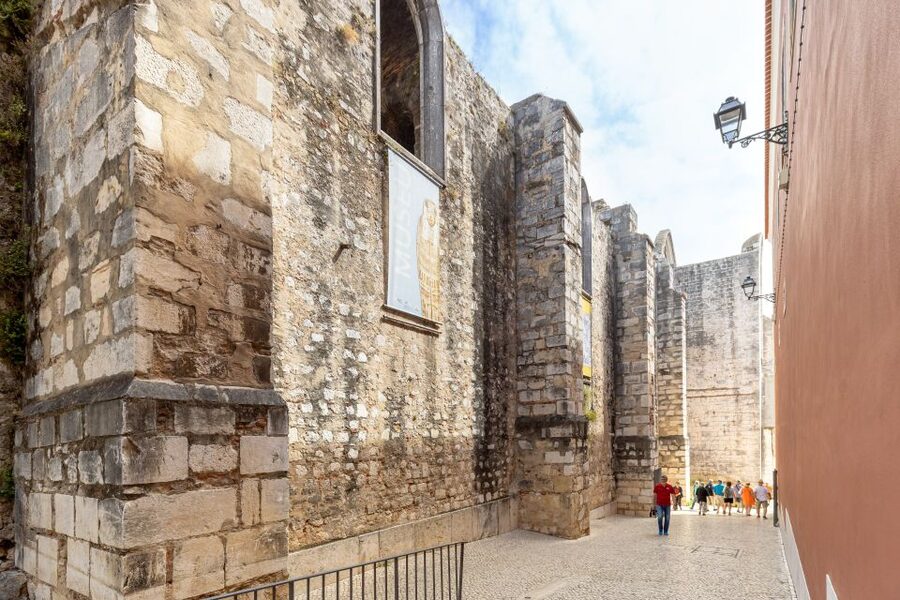
San Roque Church has an austere exterior, but the inside is far more ornate. You will see gilding, tiles, and paintings linked to Mannerist and Baroque styles.
That contrast makes this stop memorable. From the street, you might pass the church without guessing what is inside. The guide provides the background that helps you notice how much decoration is packed into the interior and why the building can feel like both a place of worship and a small art museum.
The church is one reason this tour feels broader than a simple viewpoint walk. You move from city planning to religion, art, and politics without needing separate excursions. Your guide’s explanation is important here, since the value comes from understanding what you are looking at rather than just stepping inside for a quick glance.
Something different to do with a day in Lisbon:
- Lisbon City Center Tour – The Unmissable Lisbon
★ 5.0 · 22,234 reviews - Lisbon: Sintra, Pena, Regaleira, Cabo da Roca & Cascais
★ 4.7 · 19,656 reviews - Sintra: Pena Palace and Park Entrance Ticket
★ 4.2 · 17,410 reviews - Lisbon: Jerónimos Monastery Entrance Ticket
★ 4.1 · 14,164 reviews
Carmo Convent and the Carnation Revolution
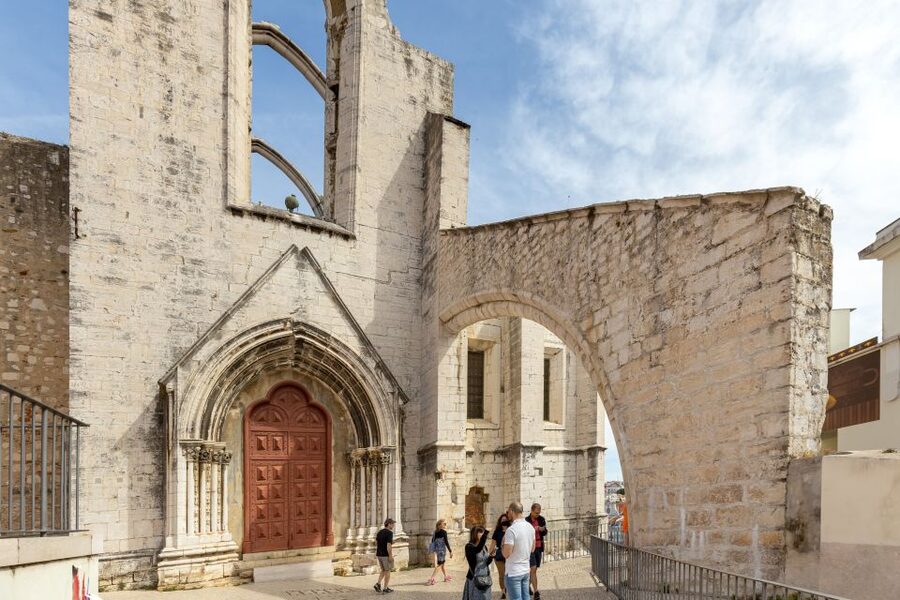
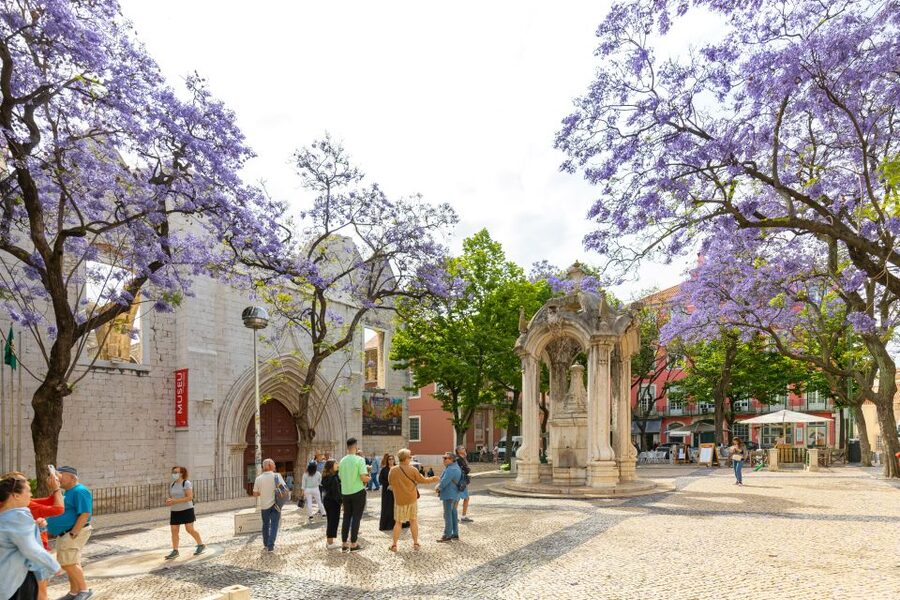
The route continues downhill to Carmo Convent and Church, fine examples of Lisbon’s Gothic architecture. The earthquake damaged the complex, and its open, ruined structure gives the stop a striking sense of the city’s vulnerability.
Carmo also carries modern political meaning. The Carnation Revolution began here in 1974 and ended nearly five decades of dictatorship in Portugal. This part of the tour connects architecture with living memory.
One guide, Paulo, has been described as having grown up in Lisbon and experienced the revolution as a child. That kind of personal perspective can make the political story feel less remote. Other guides bring their own style, but the subject remains a strong reason to choose this route if you want more than old buildings.
I especially like that the tour gives space to Portugal’s recent past. Many city walks stop with kings, explorers, and earthquakes. Here, you also get a clear look at how modern Portugal changed.
Santa Justa Elevator and the Baixa grid
From Carmo, you reach the Santa Justa Elevator, a tall Gothic Revival structure and one of Lisbon’s best-known landmarks. It links the lower Baixa district with the higher streets around Carmo and provides a popular city view.
The tour includes seeing the elevator and the surrounding Baixa sights. It does not say that you ride the elevator itself, so do not book this walk expecting that part to be included. The included public transport experience is the tram ride later in the route.
Baixa is the heart of central Lisbon and gives you a change of rhythm. The upper neighborhoods feel tight and irregular, while Baixa reflects a more planned rebuilding after the 1755 earthquake. That contrast helps you understand why Lisbon can feel like several cities joined together.
The tram ride toward Portas do Sol

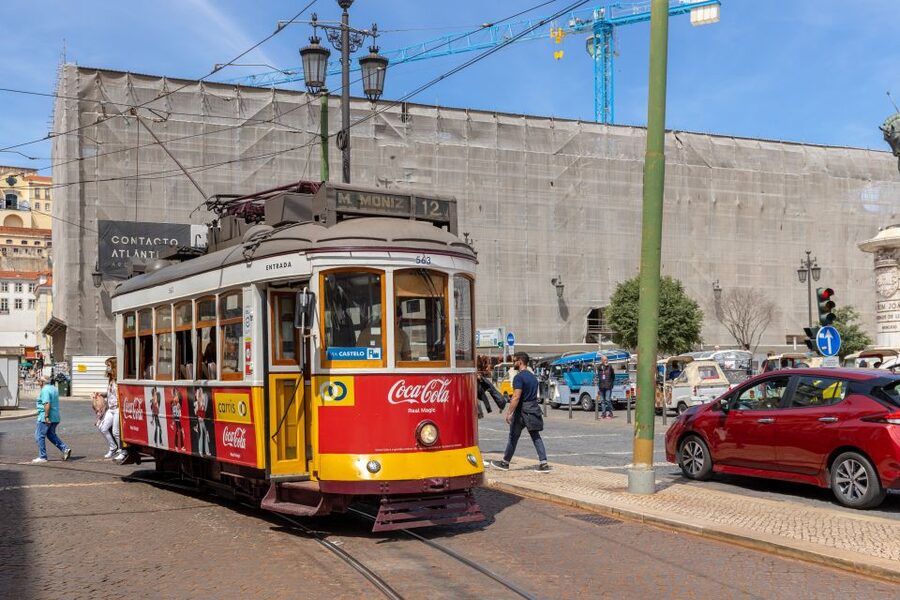
After a short break, you ride an iconic Lisbon tram from the castle area toward Portas do Sol. The ride is brief, but it is one of the tour’s most practical touches.
Lisbon’s trams are not just sightseeing props. They are part of how people move through the steep central districts, and the ride shows you how the city’s hills affect daily transport. It also gives your legs a pause before more walking through Alfama.
The exact tram service can be affected by normal city problems. One tour had to change its plan when the tram broke down, and heavy rain also required an adjustment. The guide adapted the route, but you should keep a flexible attitude. On a three-hour city walk, conditions can shape the day.
Portas do Sol and Lisbon’s oldest quarter

At Portas do Sol, you look toward the Monastery of São Vicente de Fora, the National Pantheon, and Alfama stretching down toward the Tagus.
This is a useful orientation point before entering the narrow lanes. Alfama is one of Lisbon’s oldest and most traditional districts. Its winding streets, stairways, and close-set buildings feel very different from the rebuilt order of Baixa.
Your guide talks about fado houses and the popular festivals of the saints, especially St. Anthony. These details move the tour beyond architecture. You begin to see Alfama as a place shaped by music, neighborhood customs, and annual celebrations.
The tradeoff is that Alfama is not effortless to walk. The lanes can be narrow, the paving uneven, and the route includes hills and steps. The tour has frequent stops and has been handled at an easy pace for older group members, but it is still worth being honest about the terrain.
Lisbon Cathedral, built in 1150
The final stop is Lisbon Cathedral, built in 1150, three years after the city was taken back from the Moors. Later changes gave it a mix of architectural styles, so it is not a single-period monument.
Ending here gives the tour a useful sense of time. You have already heard about the earthquake, the revolution, and the city’s later rebuilding. The cathedral brings you back to medieval Lisbon and shows how centuries of change can gather in one building.
Because the tour ends at the cathedral, you are well placed to continue exploring the surrounding streets afterward. The route itself is not designed as a full interior tour of every monument, so plan separate visits if you want extended time inside the churches, convent, or cathedral.
The coffee and pastry stop
Coffee and cake are included, with the stop often taking the form of a bica, Lisbon’s small espresso, and a pastel de nata. This is more than a sweet pause. It gives you a taste of a familiar Portuguese routine and breaks up the walking.
The stop also shows the tour’s practical value. You get the big sights, but you also sit down briefly and share a small local habit. One guide even adapted the food choice for a vegetarian participant, offering a vegan spinach snack instead of the usual pastry.
Do not expect a full meal. If you are hungry, eat beforehand or plan lunch after the tour. The coffee and cake are a welcome sample, not a substitute for one.
How much value do you get for $29?
At $29 per person, the tour is priced reasonably for three hours with a live guide, a tram trip, coffee, and cake. You are paying for the guide’s route, explanations, and local context as much as for the included extras.
The value is strongest if this is your first visit. In one morning or afternoon, you get an overview of several central districts, major viewpoints, a church, a convent, a famous elevator, the cathedral, and Alfama. You can then decide which places deserve a longer return visit.
It is less useful if you already know central Lisbon well or want long museum visits. The tour moves at a steady pace and covers a lot of ground. You see many places, but you do not spend an hour at each one.
The tour has a 4.8 rating from 10,902 ratings, a strong signal that the overall format works for many people. The praise is especially consistent around guide quality, clear explanations, humor, helpful local suggestions, and the balance between history and relaxed walking.
Which guide might you get?
The guide is not fixed. Names connected with recent departures include Paulo, Ana or Anna, Beatrice, Ricardo, Lucia, Lucie, João, Claudio, Helena, Margarida, and others.
That variety means the tone can change. Paulo is praised for personal stories and humor, Beatrice for energy and care with different walking abilities, Ricardo for broad knowledge and local recommendations, and Anna for adapting calmly when weather or transport caused trouble.
You should not book only because you hope for one named guide. Instead, expect a local professional who may focus more on political history, architecture, food, or personal stories. The strongest common thread is an ability to answer questions and keep the group involved.
Who should book this walk?
I would choose it for a first or second day in Lisbon. The route gives you a mental map, and the guide can point out areas you may want to revisit for dinner, fado, shopping, or a longer museum visit.
It suits solo visitors too. The tour offers a simple way to meet people while getting oriented, and one participant specifically found it a good chance to talk with others.
It also works for couples, families with older children, and people who prefer history explained in plain language. The guides use humor and stories, which helps keep the three-hour format from feeling like a school lesson.
I would think twice if you have difficulty with hills, steps, or uneven paving. The relaxed pace helps, but it cannot remove Lisbon’s terrain. If you need a fully level route or a vehicle-based tour, this is not the right format.
Practical tips before you go
Wear sturdy, comfortable shoes. Lisbon’s hills and paving can be harder on your feet than the distance suggests.
Leave a little time after the scheduled three hours. One outing ran over because the guide took time to finish the route, and delays can happen when trams or weather interfere.
Bring water and a light rain layer. The included coffee and pastry are welcome, but they do not cover every need during a long walk.
Check the meeting point for your chosen option. It may vary between departures, and hotel pickup and drop-off are not included.
Book with the first day of your trip in mind if you can. The viewpoints, districts, and local tips will help you plan the rest of your Lisbon stay.
Should you book the Lisbon History, Stories and Lifestyle Tour?
Yes, if you want a lively introduction to central Lisbon for $29. The route covers the city’s old quarters, its earthquake story, a key moment in modern Portuguese politics, a classic tram ride, and a simple coffee break. That is a lot of useful context in three hours.
The best reason to book is the combination of place and explanation. You do not just pass Bairro Alto, Carmo, Baixa, and Alfama. You learn why they look different and how their stories connect.
Skip it if you want slow, detailed access to every monument or if steep streets are a serious problem. For most first-time visitors who want to get their bearings and meet Lisbon through its streets, this is a practical, good-value choice.
FAQ
How long does the Lisbon History, Stories and Lifestyle Walking Tour last?
The tour lasts three hours.
How much does the tour cost?
The listed price is $29 per person.
What is included in the tour?
A live guide, the walking tour, a tram trip, coffee, and cake are included.
Is hotel pickup and drop-off included?
No. Hotel pickup and drop-off are not included.
Which languages are available?
The tour is available in Portuguese, Spanish, Italian, German, French, and English.
Is the tour private or shared?
Private and small-group options are available.
Does the tour include a tram ride?
Yes. The route includes a tram trip toward Portas do Sol and the Alfama district.
Can I cancel the tour for a full refund?
Yes. You can cancel up to 24 hours in advance for a full refund.
More Historical Tours in Lisbon
- Lisbon: Live Fado Show with Port Wine in Historic Center
★ 4.7 · 4,166 reviews - Lisbon: Fado Show with Wine in a Historic Venue
★ 4.8 · 1,294 reviews - Explore Lisbon by Tuk Tuk: History and Viewpoints
★ 5.0 · 840 reviews - Lisbon: Daytime or Sunset Boat Cruise with History and Wine
★ 4.9 · 819 reviews
Just reviewed in Lisbon
- Lisbon: Morning of Equestrian Art with Lusitano Horses★ 4.4 · 87 reviews
- Lisbon: Entry Tickets to Mosteiro de São Vicente de Foram★ 4.6 · 50 reviews
- Lisbon: National Palace of Ajuda E-Ticket & City Audio Guide★ 4.1 · 87 reviews
- Lisbon: Early Morning TukTuk Tour – hotel/cruise ship pickup★ 4.9 · 45 reviews
- Sintra: Quinta da Regaleira e-Ticket & Sintra City Audios★ 4.1 · 12 reviews
- Lisbon E-Bike Tour TAGUS★ 5.0 · 3 reviews
- Lisbon: E-bike Trip from the Sintra Mountains to Cascais Sea★ 5.0 · 67 reviews
- Lisbon: Discover Belem by electric Tuk Tuk★ 4.9 · 86 reviews
Lisbon Walking Tours, compared.

Best of Lisbon Small-Group Guided Walking Tour
Read our review →

Best of Lisbon Walking Tour: Rossio, Chiado & Alfama
Read our review →

Lisbon Roots – Small group Food & Culture Walking Tour w/tastings
Read our review →
Starter Walking Tour to the highlights in German
Read our review →
Walking Tour in the Center (Max 12 Participants)
Read our review →Browse the lists this tour appears in