
Reviewed · LISBON WALKING TOURS
A Walking Tour of Old Lisbon
Lisbon’s oldest quarters are best understood on foot, and this tour takes you straight into the city’s steep, tangled core. Starting at Rossio Square, you climb through Mouraria, visit St. George’s Castle, pass into Alfama, and finish near the cathedral and Campo das Cebolas. Along the way, the city’s story is told through Fado, tiled lanes, old churches, and local pastries.
I like the small group of up to 12 and the way the three-hour route links several historic districts instead of treating each one as a separate sight. I also like the two tastings, which give the walking a simple local touch rather than turning the outing into a lecture with no break.
The main caution is the terrain. Lisbon’s hills are not a minor detail here. You need comfortable shoes and a moderate level of fitness, and a stroller may be awkward on steep or uneven streets. Rain can also affect the experience since most of the tour takes place outdoors.
Key points to know before booking
- Mouraria puts Fado into context: You walk through the neighborhood tied to Lisbon’s strongest musical tradition.
- St. George’s Castle is the major ticketed stop: Admission is included, along with a reported queue-saving benefit.
- Alfama provides the atmosphere: The route ends in Lisbon’s oldest-feeling quarter with pastries and stories about local customs.
- Guide Maria earns special praise: Her local knowledge, friendly manner, and practical Lisbon tips are central to the experience.
- The route is steep but broken into stages: Expect a steady climb, with pauses that make the three hours more manageable.
- The finish is convenient for further exploring: You end at Campo das Cebolas, near the river and public transport.
Why starting at Rossio Square works so well
The tour begins at Praça do Rossio, the broad central square also called Praça Dom Pedro IV. This is a useful starting point because you begin in one of central Lisbon’s easiest places to reach, then quickly leave the open square for the older streets climbing toward the hills.
The change happens fast. Instead of simply looking at monuments from a flat plaza, you start to feel how Lisbon is built. Streets narrow, the route rises, and the city’s layers become easier to read. The first hour is devoted to the climb through Mouraria, so the walking itself is part of the lesson.
You should arrive ready to walk rather than expecting a bus-style sightseeing trip. The tour covers several districts in roughly three hours, and the route includes hills, slopes, and likely steps. Comfortable shoes matter more than stylish ones here.
Rossio is also a practical meeting point. It is near public transportation, and the tour ends several streets and neighborhoods away at Campo das Cebolas. That one-way design is useful because you do not spend the final part retracing your steps.
More Lisbon Walking Tours:
- Lisbon: History, Stories and Lifestyle Walking Tour
★ 4.8 · 10,902 reviews - Best of Lisbon Small-Group Guided Walking Tour
★ 5.0 · 4,869 reviews - Lisbon: Food and Wine Small Group Walking Tour
★ 4.9 · 4,082 reviews
Mouraria and the story of Fado
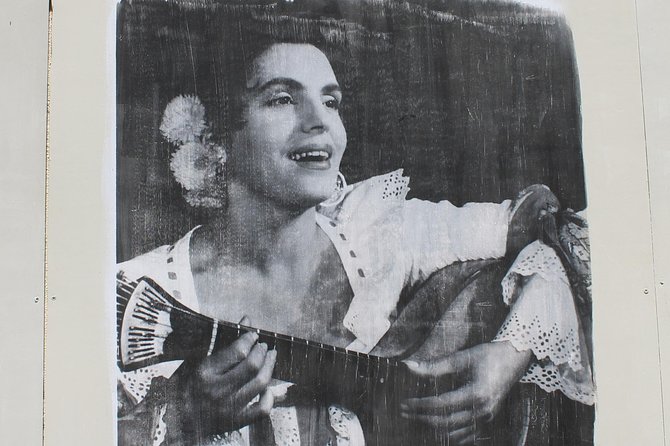
Mouraria is one of the most meaningful parts of the route. The neighborhood is presented as a place where different cultures and traditions have met over many years, and it is closely tied to the origins of Fado, Lisbon’s famously mournful musical style.
That connection gives the walk more purpose than a simple stroll through old streets. You are not just looking at weathered buildings. You are hearing how a neighborhood became linked to a musical tradition that remains one of Portugal’s best-known cultural exports.
Guide Maria is especially important here. She is a native Lisboan, and the tour’s strongest praise centers on her ability to explain the city in a clear, friendly way. She also gives practical tips for first-time visitors, which can be just as useful as the formal history. A guide who can connect a neighborhood’s past with advice for the rest of your stay adds real value.
I would pay close attention during this part of the tour and take notes if Maria recommends places or customs to explore later. The walk is designed as an introduction, not a full evening of Fado, so do not book it expecting a concert. Its strength is explaining why Fado belongs to Lisbon’s identity and how Mouraria fits into that story.
The climb to St. George’s Castle
After Mouraria, the route continues uphill toward Castelo de São Jorge. The castle sits on one of Lisbon’s hills and offers broad views across the city. It is the tour’s main formal attraction and the only stop where the listed visit time is specifically set at about 40 minutes.
Admission is included, and the experience is described as helping you avoid wasting time in queues. That matters at a major sight, especially when your total tour lasts only three hours. You get a chance to see the medieval fortress without having to arrange a separate ticket or work out how it fits into a day of sightseeing.
Still, 40 minutes is a brisk visit. You should expect an introduction to the castle rather than an exhaustive examination of every wall, courtyard, and view. If the castle becomes one of your top Lisbon interests, you may want to return on your own with more time.
The hill is also the point where the fitness warning becomes most important. The route is not described as a gentle walk, and one direct account of the experience notes that the ground is steep. The useful detail is that Maria handles the climb in shorter stages, which makes the effort easier to manage than one long push uphill.
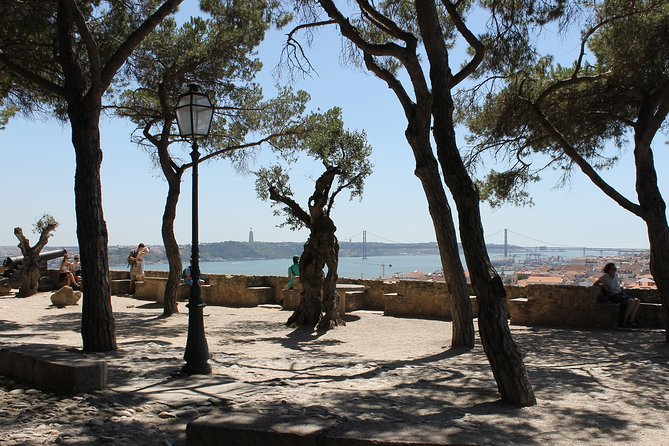
The reward is the outlook. St. George’s Castle is perched above Lisbon, so this is where the city’s shape becomes clear. You can better understand the hills, the old quarters below, and the relationship between the historic center and the river. Bring water, wear shoes with good grip, and do not treat the castle stop as a reason to dress for a formal city tour.
A pastry break before Alfama
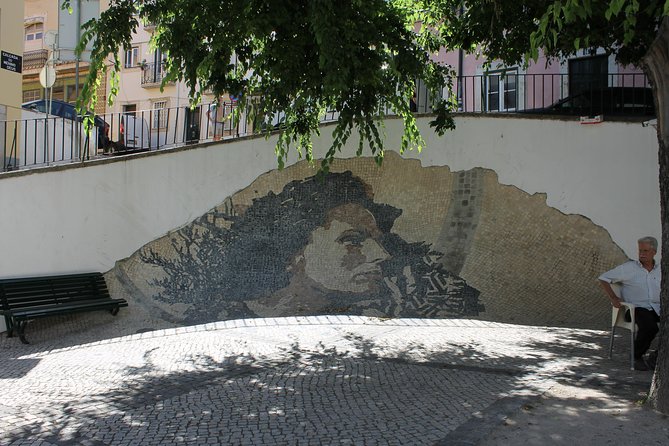
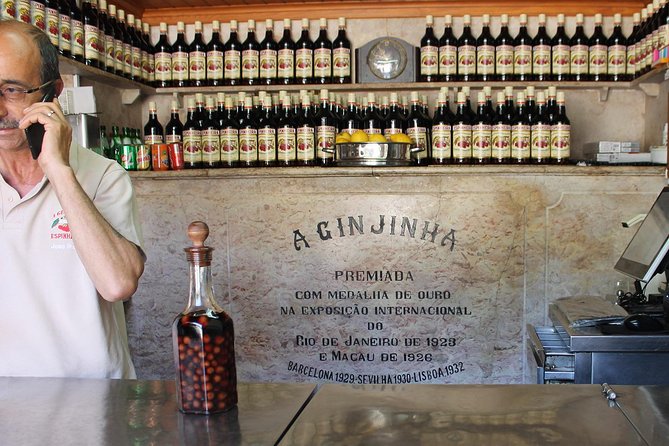
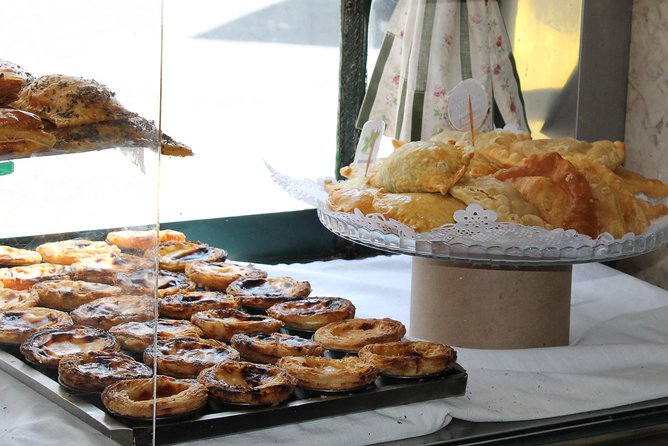
The route includes two tastings, and one of them is described as a delicious Portuguese pastry enjoyed before the group goes farther into Alfama. This small food stop is valuable because it gives the walking a pause and connects the tour to everyday Portuguese habits.
You are not booking a full food tour, and lunch is not included. The tastings are modest rather than a substitute for a meal. If you start the tour hungry, eat beforehand or plan lunch after the finish. The pastry is a pleasant local sample, not a reason to skip breakfast.
I like this kind of stop because it breaks up the history. After an uphill walk and a castle visit, a sweet bite helps reset your attention. It also makes the experience feel less like a checklist of monuments and more like an introduction to how Lisbon is enjoyed.
The exact nature of the second tasting is not specified, so you should think of the food element as a bonus rather than the main event. The focus remains the old districts, the guide’s explanations, and the changing character of the route.
Something different to do with a day in Lisbon:
- Lisbon City Center Tour – The Unmissable Lisbon
★ 5.0 · 22,234 reviews - Lisbon: Sintra, Pena, Regaleira, Cabo da Roca & Cascais
★ 4.7 · 19,656 reviews - Sintra: Pena Palace and Park Entrance Ticket
★ 4.2 · 17,410 reviews - Lisbon: Jerónimos Monastery Entrance Ticket
★ 4.1 · 14,164 reviews
Alfama, Santa Cruz, and Lisbon Cathedral
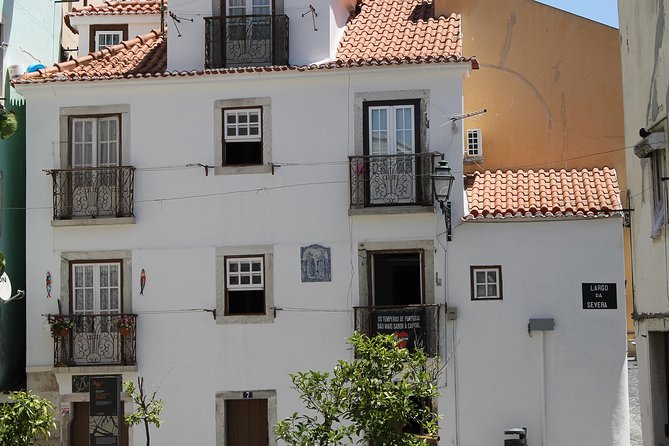
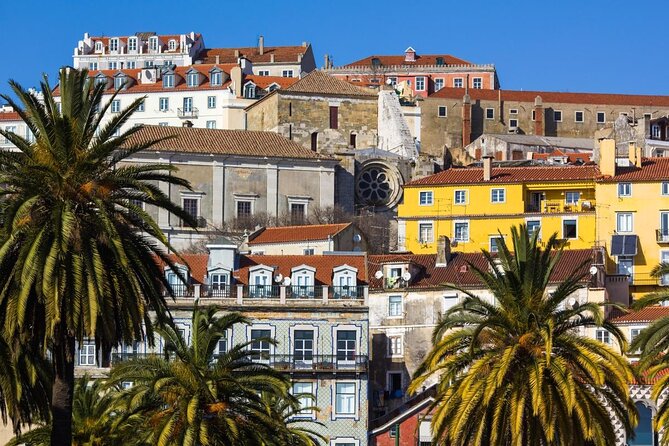
Alfama is where the tour’s atmosphere reaches its strongest point. Its old streets and close-set lanes give you a direct sense of Lisbon’s medieval layout. The route goes farther into the neighborhood after the pastry stop, with time to hear about its customs and past.
The tour also identifies Santa Cruz among the historic areas visited. Since the detailed timing does not assign a separate stop to it, expect it to be part of the walking route or surrounding old-quarter experience rather than a long standalone visit. That is worth knowing if you are comparing this outing with a tour built around extended interior visits.
Lisbon Cathedral comes near the end, with about 20 minutes allocated there. Built in 1147, the cathedral has survived earthquakes and repeated changes, repairs, and restoration. The result is a mix of architectural styles, which makes it a useful final history lesson after the more intimate streets of Alfama.
You should not expect a lengthy cathedral study in 20 minutes. Instead, this stop gives you a clear landmark and a compact explanation of how Lisbon’s buildings have changed over time. It also helps tie the city’s religious, medieval, and urban stories together.
The tour ends at Campo das Cebolas. That is helpful because you finish near the river rather than back where you started. You can continue exploring from there, find lunch, or use public transportation, though the tour does not include a meal or onward transfer.
Maria’s role in the experience
The guide can make or break a history walk, and the available feedback points strongly to Maria. She is described as a native of Lisbon with a friendly personality, strong command of the city’s past, and a habit of offering useful suggestions for the rest of your stay.
That combination matters. A guide who only recites dates may leave you with facts but no sense of place. Maria’s value appears to be her ability to explain Lisbon while also helping a first-time visitor make practical choices after the tour.
She is also praised for her enthusiasm and for making the story of Lisbon and Portugal interesting during the walk. That is especially useful on a route with several hills. A lively guide and regular shorter stages can make the physical effort feel more manageable.
The guide is present throughout the tour, not just at the castle. You get continuity as the route moves from Mouraria to the fortress, Alfama, and the cathedral. If you prefer exploring entirely at your own pace, the fixed route and group rhythm may feel restrictive. If you want context and orientation early in your stay, that same structure is a benefit.
Is $63.67 a fair price?
At $63.67 per person, this is not the cheapest way to walk around Lisbon. The value depends on what you would otherwise arrange yourself.
The price includes a local professional guide, two tastings, admission fees, and the castle visit. You also get a small group capped at 12 people, which is a better setup for questions and conversation than a large walking group. The route covers several important old districts in one outing, and the ticket arrangements reduce the work of planning the castle stop.
If you already intend to visit St. George’s Castle and want a guide for Mouraria and Alfama, the price is easier to justify. Booking the castle separately and paying for a basic walking tour could produce a similar total, while giving you less continuity between the neighborhoods.
The value is weaker if you mainly want free outdoor sightseeing or if you plan to spend a full day at the castle and cathedral. The schedule gives you a well-paced introduction, not unlimited time inside each sight. Lunch is also excluded, so budget for food afterward.
I see this as a good first-day or second-day activity. It gives you a mental map of the oldest center, explains local traditions, and supplies recommendations you can use for the rest of your visit. The tour is less useful as your only Lisbon experience, since three hours cannot cover the full city.
Who should book this walking tour?
This tour suits first-time visitors who want a clear introduction without a large group. It is also a good match for anyone interested in Fado, medieval Lisbon, local customs, and the way the old neighborhoods connect.
You should be comfortable walking uphill for several hours with stops along the way. Children under six can join without paying, but the operator warns that small children and baby trolleys may be difficult on parts of the route. That is a fair warning. The hills and old streets are not ideal for every family setup.
Rain can change the mood, so bring an umbrella if wet weather is forecast. Most of the experience happens outside, and the tour does not become an indoor program simply because the weather turns poor.
The maximum group size of 12 is a useful middle ground. You get more personal contact than on a big city walk, but you still have enough people for the tour to feel social. A minimum of two participants applies, and the operator can cancel after confirmation if that minimum is not reached, offering an alternative or a full refund.
Free cancellation is available until 24 hours before the start time. Changes or cancellations made later are not refunded, so keep that deadline in mind when arranging a tight Lisbon schedule.
Should you book A Walking Tour of Old Lisbon?
I would book it if you want a compact, guided introduction to Lisbon’s oldest quarters and you are prepared for hills. The combination of Mouraria, Fado, St. George’s Castle, Alfama, pastries, and the cathedral gives you a strong sense of how the city’s past is tied to its streets and traditions.
The best reason to choose this tour is Maria’s role as a local guide who explains the city clearly and adds practical advice for first-time visitors. The small group and included castle admission also make the price easier to defend.
Skip it if you dislike uphill walking, want a slow museum-style visit, or need a stroller-friendly route. Also skip it if your main goal is a full food tour or a long castle visit.
For most reasonably fit visitors, this is a useful early Lisbon experience. You finish with a better map in your head, a little more understanding of Fado and Alfama, and several ideas for where to go next.
FAQ
How long does A Walking Tour of Old Lisbon last?
The tour lasts approximately three hours.
Where does the tour start?
It starts at Rossio Square, Praça do Rossio, 1100-200 Lisboa, Portugal.
Where does the tour end?
The tour ends at Campo das Cebolas, 1100 Lisboa, Portugal.
Which neighborhoods are included?
The route includes Mouraria, Santa Cruz, and Alfama. The detailed route also includes St. George’s Castle and Lisbon Cathedral.
Is admission to St. George’s Castle included?
Yes. Admission fees are included, and the tour is described as helping you avoid wasting time in queues.
Are food tastings included?
Yes. Two tastings are included, including a Portuguese pastry enjoyed before continuing into Alfama. Lunch is not included.
How large is the group?
The tour has a maximum of 12 participants.
Is the tour suitable for children?
Children under six do not pay and are welcome. However, steep terrain may make the walk difficult with young children or baby trolleys.
How fit do I need to be?
You should have a moderate level of fitness and be comfortable with a substantial amount of walking. The route includes steep sections, and comfortable walking shoes are recommended.
Just reviewed in Lisbon
- Private tour Lisbon – full day★ 5.0 · 8 reviews
- Private Tour: Portuguese Food and Wine Tour★ 5.0 · 33 reviews
- Lisbon Football Experience – Private stadium and Museum Tour★ 4.0 · 10 reviews
- Lisbon and Sintra Essence 8H – Private Tour★ 5.0 · 5 reviews
- Private Tour: Lisbon Sunset Walking Tour with Fado Show and Dinner★ 5.0 · 30 reviews
- Private Catamaran Tour: Lisbon coast cruise with barbecue and drinks★ 5.0 · 20 reviews
- Lisbon: Helicopter Tour over Cascais & Cabo da Roca★ 5.0 · 4 reviews
- Private Tour Fátima – Nazaré – Batalha – Óbidos★ 5.0 · 6 reviews
Lisbon Walking Tours, compared.
Best of Lisbon Small-Group Guided Walking Tour
Read our review →

Best of Lisbon Walking Tour: Rossio, Chiado & Alfama
Read our review →

Lisbon Roots – Small group Food & Culture Walking Tour w/tastings
Read our review →
Starter Walking Tour to the highlights in German
Read our review →
Browse the lists this tour appears in