
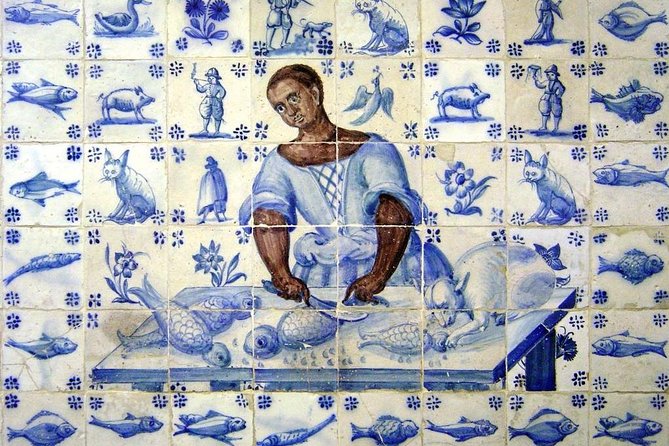
Reviewed · LISBON WALKING TOURS
Half Day Historical Walking Tour about the Slave Trade in Lisbon
Lisbon’s famous Age of Discovery looks different when you follow its money, streets, churches, and daily life through the story of slavery. This three-hour walk connects Alfama, the waterfront, Baixa, and the 25th of April revolution to Portugal’s role in the global slave trade. Guide Rui Fernandes uses images and historical documents to keep a difficult subject clear and grounded.
I like the small maximum of eight people, which gives you room to ask questions rather than trail behind a flag. I also like the route’s shape: you begin near the old waterfront and finish at Largo do Carmo, tracing Lisbon’s commercial past before reaching the political end of Portugal’s colonial empire. The main consideration is the subject itself. This is a serious history tour, not a light sightseeing stroll, and you should wear comfortable shoes for roughly three hours on foot.
Key points at a glance
- A rare focus on Lisbon’s slave-trade history: The tour addresses a subject often left out of standard city sightseeing.
- Seven stops across old Lisbon: The route links Alfama, Campo das Cebolas, Praça do Comércio, Baixa, Rossio, Restauradores, Igreja de São Domingos, and Largo do Carmo.
- Guide Rui Fernandes: He uses images, documents, and a broad historical frame to explain Portugal’s role in slavery and colonialism.
- A small group of up to eight: You can ask detailed questions and take part in discussion.
- Three hours at $39.78: The price is fair if you want serious historical interpretation rather than only landmark photos.
- A useful route for repeat visitors: It adds a difficult but important layer to Lisbon’s waterfront, old neighborhoods, and grand squares.
Why this Lisbon walk matters

Many introductions to Lisbon begin with ships, explorers, trade, and overseas expansion. Those subjects matter, but they can leave out the people who paid the human cost. This tour shifts the focus toward enslaved Africans and others caught in systems of forced labor, along with the political, religious, and economic structures that supported them.
You are not only hearing about events far away. The route shows how slavery connected to Lisbon itself. It examines the city as a port, a place of commerce, worship, government, and ordinary domestic life. That local focus makes the subject easier to understand than a lecture detached from streets and buildings.
The tour also places Portugal’s Atlantic involvement in a longer story. In Alfama, you learn about slavery under earlier civilizations, including the Romans and Moors, before moving to the Portuguese role in the Atlantic trade from the mid-15th century onward. This wider frame helps you avoid treating the Atlantic slave trade as an isolated event with a simple beginning and end.
Rui Fernandes is the guide named for this experience. His approach, based on the information available about the tour, includes visual material and time for questions. That matters here. Dates and trading systems can become cold and abstract, while a photograph, document, or map can show how large forces affected real people.
More Lisbon Walking Tours:
- Lisbon: History, Stories and Lifestyle Walking Tour
★ 4.8 · 10,902 reviews - Best of Lisbon Small-Group Guided Walking Tour
★ 5.0 · 4,869 reviews - Lisbon: Food and Wine Small Group Walking Tour
★ 4.9 · 4,082 reviews
Starting at Largo do Chafariz de Dentro
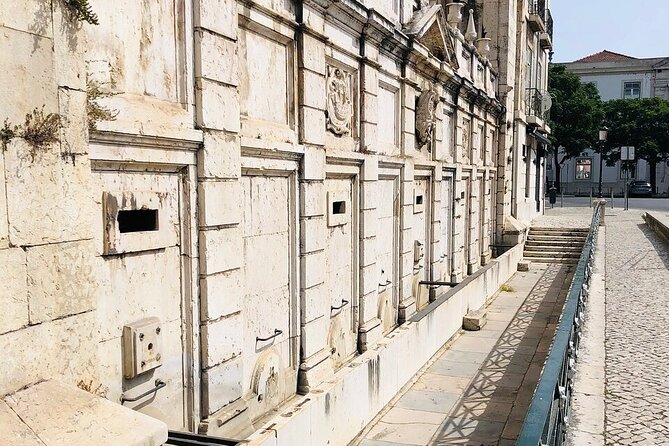
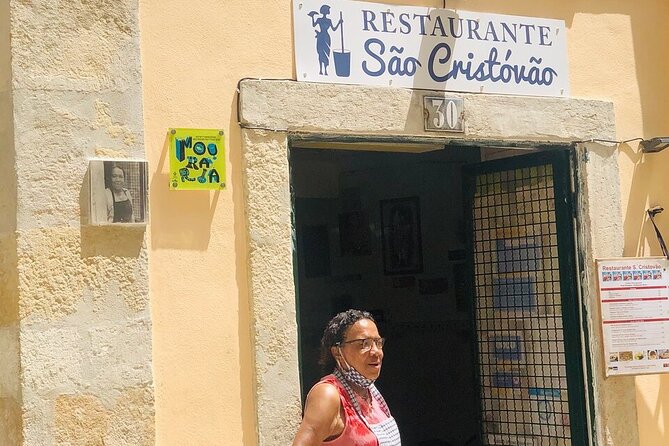
The walk begins at Largo do Chafariz de Dentro, at number 30, near the Alfama area. This opening stop lasts about 10 minutes and gives Rui a chance to introduce the subject before the group starts moving through the neighborhood.
That is a sensible beginning. You get the basic terms and historical frame first, rather than trying to absorb them while crossing a busy square. Since the group is capped at eight, the introduction should feel more like a conversation than a formal speech.
The meeting point is near public transportation, but you should still allow time to find the exact address. The experience is delivered in English and includes a mobile ticket. Food, drinks, and hotel transport are not included, so plan to arrive fed and make your own way to the start.
Alfama and the long story of slavery
The Alfama section takes about 30 minutes. Lisbon’s oldest neighborhood provides an atmospheric setting, but the point is not simply to admire narrow lanes and old walls. Here, the tour sets Portuguese slavery within a much longer human history.
You learn how several civilizations connected with Portugal practiced slavery, including the Romans and Moors. The discussion then turns to Portugal’s involvement in the Atlantic slave trade during the mid-15th century. That sequence is useful because it shows both continuity and change. Slavery was not invented by the Portuguese, yet Portugal played an important role in the expansion and organization of Atlantic trafficking.
This part of the tour may be especially helpful if your previous education presented slavery mainly through the history of the United States. The experience looks at Portugal, Africa, the Atlantic, Brazil, and other parts of the world as connected chapters rather than separate subjects.
Alfama can include uneven pavement and narrow streets, even if this route is described as moderate and without major hills. If walking is difficult for you, take the stated limitation seriously. The tour is not recommended for people with walking difficulties, and comfortable footwear is a must.
Campo das Cebolas and the question of public memory
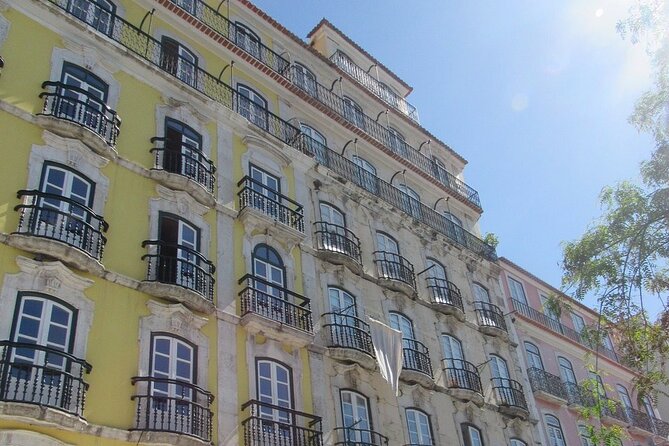
The next stop is Campo das Cebolas, where a monument to victims of the slave trade is planned for the future. The stop lasts about 10 minutes.
A place awaiting a monument can say as much about public memory as a finished statue. It raises a practical question: how does a city choose which parts of its past to mark in stone, and which parts remain easy to miss? This tour gives you a way to think about Lisbon’s physical spaces and the stories attached to them.
The location also helps connect history with the present. You are not only studying what happened centuries ago. You are considering how Portugal acknowledges, discusses, or fails to discuss that past today. For many people, this is one of the most meaningful reasons to take the walk.
Something different to do with a day in Lisbon:
- Lisbon City Center Tour – The Unmissable Lisbon
★ 5.0 · 22,234 reviews - Lisbon: Sintra, Pena, Regaleira, Cabo da Roca & Cascais
★ 4.7 · 19,656 reviews - Sintra: Pena Palace and Park Entrance Ticket
★ 4.2 · 17,410 reviews - Lisbon: Jerónimos Monastery Entrance Ticket
★ 4.1 · 14,164 reviews
Praça do Comércio and Lisbon’s commercial heart
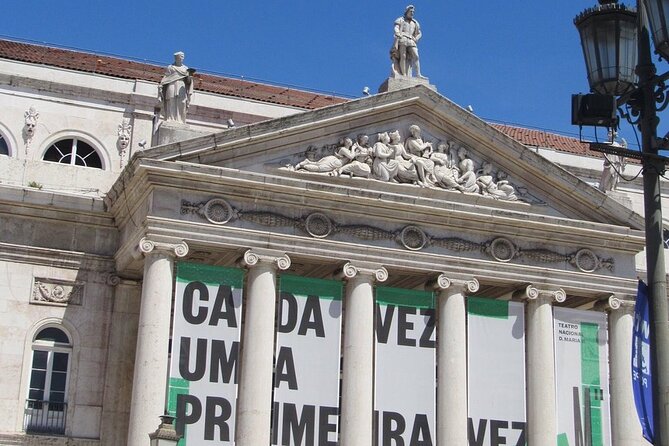
At Praça do Comércio, also called Terreiro do Paço, the group spends about 15 minutes. The square was the commercial heart of Lisbon, making it a strong place to explain how slavery fit into colonial trade.
The grand setting can make it easy to admire the architecture and move on. The tour asks you to look at the square as part of a working economic system. Goods, capital, shipping, and political power were connected, and the trade in human beings was part of that wider colonial economy.
This is where the route gives the Age of Discovery a harder edge. Maritime expansion brought wealth and power to Portugal, but that wealth was linked to coercion and exploitation. You should expect the guide to discuss those connections directly rather than soften them into a general story about exploration.
The 15-minute stop is brief, so it will not cover every aspect of Lisbon’s commercial history. That is a reasonable trade-off in a half-day tour. The goal is to give you a usable framework that the later stops can develop.
Baixa, Rossio, and Restauradores: ordinary life in the city
The longest section comes in Baixa, Rossio, and Restauradores, with about 30 minutes devoted to the daily lives of enslaved captives in Lisbon. This is one of the route’s most important changes in scale.
Large political and economic stories can hide individual lives. Here, the focus moves toward how enslaved people lived and worked in the city, including people brought from Africa and other parts of the world. The tour explores the fact that slavery was not only a distant plantation system or a maritime operation. It was also part of urban life.
Walking through central Lisbon while discussing those lives can change the way you read familiar spaces. A square, street, or commercial area is no longer only a backdrop for cafés and shopping. It becomes part of a city shaped by labor, hierarchy, law, religion, and race.
This section is also where questions are likely to be most useful. The tour’s small size allows you to ask about terminology, social roles, and the difference between Portugal’s experience and that of other Atlantic societies. Rui’s use of images and documents gives the discussion something concrete to examine.
The subject can be emotionally difficult, especially for Black visitors and for anyone whose family history connects to the Atlantic slave trade. The tone described for the experience is factual and direct, but you should still expect a sobering afternoon rather than entertainment.
Igreja de São Domingos and the role of religion
At Igreja de São Domingos, the group spends about 10 minutes looking at the relationship between enslaved people and Lisbon’s religious organizations.
Religion deserves attention because churches and religious institutions were not separate from the city’s social order. They could offer community, ritual, and a place in public life, while religious ideas were also used at different times to explain or defend systems of slavery.
This stop adds a useful layer to the economic story. Human trafficking was not supported by merchants alone. Monarchies, institutions, legal systems, religious arguments, and personal interests could all play a part. The tour’s wider approach helps you see how these forces reinforced one another.
Ten minutes is enough for a focused explanation, but not a full history of Portuguese Christianity or church life. If this topic interests you, ask Rui for clarification while you are there. The small group format should make that possible.
Largo do Carmo and the end of empire
The tour ends at Largo do Carmo after about 15 minutes of discussion at the site. This location is associated with the April 25 coup and revolution, followed by the decline of Portugal’s colonial empire in the mid-1970s.
Ending here gives the walk a strong political finish. The story does not stop with the Atlantic trade or the wealth it produced. It continues through colonial rule, resistance, revolution, and the eventual collapse of Portugal’s empire.
That final connection is valuable because it shows how the legacy of colonialism reaches into modern Portuguese history. You finish with the sense that slavery and empire are not sealed away in the past. They remain part of the political and social questions that shaped Portugal in the 20th century.
The end point is different from the starting point, so you should plan your next move from Largo do Carmo. The tour does not include hotel drop-off. Still, ending in central Lisbon makes it easy to continue sightseeing on your own.
What the $39.78 price buys you
At $39.78 per person, this is not the cheapest way to walk through Lisbon. You can visit Alfama, Praça do Comércio, and Baixa without paying a guide. The value comes from the interpretation, structure, and subject, not from admission tickets. All stops are public locations, and no museum entrance is included.
For that price, you receive about three hours with a professional guide in a group of no more than eight. That is a good setup for a complicated topic. A large group would make it harder to hear, ask questions, or discuss sensitive issues with care.
I would judge the price favorably if you want a focused history experience, especially early in your Lisbon stay. The route helps you understand places you may later revisit on your own. If you only want scenic viewpoints, famous buildings, or a quick orientation to Lisbon, another city walk may give you more for your money.
The tour is commonly booked well ahead, with an average booking time of 36 days in advance. That suggests you should reserve early if your dates are fixed. Free cancellation is available up to 24 hours before the start time. Changes or cancellations inside that window are not accepted for a refund.
Who should take this tour?
This experience suits you if you want Portugal’s colonial story treated plainly and with evidence. It is particularly useful for history-minded visitors, repeat visitors to Lisbon, educators, students, and anyone who feels standard sightseeing leaves out too much.
Black visitors may find value in having this part of Lisbon’s past acknowledged directly rather than hidden behind the language of exploration. The tour can also help visitors from the United States understand Portugal’s role in a broader global system, instead of viewing slavery only through an American lens.
Families with older teenagers may also find it worthwhile. The subject is serious, but the small group, visual material, and question-and-answer format can hold attention better than a long museum label or textbook chapter.
I would skip it if you are looking for a relaxed, purely scenic walk, or if three hours on foot would be uncomfortable. The tour is not recommended for people with walking difficulties. You should also choose another activity if you are not ready for a direct discussion of racism, forced labor, colonial power, and historical responsibility.
Practical tips for a better afternoon
Wear supportive shoes and bring water, since the route lasts about three hours. The walk is described as moderate, with planned stops and no major hills, but Lisbon’s older streets can still be hard on your feet.
Keep your group small in mind. You will get the most from this tour if you ask questions and stay engaged rather than treating it as background audio while taking photographs.
Rui has been praised for answering questions carefully, using clear visuals, and adjusting to conditions such as rain. That does not remove the need to dress for the weather, but it suggests the guide pays attention to the group rather than delivering a fixed speech and rushing away.
Afterward, give yourself time to think. The tour covers centuries of history, and the final discussion of the 1970s revolution links distant events to modern Portugal. You may want to continue the conversation over a meal or compare what you learned with a conventional Lisbon sightseeing tour.
Should you book this historical walk?
Book it if you want to see Lisbon beyond its tiled façades, viewpoints, and explorer monuments. The route is carefully spread across neighborhoods you might already visit, but the subject changes how you understand them. Rui Fernandes, the small group, visual material, and open question time add real value to the $39.78 cost.
Do not book it expecting light entertainment. This is a serious, sometimes painful examination of Portugal’s role in slavery and colonialism. For the right reader, that is exactly the point. If you want a more honest picture of Lisbon and have the stamina for a three-hour walk, this is a strong choice.
FAQ
How long does the tour last?
The walking tour lasts approximately three hours.
Where does the tour begin?
It begins at Largo do Chafariz de Dentro 30, 1100-605 Lisboa, Portugal.
Where does the tour end?
The tour ends at Largo do Carmo, 1200-092 Lisboa, Portugal.
Is the tour offered in English?
Yes. The experience is offered in English.
How many people can join the tour?
The maximum group size is eight people.
Is the tour suitable for people with walking difficulties?
No. The tour is not recommended for people with walking difficulties. A moderate level of physical fitness is advised.
More Historical Tours in Lisbon
- Lisbon: Live Fado Show with Port Wine in Historic Center
★ 4.7 · 4,166 reviews - Lisbon: Fado Show with Wine in a Historic Venue
★ 4.8 · 1,294 reviews - Explore Lisbon by Tuk Tuk: History and Viewpoints
★ 5.0 · 840 reviews - Lisbon: Daytime or Sunset Boat Cruise with History and Wine
★ 4.9 · 819 reviews
Just reviewed in Lisbon
- Lisbon: Morning of Equestrian Art with Lusitano Horses★ 4.4 · 87 reviews
- Lisbon: Entry Tickets to Mosteiro de São Vicente de Foram★ 4.6 · 50 reviews
- Lisbon: Early Morning TukTuk Tour – hotel/cruise ship pickup★ 4.9 · 45 reviews
- Lisbon: National Palace of Ajuda E-Ticket & City Audio Guide★ 4.1 · 87 reviews
- Sintra: Quinta da Regaleira e-Ticket & Sintra City Audios★ 4.1 · 12 reviews
- Lisbon E-Bike Tour TAGUS★ 5.0 · 3 reviews
- Lisbon: E-bike Trip from the Sintra Mountains to Cascais Sea★ 5.0 · 67 reviews
- Lisbon: Discover Belem by electric Tuk Tuk★ 4.9 · 86 reviews
Lisbon Walking Tours, compared.
Best of Lisbon Small-Group Guided Walking Tour
Read our review →
Best of Lisbon Walking Tour: Rossio, Chiado & Alfama
Read our review →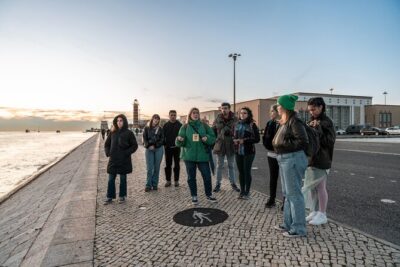

Lisbon Roots – Small group Food & Culture Walking Tour w/tastings
Read our review →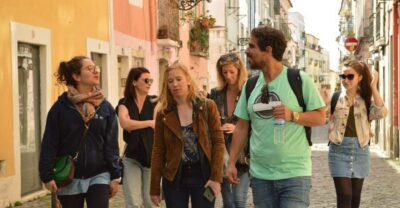
Starter Walking Tour to the highlights in German
Read our review →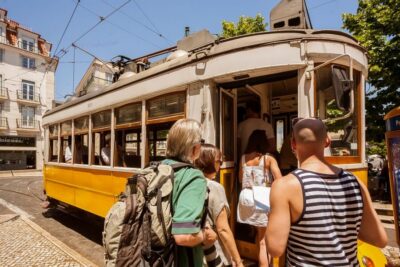
Browse the lists this tour appears in