
Reviewed · LISBON WALKING TOURS
Lisbon: African History and Heritage Walking Tour
Lisbon’s African story is not a footnote. It runs through Alfama’s Moorish beginnings, the old port, the grand square beside the Tagus, Catholic churches, and the streets of central Baixa. I like that this 3.5-hour walking tour puts people and power at the center, rather than treating Lisbon as a pretty backdrop. I also like the honest look at slavery, colonialism, and African contributions to Portuguese life. The main drawback is physical: Alfama and other parts of the route include uphill walking, so this is not a good fit if you have mobility limitations.
I especially appreciate the way guides such as Al, Alcides, Jose, and Alfie have connected buildings and streets to wider events in Africa, Iberia, the Americas, and Europe. The tour also gives you a useful first-day orientation, but $176 per person is a serious price for a walking tour. It makes the most sense if this subject matters to you and you want a focused, personal explanation rather than a quick sightseeing circuit.
Key points to know before you go
- The route links Moorish Alfama with Lisbon’s slave-trade sites, showing how African history reaches into the city center.
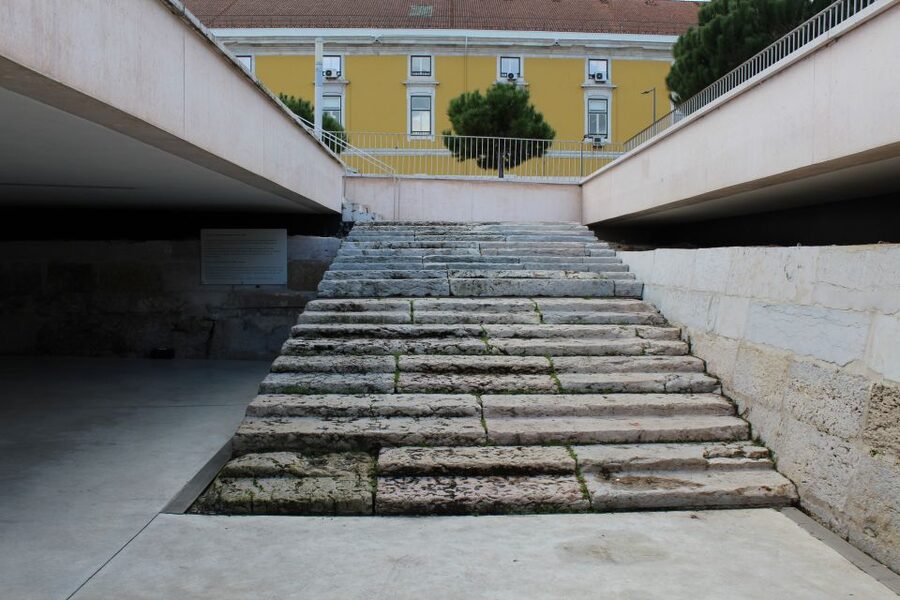
- Chafariz D’El Rei reveals social divisions, including the place of Africans in medieval Lisbon.
- Campo das Cebolas and Praça do Comércio frame Portugal’s maritime expansion, including its human cost.
- The Church of São Domingos explores African Catholic life, integration, and achievement.
- Rossio and its station connect local history to European colonial ambition, including the Berlin Conference of 1884.
- Comfortable shoes matter, since the walk includes hills and covers a significant part of central Lisbon.
Why this Lisbon walk offers a different view
Many Lisbon walks concentrate on tiled facades, viewpoints, earthquakes, and royal monuments. This one uses those same streets to ask harder questions: Who built the city’s wealth? Where did African people live and work? How were they represented in religion and public life? What did Portuguese expansion mean for people across the Atlantic?
That focus gives the walk a clear purpose. You are not simply collecting landmarks. You are learning how Lisbon became connected to Africa through Moorish rule, maritime trade, forced migration, religion, labor, and later colonial politics.
The guides are central to the experience. Several have been praised for explaining difficult subjects with care, answering questions, and tying local places to global events. Al, Alcides, Jose, and Alfie are names associated with especially strong tours, though your guide may be different. The advertised languages are English, Spanish, and Portuguese.
I would choose this tour if you want an interpretation-led walk rather than a standard introduction to Lisbon. It is particularly useful early in your stay, when the city’s streets still need a framework. One visitor specifically found it helpful on the first day because it filled in information other tours had skipped.
More Lisbon Walking Tours:
- Lisbon: History, Stories and Lifestyle Walking Tour
★ 4.8 · 10,902 reviews - Best of Lisbon Small-Group Guided Walking Tour
★ 5.0 · 4,869 reviews - Lisbon: Food and Wine Small Group Walking Tour
★ 4.9 · 4,082 reviews
Alfama begins with Moorish Lisbon
The meeting point is at A Padaria Portuguesa, and the walk begins in or around Alfama, Lisbon’s oldest neighborhood. Alfama was founded by the Moors, so it provides a natural opening for a discussion of Africa, Iberia, migration, conquest, and cultural exchange.
This part of the route is important because it complicates the simple story that Africa enters Lisbon only with the later slave trade. The Moorish period offers an earlier connection between North Africa and the Iberian Peninsula. Your guide can use Alfama’s streets and old urban form to explain how these histories overlap.
Expect a neighborhood with uneven ground and uphill sections. Alfama’s charm comes partly from its old lanes and steep passages, but those same features make the walk demanding. Wear shoes with good grip, bring water, and avoid treating this as an easy flat stroll.
I like the way the tour starts here because it gives you a broad base. Before discussing Portuguese ships and Atlantic commerce, you look at the older connections between Portugal and the African world. That helps place later events in context.
Chafariz D’El Rei and the visible divisions of society
At Chafariz D’El Rei, the guide uses the fountain to discuss social classes during the Middle Ages. Africans are represented in this setting, making the fountain more than a decorative stop.
This is one of the route’s strongest ideas: public objects can reveal how a society organized people. A fountain may seem like a small detail beside Lisbon’s grand squares, yet it can show who had access, who performed labor, and how social rank was pictured.
Do not expect a museum-style display here. The value comes from the explanation you receive on site. You will need to listen closely and ask questions if you want to follow the link between the physical object and the wider social structure.
That is also why guide quality matters so much. The stops themselves are not all large attractions with extensive signs. The walk depends on someone who can supply context without turning every point into a lecture. The strongest guide reports describe a clear story about people, culture, religion, and time, not just a list of dates.
Campo das Cebolas and the old port
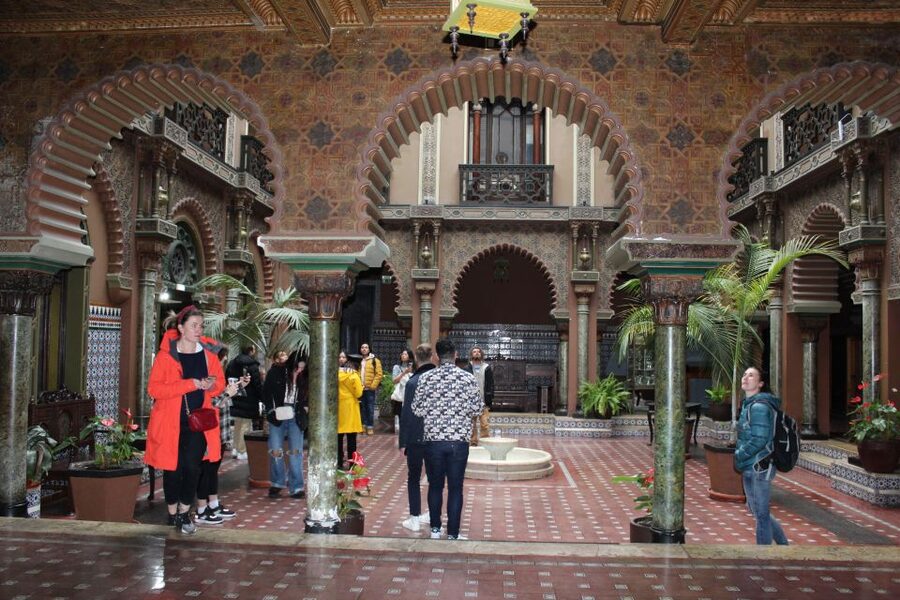
The route then reaches Campo das Cebolas, an area that belonged to Lisbon’s old port. It is presented as the place where the first African slaves arrived in Europe.
This is a serious stop, and it should be treated that way. Portugal’s maritime expansion is often told through navigation, trade, and royal ambition. Here, the focus shifts to the forced movement of African people and the commercial system that supported it.
The port setting helps you understand why Lisbon became such an important point in the transatlantic slave route. Ships, cargo, labor, money, and political power met at the waterfront. The guide’s task is to connect the ordinary urban space in front of you with the human consequences of that system.
I value the directness of this part of the route. The experience does not brush past uncomfortable subjects to reach more cheerful monuments. If you want only light sightseeing, this may feel heavy. If you want a more truthful account of Portugal’s global role, it is essential.
Something different to do with a day in Lisbon:
- Lisbon City Center Tour – The Unmissable Lisbon
★ 5.0 · 22,234 reviews - Lisbon: Sintra, Pena, Regaleira, Cabo da Roca & Cascais
★ 4.7 · 19,656 reviews - Sintra: Pena Palace and Park Entrance Ticket
★ 4.2 · 17,410 reviews - Lisbon: Jerónimos Monastery Entrance Ticket
★ 4.1 · 14,164 reviews
Praça do Comércio and the wealth of empire
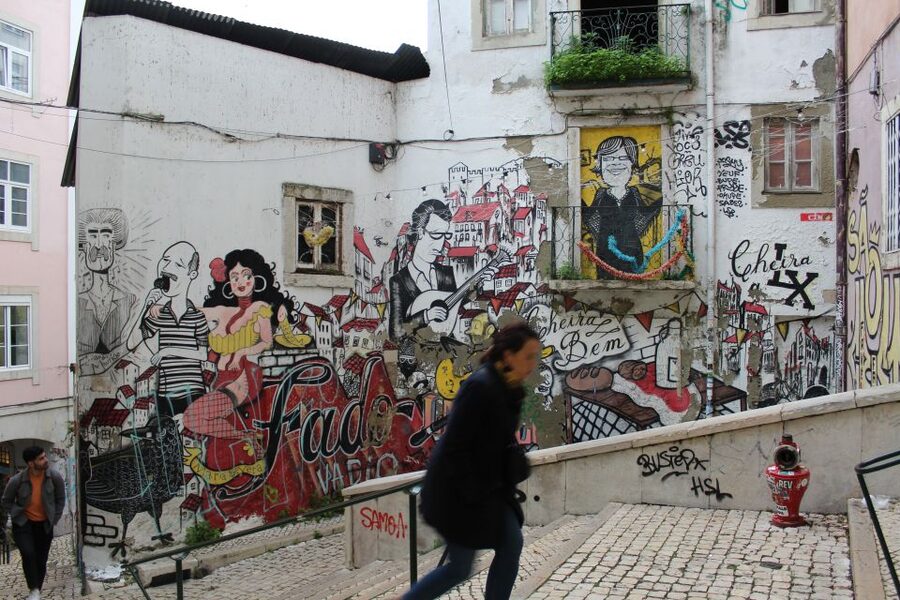
Praça do Comércio is one of Lisbon’s grandest public spaces. Its open scale and riverfront setting make it an easy place to admire, but the tour asks you to look beyond the architecture.
The square is linked to major events in Portuguese history and to the slave trade. Here, the story moves from the waterfront’s arrival point to the political and commercial center that benefited from overseas activity.
This is a good example of how the walk changes familiar sights. You may already know Praça do Comércio as a place for photographs, river views, and elegant arcades. The guide adds another layer by asking how power was displayed and where the money behind that power came from.
The stop also helps connect Lisbon to the wider Atlantic world. Portugal’s influence stretched toward West Africa, the Americas, and other parts of its empire. You are not asked to memorize every route or ruler. Instead, you get a clear sense of how Lisbon’s public life was tied to events far beyond Portugal.
Baixa after the 1755 earthquake
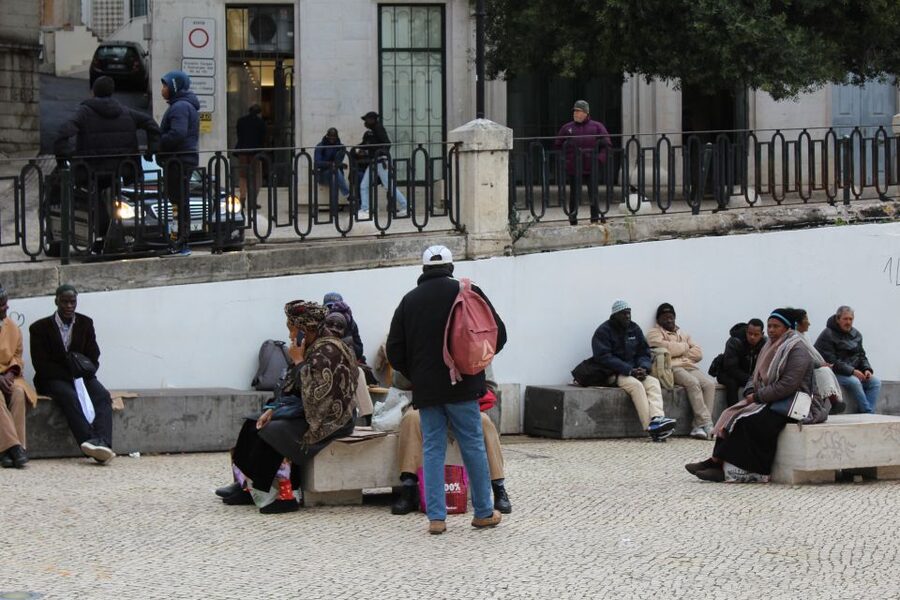
Baixa is central Lisbon, rebuilt after the earthquake of 1755. The neighborhood’s broad streets and planned layout offer a useful contrast with Alfama’s older, tighter lanes.
The tour uses Baixa to discuss the interaction of Africans with Portuguese society. That shifts the subject from arrival and exploitation to daily life, work, identity, and social position.
This section may be especially useful if you have already walked through Baixa without knowing what questions to ask. The streets are easy to cross and visually impressive, but their polished appearance can hide the complicated lives that shaped the city.
The walk does not present African history as a separate subject placed outside Portuguese history. Instead, it treats African people and African heritage as part of the making of Lisbon itself. That is one of the tour’s most valuable ideas.
You may also get a short snack break during the route. The details of the snack are not fixed, so do not book this expecting a food tour. Think of it as a welcome pause during a long walk and a chance to continue the conversation informally.
Rua Cor de Rosa and the work of African women
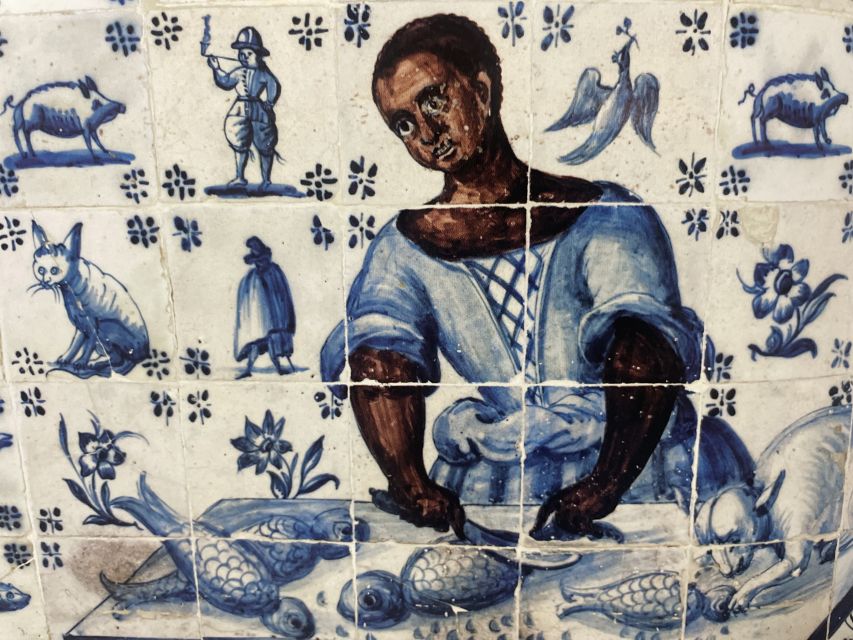
Rua Cor de Rosa introduces another part of the story. The street is connected with African women who provided services there.
This stop broadens the tour beyond kings, merchants, churches, and monuments. It brings gender, labor, and the lives of working women into the picture. Those subjects are often missing from city tours, even though they reveal how people actually experienced Lisbon.
The wording around this stop is deliberately general, and the guide provides the needed context. You may find the subject uncomfortable, but that is part of its value. It shows how African women were present in Lisbon’s economy and social life, not only as symbols in art or as anonymous figures in accounts of slavery.
I would listen for the human scale here. The grand story of empire can feel distant. A street associated with women’s work brings the discussion back to individual lives and the choices available to people living within unequal systems.
Rossio and the question of integration
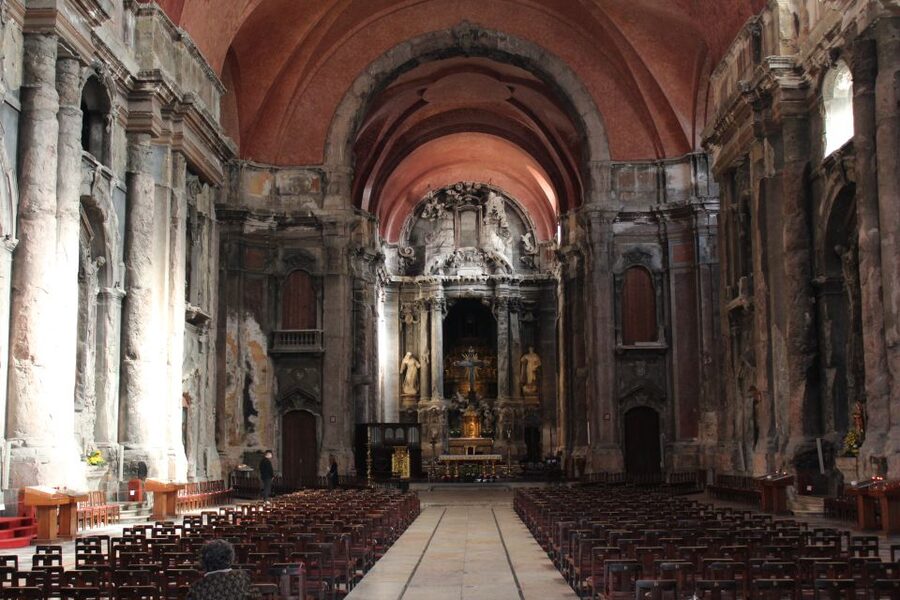
Rossio is one of Lisbon’s busiest central spaces. It is also where the tour discusses African integration and the creation of colonies.
This is a useful point to bring together the earlier subjects. The route has already covered Moorish influence, the port, slavery, social class, religion, and labor. In Rossio, you look at how African communities and African heritage became part of Portuguese society over time.
The idea of integration needs careful handling. It does not mean that equality arrived quickly or that cultural exchange erased exploitation. A good guide can show both sides: African influence on Portuguese life and the unequal systems that shaped African experiences.
This is where the walk’s broader approach pays off. You are not left with a story that ends when enslaved people reached Lisbon. The experience continues into questions of community, identity, colonial rule, and modern Portugal.
São Domingos and African Catholic life
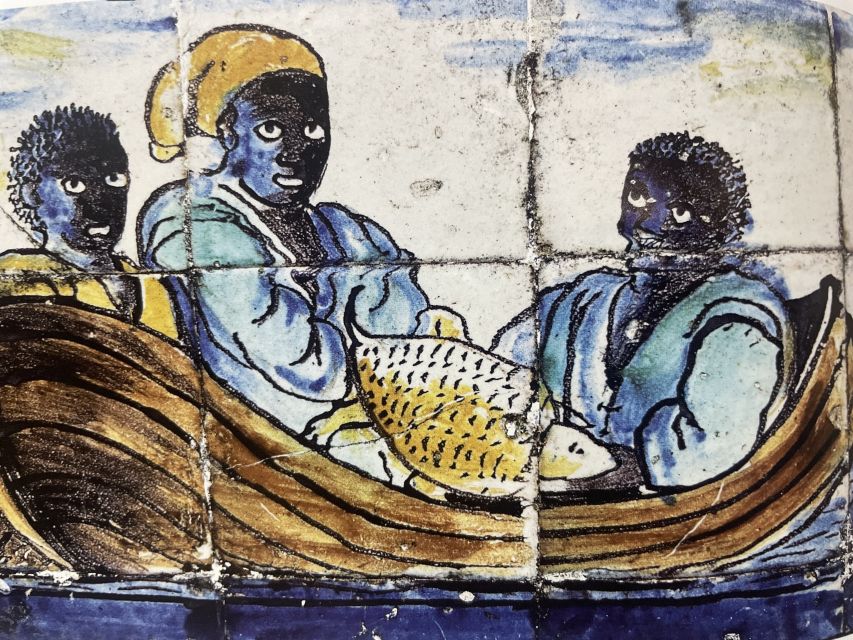
The Church of São Domingos offers a look at African integration into Catholic religion and the achievements connected with that process.
Churches can be difficult stops on a history walk because it is easy to focus only on decoration. Here, the building serves as a place to examine belief, conversion, community, and the ways Africans participated in Portuguese religious life.
The subject is not presented as a simple tale of acceptance. Religion could provide belonging and status, but it also existed within systems of power. Your guide can help explain how African people entered, shaped, and negotiated Catholic institutions.
I like this stop because it adds a spiritual and social dimension to the tour. The African presence in Lisbon was not limited to ports and labor. It also reached worship, ceremony, and community life.
Rossio Station and Portugal’s colonial ambition
The final major stop is Rossio train station, built in the 19th century in Manueline architectural style. Its ornate design reflects the period when Portugal wanted to claim a place among Europe’s colonial powers.
The station is a striking place to discuss the Berlin Conference of 1884, when European powers divided much of Africa into colonies. The building’s confident style and national ambition contrast sharply with the political reality being discussed.
This is one of the tour’s more effective visual pairings. You look at a proud symbol of modern Portugal while considering the colonial competition that shaped the country’s ambitions in Africa. Architecture becomes evidence of how nations wanted to see themselves.
The stop also gives the route a strong ending. It connects earlier centuries of African presence in Lisbon with 19th-century imperial politics. You leave with a sense that African history is not confined to one old quarter or one painful chapter.
What the $176 price gets you
At $176 per person, this is expensive compared with a basic group walking tour. You are paying for a specialized subject, 3.5 hours with a live guide, water, and a route that covers several parts of central Lisbon. Food and drinks beyond the included bottle of water are not covered, and hotel pickup and drop-off are not provided.
The value depends on what you want from Lisbon. If you prefer a short overview of major sights, the price may be hard to justify. If you want a focused account of African heritage, the slave trade, Moorish influence, religion, colonialism, and social integration, the subject is unusual enough to make the cost more understandable.
A strong guide makes the difference. The best accounts describe guides who were friendly, patient, thorough, and able to answer questions. One guide also recommended a restaurant, a small but useful touch if you want to keep exploring after the walk.
Free cancellation up to 24 hours before the activity and reserve-now, pay-later terms give you some planning flexibility. Still, the physical demands matter more than the booking terms. This is a long urban walk with hills, not a gentle ride between sights.
Who should book this walk
I recommend it for anyone who wants African history included in their understanding of Portugal. It suits curious first-time visitors, people interested in the Atlantic world, and travelers who find standard European city tours too polished or incomplete.
It is also a good choice if you care about how architecture, religion, economics, and daily life connect. The tour does not isolate one theme. It follows African presence through medieval society, maritime trade, forced migration, Catholic institutions, women’s work, colonial politics, and modern integration.
You may want to skip it if you need a flat route, dislike serious historical subjects, or want plenty of time inside monuments. The tour is mainly about interpretation in public spaces. You will see important places, but the guide’s explanation is the main attraction.
Should you book the African History and Heritage Walking Tour?
Book it if you want Lisbon explained through an African perspective and are ready for an honest discussion of slavery and colonialism. The strongest part is the way the route turns familiar locations into evidence of African presence and Portuguese power.
At $176, I would not choose it casually. I would book it for the subject, the chance to ask questions, and the depth a specialized guide can bring to places you might otherwise pass without understanding. Wear comfortable shoes, allow the full 3.5 hours, and begin with an open mind.
FAQ
How long does the Lisbon African History and Heritage Walking Tour last?
The tour lasts 3.5 hours.
Where does the tour meet?
You meet your guide at A Padaria Portuguesa.
Which languages are available?
The live guide can conduct the tour in English, Spanish, or Portuguese.
Is hotel pickup included?
No. Hotel pickup and drop-off are not included.
Is the tour suitable for people with mobility impairments?
No. The activity is not suitable for people with mobility impairments, and the route includes uphill walking.
What is included in the price?
The price includes a guide, the walking tour, and a bottle of water. Food and drinks are not included.
More Historical Tours in Lisbon
- Lisbon: Live Fado Show with Port Wine in Historic Center
★ 4.7 · 4,166 reviews - Lisbon: Fado Show with Wine in a Historic Venue
★ 4.8 · 1,294 reviews - Explore Lisbon by Tuk Tuk: History and Viewpoints
★ 5.0 · 840 reviews - Lisbon: Daytime or Sunset Boat Cruise with History and Wine
★ 4.9 · 819 reviews
Just reviewed in Lisbon
- Lisbon: Morning of Equestrian Art with Lusitano Horses★ 4.4 · 87 reviews
- Lisbon: Entry Tickets to Mosteiro de São Vicente de Foram★ 4.6 · 50 reviews
- Lisbon: National Palace of Ajuda E-Ticket & City Audio Guide★ 4.1 · 87 reviews
- Lisbon: Early Morning TukTuk Tour – hotel/cruise ship pickup★ 4.9 · 45 reviews
- Sintra: Quinta da Regaleira e-Ticket & Sintra City Audios★ 4.1 · 12 reviews
- Lisbon E-Bike Tour TAGUS★ 5.0 · 3 reviews
- Lisbon: E-bike Trip from the Sintra Mountains to Cascais Sea★ 5.0 · 67 reviews
- Lisbon: Discover Belem by electric Tuk Tuk★ 4.9 · 86 reviews
Lisbon Walking Tours, compared.
Best of Lisbon Small-Group Guided Walking Tour
Read our review →
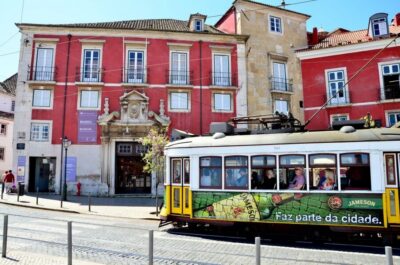
Best of Lisbon Walking Tour: Rossio, Chiado & Alfama
Read our review →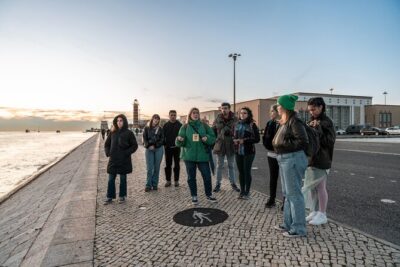
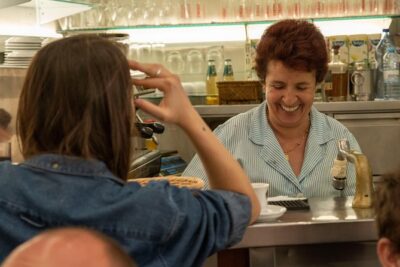
Lisbon Roots – Small group Food & Culture Walking Tour w/tastings
Read our review →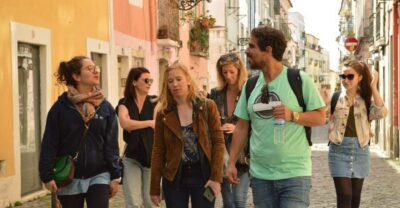
Starter Walking Tour to the highlights in German
Read our review →
Browse the lists this tour appears in