
Reviewed · CITY TOURS
Lisbon City of Spies Tour
Lisbon’s wartime spy story is far stranger than the usual postcard version of the city. On this walk, James Bond was a real person, Lisbon hotels became meeting places for agents and refugees, and Portugal’s trade in tungsten helped pull this neutral country into the hard bargains of World War II. I like the way the tour uses central Lisbon as its classroom, with Praça do Comércio, Rossio, and Restauradores providing the setting. I also like the small group limit of 15, which gives guides such as José and Filipa room to answer questions.
The tour adds much more than spy anecdotes. You get political, social, and business context, including Portugal under dictatorship and the beginnings of the republic. The main caution is the length: at roughly 2.5 hours, some people may feel ready for a seat by the two-hour mark, especially in poor weather.
Key points to know before you book
- The real James Bond: Learn about the man and wartime setting that helped inspire Ian Fleming’s famous character.
- Lisbon’s spy hotels: See the central places where agents, refugees, businessmen, and political operators crossed paths.
- Tungsten and Jewish gold: Understand the commercial side of the war, not just its cloak-and-dagger stories.
- A walk through central Lisbon: The route links Praça do Comércio, Municipal Square, Praça da Figueira, Praça Dom Pedro IV, and Restauradores.
- Small-group attention: The tour accepts no more than 15 people and runs in English.
- A strong history guide matters: José and Filipa are among the guides named in the tour feedback, both praised for clear storytelling and solid command of the subject.
Why Lisbon became a spy capital
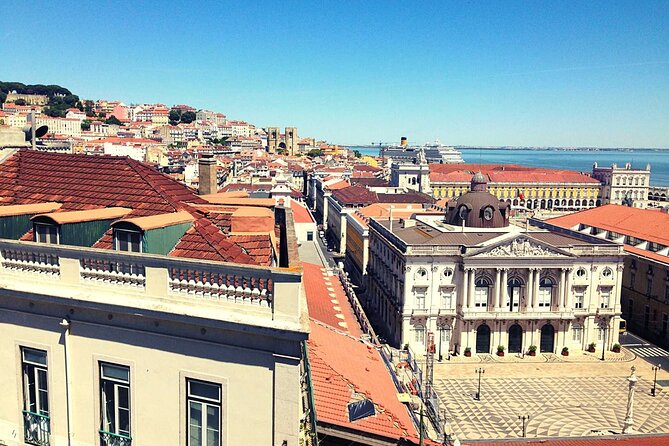
Lisbon’s importance during World War II came from its position and its unusual political situation. Portugal stayed neutral, yet Lisbon remained open to international business, diplomacy, refugees, and intelligence work. That combination made the city useful to people who needed to pass through Europe without drawing too much attention.
This tour explains that setting before piling on the stories. That matters because espionage makes little sense without the money, trade, transport, and politics around it. You hear how business relationships and international pressure could matter as much as secret meetings.
I especially like this approach for first-time visitors. You are not simply led from one old building to another and told that a spy once slept nearby. Instead, the walk helps you see central Lisbon as a place where governments, merchants, refugees, and agents shared the same streets.
The route also reaches beyond the war years. The guides discuss Portugal’s dictatorship, the country’s political changes, and everyday life under that system. If you want only dramatic spy tales, some of this background may feel slower. I consider it a strength, since it gives the stories a human and political setting.
More City Tours in Lisbon:
- Lisbon City Center Tour – The Unmissable Lisbon
★ 5.0 · 22,234 reviews - Lisbon: Daytime/Sunset/Night City Sailboat Tour with Drink
★ 4.9 · 3,114 reviews - Lisbon: City Highlights and Viewpoints E-Bike Tour
★ 4.9 · 1,556 reviews
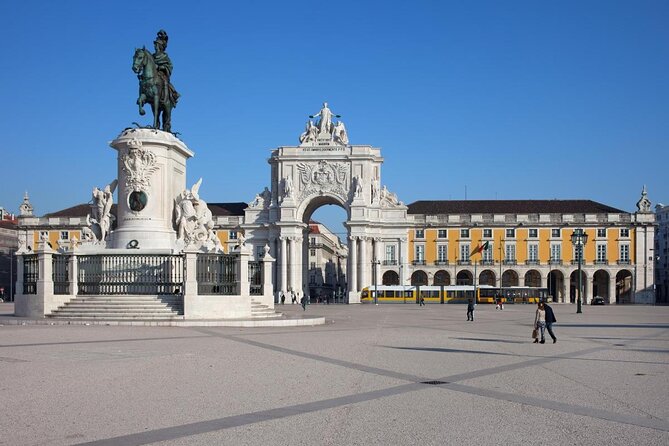
Praça do Comércio, the opening view of power
The tour begins at Praça do Comércio, also called Terreiro do Paço. Meet at Cervejaria Antártida Lisboa, by the western side of the square, at the listed address on Rua C 20-23.
This broad riverfront square is a fitting place to begin. It served as an enduring center of power, and the guide uses it to explain how authority, commerce, and Lisbon’s public life came together. You get a sense of the city’s official face before moving into its more secretive wartime side.
The opening stop lasts about 20 minutes and has no admission charge. That makes the start easy to manage, though you should arrive with enough time to locate the meeting point in the large square. The tour is outdoors and on foot, so comfortable shoes are sensible.
I like starting here because the square gives the guide space to establish the big picture. You are not thrown straight into a list of names. Instead, you begin with the city’s role as a seat of government and trade, then follow the route into the personal stories of agents and refugees.
Municipal Square and the road to the republic
The next stop is Municipal Square, for about 10 minutes. Here the subject shifts toward the beginning of Portugal’s republic.
That political change helps explain why Lisbon cannot be treated as a simple wartime backdrop. Portugal’s later dictatorship and its place in twentieth-century Europe shaped what could be said, traded, and done in the capital. The tour links public political change with the private world of espionage.
This is also a good moment to ask questions. The group is small, and the guides are described as engaging communicators who welcome questions about Portugal, Lisbon, culture, and European politics. If you are curious about how Portuguese politics affected the city’s wartime role, this stop gives you a chance to raise it.
The square itself is not presented as a museum visit. You are learning from the street, with no entry ticket and no indoor exhibition. That keeps the pace moving, but it also means the experience depends heavily on the guide’s storytelling.
Jewish gold, tungsten, and the business of war
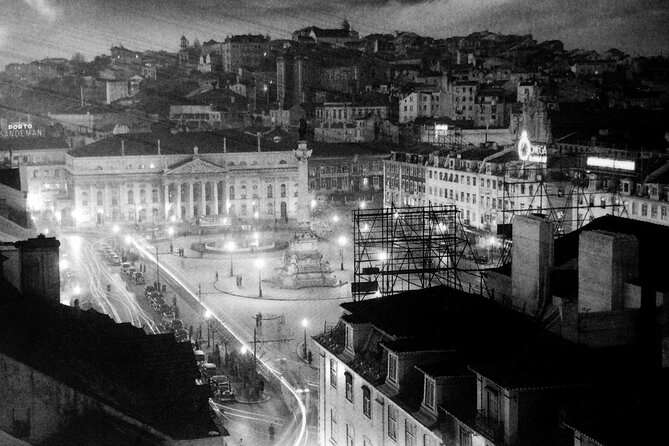
One of the most useful parts of the walk concerns Jewish gold and the traffic in tungsten. These subjects show why the tour is not just a collection of spy stories.
Tungsten was important to the war economy, and Portugal’s involvement in this trade placed its neutrality under pressure. Jewish gold brings another difficult thread into the story, linking money, persecution, escape, and international dealings. The guide uses these topics to show how espionage and commerce often overlapped.
I value this part because it gives you a better way to understand the word neutral. Neutrality did not mean Lisbon was cut off from the war. Goods, money, refugees, diplomats, and agents still moved through the city, and each movement carried political consequences.
The exact stop is not listed as a named square, so expect this section to connect the main points along the walking route. That is practical rather than a problem. The story needs movement between the major plazas, and these in-between stretches help tie the city together.
Something different to do with a day in Lisbon:
- Lisbon: Sintra, Pena, Regaleira, Cabo da Roca & Cascais
★ 4.7 · 19,656 reviews - Sintra: Pena Palace and Park Entrance Ticket
★ 4.2 · 17,410 reviews - Lisbon: Jerónimos Monastery Entrance Ticket
★ 4.1 · 14,164 reviews - Lisbon: History, Stories and Lifestyle Walking Tour
★ 4.8 · 10,902 reviews
Praça da Figueira and the real James Bond
At Praça da Figueira, the tour spends about 10 minutes on the story of the real James Bond.
This is likely to be the hook that attracts people to the experience, but the value comes from the surrounding explanation. You learn about the person behind the legend and the wartime world that made such a character possible. The guide places the story within Lisbon’s international traffic rather than treating it as a stand-alone bit of trivia.
For me, this is where the tour’s title earns its keep. The name draws you in, but the discussion moves beyond movie references. You hear about actual people, competing interests, and the messy line between business, intelligence work, and personal relationships.
Praça da Figueira also gives the route a useful central checkpoint. By this stage, you have moved from public power and political change into the people who operated in the shadows. The stop itself is short, so the guide has to keep the story focused. That is good for the overall pace, though anyone wanting a long biography of the real Bond may want more time than this tour provides.
Praça Dom Pedro IV, refugees, and fashion
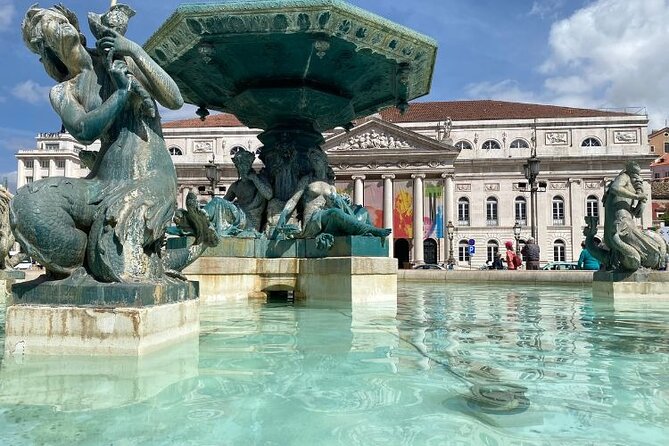
The next major stop is Praça Dom Pedro IV, commonly known as Rossio, with about 15 minutes devoted to refugees and European fashion trends.
This pairing may sound surprising, but it helps show the social side of wartime Lisbon. Refugees did not exist only as figures in official records. They arrived in a city where hotels, cafes, businesses, and public spaces brought people from different parts of Europe into close contact.
The discussion of fashion trends gives the period a more ordinary human scale. War changes what people wear, buy, and imitate, just as it changes borders and alliances. This detail helps prevent the walk from becoming too heavy or too focused on military events.
You also get a broader view of Lisbon’s place in Europe. The city was not merely a stopping point for spies. It was a meeting ground for people carrying different languages, fears, ambitions, and ideas about modern life.
The route remains in central Lisbon, which makes it manageable for most people. Still, it is a walking tour of up to three hours. If you have limited stamina, plan your day so this is not followed by another long walk.
The famous spy hotels
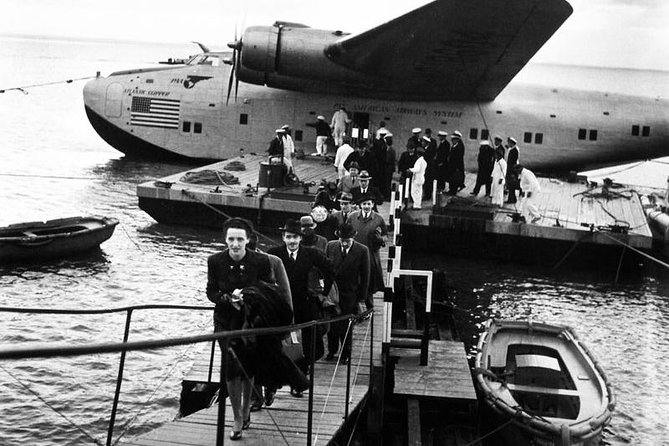
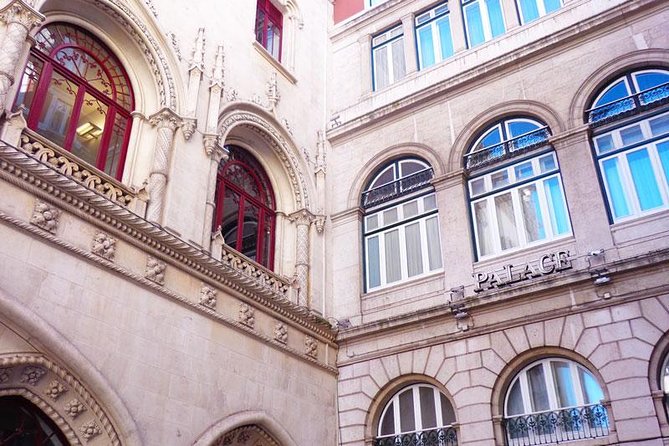
Between the main squares, the guide points out some of Lisbon’s most famous spy hotels. These buildings matter because hotels offered a practical meeting point for people who needed rooms, contacts, privacy, or a way to blend into an international crowd.
The tour does not simply ask you to admire the architecture. It explains how the hotels fit into the wartime network of agents, refugees, businessmen, and officials. You begin to see why a grand hotel could function as a place of opportunity and danger at the same time.
This is one of the strongest reasons to take the walk in person rather than read a general account before your trip. The city’s streets and buildings help you picture the movement of people through Lisbon. You may pass a hotel without noticing its wartime role if you explore alone.
The tour information does not promise hotel interiors or private access, so expect to learn from the public streets and exterior settings. That keeps admission costs low, but the experience remains dependent on how clearly the guide connects each place to the story.
Praça dos Restauradores and Garbo, the double agent
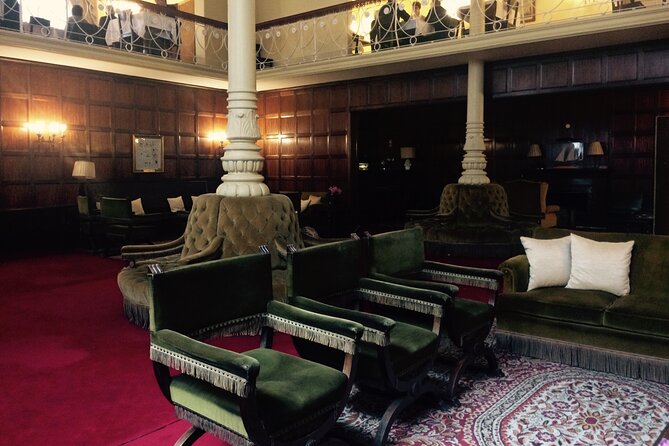
The walk ends at Praça dos Restauradores, after about 10 minutes focused on Garbo, also known as Arabel. He is presented as the most important World War II double agent discussed on the tour.
Ending here gives the route a strong final character. You have moved from government squares and commercial dealings to the calculated work of a person operating between opposing sides. The story also brings together many of the tour’s themes: false identities, political pressure, business interests, and the power of carefully managed information.
The endpoint is listed as Restauradores in central Lisbon. That is useful if you are planning your next stop, though the tour does not include a return transfer. You can continue exploring on foot or arrange your next activity from there.
I like that the final stop is not simply a general recap. A specific double-agent story gives the walk a memorable finish. It also leaves you with a clearer sense of how intelligence work depended on people, not just secret documents.
The guides make or break this walking tour
A history walk is only as good as its guide, and this experience relies heavily on the person leading it. José and Filipa are named among the guides, and both are described as strong storytellers with a clear grasp of Portugal’s wartime politics and social setting.
Filipa is noted for weaving together political, social, and economic history with personal anecdotes. José is described as bringing Lisbon during World War II to life while also answering wider questions about the city and its culture. Another guide, referred to as Ze, surprised even a Lisbon native with stories that were new to him.
That is a useful sign for repeat visitors and residents, not just first-time tourists. The subject is specialized, and a guide who can explain the links between international politics, business, and personal relationships adds real value.
The tour is offered in English. The group maximum is 15 people, small enough for questions without making the outing feel private or expensive. The activity includes a professional art historian guide, but no entrance tickets are required at the listed stops.
Is $30.17 a fair price?
At $30.17 per person, this is a reasonable price for a guided walk lasting roughly two to three hours, especially if you enjoy history and want more than a standard city orientation.
The value comes from the subject and the guide rather than from paid attractions. You are not paying for museum admission, transport, food, or a special venue. You are paying for research, local interpretation, and a route that connects ordinary public places to a little-known part of Lisbon’s past.
I would not choose it simply as the cheapest way to see downtown. Much of the route covers plazas that you can visit freely on your own. Choose it because you want the stories explained in a clear sequence, with time for questions and context.
The tour is also a useful first or second-day activity. It gives you a broad look at central Lisbon while adding historical meaning to places you may pass again later. If you already know the city well, the wartime material may still give you a fresh angle.
Timing, weather, and who should book
The walk usually takes two to three hours, with the detailed route adding up to about 2.5 hours for many groups. The pace is designed to be walkable for older age groups, but the length can still become tiring.
Rain is worth taking seriously. One group completed the tour in torrential rain and still managed to enjoy the storytelling, but bad weather will make any outdoor walk harder. Bring suitable clothing and do not schedule a demanding activity immediately afterward.
I would recommend this tour most strongly to:
- People interested in World War II, espionage, or European political history
- Visitors who want a downtown orientation with a specific theme
- Families and mixed-age groups, since the stories can appeal to adults and younger adults alike
- Repeat visitors looking for a side of Lisbon beyond monuments and food
- Anyone who prefers a guide-led walk over reading plaques and guidebook summaries
I would be more cautious if you dislike long historical explanations, need a fully indoor activity, or want a short photo walk with little narration. The tour is story-led, and the background matters as much as the locations.
Practical details before you go
The meeting point is Cervejaria Antártida Lisboa, on the western side of Palácio Real at Praça do Comércio. The route ends at Restauradores, so you finish in a different part of central Lisbon.
The experience uses a mobile ticket and is offered in English. Most people can take part, and service animals are allowed. It is near public transportation, but the supplied details do not specify a private vehicle arrangement or hotel pickup.
You can cancel for a full refund if you do so at least 24 hours before the start time. Changes or cancellations made less than 24 hours before the start are not accepted for a refund. Confirmation is sent within 48 hours of booking, subject to availability.
Should you book Lisbon City of Spies?
Book it if you want Lisbon’s famous squares to reveal their political and human stories. The strongest parts are the real James Bond account, the spy hotels, the discussion of tungsten and Jewish gold, and the final story of Garbo and Arabel.
I would especially choose it early in a Lisbon visit, when a guide can help you understand the city before you explore more on your own. At $30.17, the walk offers fair value for a specialized subject and a small group.
Skip it if you want a fast sightseeing loop, indoor comfort, or a tour built mainly around architecture. For history-minded visitors, though, this is a smart way to see central Lisbon in a different light, with José, Filipa, or another strong guide turning familiar plazas into places of secrecy, pressure, and chance.
FAQ
Where does the Lisbon City of Spies Tour begin?
It begins at Cervejaria Antártida Lisboa, on the western side of Palácio Real at Praça do Comércio, Rua C 20-23, Lisbon.
Where does the tour end?
The tour ends at Restauradores in central Lisbon.
How long does the tour last?
The stated duration is approximately two to three hours. The route and stop timings suggest that many departures may take about 2.5 hours.
What language is the tour offered in?
The tour is offered in English.
What is included in the price?
A professional art historian guide is included. Admission tickets are not required for the listed public-square stops.
How many people can join the group?
The tour has a maximum of 15 travelers.
Can I cancel for a full refund?
Yes. You must cancel at least 24 hours before the experience start time for a full refund. Cancellations or changes made less than 24 hours before the start are not accepted for a refund.
Just reviewed in Lisbon
- Private tour Lisbon – full day★ 5.0 · 8 reviews
- Private Tour: Portuguese Food and Wine Tour★ 5.0 · 33 reviews
- Lisbon Football Experience – Private stadium and Museum Tour★ 4.0 · 10 reviews
- Lisbon and Sintra Essence 8H – Private Tour★ 5.0 · 5 reviews
- Private Tour: Lisbon Sunset Walking Tour with Fado Show and Dinner★ 5.0 · 30 reviews
- Private Catamaran Tour: Lisbon coast cruise with barbecue and drinks★ 5.0 · 20 reviews
- Lisbon: Helicopter Tour over Cascais & Cabo da Roca★ 5.0 · 4 reviews
- Private Tour Fátima – Nazaré – Batalha – Óbidos★ 5.0 · 6 reviews
City Tours, compared.
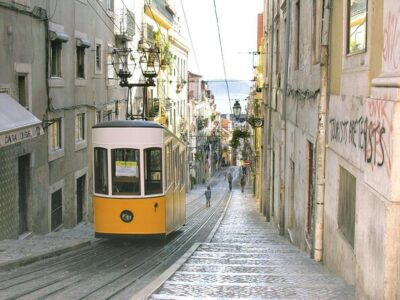
Lisbon City Center Tour – The Unmissable Lisbon
Read our review →
Daytime/Sunset/Night City Sailboat Tour with Drink
Read our review →

Browse the lists this tour appears in