
Reviewed · LISBON WALKING TOURS
Lisbon Highlights Guided Walking Tour
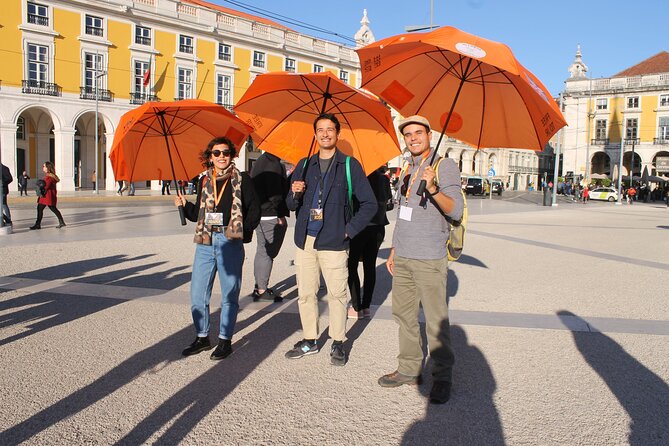
The 1755 earthquake is the key to understanding Lisbon, and this walking tour puts that story at the center. Starting in Praça do Comércio, you follow the rebuilt city through grand squares, old churches, tiled streets, and Chiado before reaching a famous viewpoint.
I like two things right away: the route gives you a useful first look at central Lisbon, and the $21.72 price covers a full 2.5-hour guided walk. Guides including José, Telma, Shiri, and Ann-Elisa are praised for clear storytelling, local restaurant advice, and a good sense of pace.
The main consideration is the walking itself. Lisbon’s hills are real, and the tour moves through busy central streets rather than quiet back lanes. You should also confirm the precise finishing point, since the route description ends at São Pedro de Alcântara while the meeting details name Praça Luís de Camões.
Key points at a glance
- The 1755 earthquake shapes the whole walk: You see how Lisbon was rebuilt in a planned grid after much of the city was destroyed.
- Fourteen central Lisbon stops fit into 2.5 hours: This is a brisk orientation rather than a slow museum tour.
- The route covers the city’s essential first sights: Expect Praça do Comércio, Rossio, Santa Justa, Carmo, Chiado, and a grand viewpoint.
- The guides add practical value: José, Telma, Shiri, and Ann-Elisa are noted for clear explanations, humor, and restaurant suggestions.
- It is a strong budget choice: You visit many landmarks without paying separate entrance fees.
- Prepare for hills and city pavement: Most people can take part, but comfortable shoes matter.
Why the 1755 earthquake is the right way into Lisbon
Lisbon can feel confusing at first. Its streets rise and fall, grand squares suddenly open out, and old buildings sit beside carefully planned blocks. The earthquake of 1755 explains much of that contrast.
The tour begins at Praça do Comércio, the city’s largest square. This broad waterfront space is a striking place to start because it feels open and orderly, unlike many of Lisbon’s tighter medieval streets. Here, the guide explains how the earthquake and resulting destruction reshaped about 80 percent of the city.
That story gives the rest of the walk a clear purpose. On Rua Augusta and the nearby streets, you are not simply looking at attractive buildings. You are seeing the planned grid created during Lisbon’s rebuilding. The guide can connect the straight streets and regular blocks to a moment when the city had to be designed again.
I find this kind of introduction more useful than a string of disconnected facts. Once you understand why the Baixa district looks so planned, the city begins to make sense.
More Lisbon Walking Tours:
- Lisbon: History, Stories and Lifestyle Walking Tour
★ 4.8 · 10,902 reviews - Best of Lisbon Small-Group Guided Walking Tour
★ 5.0 · 4,869 reviews - Lisbon: Food and Wine Small Group Walking Tour
★ 4.9 · 4,082 reviews
From Praça do Comércio to the Augusta Street Arch
The first part of the walk stays in the Baixa district, where Lisbon’s grand public face is at its clearest. From Praça do Comércio, you move toward the Arco da Rua Augusta, or Augusta Street Arch.
The arch is one of Lisbon’s best-known landmarks, and the guide explains what it represents to the city. You do not enter a paid attraction here, so the stop is short, about five minutes. That is appropriate for a walking orientation. You get the story, take in the architecture, and keep moving.
Rua Augusta follows. It is described as the most important street in Lisbon, and its straight path helps show the logic of the rebuilt district. The walk lasts about 15 minutes in this area, giving you time to connect the earthquake story with the streets beneath your feet.
This is a popular part of town, so expect a public city setting rather than a quiet historical site. The value comes from the guide’s explanation. On your own, you could easily stroll along Rua Augusta without realizing why it has this particular layout.
City Hall, the monarchy, and Lisbon’s public squares
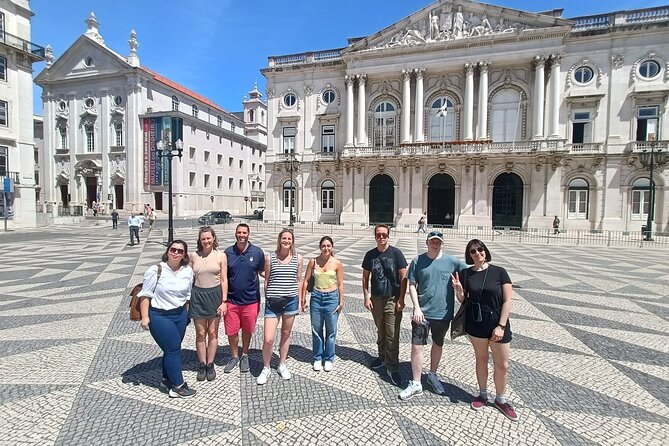
The next stop is Municipal Square, home to Lisbon’s City Hall. The guide uses this location to explain the end of Portugal’s monarchy.
That subject adds political context to the route. The tour is not limited to architecture and scenery. It also touches on the shifts that changed Portugal’s government and public life. The stop lasts around ten minutes, which is enough for a concise explanation without turning the walk into a lecture.
You then continue to Rossio Square, officially Praça Dom Pedro IV. This is identified as Lisbon’s oldest square, with roots reaching back to the 13th century. Its broad pavement and central monument make it one of the city’s main meeting places.
Rossio is also where the guide brings in several memorable subjects: Portuguese stone paving, the escape of the Portuguese royal family to a foreign country, and the square’s long role in city life. These are very different stories, but together they show how Lisbon’s public spaces have carried political, social, and everyday meaning over time.
The stop lasts about 15 minutes. I like that length because Rossio rewards a pause. You can look at the paving, watch the flow of the square, and still keep the tour moving.
Santa Justa, São Domingos, and the taste of ginjinha
The Santa Justa Elevator is one of Lisbon’s most recognizable structures. The tour explains that it is the only elevator of its kind in Portugal and discusses its connection to the Eiffel Tower.
The stop itself is short, about seven minutes. That means you should not expect a full ride or a long engineering presentation. You see the structure and learn why it matters. If you later want to spend more time here, the tour gives you enough background to make that decision.
At São Domingos Church, the subject becomes darker. The guide discusses one of the saddest episodes in Lisbon’s past connected with the church. The stop takes about ten minutes, and it adds emotional weight to an otherwise cheerful route through central Lisbon.
The church is described as one of the city’s most unusual religious buildings. Its history is not presented as a decorative footnote. It shows how disaster and loss remain part of Lisbon’s identity.
Then comes A Ginjinha, an institution linked to ginjinha, Lisbon’s famous cherry liqueur. The guide explains the drink and why this particular shop became so important to the city.
This is one of the tour’s more useful local touches. You are not just shown a famous monument. You learn about a small tradition that you can recognize later when walking around Lisbon. The stop is about ten minutes. The supplied details do not promise a tasting, so you should treat it as a visit and explanation rather than a included drink.
Something different to do with a day in Lisbon:
- Lisbon City Center Tour – The Unmissable Lisbon
★ 5.0 · 22,234 reviews - Lisbon: Sintra, Pena, Regaleira, Cabo da Roca & Cascais
★ 4.7 · 19,656 reviews - Sintra: Pena Palace and Park Entrance Ticket
★ 4.2 · 17,410 reviews - Lisbon: Jerónimos Monastery Entrance Ticket
★ 4.1 · 14,164 reviews
Casa do Alentejo and Avenida da Liberdade
Casa do Alentejo is one of the most distinctive buildings on the route. The guide points out its Moorish influence and connects the building to Portugal’s past.
This stop broadens the tour beyond the usual postcard views. Lisbon’s identity has been shaped by many periods and influences, and Casa do Alentejo gives you a visible example in the center of town. The walk spends roughly ten minutes here.
Avenida da Liberdade follows. Often compared with the Champs-Élysées, this wide avenue offers a different version of Lisbon from the narrow lanes and old squares. The guide explains when it was built and how it fits into the city’s development.
The stop is only about five minutes, so the emphasis is on orientation. You learn what the avenue is and why it matters, then continue toward Rossio Station.
Rossio Station and the road toward Carmo
Rossio Station is one of the route’s most photogenic buildings. It was Lisbon’s first central station, and the guide explains its distinctive architectural style, described as one found in Portugal.
The ten-minute stop gives you time to look closely at the facade rather than rushing past it. This is a good example of why a guide helps in Lisbon. The station may catch your eye, but you might not know its role in the city’s transport history or its architectural importance.
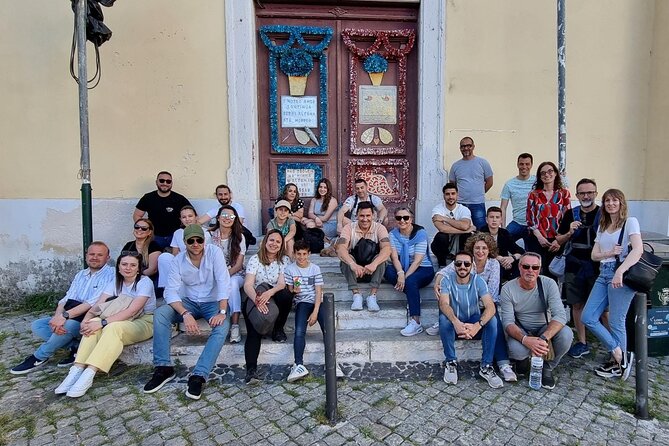
From Rossio, the route heads toward Carmo Square and the Chiado area. This section involves Lisbon’s hills, so the pace matters. One particularly useful point from the tour feedback is that the guide kept the speed comfortable while still covering a lot of ground. The hills were expected, but the timing felt manageable for people ranging from teenagers to grandparents.
That does not mean the route is flat or effortless. Wear shoes with a firm grip, and expect regular walking on city pavement. If you need frequent rest stops, this may feel hurried.
Carmo’s unfinished church and the end of dictatorship
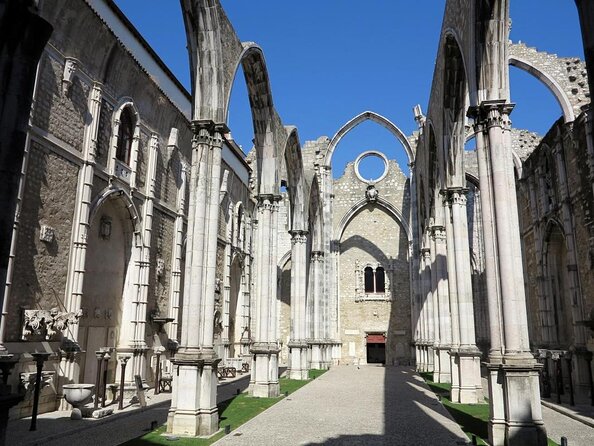
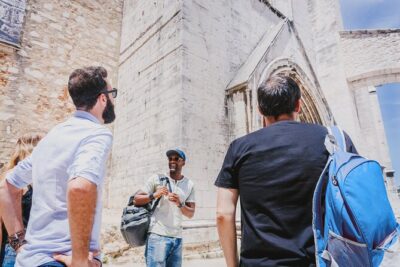
At Carmo Square, you see the Carmo archaeological site and the unfinished church. The guide explains why the church was never completed, then moves into the history of Portugal’s dictatorship and the revolution that ended it.
This is one of the strongest history sections of the walk. The earthquake story shows how Lisbon was physically rebuilt. The Carmo discussion shows how Portugal changed politically. You get both stories in the same central district, tied to places you can actually see.
The stop lasts about 15 minutes. That is long enough for the guide to explain the main events and answer questions, but not enough for an in-depth museum visit. Admission to the listed stops is not charged, and the tour does not include a separate museum entry.
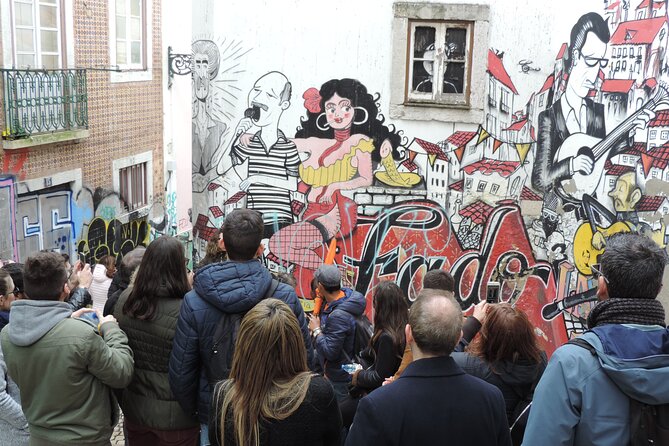
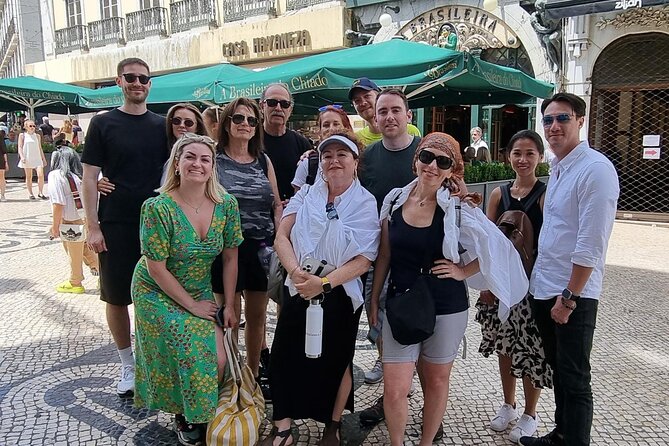
The route then continues through Chiado, one of Lisbon’s best-known shopping and meeting areas. Here, the tour points out elegant shops, Café A Brasileira, and the literary connections of the neighborhood.
Café A Brasileira was a meeting place for writers and poets in the 20th century. The guide also introduces Luís de Camões, Portugal’s most famous poet, at the square named for him. This gives the walk a cultural side without requiring you to sit through a formal lecture on literature.
Finishing with views from São Pedro de Alcântara
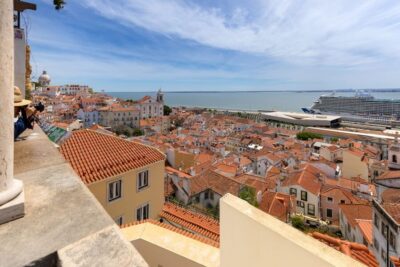
The listed final sight is Miradouro de São Pedro de Alcântara, a viewpoint with a broad view over Lisbon. Ending with a viewpoint is smart. After two hours of streets, buildings, and historical explanations, you get a chance to step back and see how the city fits together.
This is also the best point for photographs. You can look across the rooftops and connect the districts you have just walked through. The stop lasts about ten minutes.
There is one practical detail to keep in mind. The route description says the tour ends at São Pedro de Alcântara, while the meeting information lists Praça Luís de Camões as the end point, next to the monument. These places are in the same general Chiado area, but they are not identical. Confirm the final meeting details before booking if your onward plans depend on a precise finish.
What $21.72 gets you
At $21.72 per person, this is a good-value introduction to central Lisbon. You receive a professional English-speaking guide, and all listed fees and taxes are included. The tour does not include gratuities, food, drinks, or separate admissions.
The value is not in paid entry. Most of the stops are public squares, streets, exterior viewpoints, and visible landmarks. You are paying for the route, the explanations, and the ability to connect the city’s stories.
That matters in Lisbon because many important sights are easy to walk past without context. The Augusta arch, Rossio Station, Carmo, and Casa do Alentejo all become more meaningful when someone explains their place in the city.
The group can include up to 20 people. That is large enough to keep the price down, but small enough for a guide to manage questions in most cases. If you want a private, slow-paced walk with long stops at every building, this is not that experience.
It is also booked an average of 43 days in advance. That suggests you should not leave it until the last minute, particularly if you are visiting during a busy period.
Who will get the most from this walk
I would choose this tour for a first day in Lisbon, especially if you want a quick map of the central districts. It covers enough ground to help you decide where to return for more time.
It also suits budget-conscious visitors, families with older children, and anyone who prefers stories to silent sightseeing. The feedback highlights guides who keep the tone friendly and explain the past in a way that connects with modern life. José is noted for humor and clear storytelling, while Telma, Shiri, and Ann-Elisa are praised for warmth, local suggestions, and useful advice about restaurants and places to visit.
You should think twice if you dislike hills, need a very slow pace, or want interiors and extended museum time. This is a city walk, not a series of full attraction visits.
The tour is offered in English. Service animals are allowed, public transportation is nearby, and most people can participate. Good weather is required, and the operator may cancel if weather is poor or the minimum number of participants is not reached.
Should you book the Lisbon Highlights Guided Walking Tour?
Book it if you want an affordable first look at Lisbon with a strong historical thread. The earthquake explanation, the political stories, the local ginjinha stop, and the final viewpoint give the walk more substance than a simple checklist of monuments.
I especially like it for a first morning or afternoon in the city. You get the basic layout, hear where the major turning points happened, and receive practical local suggestions from the guide. Just allow for hills, wear sensible shoes, and confirm the exact endpoint before you set up your next reservation.
If you prefer a private tour, long museum visits, or a gentle route with little walking, spend your money elsewhere. For most visitors who want central Lisbon explained clearly at a low price, this is a sensible buy.
FAQ
How long does the Lisbon Highlights Guided Walking Tour last?
The tour lasts approximately 2 hours and 30 minutes.
What language is the tour offered in?
The tour is offered in English.
Where does the tour start?
It starts at Praça do Comércio 574, 1100-148 Lisboa, Portugal.
Where does the tour end?
The meeting information lists Praça Luís de Camões, next to the monument. The route description identifies São Pedro de Alcântara viewpoint as the final listed stop, so confirm the precise endpoint before the tour.
How much does the tour cost?
The listed price is $21.72 per person.
Are admission fees included?
The professional guide and all fees and taxes are included. The listed stops have no admission ticket charge. Separate food, drinks, and gratuities are not included.
How many people can join the tour?
The tour has a maximum group size of 20 participants.
Can I cancel for a full refund?
Yes. You can cancel at least 24 hours before the start time for a full refund. Cancellations or changes made less than 24 hours before the start time are not accepted for a refund.
Just reviewed in Lisbon
- Private tour Lisbon – full day★ 5.0 · 8 reviews
- Private Tour: Portuguese Food and Wine Tour★ 5.0 · 33 reviews
- Lisbon Football Experience – Private stadium and Museum Tour★ 4.0 · 10 reviews
- Lisbon and Sintra Essence 8H – Private Tour★ 5.0 · 5 reviews
- Private Tour: Lisbon Sunset Walking Tour with Fado Show and Dinner★ 5.0 · 30 reviews
- Private Catamaran Tour: Lisbon coast cruise with barbecue and drinks★ 5.0 · 20 reviews
- Lisbon: Helicopter Tour over Cascais & Cabo da Roca★ 5.0 · 4 reviews
- Private Tour Fátima – Nazaré – Batalha – Óbidos★ 5.0 · 6 reviews
Lisbon Walking Tours, compared.
Best of Lisbon Small-Group Guided Walking Tour
Read our review →
Best of Lisbon Walking Tour: Rossio, Chiado & Alfama
Read our review →

Lisbon Roots – Small group Food & Culture Walking Tour w/tastings
Read our review →
Starter Walking Tour to the highlights in German
Read our review →
Browse the lists this tour appears in